
We Are Planning To — A Plan That Doesn’t Have to Be Perfect
Fashion that cares for the environment has only just begun to crack the shell that confined it. We talk with designer Lee Okseon about Open Plan, a brand moving toward sustainable fashion through action rather than perfection.
We are Planning to — A Plan That Doesn’t Have to Be Perfect
Between talking about sustainable fashion and actually practicing it lies a gap that a few syllables can never fill. That is true even in an age when clothing made from recycled PET bottles has become a must-have item and people are encouraged to mend old clothes rather than buy new ones. Fashion that cares about the environment has only just begun to break out of the shell that confined it. Open Plan is probably the brand that has cracked that shell most boldly in Korea. Born from a single environmental documentary, Open Plan embraces the possibilities that exist in an imperfect state, moving toward sustainable fashion in the realm of practice. We spoke with designer Lee Okseon about ‘plastic-free vegan’ fashion and Open Plan.
Words Hur Taewoo
Photos Choi Namyong
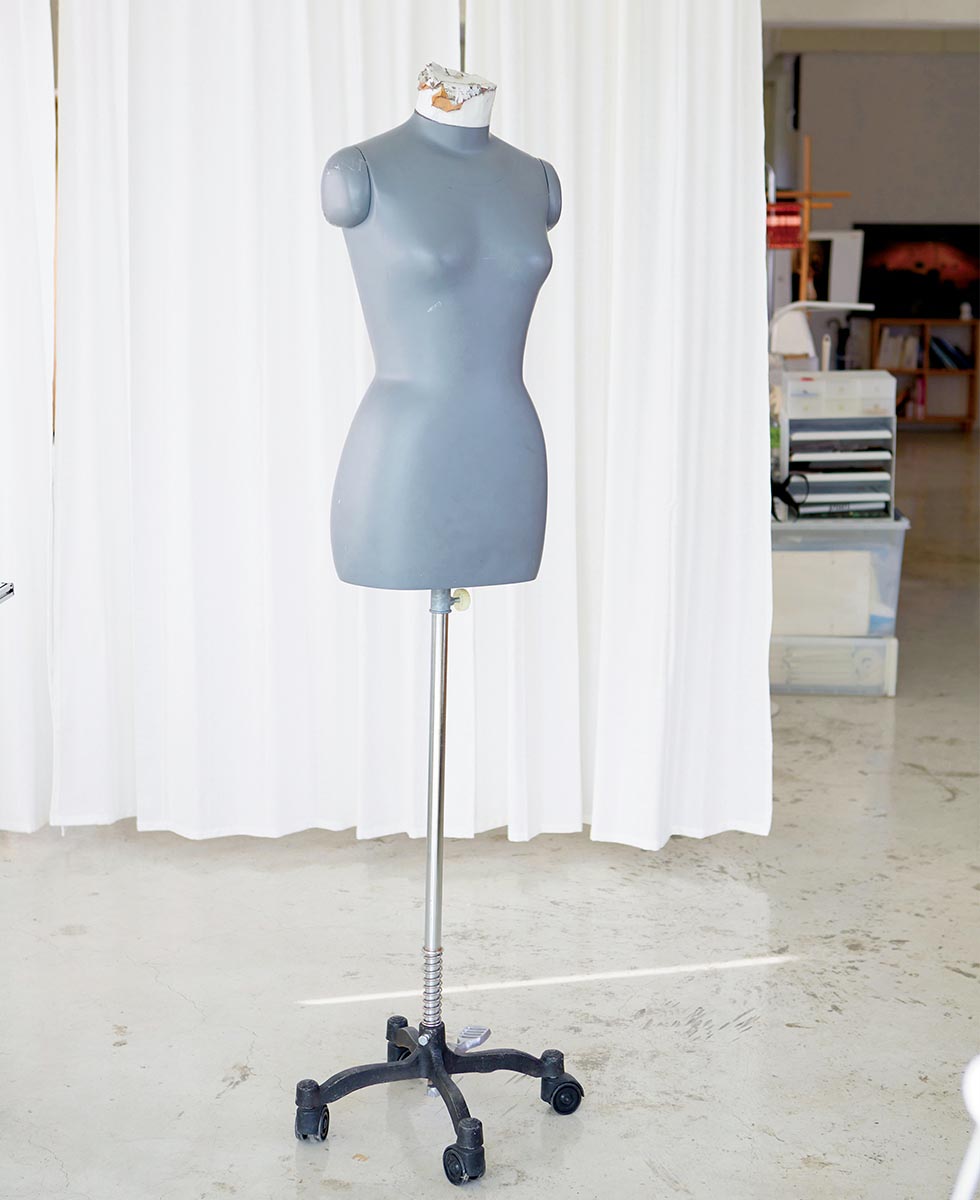
Sustainable fashion still sounds unfamiliar in Korea. When you launched Open Plan, did you think it could succeed?
I went independent and founded my company in 2010. For the first seven years, I didn’t do anything special for sustainability or the environment beyond deciding not to use animal-derived materials. Honestly, I didn’t know where to begin, so I think I put it off with one excuse or another. Three years ago, I decided I couldn’t go on like that, and I started Open Plan.
I don’t think it’s a question of whether you succeed or fail because it’s sustainable fashion. If you make good clothes and they happen to be sustainable, too, no one would turn them down. But it isn’t easy. There are limits on the range of materials you can use, and there are problems with unit costs. When I think about it, even a few years ago it wasn’t easy to buy organic food, but now you can find a fair amount of it even in a small neighborhood supermarket. Seeing organic food offered, even in a limited number of products, I judged that if more people came to look for sustainable clothes, too, this could be a viable market. And I don’t think it’s hard just because this is Korea. Don’t designers pursuing sustainable fashion abroad have similar worries and difficulties?
Could you briefly tell us about the path you have taken to practice sustainable fashion in the industry?
First of all, not many people in the industry here understood the concept of sustainable fashion. That was somewhat hard. When it comes to fabric, Korea’s textile manufacturing is world-class. But it wasn’t easy for a small design company like ours to work from the start with the excellent large companies that produce textiles. We were able to begin one step at a time as we met people who recognized and understood what we were doing.
In truth, it’s hard to call something sustainable fashion just because you changed materials and used organic cotton. You have to design with an awareness of what happens at each stage of manufacturing, and you have to consider the whole system, too. At the beginning, this is how I thought: “We are not perfect. We can’t know everything.” Discourse on the environment shifts with the times and changes as technology changes. So we decided to put into practice, one by one, what we can do now. What is the easiest thing we can change first? To start, we switched the materials that go into our clothes to products made through sustainable efforts. We paid attention not only to the materials in the clothes but also to labels and packaging. Because it’s difficult to make the shipping process to consumers 100 percent sustainable, we chose the best option within the range available to us and kept looking for something better.
We’d like to hear more about plastic-free vegan.
It means designing without plastic materials and without animal-derived materials. In fashion, not using plastic means not using synthetic fibers such as polyester or nylon, and not using trims such as plastic zippers or buttons. Plastic was invented about 150 years ago, and it’s said to take 500 years to decompose. That means the very first plastic is still on Earth. Plastic from textiles in particular is microplastic from the moment it is produced, so it’s said to be hard to filter out in sewage systems. It flows into rivers and the sea, and eventually it comes back into our bodies.
Do we really have to use plastic for style or fashion? In modern society, we can protect our bodies and express beauty and style well enough without animal-derived materials, so do we really have to? Fashion is about expressing yourself and living beautifully and stylishly. Is it right to express ourselves with materials that come from harming and oppressing other living beings? And obtaining those materials also ties us to factory farming and the climate crisis. That’s why we design a plastic-free vegan collection. There are many brands that use only natural fibers or talk about vegan fashion, but we pursue both.
How should we view clothes that make active use of plastic materials and can be worn for many years?
Does making something from natural fibers mean we can wear it for a long time? How long do we actually wear our clothes? I think we don’t throw clothes away because we can no longer wear them; we stop wearing them for other reasons. Modern clothing has a certain level of quality, after all. On the other hand, when people talk about the plastic problem, they often stress that it can be recycled, and they say the problem is that consumers’ mistakes keep recycling from working well. I think that’s wrong. The structure we’re in now is not a cycle but a straight line. If things are made on one end, they inevitably get thrown away and pile up on the other. Making things is itself the bigger problem. We have to get people to produce less. If we approach it from the standpoint of sorting waste or using things for a long time, a fundamental solution is hard to reach. Efforts to make clothes from fibers recycled from existing plastic bottles are needed, too, but isn’t the fundamental solution to reduce production and consumption?
What does Open Plan mean?
I was on a business trip to New York, and after finishing work I visited the Whitney Museum of American Art. In one spot inside the museum, I saw a sign that said ‘Open Plan.’ It wasn’t an exhibition space; it felt a bit like an office area. That was the first time I saw the words. An open plan is originally a concept in which a large space is divided not by walls but by fixtures or furniture and used flexibly. First, the words are easy and simple, and I liked the nuance those two words carry and the images they bring to mind. I also really like the idea of a space that gets redesigned according to circumstance and use. I think of design as a process of solving problems with limited materials. I wanted to approach problem-solving not with rigid, stereotyped ideas but with fresh, organic ones, so I chose it as the brand name. Is that making more of it after the fact? (Laughs.)
Since starting Open Plan, is there anything about your previous way of life that you regret?
Because I work in the fashion industry, I could never just walk past something pretty, and I would buy it. I wonder why I did that, when I couldn’t wear it all even in a lifetime… I came to regret the things I bought easily because I assumed they could be recycled, and never stopping my consumption because I didn’t even know how things get recycled and thought I’d done my part as long as I sorted my waste well.
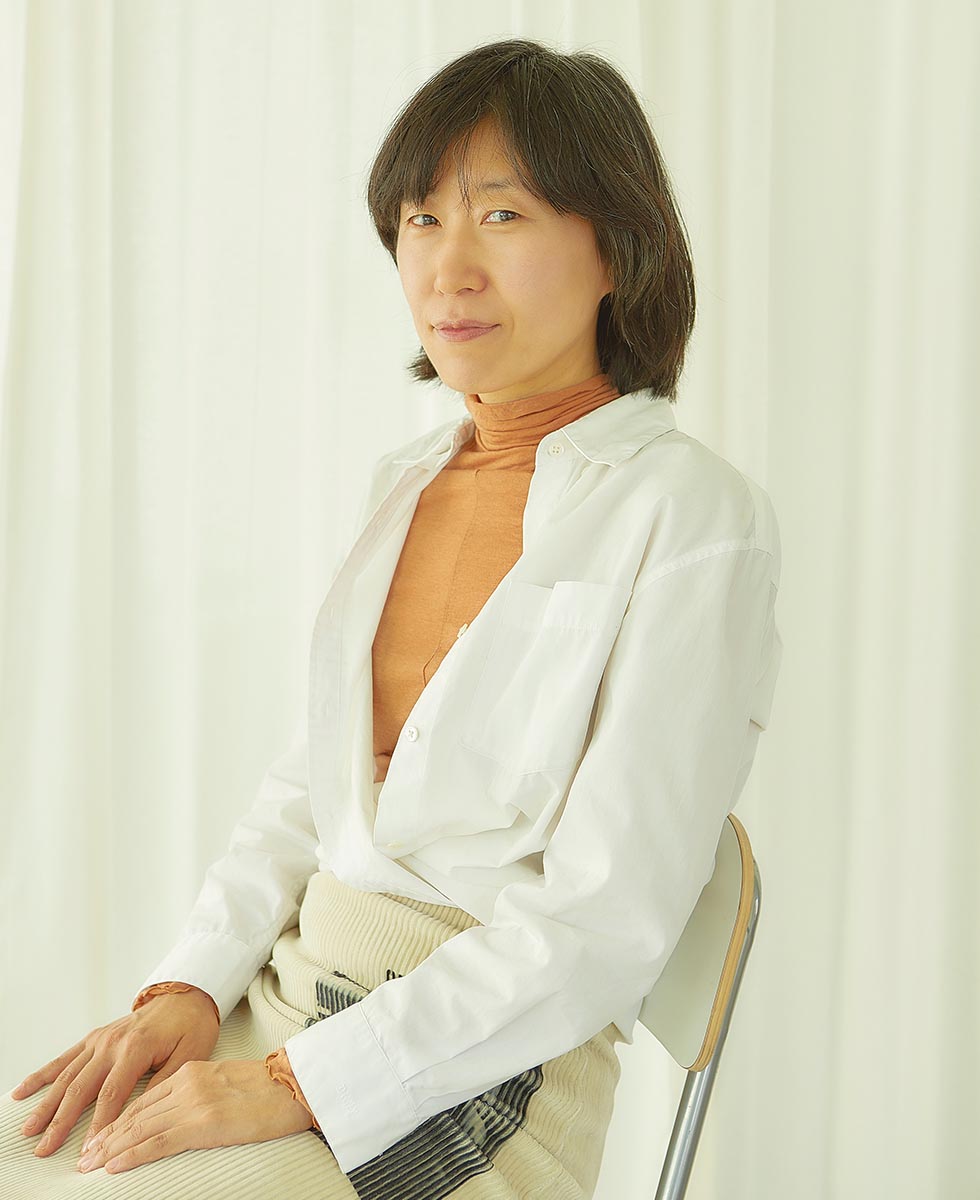
We heard that you practice veganism.
I was never really a meat lover, so I think it wasn’t that hard. For a year before going properly vegan, I mostly ate salads, without cooking and without salt. After that, starting vegan felt much easier. Korean cuisine has many dishes that work without animal-derived ingredients. Even just one day a week wouldn’t be that hard. What matters is to start first, even if it isn’t perfect. If you practice veganism for even one or two meals, that’s already a big change. It becomes possible the moment you free yourself from perfection.
We understand you planted trees with Tree Planet in the wildfire-hit areas of Gangwon-do. Could you name one forest or park that has stayed with you?
When my family visited Jeju Island early last year, we went to Bijarim Forest and Saryeoni Forest, and they were really lovely. I had expected the primal feel that the word ‘primeval forest’ suggests, and it was a little disappointing to see how well-groomed they were. Still, they were more primal than anything else I could see around me, so I liked them.
I took part in Helsinki Fashion Week in Finland with a collection designed around a trip to Jeju Island. When everything was over, I went to Nuuksio National Park, which is close to Helsinki. It was completely different from my idea of a national park. I mean, I had thought a national park was a place with rows of food stalls at the entrance and a ticket booth you pass through (laughs), but there was really nothing there. All there was at the entrance was a few posts stuck in the ground. I thought, ‘This is a primeval forest, this is nature, this is a national park.’ What I remember from spending half a day there is a family playing in the lake, splashing in the water. But the lake water was cloudy. It didn’t look clean to my eyes, yet the family didn’t seem to mind at all. Watching them, I wondered, ‘Ah, maybe my eyes have been wrong all this time,’ and ‘Maybe the water I wanted to dip into was chemically treated water, like a swimming pool’s.’ A lake is, in fact, living water, with a muddy bottom, fallen trees rotting in it and duck droppings mixed in, and yet to my eyes it looked unclean.
What inspiration do travel and places give to Open Plan’s designs and to you as a designer, Lee Okseon?
When I first founded the company, I planned, “I’m going to travel and work at the same time!” My original concept was also to present designs themed on a different city each season. In reality, I only did it once. (Laughs.) Now I go on business trips more often than I travel for pleasure. I stay a day or two longer at each destination and tell myself, ‘Well, this counts as a trip, too.’
It’s interesting that you name your collection pieces after specific places. What does that mean to you?
I name every product, and the name usually reflects the character or mood of the design, or the thoughts and experiences I had while planning the collection. A designer is someone who takes physical materials and adds a story from within. Of all the input I receive, the inspiration and stimulation that come from travel seem to me the most positive and valuable. You expose yourself to new spaces, new light, new smells, and you stay for a day or several, immersed in a new environment. You meet new people and cultures, and you have new experiences. All of that builds up and, in the end, shows up in the design, directly or indirectly.
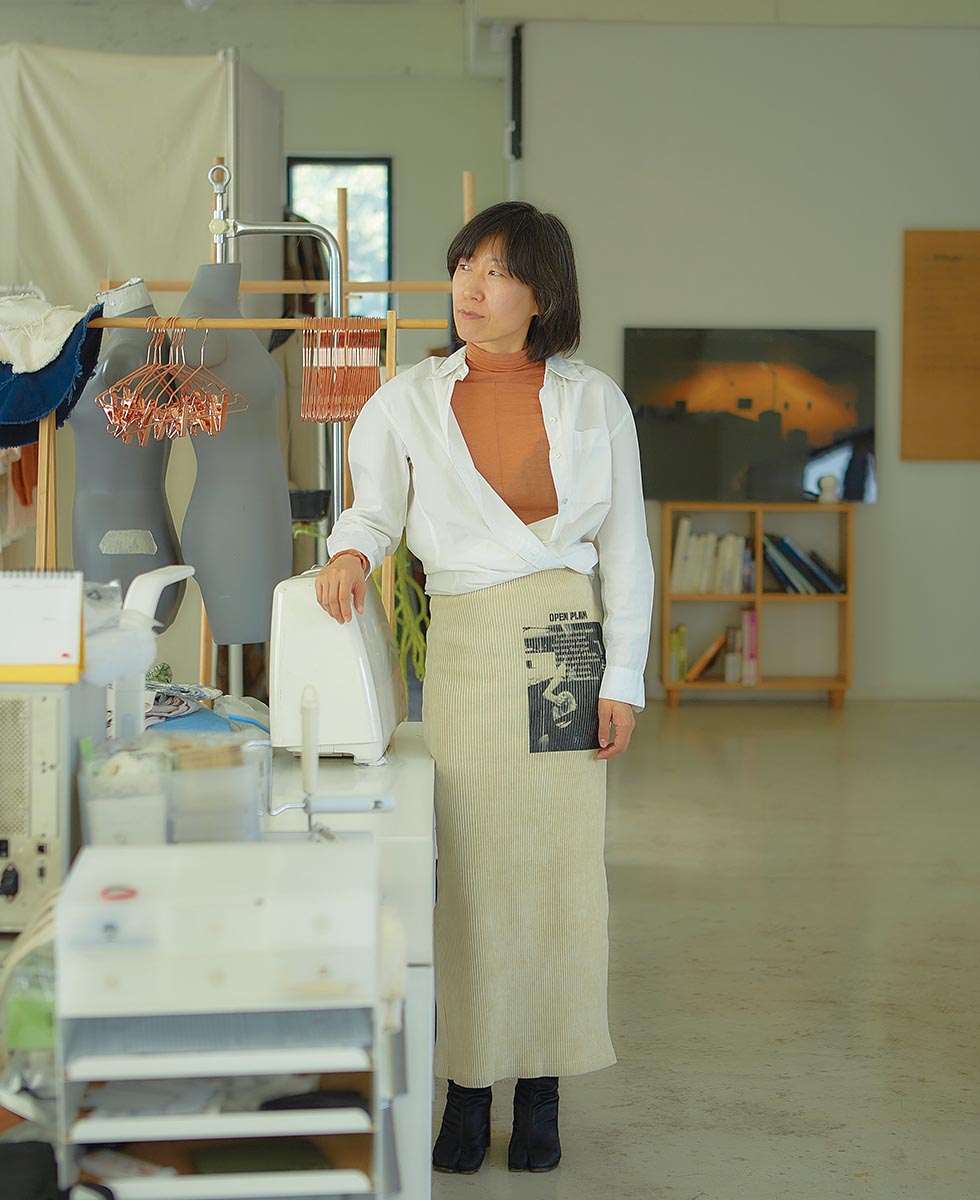
Is there anything you always bring when you travel?
My bag always has a tumbler and a cloth tote in it, and I take them on trips too. I dislike opening the packaging on the slippers they hand out on planes, so I bring my own. For the same reason, I pack a thin scarf and use it instead of the in-flight blanket. I also keep eye masks and earplugs I was given on earlier flights and reuse them every time.
Is there a travel destination where you can experience sustainable fashion?
That’s a hard question, but let me try to answer. Hmm… I’d say a place with a culture of wearing clothes for a long time, and of trading and swapping secondhand clothes. When you travel, it’s worth seeking out places like flea markets. There are plenty of fun items besides fashion, too.
If I were to recommend a place to see how the latest fashion is changing, I think Galeries Lafayette in Paris, France, would be a good fit. As part of a campaign called ‘Go for Good,’ the department store opens pop-up stores to introduce sustainable clothing. Even in regular brand stores, sustainable products carry a ‘Go for Good’ tag so that consumers can tell them apart. They also take part in events on sustainable fashion, introducing Go for Good to buyers and other participants.
What kind of sustainable travel fashion would you recommend to travelers who practice sustainable travel?
Traveling means exposing yourself to an unfamiliar environment. So I’d like to suggest a style you haven’t tried before. Boldly try something you already own but have always hesitated to wear. Since you’re not buying or making anything new, it’s sustainable fashion as well. When you come home from a trip after an experience like that, I think you’re at least a little different from who you were before. Confidence and change are motivating.
One last question. Since COVID-19, many industries have moved rapidly online. Helsinki Fashion Week was also held online this year. How should sustainable fashion respond?
I don’t think we can turn back from online, contactless formats, just as silent films gave way to talkies. According to a report published by the organizers of this year’s Helsinki Fashion Week, the environmental impact of the contactless event was markedly smaller than that of a physical one. But my sense is that the analysis was limited to the fashion week event itself. From a designer’s perspective, whether digitizing the clothes I make actually reduced carbon emissions is a different question. In effect, on top of the clothes I show to buyers in meetings, I created additional digital content for the digital fashion week. In the fashion industry, digital content still can’t replace physical content.
Among the brands that use digital fashion well, some apply more advanced policies. Look closely, and you’ll see that more and more resources go into transmitting glamorous, beautifully produced image data and running the servers. Some brands upload low-resolution photos or offer only schematic information, so customers can choose the image quality and the amount of energy used. They provide content at a lower level of detail, run their servers on renewable energy, and manage the responses and usage of people connecting in real time. How efficiently energy is spent on the digitization of fashion depends on what the makers have in mind and how they use it. I, too, aim to put this into practice step by step, for example by uploading images of an appropriate size when I create data, to be more economical and efficient.


