‘Some flowers bloom in spring, some in autumn / Even on the same stem, there’s an order in which they open / Just as blooming late doesn’t mean falling behind / We each live in our own time’ (from Cho Donghui’s “Inflorescence”)
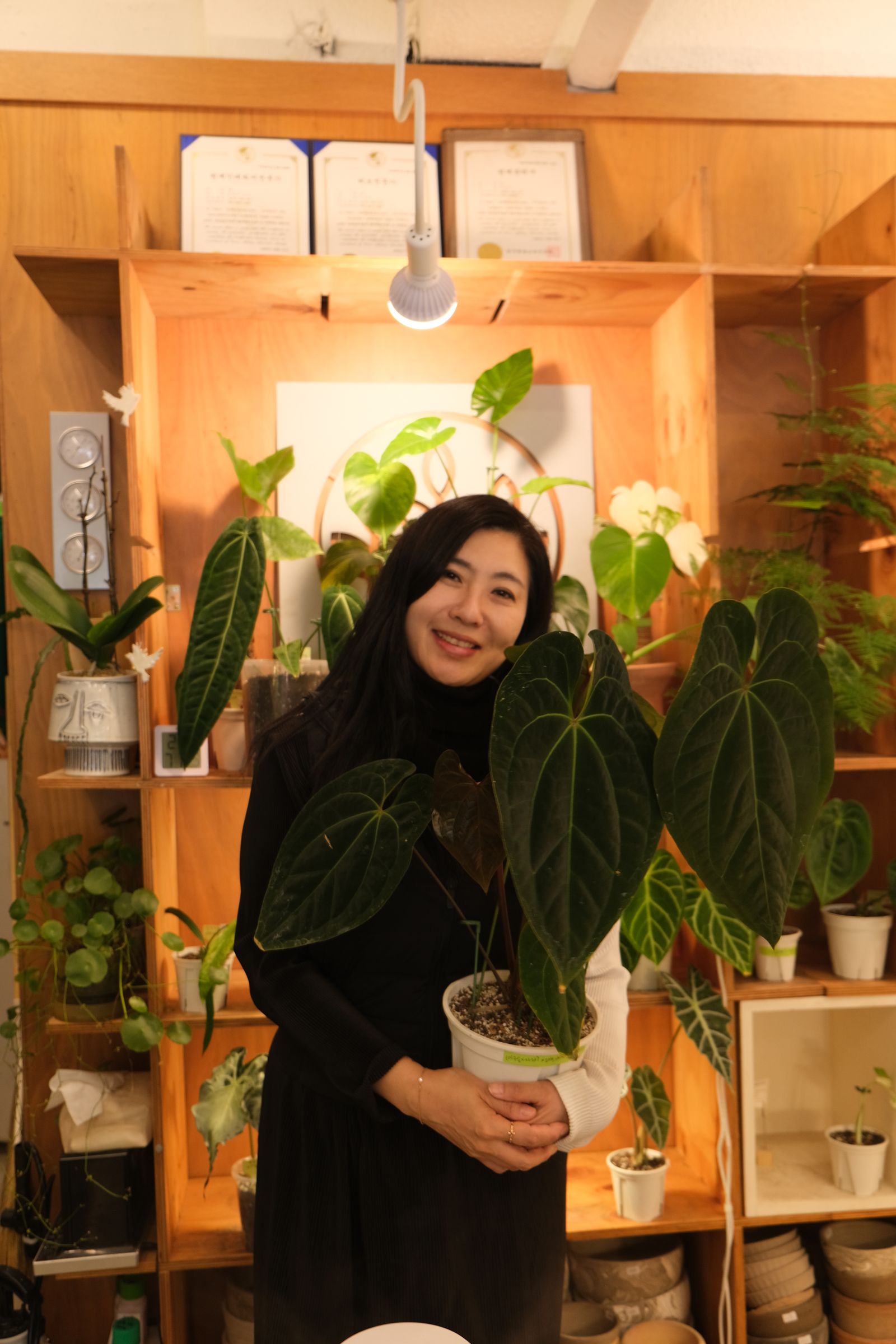
Lyricist Cho Donghui, whose lyrical words offer warm comfort to so many, has opened a small plant space in Seoul’s Yeonhui-dong called Choeso Sikmulwon (Micro Garden Studio). We visited to hear about the plants, music and travels she loves.
Interviewee Cho Donghui
Interviewer Ryu Sunwoo
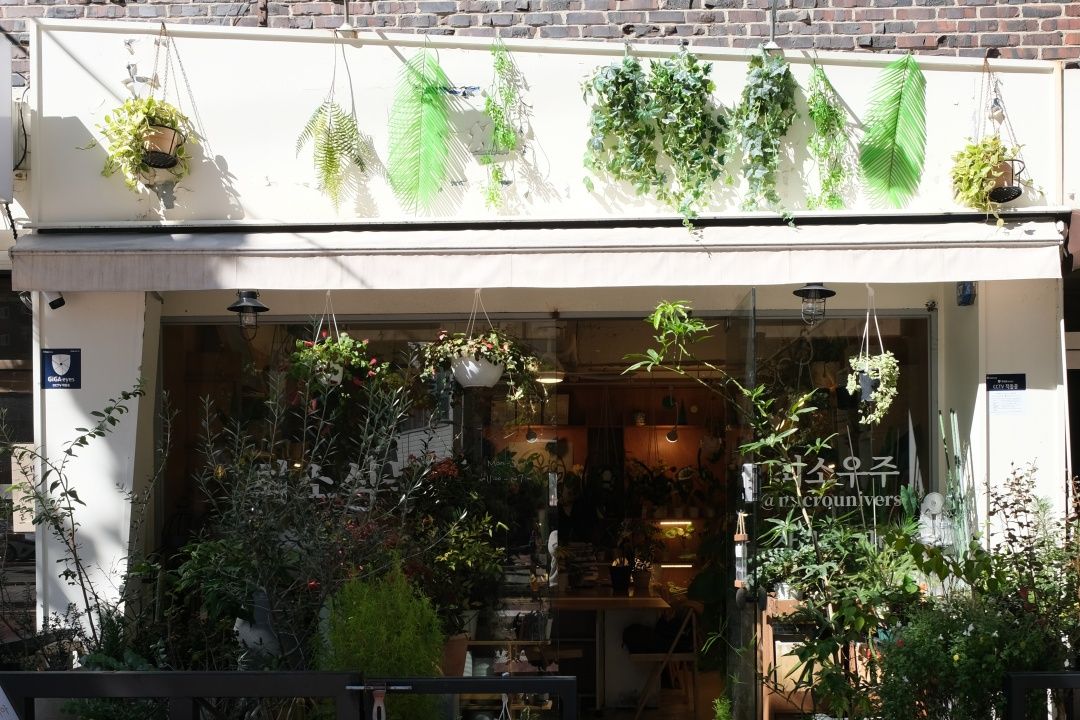
What kind of place is Micro Garden Stuido?
Our slogan is “A botanical garden by day, a cultural center by night.” During the day we sell plants, and in the evening we hold lyric-writing classes.
Does the name carry a special meaning?
I took “choeso” (minimum) from Choeso Uju (Minimum Universe), the label I run. The word carries my thoughts on sustainability. These days everything is about being faster and bigger. But I wondered, can I actually keep up with that? Could it be sustainable? After working in music for so long and watching so many rises and falls, sustainability and irreplaceability became important values in my life. When something gets smaller, it gets more substantial. I wanted to live a life that is small yet full. I chose the name hoping everyone could create a minimal botanical garden on their own desk. In “Choeso Uju,” the “universe” means a person. I believe each of us is a small but complete universe. It also means that people, each with their own universe, meet and form relationships.
You’ve long worked as a musician and lyricist. What led you to open a space centered on plants?
While working in music, I sometimes grew sensitive, and bouts of depression came often. I had always liked plants, but I only started growing them in earnest, one by one, after my children were grown. Eventually there were so many that not only my home but also my studio in Seochon was packed, with no place left to sit. (Laughs) Passersby would come in to buy plants, and friends asked me to hold a plant pop-up store, so I tried selling a few times. That led to my being asked to do the plant styling for BTS V’s home. Through that work, I saw for myself that plants bring people joy and happiness. My studio was already overflowing, so I went looking for a space with a large terrace and opened Micro Garden Stuido in Yeonhui-dong.
Was there a particular reason you came to love plants?
My father loved plants, so our home had many of them from the time I was little. He always wiped the leaves until they gleamed. As a child I didn’t understand it, but the calm that green gave me stayed in a corner of my heart. Then I visited my niece’s home in the United States, where she works in landscaping, and my interest in plants returned. She would pick roses from the yard and place them by my pillow before bed, and it made me so happy. Tending plants in the morning sun and making salads from vegetables harvested in the yard looked so healthy and happy. I thought, “This is what living is.”
After I came home, I started bringing in new trees, but they kept dying. I studied on my own by watching videos and eventually earned a horticulture certification. Watching new leaves sprout from a dying tree that was nothing but stems, I was completely captivated. I got hooked on the dopamine of new leaves. (Laughs) Just looking at plants makes me so happy. You start looking forward to each day, and you feel grateful for the season and the weather, whether it rains or the sun shines. The same goes for time. No matter how diligently you give a plant fertilizer, it only grows once time has passed. Through that process I came to reflect more and to feel the seasons as they are, and I felt so much happiness that there was hardly room for even a little depression.
Every plant grows at its own pace and blooms in its own season. After watching plants for so long, has your attitude toward life changed?
It has changed a great deal. Look around here: the plants differ in size, color and shape. Even their blooming seasons vary. I think people are the same. My attitude of accepting that everyone is different has become firmer. Even a tree left with only bare branches, if you don’t throw it away and wait, will meet enough light, water and wind to put out new leaves someday. In my song “To Time,” there’s a line, ‘Only time gave the answer.’ I think I’ve come to accept that some things happen only if you wait, only once time has passed.
What plants can visitors find at Micro Garden Stuido?
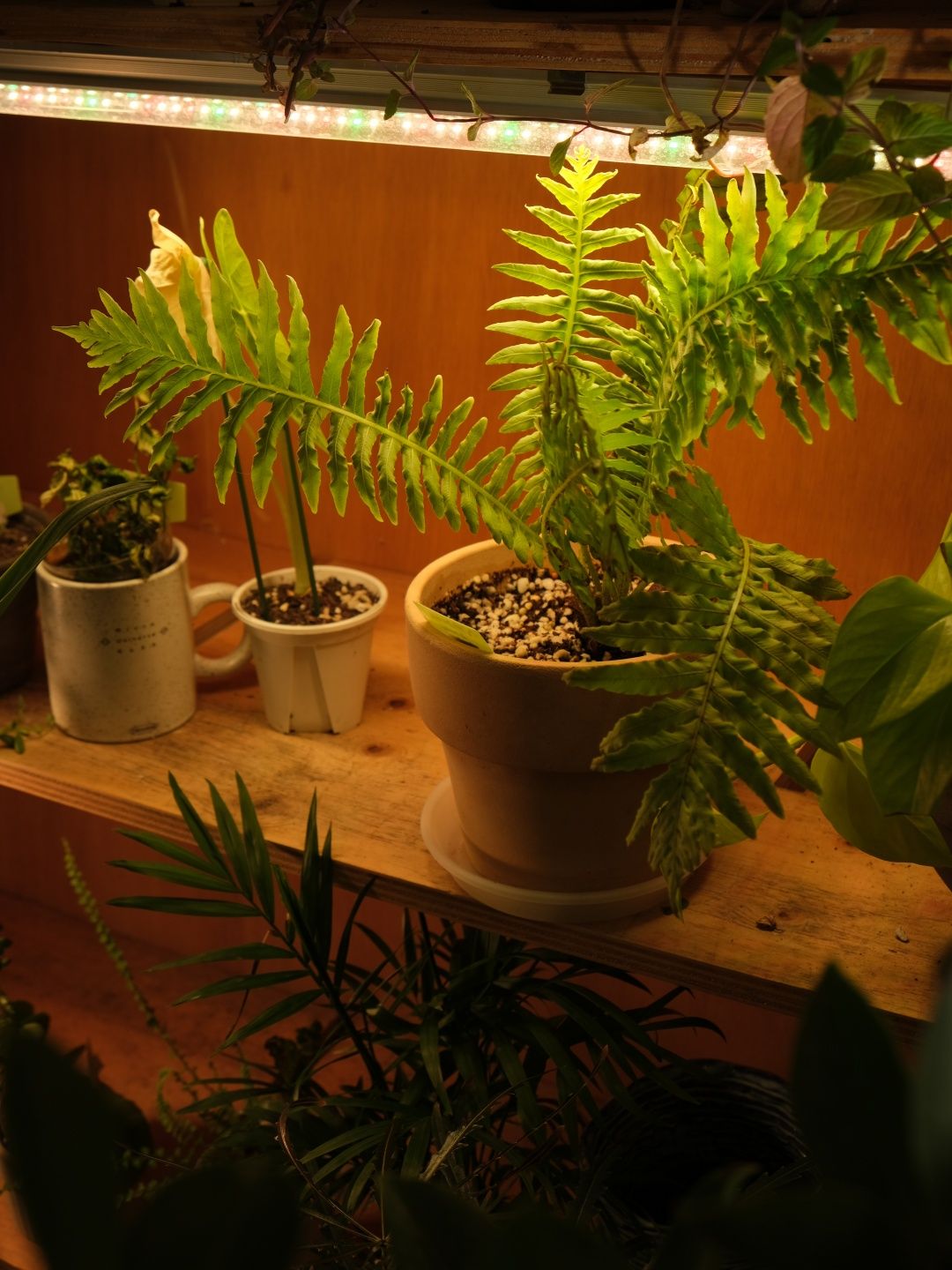
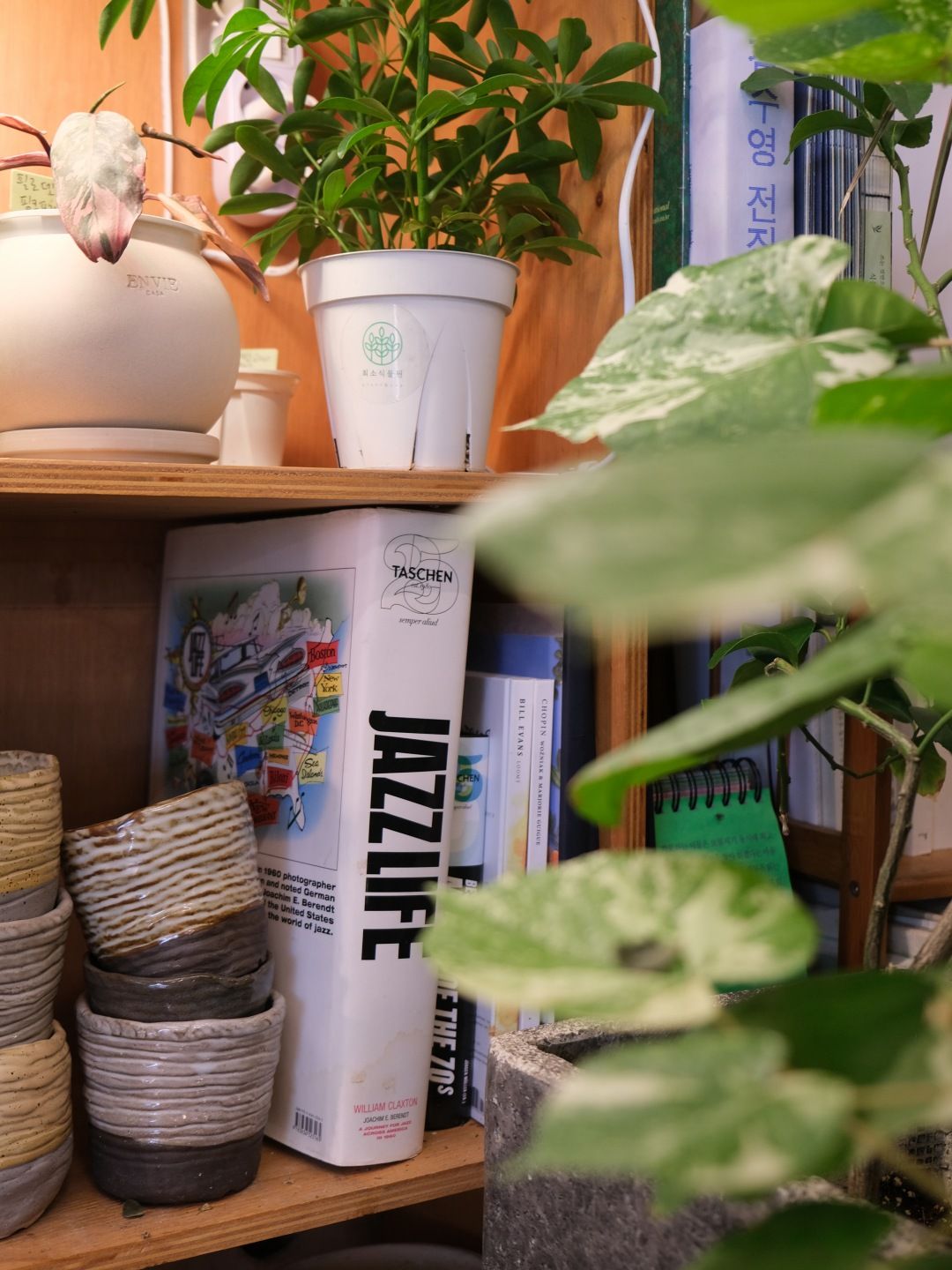
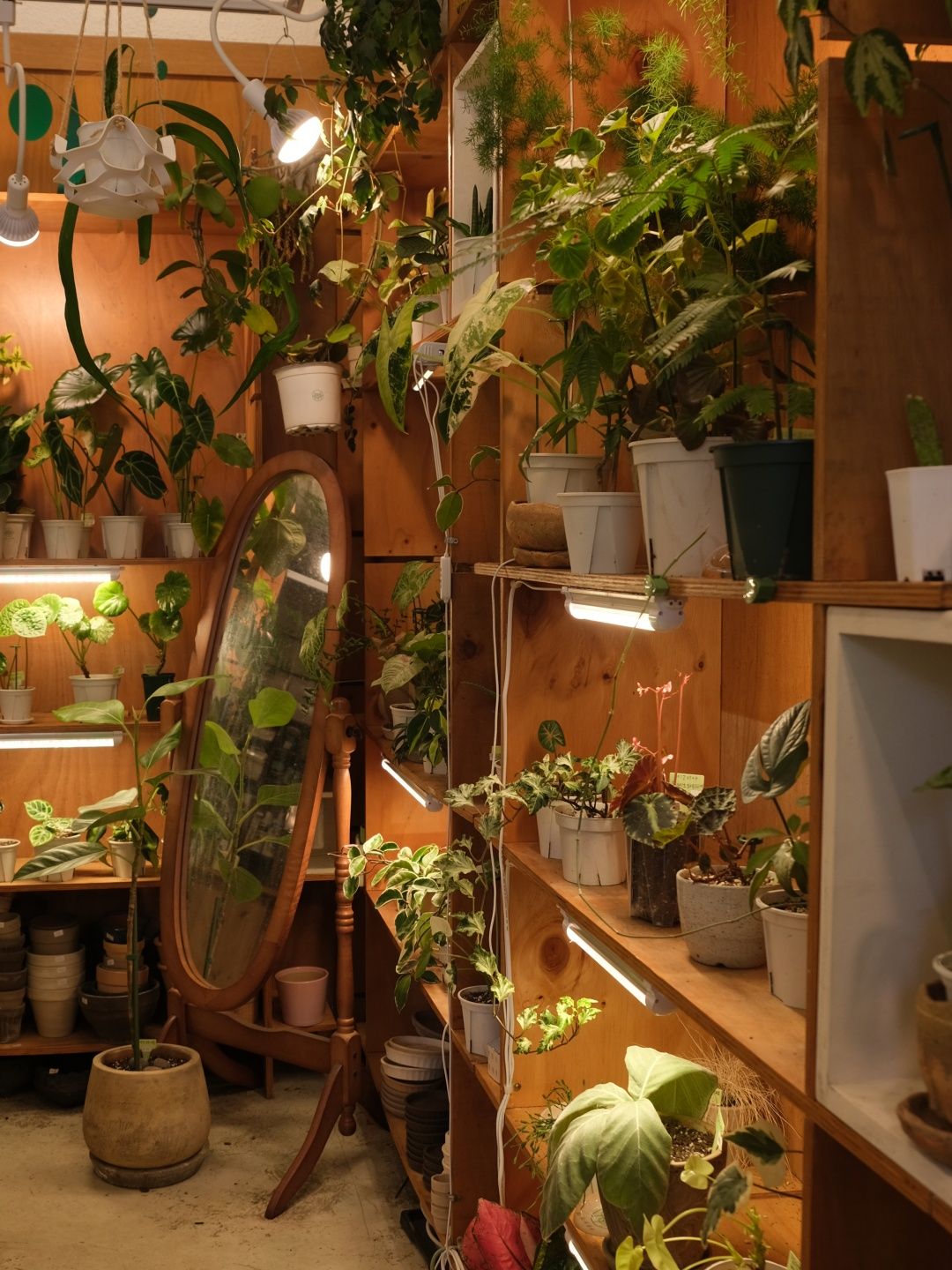
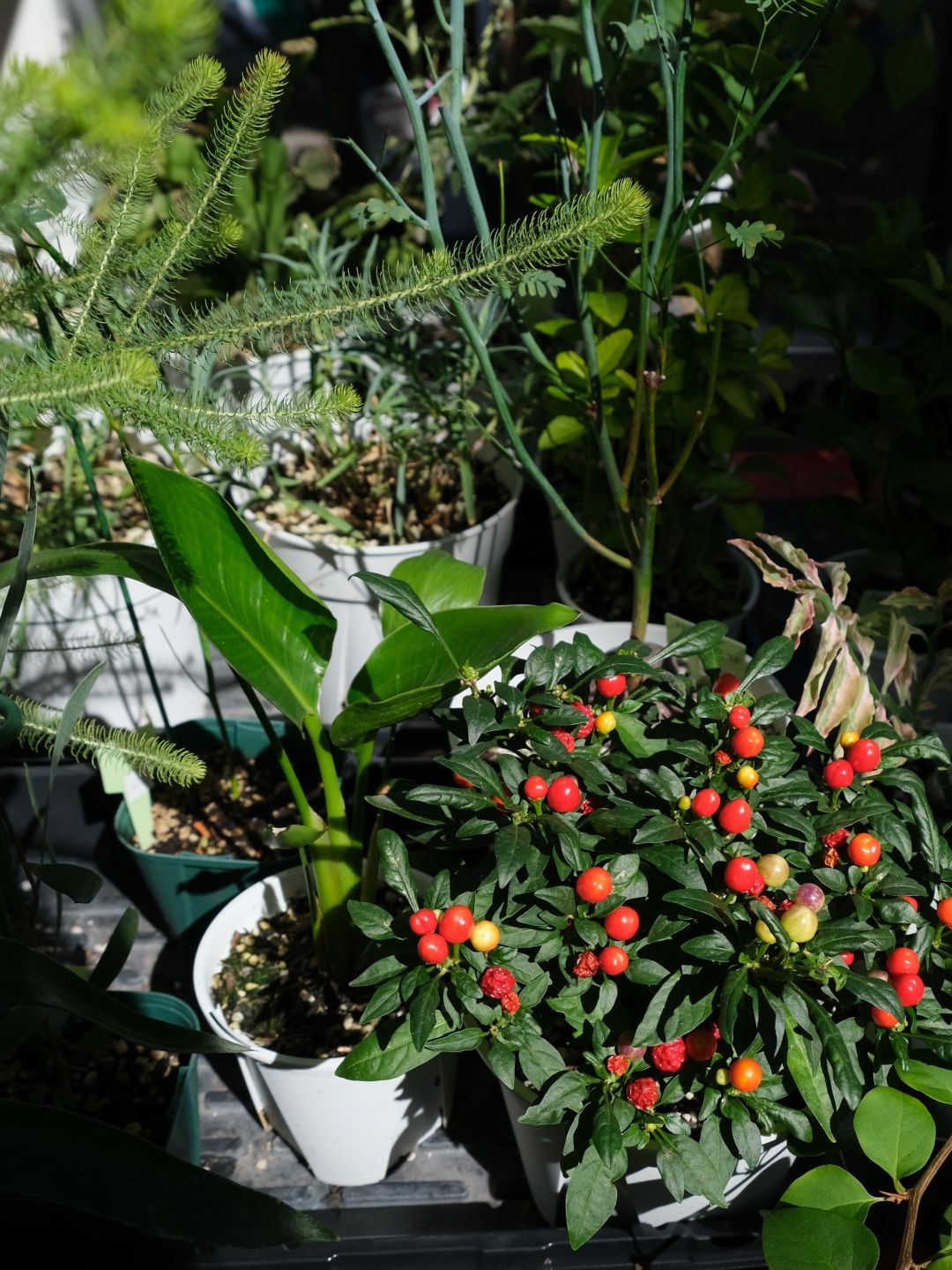
There are many plants from the aroid family, like anthuriums and alocasias, which I love. Many are rare plants that are hard to find at ordinary flower shops, but I try to offer them at reasonable prices of around 100,000 won. Some people want to give an uncommon plant as a gift, so I also carefully prepare everything from the soil to the pot and send it for them. Above all, I consider a plant’s form important, so I pay a lot of attention to shaping and trimming. Recently I’ve also become interested in asparagus varieties.
You’ve been writing lyrics for a long time. Where do you mainly find inspiration these days?
It’s one of the questions I’ve been asked most as a lyricist. I used to answer that I get it from people or books, but now I say you have to get it from everywhere. You should be able to write something just by looking at a single plant beside you. I use similar exercises in my lyric-writing classes. I ask students to talk to a plant or write it a letter. At first they’re baffled, but in the end everyone writes something. When you observe closely, a different part of your heart is touched. It’s training your heart to feel whatever you see. Even a bad experience seems meaningful, because painful experiences also temper and grow us.
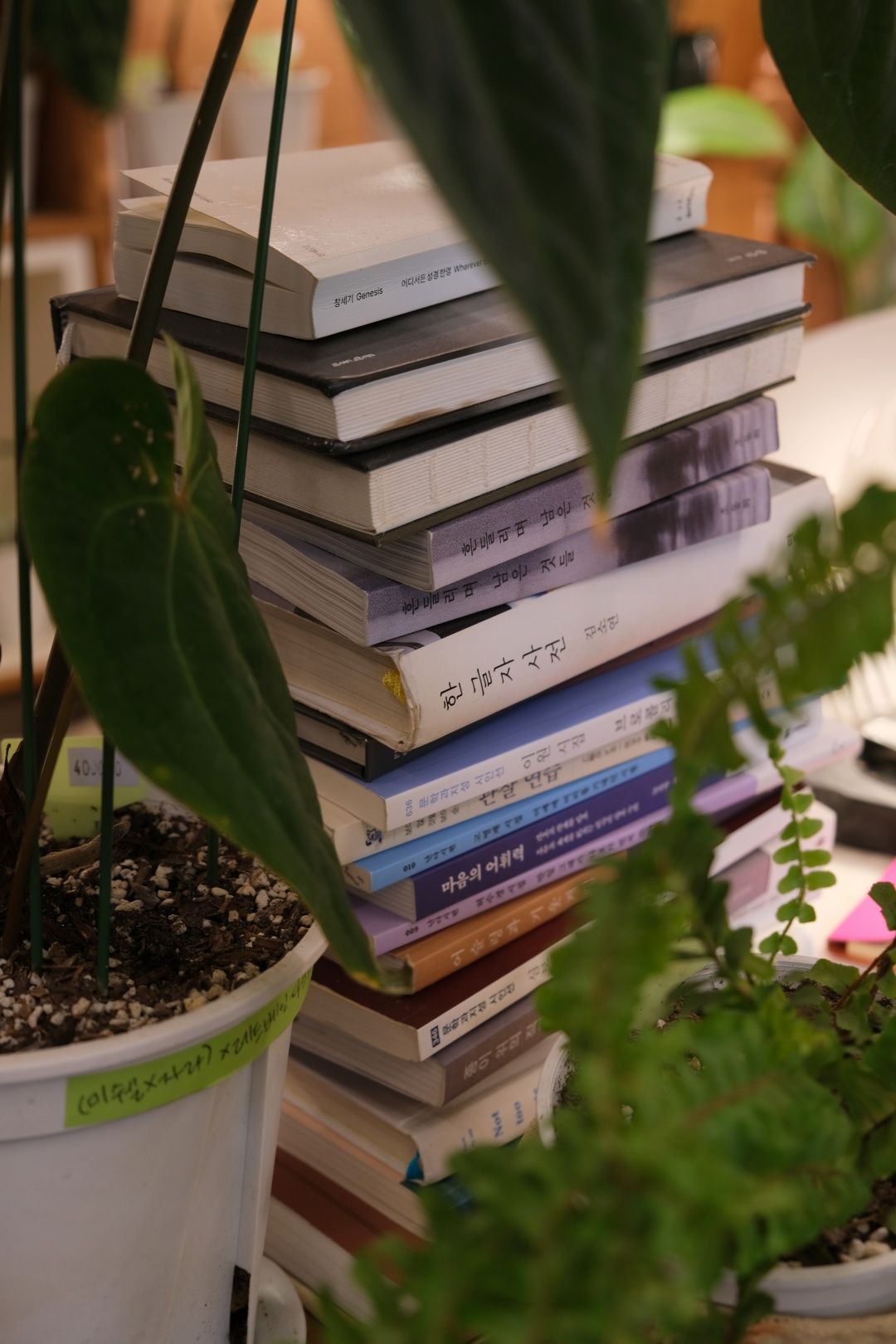
I hear you also teach lyric-writing classes in this space.
At first I ran only a beginner class for ordinary people interested in lyrics as a hobby. But people who finished it asked, “Where do we go from here?” (Laughs) So I created an advanced class where they set their own lyrics to music and even record them. Some people truly want to become lyricists, so I opened a pro class as well. It’s the first cohort now, and we do everything from dividing syllables to writing lyrics together for songs I’ve been commissioned to write. Teaching in a space full of plants means the air is good, so your head clears and your mind settles. There’s also so much to observe, which makes it even better.
Your photo essay book “What Remains as We Sway,” published last month, collects photos you took on film cameras over many years, along with your writing. Is there a landscape or scene that stays with you in particular?
The book contains film photos I took over two to three years. I shot a lot of them on Jeju Island. I’d pick the photos that capture real scenery and its shadow in a single frame, and the ones I took at the home of a teacher I admire. She’s a master of haenyeo (female diver) cuisine on Jeju, and I love her dearly. I also really like the photo that holds komorebi, a Japanese word for sunlight filtering through tree leaves.
Do you have a favorite travel destination?
I really love India and have traveled there about five times. In the south there’s a place called Auroville. Its French founder created it dreaming of an ideal community, and I once stayed in a coastal city called Puducherry (formerly Pondicherry) in order to go there. I have such fond memories of cycling around its museums and galleries. I enjoyed the contrast of feeling as if I’d stepped into a fairy tale, then heading downtown to find a sophisticated scene, but above all, your prejudices disappear. I was truly shocked when I went to the Ganges in Varanasi. Corpses and water buffalo carcasses drift by, and birds peck at them, yet right beside them people are bathing, brushing their teeth and praying. All of that happens in a single river. At first I was horrified, but strangely it was peaceful too. To them, that river is the sacred Mother River. Seeing that, I began to wonder whether the things I took for granted were really right. Time seemed to flow differently there, and the very standard by which I viewed the world shifted, and my mind opened up.
I’m also curious whether you have your own way of traveling with plants or music, Donghui.
I used to head straight for the music shops whenever I traveled. During about forty days in India, I learned traditional instruments like the sitar and the sarod, and I went to concerts with my teachers. I also loved playing and singing with people I met along the way. In the Thar Desert in India and in the Moroccan desert, I played and sang together with the people there. In Kolkata, India, I volunteered at the Mother House of Mother Teresa’s sisters, where I taught children with disabilities how to play guitar and wrote songs with them. That was when I realized music could be a gift to someone. Music makes it easy to get close to people quickly. These days, when I travel, the first thing I search for is a botanical garden. (Laughs) Even in Tokyo, I go around looking for botanical gardens and plant shops. Since I can’t bring plants home, I buy unusual pots and plant supplies instead.
What kind of place do you hope Micro Garden Studio will become? We’re also curious about anything new you’d like to try.
The happiest moment since opening Micro Garden Stuido was when regulars from the neighborhood started coming in. Many of them treat the place so casually, and they stop by to ask for plant advice, too. I want to keep serving as a kind of living room for plant lovers and spread the happiness that plants bring. For now, I only hold a songwriting class in the evenings, but if I find the time, I’d like to host book talks or small performances.