
Upcycled Ceramic — Ceramics Reborn
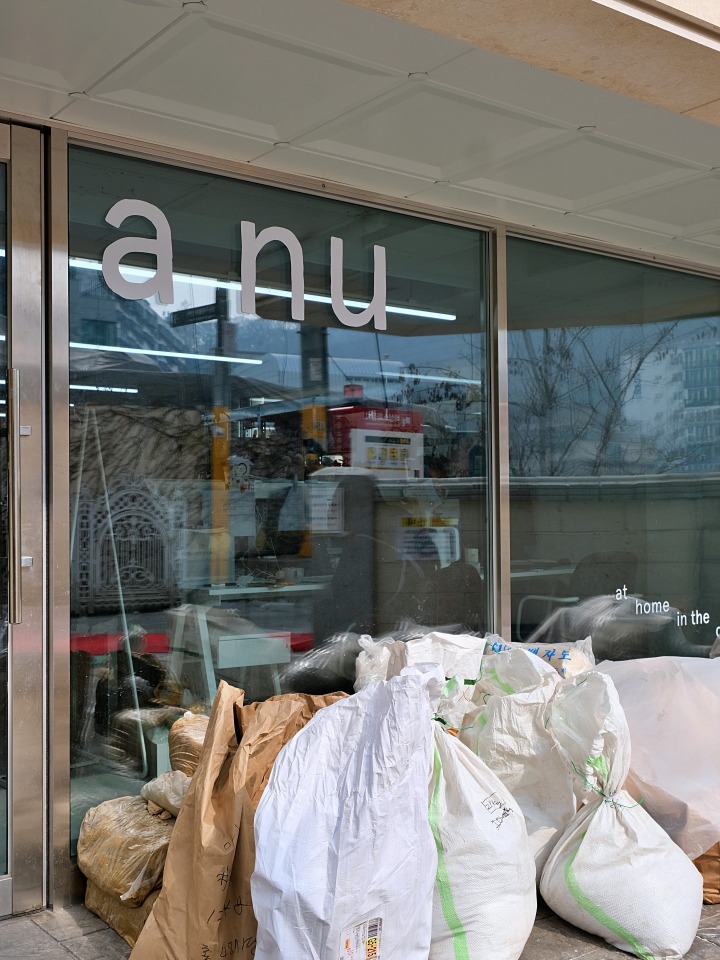
We met ANU, an upcycling ceramics brand that grinds discarded ceramics and remakes them into new products.
Upcycled Ceramic — Ceramics Reborn
Ceramics come from the earth, but once they've outlived their usefulness, they don't return to it. The upcycled ceramics brand ANU was shaped through careful observation of, and affection for, discarded ceramics.
Words Parc Jinmyoung
Interviewee Ahn Yongwoo (CEO of ANU), Na Wonho (CPO of ANU)
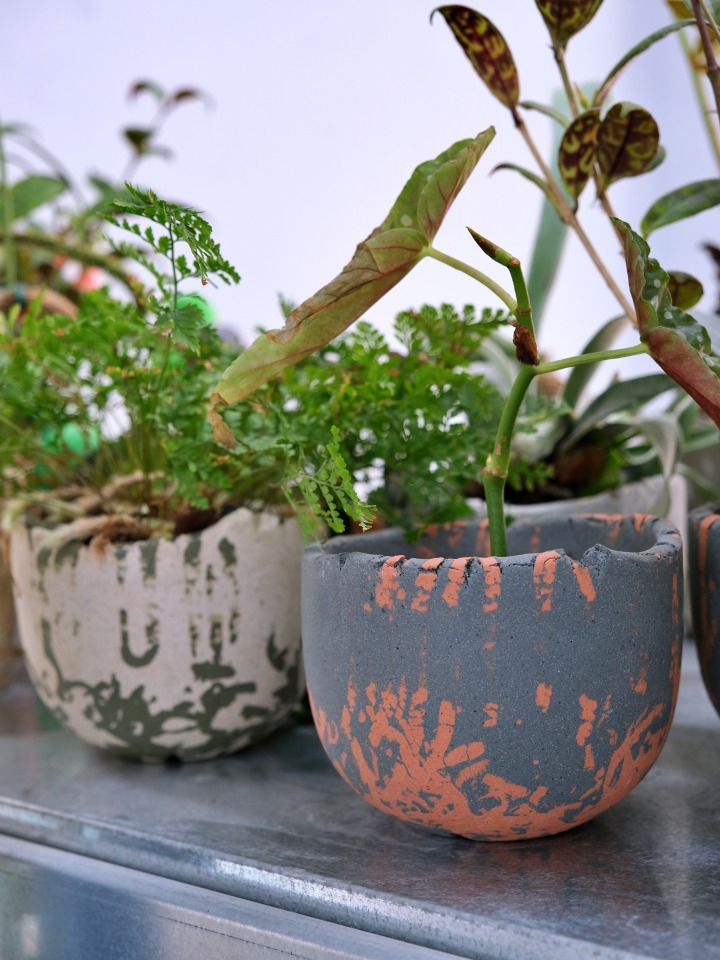
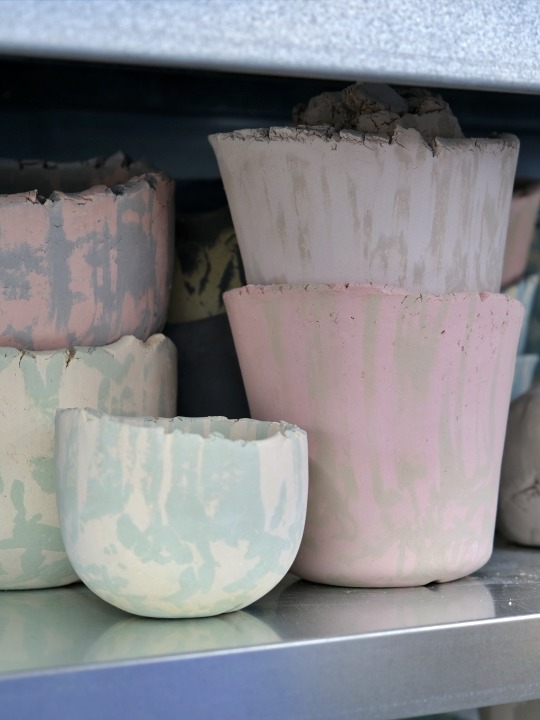
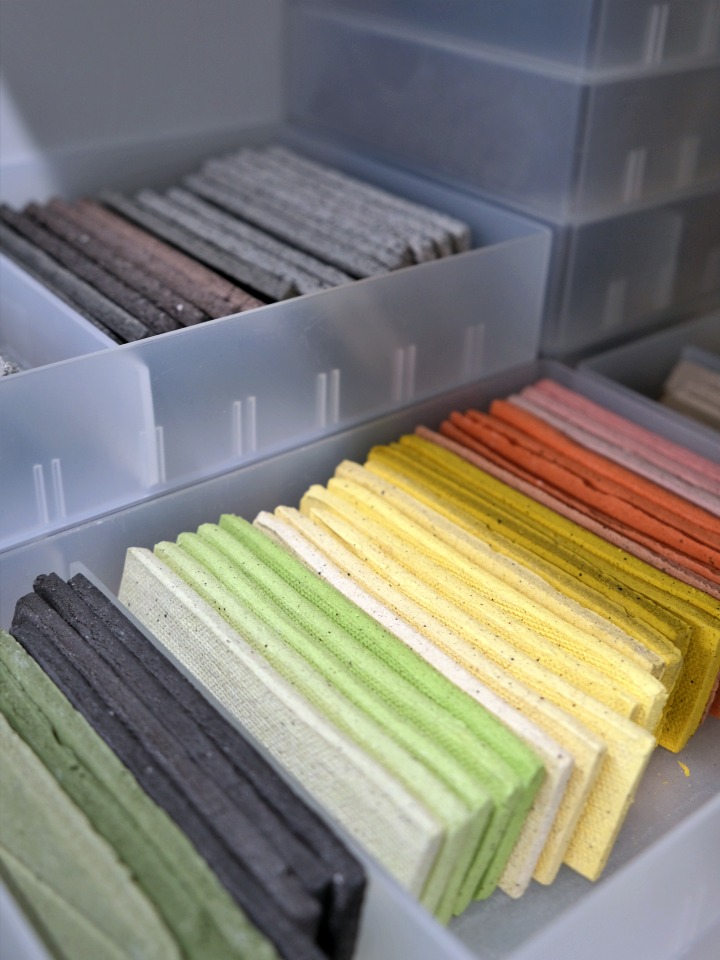
Discarded ceramics are crushed and then sifted, separated by grade from the finest powder to fragments too coarse to reuse. The finely ground powder has no plasticity on its own, so it must be mixed with clay. The coarser fragments are set aside for further research into other uses. This is how ANU reprocesses discarded ceramics into new products. The finished planters are sometimes sold already planted with well-suited plants like cacti, Peperomia albo, and Myrio cladus. Taking its name from the Korean word for “comfortable home” (安宇), ANU is a brand that makes products meant to make spaces—and the planet—feel comfortable and cozy. At the same time, it's a brand that invites us to think again about clay, which can never be undone once fired in a kiln, and about the discarded ceramics that never decompose.
What made you start ANU?
Ahn Yongwoo (hereafter Ahn) We've been close since freshman year, all design majors—well, technically we're graduating-class friends.(laughs) I and our CTO Kim Jeongyeop studied ceramics, while our CPO Na Wonho studied industrial design. We worked together on a few projects during our undergrad years and found we made a pretty good team. As graduation approached, I told my friends, ‘I'm thinking of doing this—want to join me?’ and they said yes without much hesitation.
Na Wonho (hereafter Na) I had a lot on my mind while preparing for job hunting. I wanted to try something new, and Ahn's proposal was appealing.
How did he pitch it to you?
Na At first, the mission given to us was ‘upcycling discarded ceramics.’ Since I studied industrial design, I'd only ever made mock-ups—I'd never actually made a product meant for sale. My friends who studied ceramics, on the other hand, had plenty of hands-on production experience from their undergrad days. I think that's why we were able to get such a good response when we first introduced our products to the market.
Ahn During our first year after launch, we were able to keep testing consumer response by quickly adjusting our color lineup and shapes to match demand. I think the hands-on production experience we gained at school really helped.
What's it like working with friends?
Ahn Having clearly divided roles has been mostly a good thing. Since each of us makes decisions independently in our own area, there haven't really been any major conflicts. I direct the overall design and planning, while the production team handles manufacturing and finishing the products.
Na Since we started with the idea of growing into an actual company, there's a lot to do besides just making products. I mainly handle operations—accounting, distribution, sales, external communication, and writing business plans for investment.
What got you interested in upcycling discarded ceramics?
Ahn While in school, I saw countless pieces that were ruined during work or left unsold at bazaars. Discarded ceramics get gathered up, smashed, and thrown away. Seeing that happen over and over made me feel guilty. Once clay is fired above a certain temperature, it doesn't burn or decompose—it just gets harder. My classmates and I used to joke that ‘ceramics is the art of endlessly making trash that never decomposes.’ Our department alone uses about 7 to 8 tons of clay a year, and not all of it becomes finished products. Even if you estimate the waste rate at a conservative 10 to 20 percent, that's still at least a ton of waste every year. It occurred to me that discarded ceramics could actually make a great raw material.
How did it feel when you got your first order?
Ahn At first, we ran a crowdfunding campaign for a Christmas-themed potted plant package. We hit 1,000 percent of our goal. Sure, some of that came from friends and family, but over 50 percent were new customers. Even we were surprised.
Na We'd told backers shipping would take a week after the funding ended. Not wanting to disappoint anyone, we wanted to ship everything within a single day. It happened to be winter too, so we had to make sure the plants wouldn't freeze in transit. We ordered the wrong packaging materials and even ended up using intercity bus courier service. It felt like shooting a spy movie.(laughs)
Your project with the Yanggu White Porcelain Research Institute was memorable too. What led you to repackage and resell the sand-clay pots made in Yanggu?
Ahn Four years ago, craftspeople at the Yanggu White Porcelain Research Institute ran a project making planters from Yanggu sand. Since they were only sold for a limited time, apparently a lot of inventory was left over. That stuck with me. The surface created by combining Yanggu sand with good clay has such a distinctive character. With handmade clay pots recently gaining attention, I thought it was the right moment to showcase the Yanggu sand pots. When we reached out to the institute, they agreed without hesitation. I felt it was a chance to spread the word about Yanggu sand and the craftspeople's passion.
Why is Yanggu famous for white porcelain?
Ahn Yanggu has fine clay that's excellent for making white porcelain. In the past, clay was mostly sourced from Jeollanam-do or Gyeongsangnam-do, but transporting it all the way to kiln sites in Icheon or Yeoju, Gyeonggi-do wouldn't have been easy. Instead, people started using porcelain clay from Yanggu, transported along the Bukhangang River. That's how Yanggu porcelain became famous. These days, I hear there isn't much clay left in Yanggu either.
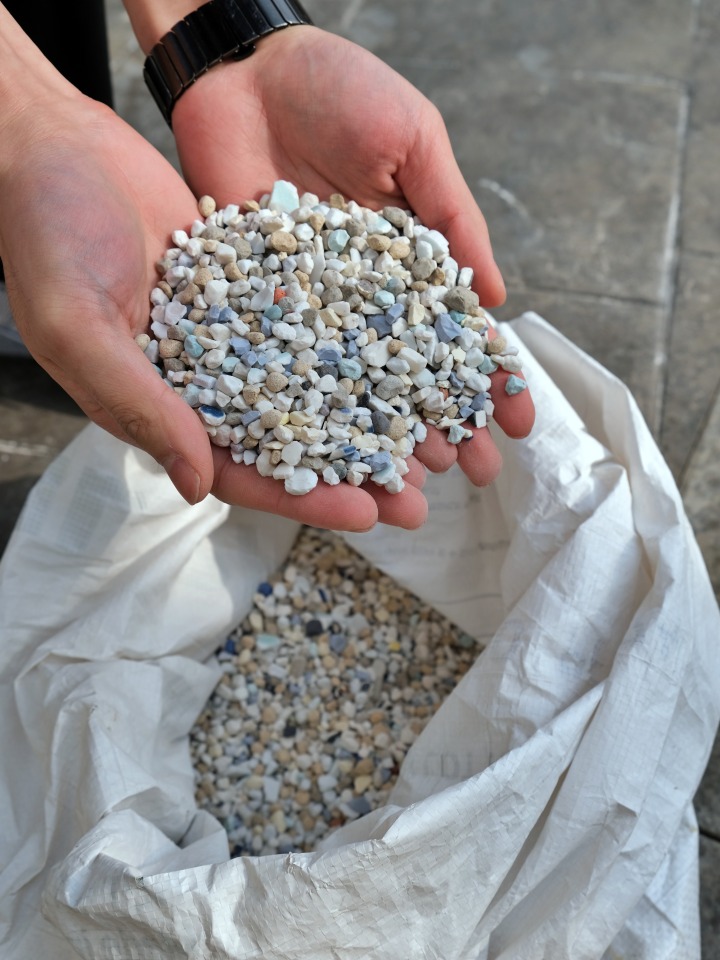
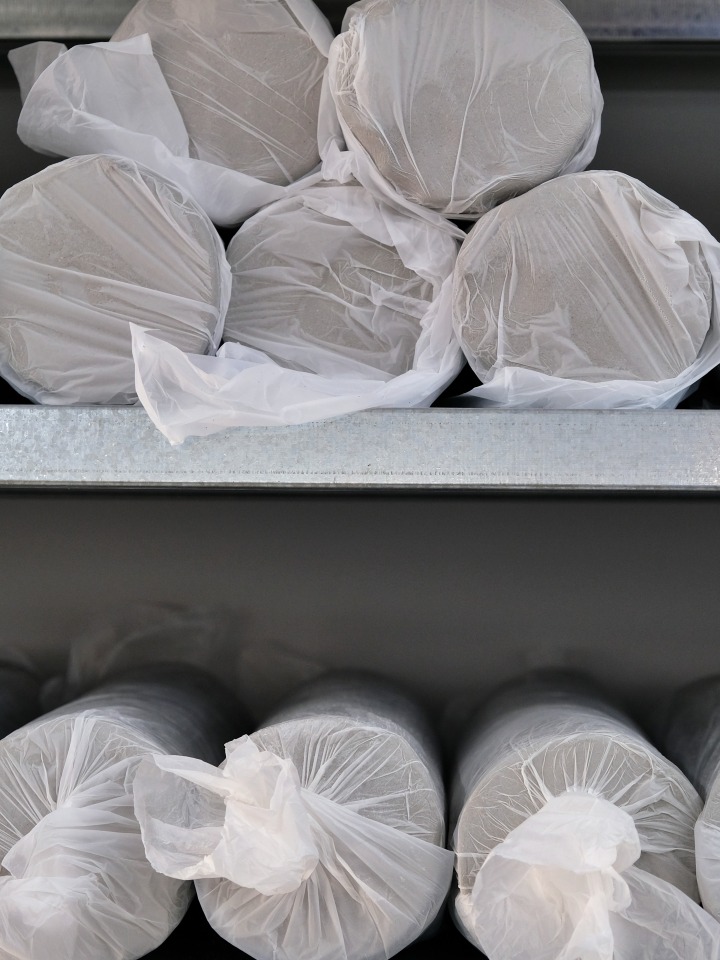
Making products from natural materials seems good for people, but not necessarily for the environment.
Ahn In a way, ceramics are basically a long-lasting disposable product.(laughs) At school, our professors always taught us, ‘if you think it's going to fail, don't put it in the kiln.’ Once something's fired, it becomes trash you can't do anything about, which is tricky for students who grow through trial and error.
Na We've set up a system to collect products back if they break or develop defects while in use. Through the ‘Reporcelain Project’ on our website, people can request pickup of discarded ceramics from homes, schools, or factories.
You're also running a campaign to collect discarded ceramics together with the refill station Almang Market.
Na The CEO of Almang Market reached out to us first. When we launched the brand, we weren't trying to lead with ‘eco-friendly’ messaging—we wanted people to buy our products because they're beautiful. But we increasingly felt it was worth emphasizing discarded-ceramics recycling more, since it's something only we do, and do well. We wrote up a post about what we do and what our philosophy is, and shared it on social media—it got a great response. That's actually how the Almang Market CEO found us.
Ahn We'd also been thinking about how we could collect discarded ceramics from households. We figured using zero-waste shops in each region as collection points would work well, so we formed a partnership. Customers can request pickup directly through our website (they just cover shipping), or bring items to a zero-waste shop in person. Our goal is to automate this system as much as possible.
Why did you choose planters as your first product?
Ahn I thought it was the product people would accept most readily when made from recycled ceramics. Since planters are home décor items that don't come into direct contact with the body, I figured consumers would accept them without hesitation. From a designer's perspective, it was also a product where we could add aesthetic playfulness and detail.
Na This summer, we're planning to launch tableware—everything from cups to plates. Stay tuned.
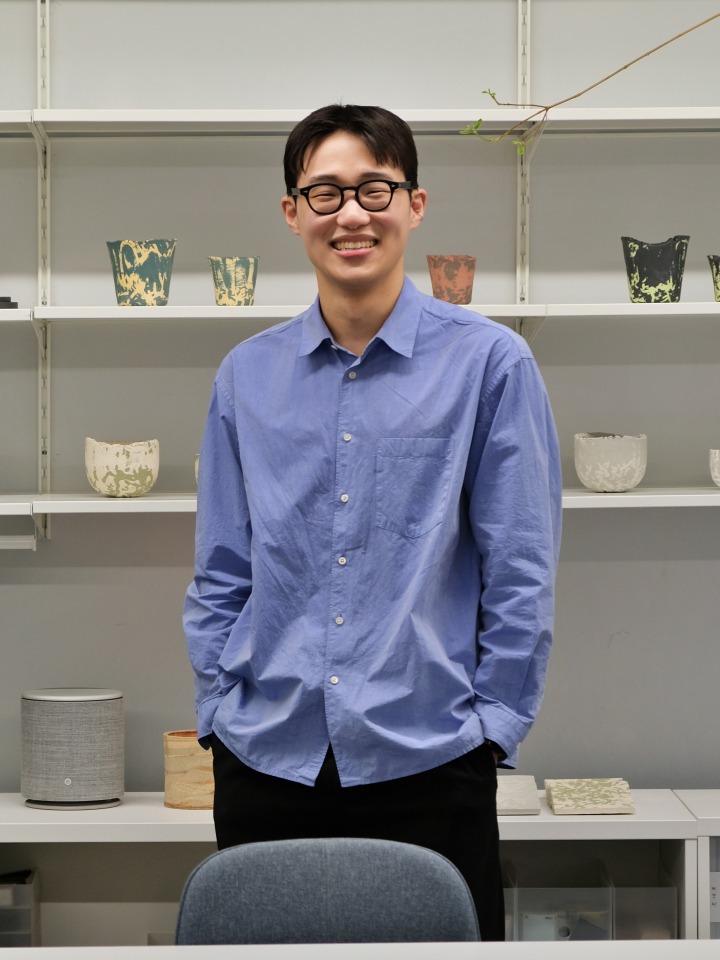
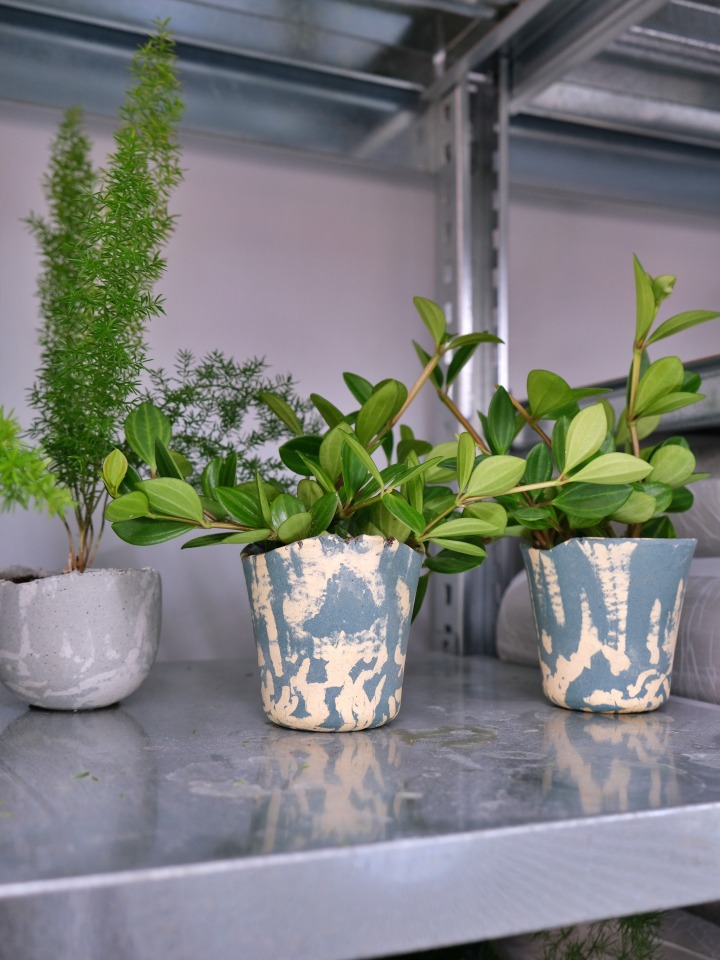
Where did you last travel to?
Na I went on a trip to Andong, Gyeongsangbuk-do, with friends. We stayed a night in Hahoe Village, and it was a real chance to unwind, away from screens and noisy buildings. There was more to see than I expected, but the villagers left the biggest impression. Everyone we met would ask, ‘Have you been here? Have you been there?’ and go out of their way to recommend places worth visiting. The unpretentious atmosphere and warm-hearted villagers stayed with me.
Do you have your own sustainable habits when traveling?
Ahn I don’t buy bottled water. I carry my own water bottle, or if I have no choice but to buy one, I reuse the same bottle afterward. Once I realized that water is one of those things you buy without thinking while traveling, I started making an effort not to purchase it.
Na I tend to pack a lot, like Doraemon. I bring the products I normally use and make sure to bring them back home with me as well.
Is there a destination you’d like to visit in the future?
Ahn Sweden, the home of IKEA and Fritz Hansen! It’s a place where everyday design objects are so highly developed, so I’d love to see firsthand what kind of products people use in daily life. While preparing Anu, we researched Nordic brands the most. Most domestic ceramic brands tend to pursue an Asian mood, whereas we wanted to combine ceramics with a simple, understated Nordic design sensibility. But not long ago, the owner of a plant shop in Taiwan told us that Anu’s products felt very Korean. That made me realize how differently foreigners perceive things — and that, since we’re Korean, Korean elements naturally come through in what we make.
I’m curious about the perspective on sustainable living that Anu proposes.
Ahn It might sound obvious, but I think the most important thing is using objects for a long time. Anu is also preparing to offer product guides focused on that — things like how to clean a pot that holds water, tips that help people use their products for longer.
Na When we collect discarded ceramics, we find that there are actually more perfectly fine pieces — just old, or brand merchandise, or items people simply got tired of — than pieces that are chipped or damaged. I’ve heard that some zero-waste shops even pick out items that have no reason to be crushed and give them away for free. I hope people consume more thoughtfully, choosing things that truly suit their taste and that they can use for a long time. Making products like that is exactly Anu’s goal.


