Trying Local Food in Cambodia — Chef Park Chanil's Journey Through Cambodian Cuisine
Chef and food columnist Park Chanil explores Cambodia's culinary world, from French-influenced fine dining at Topaz in Phnom Penh to Khmer classics like amok at Malis and the city's lively local markets.
Trying Local Food in Cambodia — Chef Park Chanil's Journey Through Cambodian Cuisine
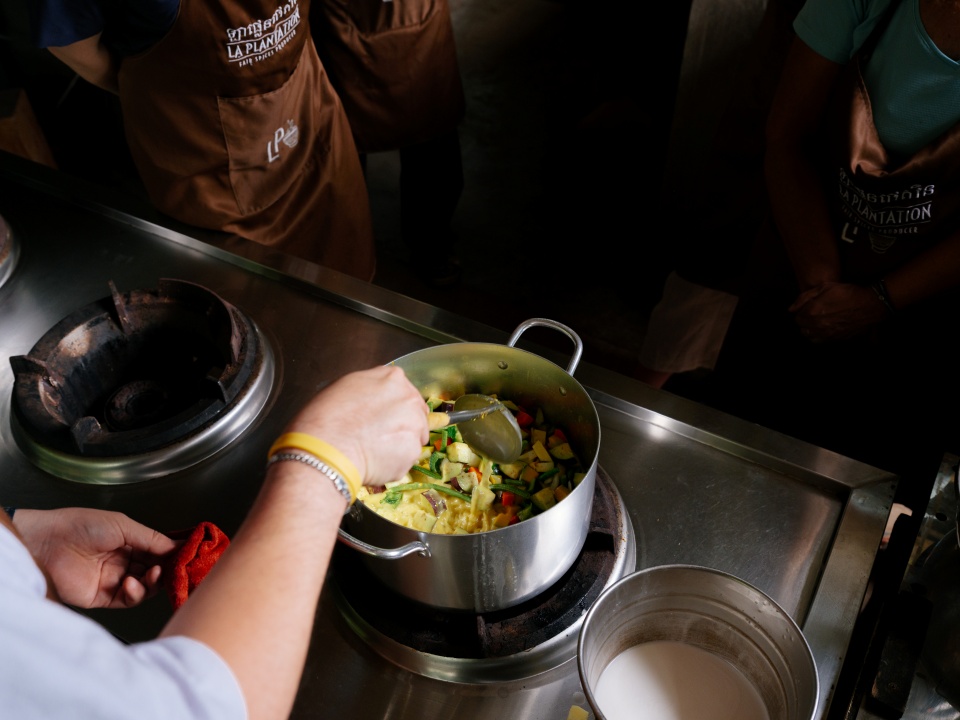
They were washing, trimming, and chopping vegetables. Gleaming metal cooking tools flashed in the Phnom Penh sunlight streaming in from outside. I said, “I think we’re going to eat very well.”
Words * Park Chanil
* Chef and food columnist. He studied creative writing in Korea and learned to cook in Italy. He currently works at Gwanghwamun Gukbap, writes about food and people, and occasionally appears on television programs.
Cambodia’s cuisine is rooted in traditional Khmer food culture. As in most countries around the world, new dishes take on a history of their own through cultural exchange with neighboring countries. Cambodia, as is well known, lived through long years of civil war and colonization, yet it carries the history of the proud Khmer Kingdom into the present. The era of French rule, as it turned out, had opened up an unexpected culinary space. It may make for a slightly radical piece, but I would like to begin by talking about French food in Cambodia.
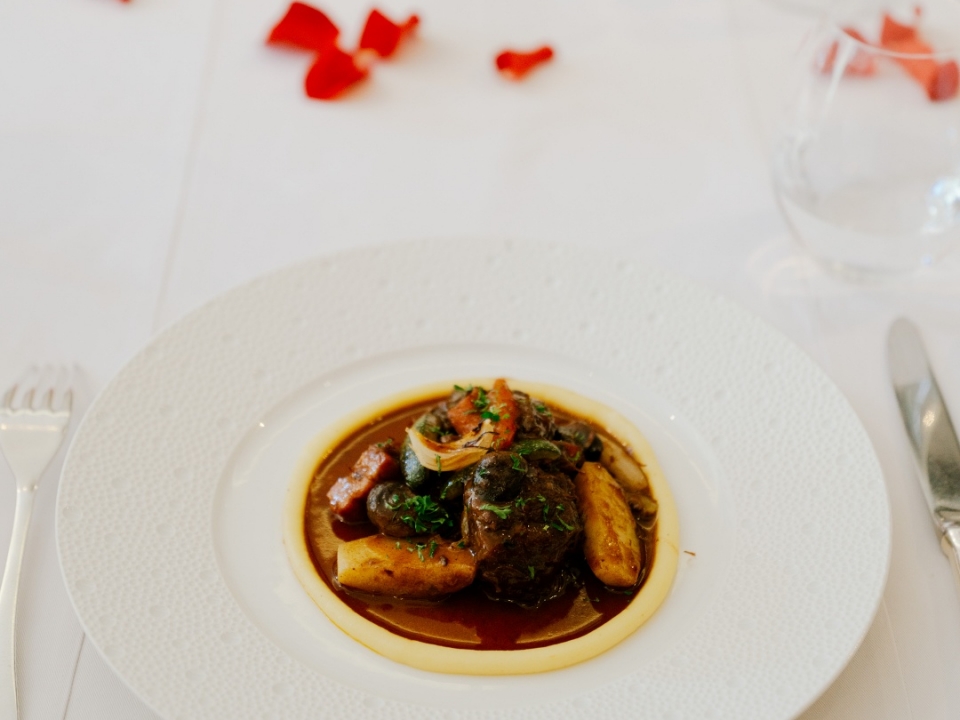
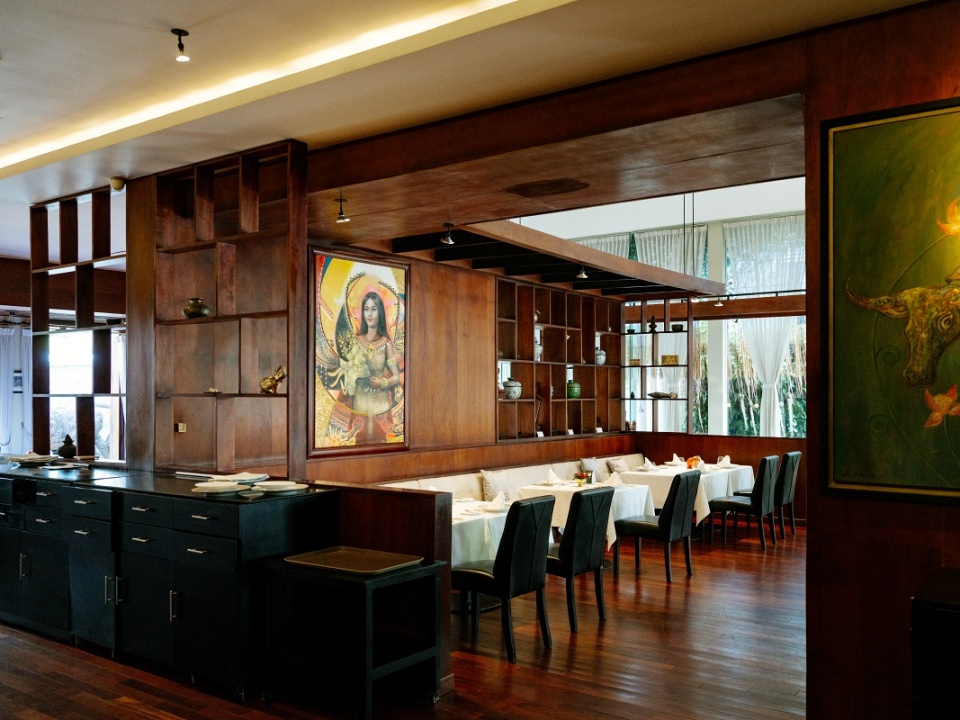
We enjoyed lunch at Topaz in central Phnom Penh. The service was elegant, composed, and refined, and the space was broad and well ordered, with a sense of room you won’t find in most of the world’s big cities. On the way to the room we had been assigned, I caught a fascinating sight. It must have been part of the kitchen: through a wide, clean window, a sleek, properly run kitchen lay in full view. As in any of the world’s top restaurants, young trainees and cooks who looked like commis (junior cooks who assist in the various stations of a kitchen) were working at what could truly be called ‘an invisible speed,’ following the directions of a seasoned female chef. They were washing, trimming, and chopping vegetables. Gleaming metal cooking tools flashed in the Phnom Penh sunlight streaming in from outside. I am a cook, and a scene like this is already enough to move me. My colleagues may not have understood that side of me, but I said so anyway.
“I think we’re going to eat very well.”
I meant it. You could even say the verdict had been reached from the expression of the staff member who greeted us at reception. When we first encounter that kind of service at a fine restaurant, our expectations swell. And sure enough, the dishes that arrived did not betray them. My colleagues and I said, “It’s a pity the Michelin Guide hasn’t come to Cambodia yet.”
To be honest about Topaz, I had no great expectations and not enough information. If anything, it was by seeing the quality of its service and food that I developed a deep affection for the place. Sadly, Alain Darc, who contributed to Topaz’s cuisine, passed away suddenly in 2023. Now his disciples, fully trained chefs, lead Topaz. Alain Darc, who hailed from France, was called ‘Papa’ in Cambodia, which tells you something about the life he lived and how he led Topaz. Alain came to Phnom Penh at the urging of his son, Arnaud Darc, who had been running restaurant businesses in Cambodia before him. He embraced Cambodian character and cooking that would have been hard to accommodate in French cuisine. It is a famous anecdote that he put on the menu a reinterpretation of amok, arguably Cambodia’s best-known dish. We happily tasted food marked by restraint, a deep understanding of ingredients, and flavors both complex and classic, all given Cambodia’s own aromas and colors. The moment I took my first spoonful of the soup that arrived first, I nodded. From the skill with duck and meat, to the starter topped with crab meat and caviar, to a pâté with perfectly balanced temperature and density, it all made me ask, “Why is there a restaurant like this in Phnom Penh?” That question was fully answered as I looked further into Topaz. Its beauty will be preserved by the Darcs, father and son, who loved, and still love, Cambodia more than anyone. The ASEAN-Korea Centre, which led this culinary journey, wanted to show that such exceptional places exist in many Southeast Asian cities. It succeeded admirably. It was more than enough. I decided to remember Topaz. If I may be so bold, should the Michelin Guide ever come to this country, many people will surely think it only natural that Topaz be the first to receive a star.
In any case, during the period of the so-called French protectorate (1863-1953), Cambodia took in bread culture such as the baguette (still sold everywhere, even on the street), a variety of European vegetables, and new ways of eating meat. Butter and coffee, of course, came too. The baguette is eaten as num pang, a sandwich filled with pickled vegetables and fish. Young people, naturally, also like it stuffed with sausage and all kinds of meat. Food traditions are bound to change. Phnom Penh still has the kind of everyday, working-class spaces we used to see and enjoy all over Southeast Asia, and the food is no different. Ordinary people enjoy markets and local eateries that are cheap, delicious, and interesting. So do tourists. Naturally, I go there. But before that, I wondered whether there might be a fine-dining restaurant that interprets traditional Cambodian cooking in an interesting way, much as we served hanjeongsik, or neat and tidy Korean meals, even before the era of development.
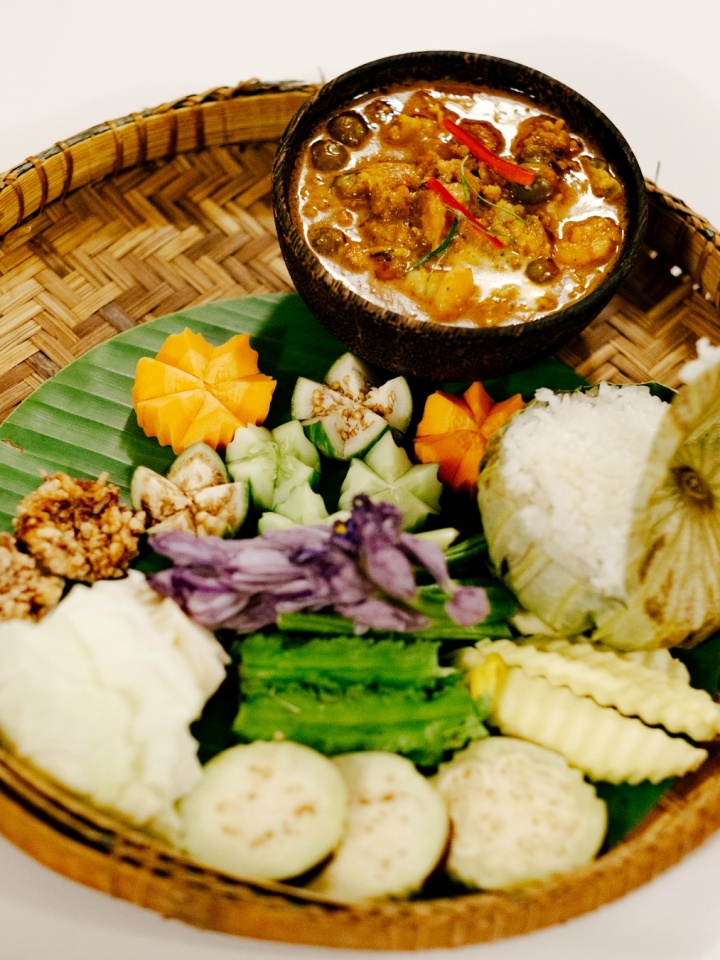
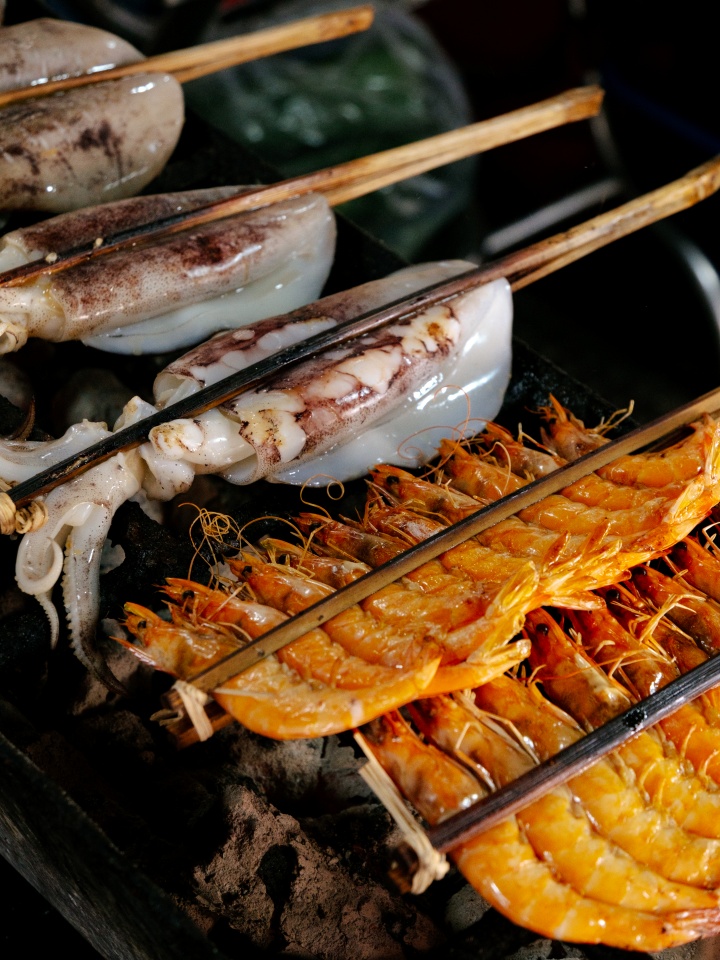
Malis, a long-established restaurant in downtown Phnom Penh that prepares traditional dishes with modern interpretations, is so popular that reservations are a must. The city doesn’t have many high-end local restaurants, which makes Malis all the more distinctive. English is spoken at Malis, and the staff have the essential service skills. I can tell Thai food from Vietnamese food, but I honestly lack the ability to distinguish the cuisines of Myanmar, Laos, and Cambodia. If you’re the same, this restaurant seems a good place to study Cambodian food. Pineapple fried rice may be a common dish found across Southeast Asia, but here it was stir-fried with great finesse, and the seasoning was careful. Phnom Penh sits on four important rivers. From the top of a high-rise, you can see their many branches. The rivers explain the city’s importance. Good seafood is hauled in from the sea near the rivers. Amok, one of Malis’s signature dishes, is of that kind. Amok doesn’t refer to a particular fish; it is generally made with a freshwater fish with a soft, creamy texture, like catfish, though meat can be used too. It is seasoned with curry and various spices, then steamed or grilled. You could call it Cambodia’s national dish. At the traditional markets around Phnom Penh, you can see vendors cleaning fish for amok on the spot. One more thing. The traditional markets sell fine lobsters, crabs, shrimp, and high-quality live fish. All of these ingredients end up in Malis’s kitchen. Cambodian chefs who have trained for many years handle the ingredients with great variety. I got the sense of a gentle, refined touch rather than anything aggressive, one that draws widely on traditional cooking methods and exotic European techniques.
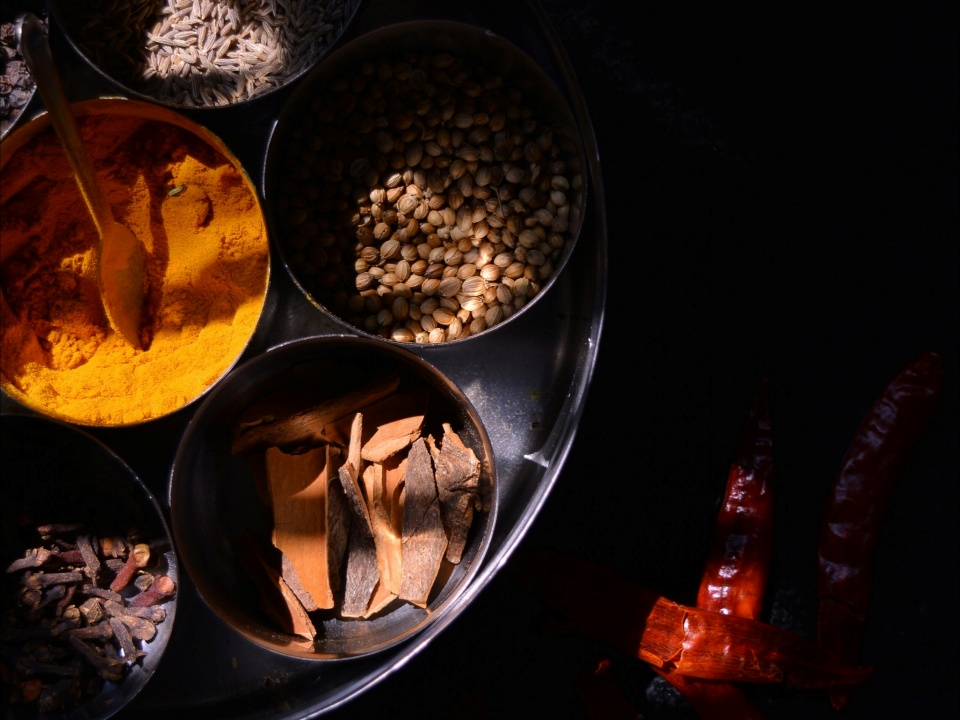
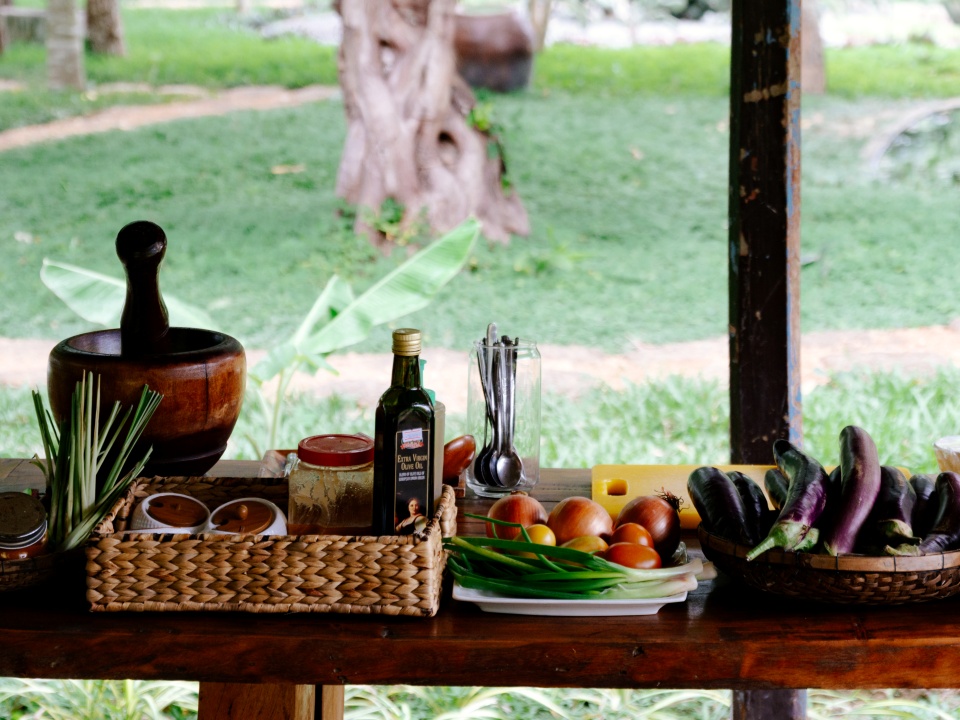
Being asked to name a few signature dishes of a country is, in truth, very hard. I am Korean, a chef, and a food columnist, and even so, could I name five or six representative dishes? Absolutely not. Yet someone has to answer that question, with a caveat, of course: “This isn’t everything. A nation’s food is like One Thousand and One Nights, a story that can go on endlessly.” Still, for readers outside Cambodia, I will try in good faith to explain this country’s signature dishes. First I should say that Cambodia is a kingdom of rich variety in meats, fish, seafood, vegetables, and herbs. I would add that its use of coconut milk, its many fermented fish sauces, and its herbs is moving in its own right. Ah, and one anecdote from before I left. As a country in which to look for ingredients, whether to give to friends in Korea or to use in the dishes I research, Cambodia was truly wonderful. Supermarkets and markets were full of fascinating ingredients. I bought coffee, tea, nuts, rum, and canned beer from local brands (of course!).
What interested me most was fermented sauces like prahok. Korea has similar things, as does every other Asian country, and so does Italy. But Cambodia’s own version has to be bought right here! At a supermarket, I asked a staff member to recommend a good prahok. Using every word he could muster, he spent a full 30 minutes recommending his country’s good fish sauces to this foreigner and urging me to buy one. He was a truly wonderful young man. I will long remember Phnom Penh’s perfectly cool air, the relaxed yet dignified smiles and manners of its people, and the friendly smiles of the monks, and I have to add that young man at the supermarket to the list. Thanks to him, I bought no fewer than four kinds of fermented sauce. They are still in my cupboard. I plan to open them one by one, taste them, and cook with them. After that, I will write to you again to share their flavors. Ah, and one thing I remember clearly. When travelers see prahok, they tend to bring up its similar neighbors, nuoc mam or nam pla (nuoc mam is the Vietnamese fish sauce, nam pla the Thai one). It is not a way of conversing that I would recommend. Cambodians consider prahok the best (naturally!). This kind of patriotism delights travelers, because Cambodians will eagerly teach them more and show them how to enjoy it even more.
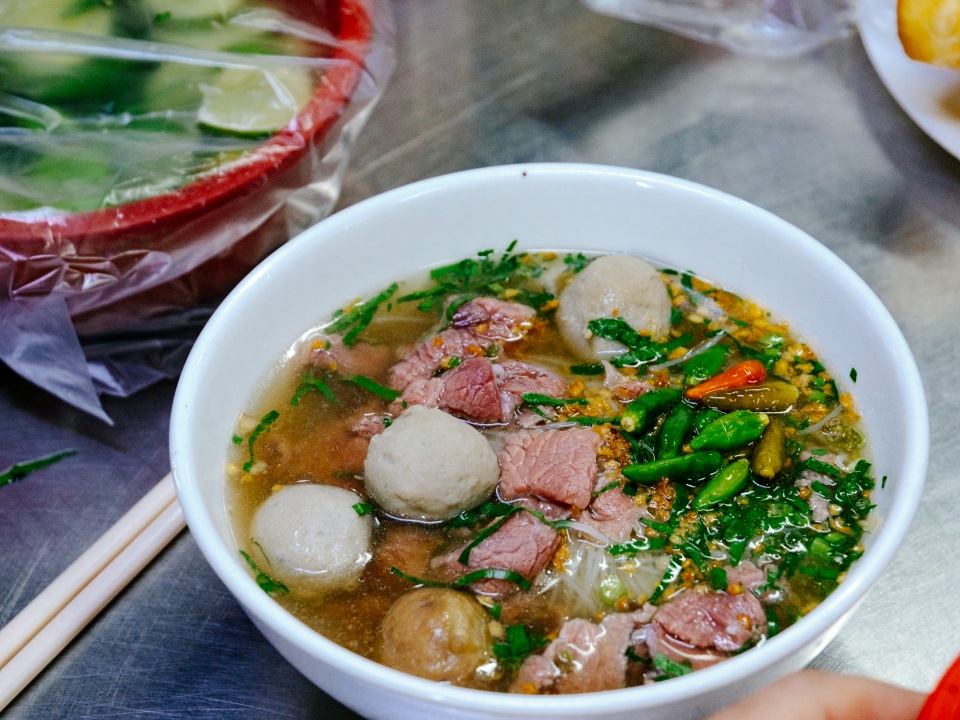
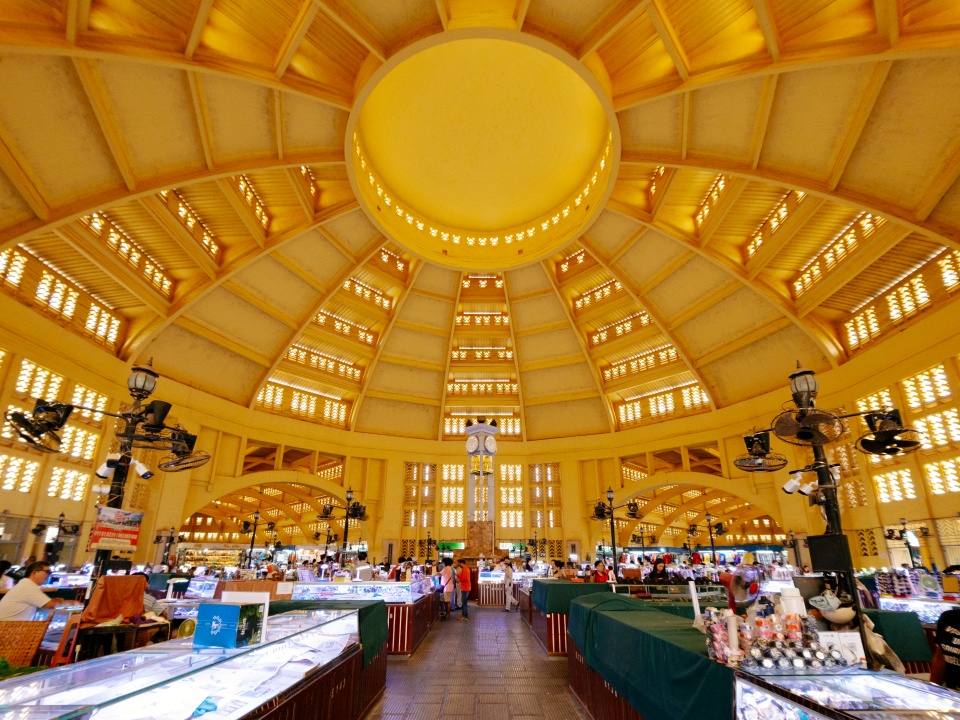
Ah, I was just about to introduce Cambodia’s wonderful signature dishes. As I said earlier, they are the various dishes made with amok. It is said to have originated in this land’s kingdom in the 13th century, so let us keep that history in mind. Next is bai sach chrouk (pork and rice), a pork rice bowl eaten mostly in the morning. The pork is presumably marinated in fish sauce, and its aroma soaks in deeply, giving it excellent savory depth. Before long, I intend to put a pork rice bowl in this style on my own menu. It is all the more endearing because you can buy it on a market street. And of course, how could we leave out nom banh chok (rice noodles with fish gravy)? Many visitors to Cambodia, as in other Asian countries, will expect noodles in a warm broth with real character. Korea has janchi guksu (banquet noodles), kalguksu (knife-cut noodles), and its Koreanized jajangmyeon. Japan has udon and ramen. So how could one skip the vast, cosmos-like world of Southeast Asian noodles made from rice and wheat? If so, Cambodia is the ideal place. They come topped generously with herbs and vegetables, and you can add whatever ingredients you like. At a noodle shop in Phnom Penh’s Central Market, I saw a wonderful flower. It is a flower you put into the food and eat, but I couldn’t catch what it is called in the local language. The flower is edible, and its fragrance and taste resemble the acacia blossoms I ate as a child in Korea, which made it feel all the more familiar. I looked up its scientific details and found it. It is a flower called sesbania. A flower you eat in your noodles!

We stopped at restaurants in several Cambodian cities, and we drank beer, too. I am a beer fanatic, so wherever I go, I study the local beers. Besides the Angkor brand, Cambodia produces several other good beers. You can easily find them in any town, and they are cheap. At local pubs they were selling for only about 1 dollar. Ah, what a blessed country! And they tasted good, too. Angkor beer, produced since 1995, is a very clean, easy-drinking brew with a faint note of rice. Its alcohol content is not high, either, which makes it a good companion for taking in a Cambodian night slowly. If you can drink it at a pub that serves grilled seafood, all the better. If you like, you will find countless pubs on the streets, differing only in scale (a street stall is a kind of pub, after all). If you come across Bayon beer, better still. Angkor is widely available, but Bayon has a stronger personality. The beer named after the capital, Phnom Penh, is also excellent. Any beer enthusiast must try it. In fact, even if you are not one, you should, of course, whenever you eat Cambodian food.