The Way of Saving Our Sea — Protecting Our Ocean Through Small Actions, Small Action
Small Action’s CEO Jeong Taeyeong on the power of small practices in protecting the seas beyond Mokpo, across the coast of Jeollanam-do.
The Way of Saving Our Sea — Protecting Our Ocean Through Small Actions, Small Action
The most important attitude in overcoming the climate crisis is believing in the power of small practices. Isn’t this precisely the message that Small Action, a brand born to protect the sea, is trying to convey?
Interviewer Parc Jinmyoung
Interviewee Jeong Taeyeong (CEO of Small Action)
I recently read an article about how the desertification of the seabed near Dokdo is being reversed. Excessive sea urchin proliferation was identified as the main cause of the destruction of kelp forests, and after divers and haenyeo (female divers) focused on removing the urchins, the underwater forests began to recover. A few months ago, the UN also announced that the ozone layer is on track to recover to 1980 levels by 2040. This is seen as proof that the Montreal Protocol, which came into effect in 1987 with a pledge to phase out the production and consumption of ozone-depleting substances, has been effective. Experts estimate that without this agreement, the Earth’s temperature would already be one degree higher than it is now. And that’s not the only hopeful news. Since President Lula took office in Brazil, illegal deforestation in the Amazon has dropped by more than 60 percent, as his administration made protecting the Amazon a core national priority.
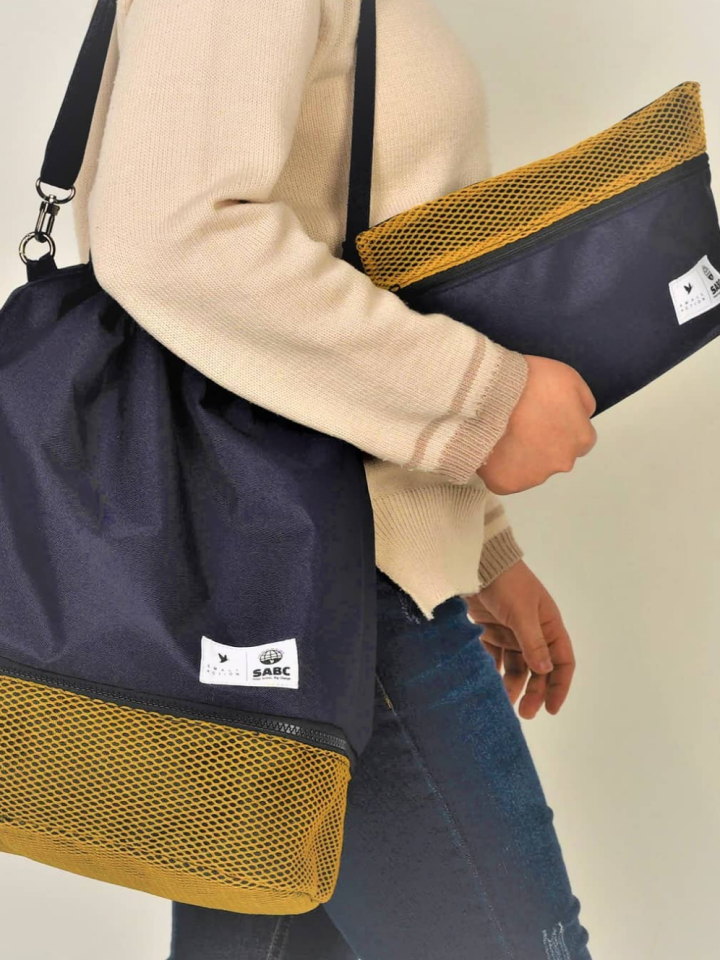
Every once in a while, news like this makes overcoming the climate crisis feel not entirely impossible. It’s probably from this very place that the upcycling brand Small Action began—rooted in the belief that even a small flap of wings can eventually return as a great wind. Small Action is a brand working to tackle marine debris, including the 200,000 tons of discarded fishing nets dumped into the ocean every year, through market-based solutions. It upcycles discarded fishing nets into lifestyle items like bags and pouches, and operates ESG-themed spaces, pop-up stores, and plogging centers. The brand also takes the lead in ocean cleanup activities and campaigns, practicing what it preaches. Even now, Small Action stays busy—body and mind—because of the discarded fishing nets still trapping and killing marine life beneath the waves.
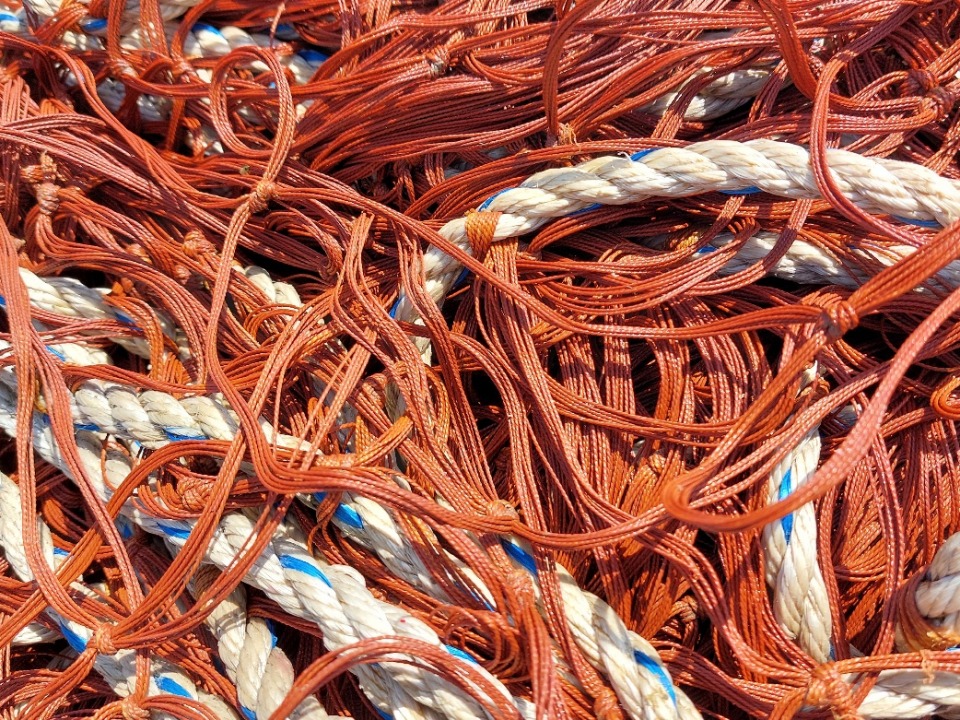
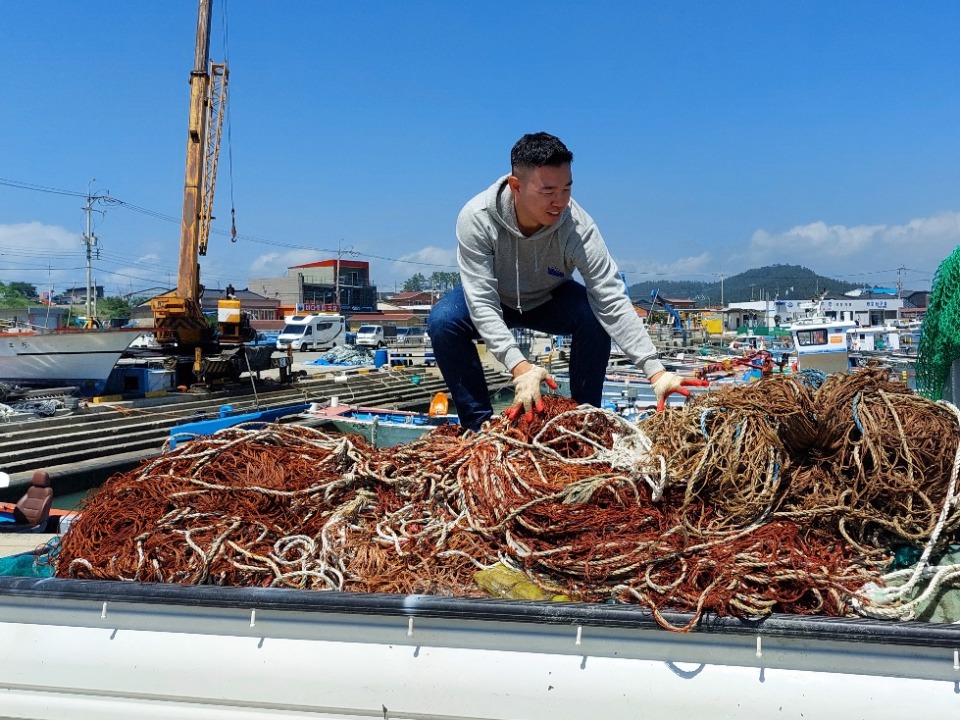
Could you briefly introduce Small Action?
We’re Small Action, aiming to be the ‘game sweeper*’ of the upcycling and recycling industry! ‘Game sweeper’ is a term I coined myself—think of it as the ocean version of a game changer, breaking every existing mold (laughs). *A ‘sweeper’ refers to someone who cleans.
What led you to launch Small Action?
It started as a gathering of three people who shared a love for the city of Mokpo and its environment. We were all working on urban regeneration projects. One day, while playing in the sea together, we came across a bird that had died after being pierced by a fishing hook, countless marine creatures tangled in fishing nets, and all kinds of disposable trash—and we suddenly started cleaning up. Later, we upcycled discarded fishing nets into bags and pouches and launched a crowdfunding campaign, which got a better response than we expected. After being featured on several broadcast media outlets, we gained confidence in this business. Looking back now, I think we dove in a bit recklessly, and the journey to get here hasn’t been easy. But seeing the business settle into a stable place makes me feel it was one of the best decisions of my life.
You’re delivering your environmental message through action. What are some of your representative activities?
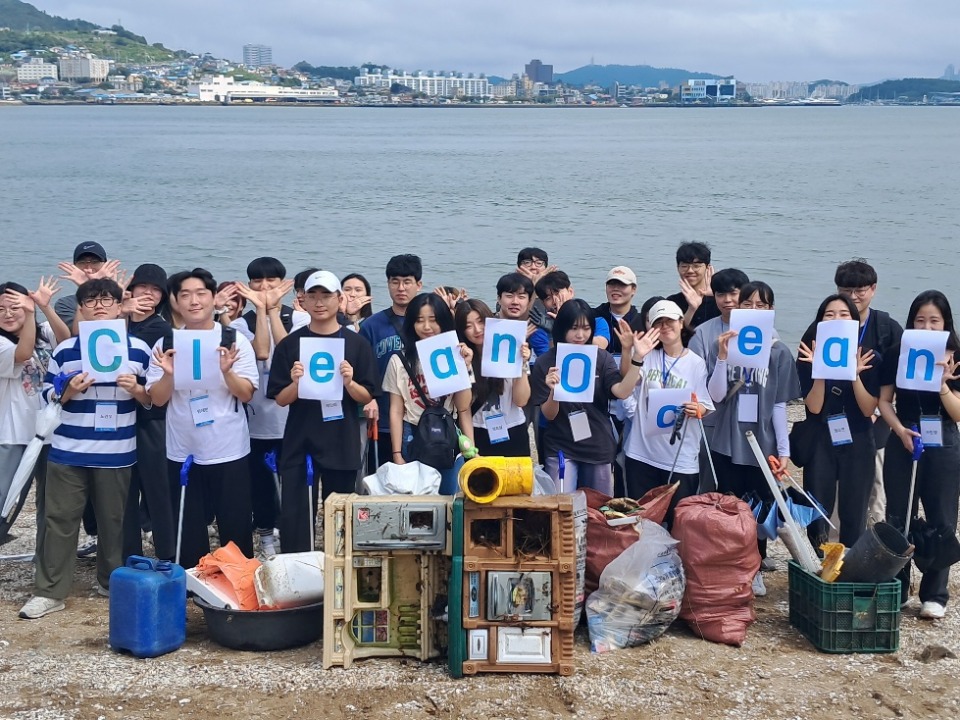
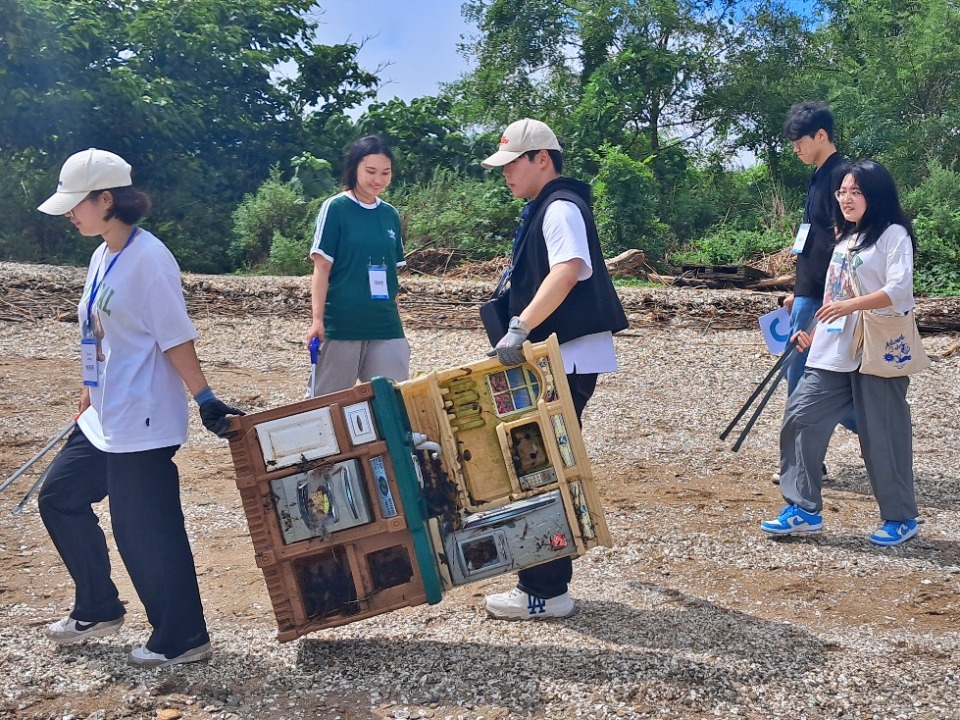
Since 2019, we’ve been holding plogging activities twice a month to pick up marine debris around Mokpo. After doing this consistently for about four years, more and more people recognize us, and local participation keeps growing. So far, about 20 local governments, public institutions, and companies have joined us, and now people are coming not just from Jeollanam-do but even from Seoul.
I believe the products we make by upcycling discarded fishing nets carry significant environmental value in themselves. Using our own patented technology, we plan to create a variety of products with a high proportion of recycled fishing net material. We’ll be unveiling them soon, so please look forward to it (laughs).
Is there a project that stands out most in your memory?
There’s something I’d love to brag about. We’re currently holding an exhibition titled “Daily Bread” at Jeonju Upcycling Center Dasibom. Themed around marine debris collected from coastal areas stretching from Mokpo to Jindo, Sinan, and Muan, I think it powerfully conveys—through both visual and auditory elements—just how serious the problem of large-scale coastal waste is, and what efforts have been made to solve it. It runs until November 2, so I hope many people come to see it.
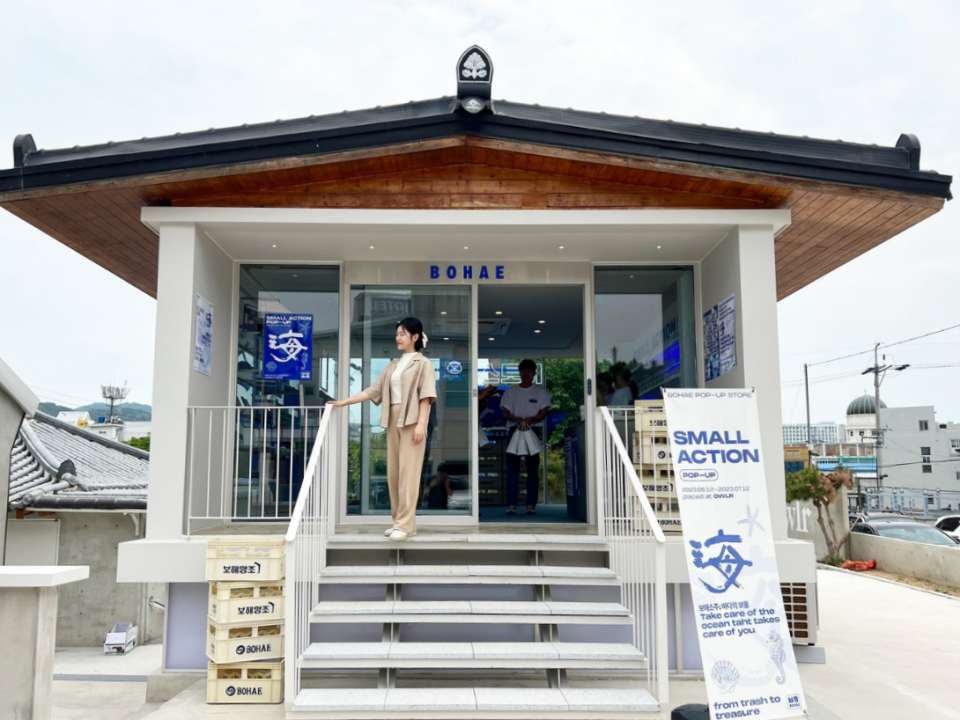
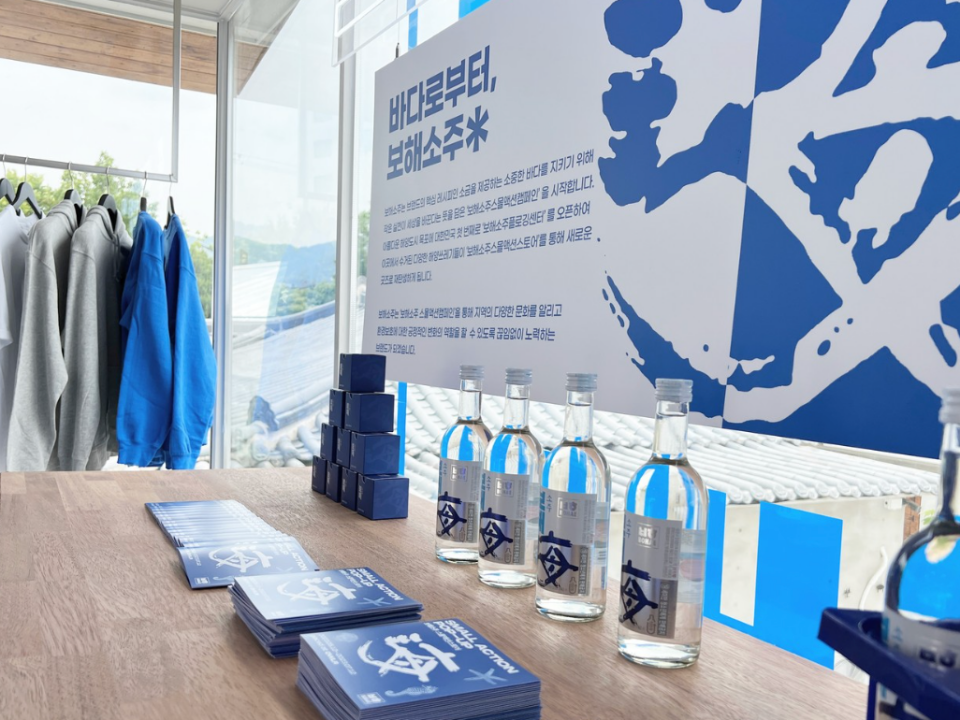
You recently launched the ‘Bohae Soju Small Action Campaign’ with Bohae Brewery. How did this collaboration come about?
Bohae Brewery, a leading liquor company in the Honam region, has shown consistent interest in us since 2021. Bohae Soju gets its distinctive taste from seawater instead of sugar, making it a brand inseparably tied to the ocean. In that sense, this was a meeting of two brands that both deeply care about the sea. We had previously collaborated on an upcycled bag and done a plogging event together once before. I think I’d always wanted to plan a project that would surprise both Bohae Brewery and the local community someday. That’s how we eventually came up with two ideas: ‘the nation’s first plogging center’ and ‘a coastal waste upcycling workshop.’ We were invited to Bohae Brewery’s headquarters to present our proposal and tour the factory, and I could really feel their eagerness to work with us—it was truly moving. Since this was the first time we’d developed such a large-scale project and submitted a full proposal, it means all the more to us.
As a result, the ‘Bohae Soju Plogging Center & Small Action Store’ opened in Mokpo this past May. How has the response been?
We were half excited, half worried, but the response so far has been enthusiastic. On opening day, the space was packed with visitors ranging from current and former city council members to representatives from universities, research groups, civic organizations, public institutions, and everyday citizens. Even now, we get many visitors from the Gyeongsang-do region, including Busan and Tongyeong, as well as from Seoul and Jeju. Sometimes dozens of university students come as a group, or public institutions and companies visit for ESG program tours and education.
I also think it’s meaningful that this project has drawn positive responses from local residents and merchants. In fact, locals might normally feel uncomfortable when a sudden crowd of people shows up, but instead, we hear a lot of kind words from them. We’re especially grateful to nearby merchants, who often cheer on people who view the exhibits at the plogging center and then head out to go plogging with the equipment provided there. I think this reflects just how much Mokpo residents value—and worry about—the sea.
What does Mokpo mean to you personally?
It’s a place that has been with me through some of the most important moments of my life. Although I wasn’t born here, this is the city that shaped the life I live today. When I first arrived five years ago, with no connections to the area, this city made me—someone who had been doing urban regeneration work in Seoul—want to throw myself in completely and grow here. I think the same was true for the other team members who had been doing urban regeneration work elsewhere.
In the early days of the business, we were just barely getting by day to day. I believe we’ve made it this far because the people of Mokpo embraced both me and this company. Going forward, Small Action will continue to grow together with the local community, centered around the sea of Mokpo.
I hear a travel program is coming soon.
We operate a workation lodging space called ‘Seven Days Retreat’ (Sederi for short). We’re planning to launch a program there that offers seven days of restorative insight. It will guide guests to secret spots even locals don’t know about, and create natural opportunities to connect with people working at the forefront of local and ESG industries. It’s meant to be a week that brings rest and inspiration not just to the body, but to the mind as well.
Could you recommend three places in Mokpo?
First, I'd like to recommend Borimadang and the nearby coastal road. It's also where our accommodation, ‘Cederi,’ is located, and it's a perfect spot to take in views of both Mokpo's sea and mountains at once. From here, you can pass by Yeonhui-ne Supermarket, one of the filming locations for the movie “1987,” and head over to Sihwa Alley, which is full of places worth visiting. Just five minutes down the sloped alley, you'll find Small Action's main plogging spot, a lovely café called Dalmonto, and a coastal road where you can stroll past various seafood and fishing gear shops.
Next is the Modern & Contemporary History and Culture Street. Among the alleyways, buildings and historic sites built during the Japanese colonial era blend with contemporary-style shops. It's a great place to spend time in a café with a strong local vibe, and you can also visit the hill where General Yi Sunsin's barracks once stood, as well as the study room where former President Kim Daejung once studied. Especially at the barracks, where you can see ferries bound for Jeju in the distance, you really feel that this is a port city (down in the market alley below the barracks, you'll find Small Action's plogging center).
Lastly, I'd like to introduce Peace Square. It offers the most open view of the sea in all of Mokpo, and it's a great spot for a morning jog or an evening stroll. It's also a beachside spot where lots of young people gather. I sometimes used to drink alone here myself. It recharges me, and somehow makes me want to suddenly go on a trip. You could say it's a place where travelers can become locals, and locals can dream of being travelers.
Could you share your future plans or goals?
We don't just want to make products—we want to become a brand that classifies accumulated marine debris like a material bank, using some of it for exhibitions and some as upcycled or recycled materials. We hope the spaces we operate can be places where people can purchase genuinely meaningful products, and also serve as wonderful travel destinations in their own right. Imagine spaces like this existing along every coastline across the country. That future is exactly what Small Action is aiming for.
What impact can small actions have on the future? We're curious about the future Small Action envisions.
We want to achieve growth that makes the name ‘Small Action’ feel almost ironic—because countless small actions, piled up together, can create enormous change. In the near future, we plan to process all of the discarded fishing nets generated each year, leaving nothing behind. In the long term, we hope to expand projects across various fields—exhibitions, product manufacturing, sales, tourism, and spaces—all in the Small Action style.