The Traveling Healing Master, Azusa Segawa
An interview with Azusa Segawa, a Japanese-born healing master who has offered authentic wellness experiences to travelers around the world. She talks about Taoist practice, Chiang Mai, and her New Year routine ahead of her visit to Four Seasons Resort The Nam Hai.
A Wellness Practitioner, Azusa Segawa — The Traveling Healing Master
Azusa Segawa, a Japanese-born healing master, has met travelers from around the world and offered them authentic wellness experiences. At the end of this year, she will visit Four Seasons Resort The Nam Hai to present her original healing program. We asked her, “What is your New Year routine?”
Interviewer Pyo Youngso
Interviewee Azusa Segawa
In collaboration with Four Seasons Resort The Nam Hai
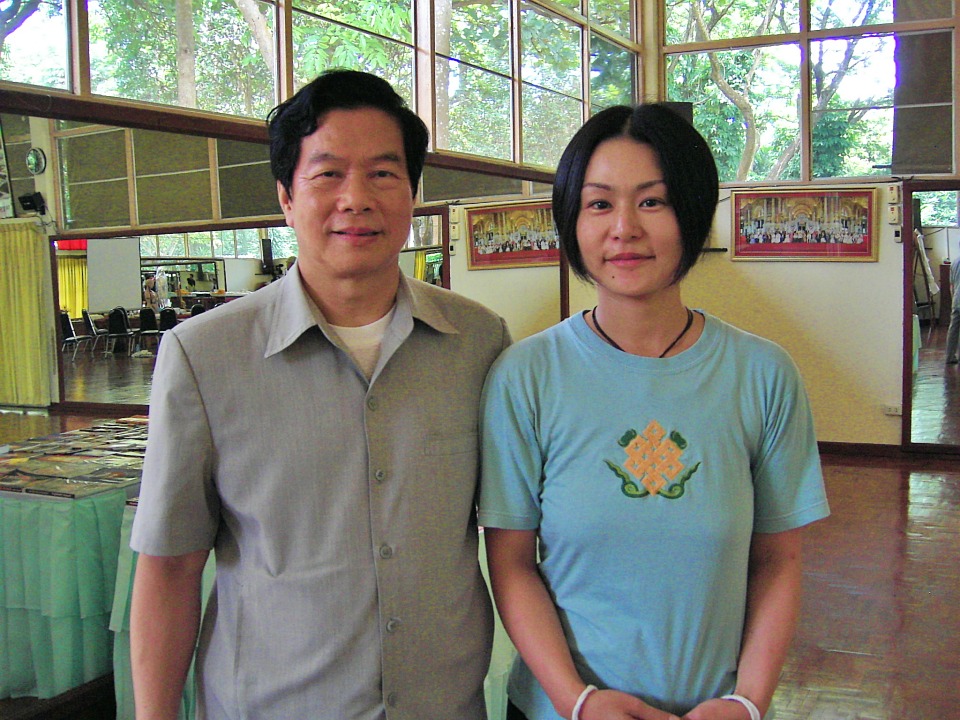
Could you briefly introduce yourself?
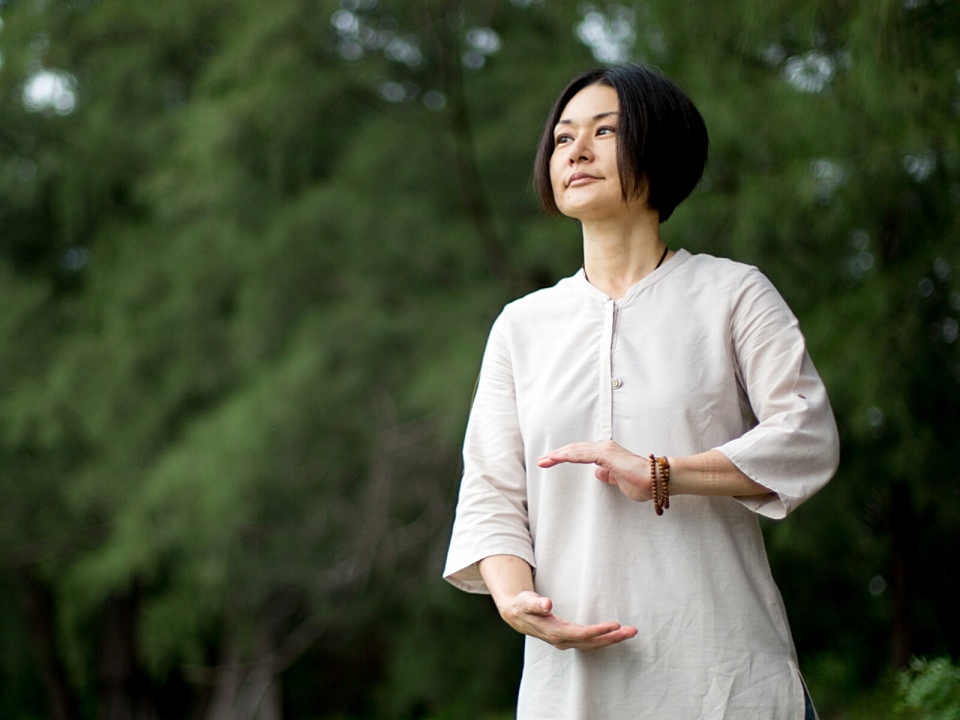
I work as a healing practitioner and collaborate with a variety of resorts and hotels. My specialties are Chi Nei Tsang, a traditional abdominal massage that originated in ancient China; Reiki, a healing method developed in Japan in the early twentieth century; and Thai bodywork. Honestly, being called a “healing master” still feels a little awkward. (Laughs)
Was there a particular moment that first got you interested in wellness?
It’s a long story. I used to work as a graphic designer in Tokyo. I worked late almost every night, always chasing deadlines. I enjoyed the work itself, but my work-life balance was a complete mess. Eventually I developed mild depression and felt emotionally numb. I realized things could get truly dangerous if I kept going like that, so I started learning yoga, which I’d been curious about for a while. It became the turning point in my life. I quit my job right away, gave up my apartment in Tokyo, and left for India to study yoga properly. I spent a little over a year there, staying at several yoga ashrams. I think everything really started then.
I heard you studied Taoist practices with a Taoist master at Universal Healing Tao in Chiang Mai, Thailand. What are Taoist practices?
I originally went there because I wanted to take the Chi Nei Tsang course. Once I arrived, I learned that Chi Nei Tsang isn’t just a set of practical techniques. It’s a discipline in which 1qigong, diet, and Taoist philosophy are deeply interconnected. While I was in Chiang Mai, I practiced various exercises, including qigong, every morning with the Taoist master 2Mantak Chia as part of my training. Some of the practices, like swallowing saliva or burping, may seem unfamiliar to most people. Taoist practice isn’t simply exercise for health or physical conditioning. It’s a holistic approach that seeks harmony among body, mind, spirit, and nature, which is what we call the Tao.
1 : A traditional East Asian practice for cultivating qi, or vital energy.
2 : Born in Thailand, he teaches Taoist practice and energy healing in northern Chiang Mai.
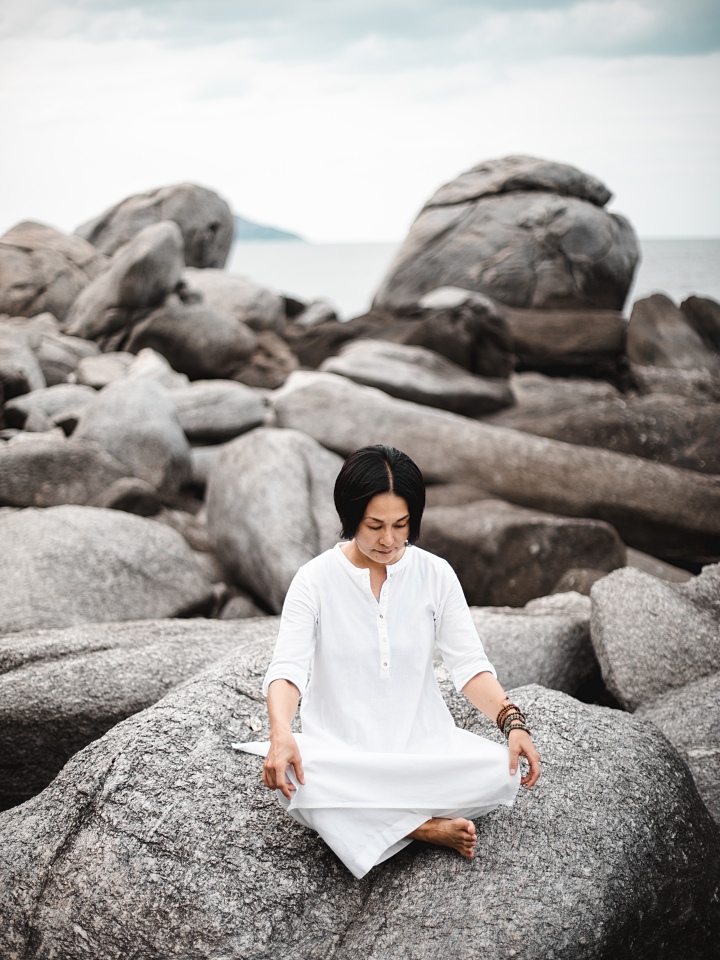
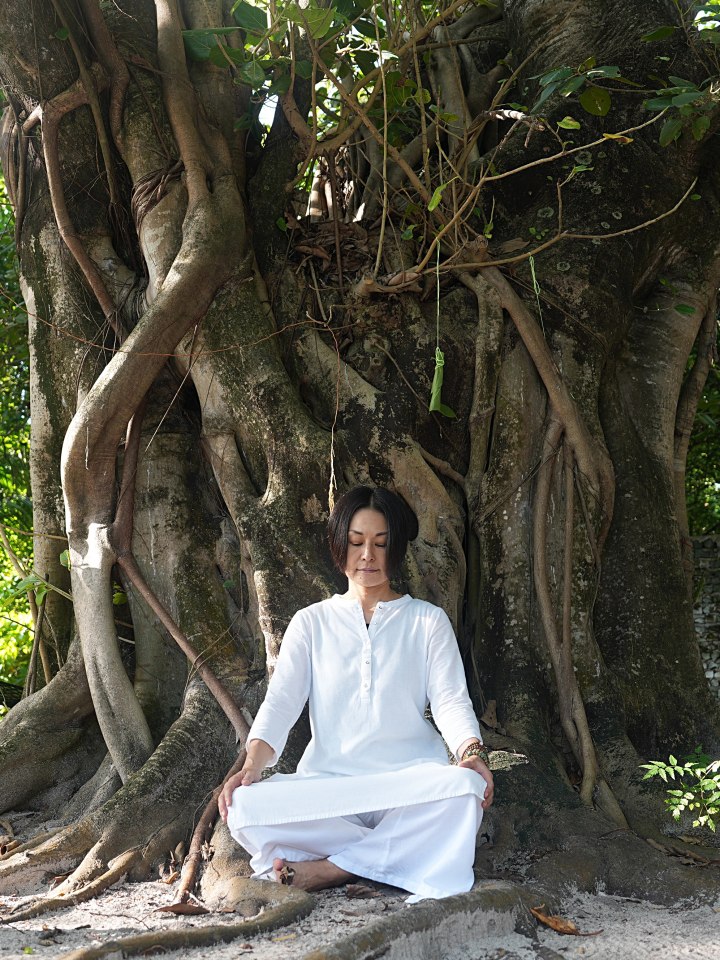
How long did you stay in Chiang Mai, and what was the experience like?
At first I stayed for about a year and learned traditional Thai massage. After that, I would stay two to four weeks at a time to study Chi Nei Tsang. I still go to Chiang Mai all the time.
You have also studied meditation, Buddhism, and yoga, and you offer therapies from Japan, Thailand, and other places. Why are you drawn to such a wide range of healing styles and practices?
It started with yoga. As I kept practicing, I became interested in meditation, which is part of yoga. Through yoga I felt a special connection to Thai massage, and eventually I found Chi Nei Tsang, which had a profound influence on my life. My family had always followed 3Shinto, Japan’s folk religion, but after I moved to Thailand I began to feel the presence of Buddhism in daily life, and I became interested in it as a philosophy. I believe everything is connected, and everything happens for a reason.
Of all the famous resorts you’ve visited around the world, which one stays with you most?
Chiva-Som International Health Resort in Hua Hin, Thailand, is special to me because it’s where I began my career as a Chi Nei Tsang practitioner. It’s a pioneer in the wellness resort industry. I had never worked in a hotel spa before, so it was an incredible experience. Every moment at Chiva-Som left a deep impression on me: the memorable guests, the professionalism and hospitality of the staff, and the kindness that is so distinctly part of Thai culture. Without the time I spent there, I probably wouldn’t be who I am today. I’m sincerely grateful.
May I ask where you’re from? How did the time you spent in your hometown shape your life now as a healing master?
I’m from Niigata, Japan, a region famous for its rice and sake. It’s about two hours from Tokyo by Shinkansen, and when I was little, I wanted to leave Niigata for Tokyo as soon as possible. I wanted to enjoy everything about the city, including the nightlife. So I can’t say the place where I was born had much influence on my life. (Laughs)
Where do you live now?
I have a home in Hua Hin, but I only spend two or three months a year there. My travel suitcase is really my home.
3 : A Japanese folk religion that holds that spirits dwell in all things in the world.
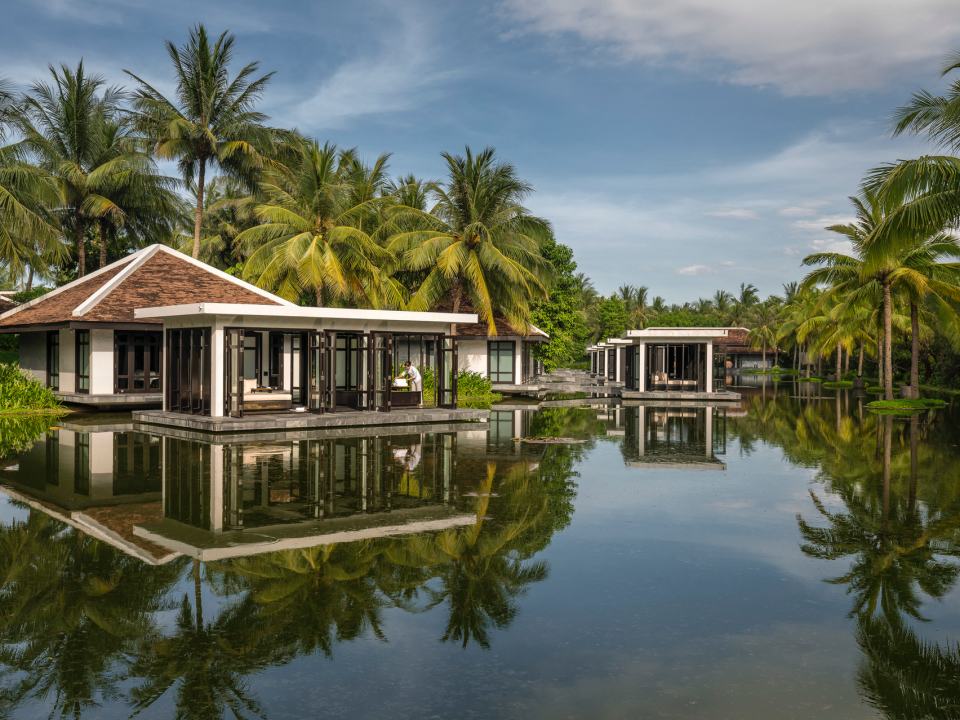
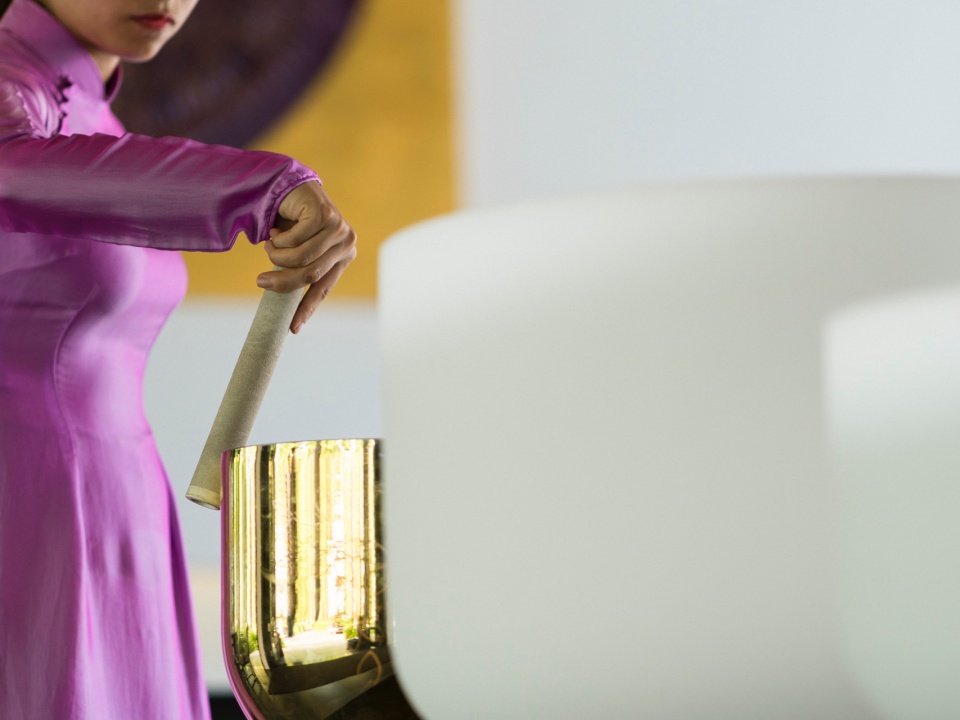
At the end of this year, you’ve been invited to Four Seasons Resort The Nam Hai to present a special program at The Heart of the Earth Spa. 4 What are you looking forward to?
Friends who have been to Hoi An told me it’s a beautiful place. This will be my first visit, and I’m really excited to spend the New Year there. Being invited as a healing practitioner, visiting a new resort, and meeting a new team is always a joy, because everything depends on the chemistry between us.
Why do you think more and more people are placing importance on wellness these days?
I think it’s because more and more people are realizing that humans may look like they’re evolving but may actually be regressing. It may also be that more people are stepping away from the pursuit of material values and starting to rethink what true happiness means.
Do you have a personal ritual or routine for closing out the year and welcoming the new one?
I used to follow Japanese customs: a thorough cleaning of the house, soba for dinner, and a visit to a shrine or temple. These days I welcome the New Year with pretty much my usual routine, and my birthday is the same. If I could, I’d like to join a ten-day Vipassana meditation retreat where speaking, reading, and writing are all forbidden.
4 : One of the 2025 wellness program offerings curated at Four Seasons Resort The Nam Hai. Themed ‘Detox and Recharge,’ it offers therapies and treatments through January 10, 2025.