
The Joy of the Season — The Pleasure of Being Bound to the Seasons, Madameal
Madameal, a brunch café specializing in seasonal ingredients, has relocated near Yongsan Station. We spoke with owner Jin Minseop about his love for seasonal food and the joy it brings.
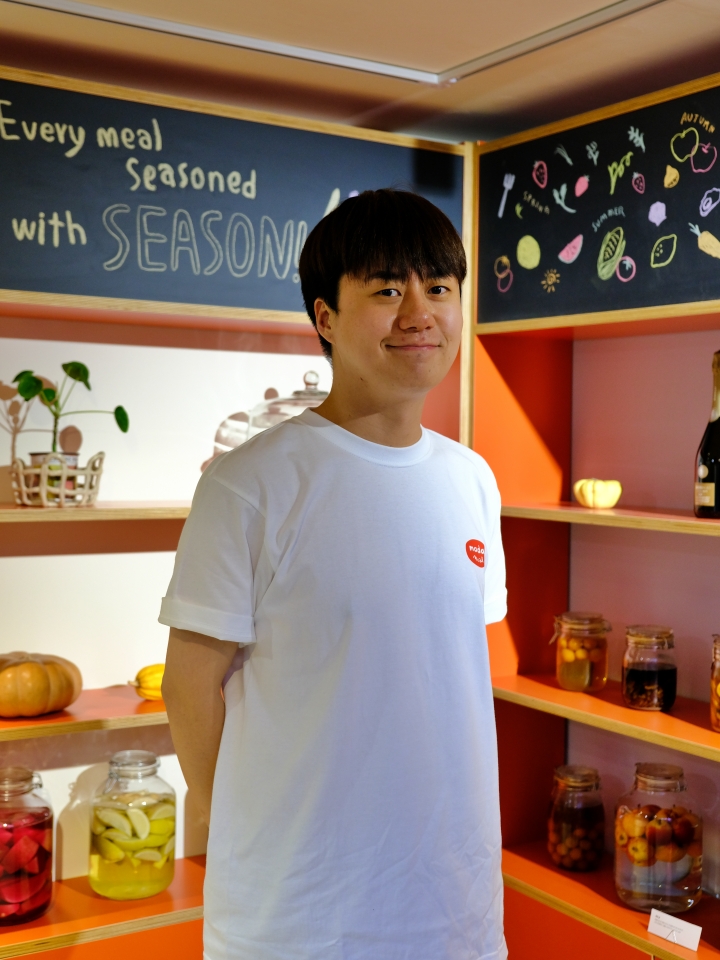
A social media channel that introduces seasonal ingredients and ways to enjoy them. ‘Madameal,’ the breakfast restaurant opened by the channel’s operator and food creator Jin Minseop, has moved from Huam-dong to a spot near Yongsan Station. We met him in a space where all four seasons can be fully felt, and talked about the luxury that seasonal food brings.
Interviewer Parc Jinmyoung, Ryu Sunwoo
Interviewee Jin Minseop (Owner of Madameal)
Three years ago, you started creating F&B content under the X (formerly Twitter) account ‘huam3house’
That was when I was working at a company. I first posted photos and videos of making kumquat jeonggwa (candied fruit) on X and YouTube, and luckily it went viral. That led me to publish my first book, <Love This Season Today!>, in March 2023.
What made you open Madameal, a breakfast restaurant, in Huam-dong six months ago?
A community brand called Achim, which shares the value of mornings, opened an offline space called Achim Provision, and they wanted to create a breakfast restaurant in that building. Since I had a connection with Achim, they made me an offer, and I opened Madameal there as a tenant. After the six-month project ended, I decided to build a nest of my own.
Why did you move near Yongsan Station instead of staying in Huam-dong?
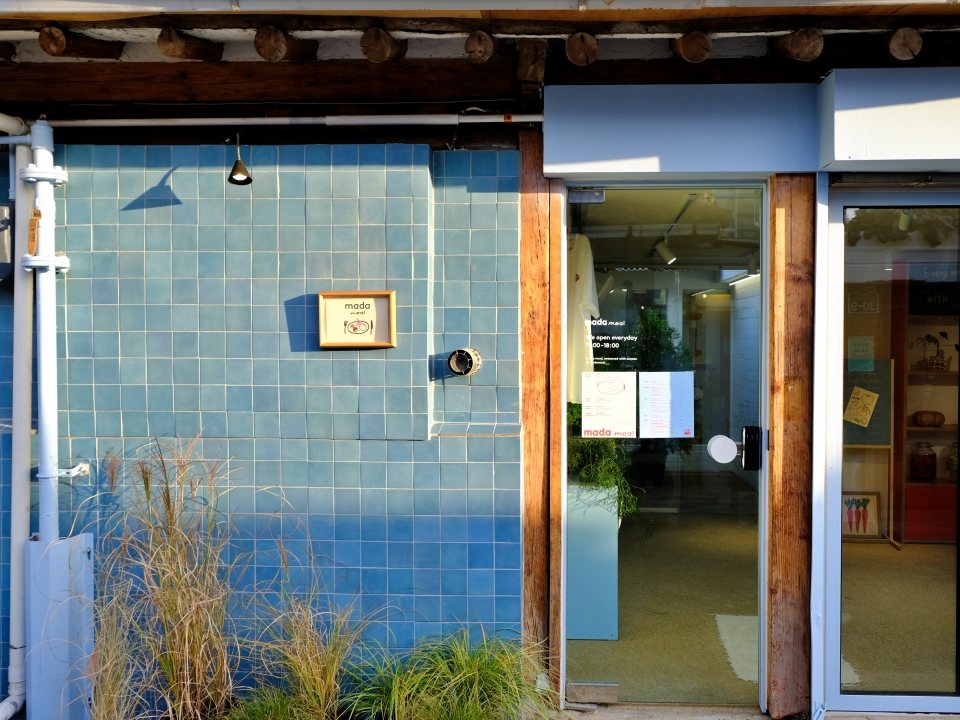
Honestly, financial reasons were the biggest factor (laughs), and I also wanted better accessibility than Huam-dong offered. At the same time, I didn’t want to lose the warmth that an old neighborhood like Huam-dong gives off. This spot met all those conditions. I love the quiet atmosphere here, with low-rise houses and shops clustered closely together.
What did you focus on most during the remodeling?
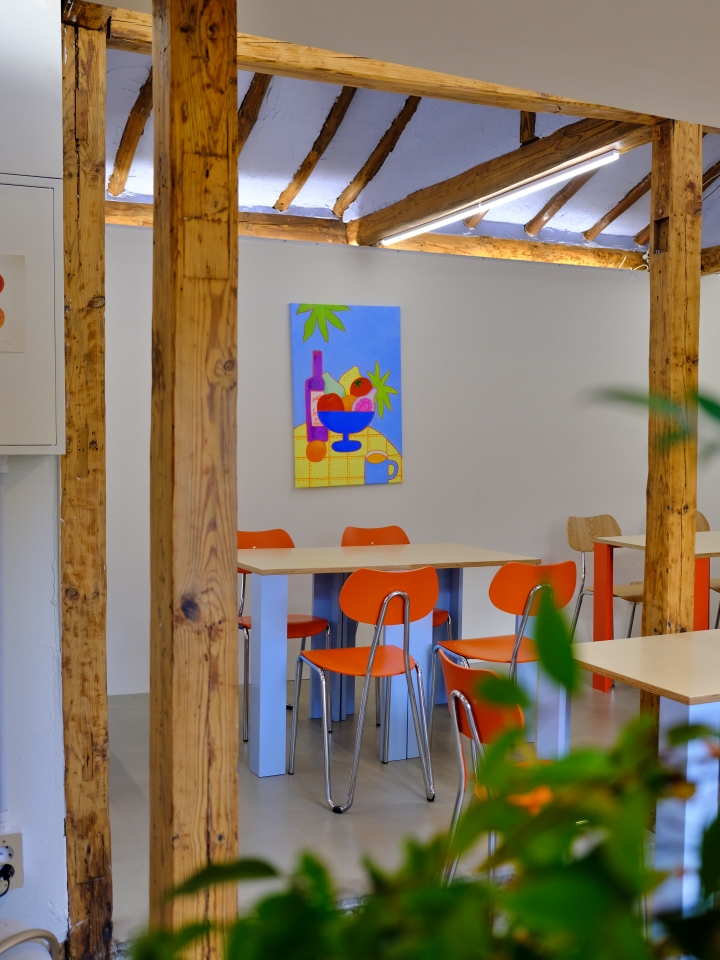
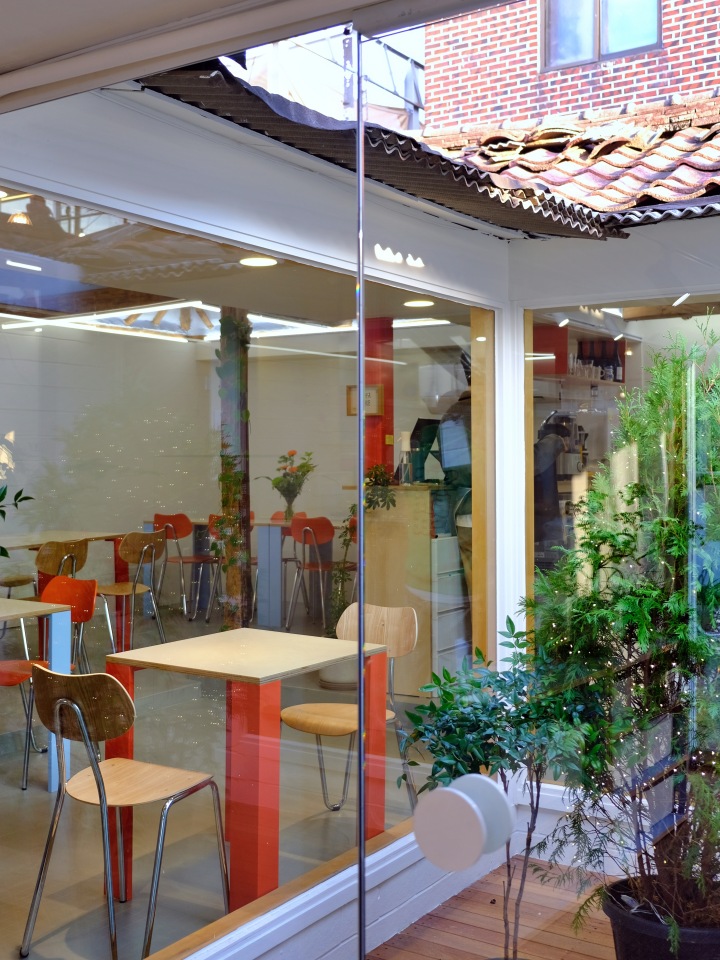
I like adding pops of color, from the food to the interior. I added sky blue and orange to the table and chair legs to create accents. Since I wanted it to blend naturally into the neighborhood, I restored the building’s original structure as much as possible, but painted sky blue between the rafters so it would go well with the colorful space.
I imagine you also thought a lot about how to organize the space.
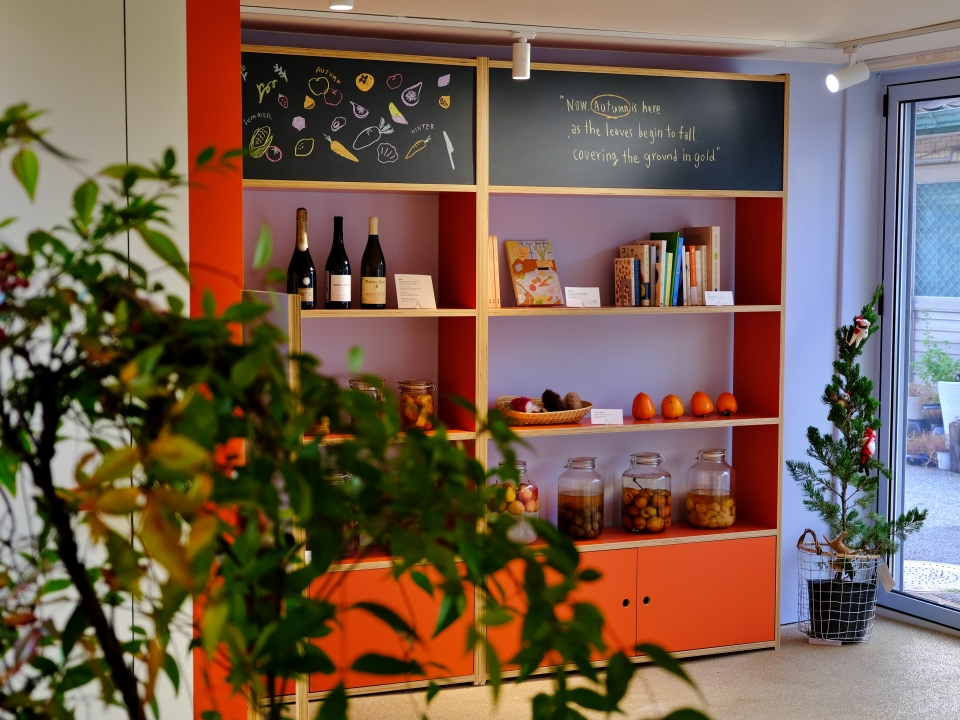
I really agonized over how to use the empty space right when you walk in the door. I wondered if I should just fill it with tables for profit’s sake (laughs). But I wanted Madameal to be more than just a restaurant—a space that tells stories woven around the seasons. For example, I could collaborate with brands from various fields around a seasonal theme. That’s why I installed a pantry, where I plan to display books, objects, liquor, and more that suit each changing season.
I noticed wines that pair with seasonal food, and liquor infused with seasonal fruit, in the pantry.
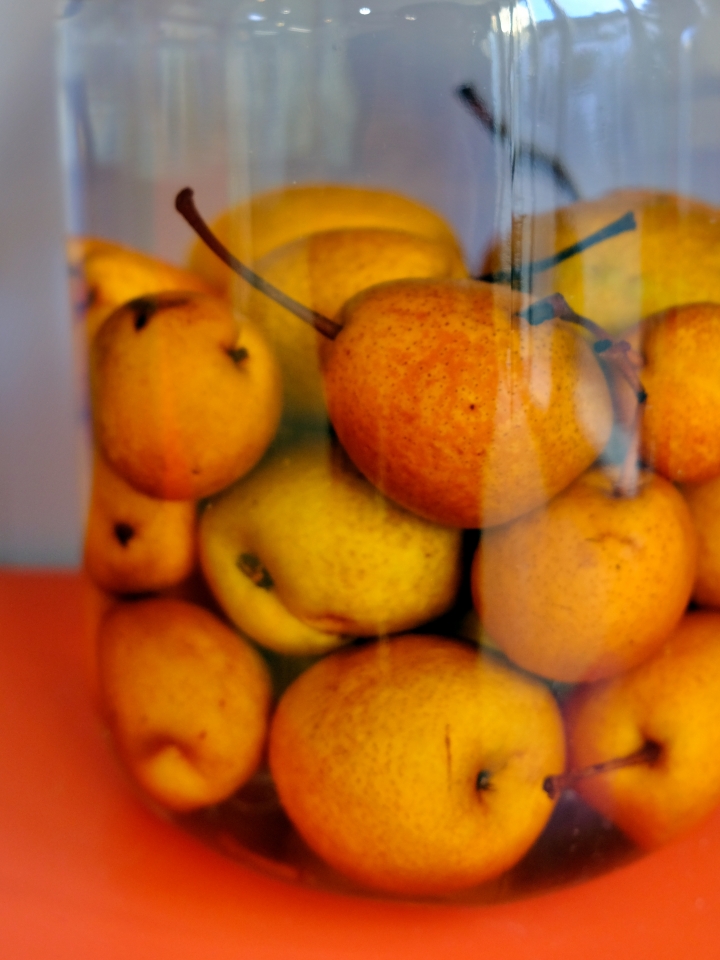
I actually enjoy making liquor more than drinking it. Since I live alone, whenever I buy fruits and vegetables, I can’t consume them all in time and they spoil quickly. So I started making liquor with leftover ingredients. It feels like I’m preserving the passing season, and I like that.
You have an unusual career path—working as a chef at a restaurant, then moving to a department store’s F&B team. Did you always dream of being a chef?
After finishing military service, I had a vague desire to work at a food and beverage company. Then I found out about SK New School, a one-year culinary program. When I enrolled, I saw it merely as a stepping stone to getting into a company, but as I intensively studied a four-year university curriculum condensed into one year, I gradually became more serious about cooking. Afterward, I worked for two years at a Korean restaurant called Kwonsooksoo. While thinking about the next step in my career, I joined a department store. After that, I gained experience at a food startup and a branding agency before arriving where I am now.
Your hands-on experience handling ingredients at restaurants must have helped a lot in your corporate work too.
My deep understanding of seasonal ingredients owes a lot to my time at Kwonsooksoo. Since it was fine dining, rare seasonal ingredients from all over the country would come together there. I think I learned a great deal encountering the tastiest ingredients of each season.
Does ‘Mada’ come from the Korean word meaning ‘every (season)’?
That’s right. Considering the brand’s potential for expansion, I added the word ‘meal’ after ‘mada.’ I thought it could be used in many ways—like Mada Catering if I started a catering business, or Mada Workshop if I held workshops.
Was there a travel destination that inspired you while preparing Madameal?
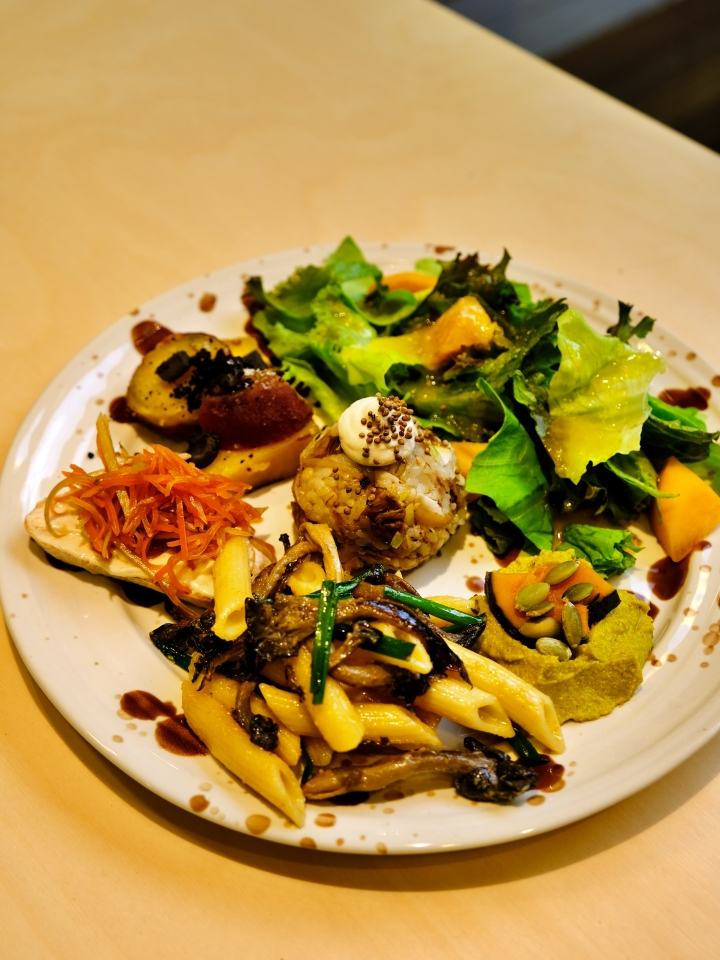
I referenced a lot of restaurants in Tokyo and Kyoto, Japan. In Japan, there are many restaurants in each region that emphasize local seasonal ingredients. Kyoto in particular has a well-developed culture called obanzai (おばんざい). It refers to home-style cooking where various seasonal side dishes are served in small portions on a large plate, embodying respect for each ingredient and minimizing waste. Madameal’s signature menu, the ‘Mada Plate,’ was inspired by obanzai.
What dishes make up the Mada Plate?
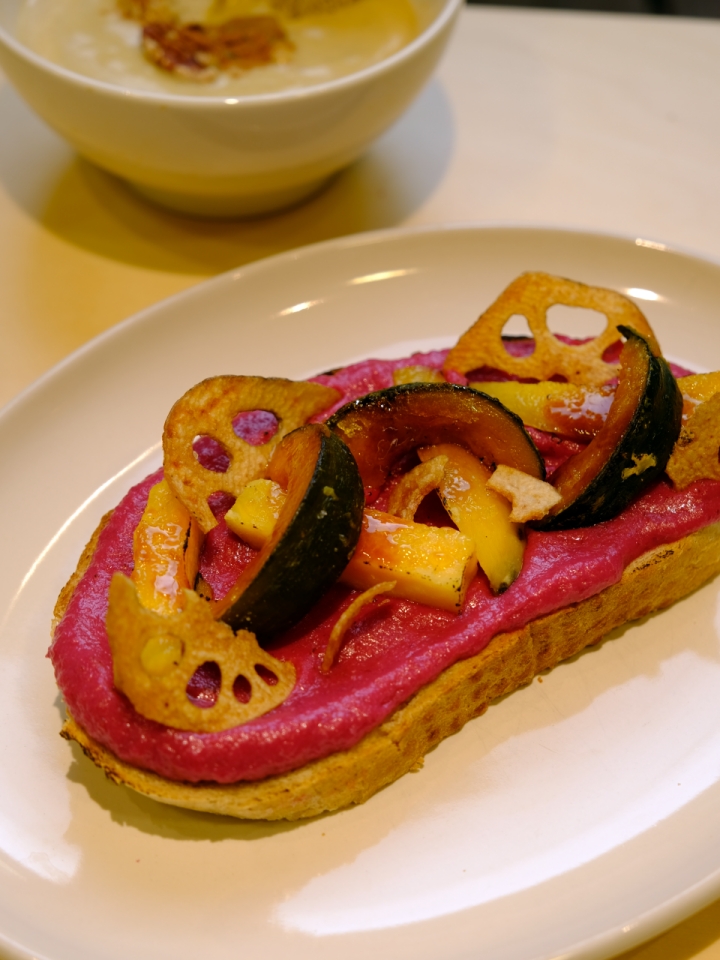
The autumn Madameal is composed of root vegetables that are tastiest this season, like burdock root, carrots, and sweet potatoes, along with fruits that represent fall, such as pears and persimmons. It includes six dishes served on one large plate: bruschetta topped with burdock root and carrots, candied sweet potatoes with black olives, rice balls with burdock root and mackerel, sweet pumpkin hummus, doenjang mushroom pasta, and fruit salad.
Do you have your own method for finding great restaurants when traveling?
I rely a lot on Instagram. If you search tags, you’ll usually come across at least one uncommon restaurant. The key is to check the accounts of people who tagged that restaurant. Looking at their feed lets you tell if their taste matches yours. Once I find an account like that, I explore which restaurants they visit and save the ones I want to try.
Please share a tip for finding seasonal ingredients.
I believe even small neighborhood supermarkets have merchandisers. The sales strategy of placing the best-selling products in the most visible spots is used everywhere. Pay close attention to the center of the display table in particular—seasonal ingredients are usually placed where they’re most visible. Also, if you see the word ‘new’ attached to something, like new potatoes, new apples, or new persimmons, it means those are the tastiest ingredients of the season. Observing your neighborhood supermarket this way is one way to feel the flow of the seasons. What matters most is freeing yourself from the obsession of having to find the ‘best’ seasonal ingredient. For example, zucchini is grown year-round but is in season in summer—zucchini grown outdoors in open fields tastes great no matter where you buy it. Don’t get too caught up in the details; just remembering the one fact that you’re eating seasonal food will make it much more enjoyable. You can find more details in <Love This Season Today!> (laughs)!
Do you have a favorite season, or a seasonal ingredient you look forward to?
I love summer and fall the most, since ingredients are so abundant then. Summer especially is the season for sweet, high-sugar fruits. Did you know the colors of ingredients differ slightly by season? Sometimes when I’m stressed, I do meal prep (a portmanteau of ‘meal’ and ‘preparation,’ meaning preparing several days’ worth of meals in advance) by laying out ingredients. In summer, spreading out vibrant red, yellow, and blue ingredients puts me in a good mood. In spring, everything looks fresh and green, while in fall and winter, the saturation drops and the colors become calmer—it’s fascinating and fun to watch that flow.
I watched the video of boni-bam-jorim (candied chestnuts with skin) on the Huam-dong Samcheungjip account and tried to recreate it several times, but I failed every time. It takes days just to make, and then another 2 to 3 months to age—I couldn’t bear the waiting. Any advice for someone like me?
I think of boni-bam-jorim as the taste of anticipation. You make it in October, when chestnuts are in season, and then eat it around Christmas or the end of the year, so the food itself holds that stretch of time within it. I’d encourage you to enjoy the waiting as the chestnuts age. Honestly, I only made it once myself, three years ago when I posted that video, and haven’t tried again since (laughs).
Lastly, do you have any plans or goals for the future?
First, I should properly introduce myself to this neighborhood (laughs). As I mentioned earlier, I’d like to expand the ‘Mada’ brand and try my hand at various new projects. One of them is a magazine themed around seasonal food culture, so please look forward to it.


