
The Base Camp for Traveling Mokpo — The Starting Point for Exploring Mokpo’s Old Downtown, Sinhyeongdang
We met Shin Hyeongbae, owner of Sinhyeongdang, a multipurpose cultural space that serves as a base camp for travelers in Mokpo, to talk about the regeneration of a small city.
The Base Camp for Traveling Mokpo — The Starting Point for Exploring Mokpo’s Old Downtown, Sinhyeongdang
Mokpo is a modern city formed roughly 127 years ago around Mount Yudal. In its old downtown, buildings that remember the past remain intact, and among the traces of history are spaces that pour a bit of imagination toward bygone eras. Sinhyeongdang, which transforms into a pub, exhibition hall, performance venue, and film screening room, is one such space.
Interviewer Parc Jinmyoung
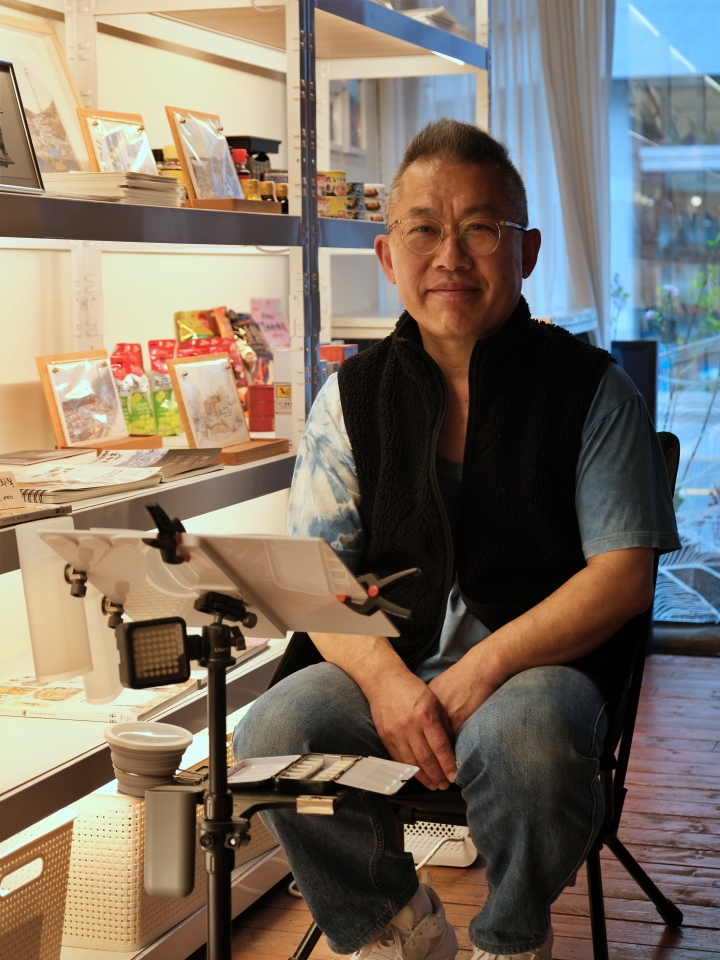
Interviewee Shin Hyeongbae (owner of Sinhyeongdang)
How did you come to open Sinhyeongdang?
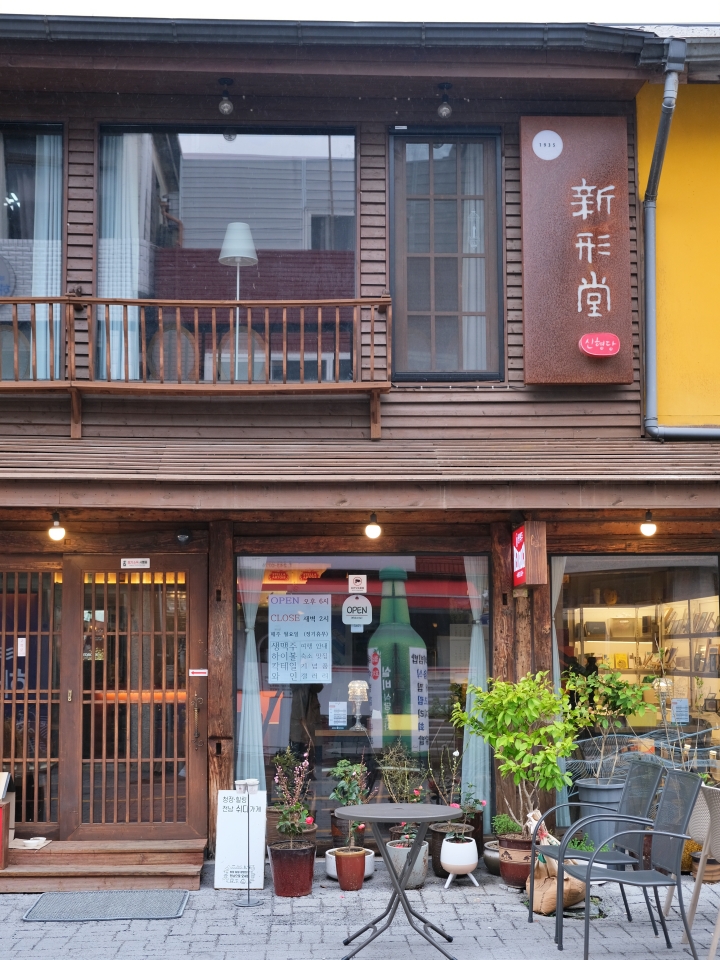
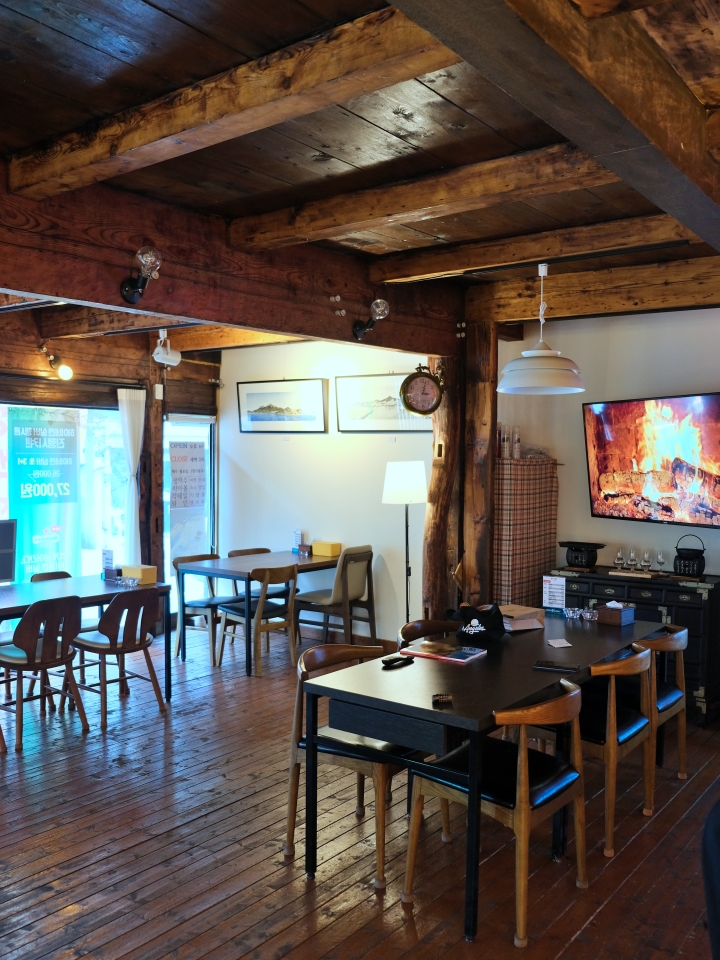
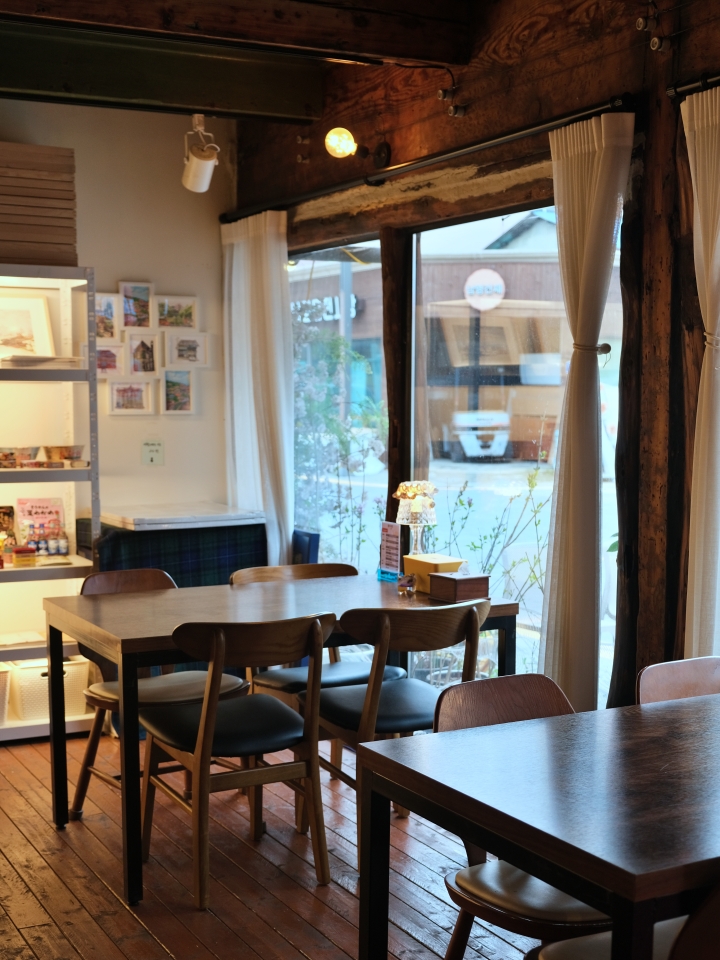
I majored in fine arts in college. I taught art for college entrance exams in Seoul, then moved through Jeju before settling in Mokpo. Wanting my own personal art museum, I remodeled a 100-year-old wooden house into a multipurpose cultural space. I also occasionally run tour programs for foreign visitors to Purple Island in Sinan.
What led you to settle in Mokpo?
I’m 57 this year. I lived in Gangnam, Seoul for 50 years. While studying abroad in the U.S., I first felt disillusioned with Seoul as a city. I began to feel that humanism was collapsing there, and that the city was being consumed by capitalism—something most people living in Seoul would probably relate to. While mulling over these thoughts, I traveled the length of the country and crossed over to Jeju, where I biked around, and suddenly felt I should try living there. At fifty, I closed all my businesses and moved to Jeju. About three years later, as massive Chinese capital began flowing in, Jeju started to remind me of Seoul’s atmosphere—where real estate is valued above all. I decided I had to leave, and traveled to Mokpo. I liked the peculiar feeling of not being able to tell whether I was in Korea or Japan. I rented a Japanese-style colonial house and stayed there for a month. In 2018, I purchased two buildings—the one where Sinhyeongdang now stands and the house where I currently live—and began splitting my time between Jeju and Mokpo.
Remodeling a 100-year-old colonial-era house must have come with its share of twists and turns.
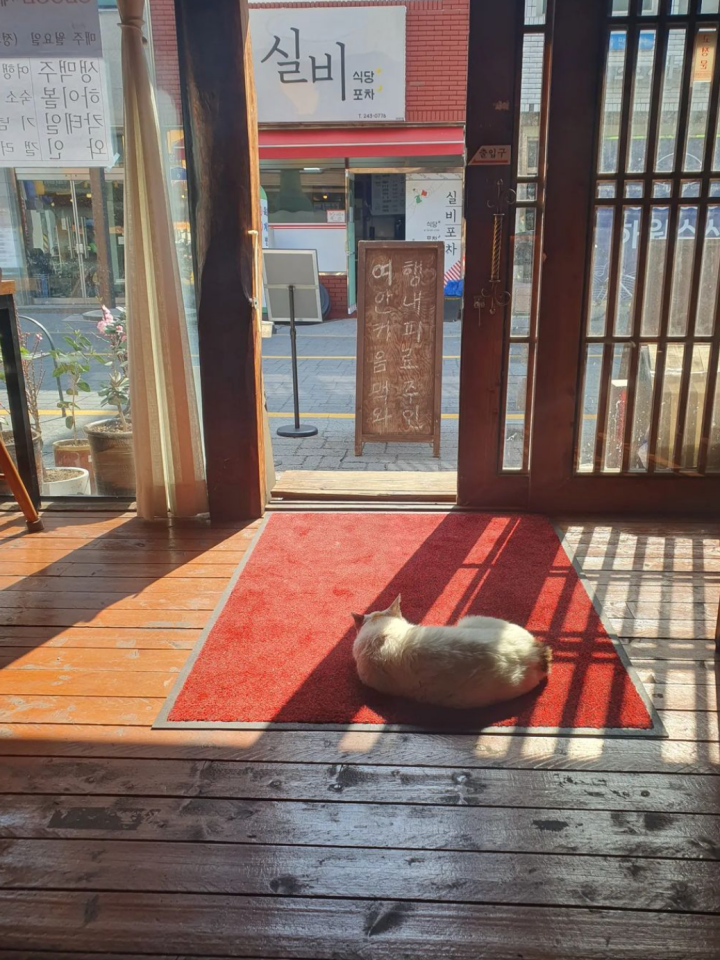
I focused on restoring it to its original form as much as possible. To preserve the feel of the old house, I brought in timber unused by other hanok to repair the floors and relaid the foundation stones. During the year-long renovation, I kept a low profile (laughs)—since the area around the building was noisy and chaotic, and I didn’t want to disturb the neighbors.
The second floor is sometimes used as a space for performances or film screenings. Right now, a friend visiting from abroad wanted to experience living in the colonial house, so I’ve given it over to them entirely and temporarily paused operations there.
What do you think is Mokpo’s biggest charm?
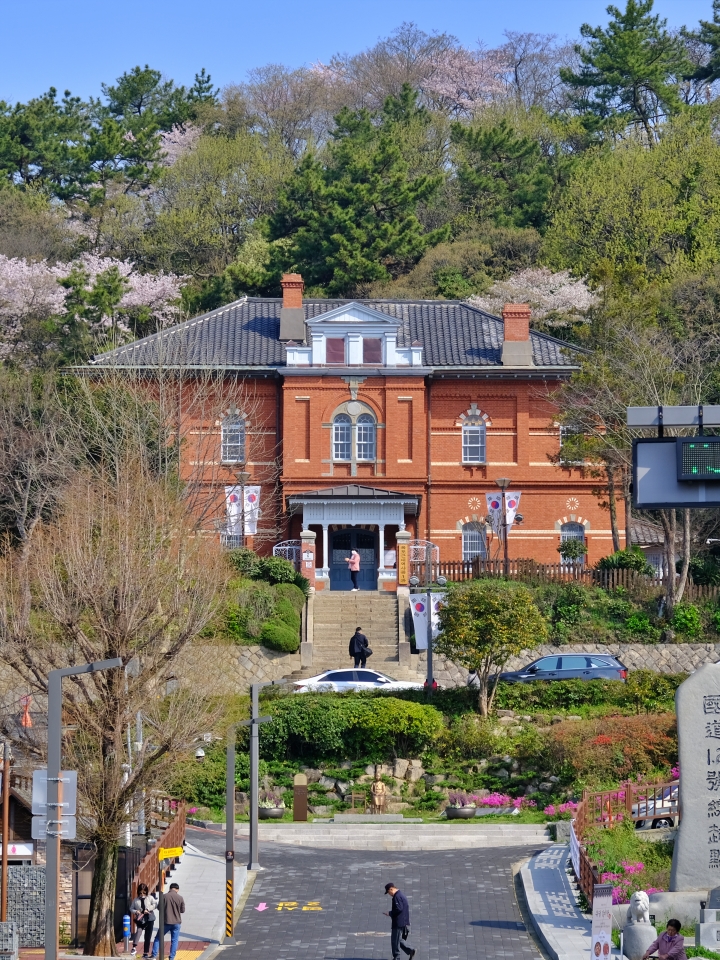
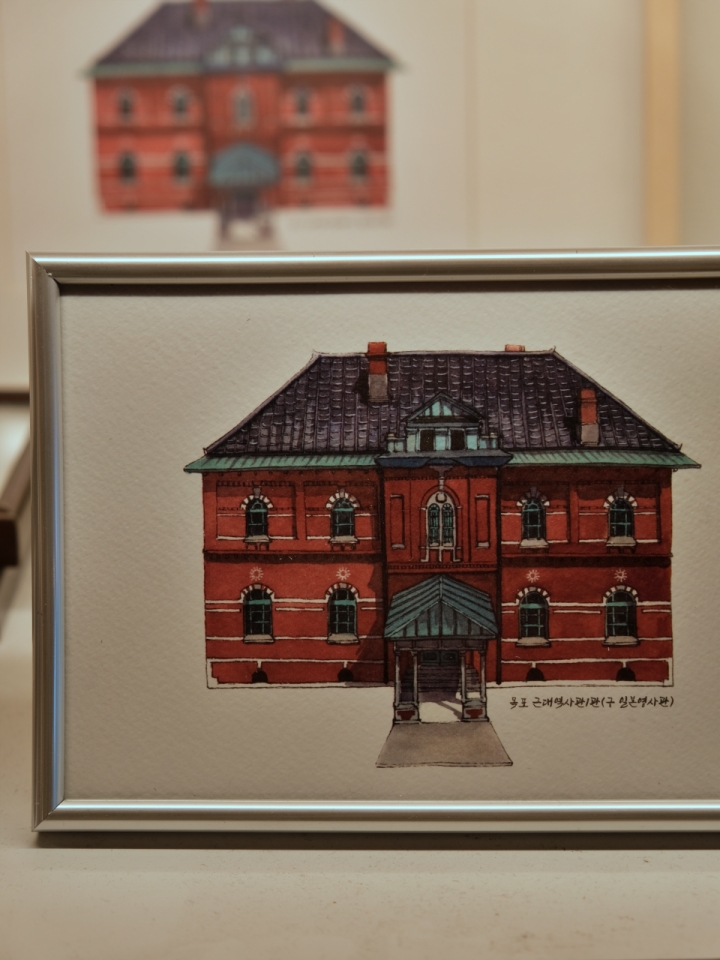
Mokpo is, quite literally, a museum without a roof. Mokpo Port is a place that symbolizes the Korean Empire’s voluntary opening of its ports (1897), but before long it became a channel for Japanese exploitation. The Japanese consulate took the best location in the city, and around it shops, homes, and factories sprang up, forming a Japanese village. The rows of colonial-era houses built at that time are the defining feature of Mokpo’s old downtown—it feels almost like being in a small Japanese town. That distinctive village form feels both exotic and endearing to me.
I heard you also served as the founding chairperson of the Kkumkkuneun Badakkolmok Cooperative.
I’ve had a keen interest in local culture and history since my days living in Jeju. I’m especially drawn to architecture that reflects regional character—it naturally leads you to look more deeply into local life. When I came to Mokpo, the Mokpo Urban Regeneration Support Center had just been established, right around the time government-led urban regeneration projects were starting to gain momentum. There, I met others who, like me, had come to this area with no prior connections, and over drinks we exchanged all sorts of ideas. That gathering grew into the Kkumkkuneun Badakkolmok Cooperative. We joined Jeollanam-do’s preliminary village enterprise program to lay the groundwork for running the organization, and the following year we were selected as a village enterprise by the Ministry of the Interior and Safety, which helped things gain further momentum.
How has the neighborhood’s atmosphere changed since the urban regeneration project?
Honestly, government-led projects rarely have much staying power. Because the policies themselves are rigid and full of restrictions, they offer little benefit to those trying to run creative businesses locally. So most people who move to a region drawn in by its charm end up hitting a wall and leaving within a year or two. A village enterprise that depends on support policies without building self-sufficiency simply can’t last long.
I think this kind of administrative policy actually makes balanced regional development harder to achieve. It’s also a problem that support policies change every time the government changes. Take Japan, for example—not just Tokyo, but Osaka, Kyoto, Hokkaido, Fukuoka, and other regional cities have managed to preserve their own distinct character relatively well. Meanwhile, we haven’t taken advantage of the good inter-city accessibility we have here at all.
Accessibility seems to be the biggest advantage of Mokpo’s old downtown as a travel destination. It’s convenient that you can walk from the station to the old town.
There are two advantages when starting a business in Mokpo. One is that it was selected as one of the four major tourism hub cities, alongside Gangneung, Jeonju, and Andong. Mokpo is a tourism hub connecting not only the islands of Sinan but also Suncheon and Yeosu. The other is that it was designated a Legally Designated Cultural City in 2022 (a legally designated city equipped with a development system that promotes sustainable regional development through culture and expands citizens’ cultural lives). Both come with government budget support, which is at least something to be grateful for.
Any advice for young entrepreneurs looking to start a business in a regional area?
Let me be realistic. Subsidies alone won’t cut it. If you have a real goal of achieving business success in a region, you need to turn about half of your startup capital into assets. Take a look at the model of Gwaenchana Village, a youth cooperative in Mokpo. These young people have been active in Mokpo for seven years and keep expanding their business. They’re a very healthy, future-oriented group.
Where do you think you’ll be after Mokpo?
I don’t think I’ll move to another city. There’s no chance the Sinhyeongdang building will ever sell (laughs).
Do you have any plans or goals for the future?
Through a drawing and humanities class I recently started, I want to help people who’ve been culturally underserved experience new things. I taught a drawing class yesterday, and most of the students said it was the first time they’d ever drawn on paper. Creating moments where people can find breathing room in life by sharing nature, art, and the humanities together—that’s what I’ve been doing all along, and the only thing I want to keep doing.


