The Adventure of Sustainable Art
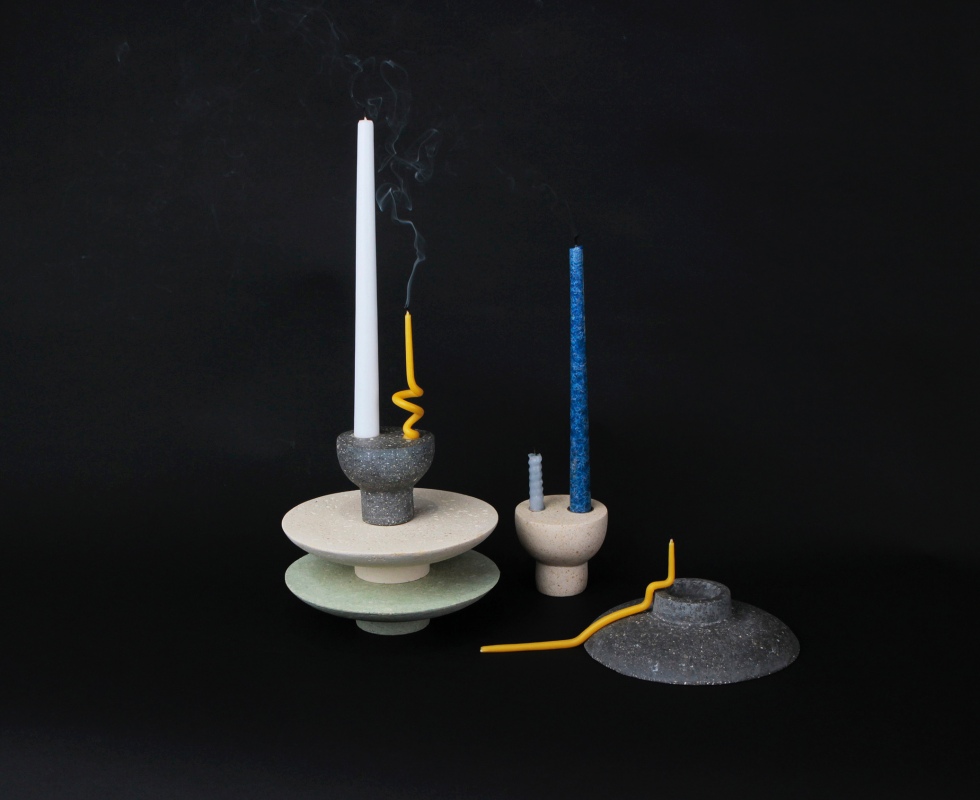
On Usadan-ro in Seoul's Itaewon, Weekend Lab is a design studio devoted to sustainable art. Two Gen Z designers turn discarded eggshells, oyster shells and dairy waste into objects, and talk about eco-friendly design, European waste and travel.
The Adventure of Sustainable Art — An Adventure in Sustainable Art
When COVID began, two designers started brainstorming ideas over Zoom. Not long after, that led them to open a design studio, built around one of the hottest and hardest concepts of all: ‘waste.’
Words Parc Jinmyoung
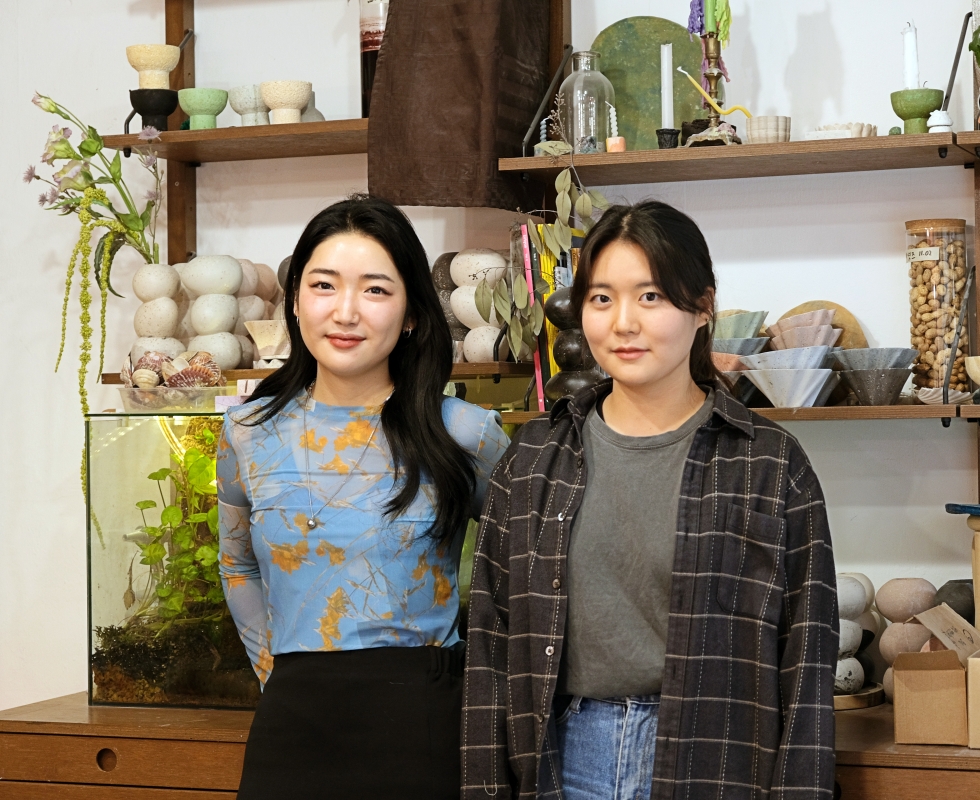
Interviewee Designers Lee Harin and Jeon Eunji of Weekend Lab
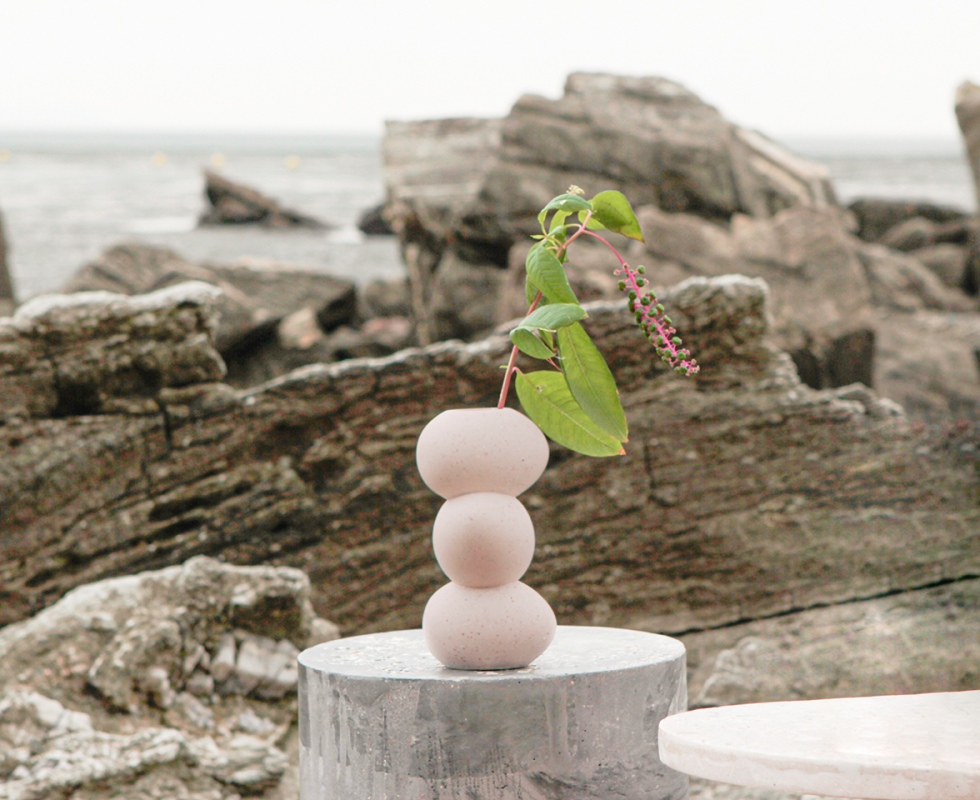
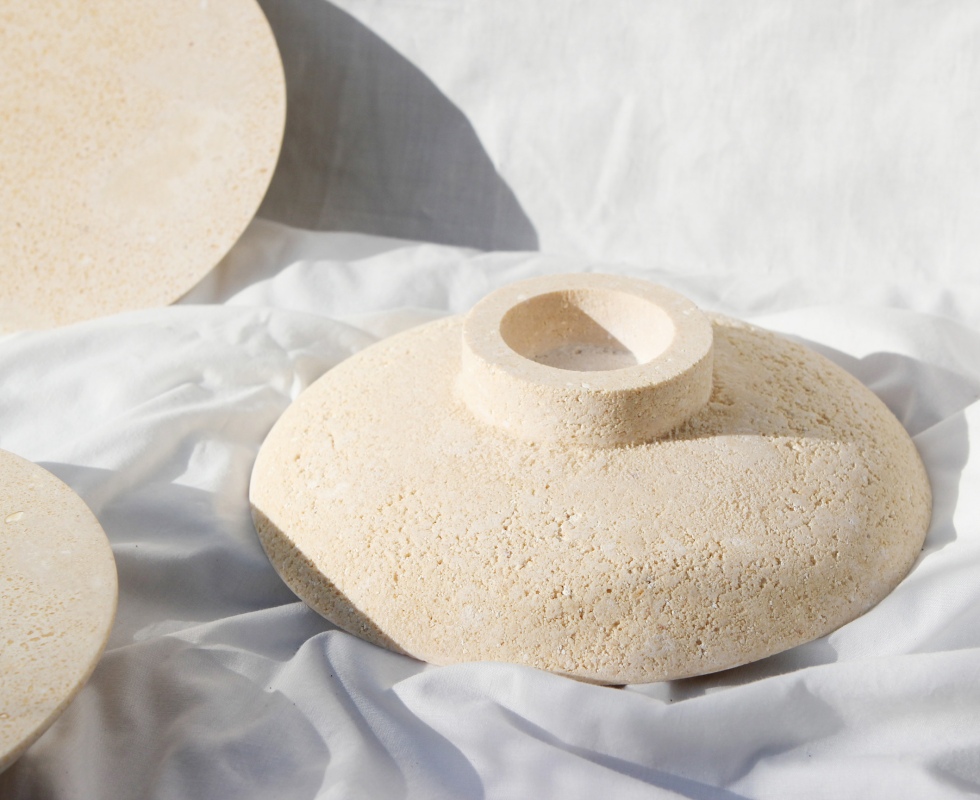
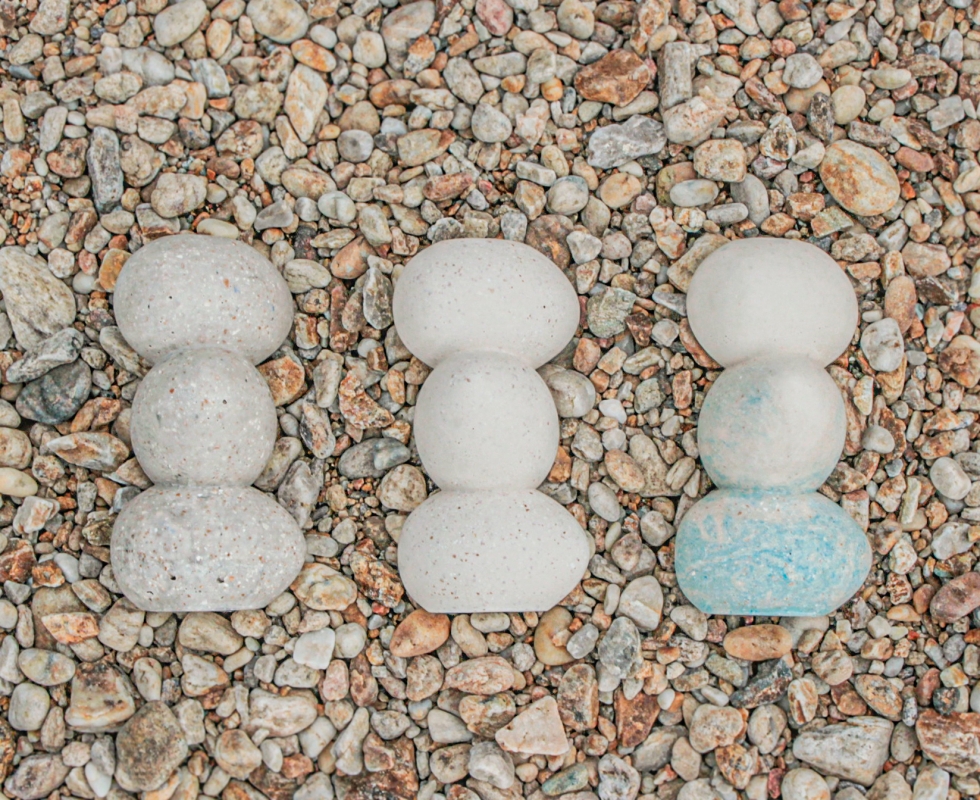
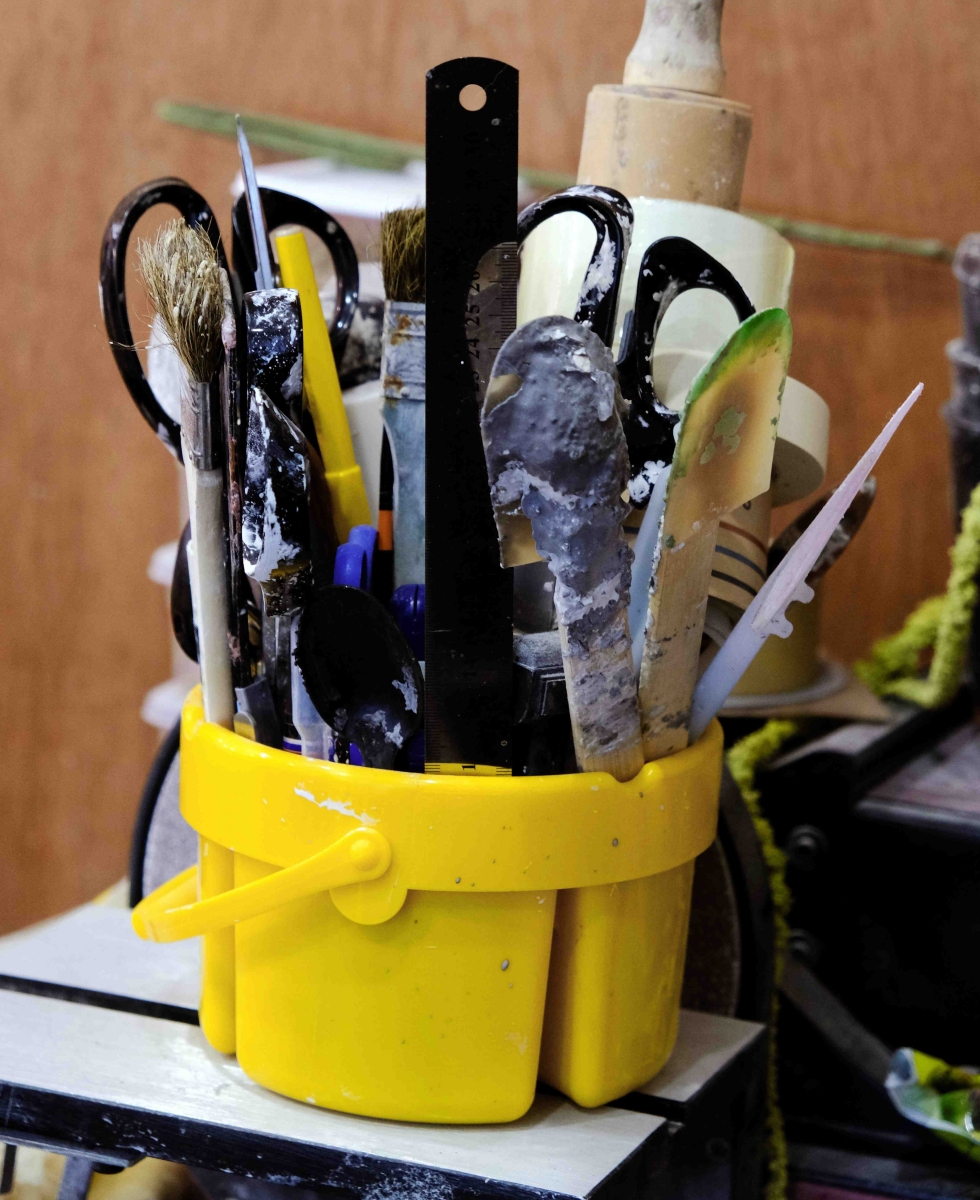
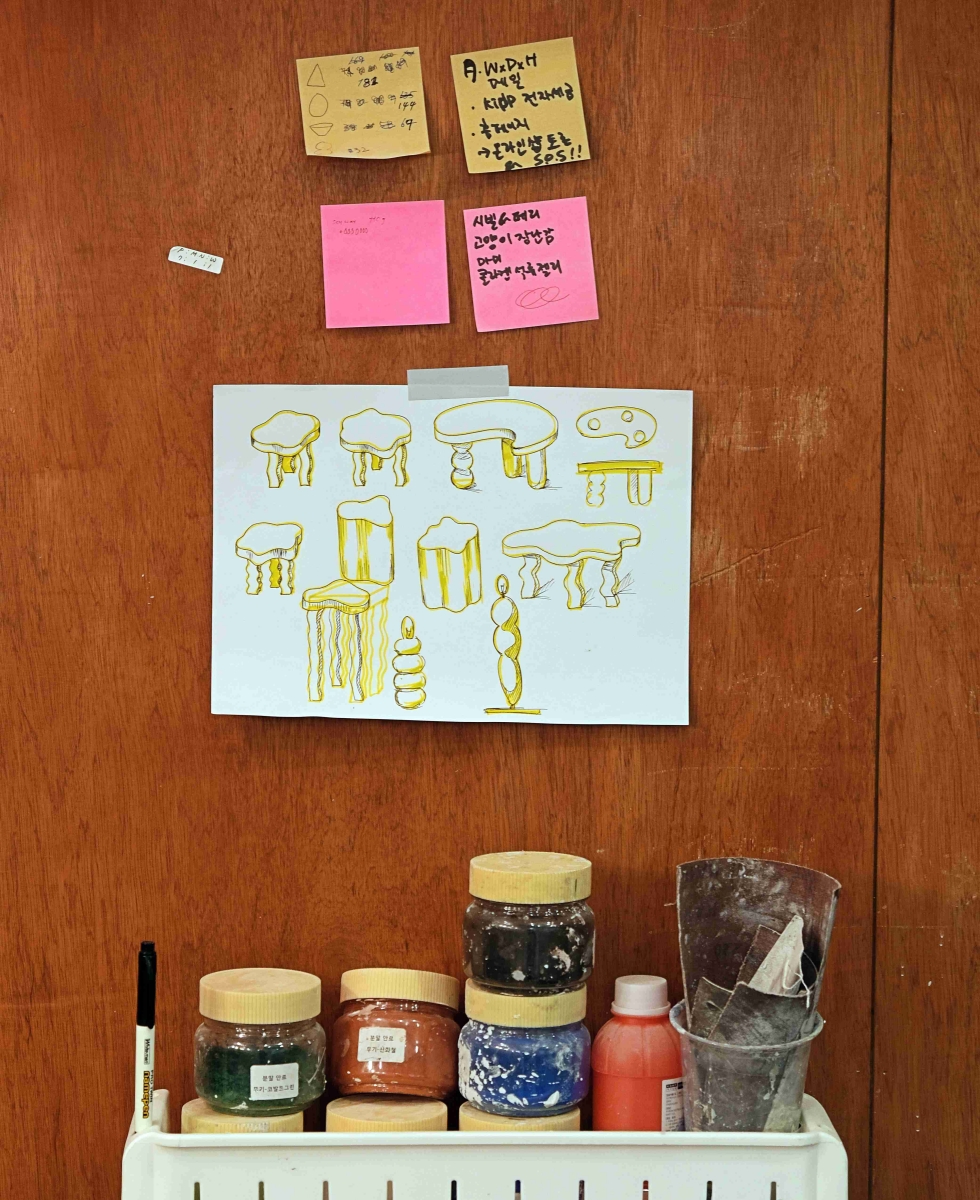
Walk into the alleys off Usadan-ro in Itaewon, Seoul, and signs reading ‘Craft’ appear one after another. Nameplates might be a better word for them than signs. All of these workshops occupy similar commercial buildings, yet each one quietly carries its own color. Follow the road inward, one that is neither noisy nor crowded like the rest of Itaewon’s streets, and you arrive at the Weekend Lab studio. Weekend Lab is a design studio that turns waste into material and makes it into works. It gathers what people around us see as ‘trash’ — eggshells thrown out by a nearby ice cream shop, oyster shells rolling around the sea in Tongyeong — and works with them in many ways. Weekend Lab’s objects have no fixed purpose. How they are used is entirely up to the user. We met the studio’s two designers, who have many stories they want to put into their work and many more they want to tell.
Note 1. A Business Story from Two Gen Z Friends the Same Age
Could you introduce Weekend Lab?
Lee Harin (Lee) We work with discarded materials under the theme of sustainability. Our main raw materials are animal and plant waste, but we don’t limit ourselves to that. We also recycle all sorts of other discarded materials into design.
If you had to pick one thing you looked forward to most and one thing that was hardest while preparing the design studio, what would they be?
Jeon Eunji (Jeon) Early on, we were lucky enough to be selected for a university support program. That let us get advice from professors and experts at school. I think it helped a lot in getting a feel for the practical side of things.
Lee Even so, once we jumped into the real thing, we couldn’t avoid all the odd jobs a business owner has to handle. Sorting out tax and accounting paperwork took up a bigger share of the work than I expected.
Jeon It made us feel like adults (laughs).
Lee Honestly, when it comes to our careers, we don’t have any big complaints.
Where do you find inspiration when you design?
Jeon Weekend Lab puts ‘sustainable’ and ‘eco-friendly’ materials forward as its keywords. But we try to go beyond simply using materials and expand on those two keywords. Put simply, it’s not only what’s eco-friendly that is sustainable. Trying to keep existing techniques alive is sustainable too. It could also mean bringing something now forgotten back into the present.
Lee I’d say it’s everything that allows human life to continue. We’re building out a link between human philosophy and design. We toss ideas about topics like that back and forth, and that’s how we’ve moved on to each next project.
Of the projects you’ve done so far, which one stays with you most?
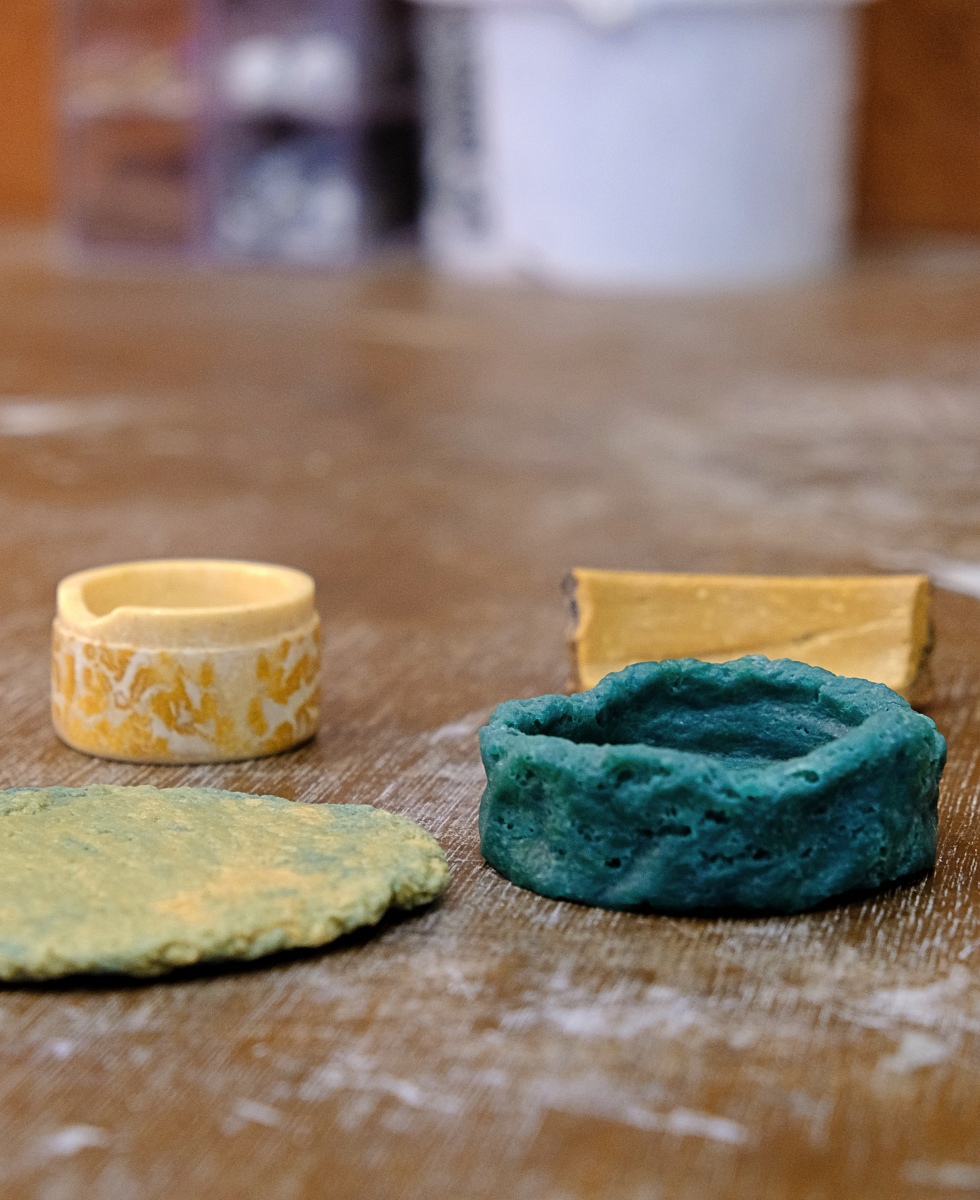
Jeon It’s an ongoing project called the ‘Ricotta Series,’ which uses milk waste. It’s a material-focused project: we extract only the protein from dairy waste and turn it into a bio-based substitute for plastic. Because we’re trying to make the material 100 percent biodegradable, it’s trickier than our other work. We’re still in the middle of researching it, so it’s a love-hate project for us.
Lee Honestly, the Ricotta Series isn’t suited to growing the business in scale, but it played a huge role in setting our direction. While making small objects and furniture ourselves from discarded milk, we tell each other, let’s keep doing meaningful work like this.
Since you work with materials you make yourselves, understanding the material must be especially important.
Jeon Usually, a designer designs first and then looks for a material that suits the design. We find the material first and then give it a design that fits. We work in reverse, thinking, this shape would suit this material, or it would be nice if it had this function. I think that makes the material a little easier to approach.
Note 2. Eco-Friendly? It’s Become a Bit Stale.
What made you aware of the problem of dairy waste?
Jeon We both have experience living in Europe. Europe has more kinds of dairy products than Korea, so it produces that much more waste. And since I was living alone, the trash from daily life became more visible to me than before.
Lee I thought that to make a truly eco-friendly material, you have to start from natural ingredients. But even natural substances can harm the environment if you simply throw them away. They say it takes 20,000 times the volume in water to clean discarded milk again. Producing milk at farms and factories also generates a lot of surplus product and waste. Either way, it felt wrong to just throw it out. To talk about that, it seemed we should start by using materials that are discarded on a large scale.
You said you became interested in the trash problem while living in Germany and Switzerland as exchange students. How does Europe’s waste handling differ from Korea’s?
Jeon I’d heard that Switzerland is relatively good at recycling within Europe. What amazed me most when I first got there was that ordinary homes have a ‘compost bin,’ a trash can that turns food waste into compost. But that’s for households with many family members. Where students or office workers live, people throw out general trash and food waste together without separating them. Maybe because of that, there does seem to be a culture of leaving less food uneaten. There was also a system for sorting glass by color. But plastic isn’t sorted (laughs). There were good points and disappointing ones in many ways.
Lee In Germany there’s a deposit-refund system called ‘Pfand.’ You put empty cans or glass bottles into a machine installed in a supermarket, and they’re collected and sent back to the company. Consumers get back a deposit of about 300 won per item (8 to 25 euro cents). Still, as in Switzerland, the awareness that plastic and food waste should be separated wasn’t strong. Honestly, I think recycling isn’t something individuals can fix; the state has to step in.
Eco-friendliness and sustainability have recently become trends. What kind of action is needed so they don’t end up as mere fads?
Lee A few days ago I bought some clothes, and inside the plastic bag they were packed again in a zipper bag. On that zipper bag was written, ‘This can be used many times, so it’s sustainable.’ It really irritated me. However reusable it is, making that zipper bag took plastic and even the process of printing the words on it. And if it isn’t properly broken down before being thrown away, it ends up as trash again. Ignoring all that and pushing ‘sustainable’ felt like nothing more than wordplay. So we use biodegradable paper made from materials like corn, and we’re always careful not to over-package. Should we include a brand introduction card? No, that’s over-packaging. We put the brakes on each other like that.
Note 3. A Designer’s Travels
Do the two of you travel together, too?
Jeon Yes, we travel together a lot.
Lee Our time in Europe overlapped, so we met up a lot there, too.
Which destination stays with you most?
Jeon Lombok, Indonesia. We went planning to live there for a month. Luckily, an islander who was going abroad lent us their whole house. We roamed every corner of the island and felt truly free.
Lee I was especially moved by Indonesia’s nature. If we came across a waterfall while hiking, we’d jump right in and swim, and the sea was beautiful, too. After living a busy daily life in a crowded city, being on an island with a low population density felt like we had the place to ourselves. We even ate fish caught by local residents. Lombok is the one I remember most.
Is there a destination you’d like to visit in the future?
Jeon If it’s design inspiration we’re after, Europe or the US would probably be the obvious choice. But for me, just stepping back from everyday life for a while clears my head and brings new ideas.
Lee I’d like to learn a handcraft with a long tradition. For instance, making fabric from the fibers inside lotus stems…
Is there an artist you particularly like?
Lee Designer Cho Gyuhyeong, who’s considered a rock star among visual designers. Most people who major in visual design focus on a single field, like book design or product design. But Cho Gyuhyeong doesn’t limit himself to one area. He works across all of visual design, doing typography one moment and product design the next. I also majored in visual design, but because I work with Jeon Eunji, who majored in product design, I’ve ended up covering a wide range of fields. Cho Gyuhyeong took part in a group show at the Daelim Museum last year, the same one I was in, so I’d hoped we might meet. But he was in Sweden, so I couldn’t see him.
Why are more Korean designers opening studios abroad?
Lee It’s much easier to explain your work and win empathy in Korea, but Europeans definitely seem to have a different attitude toward design.
Jeon Whenever I explain our design studio to older people in particular, the question that comes back is, ‘So what exactly do you guys do? What kind of company is this?’ A furniture designer should only make furniture, and someone who draws should only draw. There’s a tendency to think you’re only a designer if you have that kind of specialization. Europe has a more developed culture of cross-disciplinary art, so I think that’s why more Korean designers are establishing themselves there.
Lee Honestly, the boundaries of art have been breaking down for quite some time. When I was in school, professors often said to me, ‘Who do you think you are, an artist?’ It was common to draw a line between practical disciplines and fine art. But now we’re in an era when those boundaries have blurred, just as a writer might sing and take photographs too. I think it’s that thirst that draws Korean designers to Europe. Korean designers are also gaining recognition around the world.
Memo 4. What keeps you going with experimental challenges?
At Weekend Lab, you handle everything from material planning to development, design, and production. What drives you down such a difficult path?
Lee When you do any kind of work, you have to be able to persuade yourself. It’s the same for us, because in the end we’re telling the stories we want to tell. Why are we using this material? This kind of waste is being produced, so how could we make use of it? The questions we posed to persuade ourselves kept leading to more questions, and that’s how we got here. We want to do work that feels meaningful and that we can be proud of. I think that’s what drives us.
Jeon Honestly, we’d like to use biomass, an eco-friendly energy source, at 100 percent, but that’s difficult to realize in practice. And when we’re working for a client, results are needed quickly, so sometimes we compromise. Even within those constraints, we try to blend in the ideas we pursue as much as we can.
What is the most important quality for a creator to have?
Jeon Consistency.
Lee I think you need to have a lot of stories you want to tell.
What are your plans for the future?
Jeon We’d like to take on larger-scale work that can hold our stories. Small objects often have a limited role. So we’re developing work that allows for many different interpretations. You’ll be able to see it before long.
What is the ultimate message Weekend Lab wants to convey?
Lee The storytelling differs from series to series. Sometimes the message is direct: ‘This much waste is thrown away, so be aware.’ Other times it might be, ‘Look at what we’ve been overlooking. Let’s take another look.’
Memo 5. The reason we’re curious about what Weekend Lab does next is the playfulness of its two designers. What materials and designs will their lively, energetic ideas use to win us over? Maybe we should pick up a few pieces before they get even more famous…