
Sustainability of Hankan — The Sustainability Found in Hankan
Change in events and festivals begins with a single booth. We spoke with Lee Hojin, CEO of Hankan, an event equipment rental service built on efficiency and sustainability, about just how far his company can grow.
Reducing waste at festivals and events starts with using well-designed, efficient equipment. Hankan, an event equipment rental service, supports event spaces with the philosophy that ‘the most efficient method is the sustainable one.’
Interviewer Parc Jinmyoung
Interviewee Lee Hojin (CEO of Hankan)
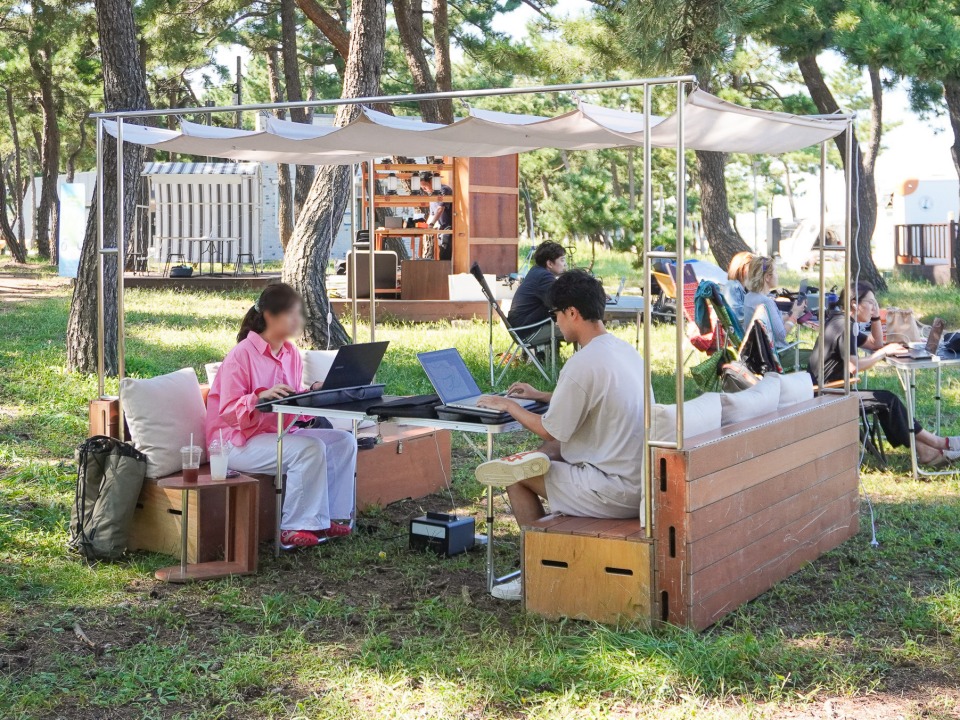
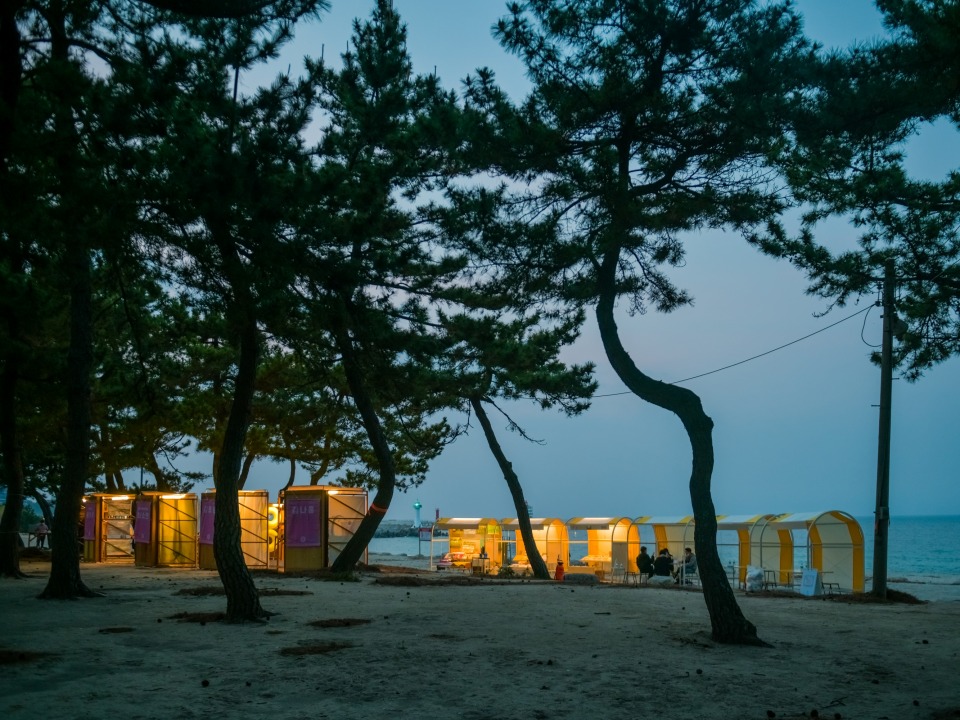
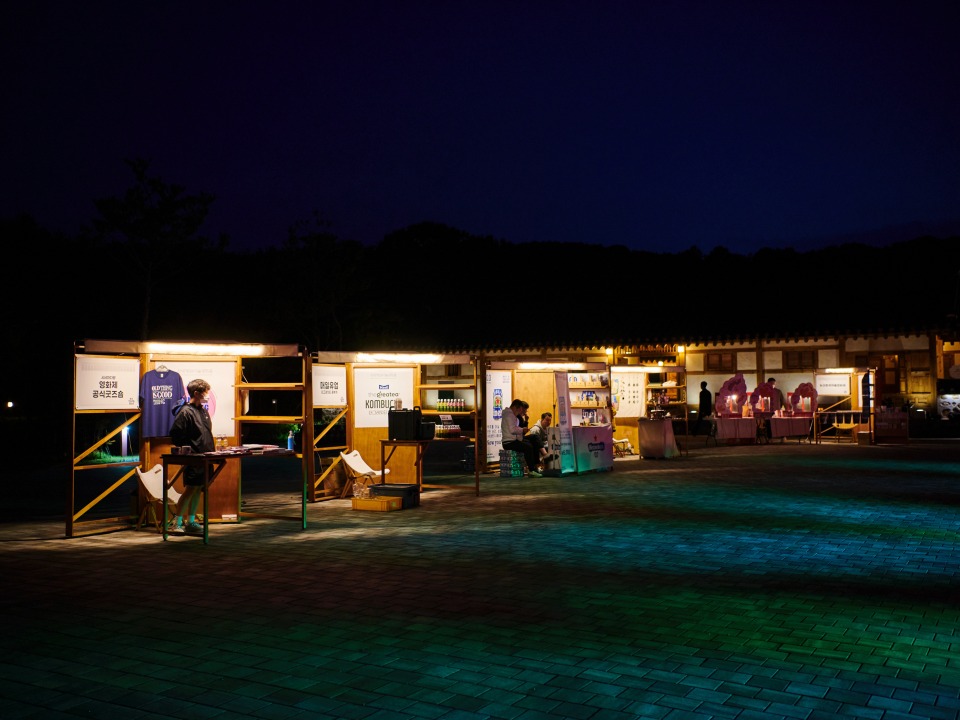
For two days starting October 23rd, the 'Together for Earth,’ an event dedicated to building sustainable environmental practices together, was held at Gwanghwamun Square in Seoul. Arched booths covered with yellow-striped tents were installed throughout the venue, and at one end of the square, a rest area featured colorful bean bags and wooden benches. There, I met Lee Hojin, CEO of Hankan. “The wooden bench, called the Lounger, is a product created through a collaboration between PROP Seoul and Think&Make. We built storage space inside the bench where tents or cushions and other booth accessories can be kept. It’s easy to install and dismantle, and the process generates no waste,” he explained.
Throughout the interview, he rarely used terms like ‘circular economy’ or ‘eco-friendly,’ yet his story kept circling back to sustainability. Just how far can an event equipment rental service expand? Let’s find the answer in our conversation with CEO Lee Hojin.
I heard you founded Hankan after working at an event planning company for eight years. What led you to start it?
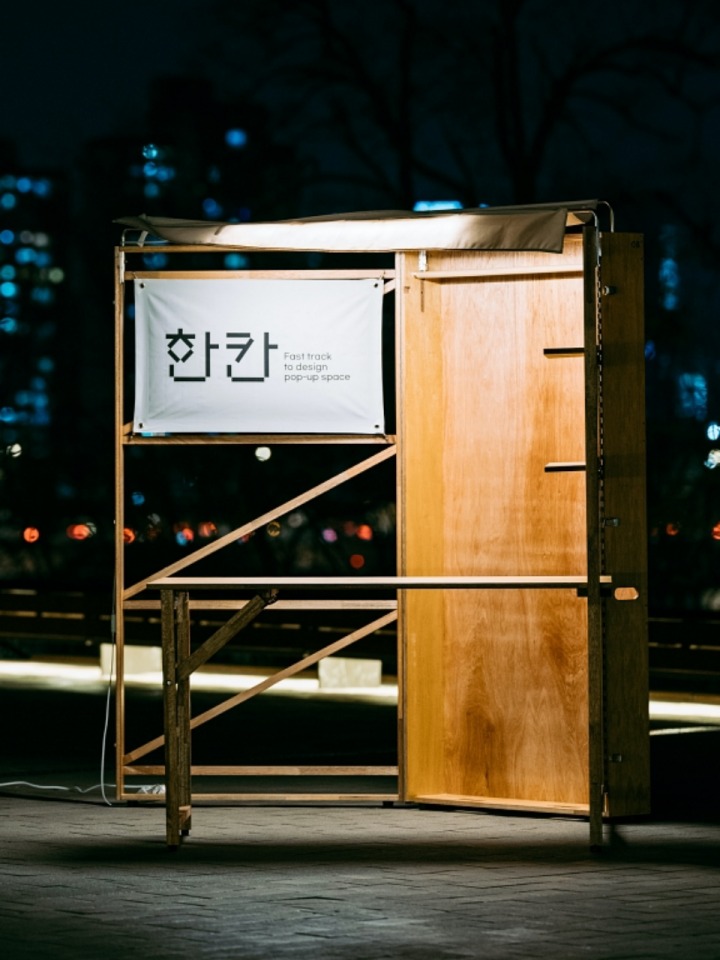
I majored in electronic engineering, so I’ve always thought in terms of efficiency. But cultural programming means creating something new every single time, which felt terribly inefficient to me. While thinking about how to work more efficiently, I ended up founding Hankan together with people who shared my mindset. First, we built a website where customers could handle everything from inquiries to orders, and we developed products that are easy to install and take down—building a system for handling work without any excess. Now, once an event is scheduled, all we need to discuss is how to maximize efficiency within the timeline. Our meetings mainly focus on things like how to transport the maximum amount of equipment in a single trip to a venue, how to work with less energy and fewer resources, and how to cut down on transport time.
I’m curious how you got into event planning in the first place.
I’d been going to church since I was young, and being active in the middle school, high school, and young adult groups gave me lots of chances to plan performances and events. Through various projects, I naturally grew to enjoy event planning. After graduating from college, I joined a company specializing in event planning, and it turned out to be no different from what I used to do at church retreats. The only difference? They actually pay you (laughs).
I read an interview with your management team on Hankan’s Naver blog. I noticed there’s a lot of other interesting content introducing Hankan as well.
Hankan is run by three of us—me as CEO, a developer, and a designer. Until last year, we handled marketing ourselves too, though that just meant managing the website and posting on Instagram. Right around the time we felt we needed a marketer, I happened to reconnect with someone I used to know who worked in marketing, and they ended up joining Hankan. Since our marketer came on board, almost every product sells out every week. We now have more than 15 events booked per week.
What sets Hankan apart?
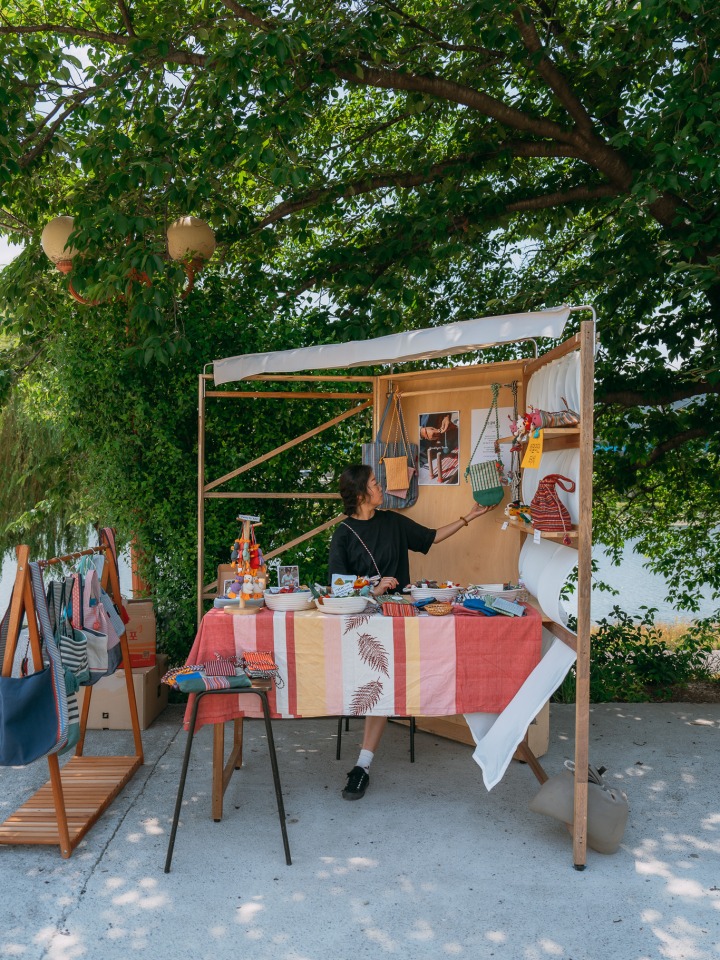
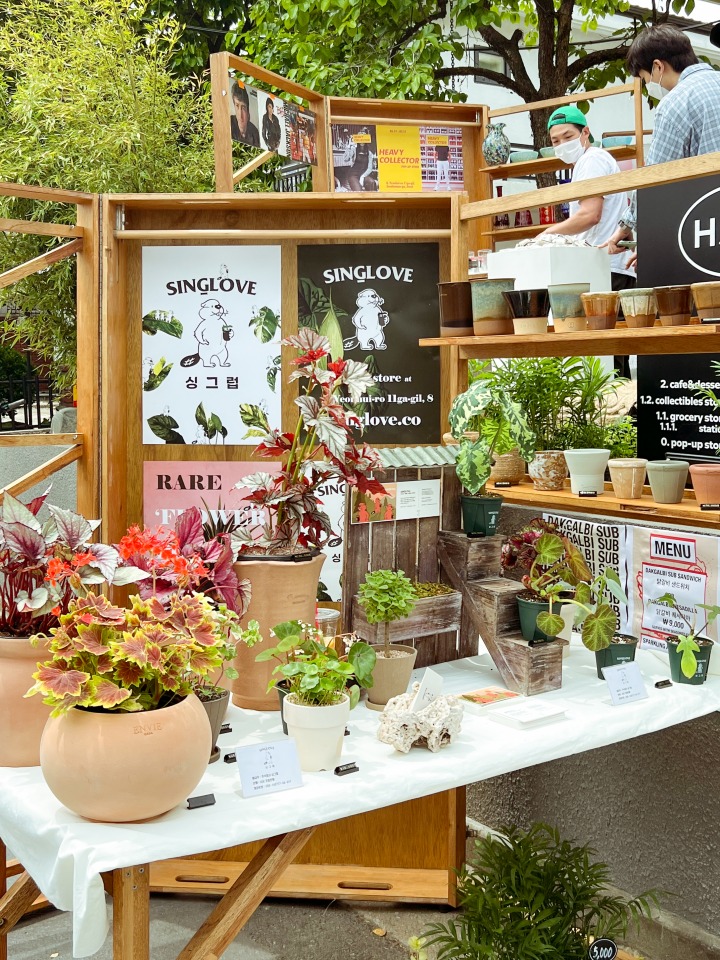
Most event equipment rental companies reuse their equipment just like we do. The real difference comes down to how efficiently you can execute on-site. For example, our products are designed so that anyone can easily fix an issue after installation, without needing a specialist. Installation and takedown also generate no waste. We pursue maximum efficiency in everything—from the manpower required to the amount of waste produced.
Since most of your equipment is used outdoors, durability must be important. What do you focus on most when designing products?
We invest heavily in production. While existing companies spend around 400,000 to 500,000 won, we spend 1.2 to 1.5 million won. We also reinforce materials like steel and wood, which we mainly use, to make them heavier and sturdier for durability.
You have a lot of wooden fixtures. How do you maintain them?
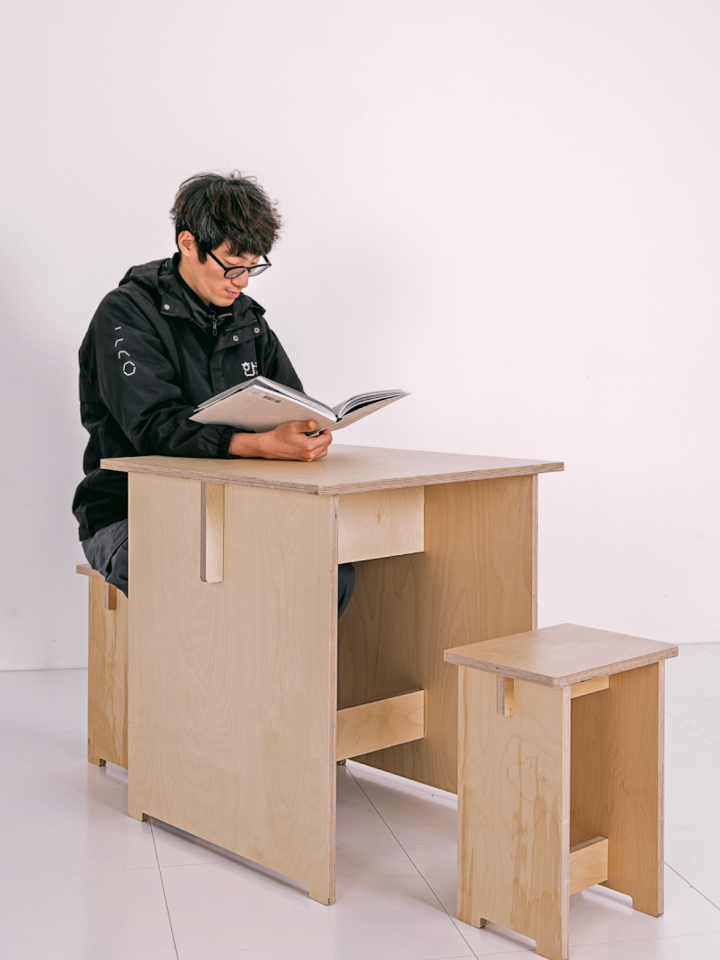
Weight and cross-section vary depending on the type of wood. There are particularly weak points where square timber and flat panels connect. If a fixture breaks, we can just replace that specific part. Steel equipment, on the other hand, is hard to reuse—once it’s damaged, it usually has to be discarded. That part is more complicated and difficult.
I’m curious how you store all the equipment.
For now, we can manage with a warehouse of about 330 square meters. I think we’ll probably need to expand and move to a bigger space next year.
Are you planning to increase your inventory?
When we first founded Hankan, we realized customers found it inconvenient and difficult to call in to ask about prices and get consultations. So we made it possible to place orders and inquiries entirely through our website—but that meant we needed a diverse range of products in stock, which is why we started developing our own products.
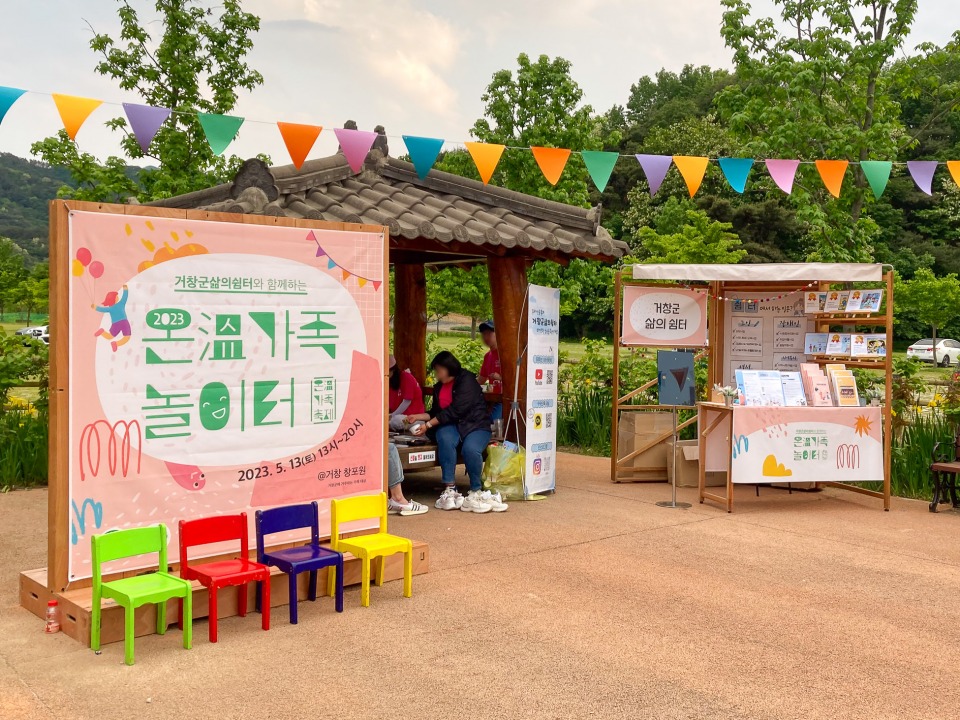
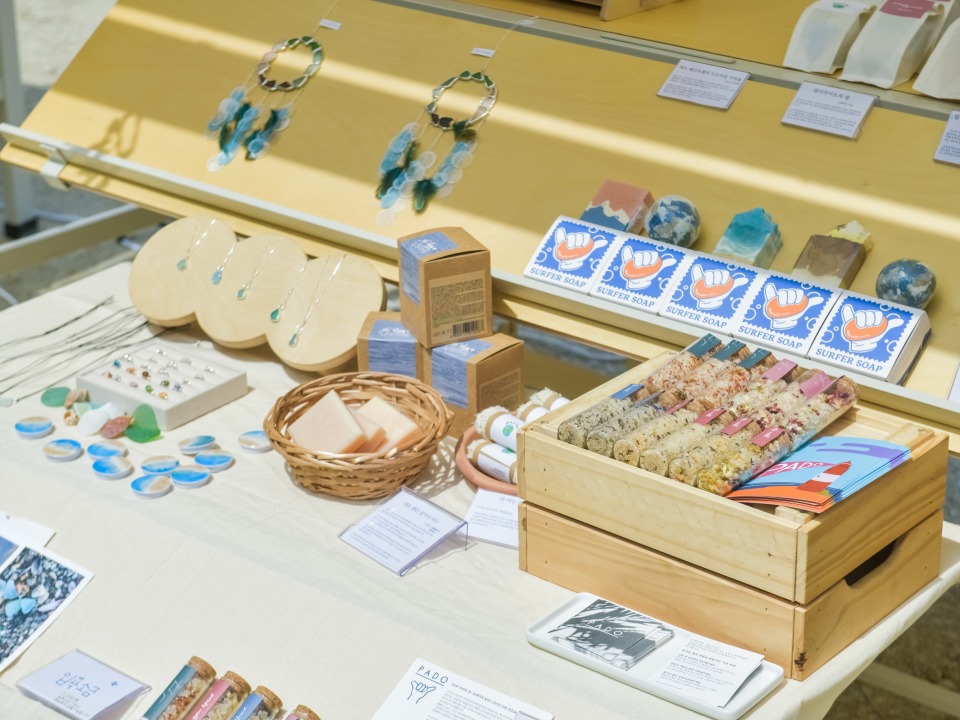
But then, as festival season approached, products kept selling out one after another. It was frustrating to feel limited in the scale of events we could handle because of our limited resources. So we started sourcing equipment from artists who shared our sensibility, and fixtures that had been used once and then left unused, and brought them onto the Hankan platform.
Could you call this a kind of platform service?
I think it’s still more like curation at this point—maybe a value-added service. When an artist entrusts us with equipment they’d otherwise throw away, it creates extra income for them. We gather usable equipment that already exists out there and provide it to people who need it. In the end, it’s good for everyone. That’s why I think it’s important to make equipment that’s easy to store and highly durable.
The ‘Example’ page on your website left an impression on me.
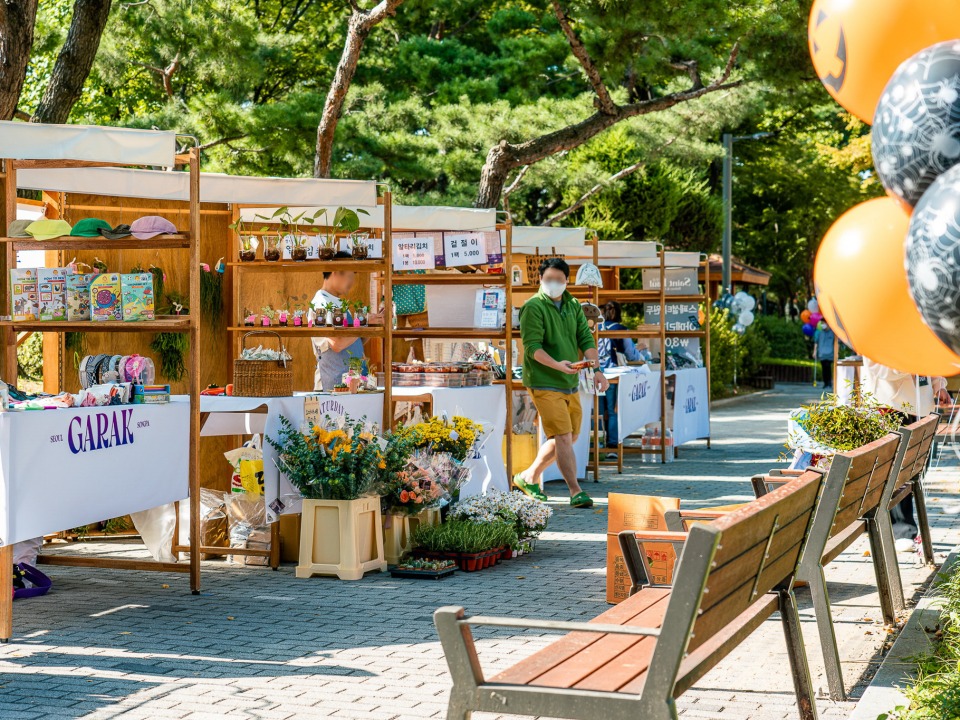
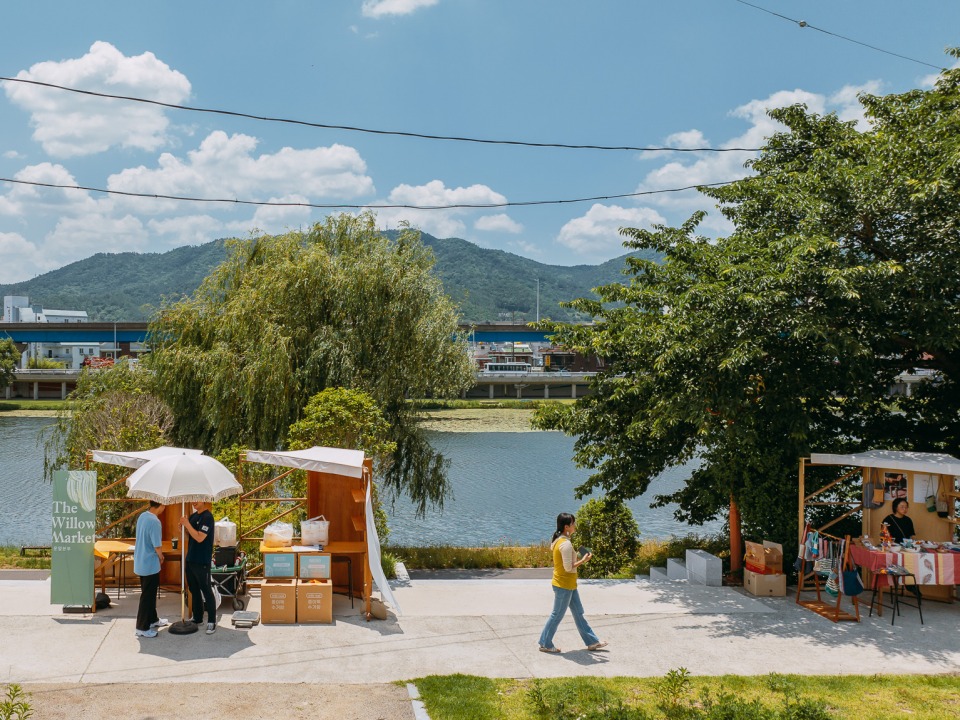
That page lets people see how other companies have used the products we rent out. It also serves as a reference for other Hankan users. If someone can’t find an answer even in the Example page, they can just reach out to us directly. Our role here is to show people how to be creative without failing.
We’re currently developing a filtering feature that lets people search for equipment suited to their event’s purpose and browse a variety of references. The goal is to help planners move more smoothly through the whole process on our website—from imagining how to use the equipment to deciding on products and placing an order.
That reminds me of the IKEA website.
IKEA is also a curation brand, so it’s a similar concept. Actually, I understand that only about 50 to 60 percent of the products IKEA sells are made in-house. Each product carries its own brand name, but people just think of it as ‘buying from IKEA.’ That’s ultimately the direction we’re aiming for too.
When do you feel the most rewarded?
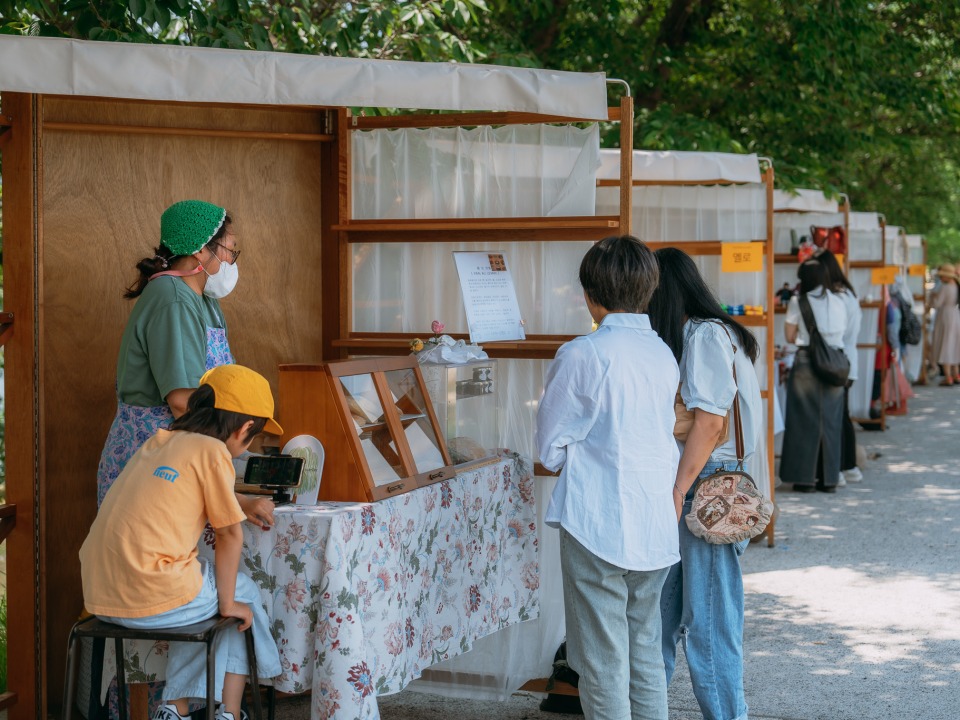
When the payment comes in (laughs). Just kidding. It’s genuinely fun to see how our equipment gets used on-site. The variety of ways people use it always surprises me.
Traveling all around the country must have taught you a few travel tricks.
Our work schedule is basically idol-level busy. There’s hardly any downtime while we’re working. Instead, we take vacations or hold workshops during the off-season, like monsoon season or winter. Last March, we all went skiing together in Sapporo, and this winter we’re planning to go to Chiang Mai, Thailand.
What’s the most memorable place you’ve traveled to?
I’ve been to Italy four times on my own. Italy has so many things I love—wine, coffee, steak, seafood. I especially loved staying in Sorrento for extended periods. It’s great for enjoying small beaches or using as a base to explore other places. One tip: don’t book your accommodation in Sorrento itself. Just two train stops away, there are plenty of great, affordable places to stay.
Do you think the day will come when Hankan’s fixtures make their way overseas?
It’s definitely possible. We once received an order related to an event held in Paris, France. We ended up having to decline because we couldn’t meet the schedule. When shipping overseas, we can send our all-in-one products, since they don’t require specialized personnel for setup or teardown. You just pack them in a box, ship them, and get them back in the same condition.
Is there a goal you’d really like to accomplish this year?
We’re planning to build a management system soon that will let brands or artists who’ve joined us handle everything from selling their fixtures to settling accounts in one place. That way, we’ll be able to use a wider variety of better equipment, right? I hope we can play our part well so that the artists on board, the event companies, and the event participants can all have a good experience.
What’s the ultimate message you want to convey through Hankan?
I should have talked with our marketer a bit more before this interview (laughs). I think a lot about sustainability and eco-friendliness in general. I believe that using well-made fixtures effectively is, in itself, a form of eco-friendliness. In the past, we used to explain things at length—‘our products are made without waste, they don’t generate trash, and using our products helps create a virtuous cycle of resources,’ and so on. These days, we don’t really try that hard to promote it. People will understand once they use it themselves. The cleaning staff love us. Even when handling cables, we use reusable velcro ties, so after teardown, not a trace is left behind. We want to show, without needing to explain it, that Hankan can make any venue look better and more sustainable.


