
Subtraction and Addition — The Aesthetics of Taking Away and Adding On
Grapelab founder Kim Minyang talks about her journey from Kakao and travels through Morocco to founding a design studio that blends sustainability, eco-friendly materials, and employment for people with disabilities.
We met Kim Minyang, founder of the design studio Grapelab, whose small, interconnected teams—like grapes forming a bunch from tiny individual berries—work together without harming one another.
Words Parc Jinmyoung
Interviewee Kim Minyang (Founder, Grapelab)
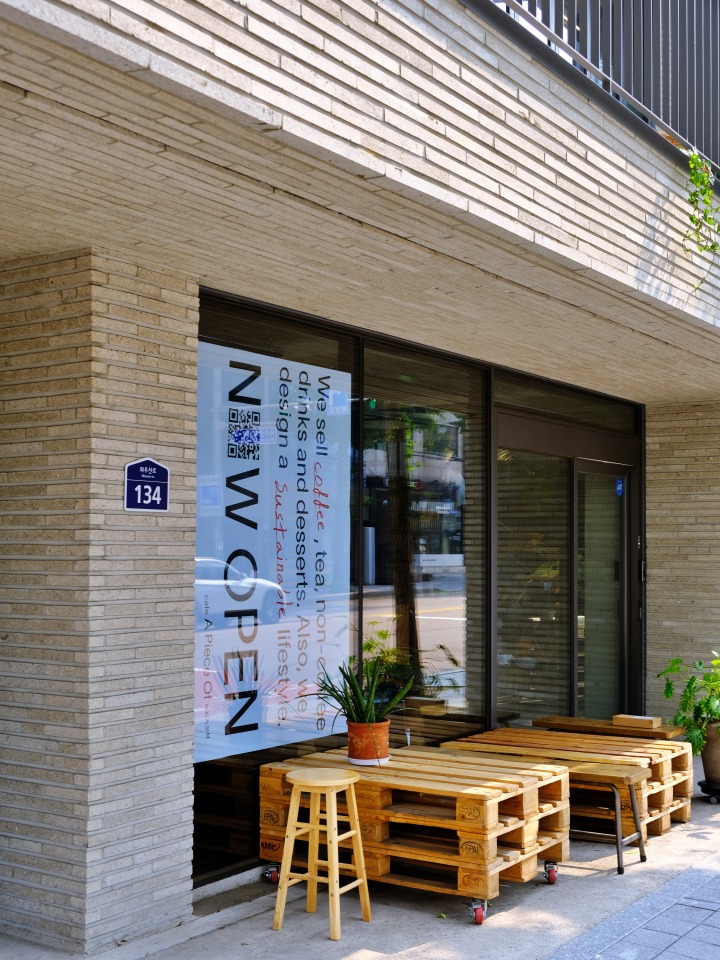
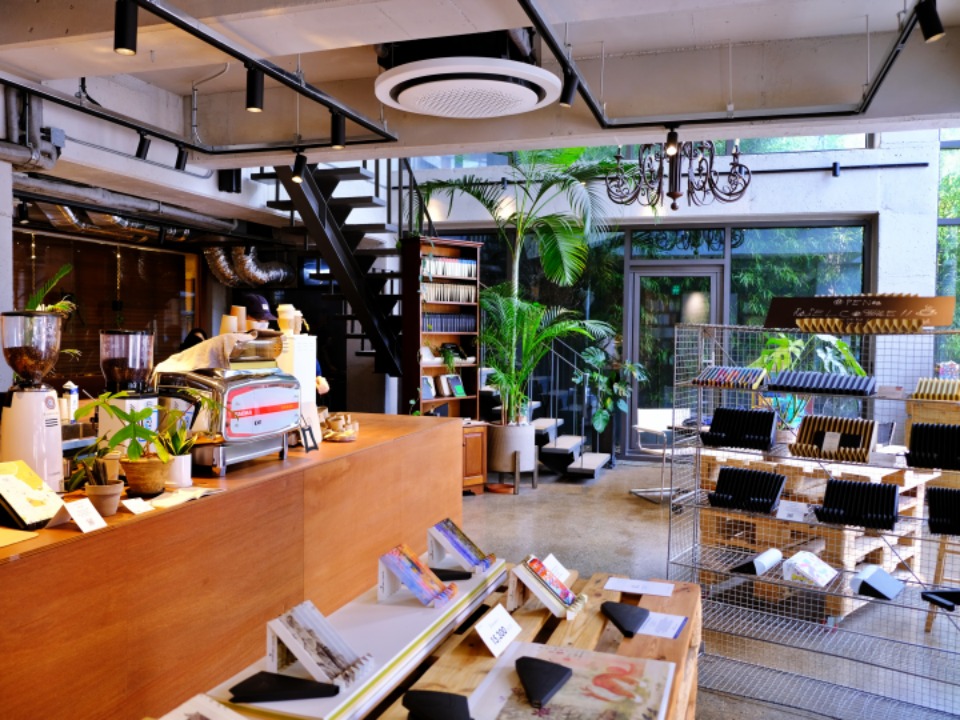
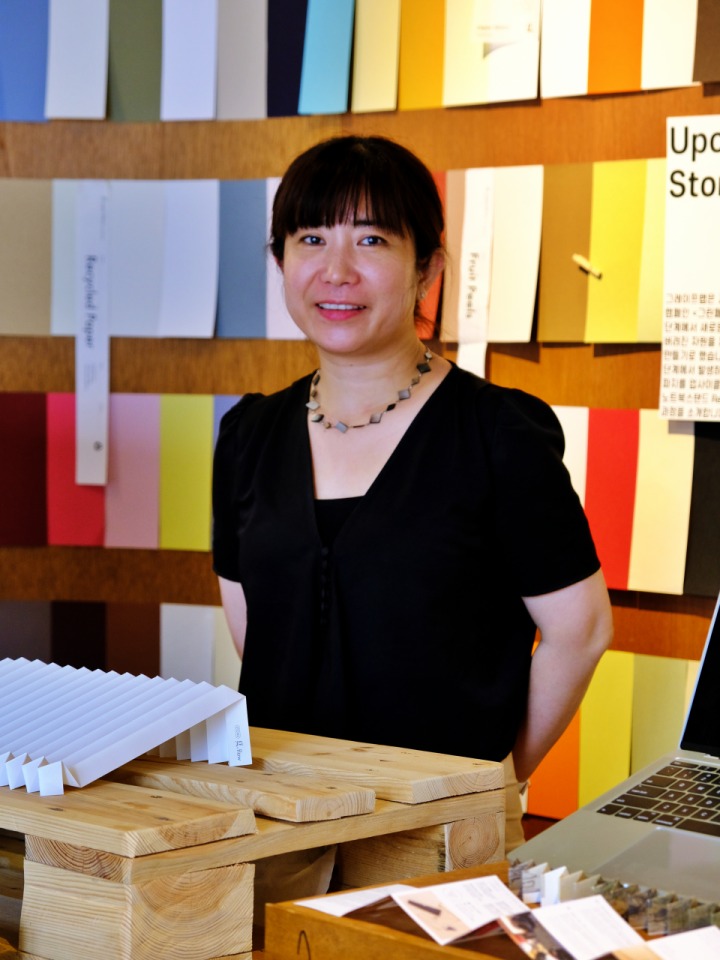
Kim Minyang, one of Kakao's early team members, left the company to study in the UK. There, through travel, deep self-reflection, and lessons on sustainability, she gathered the insights that led her to found Grapelab in 2018 after returning to Korea. Grapelab is a design studio that creates environmentally friendly products—such as laptop stands, mood lamps, and planners—made from recycled paper. The company also offers solutions to social issues throughout its operations, collaborating with artists with developmental disabilities and making it a point to hire people with disabilities as full-time employees. We met Kim Minyang—who practices the aesthetics of subtraction and addition by removing technologies that harm the environment while adding consideration for those on society's margins who are too often overlooked—at A Piece Of, the café operated by Grapelab.
Note 1. A Journey Toward Sustainable Design
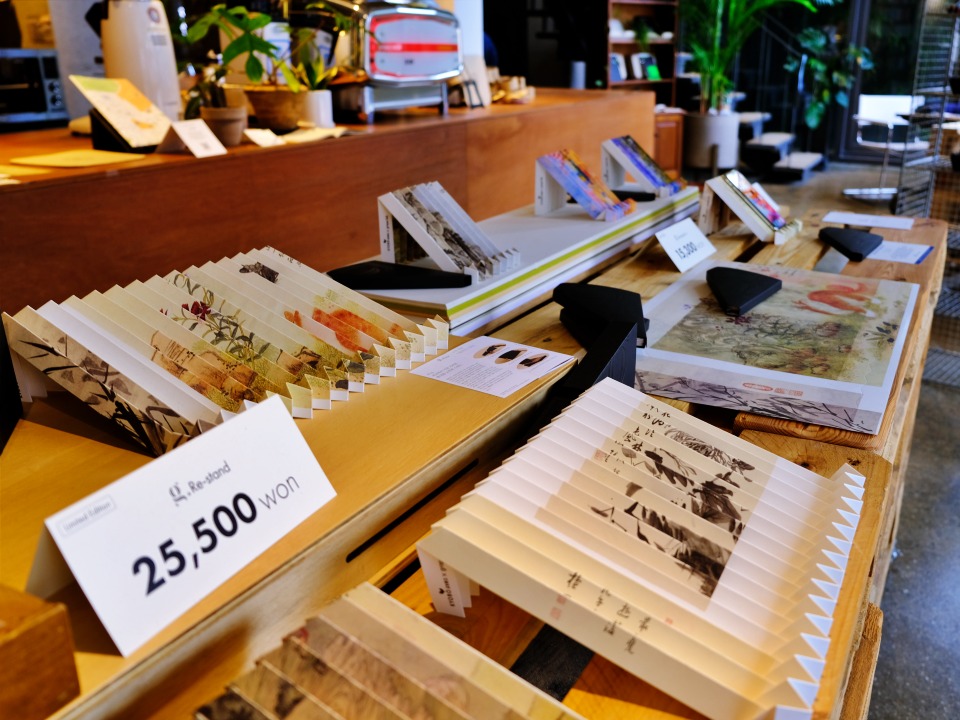
Looking at the Grapelab products displayed here in the café, they all seem lightweight and highly functional for storage—perfect for travel.
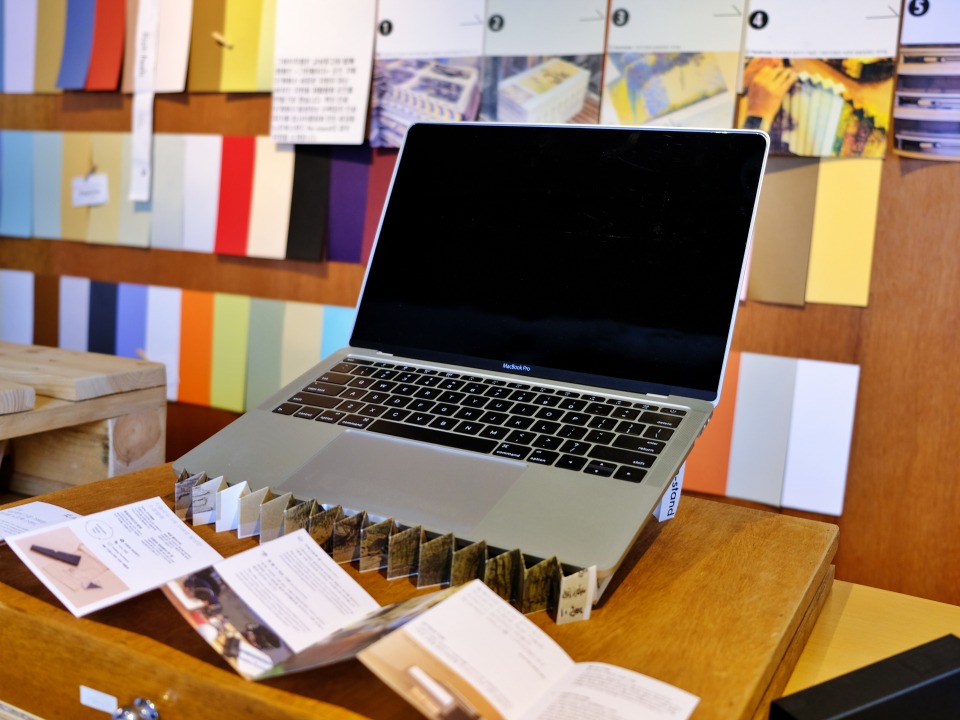
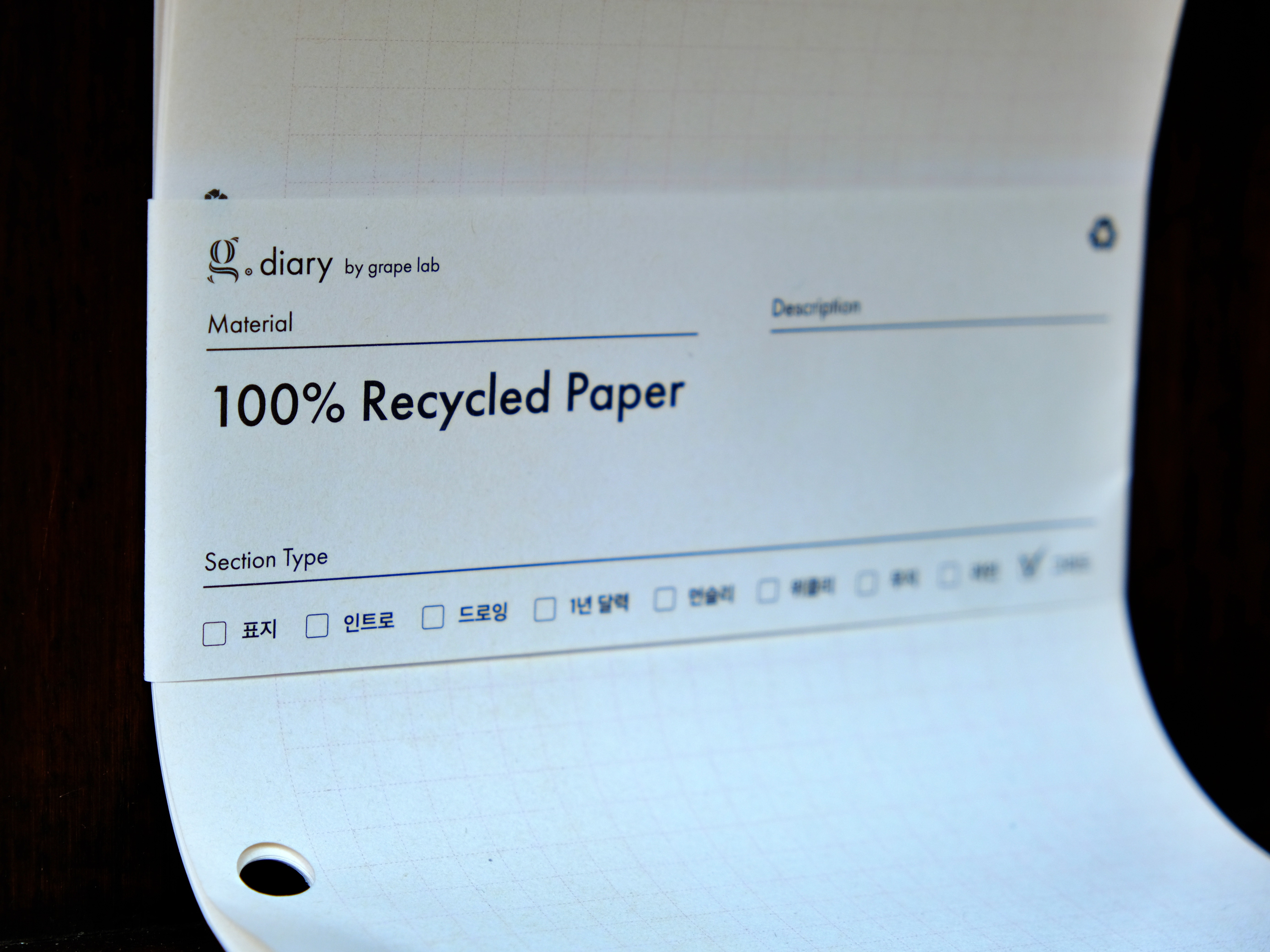
That's right. Our paper laptop stands are lightweight and, thanks to our own folding technique, extremely compact. The monthly planner made from recycled paper is actually a product I created by improving on the inconveniences of the notebook I used to carry while traveling, adding the features I felt were missing.
Do you enjoy traveling in general?
I traveled a lot while studying in the UK. I went on research trips for sustainable design to places like Morocco, Türkiye, and Croatia. I visited Morocco as many as six times. I mostly went to meet artisans working in markets or in remote areas. In the markets, artisans sit quietly behind the merchants, making their goods. In the more remote areas, women who found it difficult to go out would gather at home to make various things together.
Traveling to remote local areas that most tourists never visit must have been both risky and difficult.
It was hard, but fun. Since traveling alone was risky and I didn't know the areas well, I asked local nonprofit organizations for help. Things go much more smoothly when you click well with the people at these organizations. What matters most is verifying whether the nonprofit is properly certified, and being prepared to handle the risks if it isn't. I was lucky enough to meet someone I really got along with, and together we traveled by truck to some truly out-of-the-way places. It was an experience money simply couldn't buy.
What made you suddenly decide to study abroad in the UK?
In Kakao's early days, I was leading the preparations to launch the emoji service. To engage more actively with users, we brought on four webtoon artists—Kang Full, Lee Malnyun, Norangumi, and Nam—to create the emojis. At the time, the company wasn't generating revenue, so the budget was tight, but we proposed an unusually generous 50:50 revenue split with the artists and moved forward with the project. Emoji services are extremely common now, but back then, it was a new challenge for both us and the artists. Actually, I'd call it more of an experiment. (laughs)
Fortunately, the response was explosive as soon as we launched. The biggest change was that, from that point on, webtoon artists began receiving fair compensation for their work. At the time, webtoon artists' income wasn't particularly high. The service I had designed ended up reshaping the industry's structure and improving someone's circumstances. That experience inspired me deeply, and I wanted to help people who were marginalized or struggling through a sustainable system. Wanting to study this more deeply, I decided to go study in the UK.
Is there a moment from your research travels that stands out most in your memory?
Every time I went to Morocco, I discovered changes and possibilities I hadn't expected, which made it truly fascinating. The business I was developing at the time involved using a prototype called Grape to build an interface that would let artisans directly buy and sell goods in the market. Since literacy rates tend to be lower in the developing world, I thought that using icons instead of text to make the interface intuitive and easy to use could help a lot of people. My graduate school friends warned me that most of the older artisans, having grown accustomed to their own ways for so long, would probably hesitate to try something new. But surprisingly, everyone turned out to be remarkably open-minded. Some even said that if they didn't understand something, they'd just have their sons teach them, and expressed real enthusiasm to participate—it caught me completely off guard.
Whether mobile internet access would even be feasible was uncertain, but around that time, Africa's IT market was growing at an astonishing pace. Even people living in the middle of the desert mostly had cell phones and internet access.
How did it turn out?
There was one problem I couldn't solve in the end. The artisans couldn't open personal bank accounts. In Morocco, only a socially established elite class was able to open bank accounts. Things might be different now with the introduction of fintech, but that was the reality back then. Whose account would receive the money, and how would it be distributed? I simply couldn't solve that problem.
Note 2. Fighting the Prejudice That Strong Sustainability Themes Are Boring and Preachy
Is there a connection between your travels during that time and your business today?
The name Grape was actually coined in Morocco. In its early form, Grape was an application. Back then it was a mobile, digital-based platform, whereas now I think of it as an analog-based platform. Each of our products is connected to the structure of the platform I originally envisioned. Today, Grapelab has built a structure that incorporates artwork by artists with developmental disabilities, ensuring that revenue is distributed to them as a top priority. The style has changed, but the core philosophy remains the same as it was back then.
You went from being at the cutting edge of digital technology to analog design, which sits at the opposite end of the spectrum.
Honestly, I had no intention of doing that when I first went to study in the UK. British schools have a lot of discussion-based classes. The format usually involves presenting your own ideas and defining social issues, and my graduate school classmates kept asking me why I only ever talked about digital technology, IT, and business—didn't I want to design things that could exist without technology? That question hit me like a slap in the face. IT technology was something I took completely for granted, yet my friends were bringing up things I had never once considered. From the day I heard that, I decided to try designing by removing technology. For example, I started thinking about designs that could work even without electricity. As I kept stripping away technology, I eventually arrived at paper.
Did removing technology spark your interest in environmental issues?
I was eating a sandwich in London, and the packaging had something written on it. I don't remember the exact wording, but the gist was something like, ‘Our brand doesn't use a refrigerated distribution system for the sake of the environment. Don't you think it's excessive to insist on food being that fresh?’ The point was that even if it's not as fresh as something refrigerated during distribution, it can still taste perfectly good—yet we always insist on having only the very best. And that greed comes back to haunt us as environmental pollution. It made me reflect on myself. While working at the company, providing customers with the highest quality service felt so obvious that I never once considered what was being sacrificed behind the scenes. Seeing those words on the packaging filled me with something like awe.
It's been five years since you founded the company—how has the response to your products been?
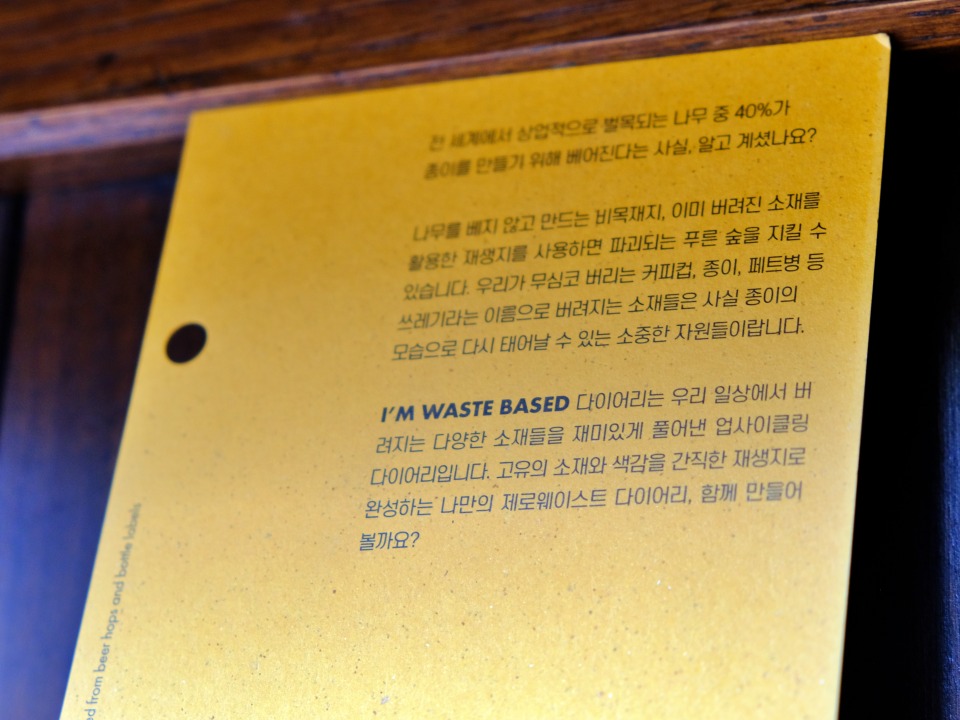
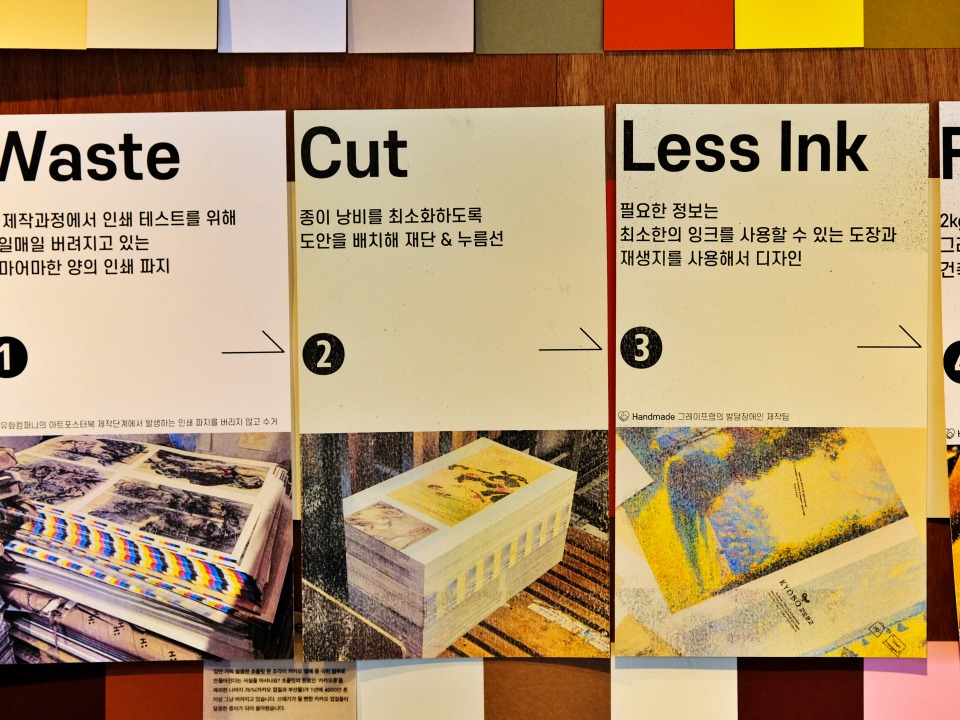
There's still a long way to go. Of course, when we first launched the product on Wadiz, the response was explosive. But honestly, it was hard to bring up the topic of the environment. Back then, there was a social atmosphere that treated environmental discussions as boring and preachy. So we set the environmental story aside and emphasized only the design. As a result, people started saying things like, ‘I bought it because the design is pretty, and it happens to be eco-friendly too.’ We've been steadily growing by winning users over that way.
Note 3. Using Eco-Friendly Materials Alone Doesn't Make Design Sustainable
I heard more than half of your company's employees have disabilities, which seems like it must be one part of your approach to sustainable design.
That's right—we work with 6 employees with disabilities who are hired full-time, and 5 artists to whom we provide revenue every three months. Honestly, it was even harder to talk about disability than about the environment. It's still difficult now, too. In the early days, the first thing people would often ask was whether running a program that supports people with disabilities meant we received a lot of government subsidies. I thought a lot about how to communicate this in a smarter way.
What made you decide to work with people with disabilities?
I was thinking about how to help people with disabilities, who are often socially marginalized, engage in stable economic activity, and that led me to a welfare center for people with disabilities. Ever since I studied art, all the way through becoming a designer and working in society, I lived trapped in an obsession with doing everything well. Everything felt like competition, and whenever I put out a subpar result, the shame and embarrassment I felt were unspeakably intense, so I was constantly under pressure. But when I saw people with developmental disabilities, who had never received any formal art training, sitting together and drawing, their hands moved so freely. Drawing without any burden, their pictures seemed to reveal an entirely different world. Watching their work loosened up my own hands and feet as well. I had never done product design before, but it gave me the courage and confidence to take on a new field.
I believe that the social participation of people with disabilities contributes to expanding diversity. We tend to try to surround ourselves with people who have standardized abilities, or who perform above average. But I think the sensibility and communication that come from diverse experiences help move us toward a better society.
What are your plans going forward?
In the second half of this year, with support from the Korea Institute of Design Promotion, we're planning a corporate ‘remote worker kit’ project. It's a kit made up of lightweight items that people who work without spatial constraints can easily carry around. We're also preparing a collaboration that uses waste materials generated by companies. In the long term, we plan to build a circular system where we receive waste materials from companies and turn them into products.
Note 4. Grapelab's laptop stand is made of paper weighing less than 50 grams. How can it withstand up to 5 kilograms of weight? According to CEO Kim Minyang, the key principle lies in the multiple folded creases, which act like legs to distribute the center of gravity. Grapelab holds over 30 patented technologies certified both domestically and internationally. Just how important is the designer's role in creating a sustainable environment?


