
Story of Antiques, Sogoni Goyo — A Place That Tells the Voices Held in Old Objects
Tucked in an alley in Seoul's Yeonnam-dong, Sogoni Goyo is a curated antiques shop. An interview with its two founders about the beauty of antiques and the stories woven into them.
Story of Antiques, Sogoni Goyo — A Place That Tells the Voices Held in Old Objects
Kyuhwan, who has long worked in photography and coffee, and Sanghui, who has steadily explored exhibitions and craft, were captivated by the stories held in antiques and began Sogoni Goyo together. We spoke with the two, who say they're drawn more to objects that carry time than to those that dazzle.
Interviewee Kang Gyuhwan, Kim Sanghui (Co-founders of Sogoni Goyo)
Interviewer Ryu Sunwoo
Could you briefly introduce Sogoni Goyo?
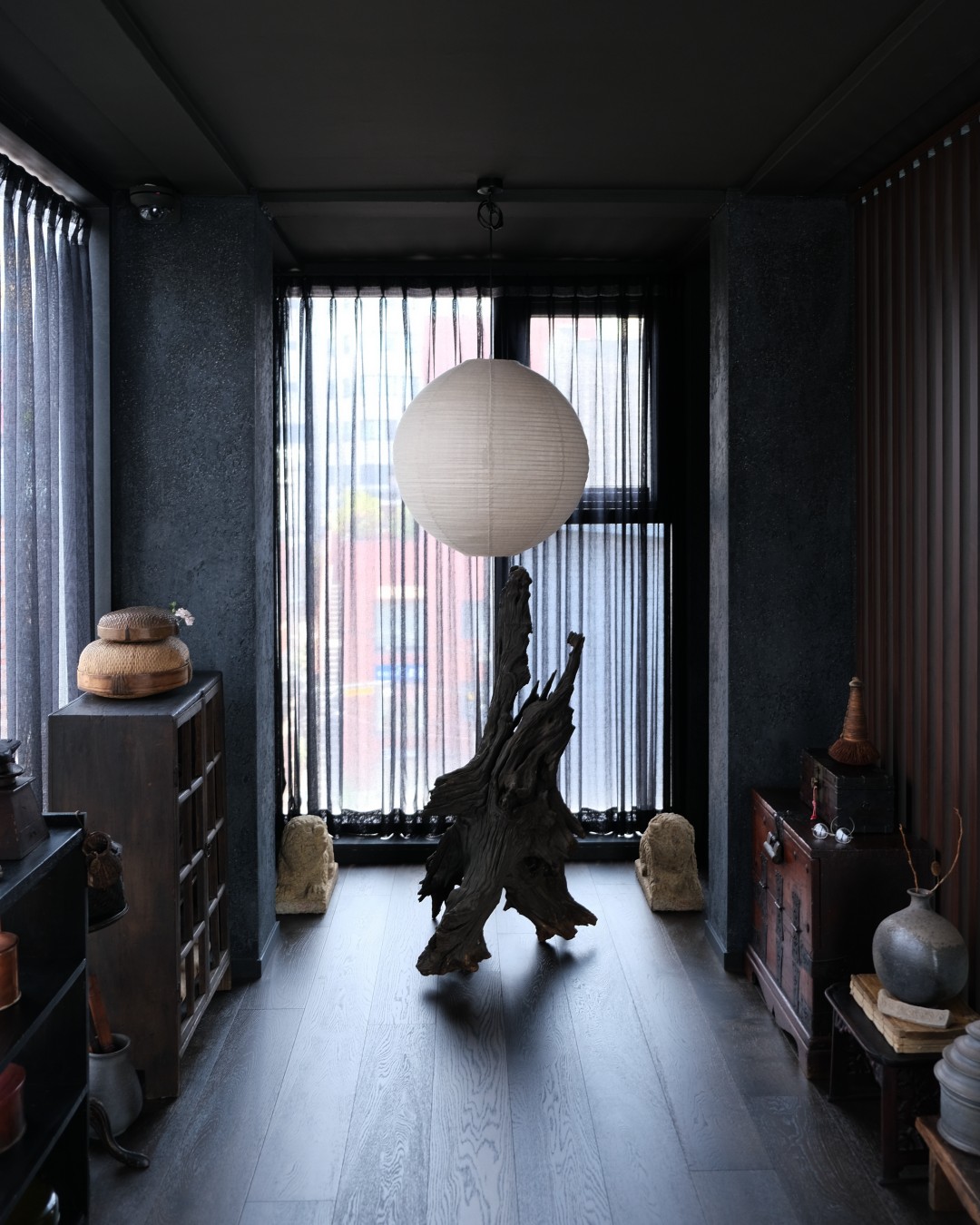
Kyuhwan We wanted to create a quiet, tranquil space, so we combined ‘sogonsogon’ (whispering) and ‘goyo’ (stillness) to make the name Sogoni Goyo. We started paying attention to antiques with the thought that our old objects might carry a beauty all their own, no less than contemporary crafts. As we began collecting pieces one by one, they gradually accumulated, and we thought it would be nice to show what we had to others, and if possible, to sell them too. That's how it began.
It's been about three months since you opened. What has daily life been like?
Kyuhwan In the early days, a lot of friends and influencers came by, and that's when Sogoni Goyo started to become a little known. There was a quiet period in between, but once we restarted our permanent exhibition, more visitors began coming. Thanks to that, I've also been getting requests for photography work, so I've been doing some personal projects as well.
Sanghui Rather than becoming widely known quickly, I'm trying to hold on to the feeling we had when we first started. We thought a lot about whether we should switch to a reservation system, but we've kept our original approach because we want visitors to be able to fully enjoy the space during their time here. I really enjoy sharing the stories held within these old things.
When did you first become interested in antiques?
Sanghui I've always loved going to exhibitions. At first I mostly sought out paintings, but once I encountered craft exhibitions, I fell for their charm. That was quite a while ago, even before COVID. Then I gradually started collecting, and naturally that led me to antiques. Antiques turned out to be so beautiful and lovely too. They're not just simple objects — there are so many stories embedded in them. That's what drew me in more and more.
Kyuhwan Honestly, I didn't know much about antiques. As I went to exhibitions with Sanghui and encountered craft pieces, I naturally became interested. Little by little, I started learning more.
Since old objects have been through so much time, they must often carry fascinating stories.
Kyuhwan I don't usually go looking with a specific object in mind from the start. When I come across something that catches my eye while browsing, I ask, "What kind of object is this?" Sometimes the seller explains it to me first. More often than not, after hearing the story behind it, I look at the object in a completely different way. Many similar pieces exist, but when there's a story attached, it looks entirely different.
Sanghui Recently I happened to find a glasses case made of hanji (traditional Korean paper). In the Joseon era, glasses cases were usually made of fish skin, but this one was made by a scholar of modest means who wanted one but made it himself out of hanji. He even replicated details like the cord and ornamentation, and it looks like he coated the outside with oil. The moment I heard the story, it tugged at my heart.
Kyuhwan The person who had owned it had traveled a long way and pleaded to bring it home, carrying it in his arms the whole bus ride back, we were told. Even while handing it over to us, they kept hesitating. (laughs) I suppose that's because the object carries memories of something cherished.
Last month you held your first curated exhibition with metal craft artist Ryu Yeonhui.
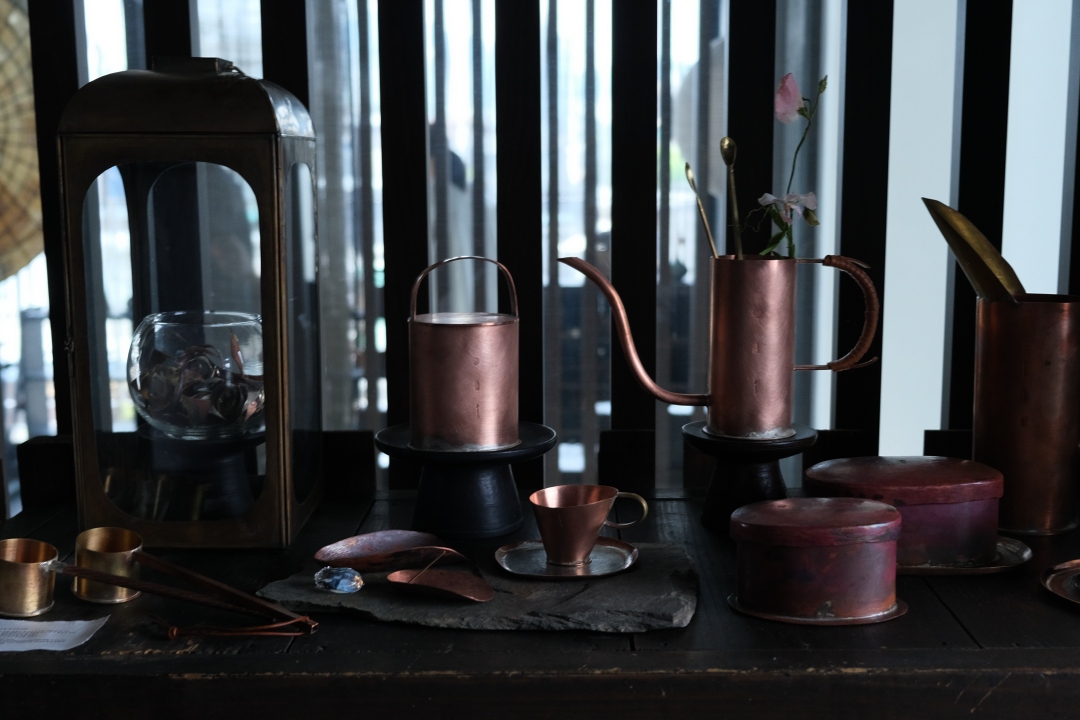
Kyuhwan With craft works too, we place great importance on stories and connections. We also met Ryu Yeonhui, who exhibited with us this time, through a chance encounter. I went to see one of her exhibitions and was introduced to her, and on the very first day we met, she invited me to her home and we talked for hours. Ryu usually works with metal boxes and sculptural objects, but for this exhibition, she also presented new pieces meant for everyday use.
I'm curious what kind of works you mainly collect and present.
Sanghui There isn't a fixed set of criteria — it's more about craft pieces that move me emotionally. When I hear the background or story behind an artist's work at an exhibition, the way I see the piece completely changes. That's when I bring home the works that resonate deeply with me. It's the same with antiques and old art pieces.
Kyuhwan (Sanghui) always talks with the artist first before buying a piece at an exhibition. After hearing what they wanted to express, she looks at the work once more. On top of that, we also consider whether it fits well with our space.
What kind of objects move you the most?
Sanghui With antiques, I tend to be drawn to modest, understated pieces rather than flashy ones. I especially love objects that scholars once used, or pieces made of bamboo and hanji. They don't need to be pristine. When traces of use or scratches remain, I feel the life of the person who lived in that era, so to speak. When I see objects like that, I just can't walk past them. (laughs)
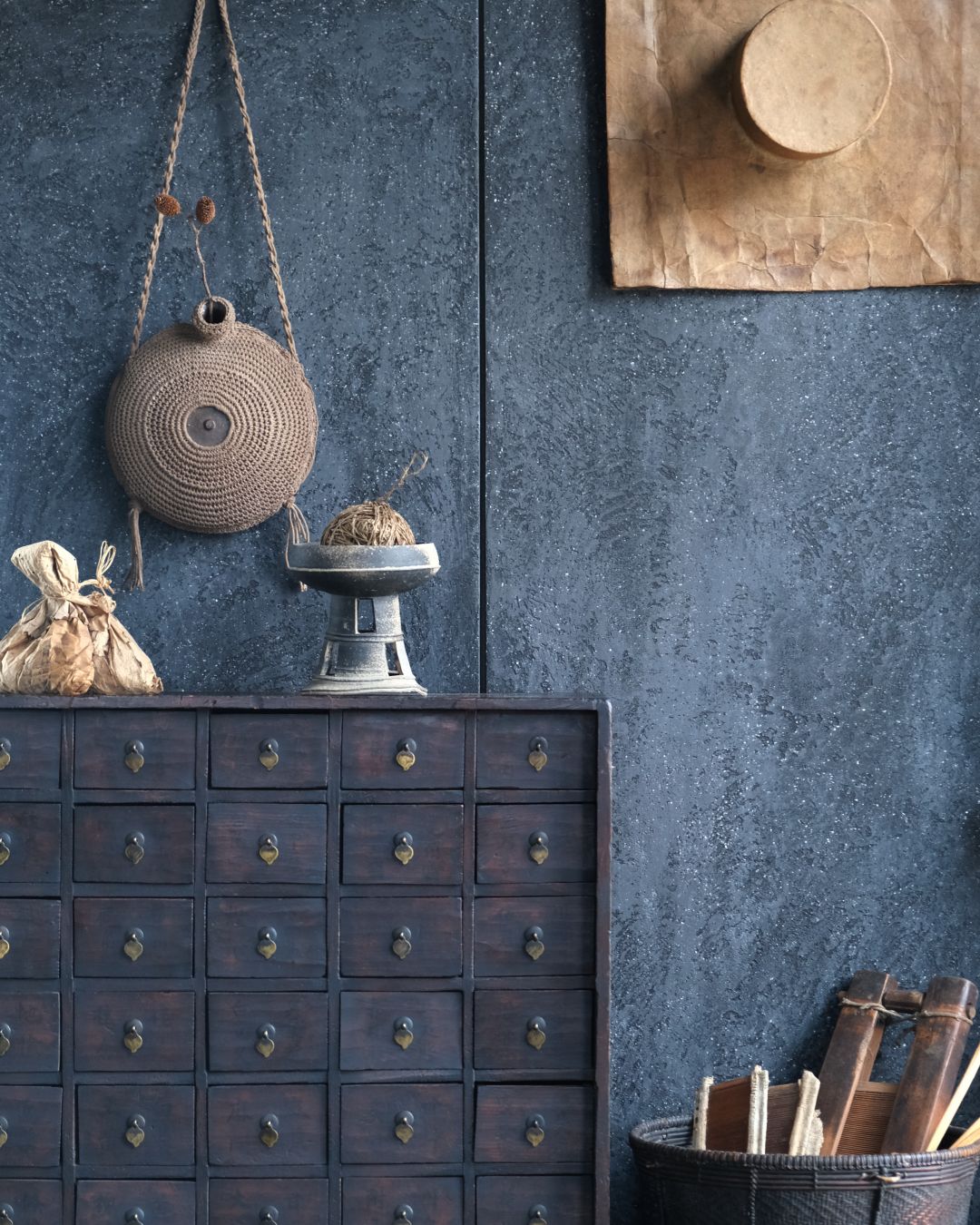
Kyuhwan At Sogoni Goyo, you'll find many objects made of bamboo or hanji. In particular, many of the hanji objects carry special stories. For example, the gat (traditional hat) case hanging on the wall wasn't made from new paper — it was made by tearing off wallpaper from inside a home. Back when paper was precious, people even practiced writing on walls, so if you look at the inside, you can still see traces of Chinese character practice on the wallpaper.
What did you pay the most attention to while preparing the space?
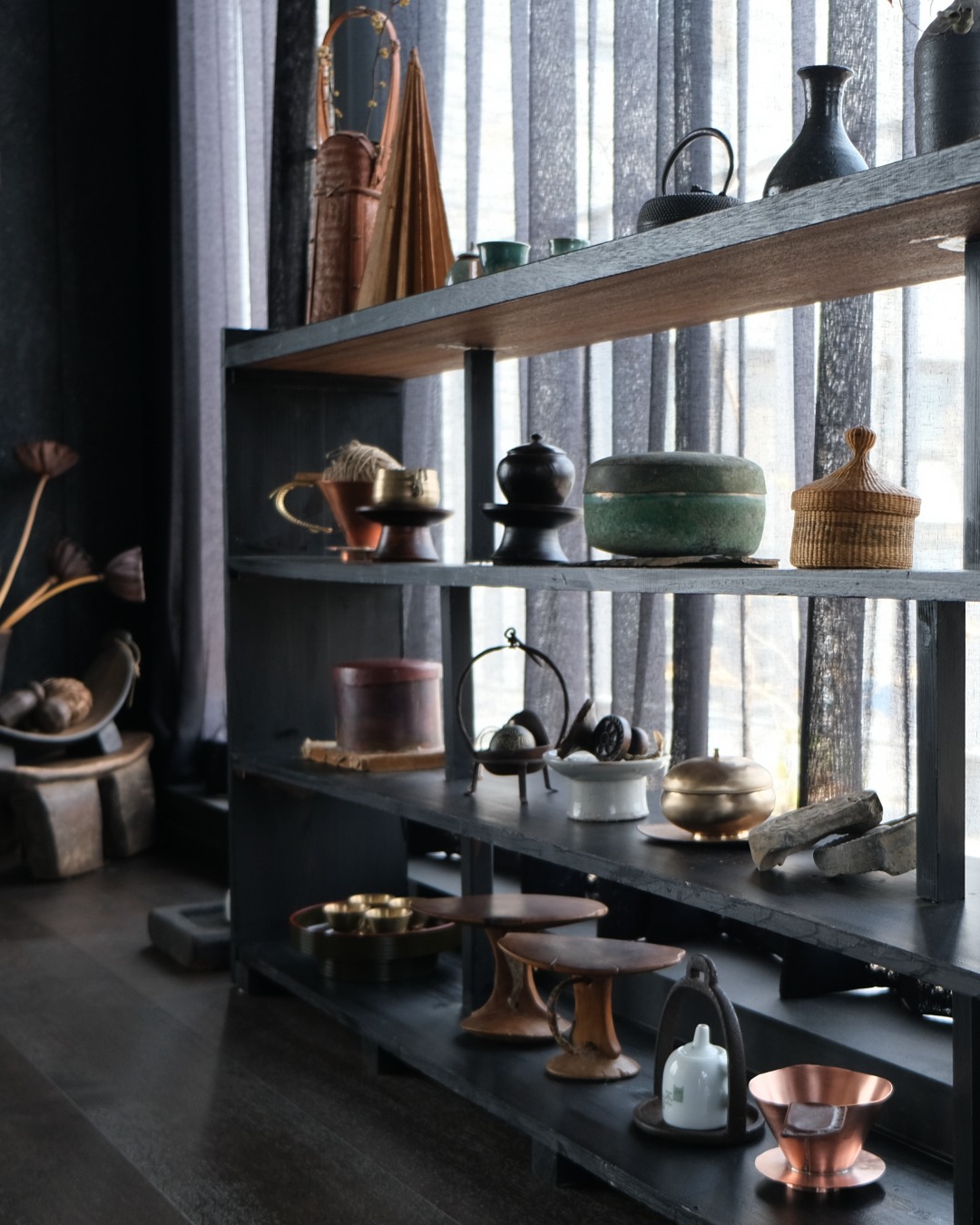
Kyuhwan The thing we paid the most attention to was the tone of the space. We kept the overall atmosphere consistently black.
Sanghui We already loved black to begin with, but more than that, we wanted to create a calm, quiet atmosphere. We designed the space while imagining what it would feel like when antiques met black, and this is what came out of it.
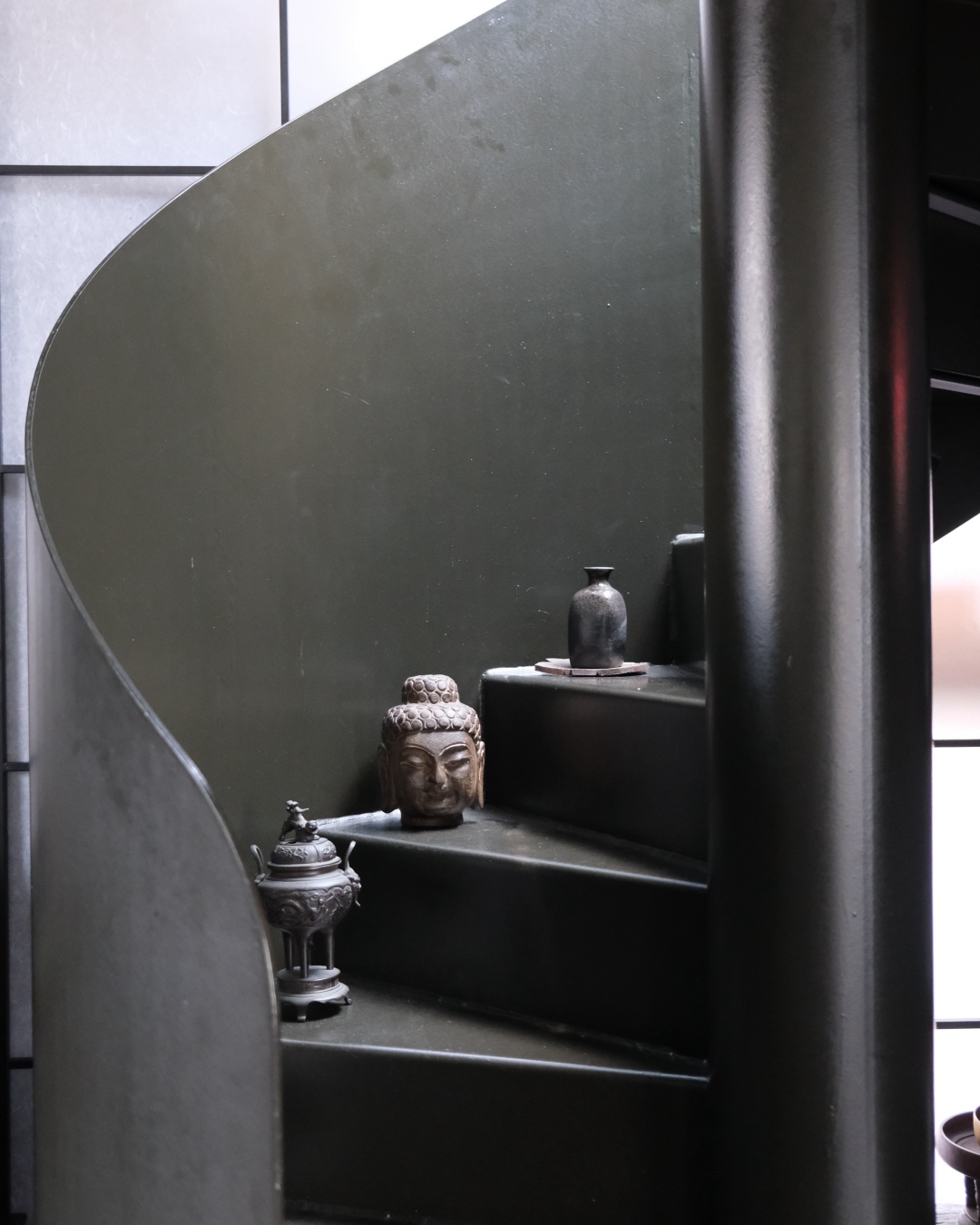
Kyuhwan We also wanted to avoid a noisy location that didn't match the character of the space. We looked all over, from Jongno to Yeonhui-dong, and happened to come across this spot tucked inside an alley in Yeonnam-dong. We liked its quiet atmosphere. The unusual U-shaped layout around the entrance and the staircase inside made it feel even more appealing.
Antiques have recently been drawing renewed attention, especially around the Dapsimni Antique Market. What do you think of this shift?
Sanghui I think it's a good thing. In the past, people who liked antiques and old art tended to skew older. Thanks to Dapsimni, it seems younger generations have also started taking an interest in antiques. I welcome this change. It gave us the confidence to start Sogoni Goyo, and made us feel we could more actively share what we love. In fact, more young people have been visiting Sogoni Goyo too.
Are there any themes or keywords you're especially interested in for upcoming exhibitions?
Kyuhwan Right now we're running a permanent exhibition that introduces the objects we own. Since many people are still encountering Sogoni Goyo for the first time, we're focused on carefully guiding them through the space and the objects. We're also preparing a new program centered on the keyword ‘rest.’ We'd like to create moments where people can sit for a while and unwind through sound, scent, and visual experience. We hope this becomes not just a place to view exhibitions, but a space where people can pause and find a sense of stability.
If you were to take a trip themed around antiques or crafts, where would you recommend?
Gyuhwan I’d recommend the Lee Jaehyo Gallery in Yangpyeong. It houses both the artist’s studio and exhibition space, and it’s quite large with plenty to see. The natural surroundings are beautiful, and you can stop by the café he runs himself for a cup of coffee. About 30 minutes away by car is Museum SAN in Wonju, which I’d also recommend. Stone Creek is a great café to visit alongside Museum SAN—you can take in a spectacular view along the rugged cliffs, and they clearly don’t take their coffee lightly either.
How can one develop an eye for appreciating antiques and crafts?
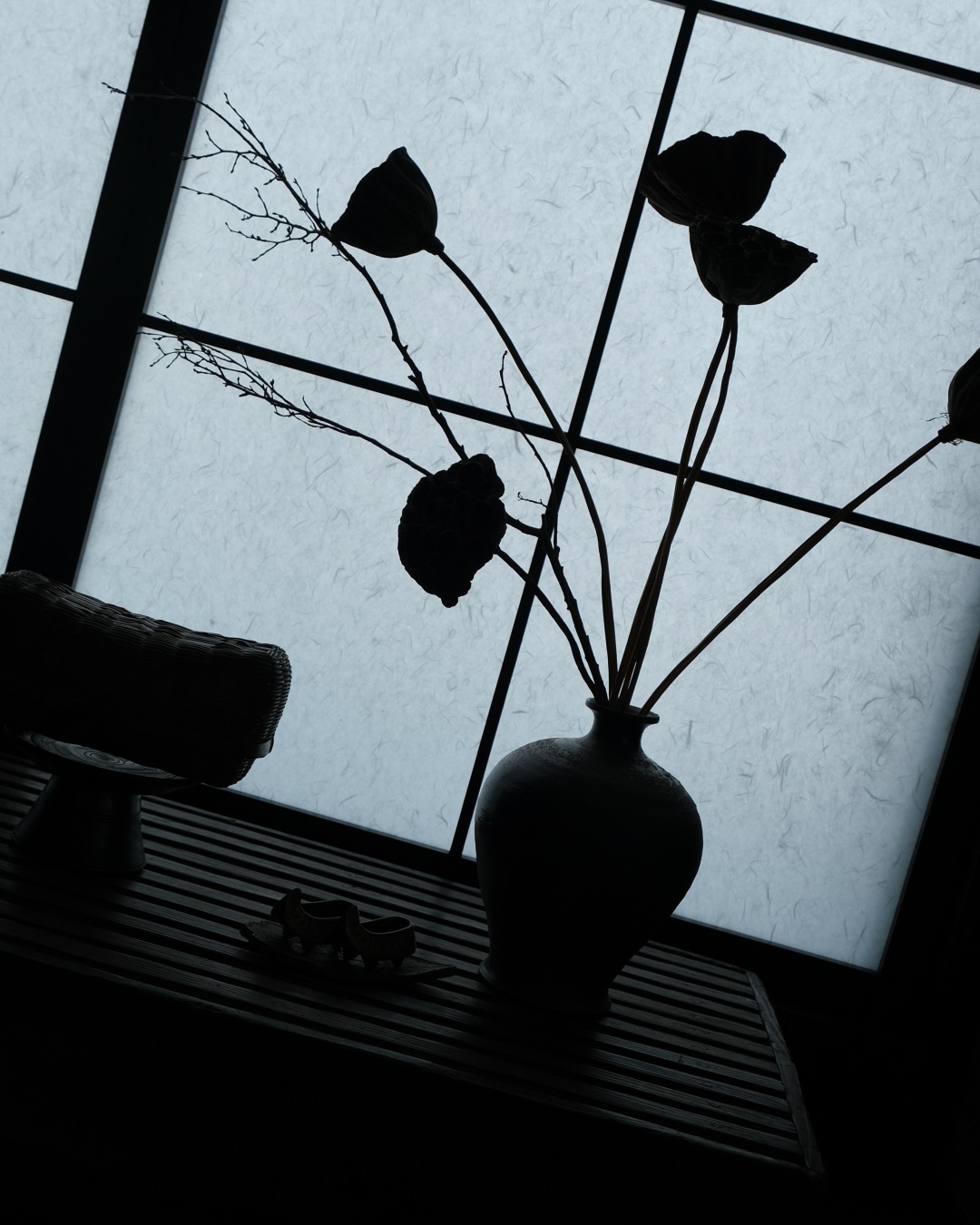
Gyuhwan I think it’s important to focus on the details of a piece and the maker’s intention. It’s hard to understand at first, but the more you look, the more you start to notice the artist’s hand in the work. For instance, the metalwork artist Ryu Yeonhui, who exhibited with us this time, leaves her own distinct mark on her pieces. Since she works by hand-hammering the metal, natural traces of that process remain visible. When looking at a craft piece, I think it helps to consider not just its form, but how the artist made it and what details they left behind. This is just personal preference, but with antiques, I love how the changes in color over time remain visible. It’s sometimes called ‘ttaenmul’ (a patina built up over years), and while you could clean it off, I think leaving it as it is holds more value.
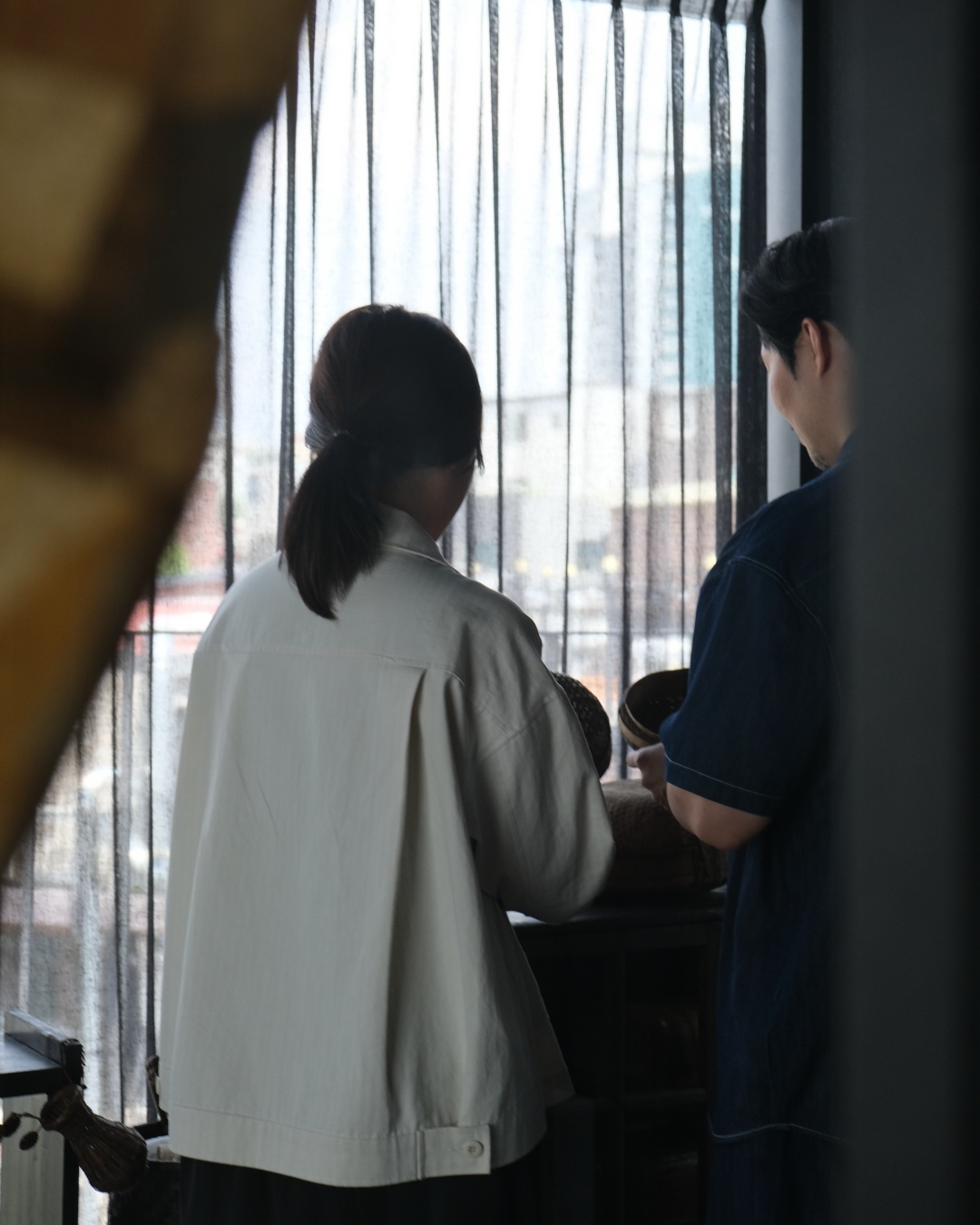
Sanghui In the end, I think simply looking at a lot of pieces matters most. The more you see, the more naturally your eye develops. As you visit exhibitions and listen to explanations, you gradually start to sense what your own taste is and which pieces hold more value. Whenever possible, I think it’s also important to actually see and touch things yourself. In a museum, you can only look at objects with your eyes, but if you get to touch them in person, you can imagine, ‘If I brought this home, how would I actually use it?’ I think that kind of accumulated experience is what helps you discover your own taste.
Is there anything you’d like to say to people who find antiques or antiquities intimidating?
Sanghui I hope people can experience firsthand just how beautiful our own heritage is. If you simply think of them as folk items or antiques, they can feel difficult to approach, but once you learn the meaning or story behind them, you start to feel a real affection for them. I try to share as many stories as I can with visitors to our space about the objects’ history—whose hands they passed through, what kind of life they were part of. Hearing those stories, I think, makes our traditional objects feel much closer and more interesting.
What do you hope to do going forward with Sogonigoyo?
Gyuhwan We’re planning programs that let people linger longer and enjoy the space’s scent, atmosphere, and low lighting. I hope visitors can find a sense of comfort and peace in this quiet space.
+ 3 Objects Recommended by Sogonigoyo
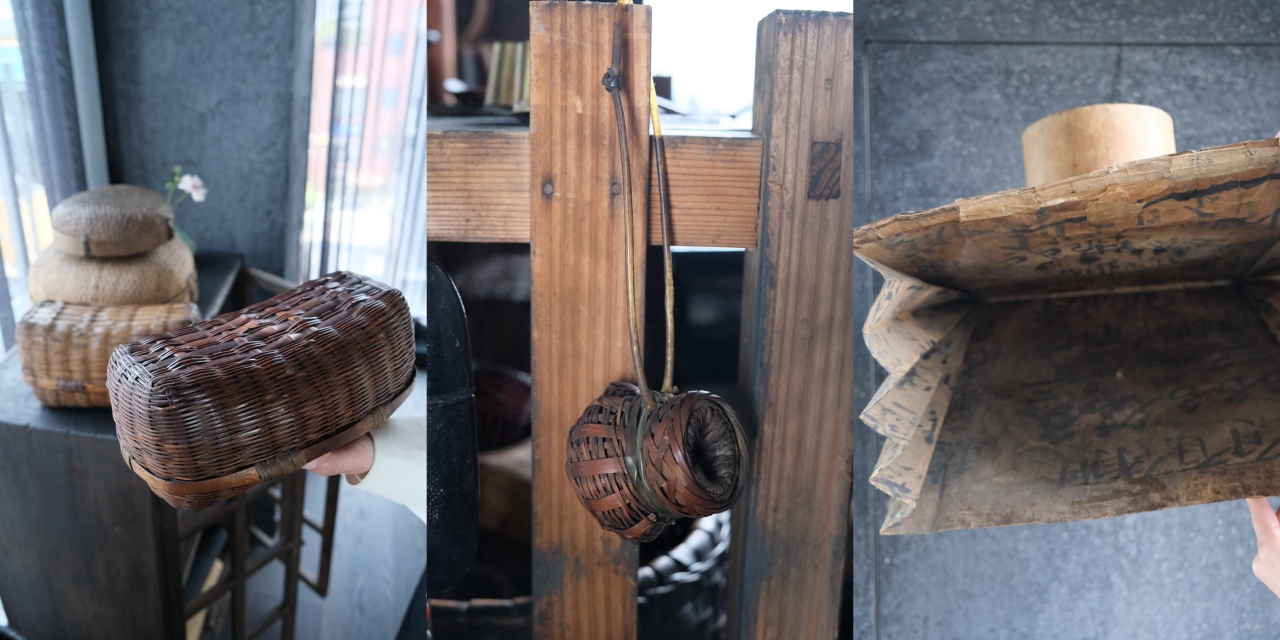
Chobaegi
A lunchbox-like container once used to carry food. This particular piece, cherished by Sogonigoyo, bears the marks of a long passage of time. Originally light in color, it has darkened to a deep brown over the years.
Cricket Cage
A container used in China to carry crickets. There is a Chinese folk pastime of pitting crickets against each other in fights, and this type of container was used to carry the crickets meant for battle.
Gat Case
A box used by scholars in the Joseon dynasty to store their gat (traditional horsehair hat). What makes this one special is its material—it was made from wallpaper that a scholar had once used to practice calligraphy on. Looking closely at the inside, you can still see traces of practiced Chinese characters. The paper was coated with oil to make it waterproof.


