
Selling Milk Straight from the Farm — The Story of Uyutjip
An interview with Woo Seungmin, who runs the café Uyutjip in Jain, Gyeongsan, using milk fresh from her father’s dairy farm, and sells handmade yogurt, string cheese, and granola alongside it.
Fresh Milk from Farm to Cafe — Selling Milk Straight from the Farm, Uyutjip
Every day, Woo Seungmin heads to her shop carrying milk fresh from the farm. Having helped out at her father’s dairy farm since she was six years old, what kinds of thoughts and choices led her to open the café ‘Uyutjip’ in a quiet village in Gyeongsan?
Interviewee Woo Seungmin (Owner, Uyutjip)
Edited by Ryu Sunwoo
What does a typical day look like for you these days?
‘Control’ is my keyword lately. I’ve always considered myself, and been considered by others, a free spirit—but I’ve come to realize that being free means that if you don’t control yourself, you can easily become hopeless. I disliked discipline and rules, and chose this job precisely to avoid being boxed in, but these days I find myself setting stricter rules for myself than any organization ever could. As a result, some days I feel proud of myself, and other days I feel like I need to write myself a letter of reflection. I’m controlling my time, my spending, and my digital device usage. Evenings spent without electronics have become so precious and meaningful that it feels like I’m living an entirely new life.
Could you briefly introduce Uyutjip?
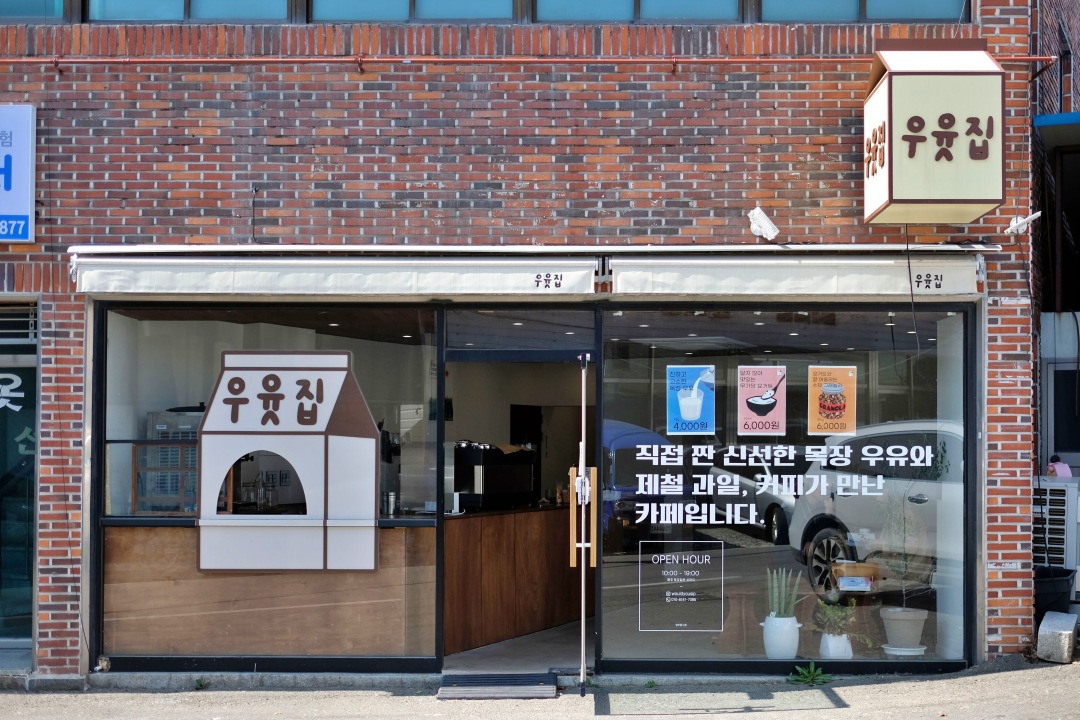
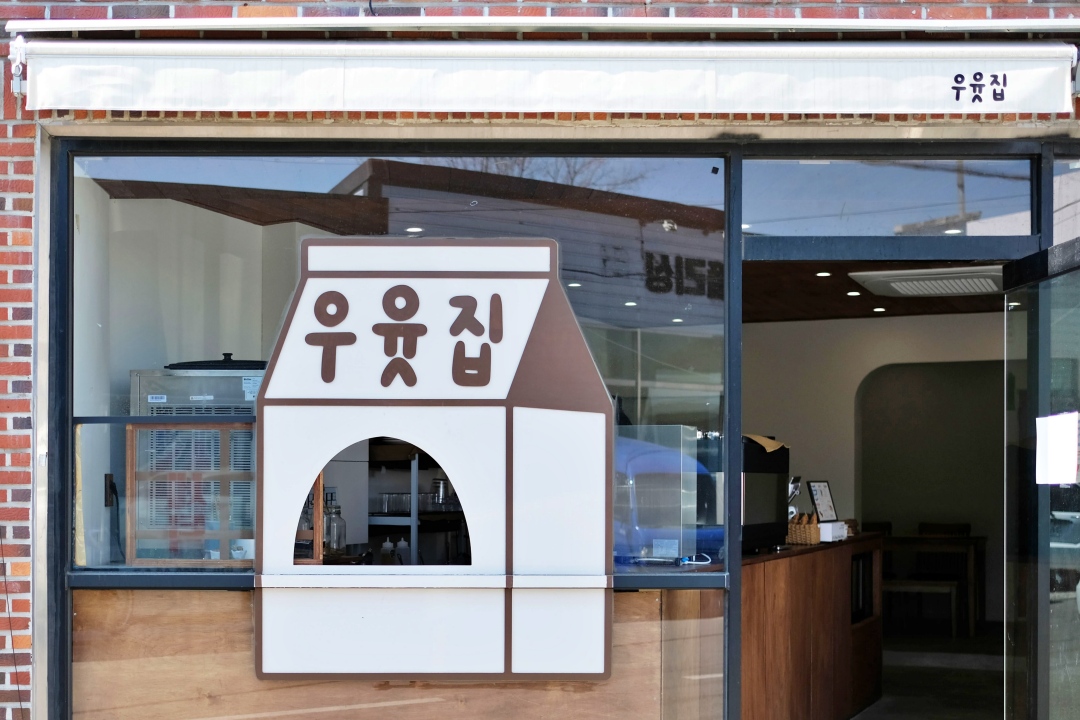
Uyutjip is a shop that sells milk drawn directly from my father’s dairy farm. Selling just milk alone felt like it might be a bit unfamiliar to people, so I started as a café to make it easier for customers to approach. Thanks to my café part-time job experience, it was also something I could do well at the time. Now we sell not only milk and coffee but also yogurt and cheese.
Was there a particular reason you opened the shop in Gyeongsan?
Since I need to bring milk from the farm every day, I couldn’t go far from it. So I opened the shop in a rural village within the township. The name is literally ‘Uyutjip’ (Milk House), and at first we didn’t even have a sign, so people kept asking what kind of place this was—whether it was a milk distributor. Many were worried that a shop opened by a young person in the countryside would fail quickly. I think we’ve managed to settle in, in our own way. Though it still happens that people who came thinking it was a café are surprised, saying, ‘Oh, you sell milk too?’ or people who came to buy milk ask, ‘Wait, you sell coffee too?’ (laughs) These days, I think we have more customers who just come to buy dairy products than customers who come for coffee.
What made you start Uyutjip in the first place?
Honestly, I never once thought I’d run my own business. I especially never wanted to open a café. My original dream was to be a copywriter, and I majored in advertising in college hoping to work at an ad agency. During college, I tried an office job for the first time, and sitting all day just didn’t suit me—it was really hard. I also realized I felt more comfortable in a quiet countryside setting closer to nature than in the city. Right around the time I was belatedly figuring out my career path, my dad signed a lease on a tiny room, about 3.3 square meters, to pasteurize and sell milk from the farm himself. It used to be one of several practice rooms inside a piano academy. When I went to see it, using just that one room seemed like such a waste. I casually said, “You could open a café here, you know?” and my dad told me to give it a try, so that’s how it started. Even now, thinking back, it’s almost absurd how impulsive the beginning was. (laughs) I guess ignorance made me brave.
I heard you also run a zero-waste shop alongside Uyutjip. Were you always very interested in environmental protection?
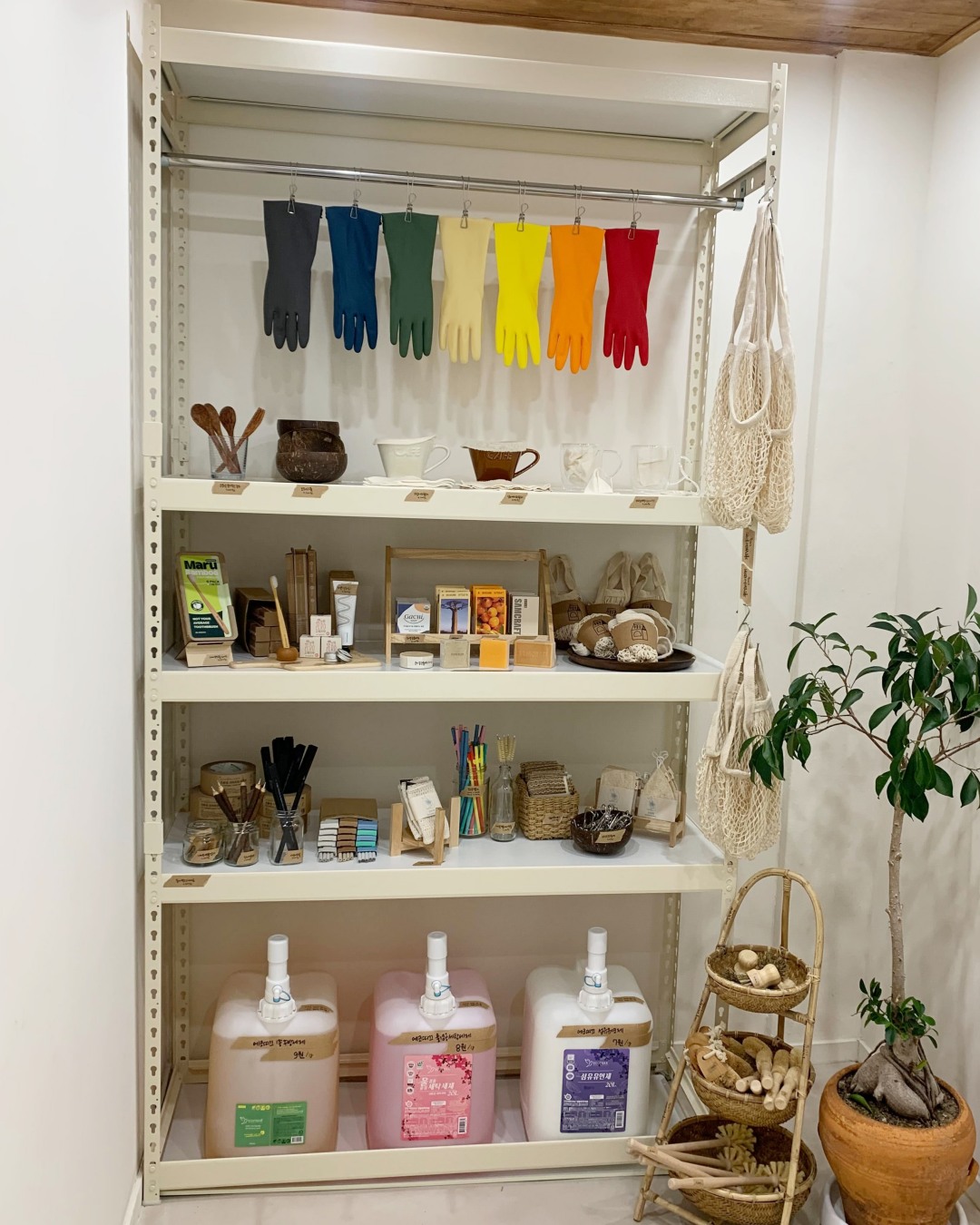
Honestly, not that much. Around the time I opened Uyutjip, I happened to become close with a couple who ran a zero-waste shop. Talking with them about environmental issues, I learned that dairy farming can actually have a negative impact on the environment. Since I had already decided to run Uyutjip, and my dad was running the farm, I wondered if there was a way to lessen our environmental impact, so I set up a zero-waste corner in one part of the shop. I especially think it’s harder for people in rural areas to take interest in environmental protection or zero-waste living. I wanted to let people know that this kind of culture exists in the world. At first, I wanted to package the milk in an eco-friendly way, so I sold it in 1.5-liter Del Monte bottles. But grandmothers kept saying the milk was too heavy to carry. As a compromise, we switched to pouch packaging. If we have more resources someday, I’d like to switch to paper cartons. We also offer discounts for bringing your own tumbler, and we accept donated paper bags, ice packs, and coolers from customers to reuse. It’s my small way of making up for the methane the cows produce. (laughs)
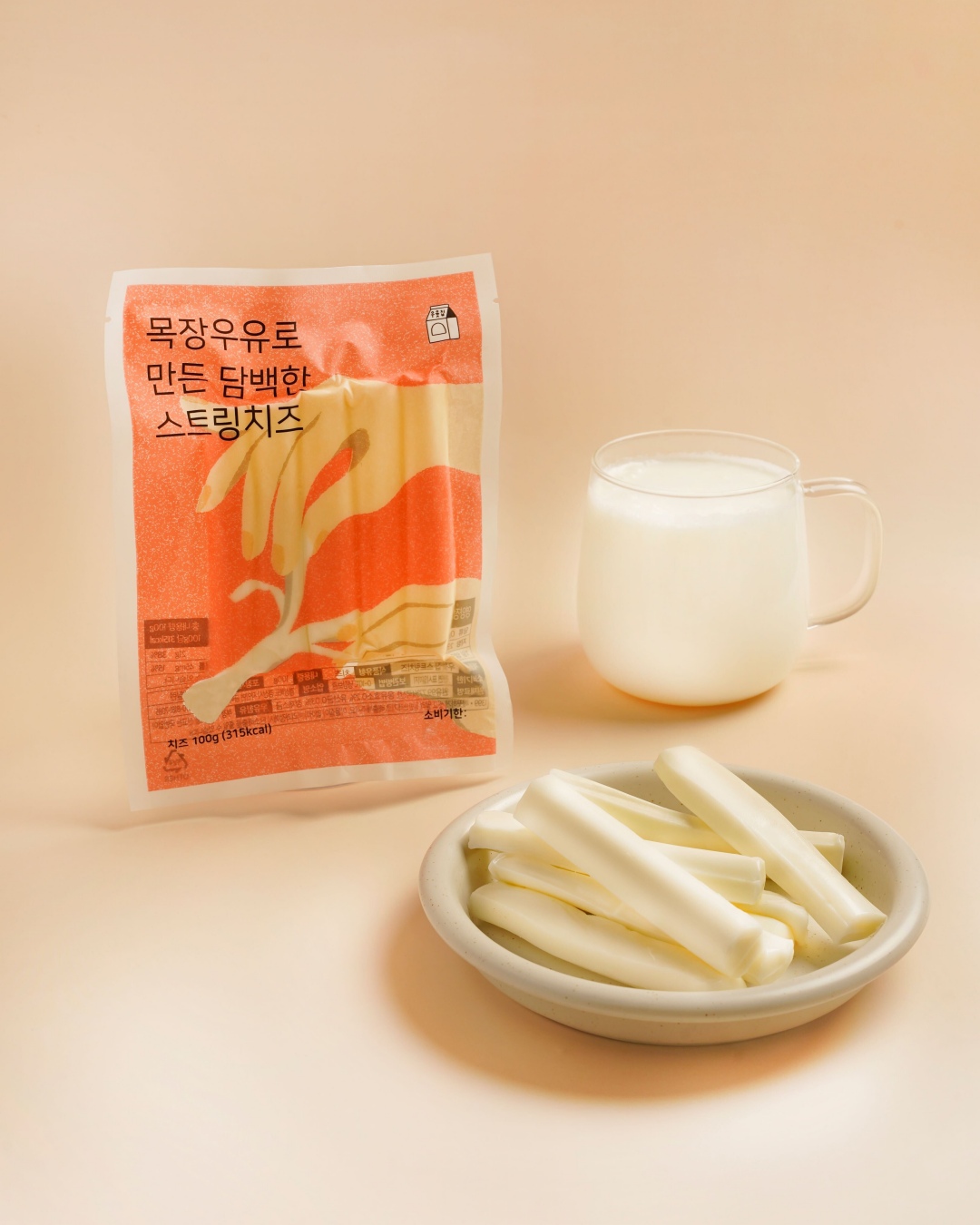
Beyond milk, you also sell products like yogurt, string cheese, and granola. How have customers responded?
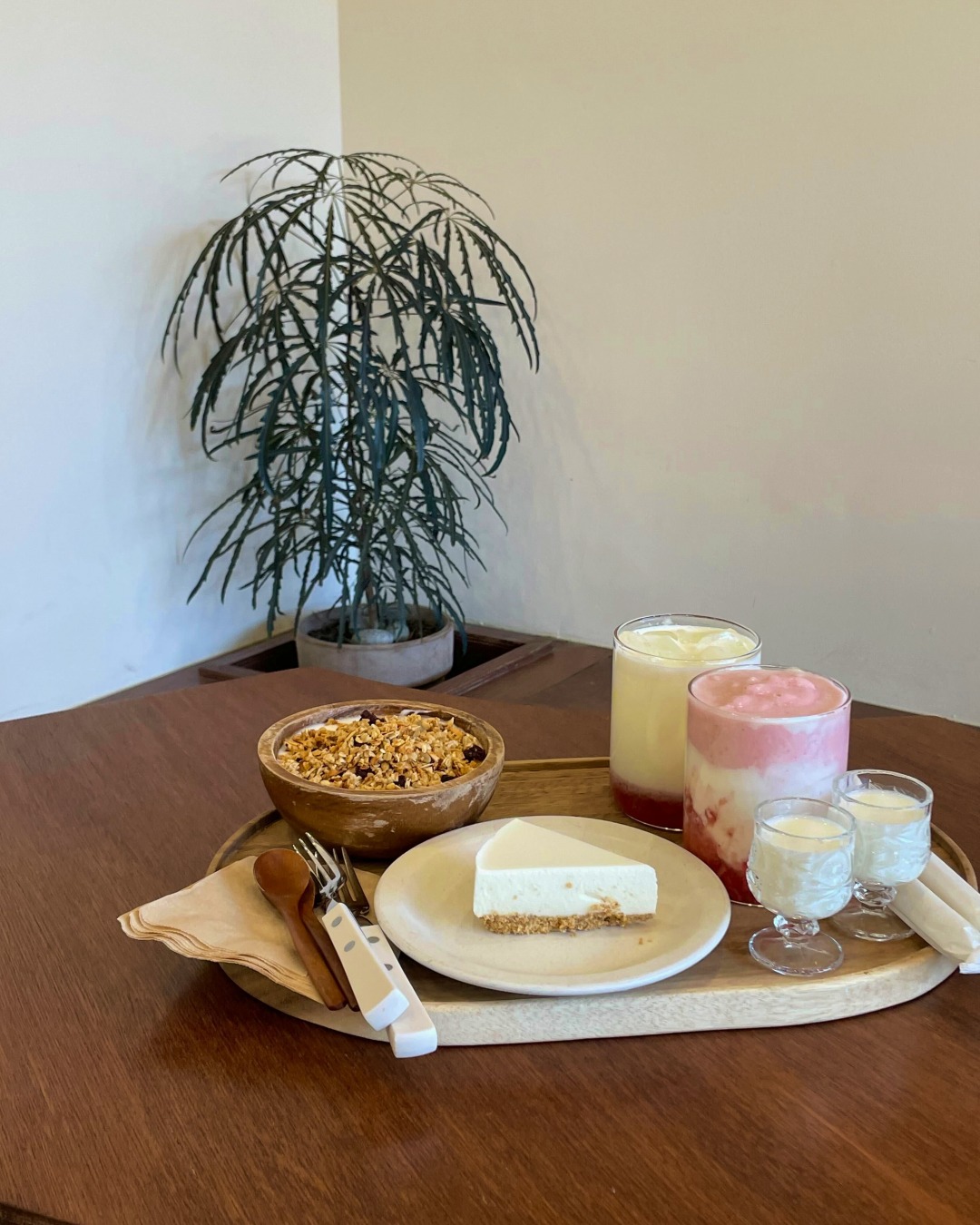
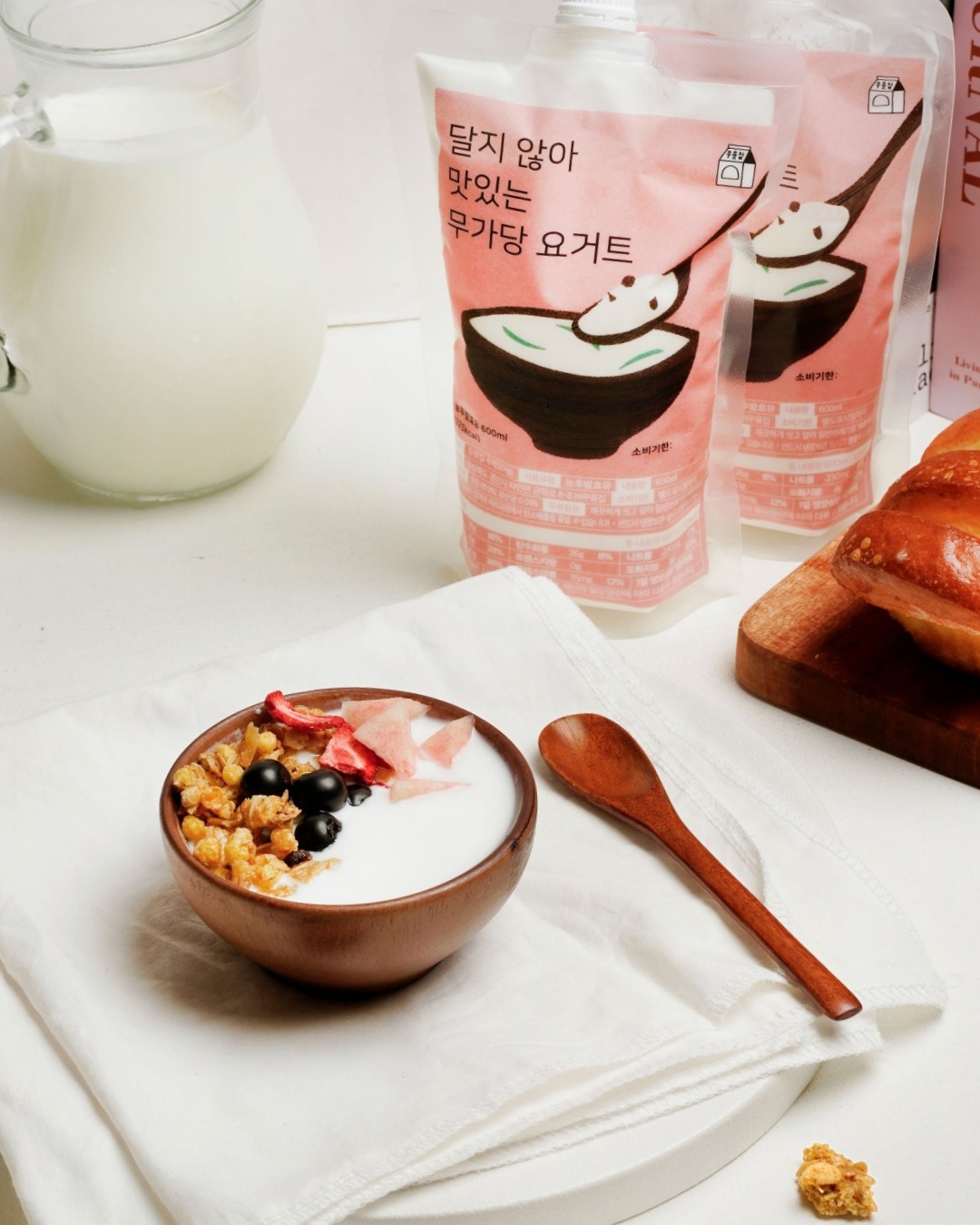
I learned how to make yogurt in order to increase the added value of the raw milk. I never studied food science formally, so figuring out things like sweeteners, flavorings, and additives gave me a headache. So I made a completely unsweetened, additive-free yogurt with nothing added to the milk except lactic acid bacteria. People said they liked that it wasn’t sweet. The granola I bake myself has also gotten a great response. It’s the same with new menu items at the café—it’s not that I’ve developed some amazing recipe or that I have a special touch. I think people just find it delicious because I skip calculating costs and pack in the ingredients generously.
After running things that way for about a year, I finally took formal training in dairy processing for the first time. That’s where I learned how to make string cheese. I doubted whether something like that would even sell, but again, everyone said it was delicious. The unsalted string cheese, called ‘Bone Cheese to Share with Your Dog,’ also sells well. Apparently dogs love it. Customer response has always been great. I’m just grateful.
What’s the hardest part of doing this work, and what’s the most fun part?
The hardest part is staying at the shop all day. I used to think sitting in an office was the only hard thing, but it turns out I just have a hard time being confined to one space in general. At first, it really felt like I was trapped in a prison of my own making. About six months after opening, I hired a full-time employee, even though I wasn’t even properly covering my own labor costs at the time. I felt like if I kept going the way I was, I’d be the first one to quit.
The most fun part is starting new things. Even when I was first preparing to open the shop, I loved creating something out of nothing and planning it all out. Ironically, once the shop became somewhat stable, the same repetitive daily routine started to feel dull. I think that’s just my personality. I love going to events, starting new projects, doing collaborations. I also enjoy creating content.
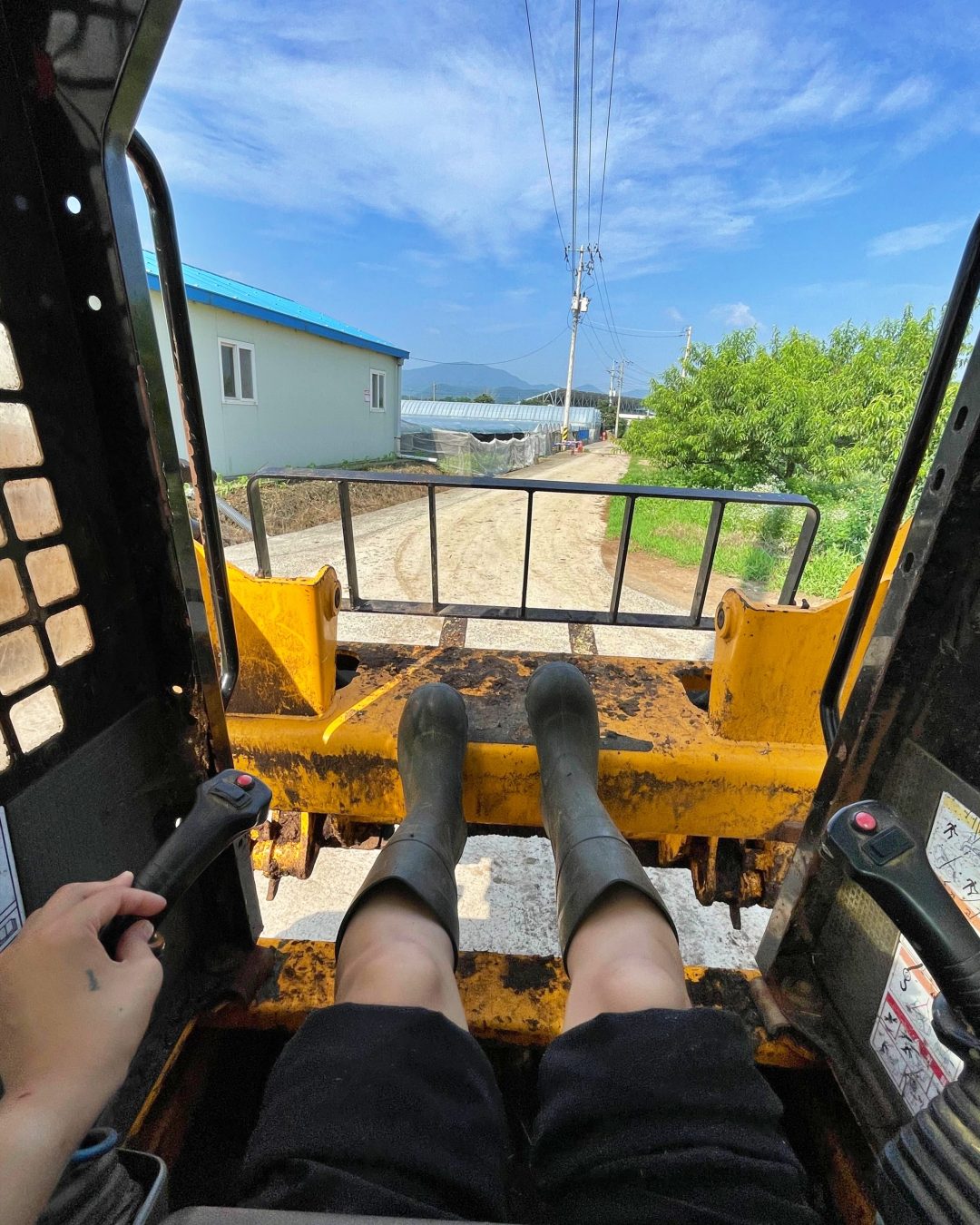
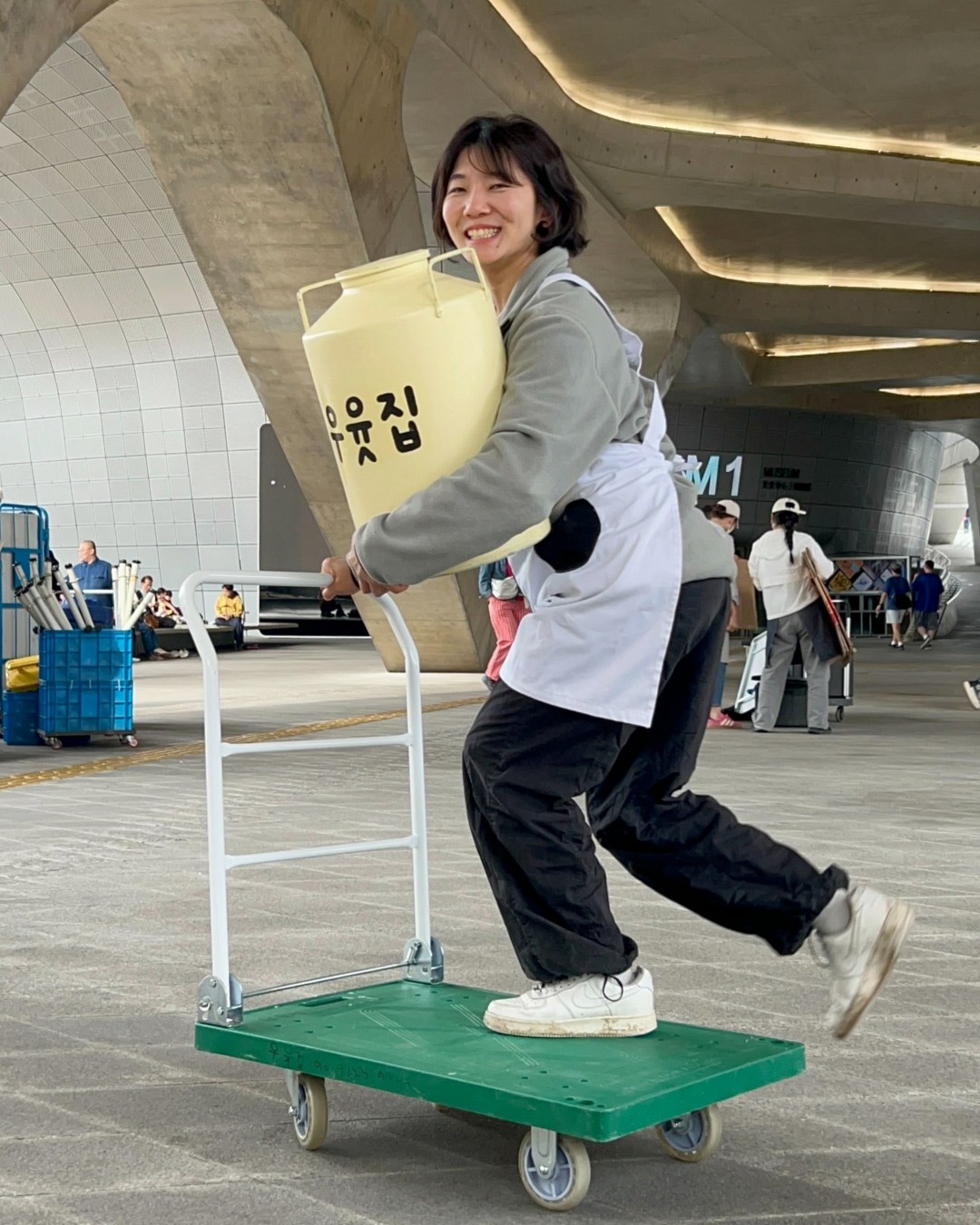
I heard you sometimes work a second job at your father’s farm. What kind of work do you usually do there?
I’ve been working on the farm since kindergarten. My older sisters weren’t interested, but apparently I was the only one who loved following my dad to the farm. As an elementary schooler, I got allowance for doing chores—if washing dishes earned me 500 won, milking earned me 3,000 won. That six-fold pay difference is why I always volunteered for farm work.
The main task on the farm is milking. It’s done twice a day, morning and evening—when a cow comes in, you clean the udder thoroughly, attach the milking machine, and once milking is done, disinfect and send the cow out. Since the milking parlor currently has about 50 cows, we repeat that process 50 times. I also feed them a mix of feed and grass. Thanks to my dad’s early training, I was driving farm machinery from a young age. I clean out cow manure, till fields, and move feed. When the seasons change, I climb up onto the barn roof to put up shade netting, and I help out whenever repairs are needed. There’s an endless amount of work. Once you see it up close, it’s really not easy at all. Above all, the most brutal part for me is that there’s not a single day off. I have absolutely no intention of taking over the farm, but whenever I post about daily life on the farm on Instagram, people respond really well, so I find myself looking around for something interesting to share.
You also frequently take part in flea markets and pop-ups held all over the country. Do you have any personal know-how for staying consistent and not burning out while juggling so many different things alongside running Uyutjip?
Honestly, there’s no real trick to never burning out. I actually burn out quite often. I think it’s just a repeating cycle of burning out and recovering. I’ve come to realize that, for me, juggling several things at once actually works better than focusing on just one. Running Uyutjip, attending events, going to trainings, and even doing deliveries—all of that suits me well.
If I had to name one piece of know-how, it’s that I make sure to really enjoy my hobbies. When you run your own business, there are moments when work becomes you, and you become the work. I make a conscious effort to carve out time to escape from work. I try to separate myself from my job by meeting people, reading books outside my field, or writing. It’s great when work and life blend together well, but sometimes when you start hating the work, you start hating your life too. So having an escape route is, if anything, my real secret.
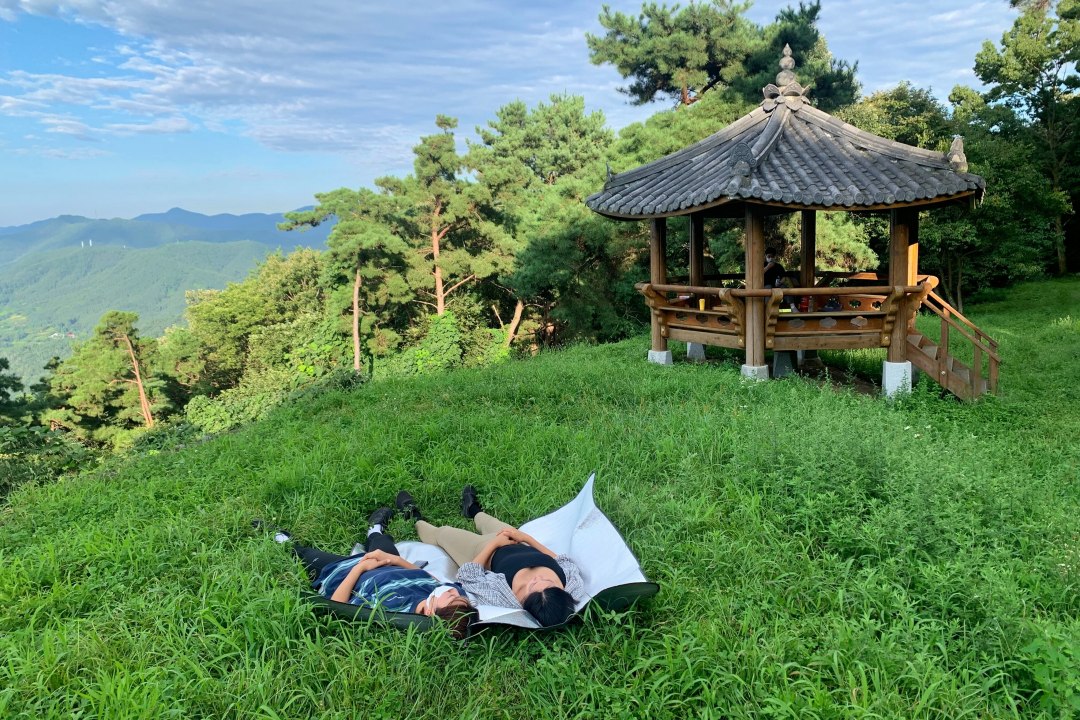
The everyday stories you post on Instagram feel honest and unfiltered, which makes them fun to read. What does running that account mean to you?
I didn’t start out writing candid stories on Instagram. I used to think keeping personal and business accounts strictly separate was the professional thing to do. In the beginning, the Woouzzip account was only used to announce store news, product updates, and event schedules. Then one time, when I posted about a price increase, I wrote out in detail all the reasons behind it—and that was when comments started coming in, which had never happened before. I guess people felt the sincerity in what I wrote.
I’d always liked writing, and it occurred to me that maybe I could realize my childhood dream of becoming a copywriter through Woouzzip. After that, I gradually started sharing more honest stories, blurring the line between Woouzzip and Woo Seungmin. People responded with even more support and warmth than before. It wasn’t some grand branding strategy—it just turned out that what I loved doing and what I needed to do overlapped. Sometimes customers who come to our flea market stalls tell me, ‘I don’t really care about milk, but I saw your Instagram and got curious, so I came to check it out.’ I still struggle with how honest I should be on the Woouzzip account, and there are plenty of nights I kick my blanket in embarrassment thinking, ‘Did I really need to share that?’ (Laughs) Running the account is sometimes fun and sometimes feels like homework I don’t want to do—it’s a love-hate relationship—but the process of constantly looking around for something worth posting is pretty entertaining in its own way.
Is there a place you’d recommend to travelers visiting Gyeongsan?
Since the city sits in a basin, mountains naturally come to mind first. If you’re looking for a proper excursion, I’d recommend Gatbawi Rock on Palgongsan Mountain; for something more like a casual outing, Yongsan Mountain Fortress tucked in the valley is nice. Gyeongsan grows a lot of peaches, so around this time of year, when the peach blossoms start to bloom, a walk to Bangokji Reservoir is lovely too. If you step into the Imdang-dong Ancient Tombs near the city center, you’ll suddenly find yourself surrounded by wide, green fields that feel like another world—it’s great for walking. Nearby cities like Daegu, Cheongdo, Pohang, and Gyeongju also have plenty to see and do, so visiting them together would make for an even richer trip. Oh, and I’d recommend avoiding the brutal summer heat when you come.
Do you have any plans or goals for this year?
This year, Woouzzip’s goal is to move ‘from running a small business to building a real company.’ We’ve done a lot of things on the fly up until now. Going forward, I plan to systematize our operations and create documented manuals for various tasks. Last year, we pushed a bit and signed a warehouse lease and brought in another milk pasteurization machine. I want to build up the substance to match the scale we’ve grown to. Ultimately, that means I want to make more money. (Laughs) As for the next step in expanding the business, it’ll probably mean building a factory—though that still feels far off. I want to do everything I can with our small processing facility before moving on to the next stage. Growing slowly, even if it feels a bit frustrating at times, seems to suit me well.
As for my personal goal, as I mentioned earlier, it’s learning to manage myself well. Just like creating an operations manual for the store, I wish I had a kind of manual for my daily life too. Thanks to our veteran manager, I don’t need to stay at the store all the time, so I have quite a bit of free time—and I’m thinking about how to make the most of it. I’ve recently realized just how wonderful it feels to move through a well-structured daily routine, and how meaningful each small daily achievement can be.


