Road Trip to Oita — Exploring Oita Prefecture, Japan, by Car
From highway rest stops to hot-spring baths, six places worth a stop on a road trip through Oita Prefecture in Japan's Kyushu region.
Road Trip to Oita — Exploring Oita Prefecture, Japan, by Car
Oita, a short trip from Fukuoka, is a destination that captures the particular charm of Japan's small towns. There is a must-visit rest area on any Kyushu road trip, a hot spring that flows with Japan's finest carbonated spring water, and a historic Japanese confectionery shop that has been in business since the 19th century. Here are the spots where you can experience the hidden essence of a trip to Oita Prefecture.
Words Hur Taewoo
Photos Park Shinwoo
Beppu Bay Service Area 別府湾SA
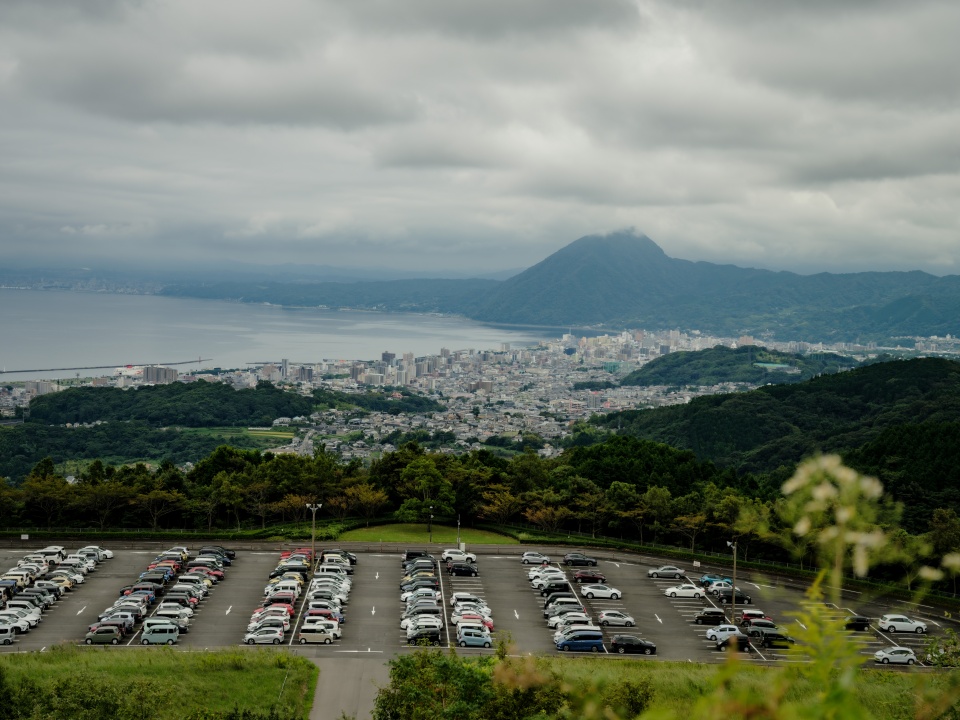
Beppu Bay Service Area is an expressway rest stop with a view over all of Beppu Bay in Oita Prefecture. You reach it by driving south from the north on the Kyushu Expressway E10. The inbound and outbound service areas are connected, so the views are superb from any point, and it is a place most Kyushu road-trippers stop at at least once as they travel to and from Beppu. Many people stop here solely for the roll cake. The food court, the B-speak café, and the soba restaurant Fushoan (不生庵) are all run by Sansou Murata (山荘無量塔), one of Yufuin's three great ryokan. B-speak is Yufuin's best roll cake shop, and even when the day's roll cakes sell out at the main shop in town, there is a good chance this rest-stop branch still has some in stock.
7:00–20:00 (B-speak café and Fushoan 11:00–15:00), 3677-43-2 Ogi-yama, Uchikama, Beppu, Oita (大分県 別府市大字内竈字扇山 3677-43-2)
www.w-holdings.co.jp/sapa/2797.html
Asakura Fumio Memorial Museum 朝倉文夫記念館
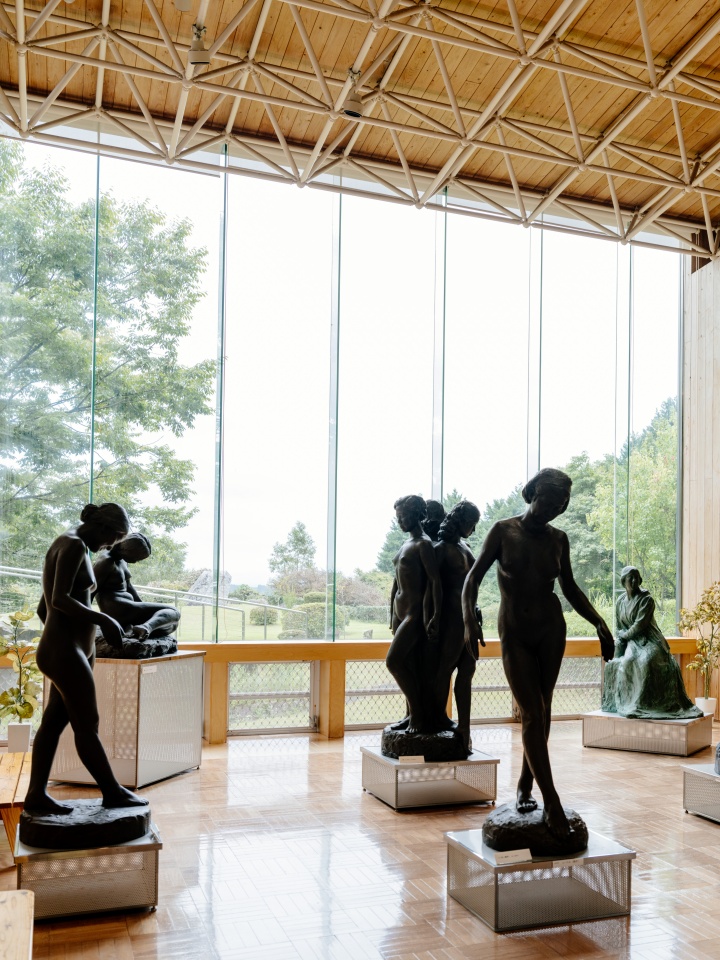
This space honors Asakura Fumio (朝倉文夫), the father of modern Japanese sculpture. A native of Oita Prefecture, Fumio led Japan's naturalistic realist sculpture and also devoted himself to training younger artists, building a school of his own. The museum was founded after his death at the initiative of local residents. The two-story building displays some 50 of Fumio's works along with his tools, and outdoors it has installed works by contemporary sculptors. After touring the museum, it is pleasant to take a light stroll through the outdoor park. Fumio is said to have been especially fond of cats, and the three cat sculptures carved from cedar by his followers at Tokyo University of the Arts have become something of an icon of the museum.
Museum gallery admission 500 yen, 10:00–16:30 (closed Mondays)
Taketa Marufuku 竹田丸福
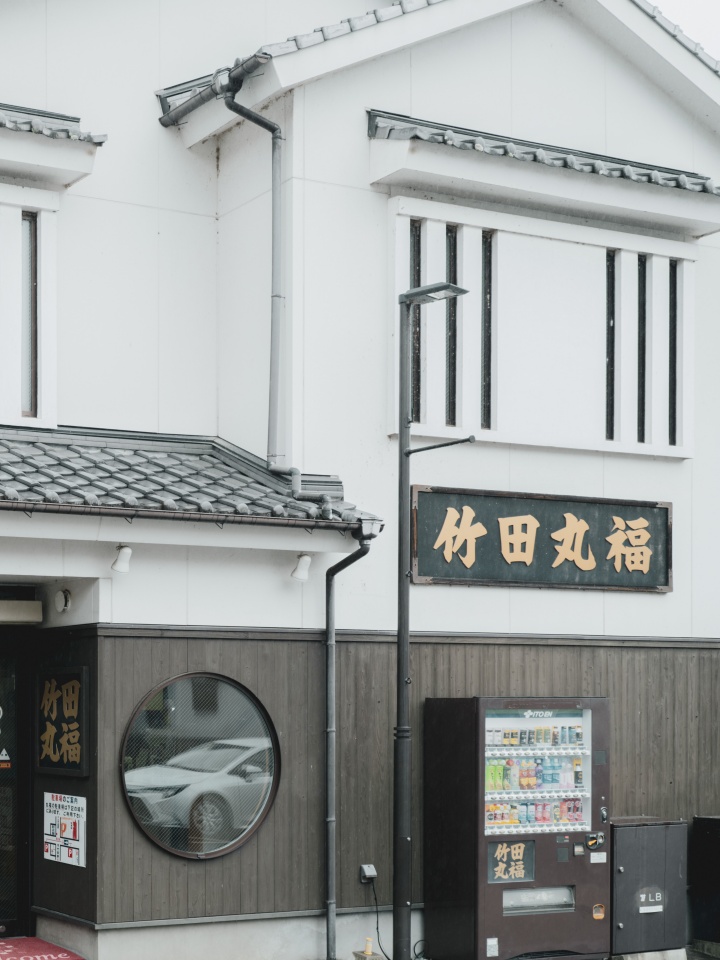
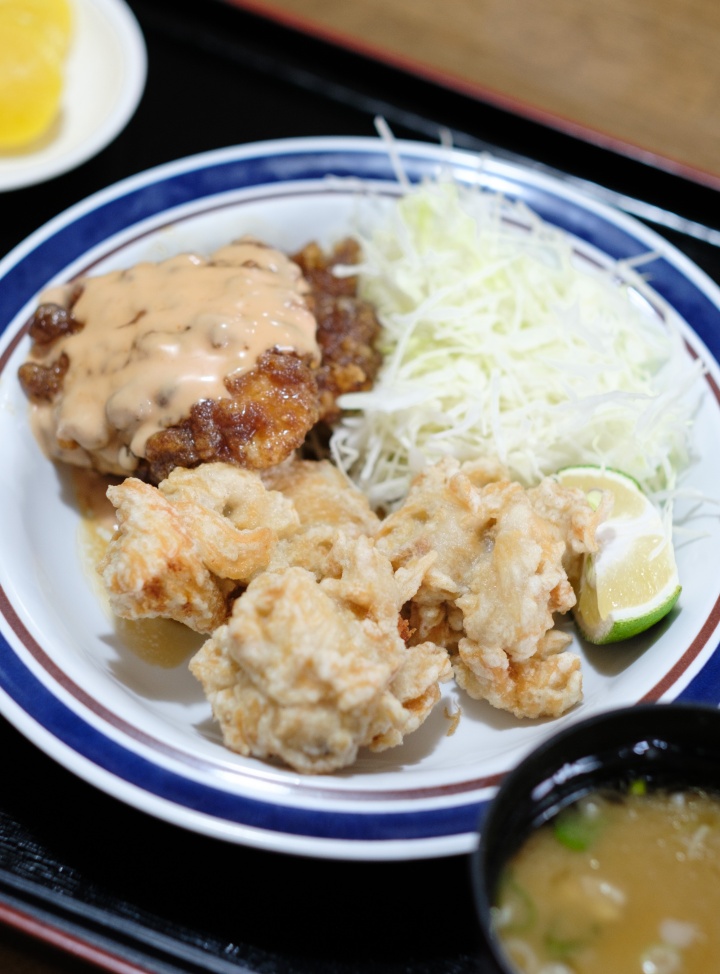
No matter who you ask, Oita Prefecture's signature food is chicken. After World War II ended, poultry farming is said to have flourished in Oita as a hedge against food shortages. Chicken dishes naturally developed, and both toriten (とり天, tempura-style fried chicken) and karaage (唐揚げ, Japanese fried chicken), the fried chicken dishes we know so well, were born in Oita restaurants. In Taketa (竹田), one of Oita's peaceful small castle towns, there is another restaurant that has built a name for itself in fried chicken: Taketa Marufuku, with 60 years of history. Its fried chicken is karaage made from chickens raised on the restaurant's own poultry farm, and its strength lies in the harmony of a crisp crust and tender, chewy meat. Locals typically order a set meal of a piece of fried chicken with rice and miso soup. The restaurant also holds the distinction of winning first place at the Oita B-Class Gourmet Grand Prix. Besides the Taketa Marufuku main store, it operates four other branches.
Chicken-leg karaage 1,000 yen, 10:00–21:00
Tajimaya Roho Main Store 但馬屋老舗 本店
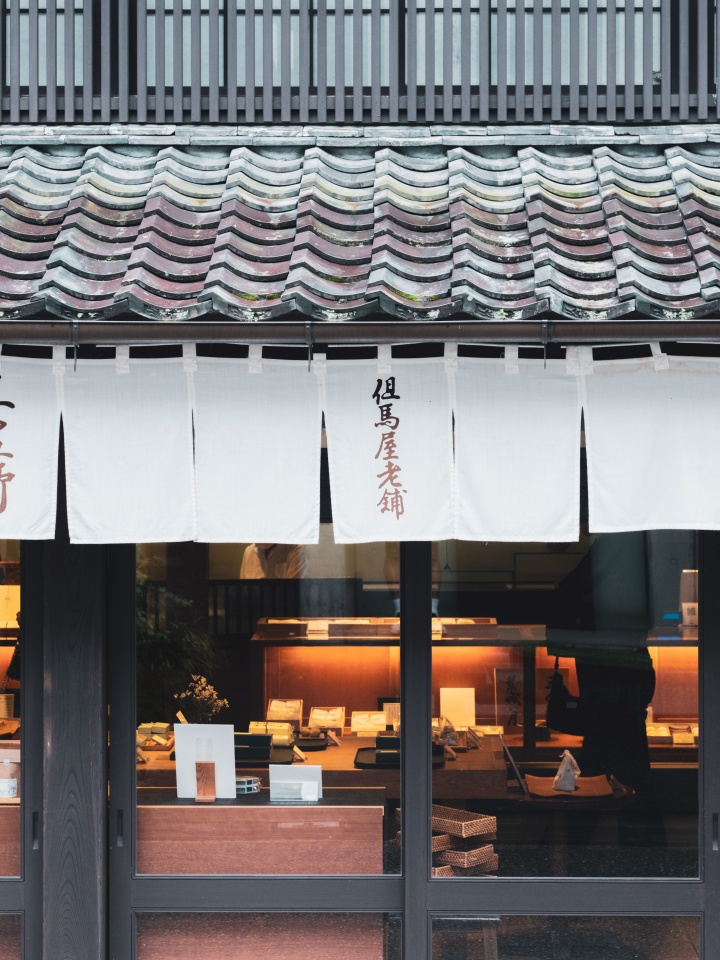
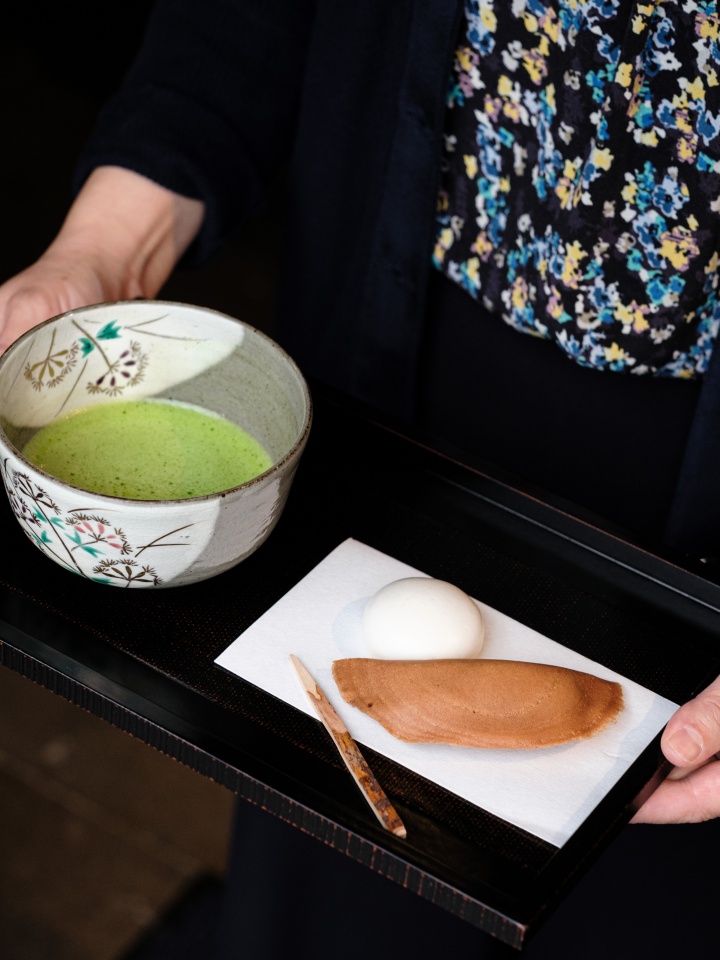
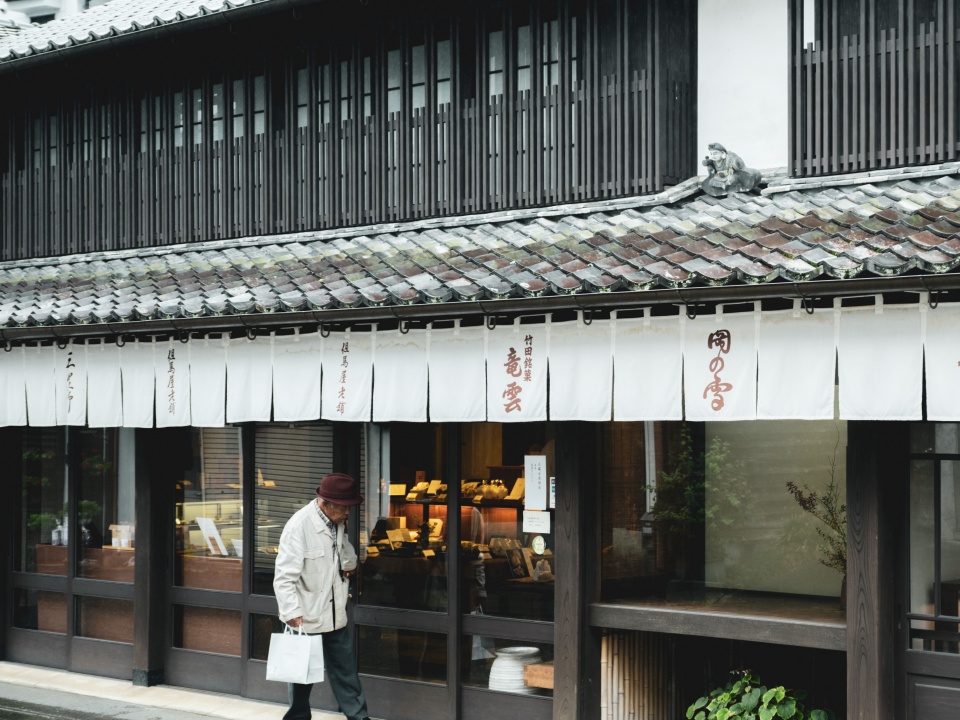
Founded in 1804, this is the oldest Japanese confectionery shop in Oita Prefecture. The founder, Tajimaya, is said to have trained in a confectionery shop in Kyoto in his youth before becoming an official confectioner at the request of the lord of the Oka Domain (岡藩, a domain that held part of present-day Oita Prefecture during the Edo period). Tajimaya's signature sweets, stubbornly made by tradition across six generations, are renowned throughout Japan. Its two flagship products are Mikasano (三笠野) and Kōjō no Tsuki (荒城の月). Mikasano looks like a financier, a lightly baked batter wrapped around sweet red bean paste, while Kōjō no Tsuki is a manju-shaped confection resembling a round white moon. Both fill your mouth with a soft, sweet flavor from the first bite. Kōjō no Tsuki has also been named to The Wonder 500, a project certified by Japan's Ministry of Economy, Trade and Industry that selects 500 regional products from across Japan to introduce overseas. The classically styled shop, tucked along an alley in the Taketa castle town, also offers a tea ceremony experience in a separate tea room.
9:00–18:00 (closed Tuesdays)
Lamune Onsen Kan ラムネ温泉館
Oita Prefecture has star hot-spring destinations in Beppu and Yufuin, but true hot-spring connoisseurs rank Nagayu Onsen (長湯温泉) a notch higher. Nagayu, which always makes the list whenever people discuss Japan's “100 best” or “10 best” hot springs, is prized above all for having Japan's finest carbonated spring water. Carbonated hot springs contain magnesium, sodium, and other minerals, and are said to be good for blood circulation and effective for skin care and recovering from fatigue.
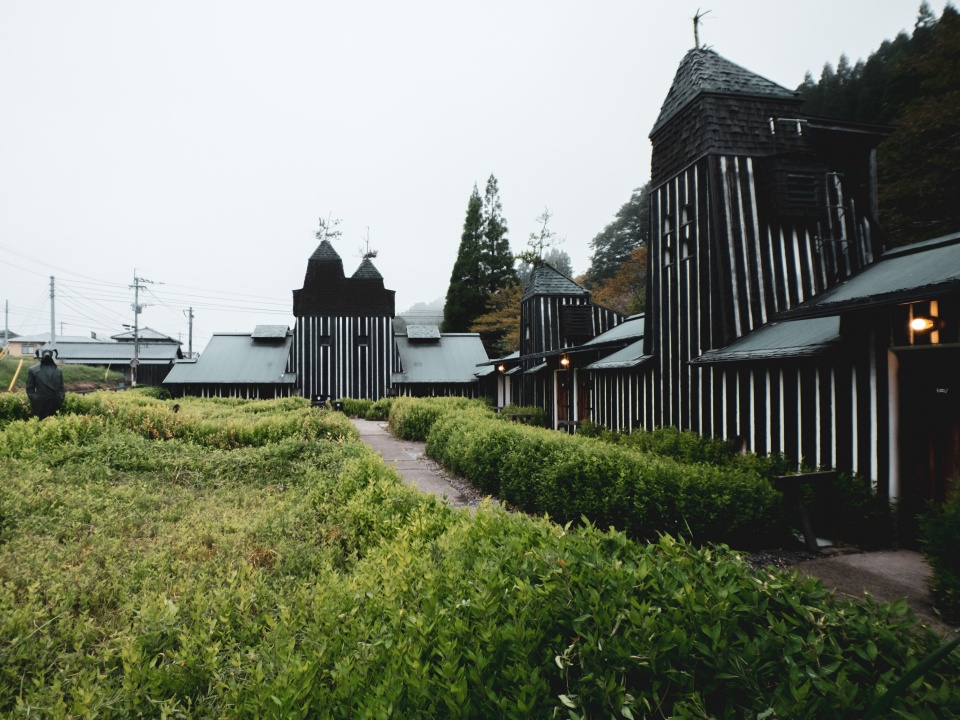
Lamune Onsen, Nagayu's signature bathhouse, was established in 2005, inspired by a passage by the novelist Osaragi Jiro (大佛次郞). Osaragi Jiro (1897–1973), a writer from Yokohama, described Nagayu Onsen in his travelogue this way: “Tiny bubbles cling to your whole body, and even when you rub them off with your hands, bubbles stick to you again afterward. It's just like a ramune bath.” First, the distinctive building, which reflects the imagination of Fujimori Terunobu (藤森照信), one of Japan's leading architectural historians and architects, sparks curiosity. With its black-and-white striped exterior walls and copper-plate roof, it resembles a building in an amusement park, while the indoor baths, finished in plaster, feel like a hot spring inside a cave. The bathhouse also has a gift shop, an exhibition room, and an outdoor garden. The ramune carbonated water in the open-air bath is not especially hot at 32 degrees Celsius, but the longer you soak, the more the distinctive texture of the carbonated water envelops your whole body and gently warms it.
Adults 500 yen, private family bath 2,000 yen per hour, 10:00–22:00 (closed the first Wednesday of every month)
Daimaru Ryokan 大丸旅館
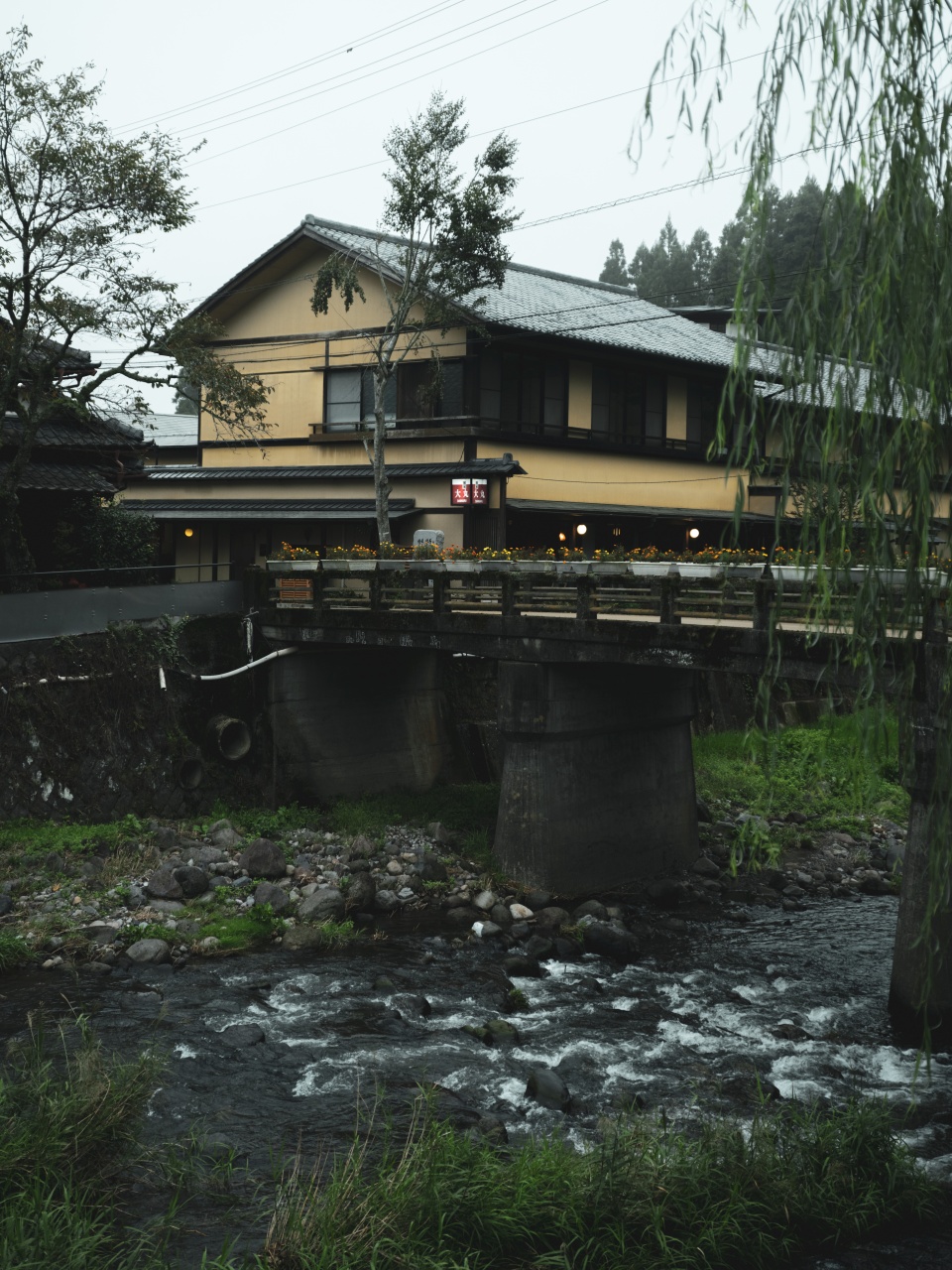
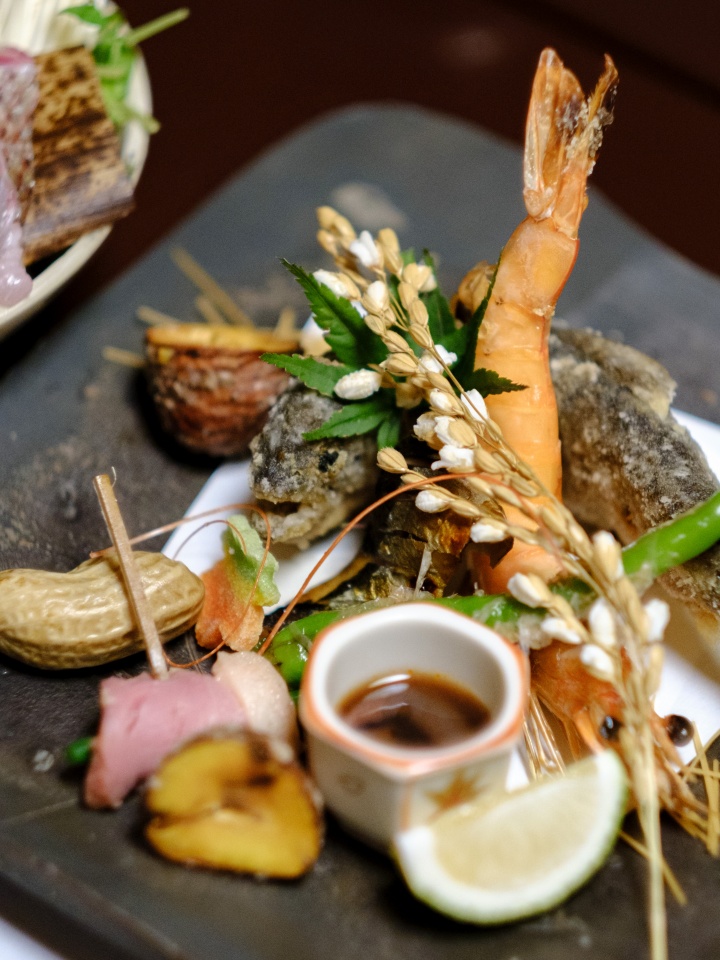
In Nagayu, where the charm of a small hot spring town flows unhurried, Daimaru Ryokan stands like a dignified longtime resident. Since opening in 1917, it has welcomed countless guests and dignitaries across six generations. It is also one of the few ryokan where you can still experience the warm, attentive service of an okami (女将, traditionally the proprietress of a ryokan in Japan; the staff who assist her are called nakai) and her nakai (仲居). With 15 guest rooms across the main building and the annex, it is small in scale but lacks nothing in facilities. Besides the guest rooms and hot spring baths, it has a lounge displaying works by Kawabata Yasunari (川端 康成), Japan’s first Nobel laureate in literature, and the Western-style painter Takada Rikizo (高田 力蔵), as well as Kawabata-ke (川端家), a café in a separate building. The guest rooms, where the low murmur of the river and the sway of the trees come through just as they are, seem to settle the mind as well. All of the ryokan’s baths are filled in the kakenagashi (かけ流し, a method in which hot spring water drawn from the source is kept flowing so that it drains out as it comes in) style, so the water is clean, and you can turn on the tap in your room and drink the natural carbonated water straight away. Guests can also use the nearby Ramune Onsen, a five-minute walk away, free of charge. The kaiseki dinner is well composed and delicious. Dishes made with local ingredients such as Bungo beef (豊後牛, a specialty beef raised on the highlands of Oita Prefecture) are served in regional tableware, and the signature rice porridge cooked with Nagayu hot spring water is a treat as well.
From ¥37,000 for two people per night
More to Japan Road Trip Series — Kitakyushu, Yamaguchi Prefecture, and Oita Prefecture