
Peace Day
Field notes from the Punchbowl Peace Trek, a fair-travel journey with Gangwon Peace Tour through the DMZ borderlands of Yanggu, Gangwon-do — where fierce battles once raged and peace is now being rediscovered.
Peace Day
I walked, and walked again, through the very place where fierce battles once raged to reclaim peace — searching this time for peace within myself. These are field notes from a day spent on the Punchbowl Peace Trek, part of the Gangwon Peace Tour in Yanggu, Gangwon-do.
Words Parc Jinmyoung
In collaboration with Gangwon Peace Tour
Gangwon Peace Tour is a fair-travel company running travel and exploration programs in the border areas along Gangwon-do’s DMZ. CEO Lee Kichan, a Chuncheon native, previously worked at an NGO focused on education, travel, campaigns, and exchange programs related to North Korea and peace. Drawing on that experience, he launched Gangwon Peace Tour. Running programs like the Punchbowl Peace Trek and the Yanggu DMZ Fair Travel Tour, the company seeks out places that bring greater benefit to local residents while carefully attending to ecological value. His hope is that modern travelers, worn down by fierce capitalism and competition, might find a different kind of joy through themes of peace and ecology.
Punchbowl Peace Trek Course Punchbowl Loop Trail – Lunch – Yanggu War Memorial & Yanggu Unification Hall – Camino Cidery – Park Soo-keun Museum
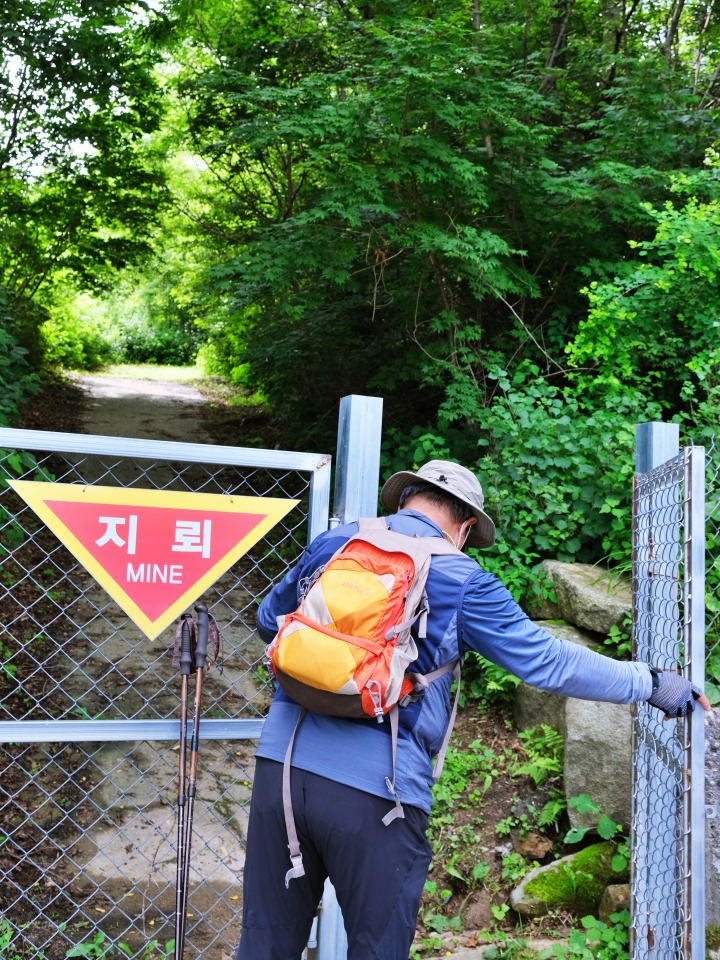
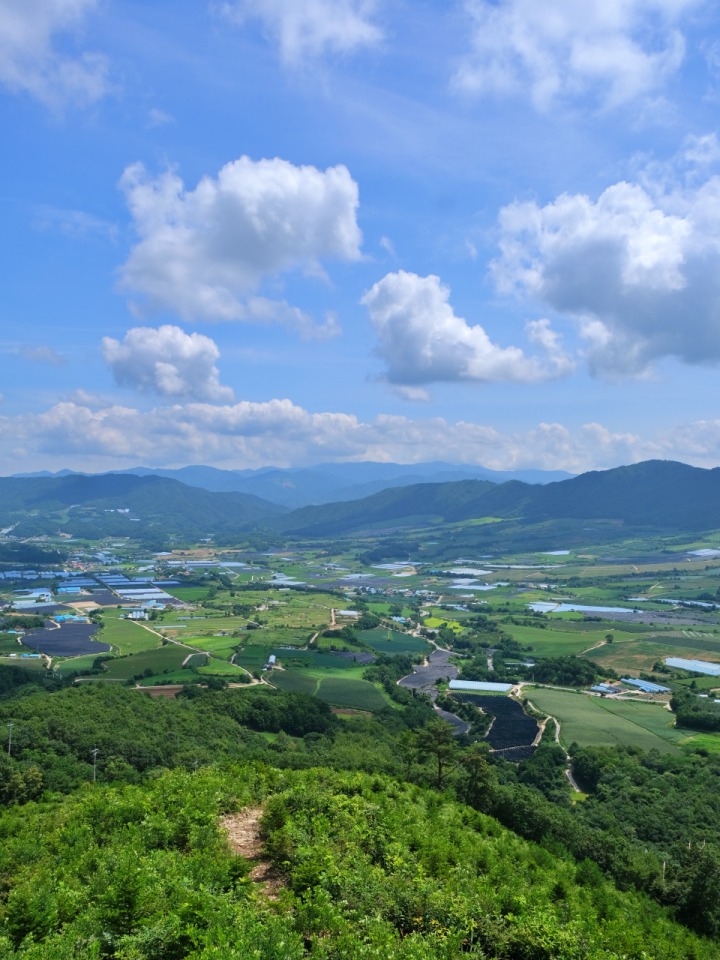
📝 Note 1. What Happened in Yanggu in 1951
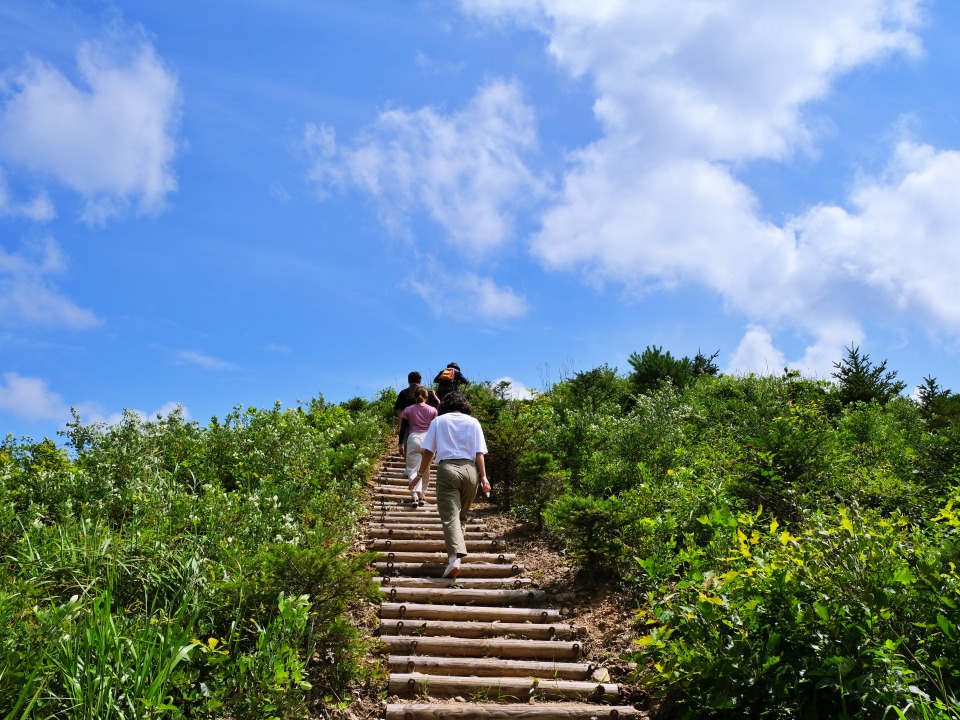
In August, said to be the hottest month of the year, I found the meeting point halfway up a mountain to walk the Punchbowl Loop Trail in Haean-myeon, Yanggu, Gangwon-do. Standing in front of a waterfall cascading down coolly, the sweat on my back quickly dried. Once everyone had gathered, Jeong Gwanggyu, a trail guide certified by the Korea Forest Service, introduced the DMZ Punchbowl Trail. Of its four courses — Peace Forest Trail, Oyubat Trail, Mandaebeolpan Trail, and Meonmetjae Trail — today we would walk the Oyubat Trail. Though the full course runs 20.1 kilometers and takes about five hours, today we’d only sample a short stretch. Due to the sensitivity of the area, the Punchbowl Trail cannot be entered without a certified trail guide.
During the Korean War, this area saw as many as nine ridge battles. After the armistice talks began, Yanggu remained a site of intense tension over where to draw the military demarcation line. At the Punchbowl, fighting broke out one after another: the Battle of Christmas Hill, ignited by a surprise Chinese attack on December 25, 1951, followed by the Battle of Bloody Ridge, the Battle of the Punchbowl, the Battle of Baekseoksan, the Battle of Dosolsan, the Battle of Heartbreak Ridge, the Battle of Gachilbong, the Battle of Daeusan, and the Battle of Hill 949.
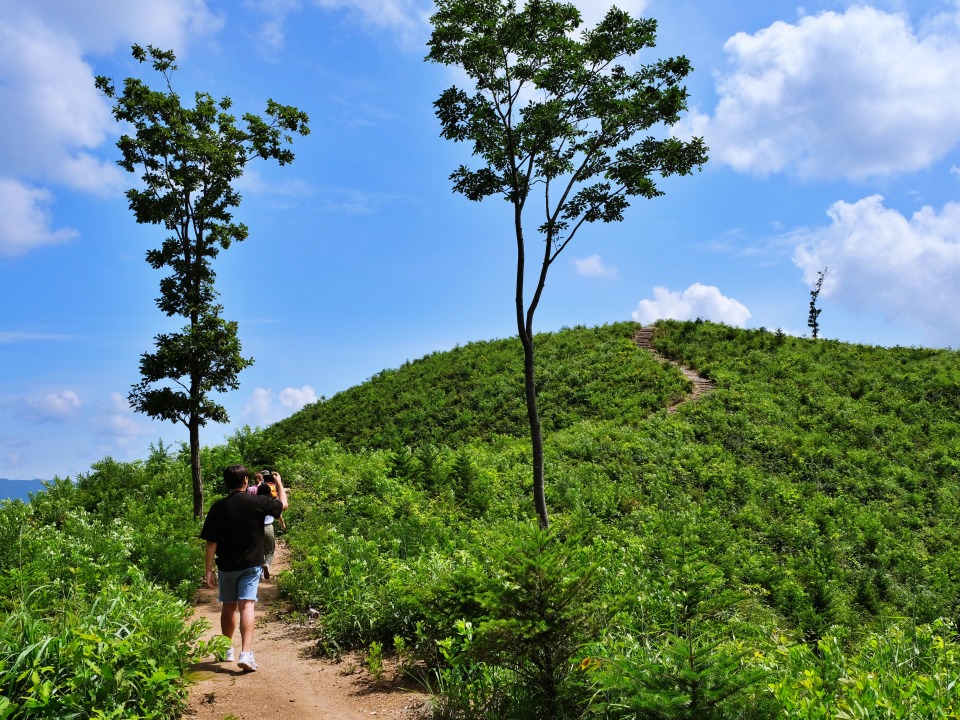
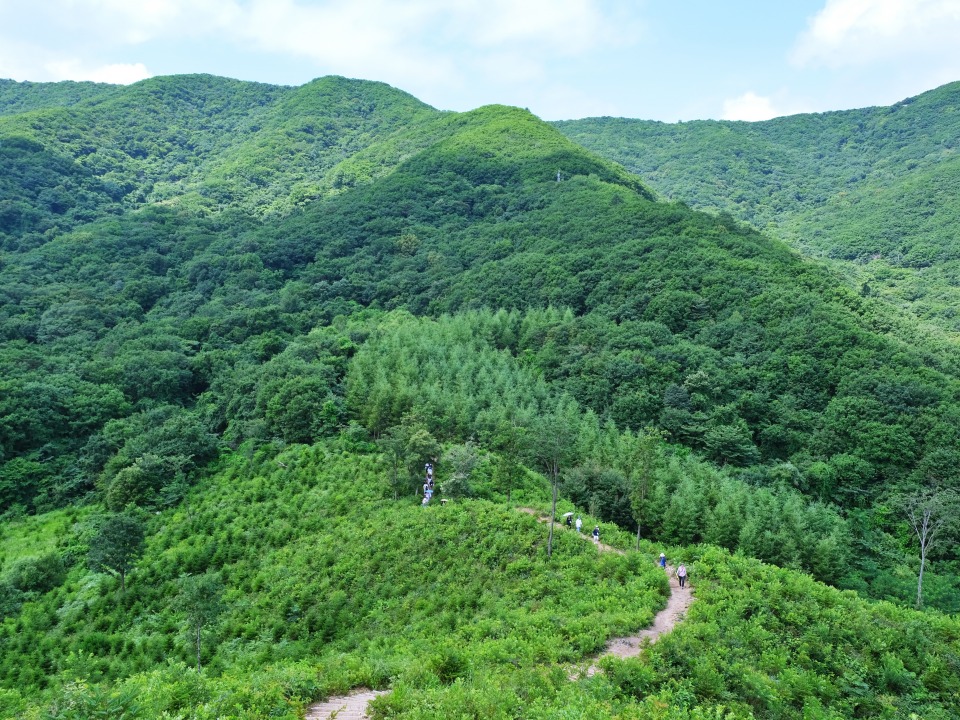
“It was probably evening. An American war correspondent, looking down at Haean-myeon from Gachilbong, saw the sunset spreading red across the basin and described it as looking ‘just like a punch bowl filled with wine.’ After that article — about American soldiers bleeding fiercely in such a beautiful place — this village came to be known as the Punchbowl.”
The official name for the Punchbowl is Haean Basin. “When people hear ‘Haean-myeon,’ they all assume it has something to do with the sea. But Haean is written with the Chinese characters for ‘pig’ (亥) and ‘peace’ (安).” This village was once overrun with snakes, a result of the high humidity typical of basin terrain. One day, a monk passing through saw a farmer suffering from ruined crops because of the snakes and told him, ‘If you raise pigs, things will settle down.’ From then on, every household began raising pigs. Believe it or not, the pigs ate the snakes, bringing peace to the farmers — and so the village came to be called ‘Haean,’ meaning ‘peaceful.’
- DMZ Native Botanical Garden: 2304 Mandae-ri, Haean-myeon, Yanggu-gun, Gangwon-do
📝 Note 2. What’s Happening in Yanggu Now
Walking beneath the cool shade of pine trees, it took just over two hours to reach the DMZ Native Botanical Garden, the endpoint of the Oyubat Trail. For tours with more than twenty participants, lunch is typically ‘Sup-bap’ (forest rice), prepared by a resident-run business in Haean-myeon, but since our group was small, we headed to a nearby restaurant instead. After a Korean buffet made with local ingredients, we drove five minutes to the Yanggu War Memorial and Yanggu Unification Hall.
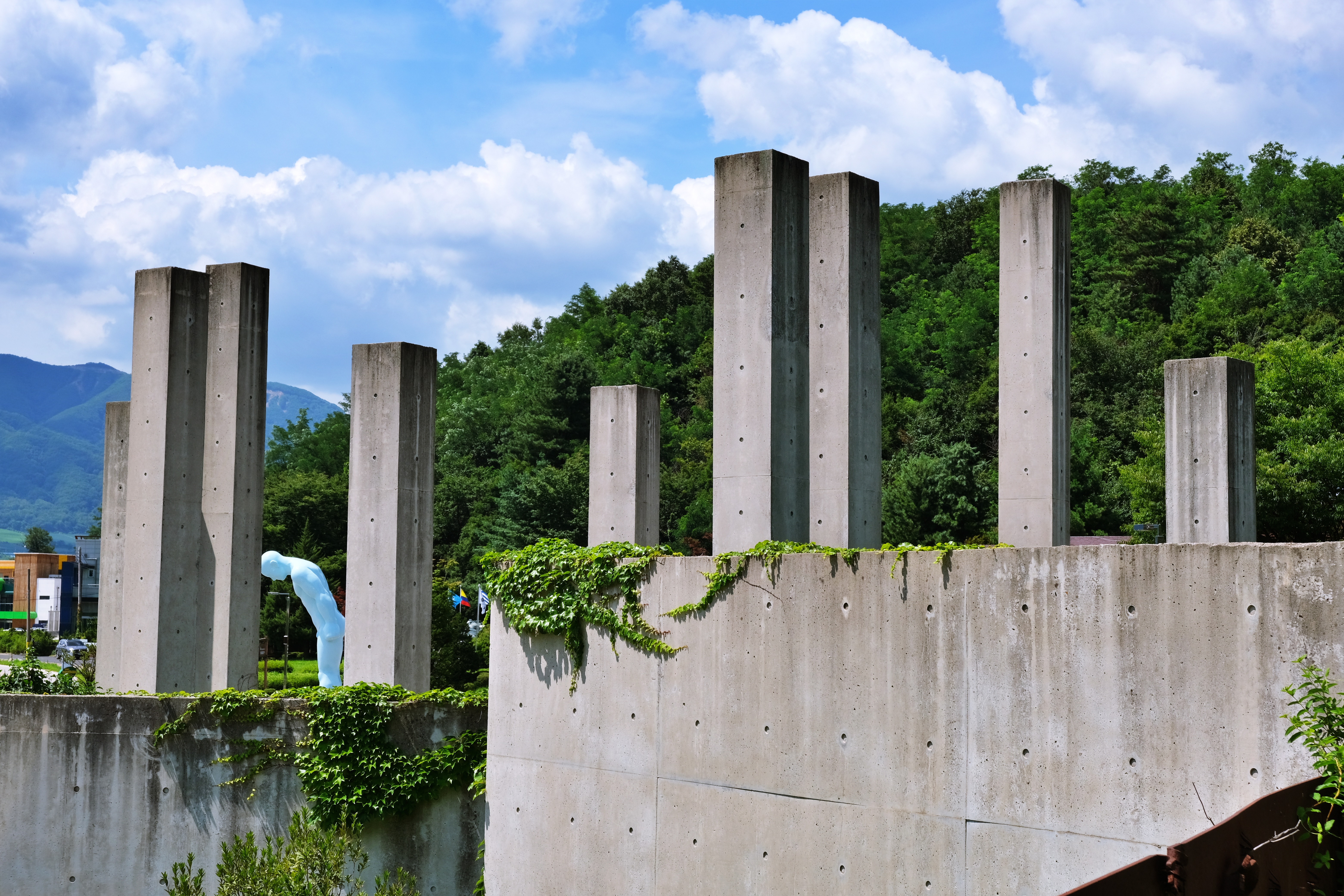
The Yanggu War Memorial opened in 2000 to shed new light on the nine fierce battles fought here and honor the achievements of the fallen. Nine monuments, one for each battle, rise solemnly to guard the front of the memorial. Interestingly, each monument stands at a different height, representing the elevation of the peak where that particular battle took place. Inside the memorial, it was CEO Lee Kichan’s commentary, more than the exhibits themselves, that captured my interest. “Until just a few years ago, there used to be a toy gun right here. A projector up front would alternate images of North Korean soldiers and South Korean soldiers — shoot the North Korean soldier and you’d score points, shoot the South Korean one and you’d lose points. That kind of outdated arcade game. And that was really until quite recently.”
- Yanggu War Memorial & Yanggu Unification Hall: 629 Huri, Haean-myeon, Yanggu-gun, Gangwon-do
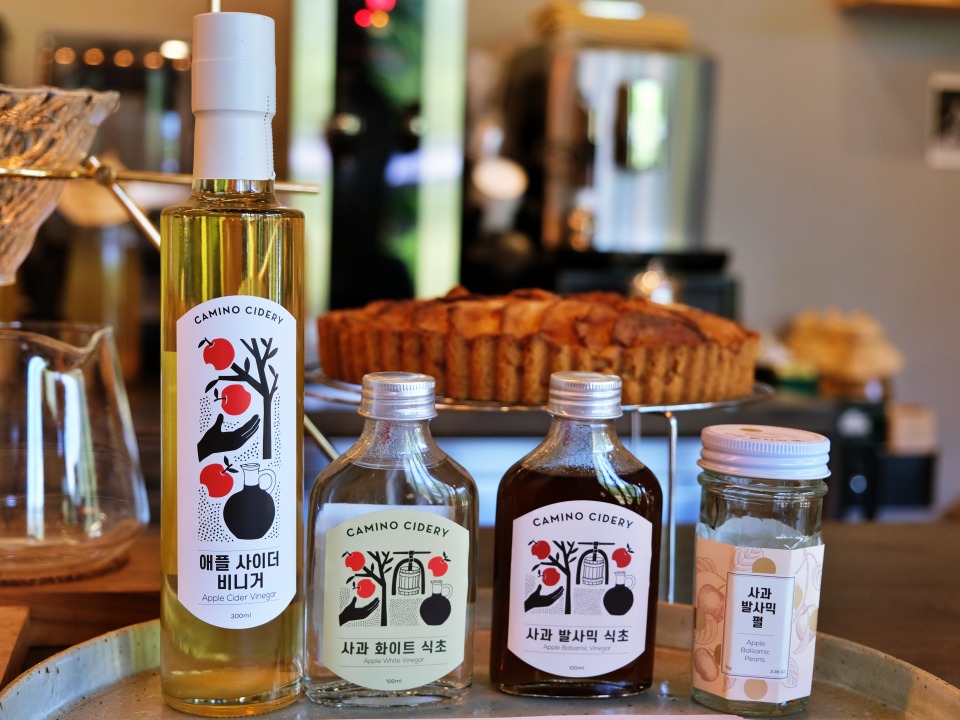
Next was a visit to Camino Cidery, which makes kombucha, balsamic vinegar, and cider from Yanggu’s unsold, blemished apples. Crossing the spacious garden into the shop, I was greeted by the warm sight of locals gathered in small groups, chatting over tea. I took a seat at a nearby table and drank down a glass of tart, cool kombucha — the perfect antidote to the fatigue and heat of the trek. Camino Cidery was founded by two high school friends who returned to the countryside and found inspiration in fallen apples. The two, friends for 37 years, learned apple cider-making methods through farm stays in Normandy, France, and Somerset, England. Despite doubts from those around them — since Korean apple varieties differ greatly from European ones — they succeeded in making apple cider from native Korean apples. What matters most to them, they say, is being able to help both the environment and local farmers.
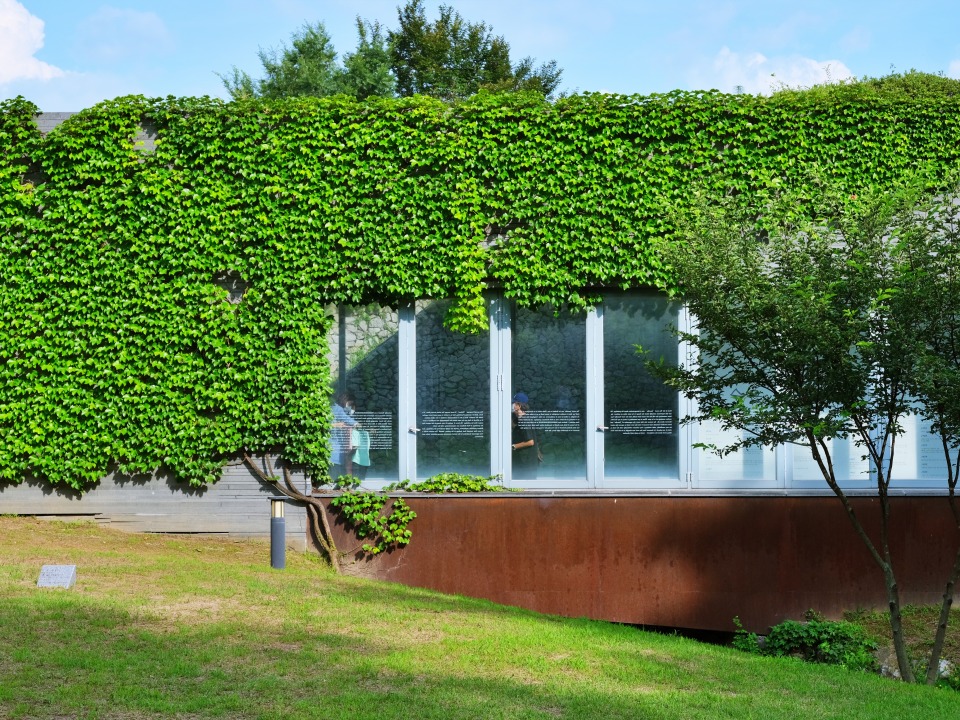
The final stop was the Park Soo-keun Museum. Everything of painter Park Soo-keun’s life and art — a Yanggu native — rests here. Or perhaps it’s more accurate to say it still lives and shimmers here. Beyond the many works and related materials on display inside, the outdoor space is fascinating too, recreating the washing sites and trees that so often appear in his paintings. As Park Soo-keun once said, ‘Art is not something that shifts easily like a cat’s eyes, but something that digs deep and takes root in one world’ — and this place was indeed one whole world expressing the person that was ‘Park Soo-keun.’ After visiting his grave on the hill behind the museum, the Gangwon Peace Tour’s ‘Punchbowl Peace Trek’ came to an end.
- Camino Cidery: 126 Guktojeongjung-ang-ro, Guktojeongjungang-myeon, Yanggu-gun, Gangwon-do
- Park Soo-keun Museum: 265-15 Baksugeun-ro, Yanggu-eup, Yanggu-gun, Gangwon-do
📝 Note 3. A Q&A with CEO Lee Kichan After the Tour
Who are the members running Gangwon Peace Tour? Five people — former and current NGO activists, a cultural researcher, and a designer.
What is Gangwon Peace Tour’s social mission? To make the DMZ region a peaceful, enjoyable place for both residents and travelers alike.
Two keywords that capture Gangwon Peace Tour? Travel and peace.
What is the appeal of the DMZ in Gangwon-do? The meeting of Gangwon-do’s beautiful nature with the ecology of the DMZ, untouched by human hands for so long.
What are Gangwon Peace Tour’s flagship programs? The Punchbowl Peace Trek and Yanggu DMZ Fair Travel Tour in Yanggu, and the Nam Goseong Border Tour (East of the DMZ) in Goseong.
What does sustainable travel mean? Travel that is neither excessive nor lacking — especially, not excessive.
What are your future plans? Turning a profit.


