
My Marathon Race Report — Kim Wolf’s 2025 Marathon Diary
Kim Wolf says she hasn’t gone a single day without thinking about running for years. At the end of last year, she raced in three countries in three consecutive weeks. This is her marathon travelogue.
My Marathon Race Report — Kim Wolf’s 2025 Marathon Diary
Looking back, I haven’t gone a single day in the past few years without thinking about running. I rearrange my schedule around my runs and gather whatever strength I have left to finish them. I only feel at ease once I’ve run more than 300 kilometers in a month, and days when I get to run twice are pure joy. Even without any particular reason or goal, I run. At some point, I started packing running shoes for every trip abroad, squeezing in a run whenever I could. Marathons have become my greatest interest, and I now enter races overseas several times a year. In a word, I’m hooked on running. Here, I’ll tell the story of how, at the end of last year, I traveled to run in three countries over three consecutive weeks.
Words & Photos Kim Wolf
Shanghai International Marathon
上海國際馬拉松
since 1996
Race date: November 30, 2025
“Oh, right. I signed up for that one!” I heard that the Shanghai International Marathon had announced its participants through Instagram stories and friends. Entry was by lottery, so I had applied without much thought. If I got in, I could figure it out then. And I got in. Should I go?
First, I looked for reasons not to go. I was in a stretch where every day felt satisfying, and I was in a good place mentally and emotionally, so I didn’t particularly need a vacation. Financially, it hadn’t been a flush year. That was the whole list. When I searched for flights, there were several direct flights a day, and they weren’t any more expensive than usual. There were even plenty of mileage seats left. Lodging also came in several reasonably priced options, and the race entry fee wasn’t high compared with other major marathons. A mileage ticket plus cheap accommodation? The seed of some miraculous logic had sprouted. To hit the time you want in a marathon, both long-distance and speed training should be done three weeks before the race. A month earlier, I had comfortably run the JTBC Marathon full course as a pacemaker, and two weeks earlier I had run the half course of the Jeju Tangerine Marathon well. I had kept running more than 300 kilometers every month, even through the summer, and as autumn came I could feel my form slowly improving. Physically, I was well prepared for a marathon. The Shanghai International Marathon is mentioned as a candidate for the world’s top nine marathons. There was no reason not to go.
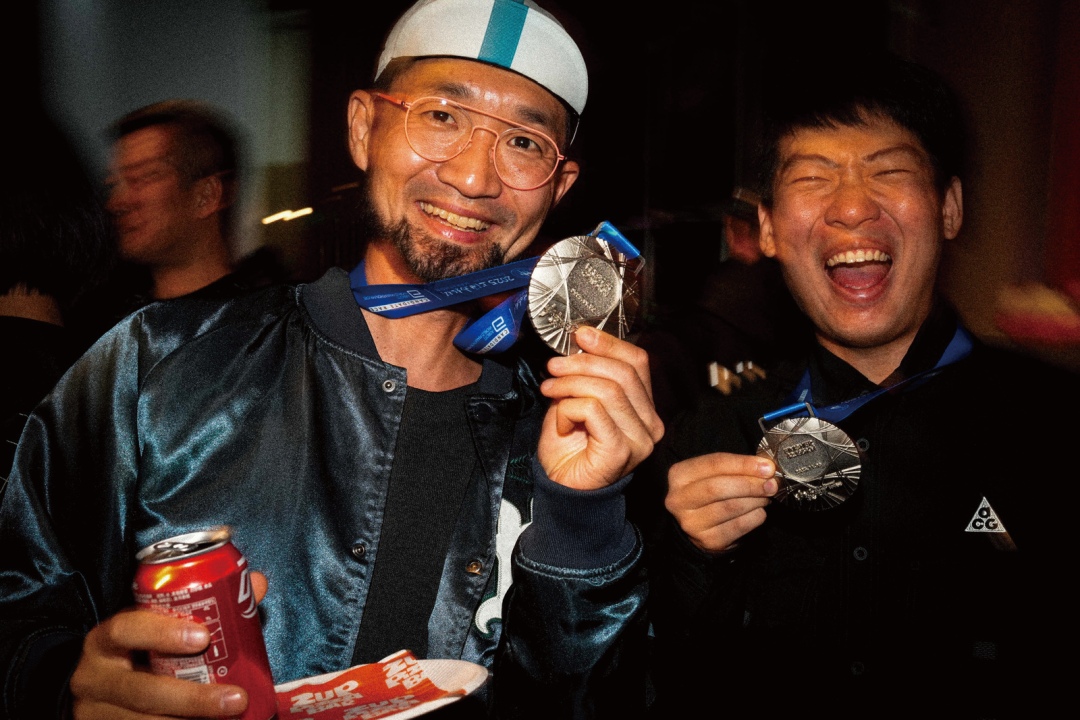
I arrived in Shanghai two days before the race. Major marathons draw participants from all over the world, so all kinds of social events are held around them. Runners from around the globe become friends by running together. An event called “RUNHAI,” a name borrowed from Shanghai, was held, and I took part in the two-day event organized by the city-based running crew Darkrunners as a member of 1PRRC1936. Taking in a city while running is a special experience. It feels like gently scooping the foam off a cappuccino with a spoon. On good running routes with no traffic lights or cars, the feeling is doubled. We ran together along the Huangpu River through the Bund area. There were so many magnificent buildings. In the Qing dynasty, Shanghai was still a small fishing village. After the Opium War in 1842, the Treaty of Nanking made it the first city in China to open to foreign trade. Concessions were established, and as the powers competed for commercial gain, it grew into an international trading city. The European-style buildings in a variety of architectural styles that rose around the Bund are the traces of that history. With the global popularity of marathons these days, social events have grown into enormous gatherings. But because the Shanghai Marathon is still less well known, the program was modest in scale and friendly in atmosphere, small enough that I could introduce myself to crew members invited from major Asian cities such as Taipei, Tokyo, Seoul, Beijing, and Guangzhou. At the RUNHAI event the next morning, I also met members of the Korean running community “Nonghu City Run.” They run through the city every Wednesday morning, I was told. I now had one more reason to come back to Shanghai. Unexpected encounters are the charm of marathon travel.
On race day, true to a country of strong public authority, everything had been cleared so thoroughly that not a single car was on the road. As at the Boston Marathon, baggage trucks were lined up in the side streets around the main road, and runners simply had to find the truck matching the bag-check number on their bib, which was convenient. In other respects, too, from course control to water stations, the race operations felt world-class overall. Except for the starting-group issue.
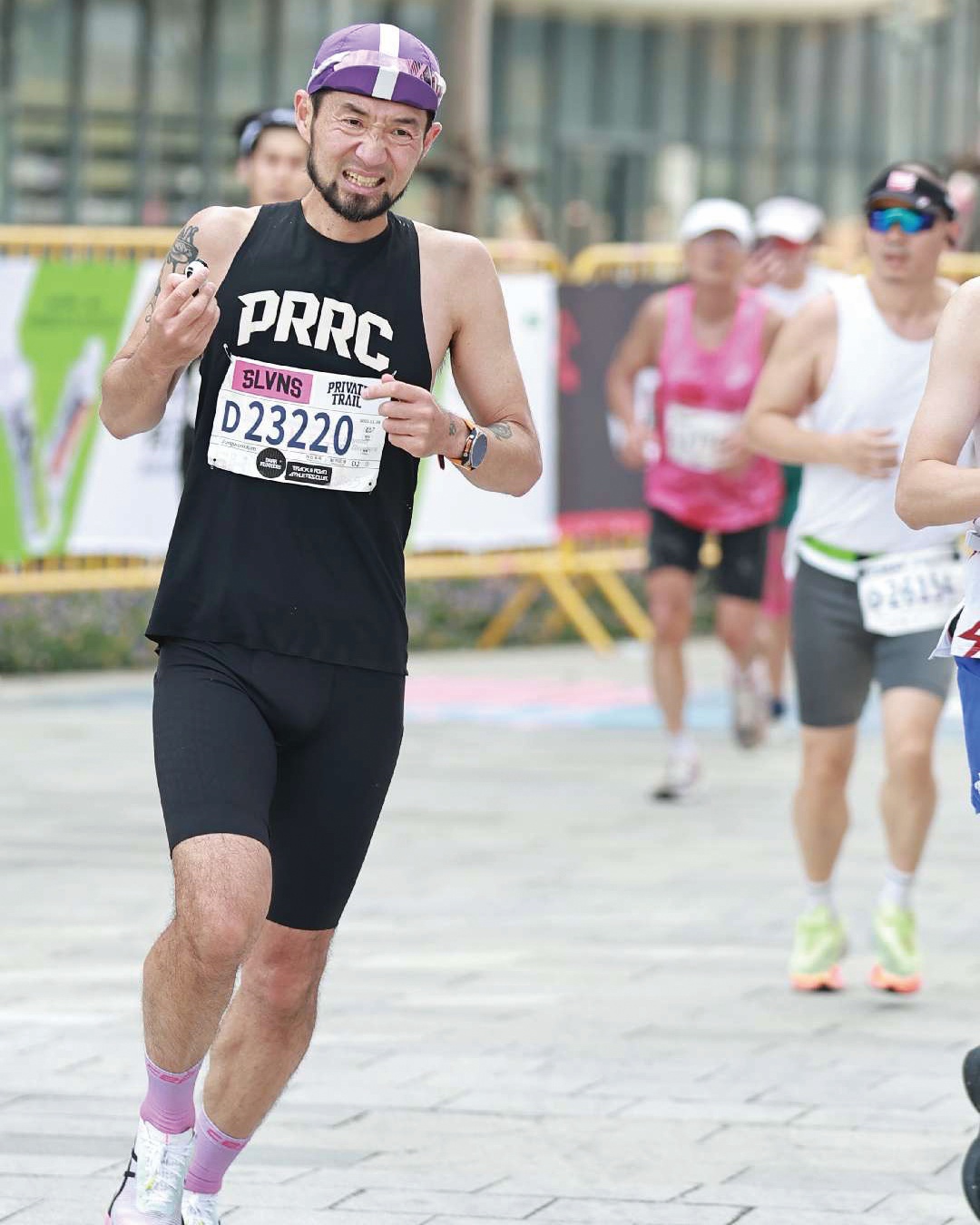
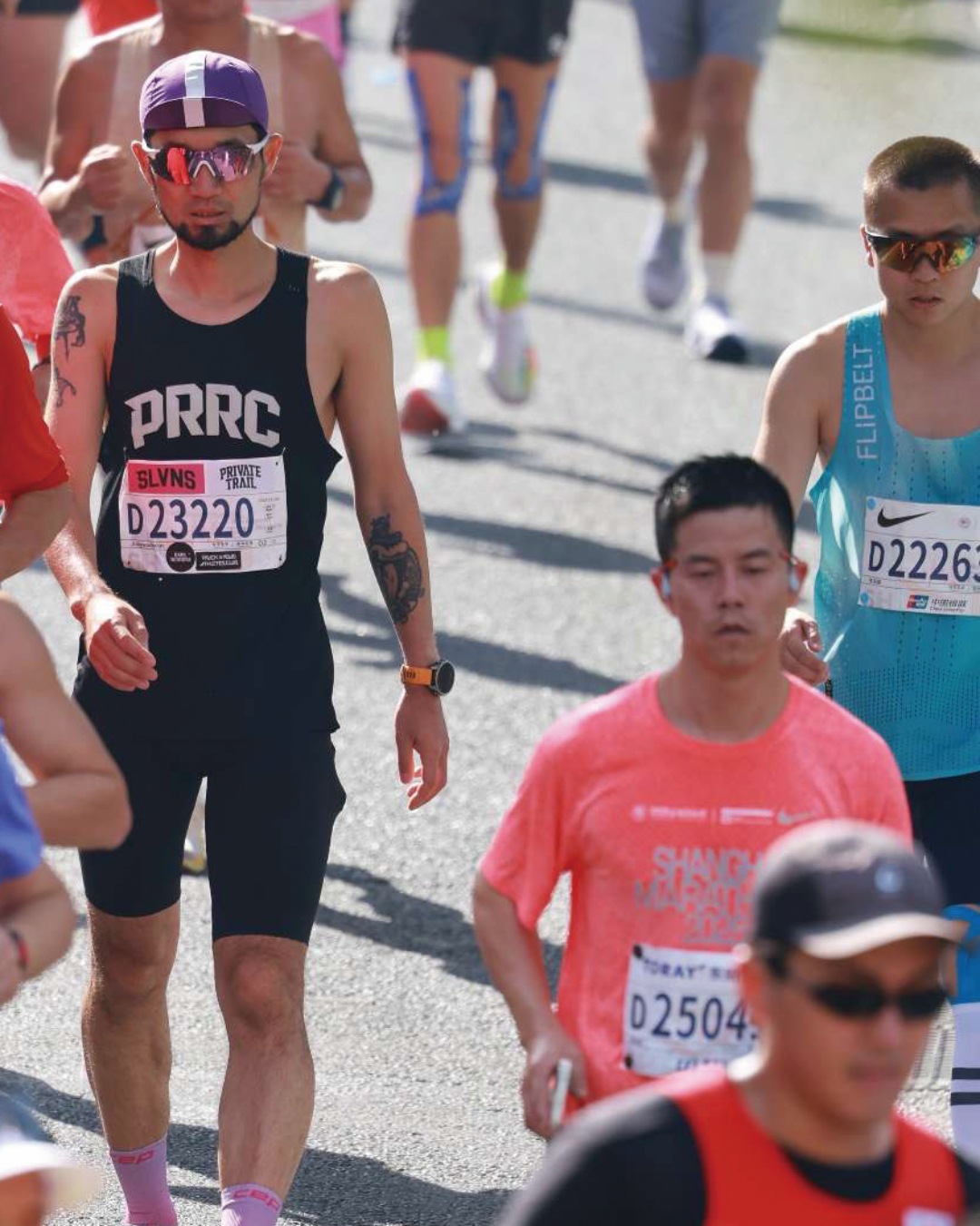
At major marathons, runners submit certified race times and are assigned to groups from A to E based on them. Those who enter through travel agencies are usually placed in the last group. Somehow, though, participants in travel agency packages were put in Group B, while foreigners who had submitted certified records were herded into Group D. (I heard that some foreigners with prior race experience in China were assigned to Group B.) I thought it was a bit much, but there was nothing to do but accept it. Just before the race, a warm-up group formed at the very back of Group D, running a stretch of about 50 meters back and forth. I looped around about 20 times with my friends, then went to the starting line. The weather was good, but I felt in poor condition. I hadn’t slept properly for several days because of video editing. Still, I didn’t want to change my goal. Shouldn’t you at least try to do everything you can? I get excited every time I stand at a starting line. Marathoning is a sport where everyone stands at the start a coward, and everyone becomes a hero at the finish. I was worried about bottlenecks, so I started almost at the very front. Things were fine for the first two kilometers or so, but once the bottleneck began, it was an exhausting journey. Some people suddenly stopped, others shouted as they pushed past the crowd, and still others dithered, and I had to run through all of it. In the midst of the chaos, I wasted energy accelerating and decelerating over and over. I reached the half in 1 hour 29 minutes. Even in difficult conditions, I had more or less kept my pace. The temperature was rising higher than expected, but it wasn’t a big problem. Let’s go as far as I can. The course, which passed every one of the city’s landmarks, was wonderful too.
At the 23-kilometer mark, I met a group of Koreans overtaking me and was greeting them when I suddenly felt pain. It was hamstring pain unlike anything I had ever experienced. It felt as if a thick steel rod had been driven into my right leg. There had been no warning signs of injury, so I couldn’t believe it, but before long I couldn’t run any farther. I stood there trying to loosen the muscle, but it seemed something serious had happened. My leg gave out and I collapsed. I went to the medical staff and said I wanted to take an ambulance, but the answer I got was “Jiayou (加油), jiayou!” Urged on by medical staff who kept telling me I could do it, I plodded forward on foot. If I had known then that my hamstring had torn by six centimeters, I wouldn’t have gone on. I tried to run the remaining 19 kilometers again. The harder I pushed, the more it hurt, and I cried. Foolishly, I hadn’t brought my phone or a transit card, so the only option I had was to walk along the course. In the end, I finished.
Shonan International Marathon
湘南国際マラソン
since 2006
Race date: December 7, 2025
The injury from the Shanghai Marathon tangled up my plans. The very next week, I was scheduled to run 10 kilometers at the Shonan International Marathon with a camera mounted on me. I got every treatment I could in a single week, but the injury was serious. I couldn’t even walk properly, let alone run. Bruising spread across my thigh. I found a friend to carry the camera and run in my place, and we went to Shonan together.
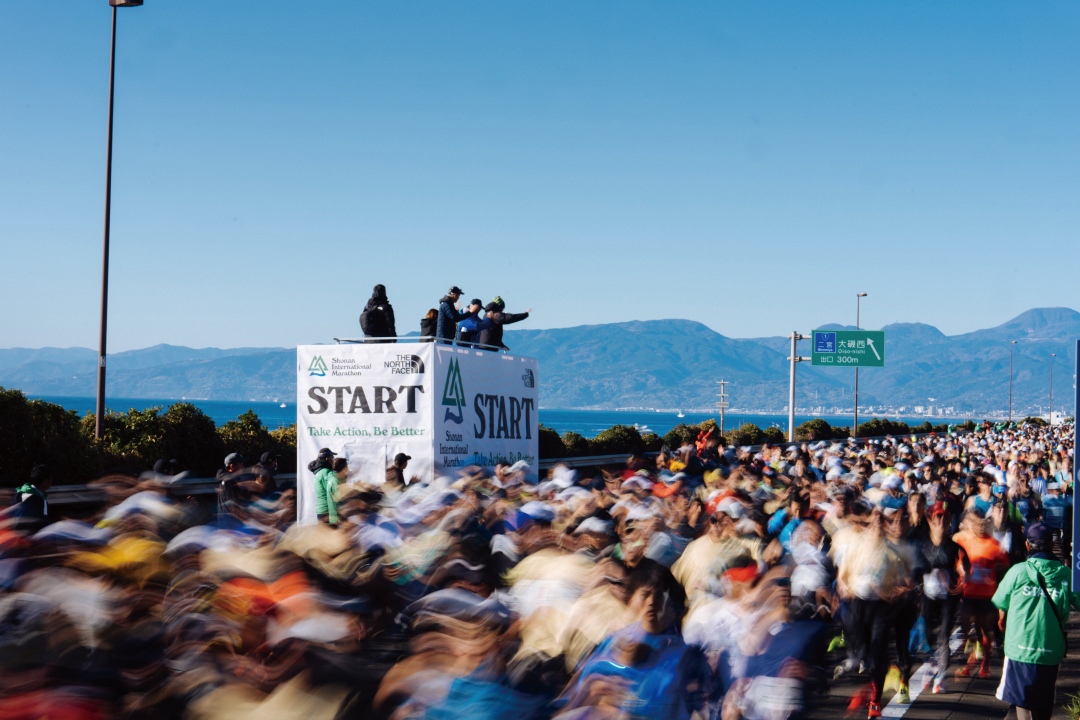
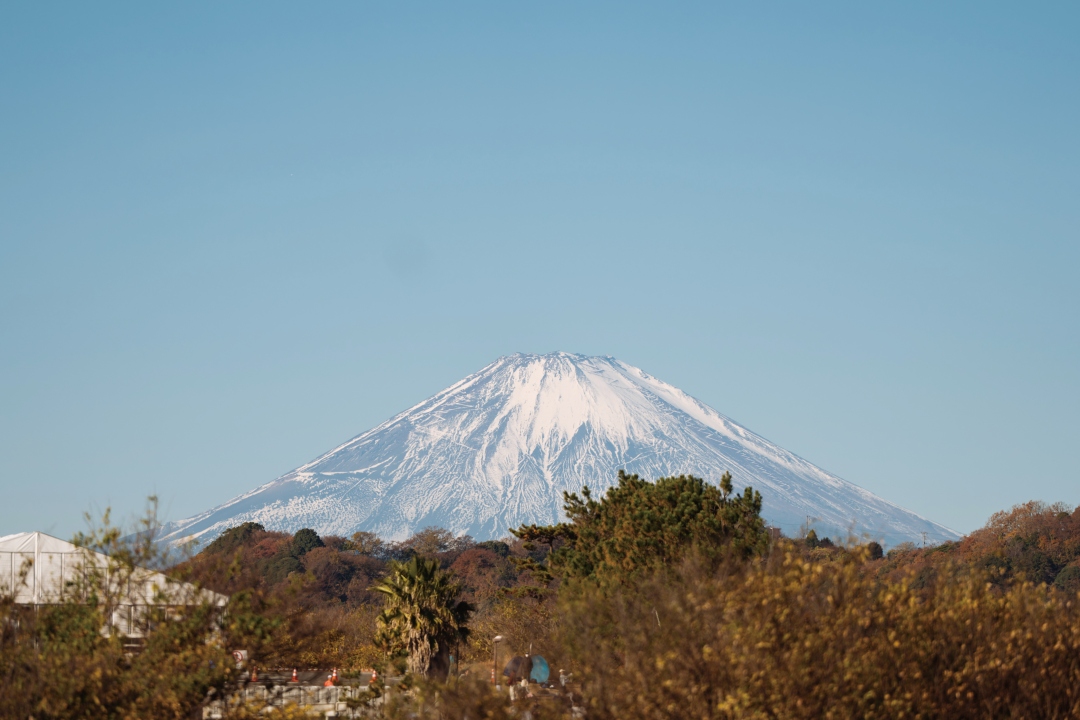
“Continuing is power.” The reason I didn’t give up and went anyway was the Shonan Marathon’s motto. The Shonan International Marathon is an international race run along a beautiful coastal road near Sagami Bay in the Shonan area of Kanagawa Prefecture, Japan. It aims to be eco-friendly (runners are required to bring their own cups and water bottles), and its course is relatively flat with sea views. It is now in its 20th year, and the number of overseas participants keeps growing. The starting point is the Oiso Prince Hotel. If you stay there, you can head straight to the start on race day with no transfer. From the hotel rooms, the open sea stretches out beyond the window, and the view alone makes it worth a stay. On the opposite side from the sea, Mount Fuji appears in the distance. Although even limping along was hard this time, I thought that someday I wanted to come back here and run to my heart’s content. Two days after returning home, I headed off again, this time to Hawaii.
Honolulu Marathon
Honolulu Marathon
since 1973
Race date: December 14, 2025
Ever since my first trip to Hawaii, I haven’t been able to forget the temperature, the humidity, the sunlight. The name Hawaii is said to derive from Sawaiki, an old Polynesian word meaning ‘homeland.’ It is a place of warm sun and cool, gentle breezes, and the capital of its seven islands, large and small, is Honolulu. The city sits on the southern shore of Oahu, a bit like Seogwipo on Jeju Island. True to its name, which means ‘sheltered harbor,’ Honolulu has smaller waves than the rough north shore. Its geography, favorable for anchoring ships, made room for the Pearl Harbor naval base and a trading port, and the city has long played an important role economically, culturally and militarily.
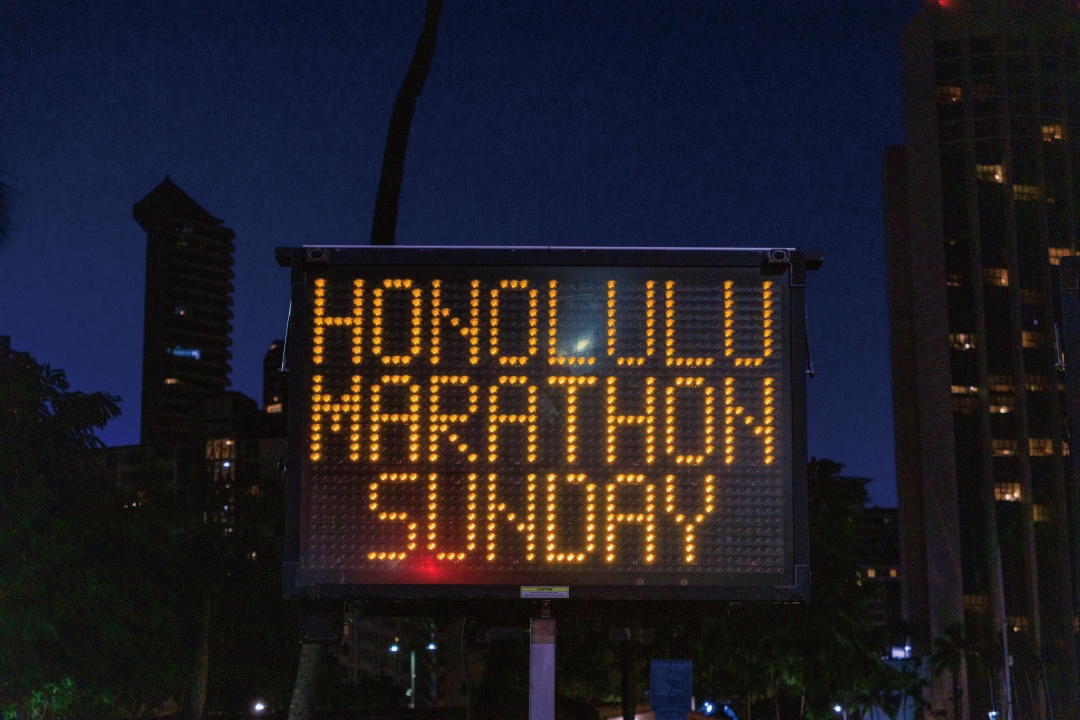
The marathon is one of Honolulu’s major annual events. It draws huge crowds, and race day is practically a citywide festival. The course cuts across the downtown area and passes major landmarks. The Honolulu Marathon is held every year on the second Sunday of December. This time I should have given up on it. Among the countless reasons not to go, I kept searching for little fragments of a reason to go. With a hamstring injury, I couldn’t even walk for long, but I still wanted to stand on the starting line. I had already paid the entry fee, higher than that of any other marathon ($350), and I hadn’t bought refund insurance. (Refund insurance is just bait anyway; I’ve never met anyone who actually got a refund.) If I couldn’t get the fee back regardless, then what?
The Honolulu Marathon has no cutoff. In long-distance races, a cutoff is a rule that disqualifies runners at the back of the pack who miss a posted time limit, usually because of road closures, but the Honolulu Marathon is famous for not having one. Its founder, the cardiologist Jack Scaff, wanted to shatter the prevailing prejudice that ‘marathons are dangerous.’ To prove his belief that running slowly for a long time is good for your health, he trained heart attack survivors and entered them in the 1973 Honolulu Marathon, to great success. From that first race to today, it has been run without a time limit. It is one of the most welcoming marathons in the world, open to anyone age 7 and older. Thanks to the mild weather, you don’t get cold even in the rain, or when you stop or rest along the way. Add to that a relaxed state of mind, and it can become a picnic that fills the whole day. Perhaps this was the race for an injured person like me? Four weeks after the injury, my hamstring was still torn. My doctor said that if it tore again, I might have trouble running for a while, or even for good. He added that walking a little at a time would help my recovery. The more I thought about it, the clearer my mind became. It was bound to make a good memory. Instead, I would nip my urge to run in the bud. I wouldn’t bring my lace-up running shoes from Korea. Since I was spending a lot of money on unexpected treatment, I would save as much as I could on the trip. I left my carbon-plated shoes and thin race-day clothes at home, and packed a few books and some beach gear. With the exchange rate so high, I filled my bag with food, including instant noodle cups, packaged rice, canned tuna and seasoned seaweed flakes, and set off.
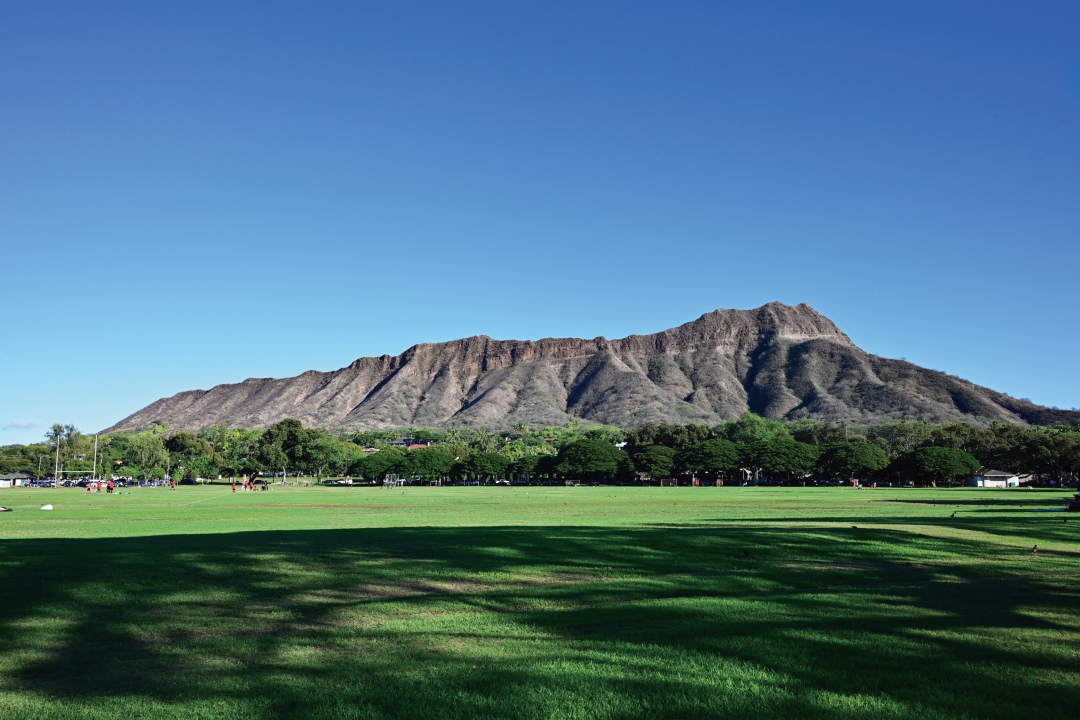
Until now, a marathon for me had always been about how fast I could run. I had never doubted that I would finish, but this journey was different. Let’s take the challenge, I told myself, but let’s not overdo it. My plan was to stand on the starting line and walk from start to finish. If the pain got so bad that I couldn’t walk, I would drop out near Kapiolani Park, at the end of Waikiki Beach, the 10-kilometer mark, and go back to my lodging. If I felt fine, I decided I would go as far as I could.
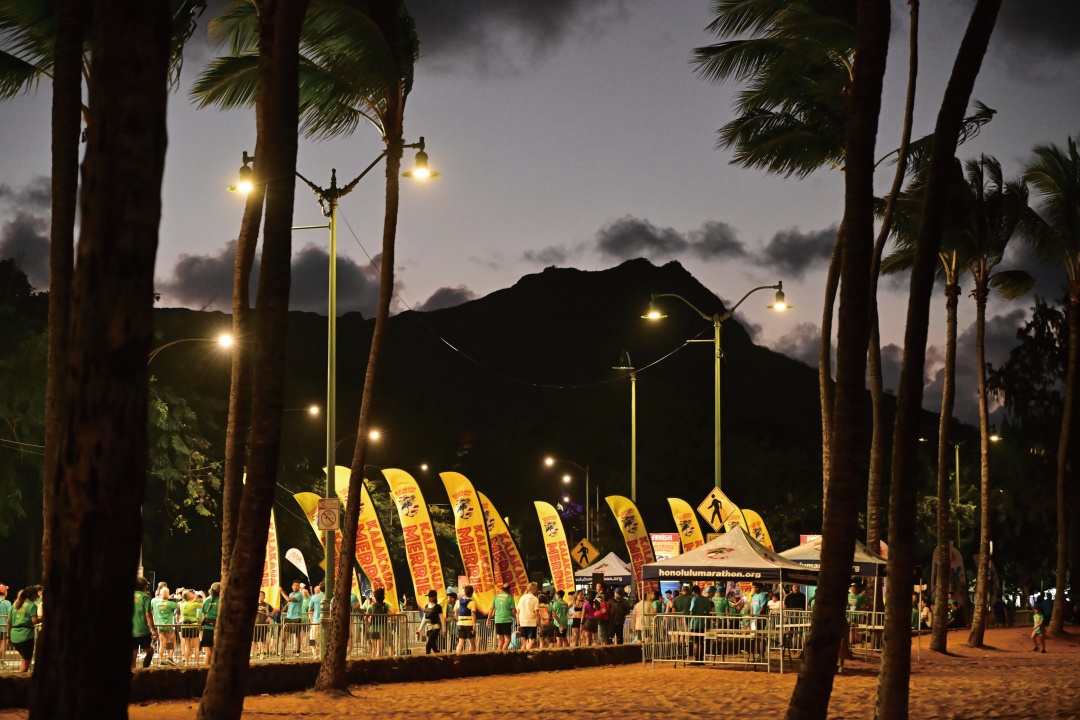
It rained hard even before the race began. In the early morning, I even got a flash flood warning alert. Luckily, though, this is Hawaii. It heats up quickly once the sun rises, so the race starts at 5 a.m. In the parking lot of the Ala Moana Center near the starting point, the faces of the many people sheltering from the rain were full of smiles. A marathon is agony to those who have never experienced one, but to the many who have, it is pure joy. I drew a strange sense of kinship and strength from the fact that so many people had paid a lot of money and traveled so far, and were delighted to be facing a road of hardship.
I waited to start in the Green group, the front row, where the fastest runners line up. There were only about ten elite athletes. A few influencers who were former athletes, invited from Japan, and runners from the University of Hawaii track team stood at the very front. After a fairly simple ceremony, the race started right on time with fireworks. I walked on, paying no attention to the people pushing past me from behind. About 500 meters in, my mind went blank. I had dropped my phone. The zip-top bag holding my bus card, my phone and $40 in cash had vanished entirely. In the crowded atmosphere, where the sound of footsteps mingled with the bursting of fireworks, I started back. Walking against tens of thousands of runners streaming toward me was eerie, but there was no other way. I walked like a madwoman, staring at the ground, and found the bag near the starting area. The phone screen was cracked and the bag had a hole in it, but I was grateful nobody had taken it. ‘Oh, thank God.’
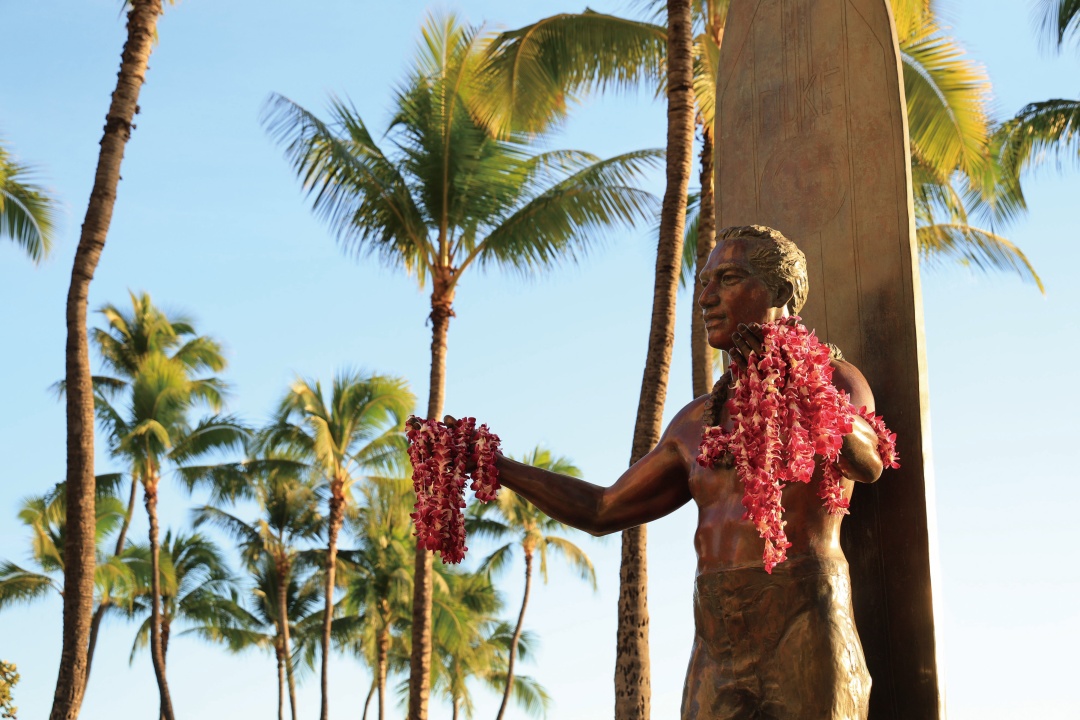
After looping through Chinatown, the old downtown and Aloha Tower, I came back to the front of Ala Moana Regional Park (the 6 km mark). I liked how the course was designed to bring us back to the start, so that we could receive the crowd’s cheers once more. I felt self-conscious about walking and kept lowering my head, but I was glad that so many people shouted encouragement. Walking briskly, I could manage a pace of about 9 minutes 50 seconds per kilometer. I set 10:05 to 10:10 as my baseline and decided to try a ‘negative split’ strategy, keeping my pace consistent and speeding up in the second half. For most runners, this is the ideal strategy for finishing. About two hours after the start, I passed Waikiki Beach (the 8 km mark). It was an overcast day and the sun wasn’t visible, but I loved the seaside scenery as the sky began to brighten. Passing the statue of Duke Kahanamoku, the father of modern surfing, with birdsong added to the scene, it all felt unreal. It was as if they were cheering me on, telling me I could do it.
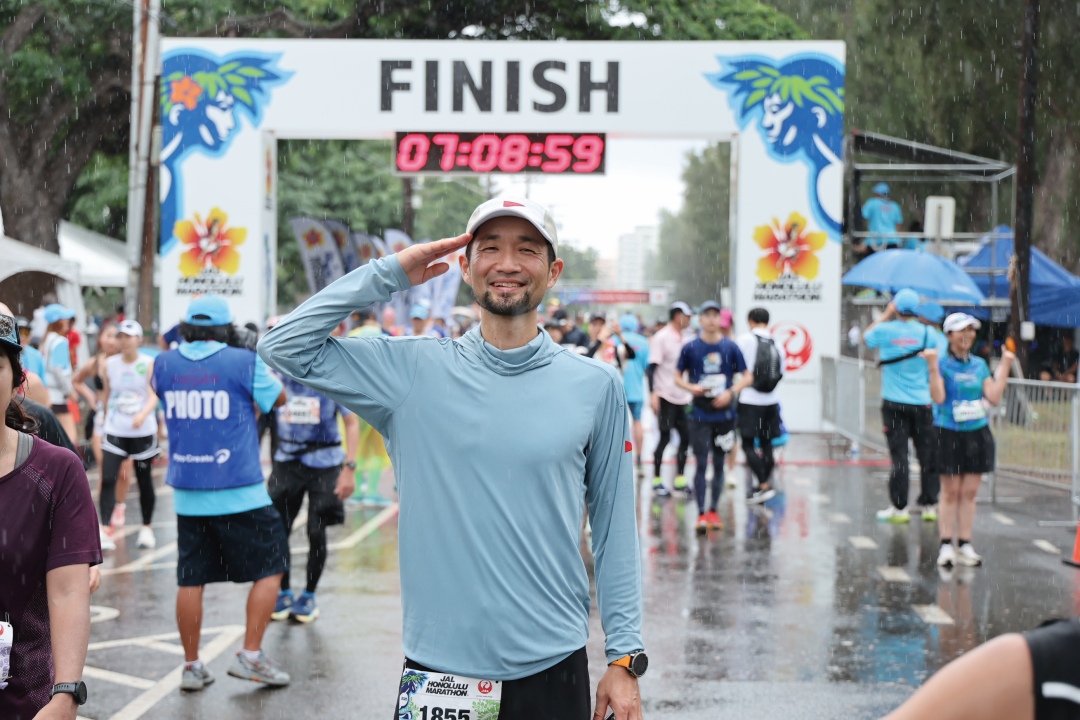
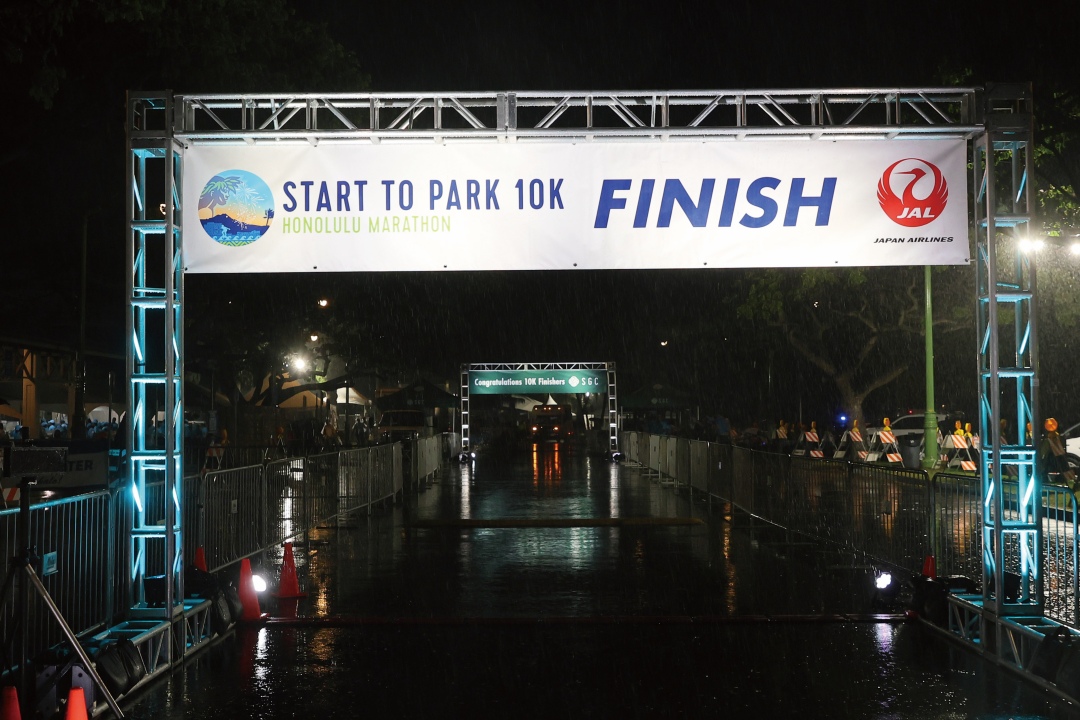
After the beach ended came the uphill stretch from Kalakaua Avenue to Diamond Head Road (the 12 km mark). On the opposite side of the road, the escort motorcycles and broadcast vehicles passed, and the first-place woman came running by. ‘The men’s leaders have already gone through.’ After that, the runners steadily multiplied. If I hadn’t been injured, I would have been somewhere up there. Knowing I still had 29 more kilometers to go, it didn’t feel real. My uncomfortable shoes and wet socks had given me a big blister on the sole of my foot, and my hamstring felt stiffer and stiffer. If I slowed down or stopped here, I would become too slow to move forward at all. The moment I had expected had arrived: somewhere between giving up and forcing it.
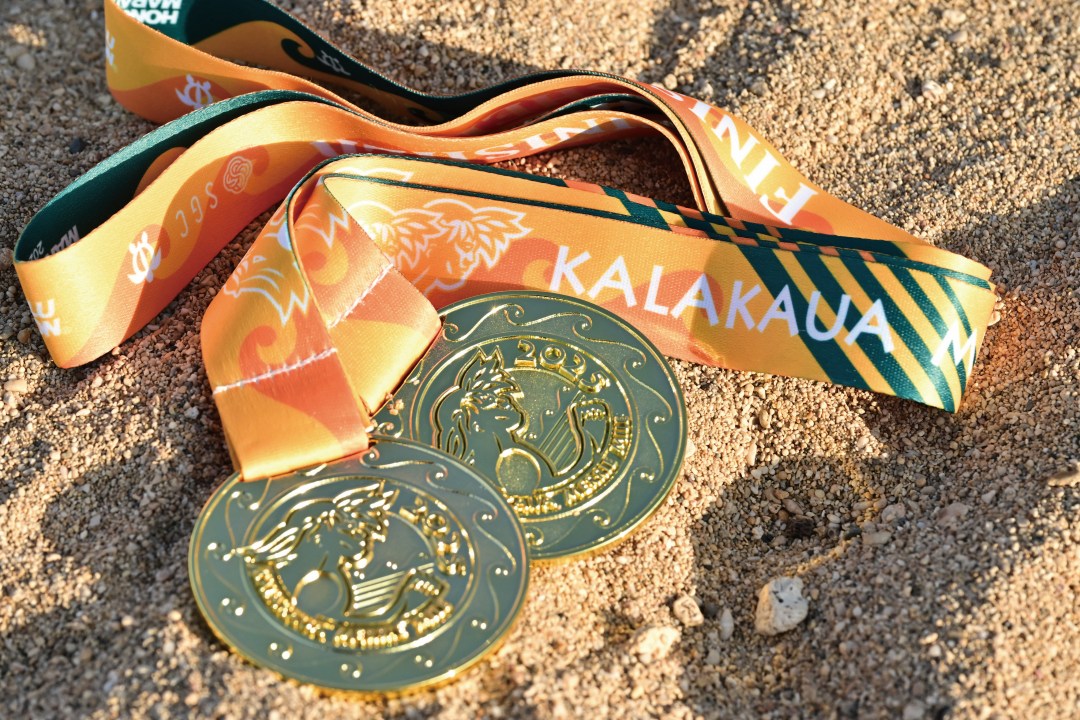
The choice was mine. I resolved not to be daunted or to agonize. I just had to shorten the distance one step at a time, like most runners, who quietly fill in their own miles. Somewhere along the way, I stopped believing in shortcuts. I believe that taking the long way around is the only way. I know that looking for a way to skip the process and still reach the destination is wishing for a fluke. That’s why I love the marathon. Nobody breaks that rule. Giving up is an option between every footstep, yet no one stops easily. Who is fast and who is slow is a matter for later. Getting from the starting line to the finish line is the essence of the marathon and everyone’s goal. The identical, glittering finisher’s medals handed out at the end each hold a story of their own, the heart and spirit of having done it ‘nevertheless.’ I have never once regretted running. Even when I’m injured or worn out with aches, finding the reason for the pain and accepting it is also part of running. Within that, I just do what I can, one thing at a time. I still love running, and I am grateful for the whole journey.
Seven hours, eight minutes, 15 seconds: the slowest marathon of my life. Nevertheless, I stood on the starting line, and nevertheless, I did it. I never ran a single step from start to finish, yet it was a journey in which I never stopped for a moment. I didn’t give up, and I finished. I’m the only one who knows that. To think that a story only I would have known has become something I’ve written down. My injury hasn’t fully healed yet, so I wrote this while undergoing rehabilitation. Thank you, Pitch by Magazine, for giving me the chance to remember the feeling and the joy of that moment once more.


