More Than a Museum — M+ in Hong Kong
M+, Asia’s first global museum of contemporary visual culture, has opened beside Victoria Harbour in Hong Kong. We talk with Deputy Director Doryun Chong about the museum’s vision, its Sigg Collection and its role in Asian art.
More than a Museum — M+ in Hong Kong
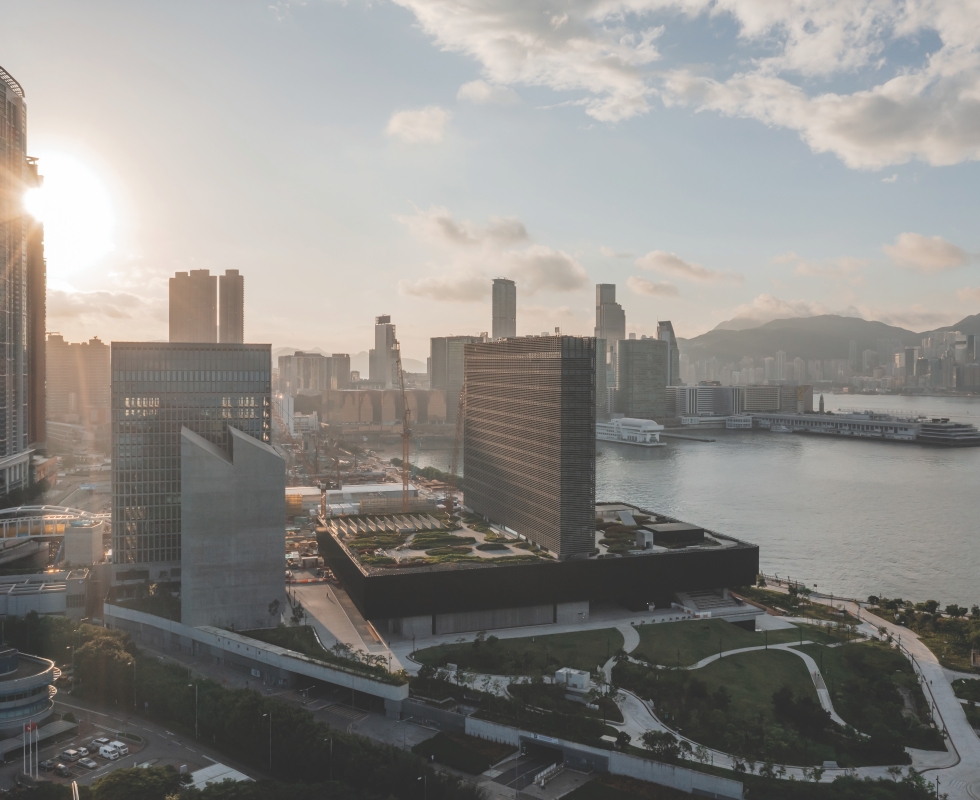
M+, which opened beside Victoria Harbour in Hong Kong on November 12, 2021, has slowly set sail as Asia’s first global museum of contemporary visual culture.
Courtesy of Hong Kong Tourism Board
Courtesy of M+
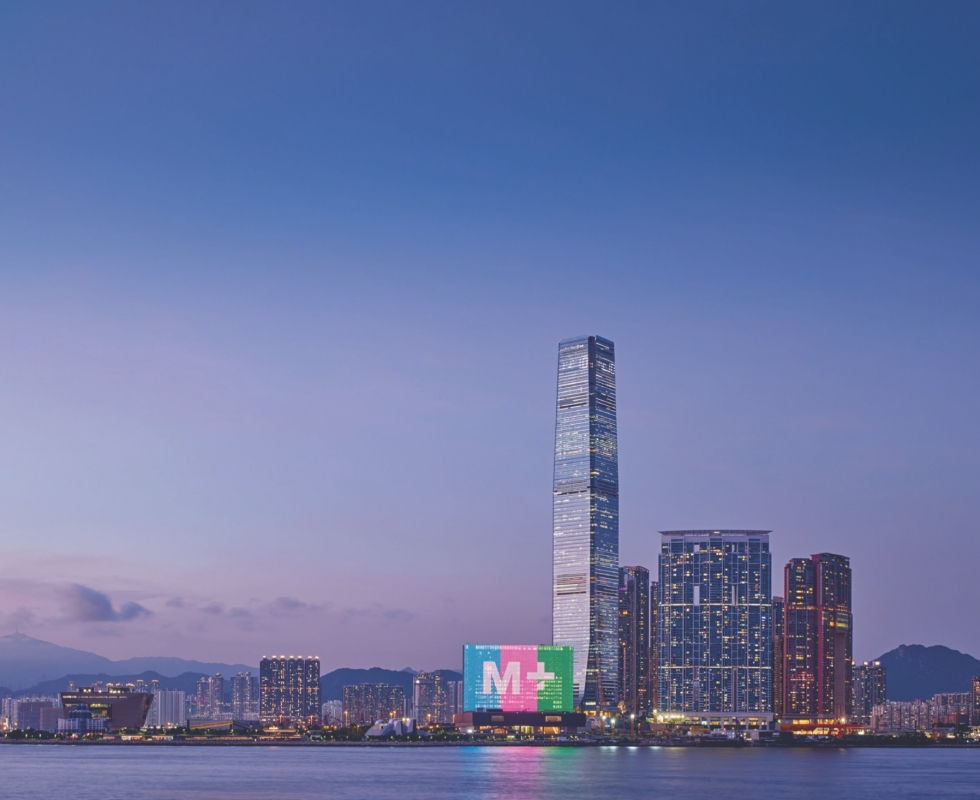
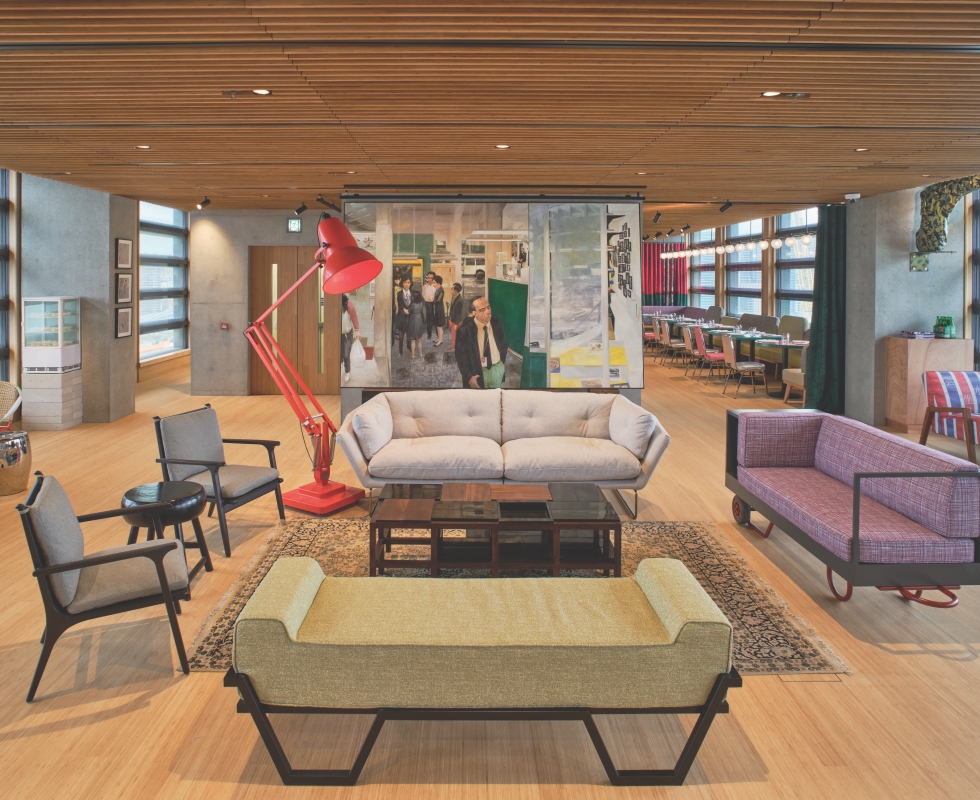
The M+ building, which occupies 6,500 square meters in Hong Kong’s *West Kowloon Cultural District, was designed by Herzog & de Meuron, the renowned Swiss architecture firm. True to a name that means “more than a museum,” it offers not only exhibitions but a range of lifestyle experiences against the backdrop of the Victoria Harbour waterfront park. Facilities such as a museum shop, a café, a Korean restaurant, a members-only cocktail lounge, a cinema, a performance space and a Roof Garden reveal the direction M+ is pursuing.
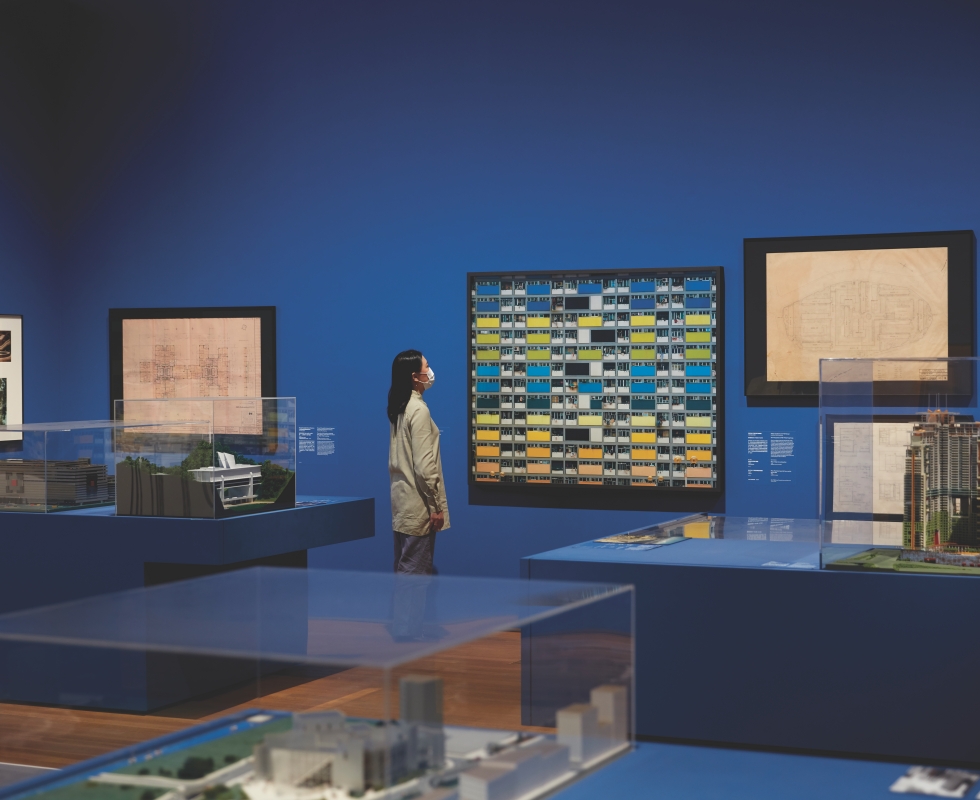
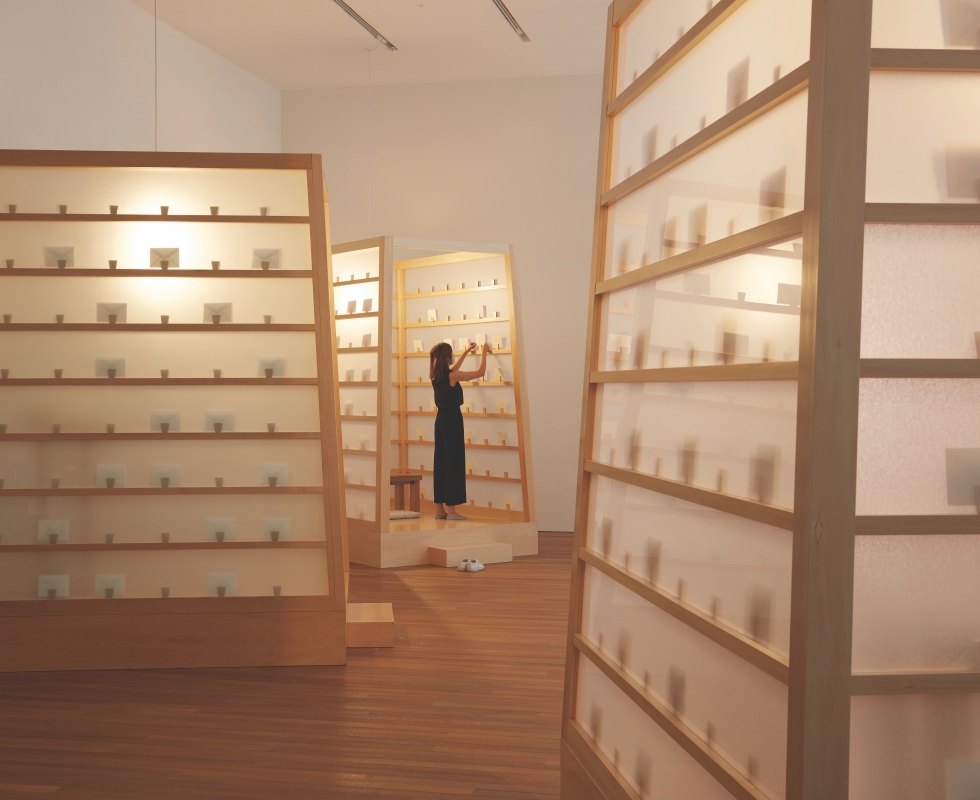
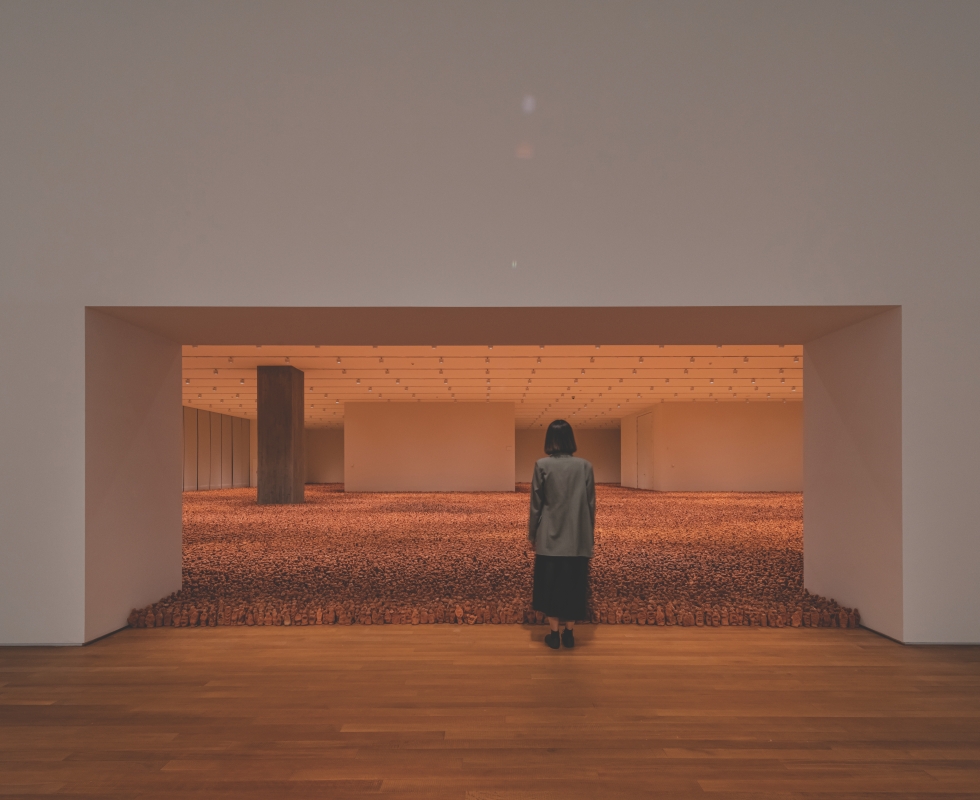
Start with the exhibition spaces, which include 33 galleries inside the museum and extend outdoors to the large LED screen on the building’s south facade and the Grand Stair. Here you can encounter works spanning visual art, design, architecture and moving images. The opening exhibitions are “M+ Sigg Collection: From Revolution to Globalisation,” built from the Uli Sigg collection; “Hong Kong: Here and Beyond,” which explores the visual culture linking Hong Kong’s past and present; and “Things, Spaces, Interactions,” which investigates the relationship between design and space in Asia. New works by Taiwanese calligrapher Tong Yang-Tze, Japanese designer Nakamura Yugo, Korean installation artist Haegue Yang and the media art collective Young-Hae Chang Heavy Industries are also being unveiled for the opening. Once M+ Cinema, scheduled to open early next year, and other facilities are complete, M+ is set to establish itself as a firm landmark symbolizing Asian visual culture.
On November 16, 2021, an online media interview with Deputy Director Doryun Chong was held, hosted by the Hong Kong Tourism Board. Chong, who is from Korea, completed a doctoral program in art history at the University of California, Berkeley. She then worked at the Asian Art Museum in San Francisco, the Walker Art Center in Minneapolis and, as associate curator in the Department of Painting and Sculpture, at the Museum of Modern Art (MoMA) in New York, before moving to Hong Kong in 2013 as chief curator of M+. She has been named to the contemporary art magazine ArtReview’s list of the 100 most influential figures in the art world, and is currently Deputy Director and Chief Curator of M+.
* The idea of building a cultural district on the western edge of Hong Kong’s Kowloon Peninsula and developing Hong Kong into Asia’s cultural hub was already being discussed publicly in 1998, and after long deliberation an initial plan was settled in 2007. A mega-project in which some 17 integrated arts and cultural facilities are rising on a site of about 40 hectares, it is scheduled for completion around 2026.
Talk with Doryun Chong, Deputy Director of M+, Hong Kong
The museum’s diverse cultural and linguistic backgrounds must be a great strength and source of energy for M+.
About 250 people work at M+, and they come from 30 countries. Eighty percent are from Hong Kong, and the rest are staff from Asia, the Americas and Europe. You could say our staff comes from a wider range of countries than at any famous museum overseas. Our vision is to be Asia’s first museum showing global visual culture. If you want to build an international museum in Hong Kong, I think the staff naturally has to reflect that. I’m from Korea myself, but living in the United States for 25 years taught me the importance of multinational culture. Personally, I wanted to realize that multinational spirit in Asia before I got any older, and I came because M+ could give me that hope. Hong Kong has seen a lot of change over the past decade, but I haven’t had any major problems doing what I wanted to do since coming to M+.
**There is also a lot of interest in the works donated by collector Uli Sigg.
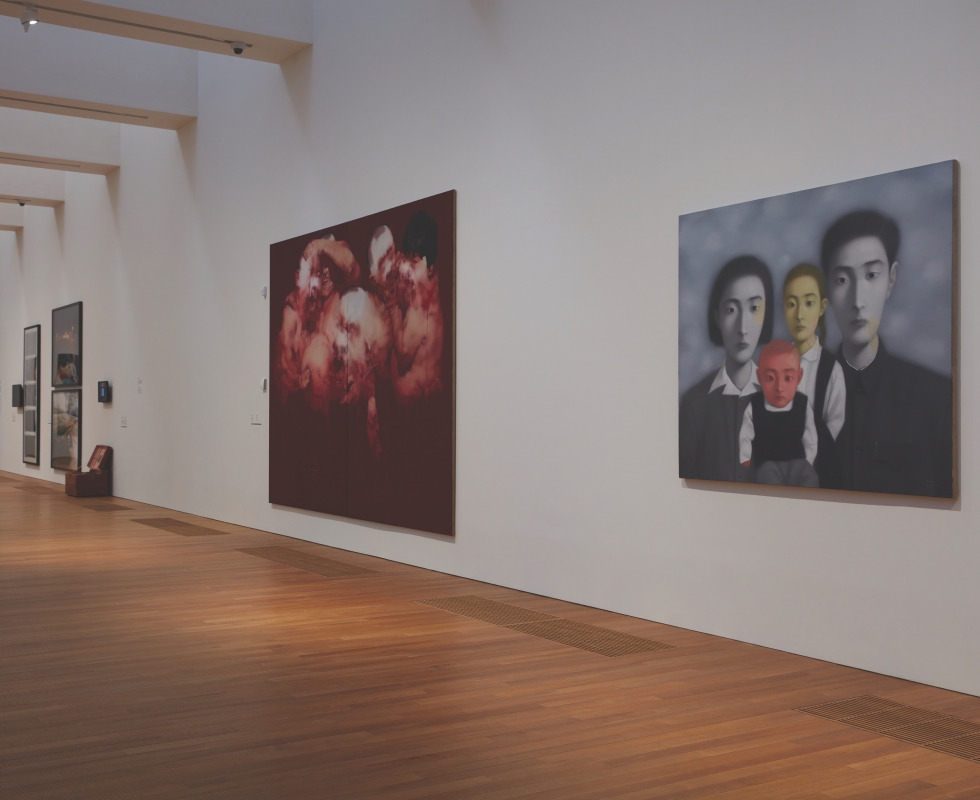
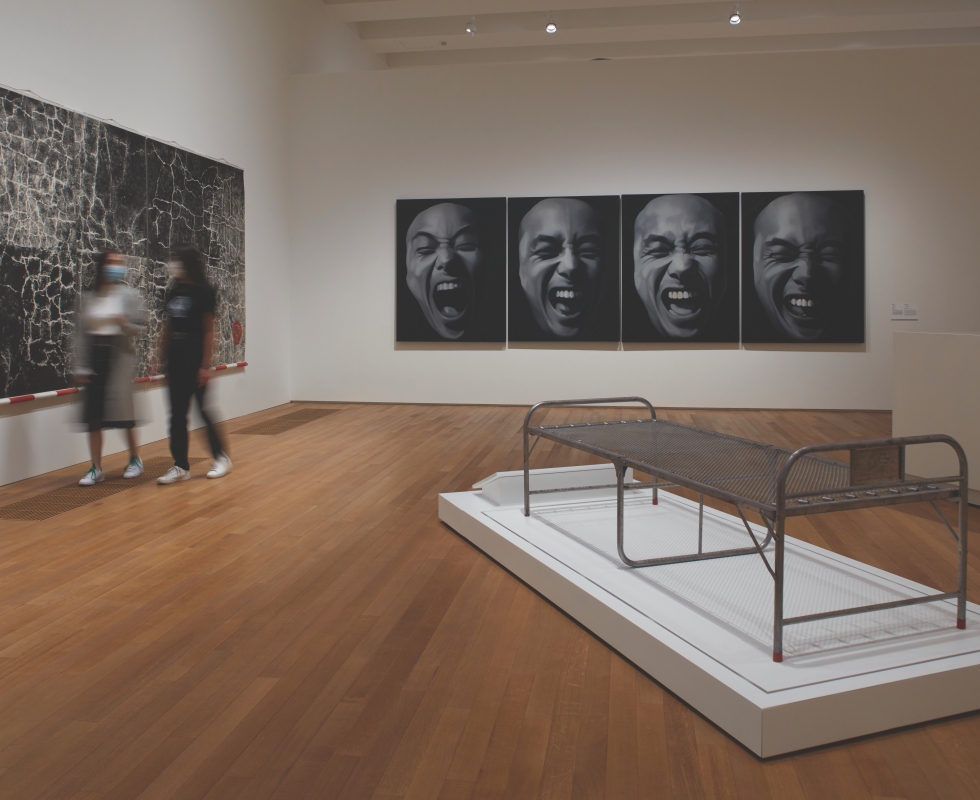
The Sigg Collection at M+ comprises 1,510 works. It is the finest collection for showing the evolution of Chinese contemporary art from the 1970s to the 2010s. We say so, of course, and so does the entire art world. Since M+ opened, most visitors have been seeing this collection after viewing the “Hong Kong: Here and Beyond” exhibition. One thing I thought about when opening the Sigg Collection exhibition is that it’s hard for anyone who hasn’t experienced China’s Cultural Revolution even to imagine it. I think that through the collection you can feel how drastically China has changed since then, and how fierce the struggle was to forge an identity as an artist within it. Dada, after all, was born as a reverberation of World War I. Seen in that light, although the Cultural Revolution was not confined to China, I think the contemporary art that followed the revolution was perhaps the most productive work in the art world in the period moving from the late twentieth century into the twenty-first.
Collectors play an ever-larger role in the art world, and Hong Kong is also the center of the Asian art market. How will M+ affect collectors and the art market?
I agree that the role of collectors is growing. In fact, collectors and art institutions have long had an important relationship. The background to the birth of MoMA in New York was ***four collectors. The Guggenheim Museum came into being in a similar way around the same time. Major museums in the West, especially in the United States, could get started because collectors laid the foundations. I think private collections turning into public institutional collections was a general tendency among museums that began in the late nineteenth and early twentieth centuries. Uli Sigg donated his collection to M+ presumably because he knows that history well.
I started coming to Hong Kong often around 2010, and over the following decade the city’s art market grew rapidly. Global auction houses such as Sotheby’s and Christie’s, as well as auction houses from China, opened here. In the early days there were about ten leading commercial galleries, and their number then grew quickly. The same goes for nonprofit organizations. The entire ecosystem that makes up the art world grew. Of course, Hong Kong is still known mostly as a hub for trading artworks. Nonprofit organizations were small in both number and scale, but now that M+ has opened, it has added great weight to that sphere. I think it can energize not only the art market but also the ideas and discourse of the art world as a whole.
** A Swiss businessman and collector who even served as Switzerland’s ambassador to China and North Korea. Active in China for more than 20 years, he collected Chinese contemporary art with passion and supported China’s art world. Sigg’s collection is regarded as the finest collection running through the whole of Chinese contemporary art.
*** Three people, Abby Rockefeller, Lillie P. Bliss and Mary Quinn Sullivan, first laid the groundwork for MoMA, and A. Conger Goodyear joined afterward.
If someone visits M+, what should they focus on?
If you look at the history of museums and art galleries, within Asia there are some good institutions in Japan, Korea and Taiwan that play an international role. But if you take a broad view of Asia, I don’t think there are many museums that serve, from within Asia, as a conduit between Asia and other regions. M+ has long planned to build its collection across China, East Asia and South Asia. Through that process in particular, the West, which colonized Southeast Asia, will also be drawn into the discourse. I think M+ is the museum that takes a global view from Asia, cuts across Asia and looks out to the world beyond it.
How can we understand the relationship between contemporary consumer culture and art?
Around 2007, influential figures in Hong Kong gathered to envision the city’s future, and a proposal emerged to build a museum of 21st-century visual culture in the West Kowloon Cultural District. At the time, the proposal simply labeled it ‘M+,’ meaning ‘more than a museum.’ Later, the branding was so appealing that it was chosen as the museum’s name. The vision was to take in art, design, film and all of visual culture, and to show what they share and where they differ.
In 2019, a new shopping mall in Kowloon branded itself as an art mall. Its name is K11 Musea. If a shopping mall calls itself a museum, how should M+ compete with such a museum? K11 Musea is centered on consumption, but the appeal it radiates is culture, which is a different dimension from shopping. In this situation, we have to ask: ‘What is the museum’s next role, its next layer? What should visitors come here to experience?’ M+ conveys a message of changing lifestyles. That is why the ambition for M+ to become the MoMA of Asia is meaningful.
The website that presents the M+ collection like an online shop is impressive.
At most large museums, the digital team belongs to marketing or IT, but at M+ it works within my team. Since 2017, curators and the digital editorial content team have worked together. We built an API for the collection’s open database, and after completing fact-checking and copyright checks, we finished the collection database. It is fully open and easy to access. We posted the source code on GitHub and even held a hackathon. The website’s design was also completed thanks to a cool proposal from a design firm in Brooklyn.
How will the museum go about collecting contemporary works such as media art and digital art in the future?
What I have always told my internal team is this: “To build a 21st-century museum, you must first build a 20th-century museum.” If you don’t first research and collect the lineage of video and media art historically, it can easily collapse. (Among the collection) there are works by Nam June Paik and by Young-Hae Chang Heavy Industries, and we are digitizing and archiving all of the works of Young-Hae Chang Heavy Industries in particular. You could say it is a process of slowly researching and building up the history of media art and video art.
The reason we opened even during the COVID-19 period is that this is a global museum for Hong Kong, so for a while after opening we wanted to put Hong Kong people first. At the same time, we are also considering virtual tours, and we plan to release videos one by one in which curators present M+ exhibitions. The media facade installed on the exterior of M+ was unveiled a month before the opening. We have to ask what the relationship is among the media facade, social media and cyberspace, and we also have to ask how we should collect social media. We are thinking very seriously about how we should accept these contemporary changes going forward.