Life of Repair — On a Life Where You Fix Things with Your Own Hands, Gomson Repair Shop
Gomson Repair Shop runs workshops so that anyone can develop their own ‘bear hands’ (gomson) for fixing things, from darning socks to repairing iPhones. We met Gomson Keeper Yoo Hyemin, who is on a mission to overturn the idea that repair is only for experts.
Life of Repair — On a Life Where You Fix Things with Your Own Hands, Gomson Repair Shop
From darning socks to fixing iPhones and home repairs. At Gomson Repair Shop, you can gain the confidence to fix your own belongings without relying on experts.
Interviewer Parc Jinmyoung
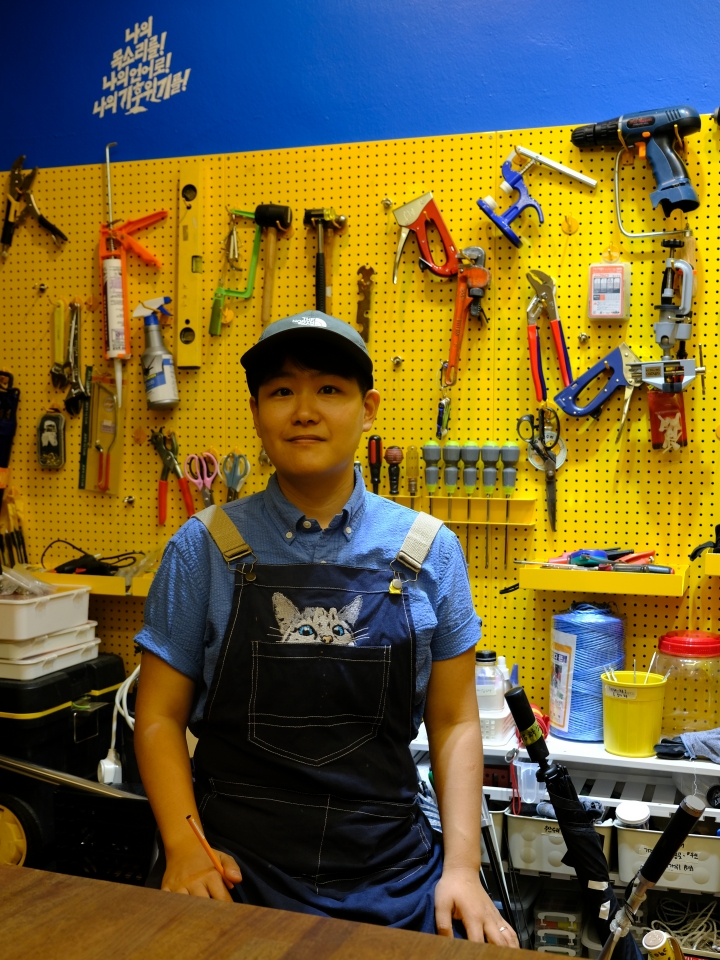
Interviewee Yoo Hyemin (Gomson Keeper, Gomson Repair Shop)

What kind of space is Gomson Repair Shop (Gomson)?
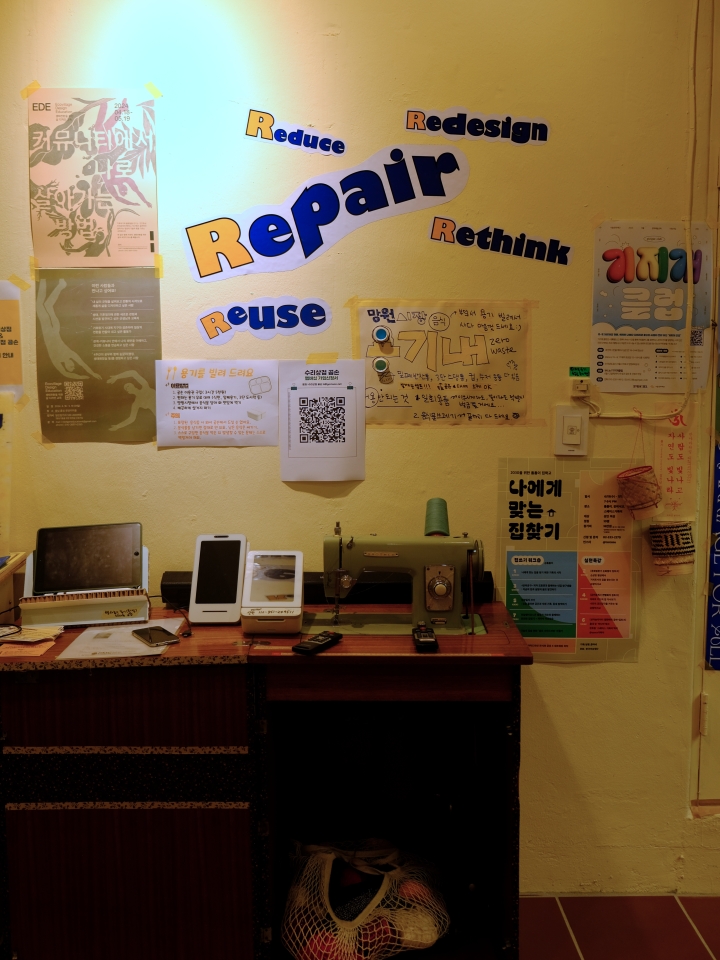
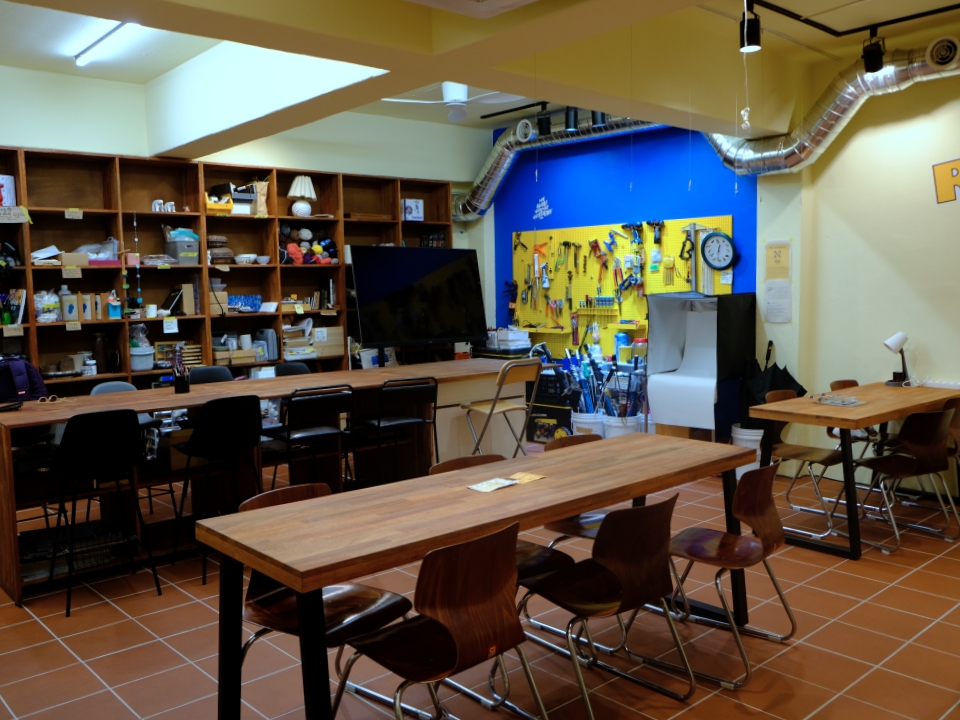
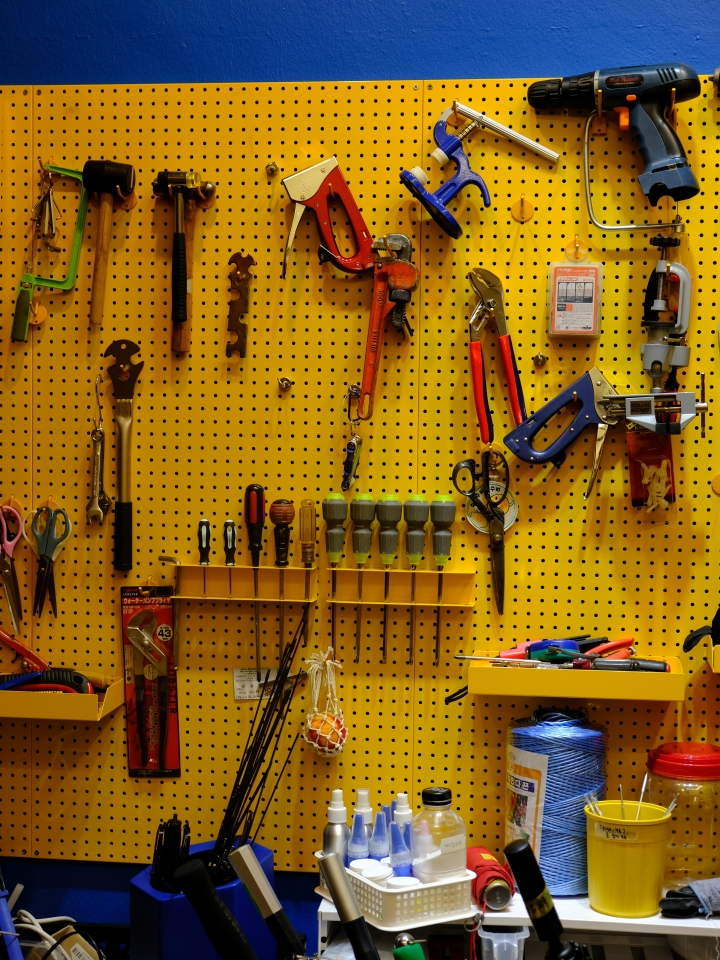
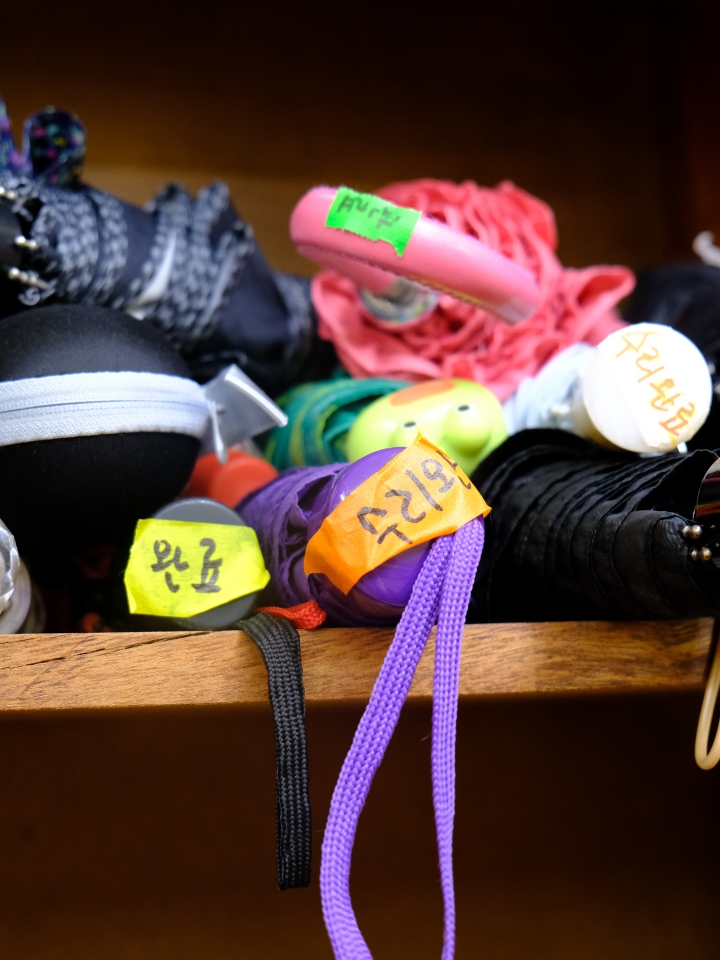
It’s a place where you can repair just about anything—clothing, umbrellas, dishes, electronics. We’re open Thursday through Sunday*, and we run workshops, repair meetups, and repair cafés for each type of item so people can learn various repair skills. The monthly workshop schedule, which changes each month, can be found on our official Instagram account. Those who already have repair skills can also purchase a pass to just use the space and tools.
* Thursday and Friday from 2 p.m. to 9 p.m., weekends from 10 a.m. to 5 p.m.
How many people run the shop?
We’re a team of six women ranging from our 30s to 50s. What brought us together is a shared passion for tackling environmental issues. Since Gomson’s services don’t generate profit, everyone has a day job. As the youngest member and the Gomson Keeper, I work in video production, and among us we also have an environmental activist and an employee of Almang Market, a refill station.
These days there seems to be growing interest in the ‘right to repair.’*
Most customers who come to Gomson fundamentally want to use a single item for as long as possible. In particular, they show a lot of interest in smartphone repair. Since a phone is essentially a collection of personal data, people are reluctant to hand it over to a service center or a private repair shop.
* The right of consumers to repair their own products and modify them however they wish.
I’m curious who mainly takes part in the workshops.
People come to Gomson for all sorts of reasons. Some are interested in environmental issues, some want to learn skills useful in daily life, and some just want to fix a cherished item. Underlying it all is a desire to treasure the things that come into our hands. The people who mostly visit Gomson value the time they’ve spent with their belongings and love a lifestyle of using things for a long time.
I heard you bring in an expert for each workshop.
Right now our own members handle the iPhone repair sessions. Gomson opened this past February. In the early days, we used to invite Kim Hakmin, the head of Seogang Jobs*. I actually met Kim through a secondhand marketplace app. I often use these platforms to sell equipment I use for video production. Back then I was the seller and he was the buyer, and since I’d already come across his story through various media, I recognized him first. Later, I became interested in iPhone repair and reached out to him again, and that’s how we met. We clicked over the shared belief that people should be able to repair their own smartphones, so we started running workshops together. I went on to complete Seogang Jobs’ beginner engineer course. I learned how an iPhone actually works mechanically, and gained enough skill to replace parts like the microphone, speaker, camera, screen, and battery when they break, and now I run the meetups and teach the classes myself.
* A company specializing in Apple product repair that also handles sales and engineer training.
Can someone with zero knowledge of IT devices repair their own iPhone?
First, it’s important to memorize the layout diagram well, since it differs by model series. I once disassembled an iPhone 4 series device—the last model released while Steve Jobs was still alive—and found the parts assembly relatively simple. The battery could even be popped in and out like an AA battery, so swapping it took about a second. On the other hand, replacing the battery on an iPhone 12 Mini requires a complicated and difficult process, including heating it with fire. There are also many different types of screws, all different lengths, so it’s important to know exactly which screw goes where. Even the slightest mistake can cause a fatal problem, like cracking the screen.
Since you work in video production, you must handle a lot of electronics. I imagine it must have been frustrating whenever something broke.
Actually, I think that’s exactly why I got hooked on repair. When friends around me were opening zero-waste shops, I never once felt envious or wanted to join in—I just thought zero waste wasn’t something I was cut out for. But since I’m always around IT devices, constantly watching for new product releases and swapping out gadgets, I think that naturally led me to get hooked on repair instead.
Is there a moment that felt especially rewarding while running Gomson?
Every Sunday, there’s a gentleman who repairs umbrellas for us—he’s nearly 80 years old, a real veteran. We once did a magazine interview together. He’s usually a man of few words who just focuses on the repairs, but afterward he photocopied the interview pages on an old printer and brought them to us, telling us to put them up in the shop. That really moved me. Sometimes, wrestling with a 5,000-won umbrella, I catch myself wondering, what’s so special about this, why am I even doing this? Repair work is one of those things where success and failure are stark—there have been plenty of times I spent two hours on something and still couldn’t fix it, which was disheartening. But seeing a coworker who loves this work and is proud of it made me think, ‘Ah, this isn’t trivial at all. We’re doing something worthwhile,’ and that comforted me.
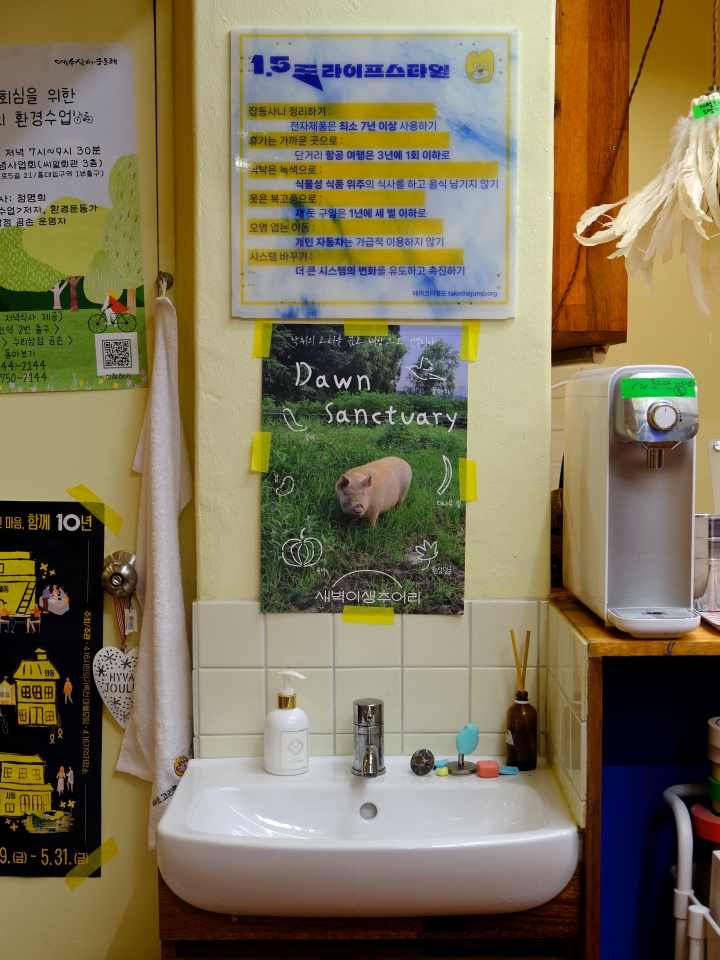

I imagine that fixing things yourself changes how you think about ownership.
I think the more things you own, the more unhappy you become. In modern society, I believe most consumption we do ‘for ourselves’ ends up becoming a structure that exploits ourselves. The more you consume, the more your bank balance drains, and to fill it back up, people take on second and third jobs without hesitation. Until my twenties, I lived a consumption-driven life. I felt like if I kept spending money like that, I’d eventually be ruined. As I wondered how to stop consuming so much, I ended up thinking about a life of not owning things, or of making do with what I already had. If you keep using an item for a long time, you buy fewer new products, and you don’t need to work longer hours just to pay off credit card bills. Thinking a bit bigger picture, if consumers use electronics longer, fewer minerals need to be mined, less nature gets destroyed, and labor exploitation in the mining process can also be reduced.
What’s the biggest change that has come from living a life of repair?
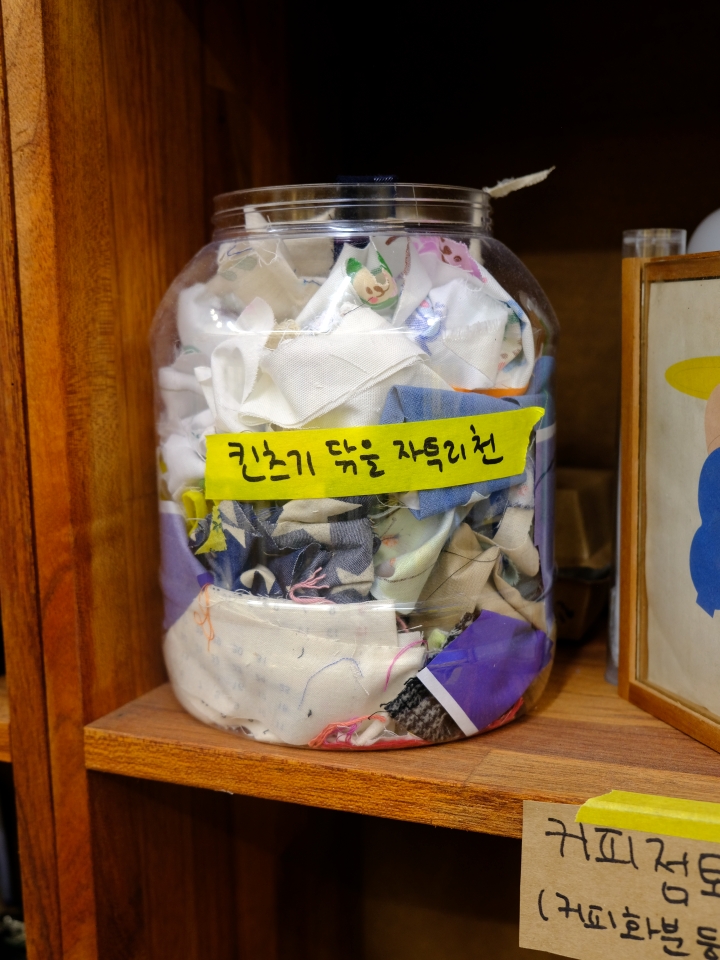
I think my sense of self-efficacy and self-esteem have grown enormously. Before, I used to baby my belongings because it was such a hassle whenever something broke, but these days I think, ‘I’ll just fix it if it breaks.’ My relationship with objects has changed, you could say. I’m actually bad at hand-sewing—not just unskilled, but foolishly, I used to look down on that skill. Because of how I walk, the heels of my shoes tend to wear out quickly, but after learning how to stitch up a shoe sole, I no longer need to buy new shoes. Another change is that when I buy clothes now, I pay close attention to whether they’ll last a long time and whether they’re easy to mend.
Is there a trip that has stayed with you?
In my late twenties, I had the chance to visit landfills abroad for a story I was covering. I traveled mostly around Southeast Asia, and through those landfills I got a glimpse into completely different ways of life. In India especially, meeting waste pickers around my own age and the activists who support them opened my eyes to a world I hadn’t known existed, and it broadened my perspective. Honestly, before that I didn’t really enjoy traveling. I used to think that if I was curious about France, I could just watch a French film, and if I was curious about Italy, an Italian film would do. But I came to realize that what you see and hear on the ground is undeniably different.
Gomson Jeonpasa is set to open in July. What kind of space do you hope it will become?
Gomson Jeonpasa takes its concept from the neighborhood electronics repair shops that used to be found in every district back in the 1970s and 80s. It’s unfortunate that those neighborhood repair shops have disappeared, and that when companies don’t offer after-sales service, there’s often nowhere left to get things fixed—so I saw this as a chance to highlight Gomson’s identity. I think it will end up being quite different in character from our regular repair shop. At Gomson, you can actually get almost anything fixed, from umbrellas to dishware, so in a way our identity had started to feel a bit blurred. Just as Gomson began with the goal of reducing electronic waste and building a lifestyle where people use their devices for longer, I want Gomson Jeonpasa to be a place where people can learn to repair their own electronics with their own hands and discover how they can take part in resource circulation.