
Happy Nuts’ Store — A Happy Nut Shop
At Paper Nuts, reusable containers are the norm rather than the exception, and freshly roasted nut blends are made daily. An interview with founder Kim Hyejeong.
Happy Nuts’ Store — A Happy Nut Shop
A rousing anthem of encouragement from Kim Hyejeong, founder of the package-free nut shop Paper Nuts, for those weary of climate anxiety.
Interviewer Parc Jinmyoung
Interviewee Kim Hyejeong (Founder of Paper Nuts)
Cheoseo, the day marking the end of summer heat and the arrival of fall, has come and gone. Between heat waves, torrential rain, and wildfires, it feels like we’ve just endured an especially long summer. With climate crisis cited as the main cause behind all of these phenomena, many people are likely struggling with feelings of helplessness and loss. A new term has even emerged for it: climate depression. Climate depression, or climate anxiety, refers to the depressive symptoms experienced by young people in their teens, twenties, and thirties who see themselves as the last generation of humanity. When you find yourself wondering, ‘Does it even matter that I use a tumbler and sort my recycling carefully?’, why not visit a space that holds firm to its own environmental philosophy? Simply knowing that there are others like you can be a great source of strength.
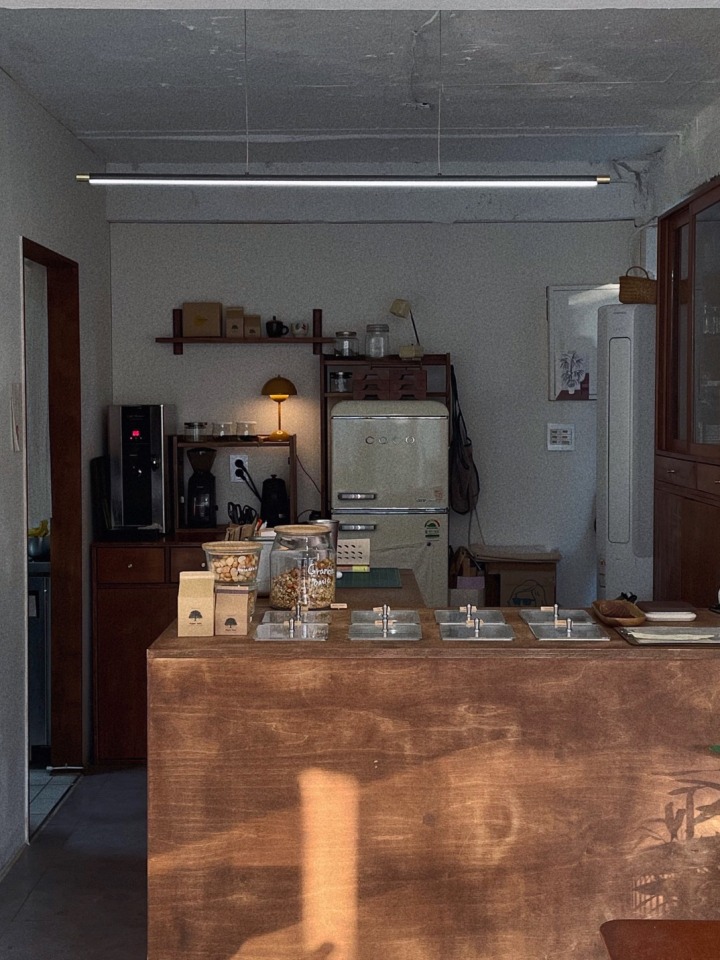
In that sense, Paper Nuts, a package-free nut shop, is a space worth recommending. Instead of plastic or vinyl containers, they sell nuts in glass jars or recycled paper, offer damp handkerchiefs instead of wet wipes, and take part in a campaign that turns used milk cartons into tissue paper. Following the operator’s environmental philosophy, you’ll come away with the conviction that even your smallest actions can bring about change. What’s more, eating nuts increases the secretion of serotonin, the hormone associated with happiness and stability, which can help ease depression!
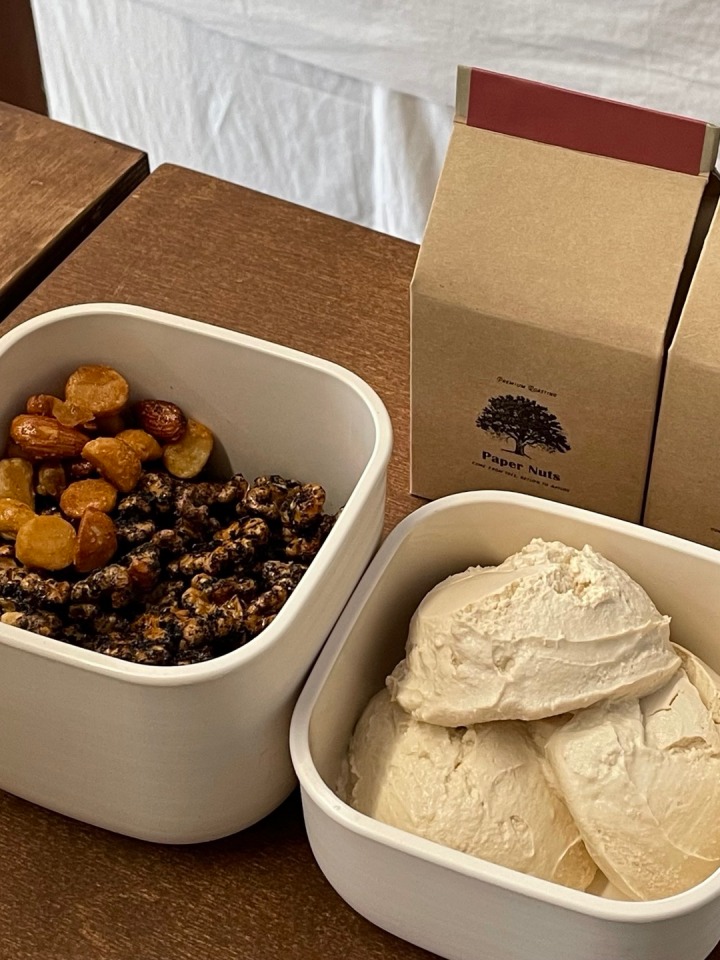
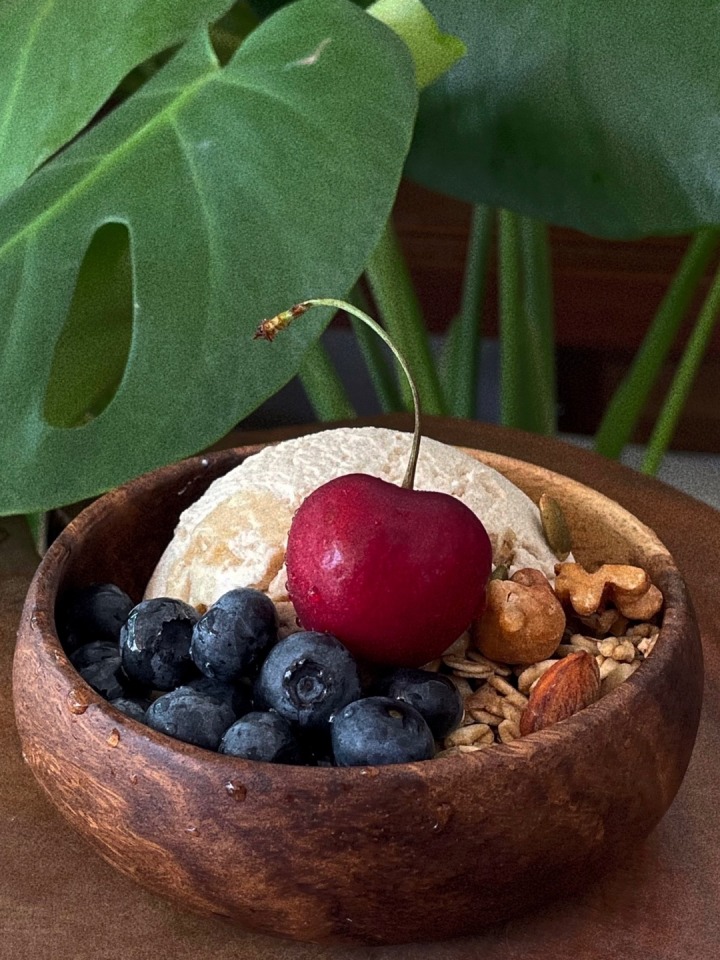
Here’s what makes Paper Nuts’ nuts special. Every morning, the nuts are washed under running water and then roasted in the oven. They’re cooled quickly with strong airflow, following the principle of same-day sale only. From there, an entire world of nuts unfolds, all made with 100 percent plant-based ingredients — walnuts subtly scented with Earl Grey tea leaves, hazelnuts and almonds evenly coated in fine shredded coconut, and pecans dusted with cinnamon powder. Paper Nuts also takes pride in its drip coffee made with fair-trade beans, served alongside the nuts, and its soy milk yogurt bowls topped with granola and seasonal fruit.
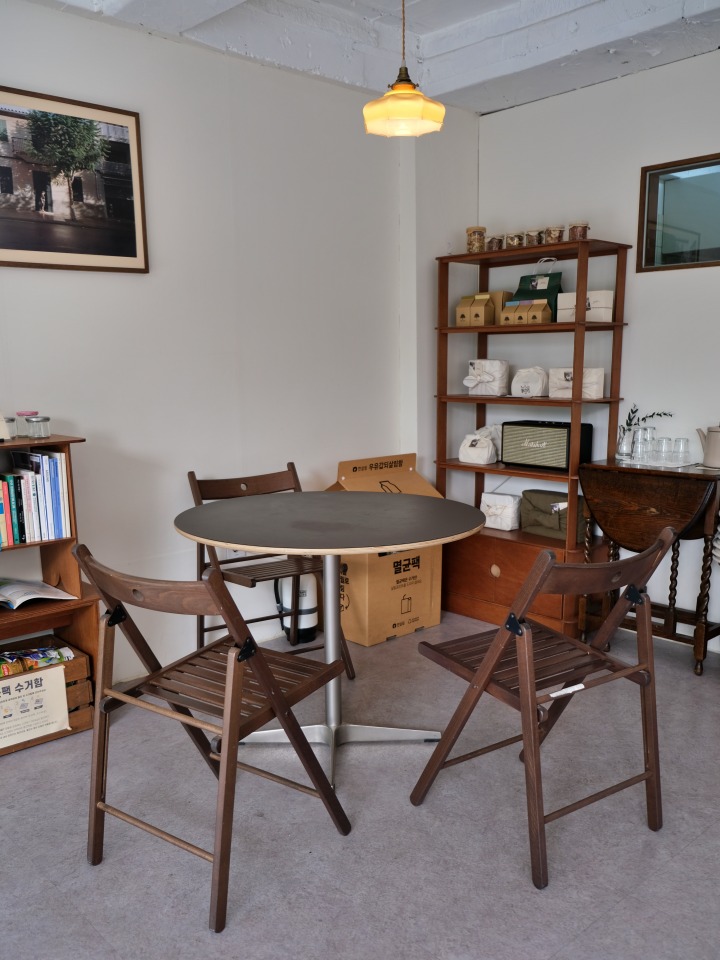
What led you to conceive of a zero-waste nut shop?
Actually, Paper Nuts was originally my older sister’s idea. She’d loved snacking since she was little, but because of allergies, she started looking for snacks she could have instead. That’s how she discovered the world of nuts, and out of a desire to introduce good nuts in a delicious and healthy way, the idea for a nut shop took shape. I joined in more seriously later, thinking through the practical side of things like operations and packaging methods. Getting closer to zero waste took a lot of studying. We opened at the end of 2019, and these days my sister is on parental leave, so I’m running the shop on my own.
What sets Paper Nuts’ nuts apart?
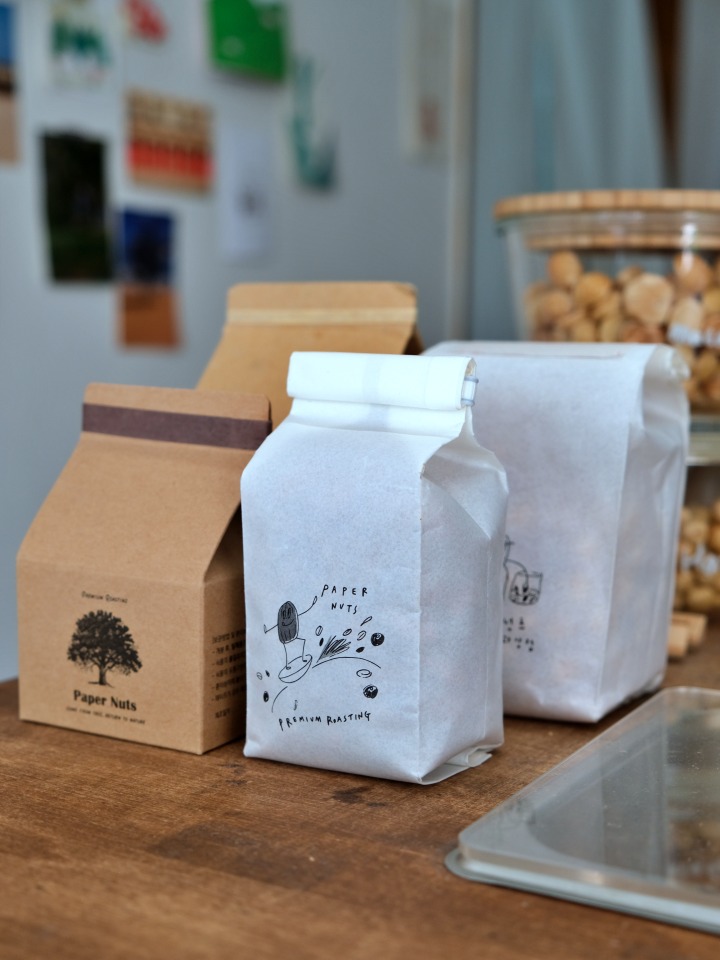
We tried to fix the things that bothered us about nuts sold on the market. Nuts are known as a healthy food, but the ones sold commercially often carry more impurities and preservatives than you’d expect. We wash raw nuts thoroughly every morning, roast them in the oven, and sell them the same day. When we ship orders online, we pack them in uncoated, undyed recycled paper that’s easy to recycle.
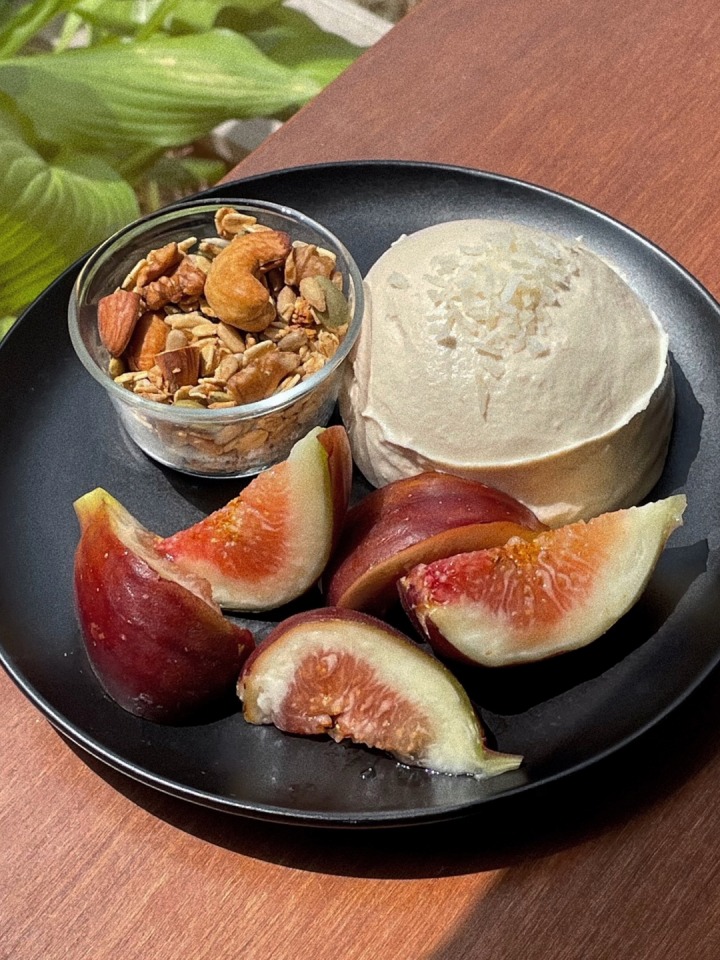
You also offer yogurt bowls with seasonal fruit, soy Greek yogurt, and nuts.
I’m quite serious about seasonal ingredients (laughs). I think enjoying food in season is one way of taking care of myself. As I sought out organic farms that grow seasonal produce one by one, it eventually led me to create the yogurt bowls. We make menus with things like kumquats from Jeju, apricots from Yeongcheon in Gyeongsangbuk-do, and figs from Haenam in Jeollanam-do. When we first started preparing soy Greek yogurt, there were almost no places in Korea selling plant-based yogurt. Looking back, it seems the world has changed just as much as the time we’ve spent running this shop.
More and more spaces are embracing zero waste and veganism these days.
It does seem like the industry’s offerings are diversifying, but since last year, support programs and budgets have been shrinking. Because of that, some projects we had planned have ended up getting cancelled.
What’s the hardest part?
Finding the right baseline was the hardest part. To run a shop that generates less waste, we had to invent methods that didn’t exist before. The more you study zero waste and veganism, the more you keep noticing your own shortcomings. Making money inevitably means generating some waste, so I struggled a lot with the gap between reality and ideals. The hardest part is figuring out how to deliver this message to customers in a way that’s effective but not burdensome, while also finding a way to run things that feels manageable for me.
Do you tend to compromise in those moments?
I try to find a middle ground (laughs). For example, in the early days we offered handkerchiefs instead of napkins. But customers who weren’t used to handkerchiefs just ended up using tissue from the restroom instead of the handkerchief. So we settled on bamboo napkins as a compromise. Wet wipes, though, I just can’t accept (laughs). Instead, we dampen a handkerchief with water and offer that.
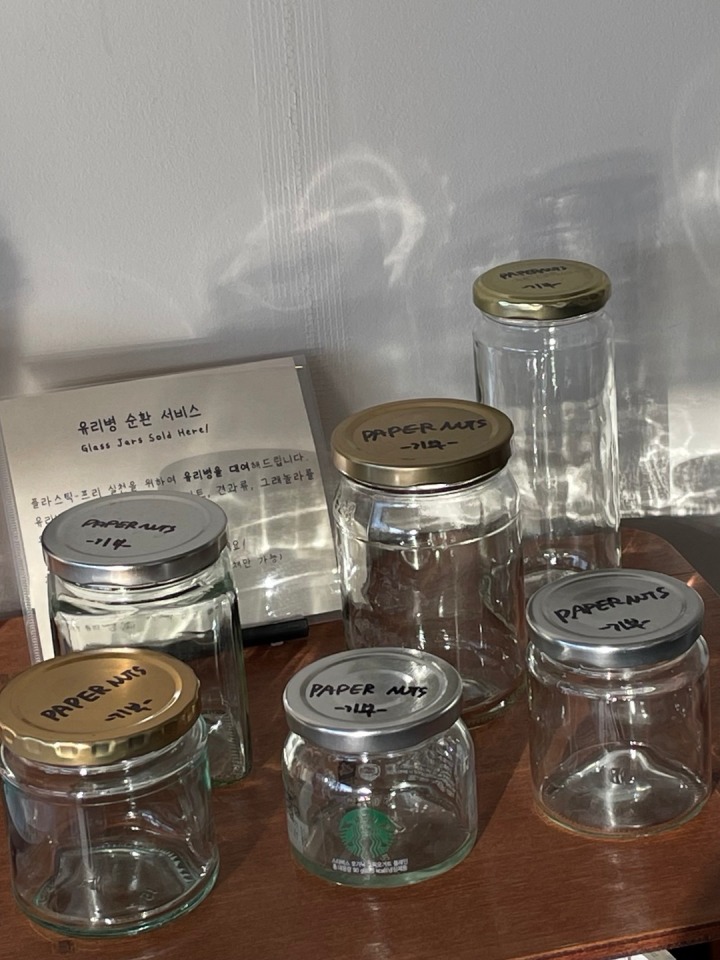
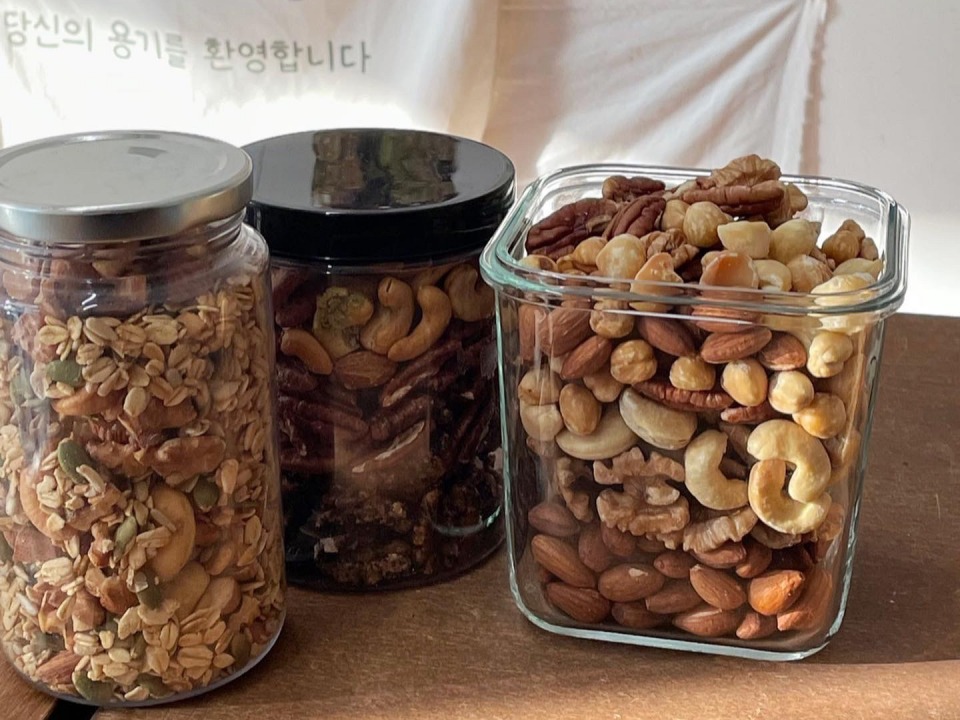
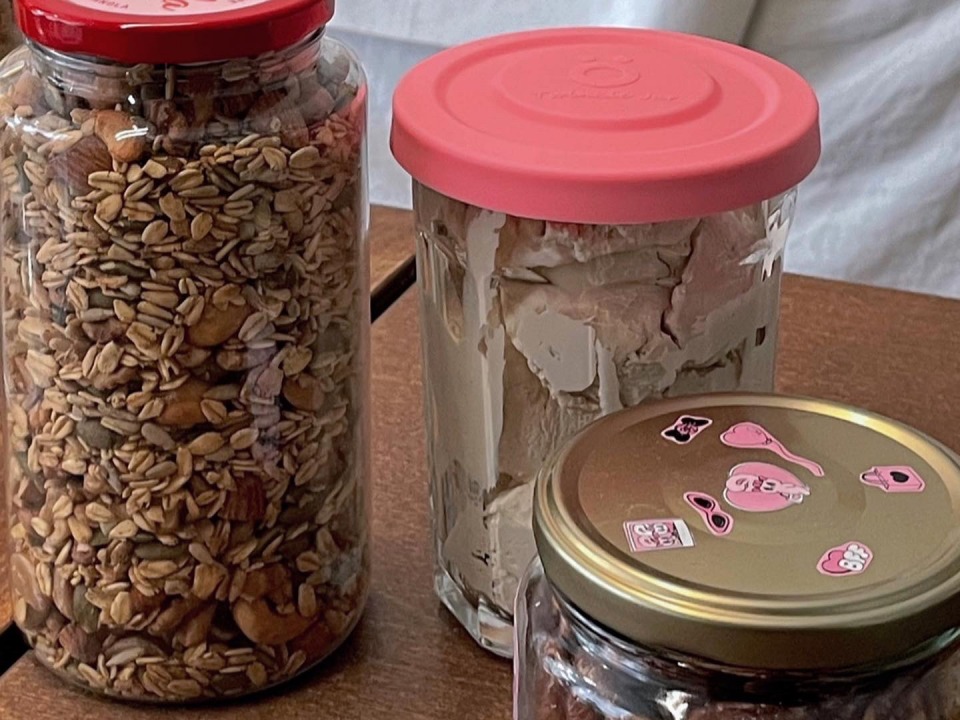
We also created a service where customers can borrow glass jars instead of using plastic containers. But I don’t think constantly using brand-new glass jars is necessarily a good thing either. Aside from soju and beer bottles, recycling rates for glass are extremely low, and its carbon footprint is fairly high. Still, since it allows for resource circulation and is better than plastic, glass jars were the best option for takeout customers. I think it’s one of our services that has settled in fairly well. To stay true to Paper Nuts’ philosophy, we’ll have to keep inventing our own way of doing things.
Have any customers felt resistant to the reuse system?
Not entirely absent, but most of our customers take reuse for granted. Some have even become regulars specifically because they like our philosophy and purpose.
That must feel rewarding.
The moments I find most rewarding are when I hear that someone who experienced packaging in reusable containers at our shop went on to practice it elsewhere too. Also, up until our first year, we only offered vegan options on the menu, but starting in our second year, we made every single item on the menu fully vegan. It’s also gratifying to hear news from others who’ve decided to go vegan alongside us. There’s no greater compliment than knowing you’ve had an impact on someone’s daily life.
Have you found inspiration from any travels while running this space, or is there anywhere you’d like to visit?
Before opening the shop, my sister and I traveled a lot together. In particular, we’d explore small neighborhood spaces like ours, collecting posters and small objects and observing furniture and layout. We also tried zero-waste travel several times. It turned out to be less difficult than I expected.
Any destinations you’d recommend for easy zero-waste travel?
Singapore and Jeju come to mind right away. Since Singapore is a melting pot of different cultures, there are many cafés and restaurants catering to vegans, from plant-based drinks to full vegetarian meals. What especially stood out to me was that wet wipes weren’t given out for free but sold instead. Thanks to small regulations like that, I was able to minimize unnecessary waste as much as possible during my time traveling in Singapore.
Jeju has long had a culture of packaging things in reusable containers, so zero-waste travel there isn’t too difficult either. I never feel self-conscious asking someone to rinse out my tumbler before pouring in a drink. I especially love Gujwa, on the eastern side of Jeju, and every place I stayed there had a water purifier on hand.
Is there an ultimate message you want to share through Papernuts?
I feel like I've mostly talked about the waste problem so far (laughs), but honestly, what I most want to convey is the clean, crisp taste of nuts. Not old nuts soggy with oil, but the fresh taste of freshly roasted nuts — I want to share that with people. I also want to break the prejudice that products wrapped in plastic and vinyl are automatically clean and perfect. Lastly, I want to introduce people to the taste of seasonal fruit. Knowing that taste might seem like a trivial thing, but it can actually give you the strength to take care of yourself amid a busy daily life.
What kind of future does Papernuts envision?
Honestly, all the nuts we currently carry in our store are imported (we use high-quality nuts supplied to department stores). Korea has a lot of high mountains, so domestic nut farming happens only on a small scale, making it too expensive for a small store like ours to sell. I have a strong desire to introduce fresh domestic nuts as soon as possible. And as someone practicing zero waste, and as the operator of this space, I want to add depth rather than pursue expansion.


