Great Coffee, Old Objects, and the Earth
At Cafe One-Third in Hwanghak-dong, what’s on offer is great coffee, secondhand objects with history, and a genuine sense of sustainability.
Coffee, Old stuffs and the Earth — Great Coffee, Old Objects, and the Earth
Here’s the sustainable lifestyle proposed by Cafe One-Third, located along Hwanghak-dong’s kitchenware and furniture street.
Words Parc Jinmyoung
Interviewee Park Sunyoung (Creative Director, One-Third)
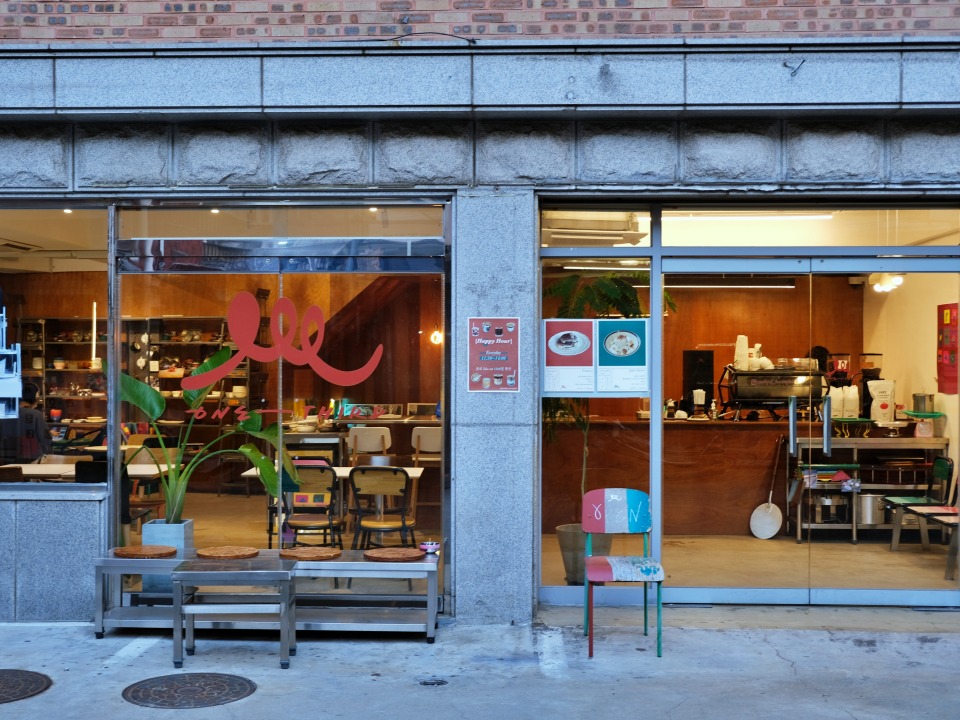
About a 10-minute walk from Sindang Station. To reach One-Third, a cafe built around the concepts of sustainability and eco-friendliness, you have to cut through Sindang Central Market and the kitchenware-and-furniture street. Along the way, gleaming silver tableware, worn chairs and tables that look like they came from an old-school eatery, and chair frames being pressed into shape for new products all unfold before your eyes. Locals enjoying a beer in broad daylight beneath a faded sign that reads ‘sujebi restaurant,’ ‘of-the-moment’ shops tucked between long-standing stores — taking in this warm, inimitable neighborhood scene, I found myself arriving at One-Third before I knew it. Standing in front of the cafe, whose name comes from the fact that manufacturing accounts for a third of all carbon emissions, a cheerful, tender image took shape in my mind. Would it be too grand to say that in that image, there was a version of myself living sustainably, and an earth slowly finding its way back to balance?
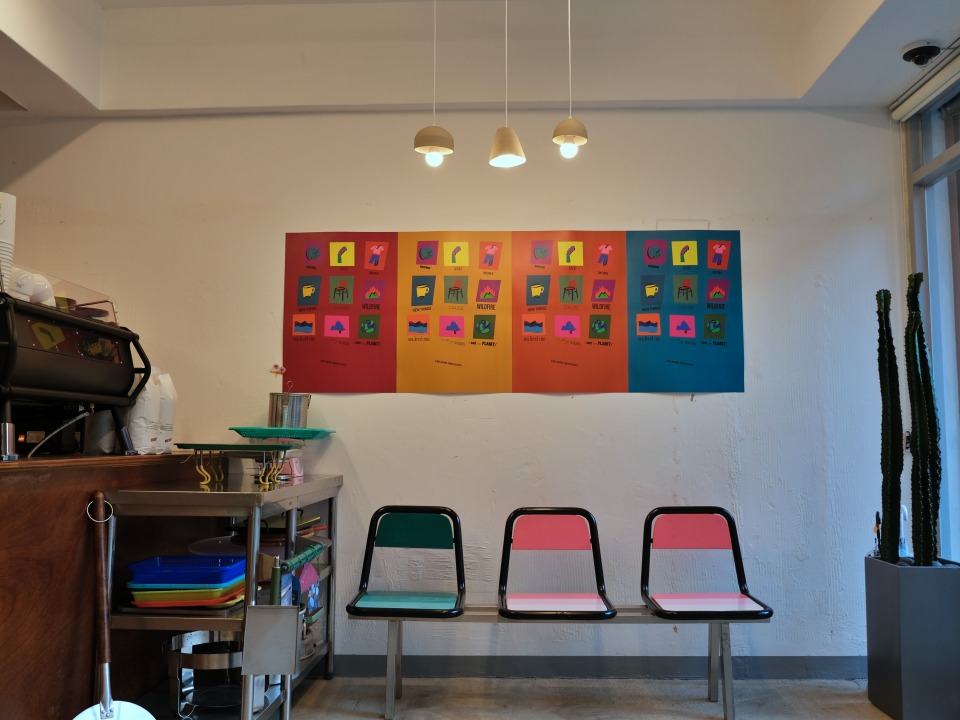
📝 Note 1. Hwanghak-dong
This is my first time in Hwanghak-dong. What kind of neighborhood is this?
The kitchenware and furniture street is the most famous part. It’s a district specializing in kitchen equipment and furniture that began forming behind Central Market back in the 1980s. It’s the kind of place where people buy fixtures and tableware when starting a business, and sell them back when closing one down. But secondhand goods are notoriously hard to resell. So this is also a place where perfectly good products pile up like mountains, never used again. I opened One-Third here to help circulate the secondhand goods that just keep accumulating without ever being reused.
What made you start thinking about sustainability and eco-friendliness as a concept?
When I was studying design management in London, sustainability and eco-friendliness were already becoming major topics across Europe. In Korea, it was still an unfamiliar and difficult subject at the time, and that’s when I started wanting to bring that kind of message here.
One of the simplest and most certain ways to protect the environment is to use something that’s already been made for as long as possible. I went looking for the place in Seoul with the most accumulated secondhand goods, and that’s how I found this spot in Hwanghak-dong. Dongmyo and Sinseol-dong were also options.
So you approached the keyword of sustainability first, before deciding on a medium to express it.
Yes, that’s right. Thinking about a way to present this theme to the public in a comfortable, approachable way, I landed on a cafe. It naturally draws people together, and it has enough space to fully convey the message.
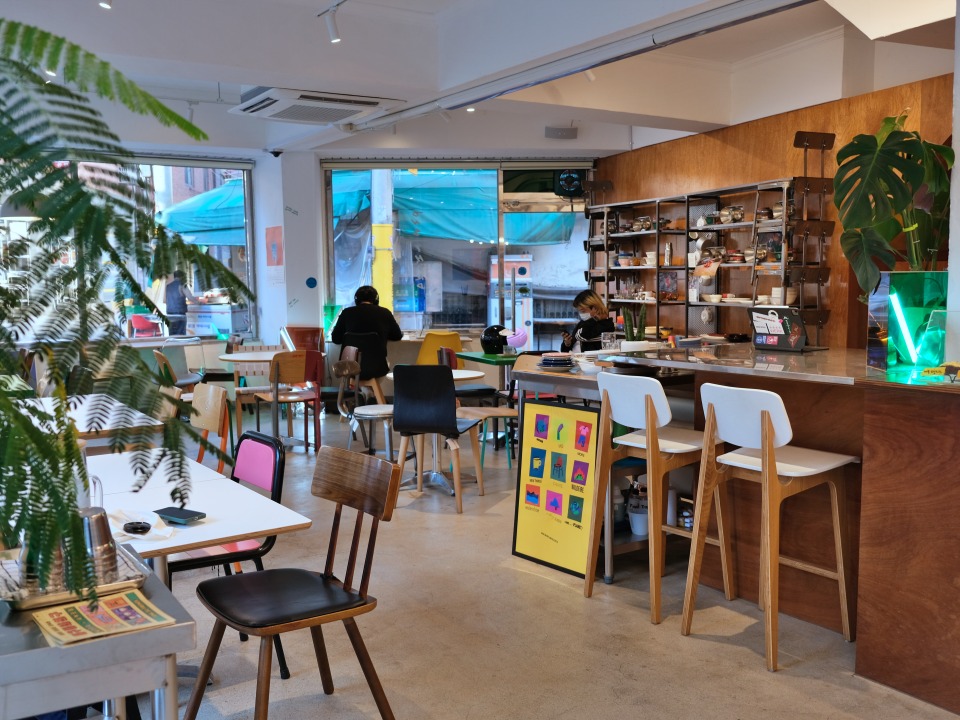
📝 Note 2. One-Third, ‘Serious’ About Coffee Too
Do mostly locals come here? Since the area is surrounded entirely by kitchenware and furniture shops, and it’s a bit of a walk from the subway station, it seems like outsiders would have to make a deliberate trip.
A lot of young people who work around Dongdaemun, City Hall, or Gwanghwamun live in this neighborhood. During the height of the pandemic, a lot of people came to the cafe to work or do their own projects. On weekends, we get plenty of customers who travel from farther away.
Besides drinking coffee and looking at pretty objects, what else can people experience at One-Third?
Last year, we held an exhibition in collaboration with eight artist teams. Each of them wandered around Hwanghak-dong, chose objects they liked, and turned them into their own artwork. We also ran a salon on the theme of the environment, bringing together local residents and young people. Meeting regularly over three or four months, it was a chance to recycle tables, chairs, and tableware together, and to have deeper conversations about the circulation of resources and sustainability.
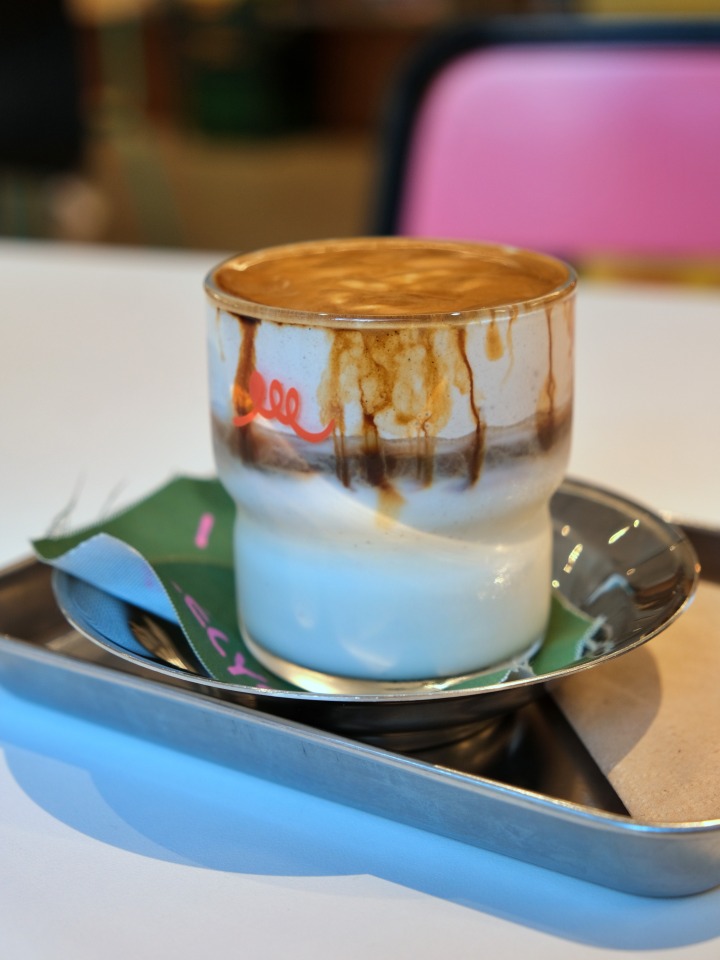
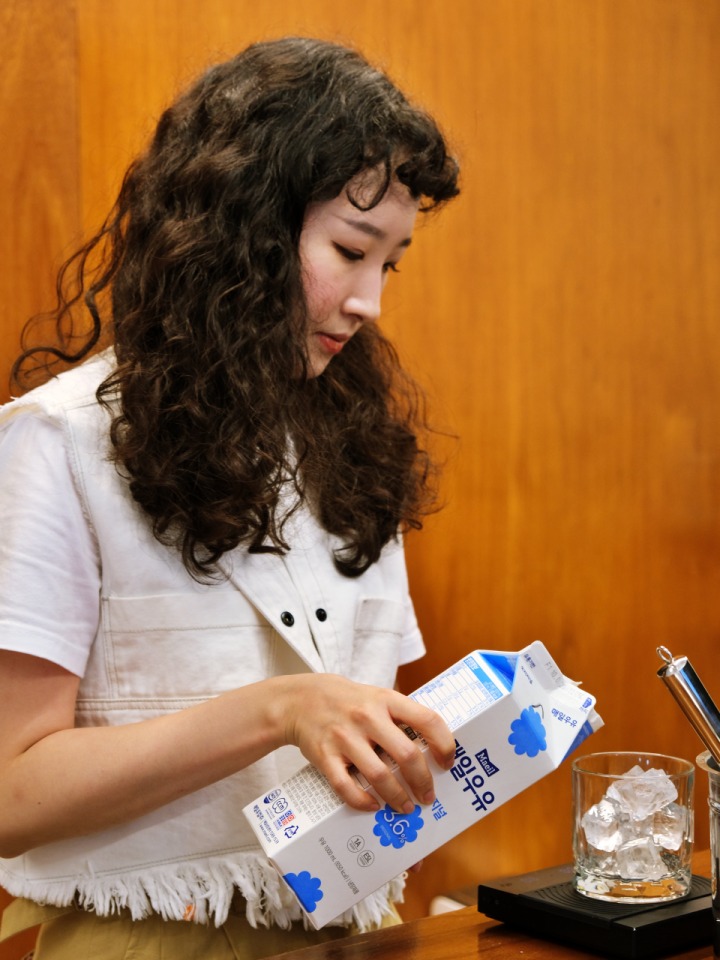
How did you develop the menu?
I always loved seeking out cafes and good restaurants. Whenever I had free time I’d browse recipes on YouTube, and since I’m also quite interested in ingredients, I think I put the menu together with real enthusiasm. The drink called ‘One-Third’ was inspired by the einspänner — I added yulmu (Job’s tears) powder to the cream to give it a thicker, nuttier flavor. Most of the menu reflects my own taste, preferences, and experiences. If you’re ever stuck on what to do, I think looking closely at what you yourself like is the best solution.
Was there something you prioritized above all when deciding on the layout of the space?
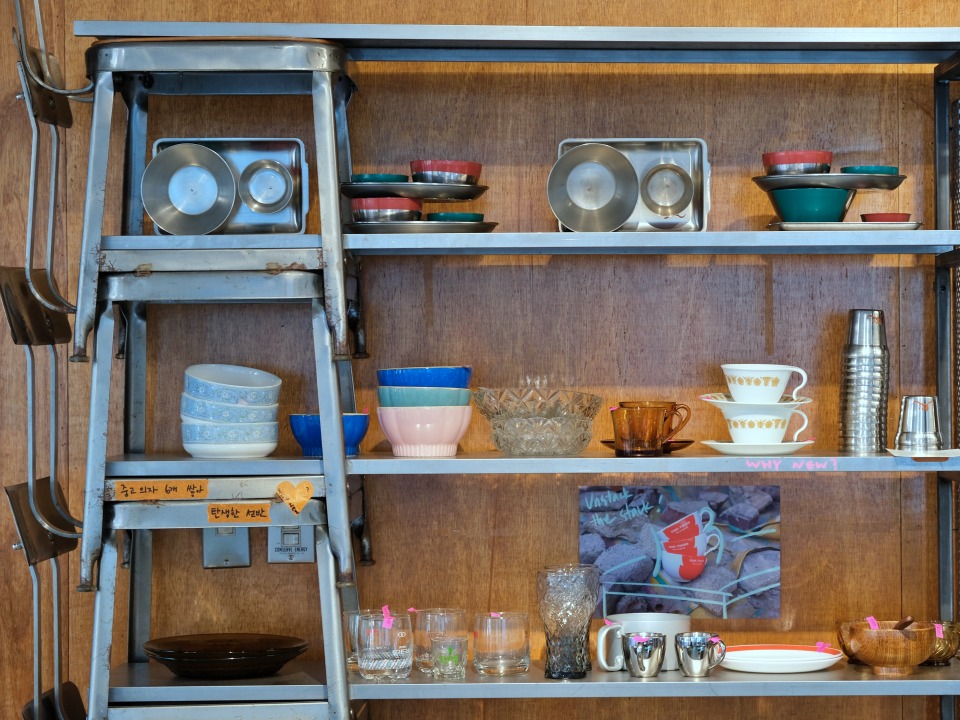
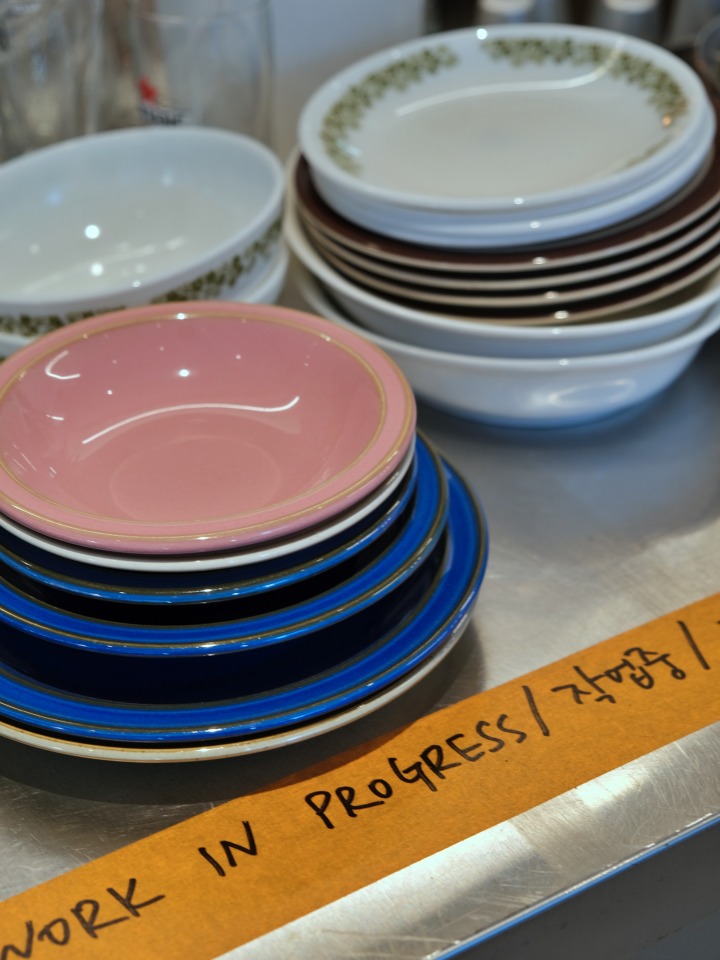
The size of the space. I thought that in an open space with full glass windows, the furniture, dishware, and tableware I selected would look all the more appealing. And I wanted to do as little interior work as possible — I wanted to reduce carbon emissions even while decorating the space. The only brand-new item here is the espresso machine. The shelving was made by stacking secondhand steel chairs on top of one another, and the owner of ‘Dongil Metal,’ a shop a couple of doors down, brought the image in my head to life.
It seems important to keep delivering the message consistently, too.
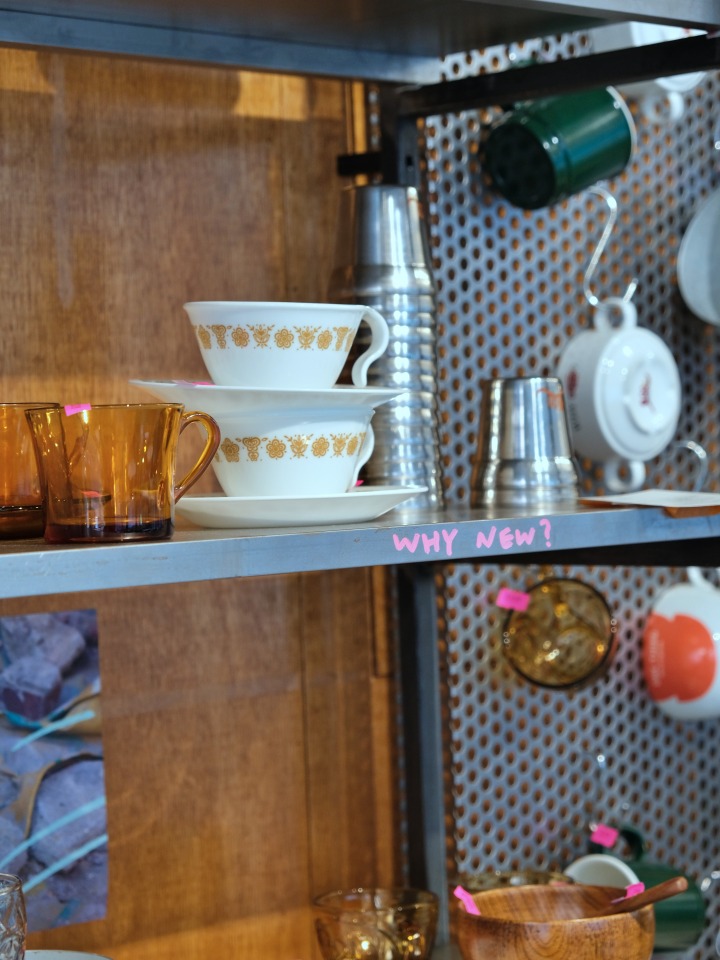
I’m constantly developing content that makes people want to come back. I regularly change the posters and the items displayed on the shelves, and to host exhibitions and salons, I reach out with proposals to brands and artists whose direction aligns with One-Third’s. I think the most important thing is giving people the sense that ‘it’s worth coming back here.’
📝 Note 3. A Designer’s Role in Building a Sustainable Neighborhood and Planet
Do you have a favorite cafe or travel destination?
Without hesitation, I’d say London. That’s where I fell in love with coffee and really started exploring it seriously. Five years ago, when I was studying in London, specialty coffee wasn’t nearly as well known in Korea as it is now. Wandering the alleys of London in search of cafes and roasteries, experiencing aromas and flavors I’d never encountered before, coffee just kept getting more and more fascinating to me. And of course, seeing that vegan options were standard and that children and dogs were welcome, I think I’d always imagined creating a space like that myself.
Where did you mainly draw inspiration from while preparing the cafe?
Rather than looking at the internet or current trends, I relied entirely on my own experience. I’d dig through my memories and often google the interiors and menus of the London cafes I’d especially loved.
The straightforward layout of tables and chairs feels different from a lot of cafes these days, which often go for big sofas or low tables to create a freer, more varied arrangement. Was there a particular reason for this?
I wanted to be considerate of customers who come to the cafe to work or focus on a project. When I used to visit cafes myself to work, I found a lot of inspiration and a real mood boost just from the atmosphere of the space. I want people to be able to work comfortably the whole time they’re at One-Third.
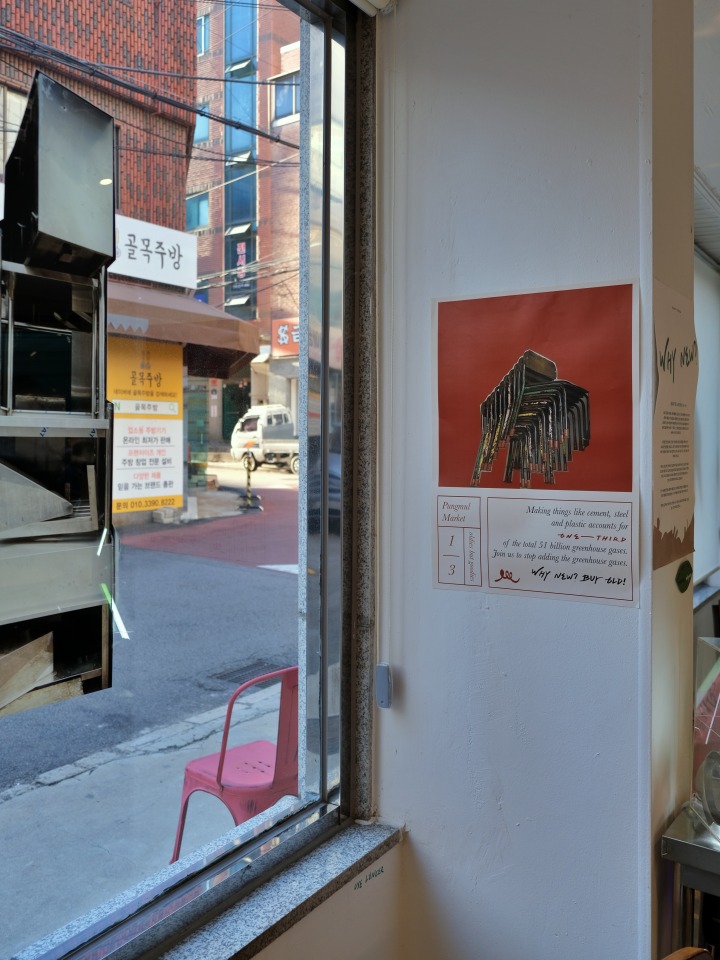
In Hwanghak-dong, coexisting well with the merchants and residents who’ve held down the neighborhood for so long must matter a lot too — though I imagine that’s true anywhere.
That was actually something I paid the most attention to when I first started the business, so I made a real effort to reach out first. I’d deliberately borrow tools from the dry cleaner or the metalworker next door, or make a point of greeting them warmly — little things like that. Now we’ve become close enough that they sometimes hand me ice cream when I pass by. This spot used to be an old naengmyeon (cold noodle) restaurant. In the beginning, whenever I mentioned at the Central Market that I was opening a cafe where the naengmyeon place used to be, people would welcome me warmly. Coexisting with local residents is one of the elements of sustainability, so I think it’s something worth working hard at.
Your business card says ‘Creative Director.’ It seems to reflect the way you’re expanding the brand One Third.
I have so many things I want to do. (Laughs) I want to keep collaborating with young artists and brands. Not long ago, I collaborated with another design studio and submitted a piece to the DDP Design Fair — a lamp made from tableware sourced in Hwanghak-dong. The organizers gave us the opportunity to mass-produce the new product, so I’m looking for ways to introduce it to more people. Thanks to this opportunity, the ideas and sensibilities of various artists have been added to the work I used to do alone, and I’m learning a lot from it. I also want to share stories about the environment through the space of the café.
What do you think is the designer’s role in building a sustainable environment and way of life?
Designers are a group of people with a strong aesthetic sense. I think a designer’s role lies in using that talent so that everyone can live well together. When I was studying, I once came across the phrase ‘design changes the world,’ but personally, I don’t think that’s quite true. (Laughs) I do think design can change the way people think. I want to do my part by presenting a subject as serious and potentially dull as the environment in a way that’s visually engaging and approachable, and by shifting the way people think about it.
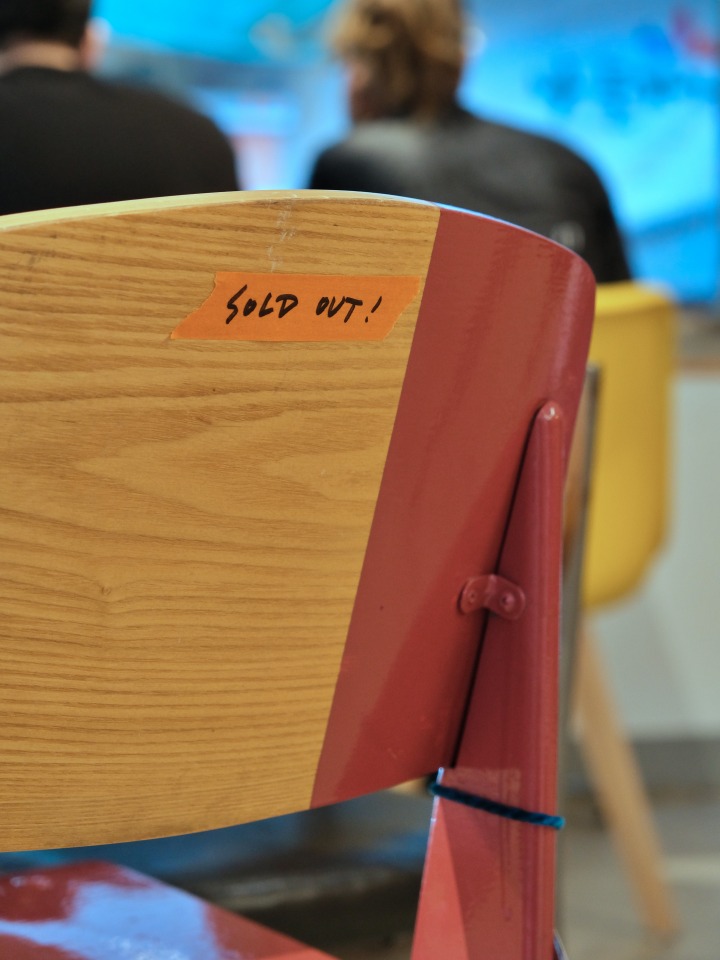
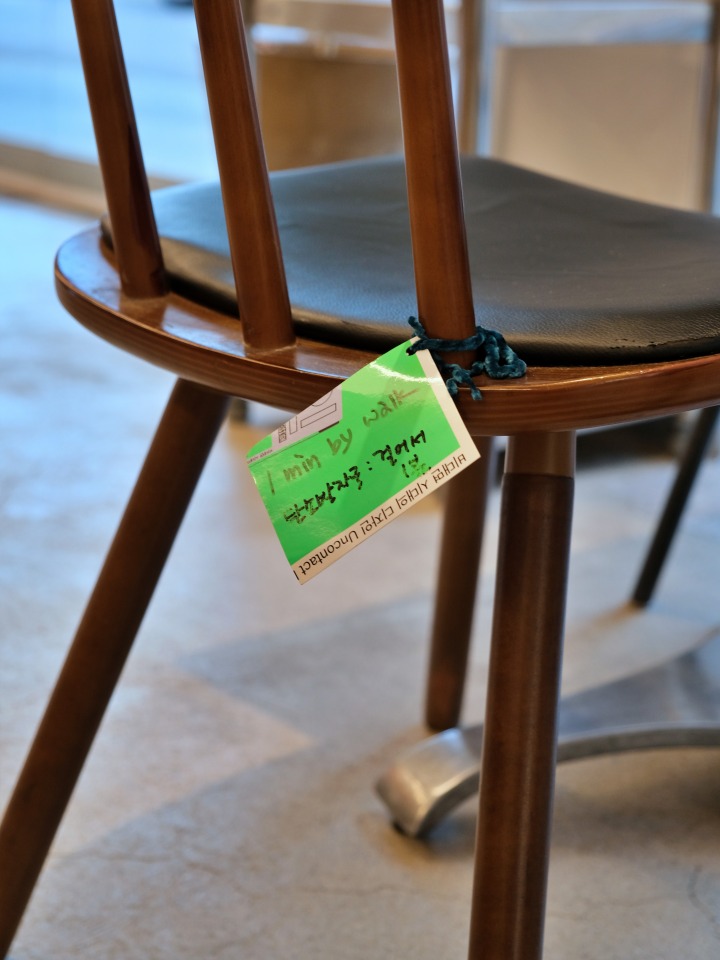
📝 Note 4. The chairs labeled ‘Sold Out’ are, as I was told, products that have already been sold. The cup you drank from, the plate your dessert was served on, the chair you sat in, the tableware on display, the poster on the wall — all of it can be taken home. Imagining finding a piece you love on this street — a well-worn piece of furniture, a plate or dish that carries someone’s story — and giving it a color of your own felt like a pretty good idea. Who says sustainable living has to be some grand thing? Turns out it’s nothing so complicated after all.