
Driving into the Canadian Rockies
From Jasper to Kananaskis, a road trip into a small corner of the Canadian Rockies, where glaciers, wildlife, evergreen forests and glacial lakes unfold along the Icefields Parkway, Maligne Lake and Lake Louise.
Driving into the Canadian Rockies
From Jasper to Kananaskis in Alberta, Canada, we slowly make our way into a small part of the Rocky Mountains, one of the vastest mountain ranges on Earth. Peaks that pierce the sky, glaciers that blanket the land, wildlife, conifers and transparent lakes brush past our gaze. The awe-inspiring scenery of the Rockies creates a place to pause, somewhere between desolation and gentleness.
Words & Photos Hur Taewoo
Icefields Parkway
Icefields Parkway
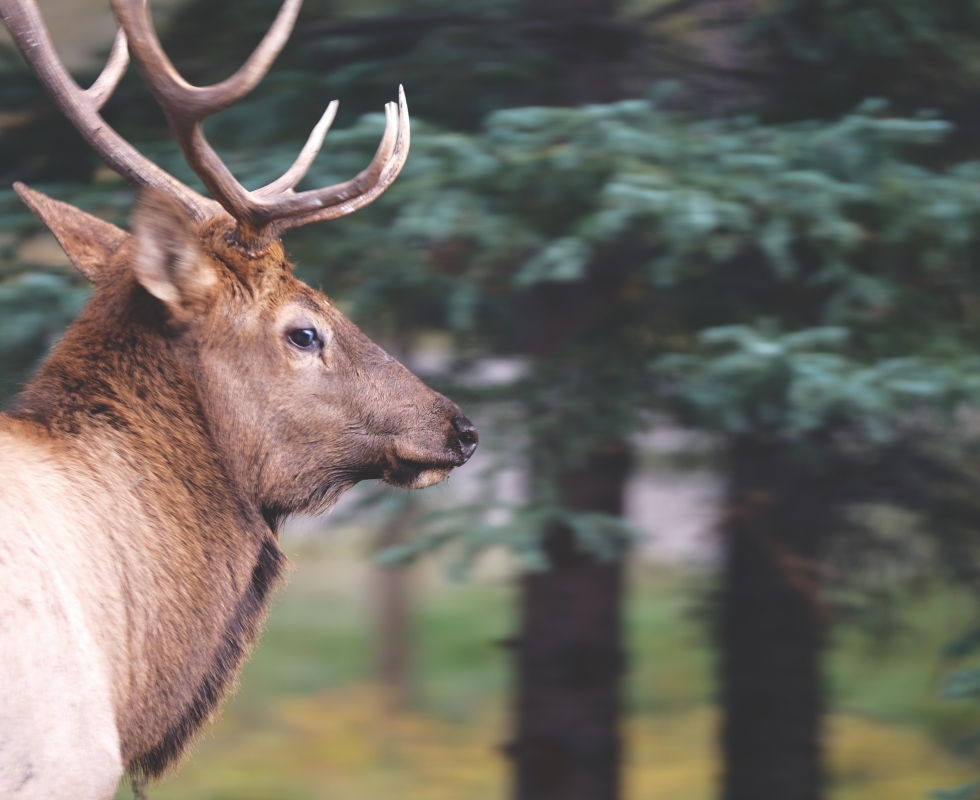
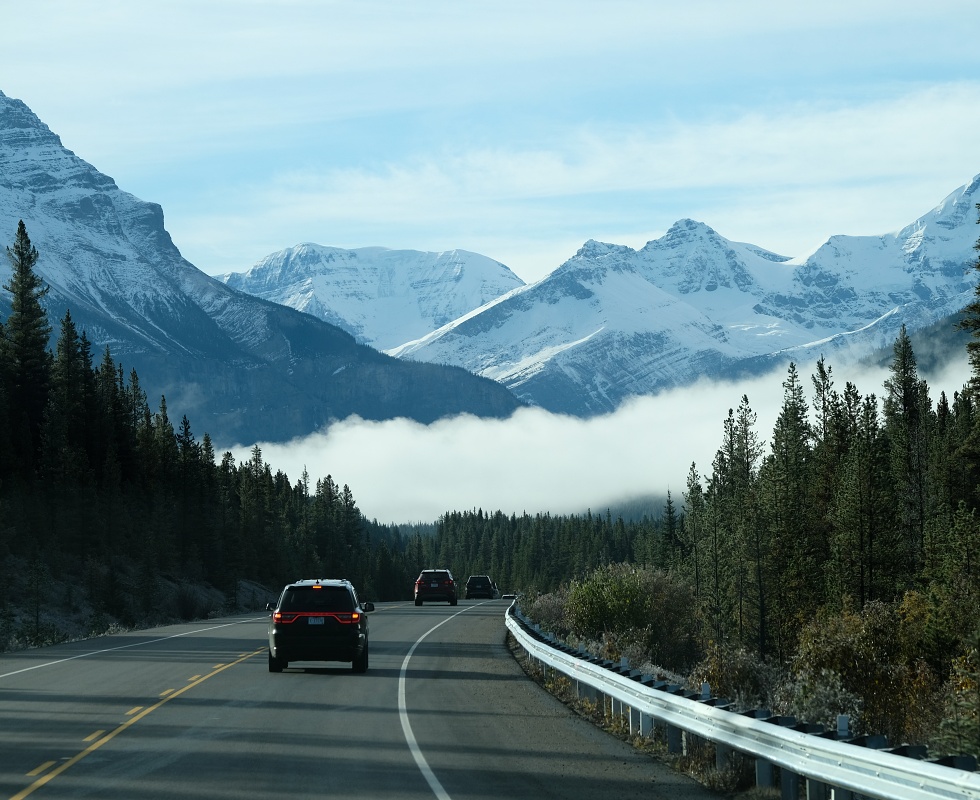
We set out from Jasper in a big white Chevrolet van and drive down Highway 93. This is the 1 Icefields Parkway, considered one of the most beautiful mountain roads in North America. The road runs along the 2 continental divide, skimming past the grand, rugged peaks of the Rockies. Indigenous peoples and fur traders began trading here in the 1800s and carved out the original route, and the highway itself was completed in the early 1960s.
As winter approaches, the Rockies lay down a wave of golden foliage at their feet like a discarded scarf and prepare to pull a cloak of pure white snow over their heads, starting from the summits. Sometimes, as if embarrassed, they hide their ridgelines behind low clouds. Here and there, scattered conifers trace shadows on the slopes, bracing for the cold. In deep winter, this road is as good as a sheet of ice, since temperatures around the Icefields Parkway can fall to minus 50 degrees Celsius. Until then, countless travelers will surely come to the parkway as if to witness one last view. Everything from sleek little electric cars to lumbering, listing RVs files along in a long line, stopping and starting again and again to capture the Rockies’ dramatic terrain and the wildlife that suddenly appears. Of course, some will purse their lips and complain about the weather, which can change several times in a single day.
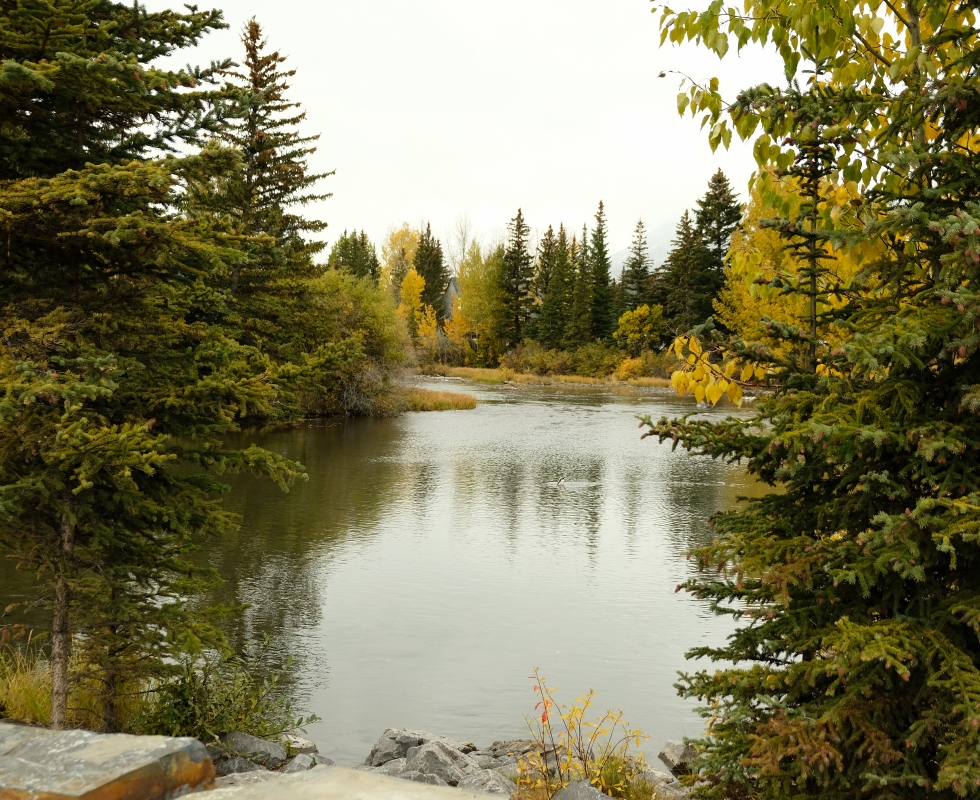
Morning at Pyramid Lake near Jasper was bleak and overcast. Mist hung low over the water, lending the place a gloomy air like the opening of a suspense film. But on a bright, sunny day, our guide 3 A. V. Wakefield tells us, Pyramid Mountain, the broad rock peak said to resemble a pyramid, reflects picture-perfectly in the lake, and outdoor weddings are held on sparkling Pyramid Island. In other words, it is a famous photo spot that visitors to Jasper make a point of stopping at at least once. During a 30-minute stroll along the shore, I saw dozens of travelers handling 200mm telephoto zoom lenses, so it must be true. Still, even they might be somewhat disappointed on a cloudy day, when Pyramid Mountain stands sulking like a folding screen above a gray lake. There is hope, though. In the Rockies, a glacial lake glittering under the sun is never far away.
1 A section of Highway 93, with a total length of about 230 km.
2 Centered on the Rockies, waters on the eastern side flow to Canada’s Hudson Bay or America’s Mississippi River, while those on the western side flow to the Pacific Ocean. This divide continues south from Canada all the way to Mexico and Central America.
3 A. V. Wakefield is a photographer and visual storyteller based in the Rockies. (Instagram @viktorianorth)
Maligne Lake
Maligne Lake
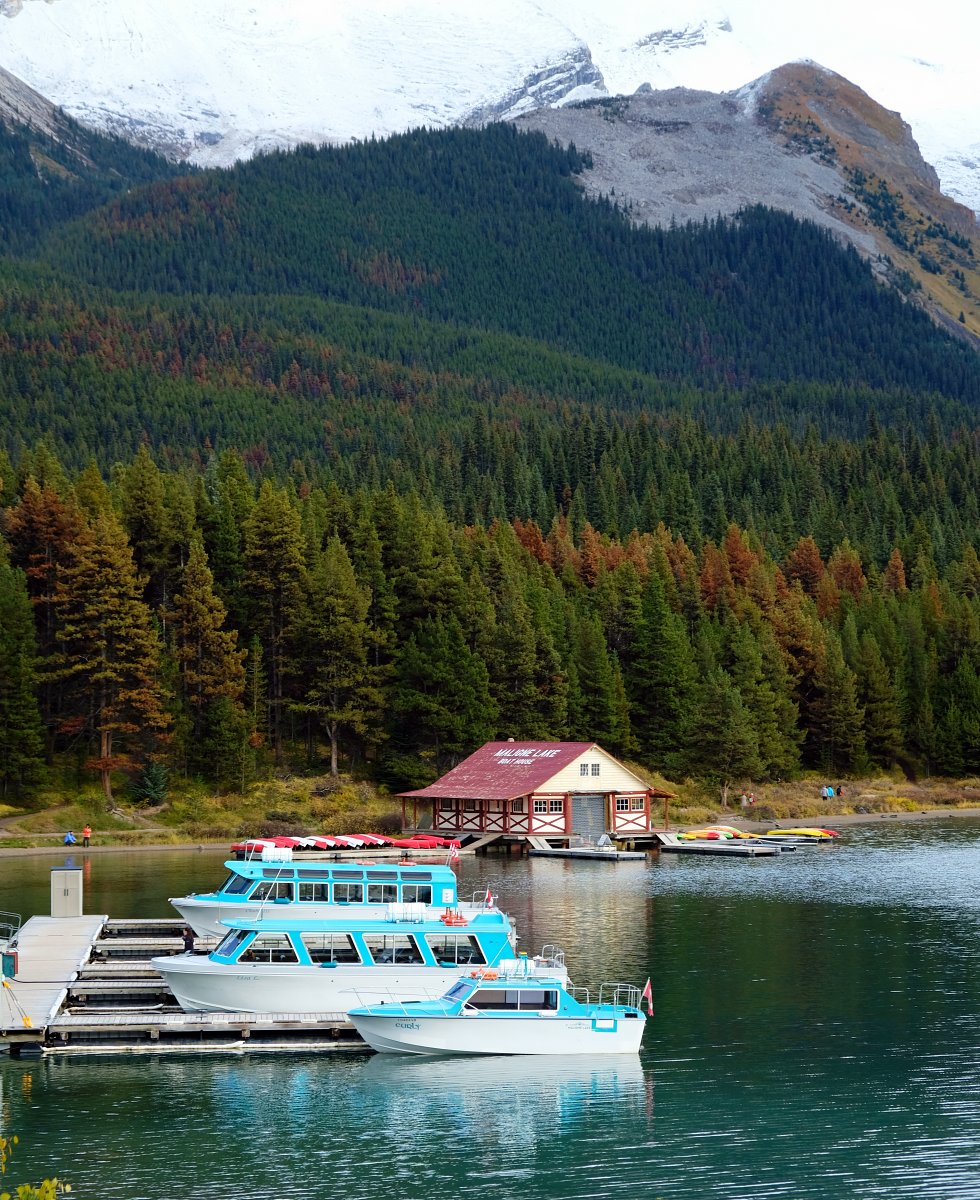
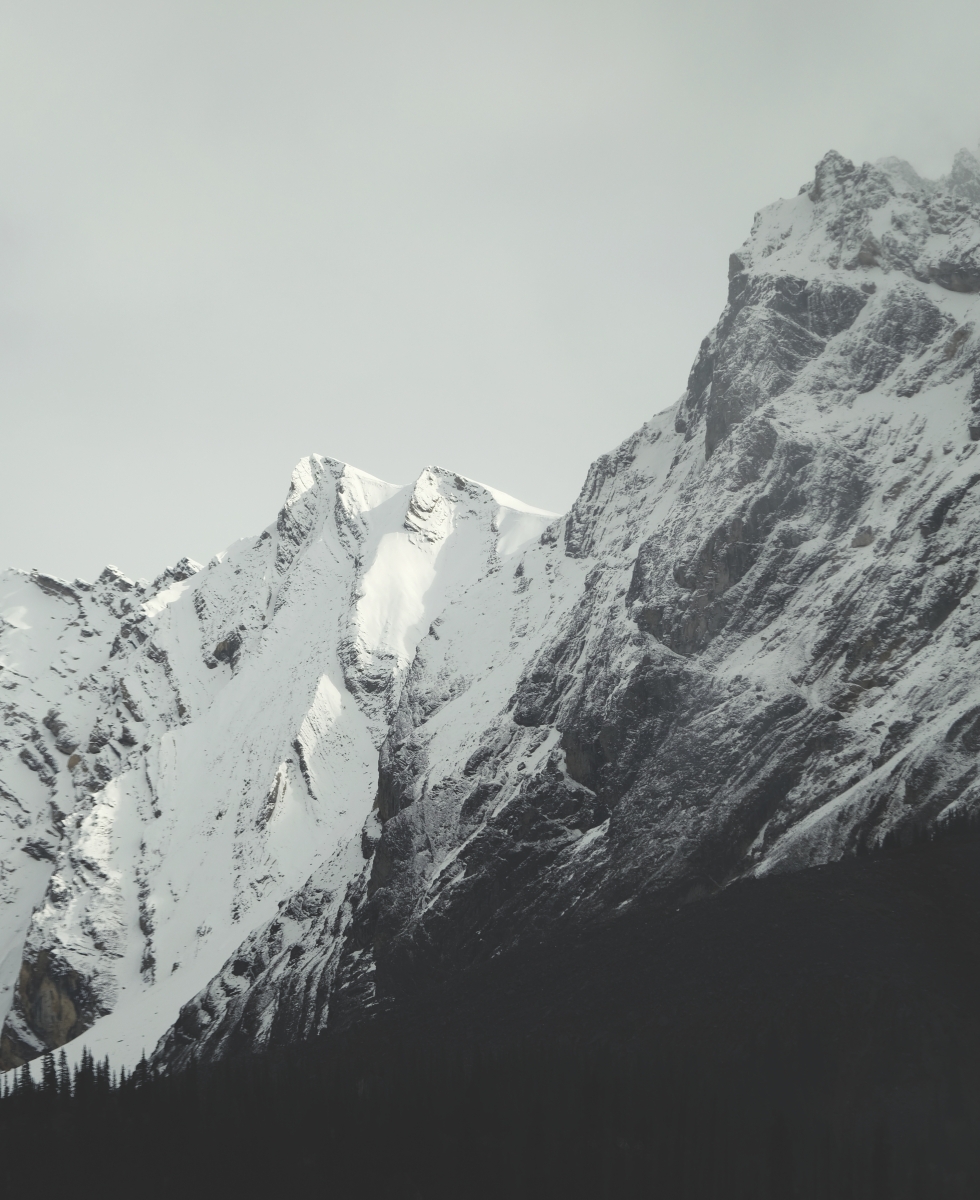
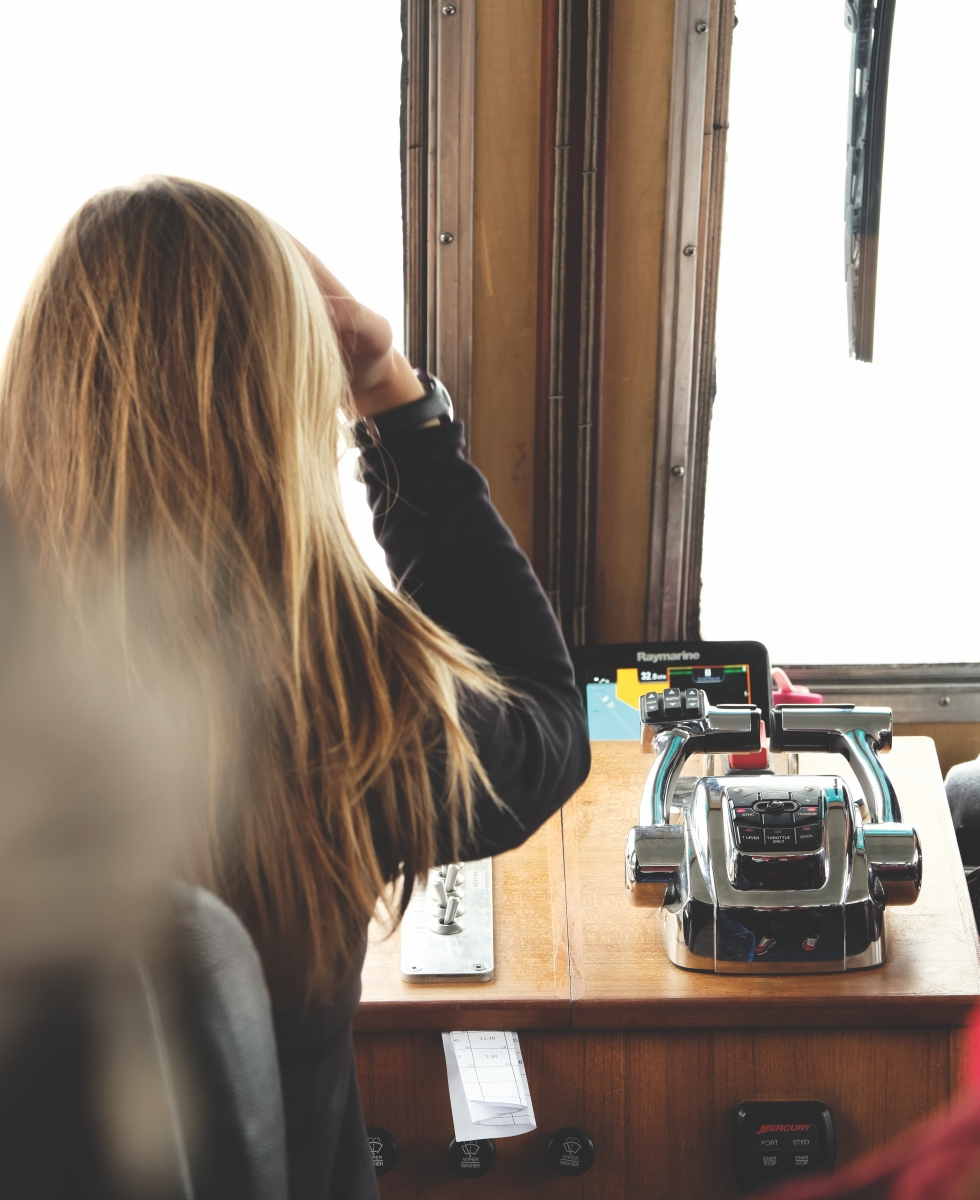
About an hour’s drive from Jasper, Maligne Lake brings to mind a vast fjord. It certainly does when you drift across the 22-kilometer-long lake by cruise boat, with mountain ranges unfurling on either side. The only difference is that the sea is some 800 kilometers away.
Maligne Lake played a significant role in the early days of tourism in the Rockies. Fred Brewster of Jasper, who could not ignore the lake’s beauty, built a guesthouse on its northern shore as early as the 1930s to welcome visitors. At the time, Jasper was the hub of Western Canadian settlement and Rockies travel, thanks to its railway connection. Travelers who plodded over on horseback from Jasper, a half-day’s ride, enjoyed trout fishing and boating alongside the lake’s hidden scenery.
Today, the 4 cruise departing from the dock at the lake’s northern end drops passengers off at Spirit Island. The island can be reached only by boat, and according to guides and promotional materials, it is the most photographed spot in the Rockies. The moment you step off the boat, you understand why: a small island floating on emerald water, flanked behind by sheer mountains on both sides, and a single boat trailing a long wake of foam. It is a scene bound to appear on millions of postcards. Even the most meticulous art director would find it hard to stage something like this.
In fact, the island’s existence began to be known around the world in 1960, when Kodak used the view of Spirit Island in an advertising image, as though it were an island not of this world. The scenery went on to influence the digital-camera generation, the descendants of the film generation: the same view appeared at Apple’s iPad launch showcase in 2014.
To protect the island’s nature, visitors who step off the cruise are given exactly 25 minutes to take in the island. From then on, tourists are busy moving this way and that to photograph it. They pose before all manner of camera equipment, calling out, “A little more to the right,” “Raise your hand,” “How about turning around?” And so Spirit Island once again announces itself in hundreds more photographs.
4 The Maligne Lake cruise runs from spring through fall each year. www.banffjaspercollection.com
Lake Louise
Lake Louise
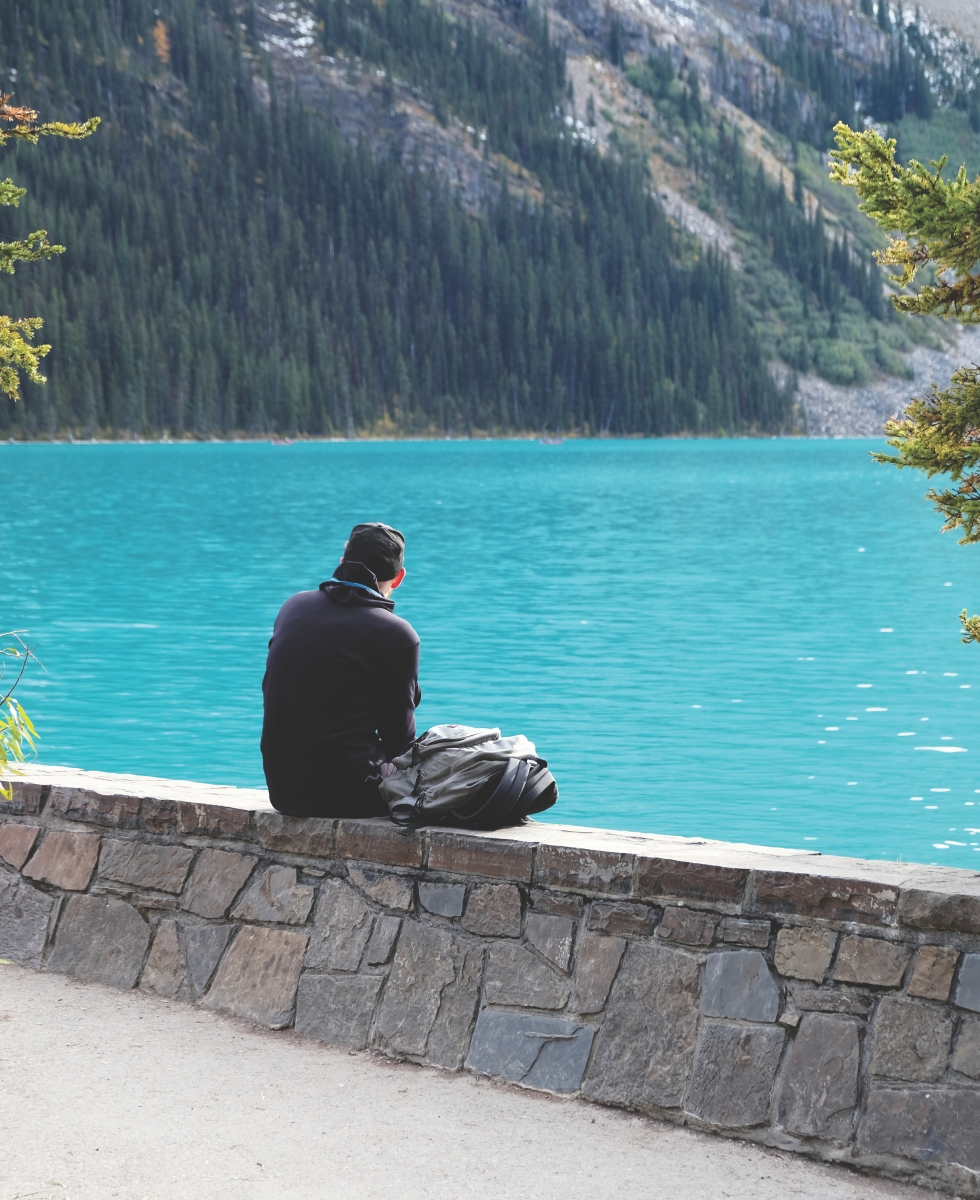
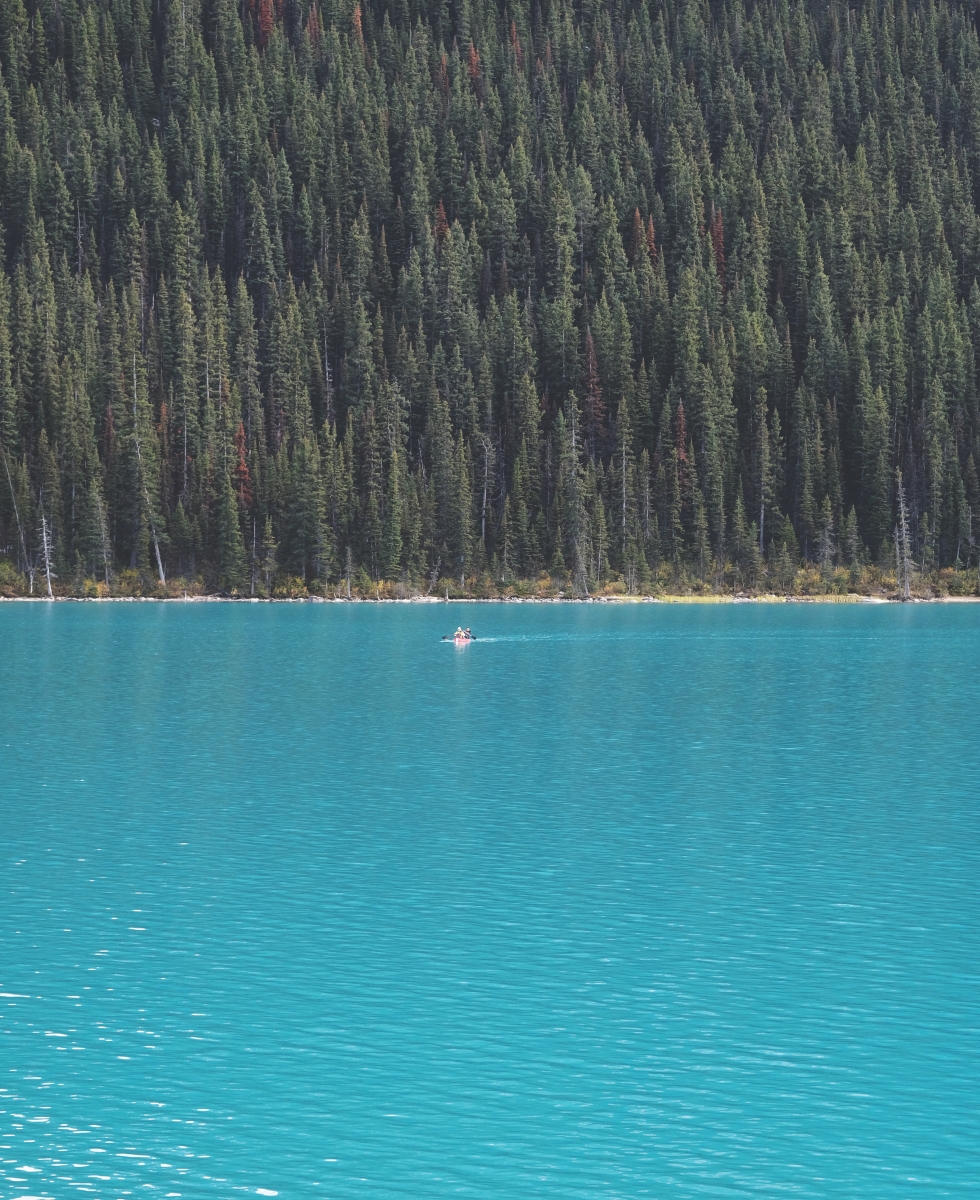
Among the Rockies’ glacial lakes, Lake Louise enjoys unrivaled popularity. We arrive in the village of Lake Louise (the name belongs to both the lake and the village) after driving the Icefields Parkway for about two hours from the Columbia Icefield. The streets are relatively quiet, yet cars stream in and out. Surely many people have gathered along the lakeshore, all to admire the famous lake named after a British princess.
Seen in person, Lake Louise shows off a form worthy of its fame. The water is an emerald blue so vivid it looks synthetic, and the lake is wrapped like a curtain by handsome mountains and Victoria Glacier. Most visitors take a commemorative photo at the lake’s entrance as if performing a ritual, then either head left to board a kayak and idle away the hours, or turn right for a hike along the shore. Whichever you choose, you can take in the full emerald glow of Lake Louise, though at times its surreal quality creates a prejudice: that every lake on Earth must be emerald, and that every lake must have a fir forest around it. The scientific explanation, that fine rock flour created by glacial erosion seeps into the water, becomes a secondary matter.
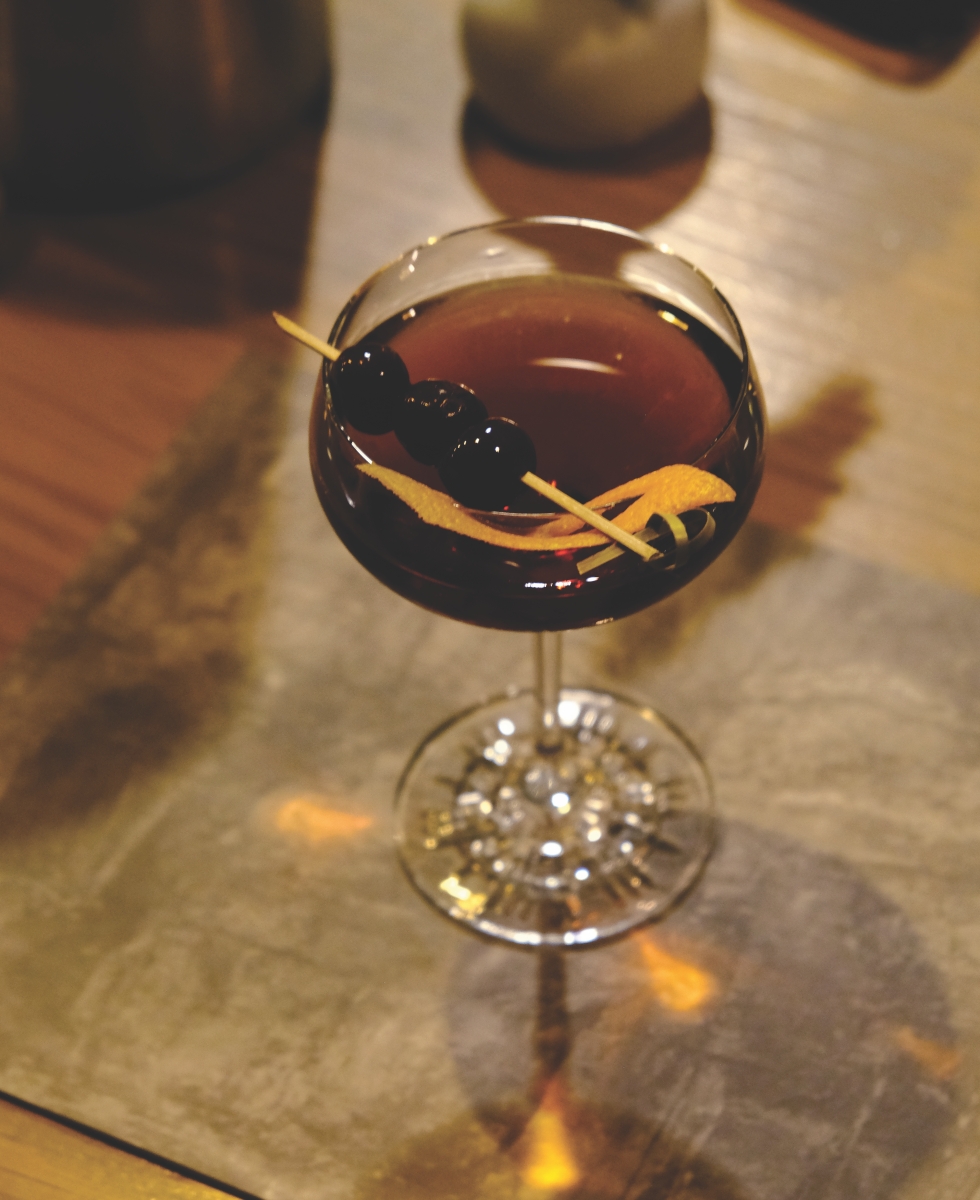
When the 5 Fairmont Chateau Lake Louise opened on the lakeshore in 1911, travelers must likewise have been captivated by that light. Built by the Canadian Pacific Railway, operator of the trans-Canada railroad, this monumental hotel was a hideout for wealthy travelers and daring climbers in the early days of Rockies travel. For more than 100 years since, those who have come to Lake Louise have drawn countless inspirations from the natural splendor and the hotel’s elegance. At times, they also needed a place of fellowship where they could compare what had inspired them. “Honestly, when you stay here, you hardly know what’s happening in the outside world. Ha-ha. We try to bring back as much as we can the atmosphere that people who came here in the early days of Rockies travel would have experienced, with people connecting alongside nature,” says the publicity manager of the Fairmont Chateau Lake Louise.
Banff National Park, where Lake Louise is located, draws 4 million visitors a year, the most of any national park in Canada. In other words, every year 4 million travelers gather a shared story from the Rockies and carry it home. Could the hikers who huddled in a cabin by the lake a century ago, swapping tales of the day’s adventures, have foreseen this? Probably not. A single day’s wonder was enough to fill them completely, and they forgot all about the future, much like the people today who are busy raising a toast to that emerald color in a hotel restaurant.
Spray Valley Provincial Park
Spray Valley Provincial Park
The summer of the film “Brokeback Mountain” and the winter of “The Revenant.” As we head down a dirt road deep into Spray Valley Provincial Park, the movie settings filmed in 6 Kananaskis come to mind. Kananaskis is a region favored by Canadian locals who want to escape the bustle of Banff and Lake Louise. There are no emerald lakes here, but the nature that breathes is even more jewel-like. Desolate yet profound, mournful yet majestic.
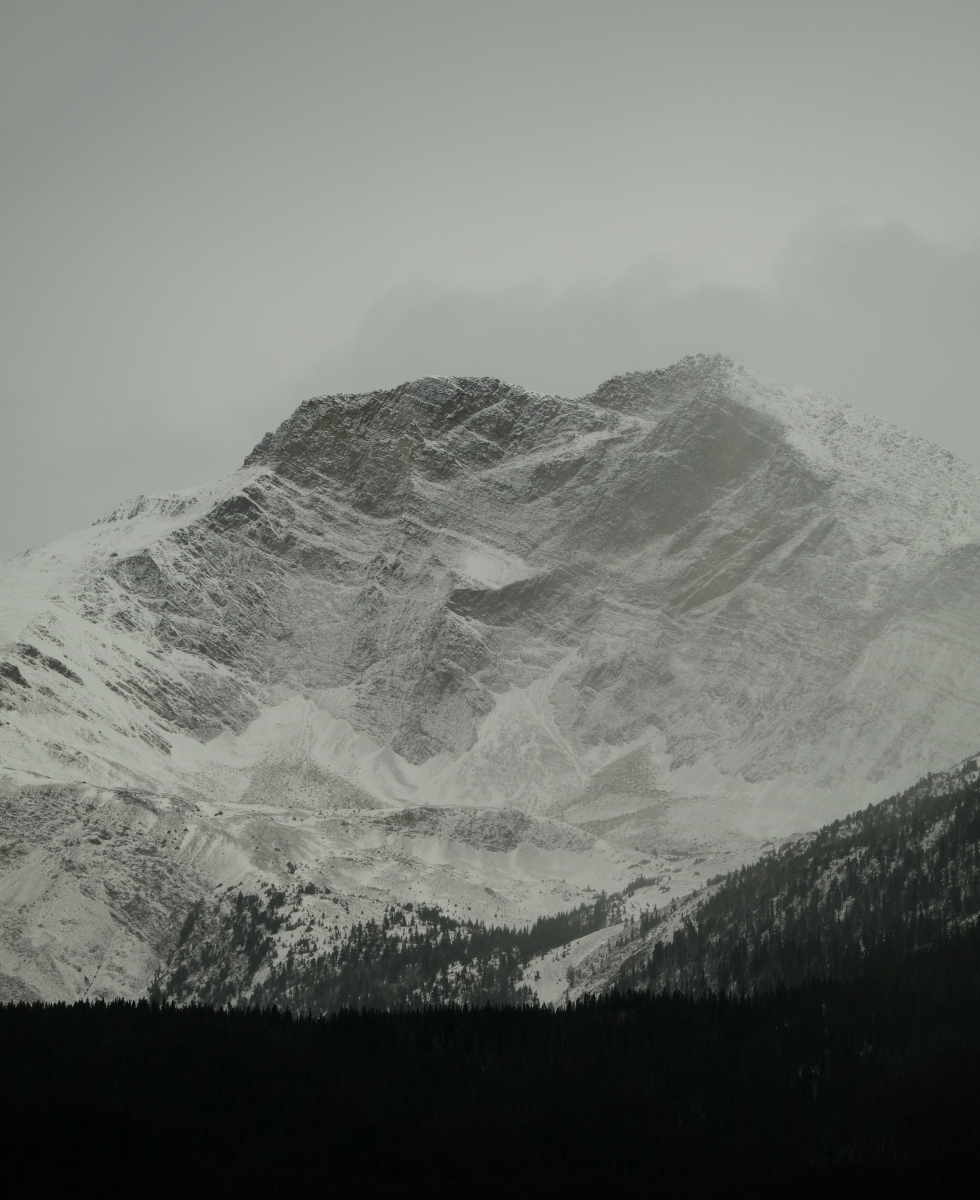
The waterways hold a leaden gray, and the grasslands are tinged tawny. The jagged peaks that wall them in look like scars left by gale winds clawing at the rock. Water is distinct from plain, plain from mountain, and along the treeline at 2,500 meters above sea level, the boundary between forest and rock is so clear that the scenery divides into dark layers. Neither the eyes nor a camera lens can fully take in each of nature’s different scenes. Is this the inner flesh of nature that the Rockies have so far tried to hide? You can feel a force that makes the viewer feel small.
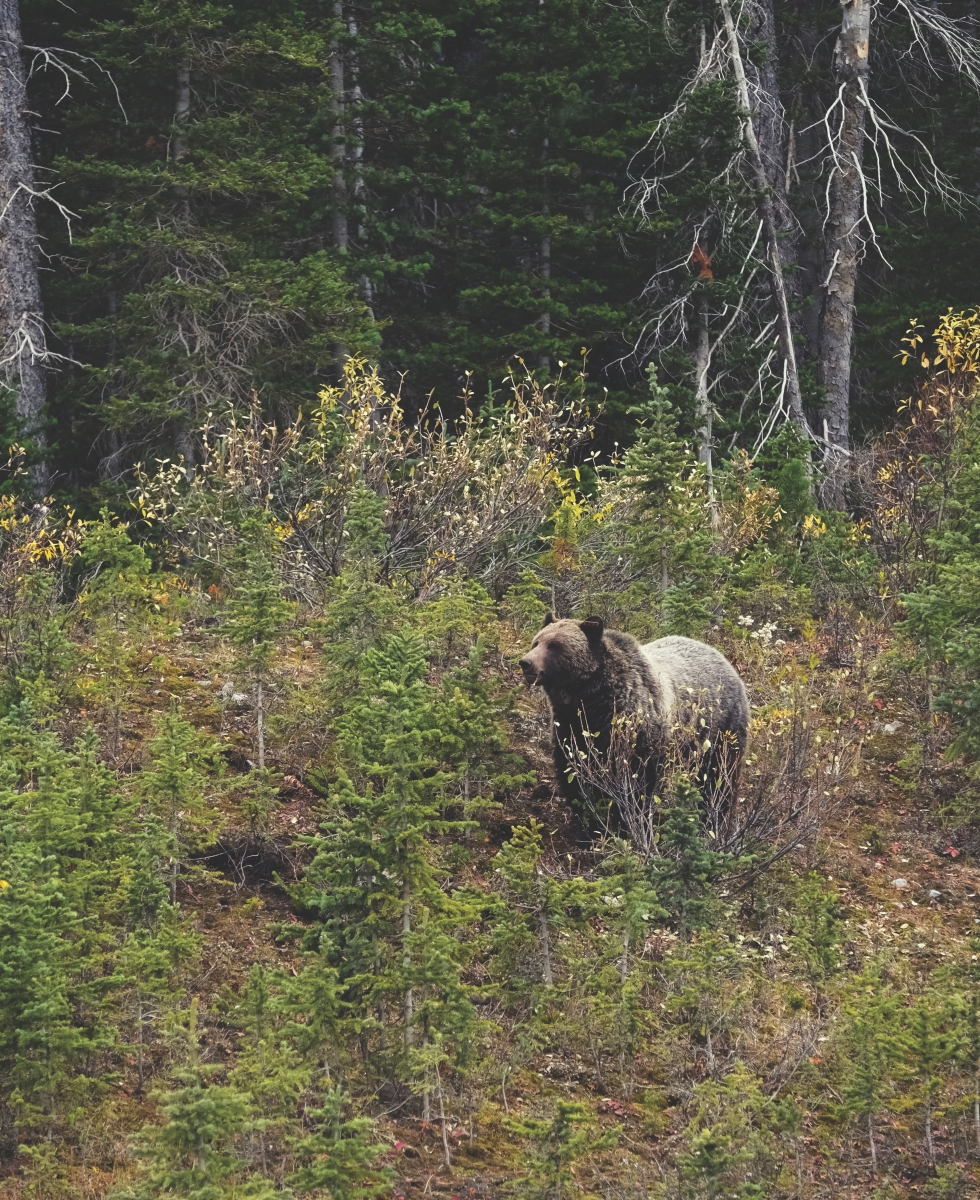
With a scene like an IMAX film held in our hearts, we move slowly along the road when we spot cars stopped by the roadside once again. Soon a dark brown animal comes ambling out beside the road. 7 It’s a grizzly bear. The round-bodied bear gazes at its audience in the cars with small, steady eyes. It is an unexpected, mysterious encounter. I quickly pull out my camera. In the viewfinder, the grizzly looks this way and that, then playfully digs at the soil. It seems a clear statement that other lives exist on this land too. In the vast Rockies, humans are nothing more than a part of nature. For days we had driven the roads, enclosed by curtains of mountains, and only now have we come a few meters closer to nature.
6 This name, too, was given by the Indigenous Cree. It means “the warrior who survived an ax to the head.”
7 A grizzly is a brown bear found only in North America. An apex predator, a large grizzly standing fully upright on two legs stands nearly 3 meters tall. Males weigh about 180–500 kg and females about 100–360 kg.


