
Cheonnyeonsikhyang, a Vegan Restaurant for Non-Vegetarians
Located in Seocho-dong, Seoul, Cheonnyeonsikhyang is a vegan restaurant with the ambition to cook in a way it can carry on for a thousand years. An interview with Byun Hyejeong and Ahn Baekrin, the mother-daughter duo behind it.
Vegan Restaurant For Non-Vegan — Cheonnyeonsikhyang, a Vegan Restaurant for Non-Vegetarians
There’s an English saying, ‘You are what you eat.’ Since the food we eat becomes the very stuff of our bodies, the idea is that we ought to eat well. At Cheonnyeonsikhyang, a vegan restaurant whose name means ‘a way of cooking we hope to carry on for a thousand years,’ you can savor all-natural dishes that sacrifice nothing—not flavor, not satisfaction. Could a meal here make us better people?
Interviewer Parc Jinmyoung
Interviewees Byun Hyejeong (wine sommelier), Ahn Baekrin (chef)
* Relay Interview: A recurring feature in which each interviewee recommends the subject of the next interview. Lee Deokhwa, the owner of Stay Goyi, interviewed in Pitch by Letter Issue 46, recommended Cheonnyeonsikhyang.
Give us a brief introduction to Cheonnyeonsikhyang.
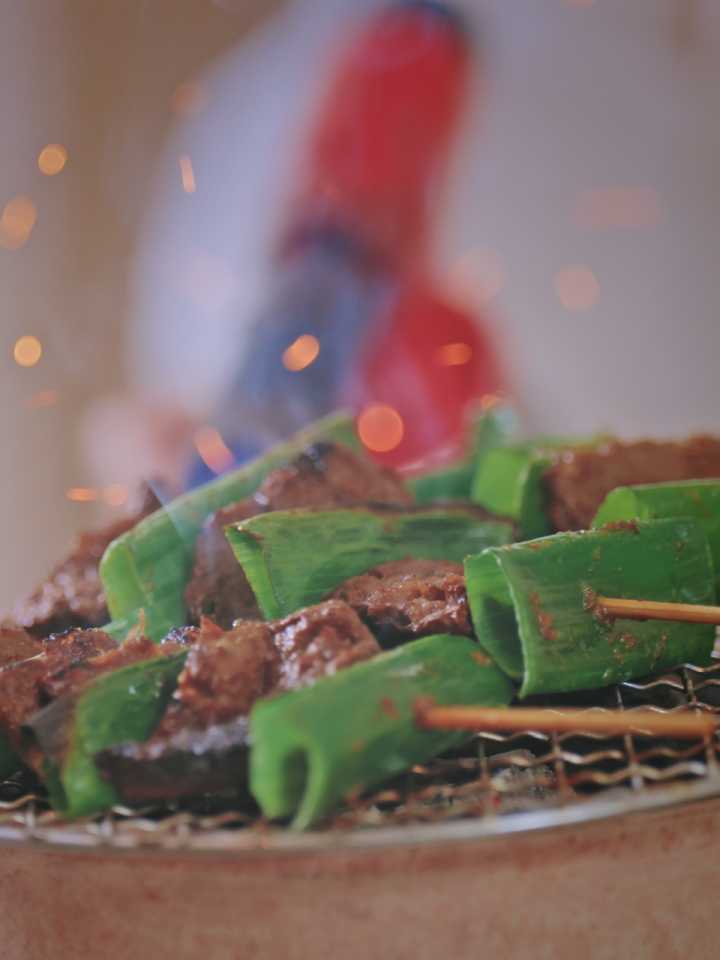
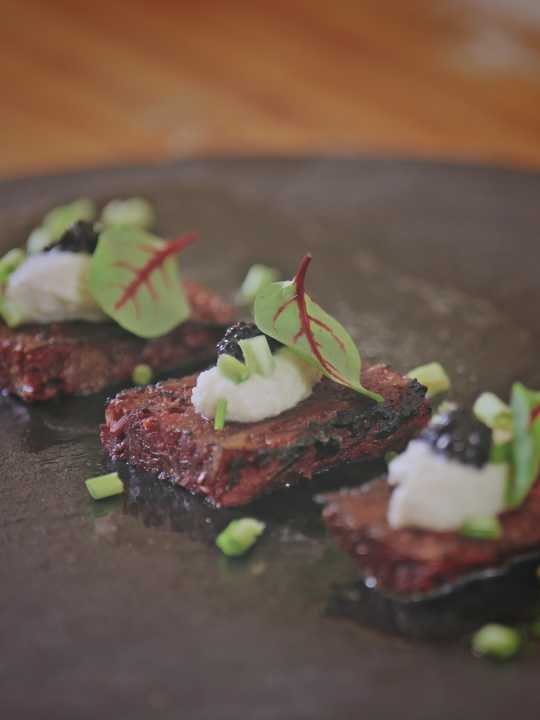
Byun Hyejeong (Byun) We’re a vegan restaurant where you can enjoy dishes made with plant-based meat and vegetables, paired with natural wines or cocktails—a kind of marriage between food and drink. Our signature dishes include Sex and Steak, a soy-protein steak topped with spicy mala oil and a sweet ssamjang aioli sauce, and pizza made with an organically fermented dough, topped with handmade plant-based ricotta cheese and assorted vegetables.
What led a mother who’s a wine sommelier and a daughter who’s a chef to team up and open a restaurant together?
Ahn Baekrin (Ahn) While studying medical biology in the UK, I became fascinated with what’s called the ‘law of flavor satisfaction.’ Ever since I was young, I’d had a weak digestive system, so I never liked eating large amounts of food—I only liked tasting delicious dishes. I was drawn to the theory that no matter how little you eat, if the multilayered flavors your brain craves—not your stomach—are satisfied, you’ll feel full. I thought vegetables were the ingredient best suited to fully realizing that principle, and I wanted to share ways to make vegetables genuinely delicious, so I studied cooking in the US, Italy, and France.
Byun When Chef Ahn came back to Korea and started preparing to open the restaurant, I thought my wine sommelier certification could be useful. Pairing food with the right wine or cocktail really brings out its flavor. Among all the options, I felt natural wine—made without additives, capturing the true taste of the fruit—would pair best with plant-based cuisine. That eventually led me to running an import company (Amber & Chervil) as well.
It seems like this concept would have done even better abroad—why come back to Korea to open a vegan restaurant?
Ahn When we opened in 2020, I had no idea Korean people were so uninterested in vegan food (laughs). These days, as interest in sustainable dining grows, more restaurants sharing similar values are popping up, but back then that wasn’t the case. Since we were doing something no one else was, we ended up getting more attention and more media exposure.
It’s interesting that the restaurant is located in Seocho-dong. There’s even a dakgalbi (spicy stir-fried chicken) restaurant on the first floor of the building.
Byun At first they were a bit wary of us, but once they realized we weren’t in the same business, they warmed up (laughs). There’s a café on the second floor, and the owner always jokes with us, saying, ‘Would you please stop with the self-actualization already.’ In our early days, we used to sell coffee too, but we dropped it from the menu so customers would go upstairs for their coffee instead. I think the most important thing is coexisting while respecting each other’s values.
Ahn Of course I’d love to be in a neighborhood like Hannam-dong or Seongsu-dong, where similar shops cluster together (laughs). But it was more important for my mother to have an easy commute, so we settled on this neighborhood. Someday I’d like to move somewhere with a basement space I could use as a workshop.
I heard you developed your own alternative meat.
Ahn We’re not strict vegetarians. My mother is a pesco-vegetarian (someone who eats dairy, eggs, and fish), and while I mostly eat vegetables, I do sometimes eat meat that’s truly delicious and animal-welfare certified. We got into developing alternative meat because we wanted something that could be eaten sustainably, without animal sacrifice, but that still tasted good. The alternative meat we developed is currently sold at Cheonnyeonsikhyang, and we’ve already completed mass production to a level ready for export. Once we sort out the administrative issues, we plan to sell it in the US first.
These days, large corporations are also investing heavily in alternative meat development. How is Cheonnyeonsikhyang’s alternative meat different?
Ahn We hold three patents related to alternative meat. One of them recognizes our product as the closest match to hanwoo (Korean native beef) in a marbling texture test—the results showed it was similar to Korean 1++ grade rib meat. Mushrooms actually contain compounds similar to the ones that give beef its umami flavor. We maximized those compounds to recreate a texture and taste as close to hanwoo as possible. Thanks to the marbling, you can even adjust the doneness—rare, medium, or well-done—just like with steak.
Byun You could say our alternative meat isn’t made for vegans—it’s made for people who love meat.
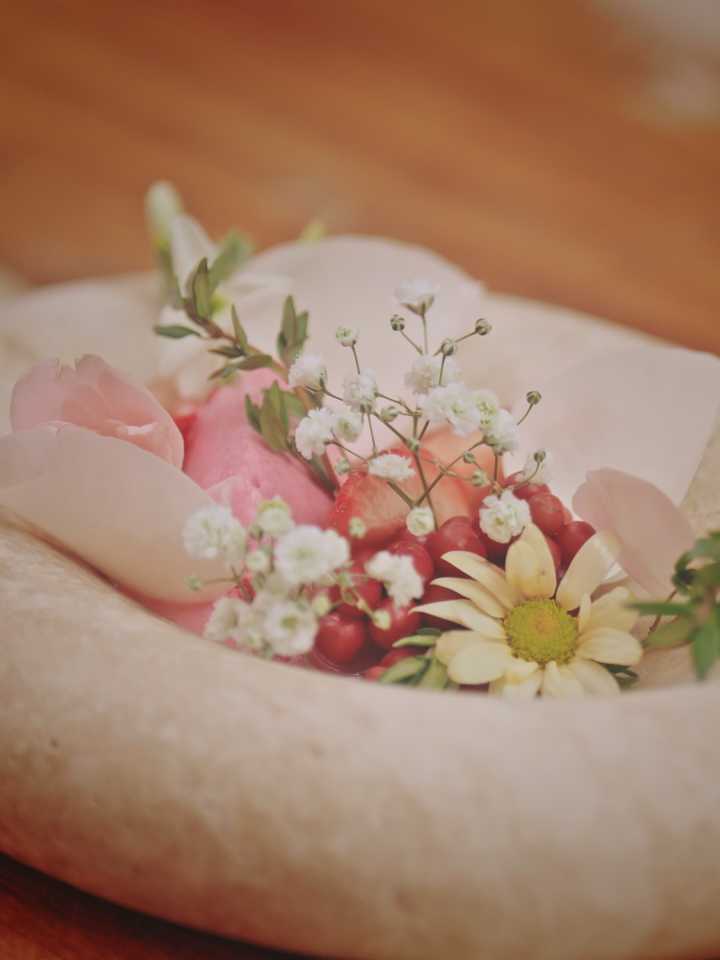
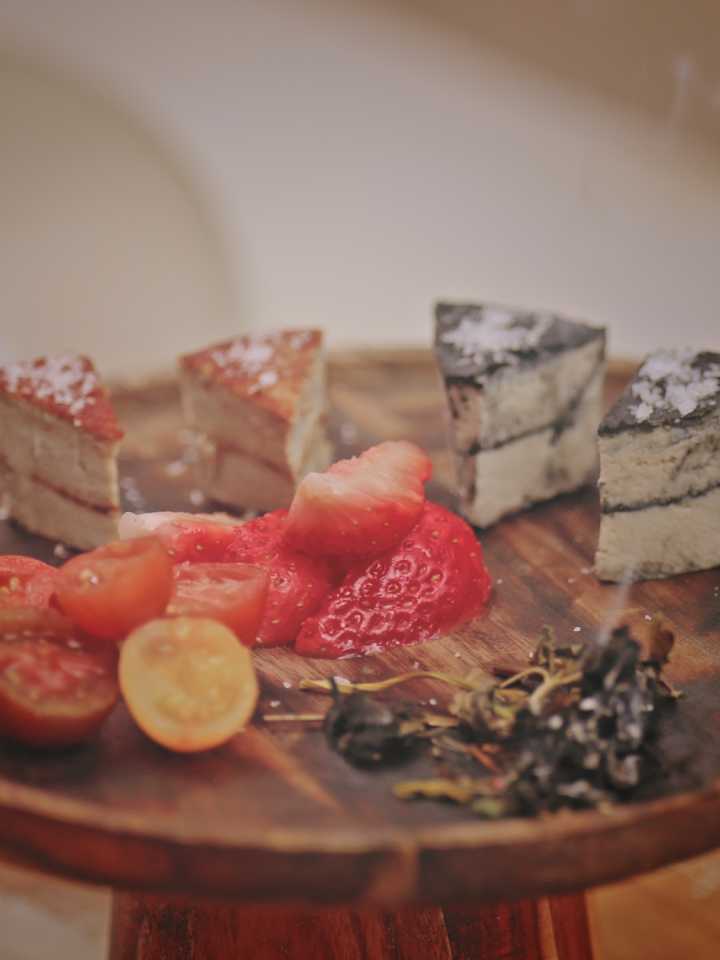
What matters most in vegan cooking?
Ahn I believe the flavor of vegan food ultimately comes down to fermentation, low temperature, and salt. We use our own special fermented sauces in almost every dish—mainly a mushroom fish-sauce made by fermenting mushrooms with nuruk (fermentation starter), a carrot doenjang made by fermenting grated carrots, plant-based oyster sauce, and a fermented plant-based butter sauce, all of which build umami. We also blend anywhere from five to ten different salts. I love salt so much that I carry my own even when I go out for burgers. I guess I really do follow that law of flavor satisfaction to the letter (laughs).
Byun How much care and time you put in matters too. Fermentation and low-temperature cooking both demand endless attention and a lot of waiting.
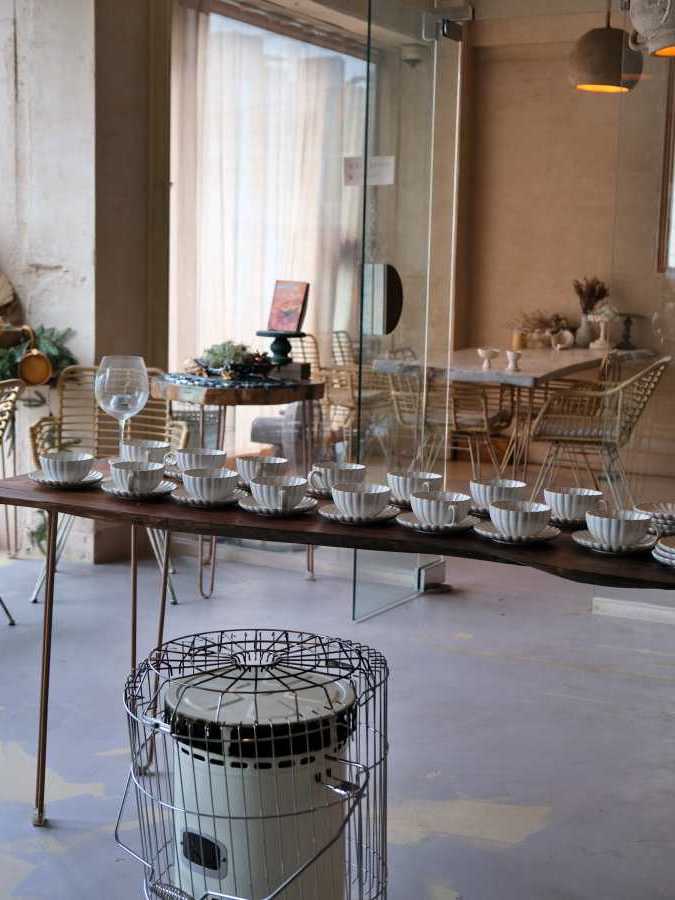
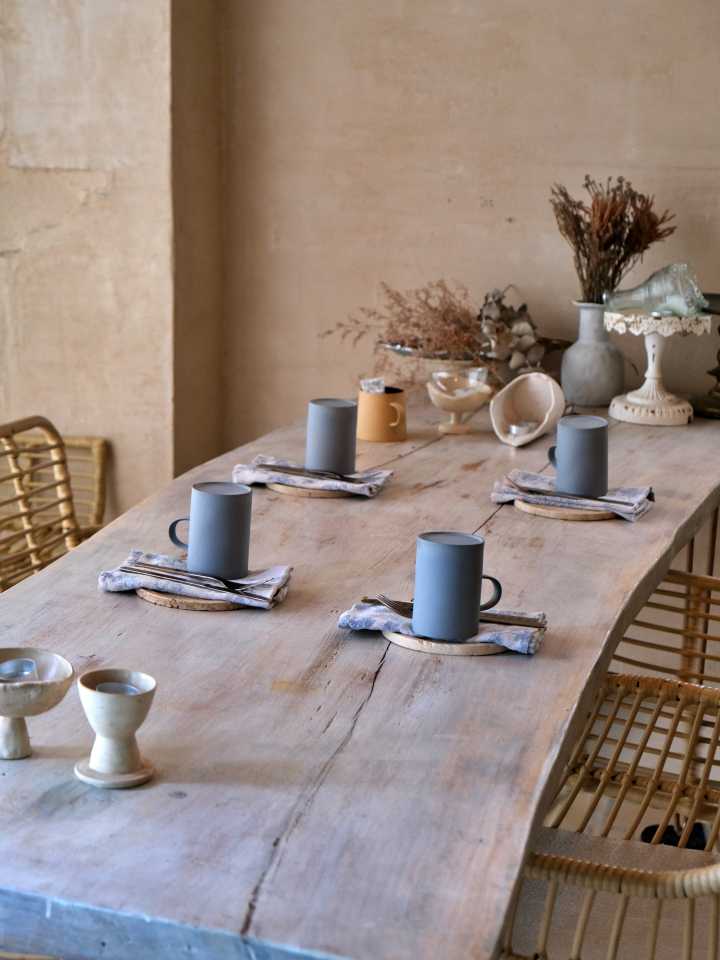
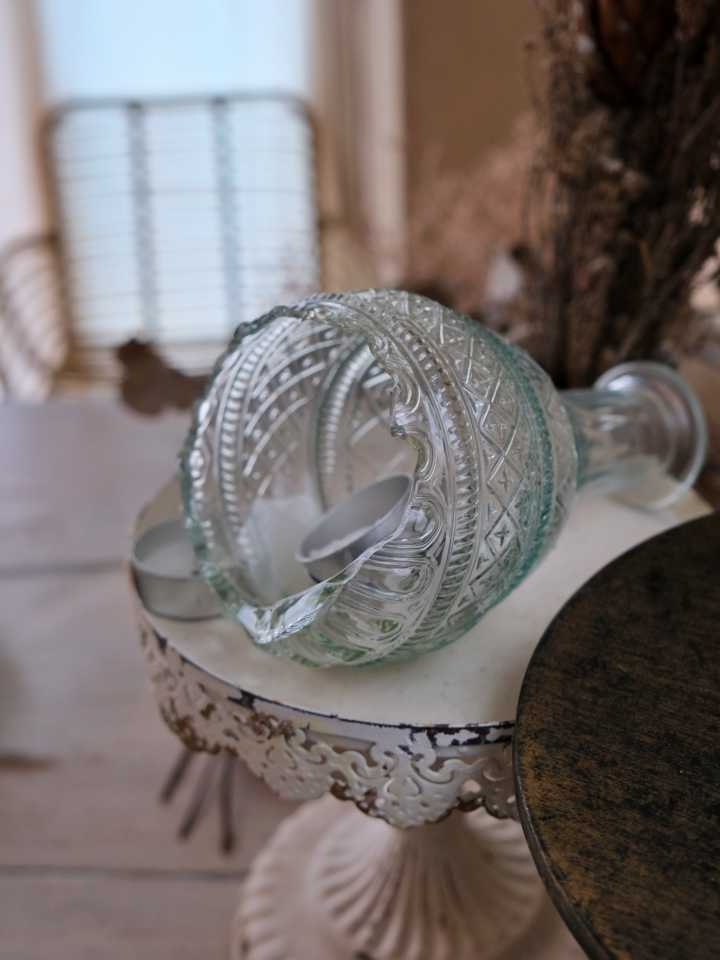
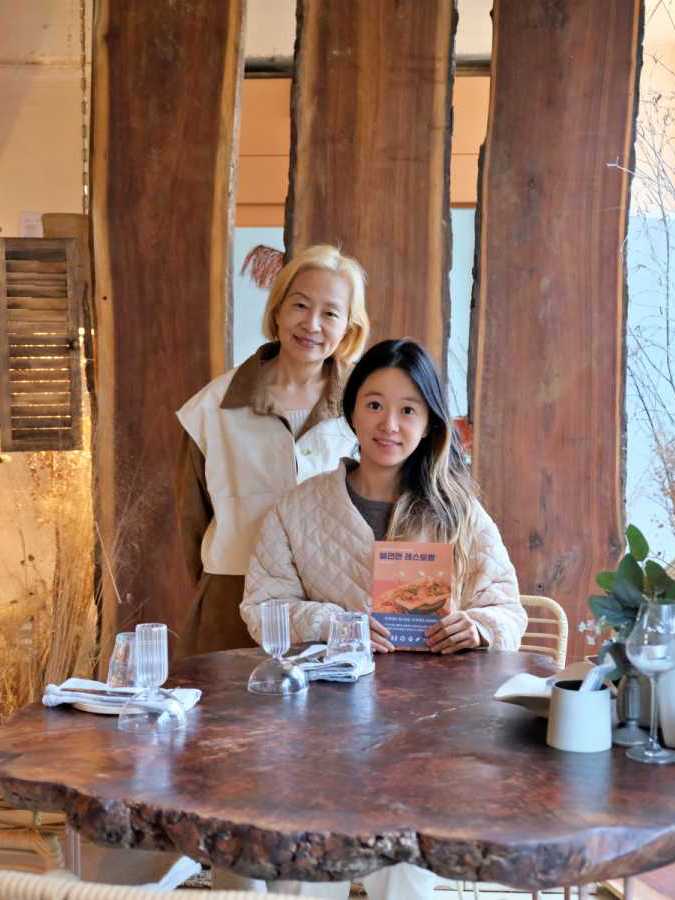
The wooden tables, each a different shape, and the candle holders made from ground-down broken glass really stand out. I heard you did the interior design yourselves.
Ahn Since we’re presenting food connected to nature, we wanted the space itself to feel as natural as possible. We used wood tones and beige, which I love and which feel closest to nature.
Byun Almost all the decor inside is repurposed, following a zero-waste concept. The one thing we compromised on with the world is tissues and wet wipes. When we first opened and didn’t provide them, we got a lot of complaints (laughs). We provide them now out of necessity, but we still try to avoid generating unnecessary waste.
Were there any travel destinations or spots you referenced while preparing the interior design?
Ahn There’s a Belgian fermentation expert named Pascal Bauder who makes wild fermented foods using wild plants, yeast, and bacteria. I once visited his workspace in California. It’s set right in the middle of the wilderness, as if you’d dropped straight into some unknown land. Seeing the space filled with fermented foods made from all kinds of wild plants I couldn’t even name, along with the roughly textured fermentation vessels he made himself, really made me feel connected to nature.
How sustainable can Chunnyunsikhyang’s vision truly be—a restaurant where all life on Earth coexists in harmony?
Ahn Vegetarian restaurants are popping up everywhere these days, but there’s still a lingering attitude in Korea that fails to understand why vegetable dishes should be expensive. Still, I think things are changing a lot. Women in their 20s and 30s today who think about and practice sustainable dining—once they reach their 40s, I believe the landscape here could look very different.
Byun In the early days, most of our guests were mothers and daughters. But gradually, the proportion of middle-aged male guests has been increasing, and recently there was even a day when every table was filled with men. It seems like more and more people who care about their health—not just vegans—are gathering at Chunnyunsikhyang. Watching that shift unfold is one of the joys of running this restaurant.


