Brunei’s Historical Restaurants — Three Time-Honored Eateries That Fill the Day
Brunei’s table favors balance over flash. Three long-running eateries offer a glimpse of the country’s everyday food culture: home-style ambuyat, yellow bread with kopi, and the grab-and-go nasi katok.
Brunei’s Historical Restaurants — Three Time-Honored Eateries That Fill the Day
Brunei’s table pursues harmony rather than extravagance. Instead of dazzling the eyes and palate with intense spices or elaborate presentation, meals here are modest, and the real emphasis is on getting fed and spending time with the people closest to you. From a strong cup of coffee with a piece of soft bread, to simple family meals shared around the table, to easy fare that stills hunger anytime, anywhere, the foods that have sustained Bruneians’ days offer a window into their daily lives and a varied food culture.
Words Pitch by Pitch
Illustration Kim Eunbin
In collaboration with ASEAN-Korea Centre
Curious About Brunei’s Home Cooking? Restoran Aminah Arif
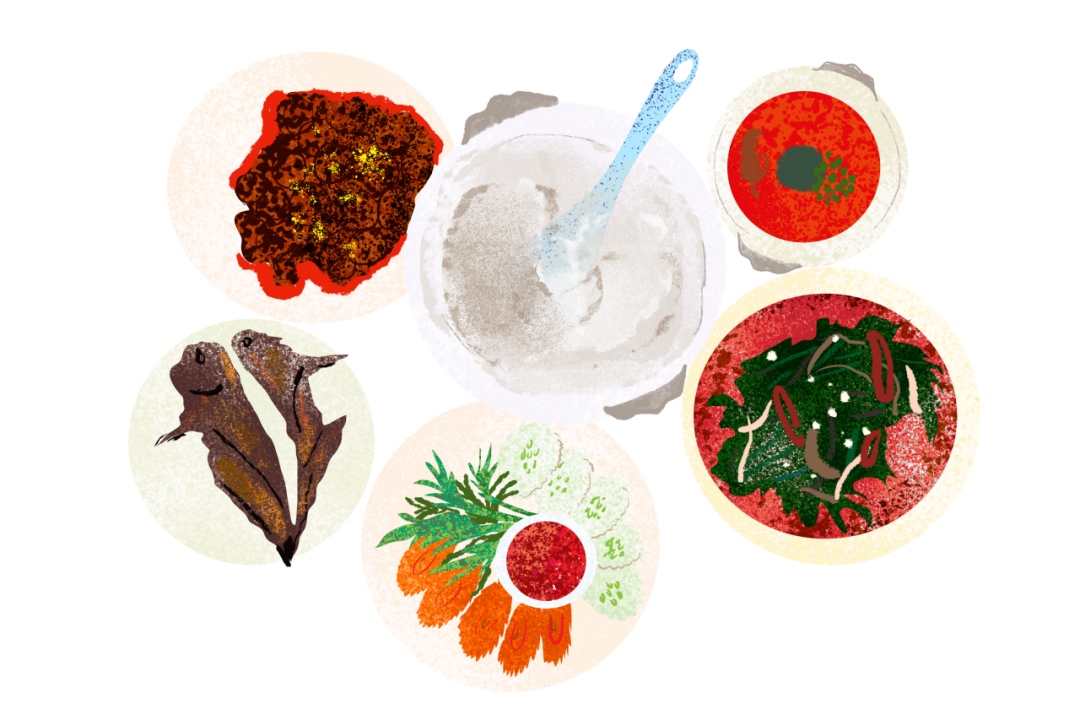
Because rice is difficult to grow in Brunei, the staple here is not rice but ambuyat, a dish made by mixing sago palm starch with hot water. Its texture is sticky and translucent, like jelly, and it has almost no flavor of its own. Yet because it serves as a base for an array of side dishes, it is an indispensable part of Bruneian food culture. In short, it is a must-try for anyone who wants to experience the most everyday local flavors.
Restoran Aminah Arif has been serving a wide range of traditional Bruneian dishes for more than 30 years. It runs three branches in Bandar Seri Begawan and is considered a culinary landmark among locals and travelers alike. The interior is plain and practical, in the style of a traditional local eatery, which makes it a good place to see how Bruneians gather with family and friends to eat. The signature dish is, without question, ambuyat. It comes with traditional sauces such as sambal belacan (a chili paste with shrimp paste) and tempoyak (fermented durian), known for their intense savory and spicy notes, along with crispy fried fish, ikan goreng, and lalap, a platter of raw vegetables, making for a generous spread. A set menu of ambuyat and four to five dishes is also a good option. After the meal, don’t forget to try traditional Bruneian kueh (bite-sized cakes and sweets) for dessert.
Established: mid-1990s
Address: Block B, B Simpang 68, Bandar Seri Begawan
Yellow Bread and Coffee to Start the Morning: Chop Jing Chew

As ethnic Chinese from southern China settled in Brunei in the early twentieth century, kopitiam culture began to take hold here too. The word combines “kopi,” the Malay word for coffee, with “tiam,” a Chinese dialect word for shop. These traditional coffee shops quickly wove themselves into city life as places to start the day with coffee and breakfast. Chop Jing Chew, in the old quarter of Bandar Seri Begawan, is a venerable eatery that has shared in that local history. Since Han King Juan, an immigrant from Hainan, China, first opened it in 1964, it has kept the form of a traditional family-run kopitiam. Step inside, with its old tables and chairs and vintage interior intact, and it feels as if you have traveled back in time.
Chop Jing Chew is famous for more than its long tradition. It is where roti kuning, a bread made with eggs and butter, was born. Called “yellow bread” for its distinctive color, it is now an iconic part of Bruneian kopitiam culture. Soft, moist roti kuning filled with kaya jam and butter, paired with a strong cup of coffee sweetened with condensed milk or sugar, is a perfect combination. Add soft-boiled eggs and you get a nutritious meal as well. A taste kept consistent for more than 80 years and low prices are the secrets of Chop Jing Chew’s popularity. That is probably why the place is so crowded at mealtimes that there is hardly an empty table, and why thousands of roti kuning sell every day.
Established: 1946
Address: Simpang 5, No.10, Jalan Gadong, 1, Bandar Seri Begawan
The Original Nasi Katok: Nasi Katok Mabohai
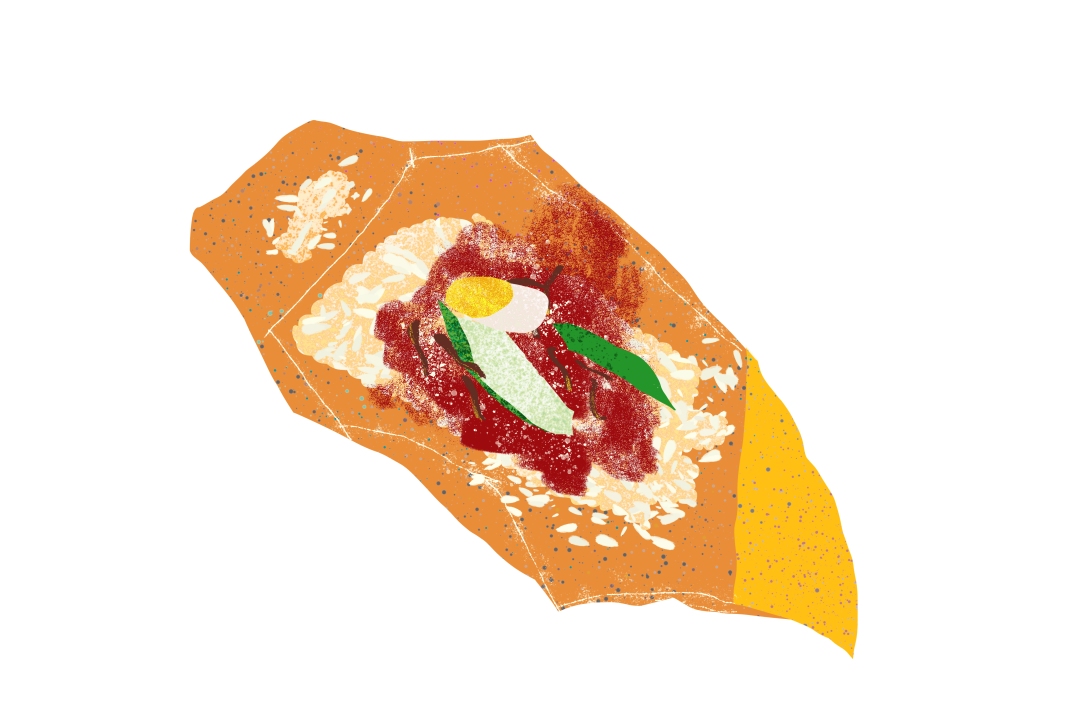
Can you say you’ve truly experienced Brunei without trying nasi katok? Made of white rice, a piece of fried chicken, and sambal sauce, nasi katok is a national favorite, much like gimbap in Korea, a quick and easy meal for any time or place. In Malay, “nasi” means cooked rice and “katok” means “to knock,” a reference to the way people would knock on doors late at night, after most restaurants had closed, to buy this food.
Nasi Katok Mabohai is the eatery said to have given the dish its name. In Mabohai, one of the residential neighborhoods of Bandar Seri Begawan, people reportedly did knock on the windows of street stalls late at night to buy rice, and that practice settled into the nasi katok we know today. Because the ingredients and cooking methods are so simple, countless versions exist, and the “Mabohai style” can be considered the starting point. Operating as a takeout-only shop since the 1980s, it serves rice with spicy sambal, topped not with fried chicken but with crispy fried anchovies, a boiled egg, and a slice of cucumber, a combination unique to this place. For around one dollar, it offers flavor and portions more than sufficient for a meal, and it won the “Best Food Award” and a “Lifetime Achievement Award” at the 2020 Brunei Food Awards.
Established: 1980s
Address: Low San Flat, 10 Jalan Mabohai, Bandar Seri Begawan