ASEAN Workation Guide — Part 2
The second ASEAN workation guide for the post-pandemic traveler covers Malaysia, Laos, Indonesia, Cambodia, and Brunei, with destination highlights and practical tips on working, living, eating, and exploring in each place.
ASEAN Workation Guide — Part 2
In the post-pandemic era, this is the second installment of our workation guide to the ten ASEAN countries for travelers who work on the road. This time, we introduce leading workation destinations in Malaysia, Laos, Indonesia, Cambodia, and Brunei, along with useful travel information for each.
Words Pitch by Pitch
In collaboration with ASEAN-Korea Centre
The ASEAN-Korea Centre is an intergovernmental organization that promotes economic, social, and cultural cooperation between Korea and the ten ASEAN member states. Its travel website offers a wide range of articles on traveling in ASEAN.
www.aseankorea.org/kor/travel/
Kuala Lumpur
Malaysia
Intro
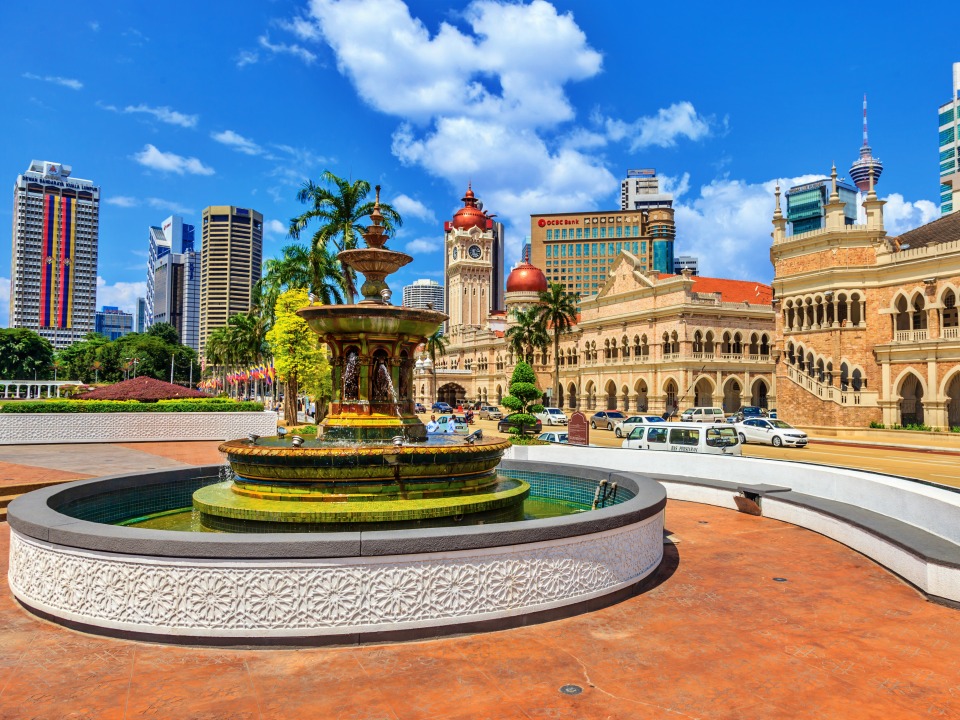
Kuala Lumpur proudly shows off its credentials as a Southeast Asian international city, and it deserves a place near the top of any list of cities for workation travelers. Skyscraper skylines and mosque minarets, street trees and parks that offer respite, exotic street food, trendy cafés and restaurants, enormous shopping malls and museums: there is more than enough here to fill a digital nomad’s free time.
In the mid-19th century, the people of the Malay Peninsula who first helped found the city spent generations building its history and cultural richness. Since gaining full independence from Britain in 1957, Malaysia has achieved remarkable growth, and global landmarks such as the Petronas Towers and The Exchange 106 now speak for Kuala Lumpur’s present and future. The energy of this city, said to be the sixth most visited in the world, can’t help but have a positive effect on workation travelers. Kuala Lumpur residents begin their day at an old neighborhood kopitiam (traditional coffee shop) and then hurry off into the rhythms of life in a global city. Although Malaysia is a Muslim country, English serves as a second official language, which allows multinational startups to thrive and fosters a lively community culture led by locals and newcomers alike. Coworking spaces scattered across the city offer convenient services to workation travelers, and in stylishly designed cafés it’s easy to see travelers from many countries focused on their work. For anyone who wants to enjoy entertainment and travel while also getting work done, few cities are as satisfying as this one.
Work & Living
Most shared offices are clustered in Kuala Lumpur’s central business districts, such as Bukit Bintang, Bangsar, and KL Sentral. Many operate large facilities inside high-rise buildings. The business districts are surrounded by plenty of places to eat, see, and enjoy, and with solid infrastructure such as public transit and accommodations, there is nothing lacking for those who stay while working. Global shared-office brands such as WeWork and Regus have a strong presence, and WORQ, which is headquartered in Kuala Lumpur, is growing rapidly on the back of major investment. WORQ can accommodate about 400 people, and a single-person hot desk costs 700 ringgit (about 220,000 won) per month.
Bangsar, Mont Kiara, and Cheras are popular residential areas among long-term visitors. Of these, Mont Kiara is a new town about 6 kilometers from KLCC (Kuala Lumpur City Centre), the heart of the city. Recently developed, it is considered a good area for foreigners to live in. A modern commercial district has taken shape there, bringing together shopping centers such as 1 Mont Kiara, Plaza Mont’ Kiara, and Publika mall with restaurants and food courts serving cuisines from around the world. Another advantage is that large malls and supermarkets such as Tesco and IKEA are not far away. Ampang, about 5 kilometers from KLCC, has long been home to a dense Korean community. Korean restaurants and shops, karaoke rooms, and jjimjilbang (Korean bathhouses) do brisk business, and embassies from more than 30 countries, including Korea, China, Thailand, and the United States, are located here, making the area safe and well equipped for daily life.
The housing type Malaysians prefer most in big cities is the condominium, similar to an apartment or an officetel. In Kuala Lumpur, too, you can find a variety of condos well suited to travelers. Monthly rent for a condo of about 20 pyeong (roughly 66 square meters) in an outlying residential area starts at around 500,000 won, and the central business districts are somewhat pricier.
Eat & Experience
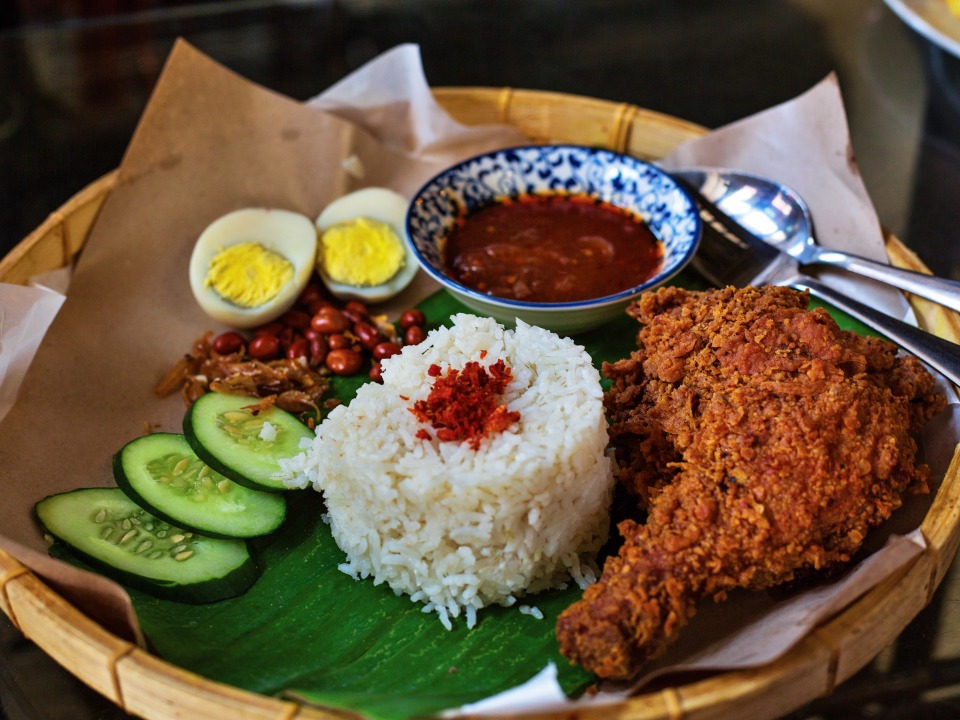
Nasi lemak is one of the most beloved dishes in Malaysia. A one-bowl meal of coconut rice served with sambal sauce and side dishes, it is also the country’s signature breakfast. The sides can vary endlessly, but typically include curry, spicy grilled shrimp, fried fish, chicken drumsticks, or fried eggs. Among noodle dishes, laksa is a must. There are countless kinds of laksa, too. Of these, we recommend assam laksa, known for its tangy flavor from seafood broth flavored with lemongrass and tamarind juice, and curry laksa, a thick curry made with coconut cream, fish, and cilantro. When you want a quick bite, look for a satay stall. These are skewers of marinated, grilled meats such as beef, chicken, or lamb, as well as seafood, and they taste even better dipped in rich peanut sauce. Cendol, the Malaysian shaved-ice dessert made by pouring coconut milk over finely shaved ice and topping it with pandan jelly and red beans, makes a perfect dessert.
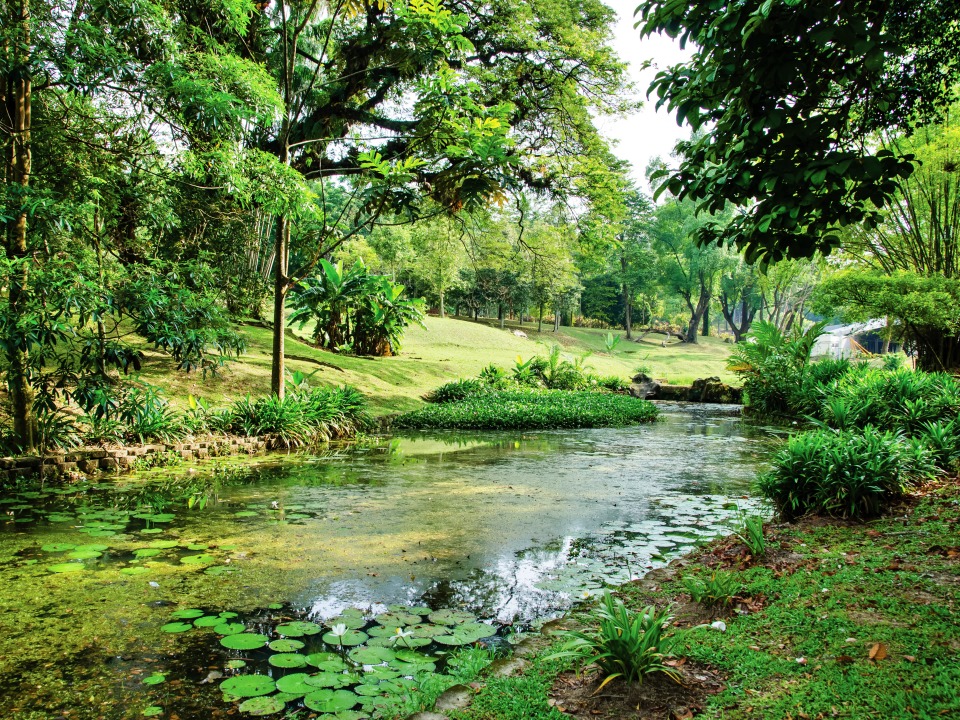
Before you begin exploring Kuala Lumpur, go up the Petronas Towers to take in the city’s past and present at a glance. The 452-meter silver twin towers symbolize the history of a city that began with tin mining and grew into a 21st-century metropolis. From the observation deck on the 86th floor, you can take in the whole city. Merdeka Square, surrounded by Kuala Lumpur’s major landmark buildings, is another historic site you can’t pass by. It is where Malaysia declared independence from Britain in 1957. If you have a free half day, head to the Perdana Botanical Gardens. Spread across 70 hectares of lakes and gardens, this beautiful botanical garden is a lovely place to stroll among flowers and orchids or simply rest. Nearby are the Islamic Arts Museum Malaysia, where you can see Islamic decorative arts collected from around the world in one place, and Masjid Negara (the National Mosque), built with inspiration from Masjid al-Haram in Saudi Arabia, so we recommend visiting them together.
If you are looking for a leisure getaway near Kuala Lumpur, we recommend Genting Highlands. This highland resort complex, about 51 kilometers northeast of the city, has a golf course, an amusement park, and a casino, and offers dynamic activities such as skydiving and rock climbing. Melaka, two hours from Kuala Lumpur by bus, is also worth recommending as a day trip. A historic city that flourished as a trading port in the 15th century, it is a UNESCO World Heritage site.
Vientiane
Lao PDR
Intro
Vientiane, the capital and largest city of Laos, is full of an unhurried calm, like the slowly flowing Mekong. It is different from the cutting-edge, congested metropolis, but within it live a beautiful Buddhist cultural heritage, friendly locals, and boundless possibility. Because France once made this city a hub of trade in Southeast Asia, traces of European architecture and food culture also stir travelers with a distinctive atmosphere. Reasonable prices compared with neighboring Southeast Asian countries and a varied food scene are further appeals for workation travelers who have put Vientiane on their shortlist.
Digital nomads in Vientiane move from café to café with Wi-Fi, tasting coffee grown on local farms or cooling off with a Beer Lao. Visit the shared offices that have begun opening in the city center, and you can mingle with people from Vientiane’s most forward-looking startups. After work, you can lose yourself in the romance of walking old alleys or watching the sun set over the Mekong River, or spend a lively, pleasant evening at a night market or a boutique hotel bar. From Luang Prabang or Vang Vieng, both possible weekend trips from Vientiane, you can experience the vitality of backpackers from around the world, the generosity of pure Buddhist culture, and outdoor activities in nature all at once, building a different set of travel memories.
Of course, Vientiane has no subway running on a precise schedule, and infrastructure such as 5G is lacking. For this reason, most workation travelers stay for short periods of less than a month. Even so, hardly anyone complains. Being able to calmly rediscover yourself amid this unhurried pace is exactly the charm of this city.
Work & Living
Vientiane is the only city in Laos with a thriving coworking scene. Toong, a coworking brand with branches across Asia, opened its first Laos location here, and there are local options as well, such as Lab de Lines and Toh-Lao. A single hot desk costs about 150,000 won a month on average. For short-term visitors, we also recommend working from a café. Naked Espresso, a local café brand with several branches in Vientiane, offers wall outlets for charging laptops and free Wi-Fi. Title Coffee, known for its delicious home-brewed espresso, also has a good work environment, with comfortable seating, fast internet and charging outlets.
Many Koreans live in neighborhoods such as Sapanthong, Phonsinuan, Phonthan and Phonpapao. There are Korean-run grocery stores and restaurants, and plenty of residences and studio apartments with a bedroom and kitchen. A modern studio rents for around 200,000 won a week, while a larger place with two or more bedrooms costs about 1 million won a month. A decent business hotel runs about 40,000 to 50,000 won a night.
Imported manufactured goods are expensive in Laos, but groceries and other everyday items are cheap. Vientiane’s traditional markets generally sell food in the morning and manufactured goods in the afternoon. Talat Lao, the best-known morning market, was demolished in March 2021, leaving many travelers and locals wistful. A new shopping mall is reportedly planned for the site. Head instead to Talat Kuadin, a traditional market across the street. It opens before 6 a.m. and closes at 8:30, and it may be the best place to see everyday Lao life up close. Talat Sao Mall, the oldest large shopping mall in Laos, is cheaper than the tourist district and draws many travelers. Nights along the Mekong are livelier than the days, because a sprawling night market stretches along the riverbank. Running from dusk until around 10 p.m., it is packed with accessories, handicrafts and all kinds of food, making it a perfect place to fill a hungry stomach late in the evening.
Eat & Experience
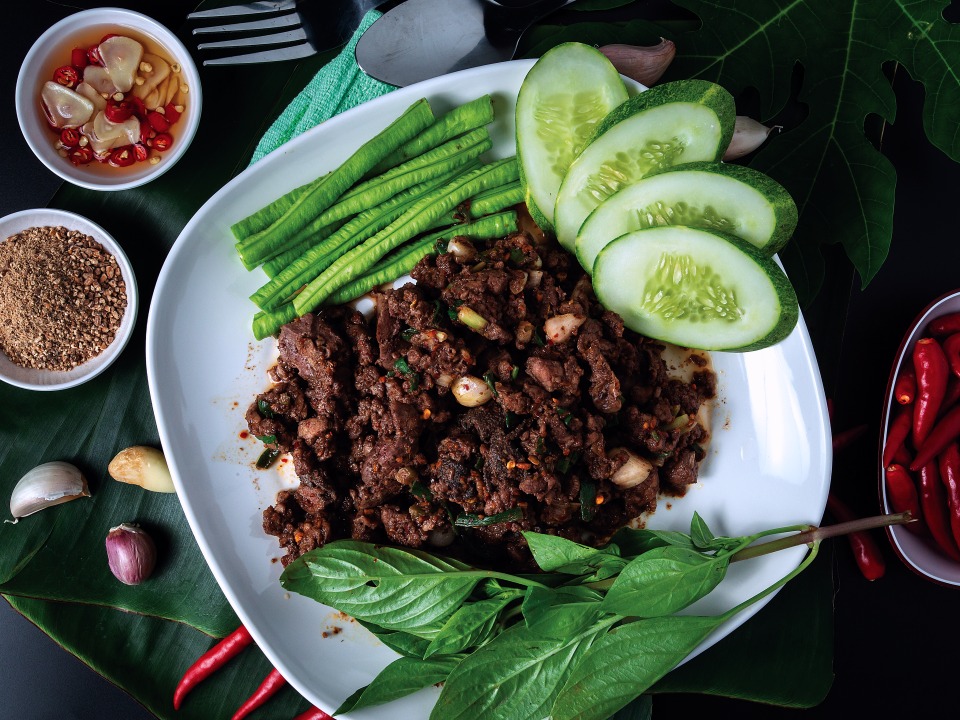
If you had to name the best-known dish in Vientiane, it would probably be laap, a Lao-style salad made with finely minced meat or fish. The flavor varies greatly depending on the main ingredient, but it is typically mixed with lime juice, garlic and mint leaves, then seasoned with pa daek, a freshwater fish sauce. Locals like laap moo, made with pork, and laap paa, made with fish. Add khao niew (sticky rice), and you have a satisfying meal. Soaked rice is steamed over charcoal and cooled in a bamboo container, and khao niew is the staple of the Lao diet. For a quick bite, we recommend khao jee pâté, a Lao-style baguette sandwich. It is a signature Lao street food, similar to Viet Nam’s banh mi. A split baguette is filled with pork liver pâté or Lao sausage, piled with thinly sliced papaya, carrot, shallot, cucumber and cilantro, then drizzled with chili sauce.
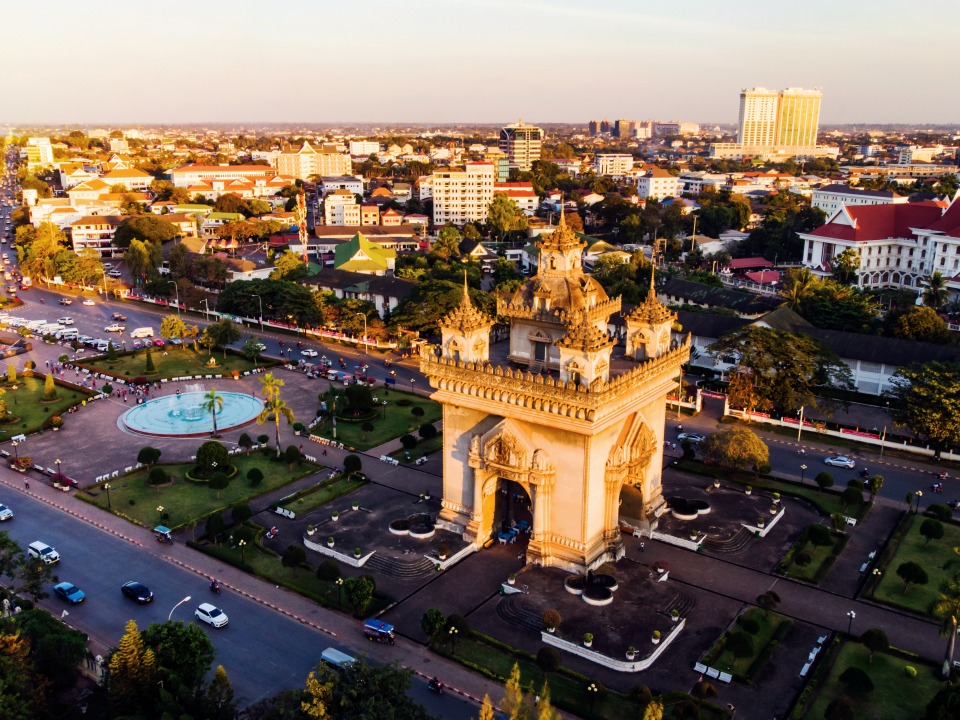
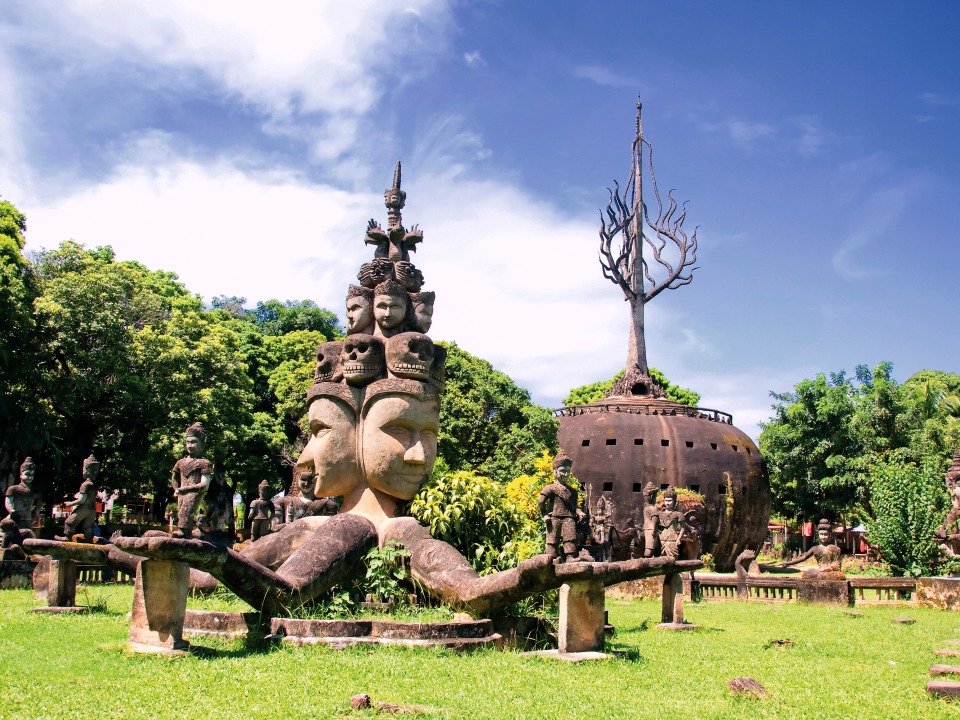
Begin your trip to Vientiane by climbing Patuxai for a panoramic view of the city. Built with the Arc de Triomphe in France as its model, plus traditional Lao touches, Patuxai means “Victory Gate.” It is a monument to the Lao people who lost their lives in the war of independence against France. Four kilometers northeast of the city center stands Pha That Luang, considered the most important monument in Laos. The slender, 45-meter golden stupa, surrounded by a high cloister, even appears on Lao banknotes. It was built in the 16th century when King Setthathirath moved the capital from Luang Prabang to Vientiane, and it has been restored several times since. For a more unusual sight, head to Xieng Khuan, also known as the “Buddha Park.” Built in 1958 by Luang Pu, a priest, shaman and yogi who blended Hinduism and Buddhism, it is filled with bizarre and mystical sculptures.
Cooking classes, where you buy ingredients at a local market and make Lao dishes yourself, and bicycle tours of Vientiane’s main sights and local villages are also popular activities. Those who want more adventure head to Vang Vieng, two hours away by bus or train. Kayaking, cave exploring, hiking, ziplining, river tubing and rock climbing are among the many activities that let you experience Laos’s nature with your whole body.
Bali, Indonesia
Bali, Indonesia
Intro
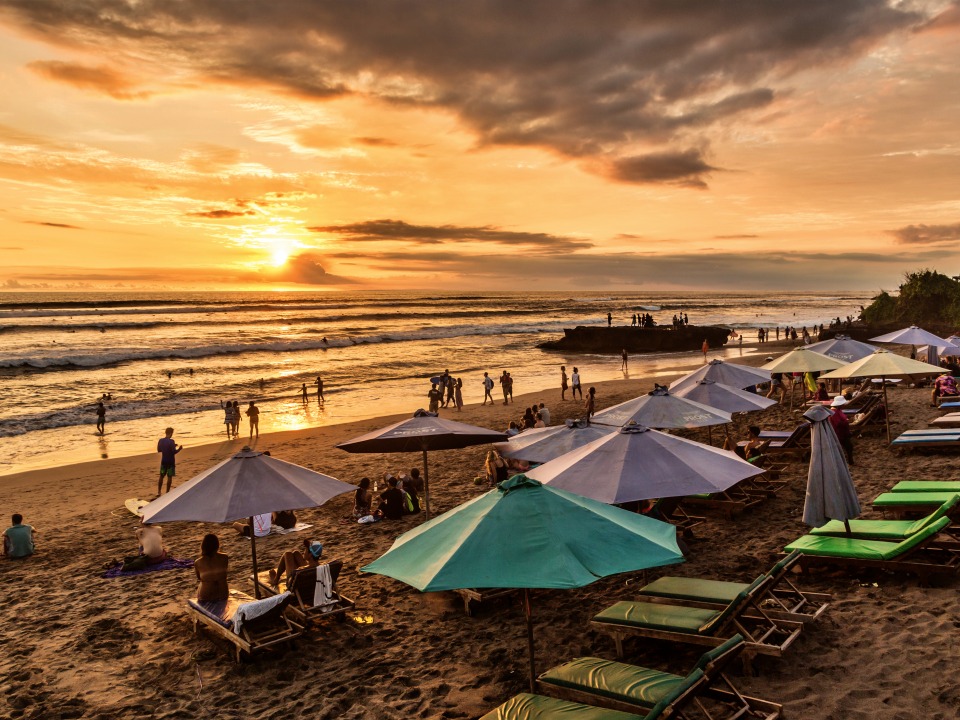
Bali is considered one of the world’s best resort destinations and workcation spots. Amid its rich, diverse culture and beautiful, striking nature, nomadic travelers in Bali find a perfect balance between work and rest. That means Bali is not just a resort but holds something more.
After experiencing the ceremonies and parades held at countless temples, and the spirited music and festivals that move body and mind, you will see what makes this island special. The roughly 10,000 temples on the island’s hills seem to serve as life’s signposts for locals, and the smoke rising from Gunung Agung feels like the roar of a god. The inspiration drawn from Bali’s nature, culture and local life nourishes your business projects and helps you reach your goals.
In practical terms, too, Bali is highly competitive in attracting nomadic travelers. According to an official at the Indonesia Tourism Board, “Bali offers an excellent work environment for workcations thanks to its fast internet infrastructure, reasonable prices and safety, and it is a place where startups can find business opportunities through the diversity of people from around the world.” Among Bali’s many areas, startup activity is especially lively in Canggu and Ubud. Coworking spaces and cafés for nomadic travelers are easy to find here, and you can find accommodations to suit your taste and budget, from coliving spaces to luxury resorts. Frequent international startup events are another plus, making it easy to keep up with trends. After leaving the coworking space, set aside plenty of time for rest and self-improvement. Friends who have long lived in Bali as digital nomads will share their know-how.
Work & Living
Travelers in Bali favor areas such as Ubud, Seminyak, Kuta, Canggu and Nusa Dua. Each area has its own character and appeal, so you can choose according to your taste and lifestyle. We recommend Seminyak if you want to stay close to the city center, Kuta and Canggu if you love surfing, Ubud if you want to experience local culture and Bali’s nature up close, and Nusa Dua for a quiet getaway. Of these, Ubud and Canggu are the areas workcation travelers visit most. Prices are relatively low compared with famous tourist spots, and there are many coworking spaces that offer both workspace and lodging. A month costs 200,000 to 300,000 won, and choosing an hourly flat rate can save you even more.
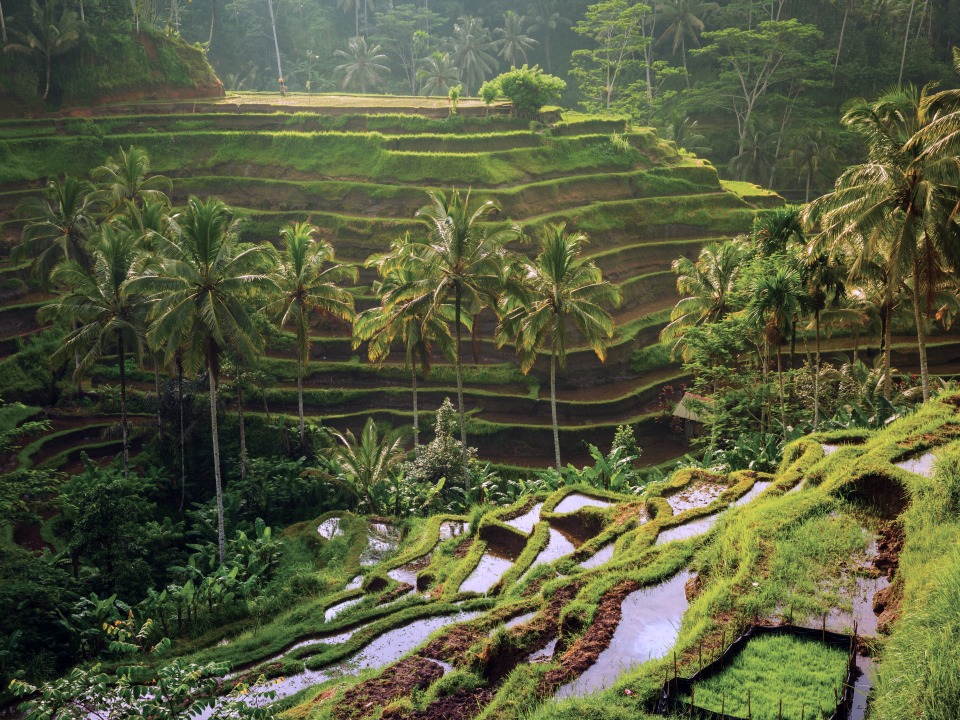
Ubud, a good place to heal in a free-spirited atmosphere while focusing on work, has been called a mecca for digital nomads for more than a decade. The cultural heritage and artworks you encounter all over the streets provide inspiration, and the lush jungle and terraced rice fields around you refresh the mind just by looking at them. Outpost Ubud is a well-known coworking brand in Bali where you can experience coliving and coworking at once. It has Bali-style suites, private offices and kitchenettes, as well as a lounge for networking and a yoga studio.
Canggu, a good place to catch startup trends, has been emerging as a workcation hub for several years. Startup events are held almost every day, and you can enjoy work and leisure at the same time. Dojo Bali, Canggu’s first coworking space, has a full range of amenities, including a bar, restaurant, meeting rooms, coworking space and swimming pool. It is also close to Echo Beach, famous for its black sand, so it is a good base for outdoor activities.
Accommodations of every kind are spread across Bali, from hostels to Airbnbs, pool villas, apartments, resorts and hotels. A one-bedroom studio with a shared pool in Ubud or Canggu rents for about 600,000 won a month. Coliving prices vary widely depending on the range of services. A place offering only basic lodging and a coworking space costs about 500,000 won a month.
Long-term travelers who want shopping, dining and entertainment in one place should consider Kuta, where several shopping malls cluster. Beachwalk Shopping Center and Bali Collection are well known, and Level 21 Mall Denpasar, a large mall that opened relatively recently in Bali’s capital, Denpasar, is also popular.
Eat & Experience
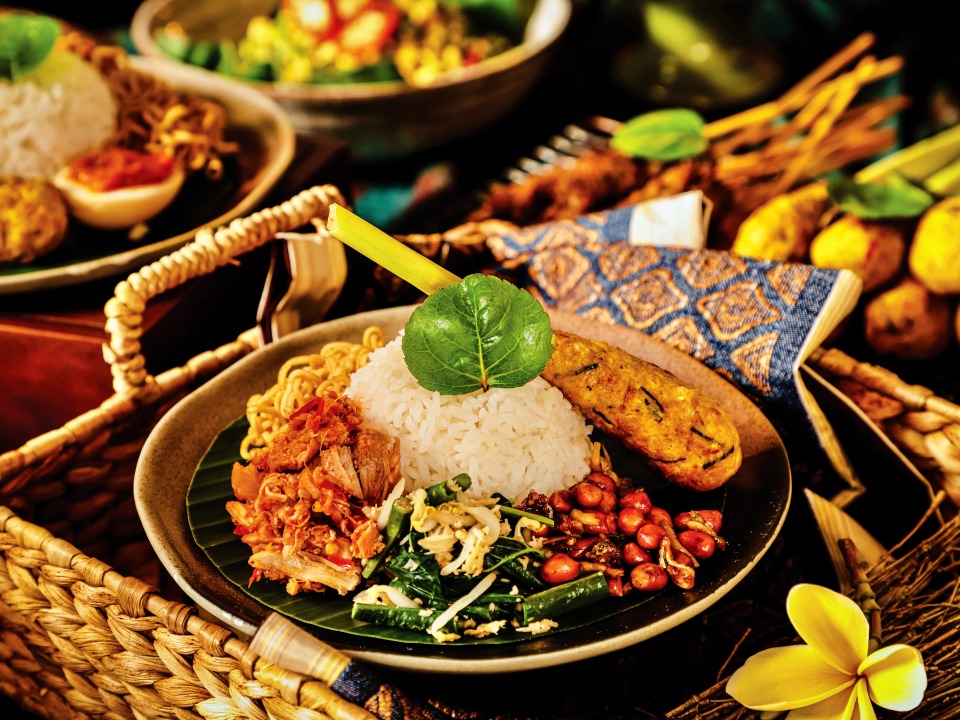
Satay, the grilled skewers found everywhere you travel in Indonesia, has developed distinct characteristics in each region. In Bali, the favorite is sate lilit. Minced meat or fish is marinated in coconut milk, lemon juice, shallots, pepper, and more. Its main ingredients include pork and beef, and even sea turtle. Babi guling and betutu are also signature Balinese dishes. Babi guling, a whole pig roasted over a wood fire, is traditionally eaten at ceremonies and major events. Betutu is a whole chicken or duck roasted or steamed with a variety of spices. It takes its name from the seasoning blend of shallots, garlic, turmeric, ginger, and more. Indonesian fried rice (nasi goreng) and fried noodles (mi goreng) are available at most restaurants in Bali. If you want something light to tide you over when you get peckish, try nasi jinggo. This street food is a portion of rice, side dishes, and chili sauce wrapped in a banana leaf, a meal Balinese locals often eat.
Built in the 17th century on the shore of Lake Beratan in northern Bali for Dewi Danu, the goddess of water, Ulun Danu Beratan is a Hindu temple so famous that it appears on Indonesia’s 50,000-rupiah banknote. It sits at an elevation of 1,500 meters, and when a thin mist rises over the clear lake, the atmosphere feels almost surreal. The most popular spot for sunset photos in Bali is probably Pura Tanah Lot. As its name, which means ‘land in the sea’ in Balinese, suggests, the temple stands on a rocky islet in the water. For sunrise, Mount Batur is a must. One of Bali’s two active volcanoes, it offers a magnificent sunrise from its 1,700-meter summit, which makes it a popular dawn hike. It is easy to reach from anywhere on the island, and the trail is not too difficult, so it is worth trying at least once.
A wide range of wellness and activity programs, such as yoga, surfing, and diving, makes a workation in Bali even richer. With so many options, you can choose according to your level and schedule. If you have a free day, you could also take an island-hopping trip to nearby small islands such as Lembongan, Lombok, or Gili Trawangan.
Siem Reap
Siem Reap, Cambodia
Intro
Cambodia is the heir to the Khmer Empire, which once dominated Southeast Asia. The country’s cultural appeal and beauty are hard to sum up briefly, but if you want to truly feel them, head to Siem Reap without hesitation. Home to Angkor Wat, one of humanity’s great cultural treasures, Siem Reap began to be known to the outside world in the early 20th century, when European explorers heading for Angkor Wat stayed here to prepare for their journeys. Over time, as it passed through the historical events of modern Cambodia, Siem Reap gradually grew into a gateway city for the interior. Today it is one of the fastest-developing cities in Cambodia, a cultural hub, and a base camp for digital nomads.
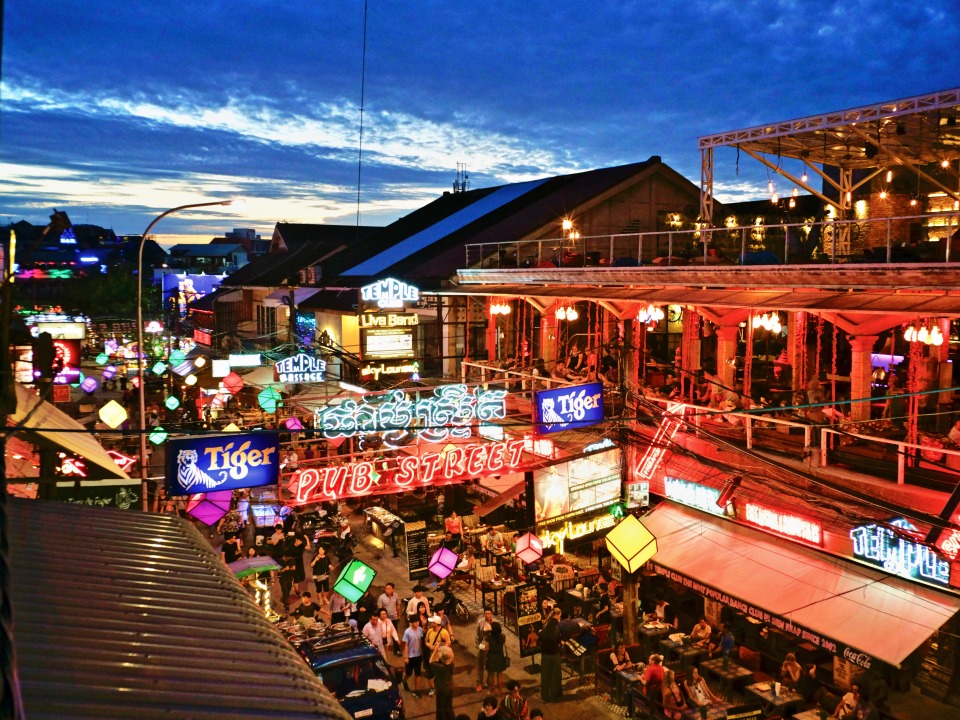
Tourists who come to Siem Reap drawn by the fame of Angkor Wat will, as time passes, discover another charm they never expected. Think of the workation travelers who fall for the city’s atmosphere and keep coming back. Although it is a mid-sized city of about 250,000 residents, Siem Reap has everything a traveler could want. Streets where old and new architecture mingle hold both ease and energy, and friendly, hardworking locals always welcome outsiders. From budget hostels and street food to hip dining and lively nightlife, from luxurious spas and hotels to stylish shops and galleries, from cultural sites represented by Angkor Wat and Bayon to the natural landscape of Tonle Sap Lake, nothing is missing. That is not all. Siem Reap has the most active coworking spaces and cafés for digital nomads in Cambodia, and young startup founders are driving the city’s growth. Living costs that are reasonable compared with Southeast Asia’s big cities are another major advantage. Thanks to this, workation travelers in Siem Reap can live more comfortably and experience more.
Work & Living
In recent years, as Siem Reap has emerged as Cambodia’s startup hub, the related infrastructure and communities have been taking solid shape. Many cafés, restaurants, and hotels offer shared workspaces, and the internet is excellent, so you can immerse yourself in work without much difficulty.
Coworking spaces are mostly clustered in the city center, with Footprint Café and BioLAB among the best known. A fixed hot desk at these spaces costs about KRW 100,000 a month on average, which is very reasonable. BioLAB, for one, offers more professional services, including private office space on the second floor for long-term travelers. If you would rather focus on work in a quiet neighborhood, we recommend Format Cowork, a 10-minute drive from downtown. Located along the road to Angkor Wat, it offers fast internet and comfortable office furniture.
The Old French Quarter, where buildings from the French colonial period are gathered, and Wat Bo Road, a peaceful, quiet neighborhood slightly outside the center, offer good living environments for long-term travelers. Both areas have a wide range of accommodations, from global-brand hotels to apartments and hostels, and are relatively safe. However, because Siem Reap still has an insufficient power supply, be sure to check whether your lodging has its own generator. A one-bedroom apartment in the city center rents for about KRW 400,000 a month, guesthouses start at around KRW 10,000 a night, and a four-star hotel can be found for about KRW 50,000 a night.
To buy daily necessities, try large traditional markets such as Phsar Leu Market in the city center or the Night Market. You can shop at low prices and experience local culture. Meanwhile, modern shopping malls such as Heritage Walk and Lucky Mall are opening one by one. They are still small, but shops, cafés, and restaurants are gathered in one place, which makes them convenient.
Eat & Experience
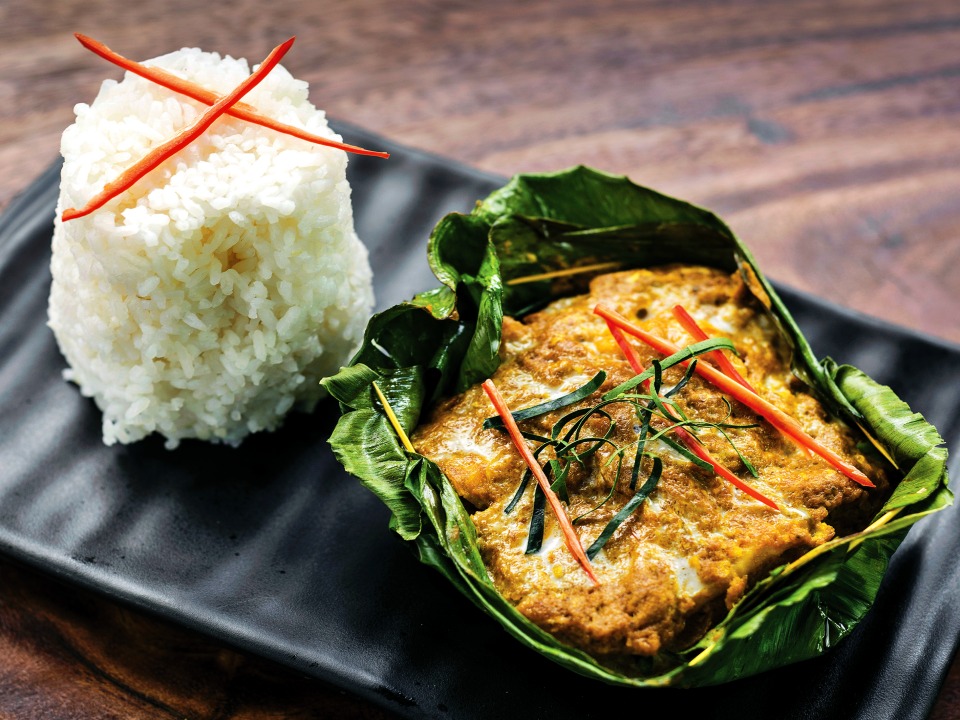
In Siem Reap you can try traditional Cambodian food as well as dishes influenced by Chinese and French immigrants. Cambodia’s staples are rice and fish. Freshwater fish caught along the Mekong River in particular is a main ingredient that never fails to appear on local tables. Among the dishes you must try are prahok, a fermented fish paste made by salting freshwater fish, and amok, a mix of curry spices, coconut milk, and fish wrapped in banana leaf and steamed. Prahok is versatile: it is used as a seasoning or eaten spooned over rice. Amok, easy to find at any Cambodian restaurant, is a kind of soul food for locals. When you crave a refreshing salad, we recommend lap Khmer, made with finely chopped raw beef and fresh vegetables, mixed with mint and lime juice. Noodle dishes such as rice noodles and stir-fried noodles are also popular. With choices that range from street food to traditional Khmer restaurants and fine dining, you will be happily torn throughout your stay in Siem Reap.
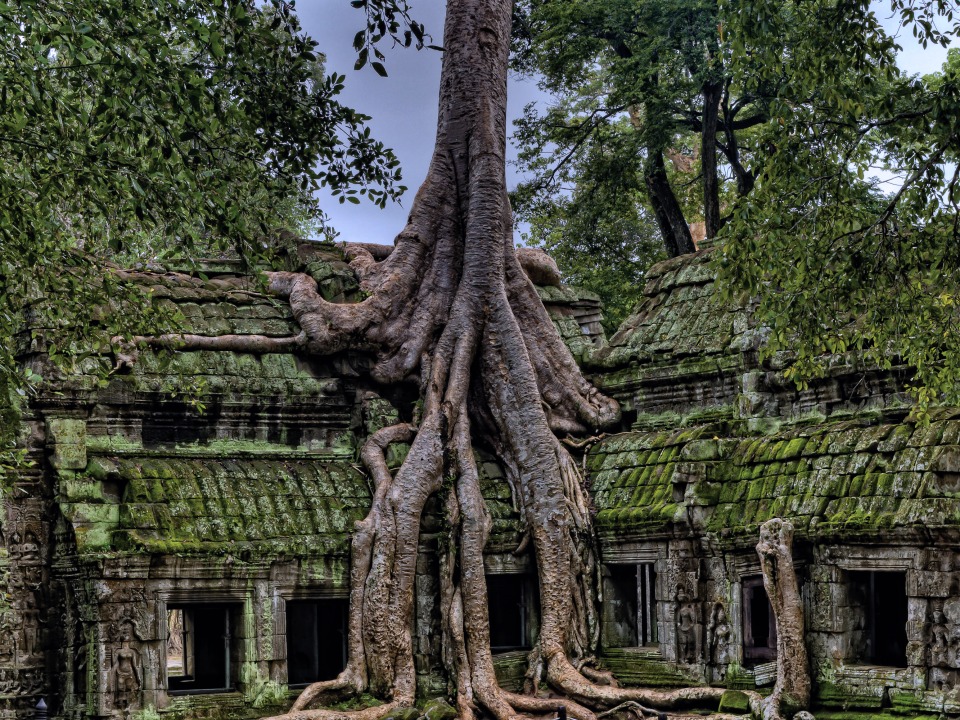
You cannot say you have been to Siem Reap without visiting Angkor Wat. Built in the 12th century, this vast temple complex is a great legacy of the Khmer Empire and is considered the largest religious monument in the world. Its enormous scale of about 162 hectares, its architecture blending Hinduism and Buddhism, and its intricate bas-reliefs combine to create a mysterious atmosphere. The many other Angkor ruins scattered nearby are also not to be missed, such as Bayon Temple, carved with 216 faces, and Ta Prohm, famous as a setting in the film “Tomb Raider.” If you want to learn more about the culture and art of Khmer civilization, visit the Angkor National Museum, where you can see a range of relics related to the Angkor ruins in one place. Tonle Sap, Southeast Asia’s largest lake, about 15 kilometers from Siem Reap, is also a must-visit. There you can feel the beauty of Cambodia’s nature and glimpse the lives of locals who live alongside the lake.
Among activities and tours, popular choices include cooking classes that take you to Siem Reap’s traditional markets and teach you to make Cambodian dishes, and bicycle tours through the beautiful countryside around the city. Performance lovers may enjoy Phare Circus, a contemporary reinterpretation of Cambodia’s long-standing traditional circus.
Brunei
Brunei Darussalam
Intro
A sultanate on the northern coast of the island of Borneo. Once one of the mightiest empires in Southeast Asia, it had to stand up to foreign powers amid the turbulence of history. The kingdom’s story began long ago, but Brunei did not gain full status as a modern independent state until 1984. Today Brunei has a population of about 440,000 and a land area only about half the size of Gyeonggi-do, yet size alone does not explain this country. After independence, it built a solid economy on the oil industry, achieving high rates of growth. As a result, Brunei’s per capita income ranks among the highest in the world, and its citizens enjoy generous social welfare benefits. A relaxed mood generally runs through daily life among locals, too, as if to explain why the country’s full name includes Darussalam, which means ‘abode of peace’ in Malay.
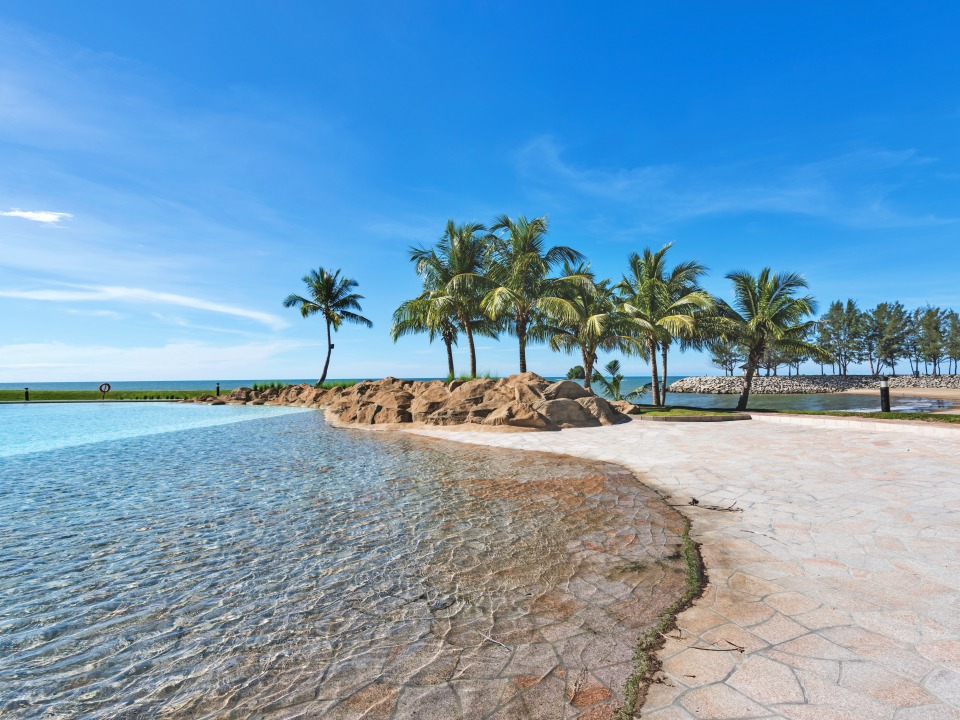
Digital nomads who visit peaceful Brunei can enjoy an engaging workation in a stable environment. The country’s startup community is only just beginning to stretch its wings, but the necessary infrastructure is already more than adequate. In the capital, Bandar Seri Begawan, coworking spaces and cafés for digital nomads are easy to find, and interest in workation travel is rising across the board. Rich culture and unspoiled nature add to the appeal of a Brunei workation. You can spend a weekend in a luxury hotel once frequented by the sultan, then seek out a traditional water village in the tropical primeval forest. Or you can wander through a giant shopping mall and a bustling night market, and ten or so minutes later sink into a leisurely rest on a beach at sunset. For nomads who want to savor a wide range of experiences in a short time, there may be no destination quite like Brunei.
Work & Living
Brunei’s coworking spaces are concentrated in Gadong, the commercial district of Bandar Seri Begawan. Hotels, shopping malls, restaurants and other amenities cluster in this area, and international business is active here, which makes it convenient for getting work done. Most coworking spaces run sophisticated daily scheduling and reservation systems, so even if you suddenly need a meeting room or a place to work, it is easy to find one. Brands such as Ikigai Lounge and Regus offer coworking services, and a single hot desk costs an average of about KRW 250,000 per month. North of Kiulap, where hotels and lodging are plentiful, lies a residential area. The average monthly rent for a one-bedroom apartment is about KRW 900,000.
Kiarong, next to Kiulap, is home to a number of trendy cafés and restaurants. At local favorites like PUC Coffee, we recommend trying the specialty coffee and the house-baked pies. If you want to shop in Brunei, head to the country’s flagship malls, The Mall or Yayasan Shopping Complex. Keep in mind, though, that Brunei imports all of its manufactured goods, so prices are not cheap. Locals do their bargain shopping every night at the night market held on the vacant lot next to Yayasan Shopping Complex. With streets packed with street food and traditional crafts, it is also a great place to feel the local atmosphere firsthand.
For short-term workation travelers, staying at a hotel is also a sensible choice. The Rizqun International Hotel, which is connected to The Mall and sometimes hosts royal events, exudes a kingdom-like air with its lobby that opens up to the ceiling and its elaborate decor. The Empire Brunei, a seven-star hotel where everyone dreams of staying at least once, is another must-mention source of national pride. It sits on the Jerudong coast, about 20 minutes by car from Brunei International Airport. Its lavish interiors of marble and gold stand out, and it also has a private beach and a golf course.
Eat & Experience
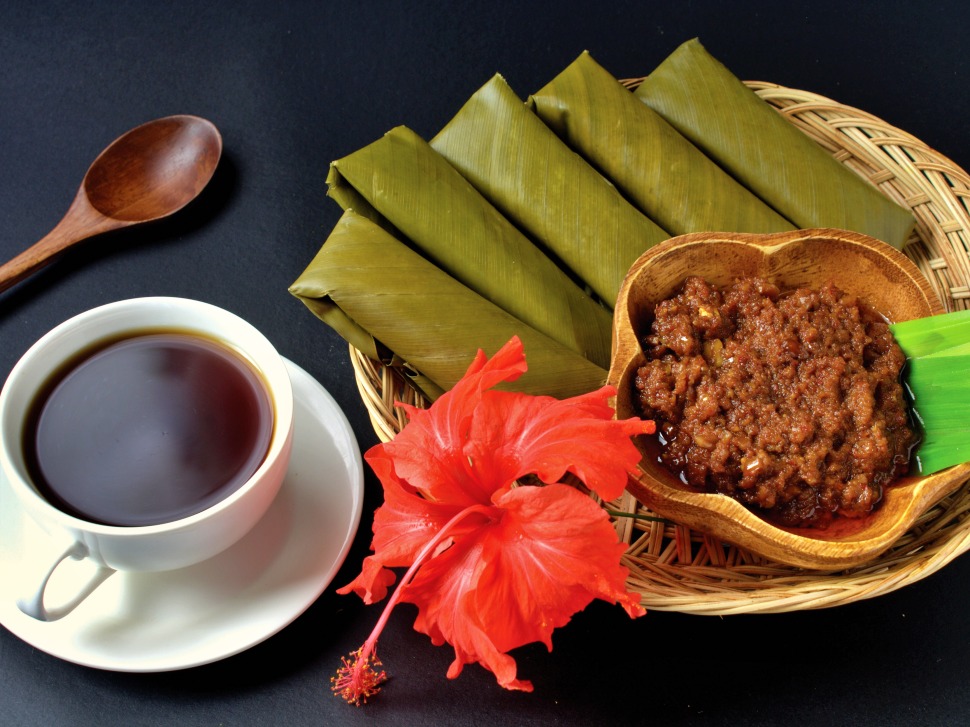
Brunei is an Islamic country, so pork is not eaten. Instead, people favor beef, chicken and seafood, and the country boasts a varied food culture shaped by the influence not only of Malaysia and the rest of Southeast Asia but also of India, China and other countries. Among these dishes, nasi katok, made of warm rice, fried chicken and sambal sauce, is the single-plate meal Bruneians love most. It is easy to find at street stalls and markets. If nasi katok is ‘Brunei-style fast food,’ then ambuyat is called ‘Brunei’s national dish.’ It is made by kneading starch extracted from the sago palm tree that grows in Brunei, and its chewy texture and translucent, jelly-like look make it unusual. Eaten with side dishes in place of rice or noodles, it offers a variety of flavors depending on the sauce you dip it in. There is no need to feel too wistful about the ban on alcohol. In its place, desserts and sweet drinks have flourished. Try pairing desserts such as kelupis, glutinous rice cakes steamed in nyirik leaves, or kuih cincin, a doughnut of fried rice flour coated in brown sugar, with assorted fruit juices and sweet tea or coffee.
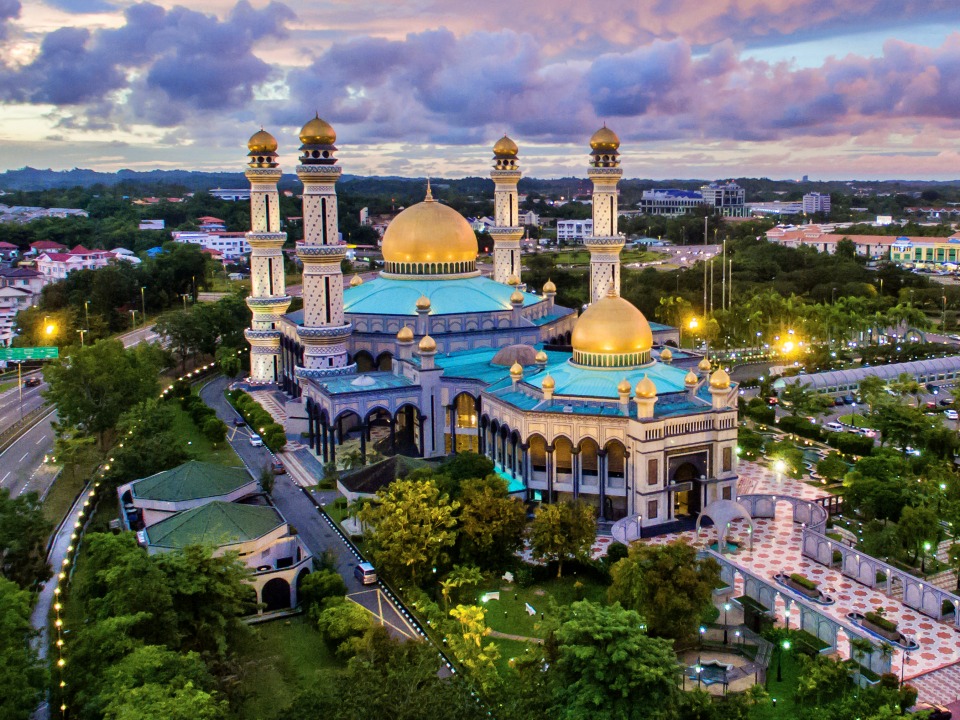
The Omar Ali Saifuddien Mosque, with its 52-meter minaret and enormous golden dome, is the landmark that represents Brunei’s capital. Its striking exterior is matched by interiors that show opulence at its peak, including walls and stairs of top-grade Italian marble and mosaics made of millions of pieces of glass. An artificial lagoon surrounds the mosque, so its reflection on the water is beautiful as well. The Jame’Asr Hassanil Bolkiah Mosque is the largest mosque in Brunei, and its immense scale, able to hold more than 5,000 people, overwhelms visitors.
To truly experience Brunei’s nature, Ulu Temburong National Park is a must. It sits in the middle of a rainforest of about 500 square kilometers that blankets the Temburong region in eastern Brunei. As part of a forest reserve, it is called both the center of Brunei’s ecotourism and a treasure trove for the study of flora and fauna. In the sections open to the public, you can enjoy canopy walks and jungle trails, and even jump into a waterfall for a swim.