A Place That Bakes More Than Bread — Gullim, a Space That Bakes the Neighborhood’s Time Along with Its Bread
Gullim, a bakery in Ssangmun-dong, Seoul, is a small neighborhood refuge where bread becomes the medium connecting people to one another. We sat down with the shop’s operator to talk about it.
A Place That Bakes More Than Bread — Gullim, a Space That Bakes the Neighborhood’s Time Along With Its Bread
Sometimes it’s not the flashy hotspots but the places that stay exactly where they are, no matter when you visit, that leave the deepest impression. Gullim, in Ssangmun-dong, is one such place — a small neighborhood refuge where bread becomes the medium that connects people to one another.
Interviewee Kwon Yongchan (Operator of Gullim)
Interview conducted & edited by Kwon Sarang, Kim Gaeun, Jeong Heeju, Hwang Chaewon
* This interview was conducted as part of a ‘Sustainable Travel Content Planning and Production’ project by students in the ESG Sustainable Marketing spring course at Duksung Women’s University, 2026.
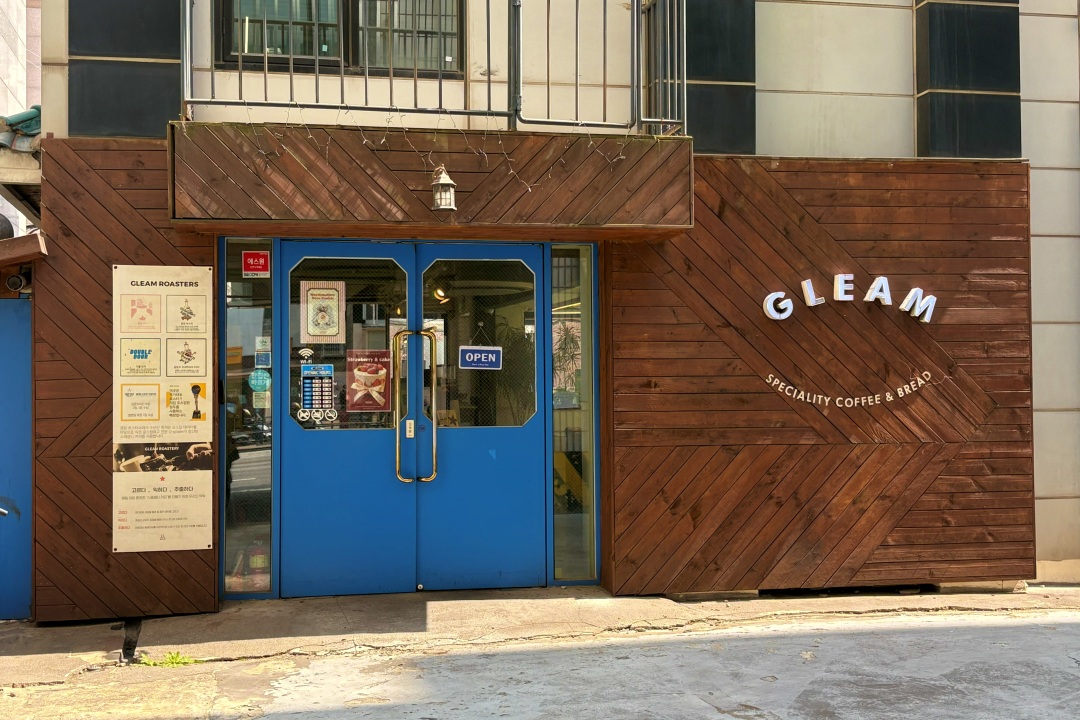
Was there a particular reason you chose to start in Ssangmun-dong, Dobong-gu, rather than a glamorous downtown area?
Of course, if I’d started downtown, I might have enjoyed the flashy attention of an ‘opening effect’ early on. But I placed more weight on sustainability than that. Ssangmun-dong is a classic bedroom community, which means it has solid, stable demand behind it. Rather than burning hot with a trend and then quickly fizzling out, I found it attractive that this could be a stable environment that seeps into residents’ daily lives. It’s also a neighborhood I know well. When I first started, this kind of specialty bakery concept wasn’t common here, so I judged there was real potential.
In Korea, bread isn’t a staple food, so the market is very trend-sensitive. Is there a special meaning behind continuing this bakery business in this particular area anyway?
That’s right — bread is a very trend-driven item. But I hoped this place wouldn’t just be somewhere people buy bread and leave. Bread is only the medium; the real purpose is to provide a space where customers can mingle with one another. A scene where people sit facing each other with bread between them, talking. Because I believed in the value of that kind of communication, I also considered the size of the space carefully when choosing it.
Among countless bakery cafés, what would you say is Gullim’s biggest point of differentiation?
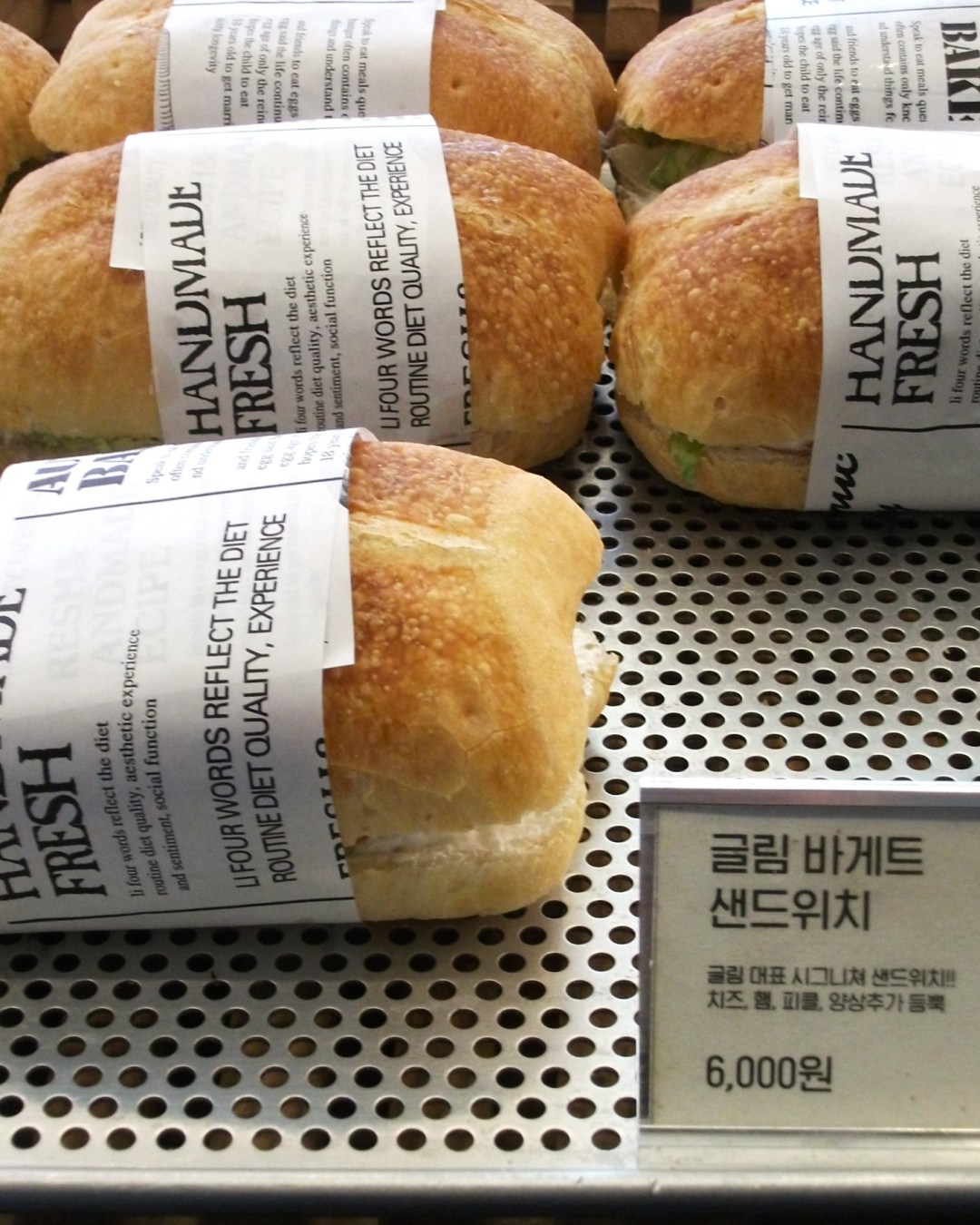
In the end, it’s ingredients and approachability. Honestly, there are menu items that are hard to sustain if you only look at operating efficiency or cost. But if there’s a menu item that neighbors keep coming back for, or one they miss after it’s discontinued, we bring it back even if it means taking a loss. Choosing bonds with neighbors over profit — that’s our way of doing things.
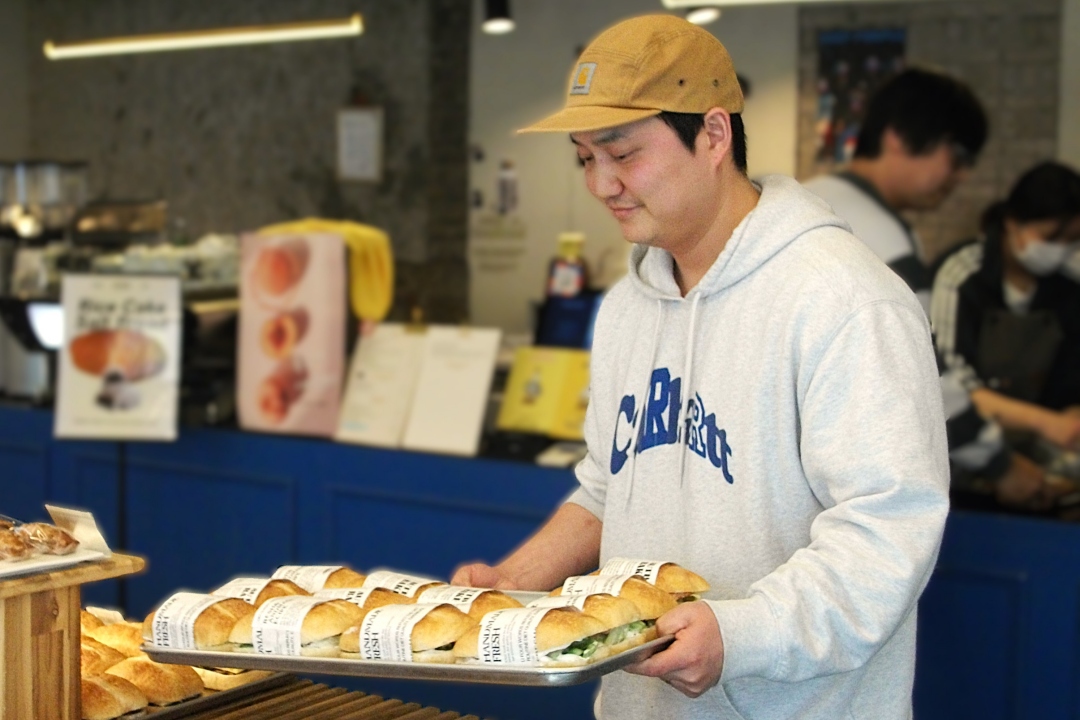
What value do you consider most important in the baking process?
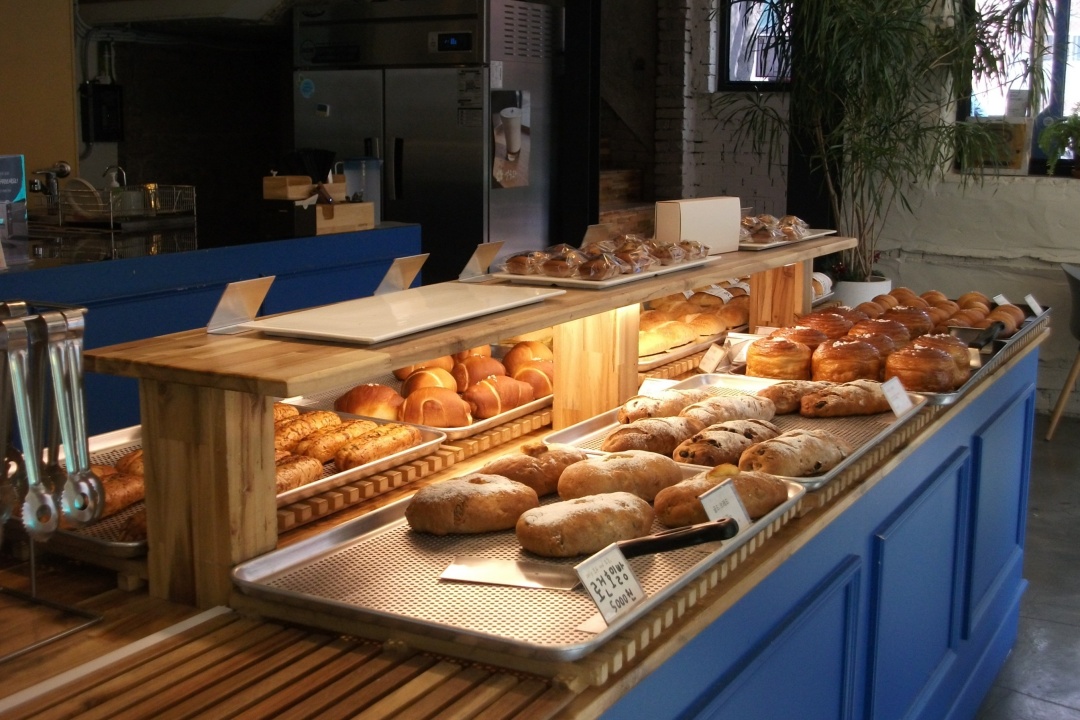
I’d put time first. Here, time means the moment the bread comes out — in other words, a promise to the customer. A customer who comes in the morning to buy a sandwich should never leave empty-handed. Keeping the trust that “if you come at this time, you can always get this bread” — I believe that’s the key to a shop’s sustainability.
I noticed the ‘Carbon Neutral Restaurant’ certification at the counter. How did that come about?
The local government reached out first, and we received it after a review process. It wasn’t something I initiated myself, but seeing mothers who visit the bakery earning points for it gives me a positive kind of encouragement. I believe small practices like this create a virtuous cycle in the neighborhood.
Is your insistence on good ingredients and natural yeast rooted in the same spirit?
I wanted to show our sincerity, something clearly different from franchises. When I hear feedback from customers saying, “My stomach feels upset unless I eat bread from here,” I feel proud that my choice wasn’t wrong.
The layout of the space feels very thoughtful too — especially how each floor has its own distinct character.
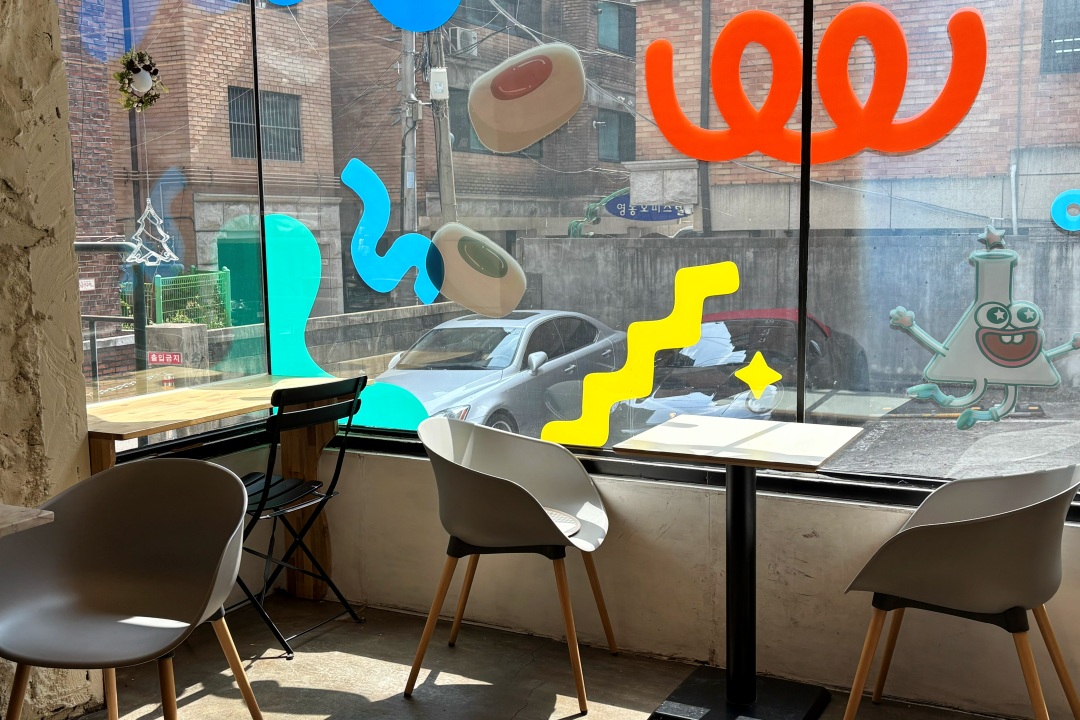
I wanted customers to be able to fully enjoy their own time. If the flow of customers overlaps too much with the owner or staff working in the shop, customers might feel uneasy, worrying that their conversation could be overheard. So we designed it so people could relax more comfortably on the second floor than the first. I wanted to offer the ‘freedom to talk.’
What feeling do you hope people take away when they visit Gullim?
When I first started 7 to 8 years ago, I wanted it to be an unfamiliar, distinctive, so-called ‘standout’ space. But my thinking has changed over time. Now, I just want it to be remembered as a familiar, comfortable place — somewhere people feel a sense of relief, thinking “ah, this is nice,” the moment they walk in, a neighborhood refuge where they can stay without any pressure, any time. Nothing would make me happier than that.
The atmosphere at Gullim probably differs a bit between weekdays and weekends. Who mainly visits, and for what reasons?
On weekdays, there are many regulars who come consistently. Women in their 40s and 50s often chat comfortably on the second floor without worrying about the staff, and in the afternoons, students come to study. On weekends, on the other hand, there are more new customers who’ve come specifically from far away, as well as people stopping by after church services nearby.
Do people who come from far away usually visit specifically for Gullim, or do they also explore the surrounding alleys?
Weekend visitors definitely come largely because of our spacious, pretty space. But longtime residents of this neighborhood love to say to friends, “There’s a place like this in our neighborhood,” and combine it with other nearby spots to enjoy as a kind of course.
What do you think is the unique charm of the Ssangmun-dong alleys?
As I mentioned, this is a classic bedroom community. It’s not a place like the glamorous Seongsu-dong, where people arrive ready to open their wallets — it’s an everyday place steeped in the scent of daily life. Lately, more young business owners have been trying to graft new culture onto this familiar neighborhood. I think the ripple effect that happens when these new attempts meet ordinary daily life is this neighborhood’s unique charm.
What do you think is needed for Ssangni-dan-gil to become an even more attractive area going forward?
In the end, it’s ‘settling in.’ It’s most important for merchants like us to stay in one place for a long time. Rather than a single, one-time impact, the key is for a shop to still be right there when someone thinks, “That place was good last time,” and comes back. If local government could offer support during real difficulties like rent, it would be a great boost to the sustainability of small business owners like us.
Is there a recommended course for spending time around Gullim and exploring the area?
I’d recommend buying a sandwich at Gullim and heading to nearby Choansan or Dobongsan mountains. The Uicheon stream walking path is also wonderful — the natural scenery is truly stunning. Personally, I love the curious atmosphere where Ui-dong’s distinctive skyline, café street, and upscale residential area all blend together.
Could you share a hidden gem restaurant in Dobong-gu?
Well, Dongjeok Bulgogi or Oseong Butcher’s Restaurant are both good, and if you want a bit of atmosphere at night, I’d recommend the distinctive bar Jangdan. There are actually quite a few really good spots tucked away throughout Dobong-gu.
Lastly, how do you hope local university students will come to see Gullim and this neighborhood?
I hope they’ll turn their heads a little, rather than only walking the same familiar paths. There are so many wonderful businesses run with real sincerity all throughout this neighborhood. I hope students will discover a new side of the neighborhood through places like ours, and fully enjoy that experience.