
A Place for Paper Lovers, Smultronställe — If You Love Paper and Keeping Records
This February, Smultronställe opened in a quiet Seochon alley in Seoul, a stationery shop centered on Somemood Design’s products alongside a curated selection of other brands. An interview with founder Kim Seol.
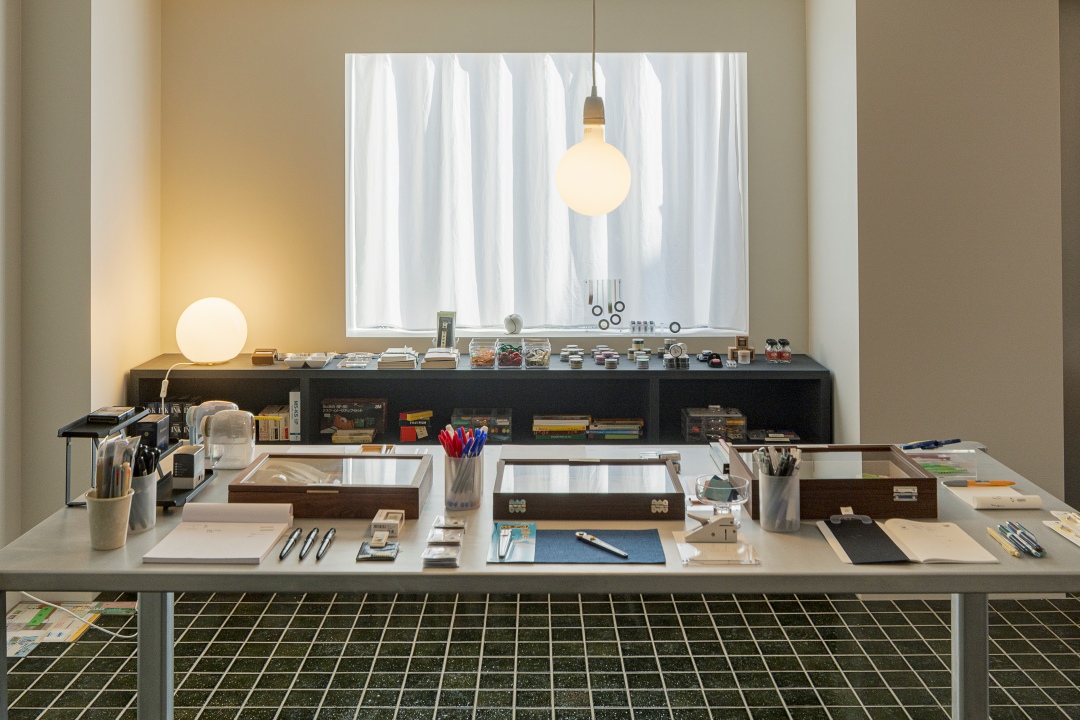
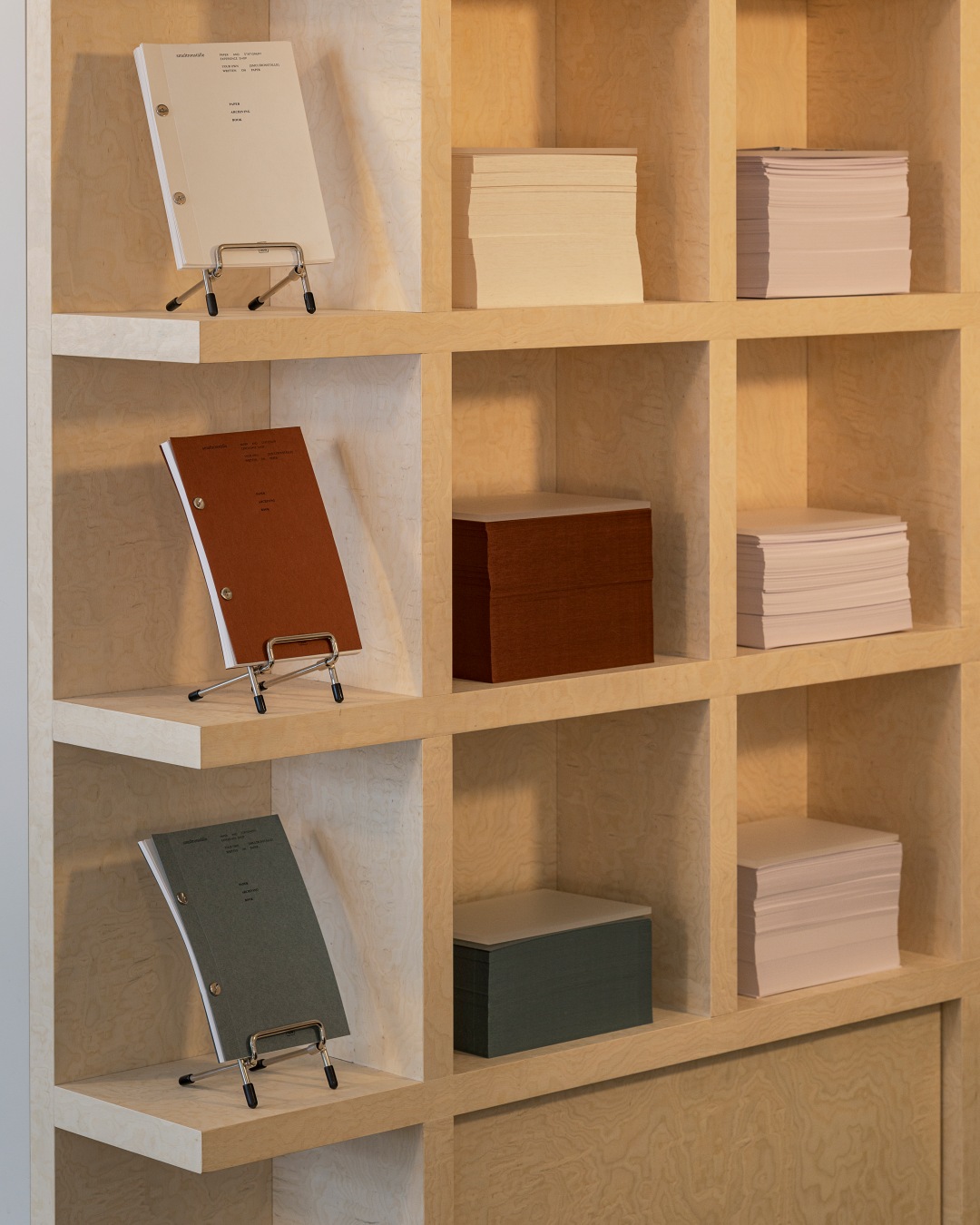
Tucked away at Seochon in Seoul, Smultronställe feels less like a simple stationery shop and more like a space to experience paper itself. A wall filled with paper, music playing from LPs, travel scrapbooks, and collections of vintage pencil boxes and erasers all reflect the taste of the person who created this space. We spoke with Kim Seol, who has run the stationery brand Somemood Design for eight years and recently opened this offline shop.
Interviewee Kim Seol (Founder, Smultronställe)
Interviewer Ryu Sunwoo

Could you briefly introduce Smultronställe?
It’s a showroom space where you can see Somemood Design’s products in person. It’s also a place where I want to offer people an experience of paper itself.
What’s the meaning behind the name?
It’s a Swedish word meaning ‘wild strawberry field.’ It also carries a more romantic meaning — something like ‘a happy hideaway that only you know about.’ I named it hoping that people could create their own wild strawberry field within this space.
When did your interest in stationery begin?
I think it started when I was really young. Since kindergarten, I used to stop by the stationery store and buy things, running up a tab under my mom’s name. (laughs) Throughout my school years, keeping a diary was all the rage. I think it was my senior year of high school — a friend saw me decorating my diary and said, “You should work in this field someday.” That was the first time I realized I was someone who truly loved stationery.
What made you decide to start your own stationery brand?
I majored in visual design in college. After graduating, I received offers from several companies, including editorial design firms, but I wanted to work in the design stationery industry more. I wanted to learn more about the field, but there wasn’t much information available — barely any books, and very little online. So I reached out directly to the founders of a few brands by email. I wrote something like, “I’m a student studying design stationery, and I have a lot of questions,” and sent them a list of questions. Looking back, it was pure youthful boldness. (laughs) I sent emails to about seven places, and a few replied. Some I actually got to meet in person, and I still keep in touch with a few of those founders today. After that, I worked at a design stationery company for about six years before founding Somemood Design.
What was it like when you first started the brand?
These days, so many brands launch with a polished, fully formed identity — sometimes with a marketer involved from the start. For me, it began with 80,000 won in my pocket, making memo pads and selling them at a flea market in Yeonnam-dong. I joined online diary-decorating cafés to post about my work, and built things up bit by bit through blog posts and Instagram photos. Whenever I hold workshops, the first thing I tell participants is not to think too seriously about starting out. You don’t need to be perfectly prepared. I got to where I am now from a very small beginning.
You finally opened an offline space in your eighth year as a brand — what led to that decision?
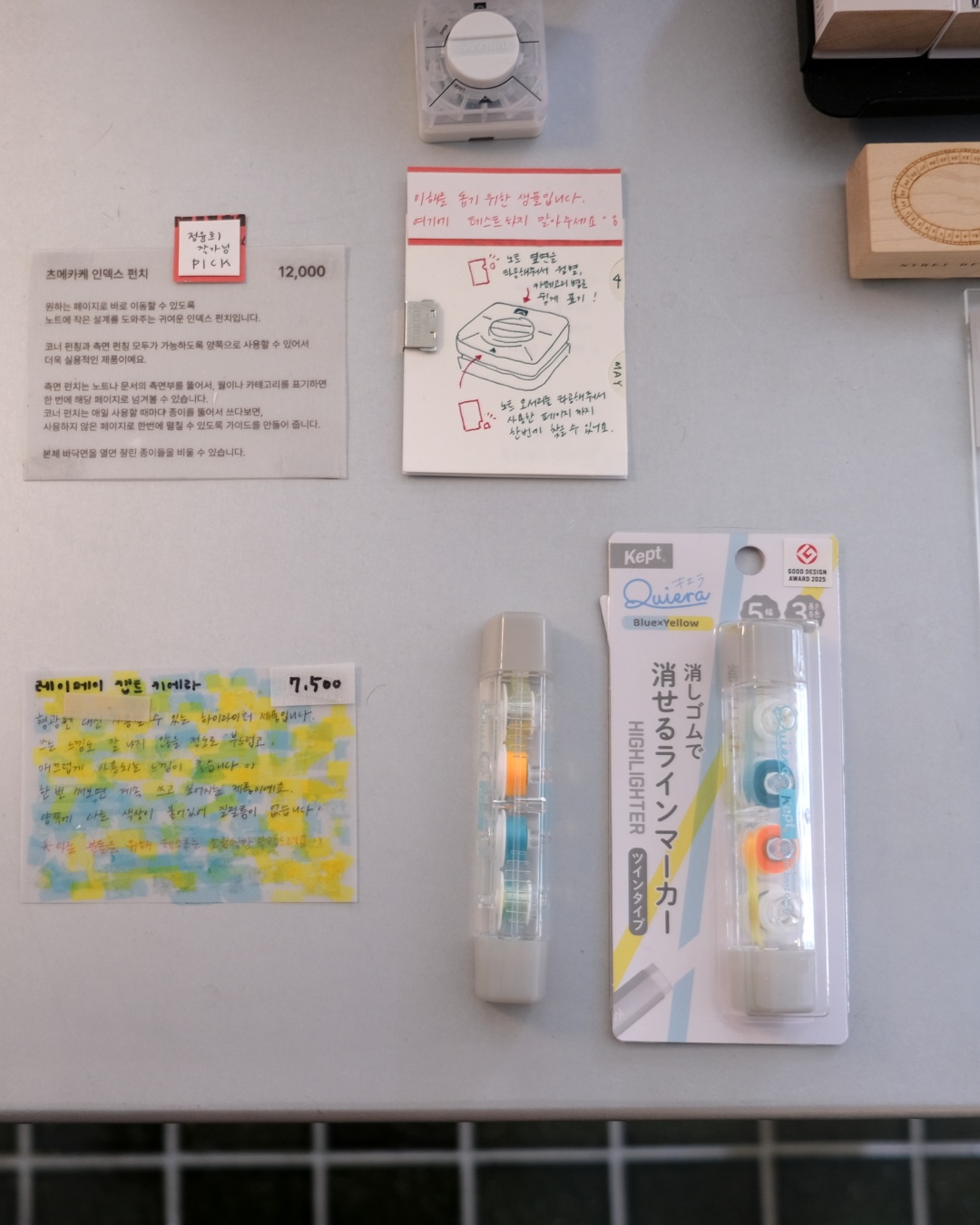
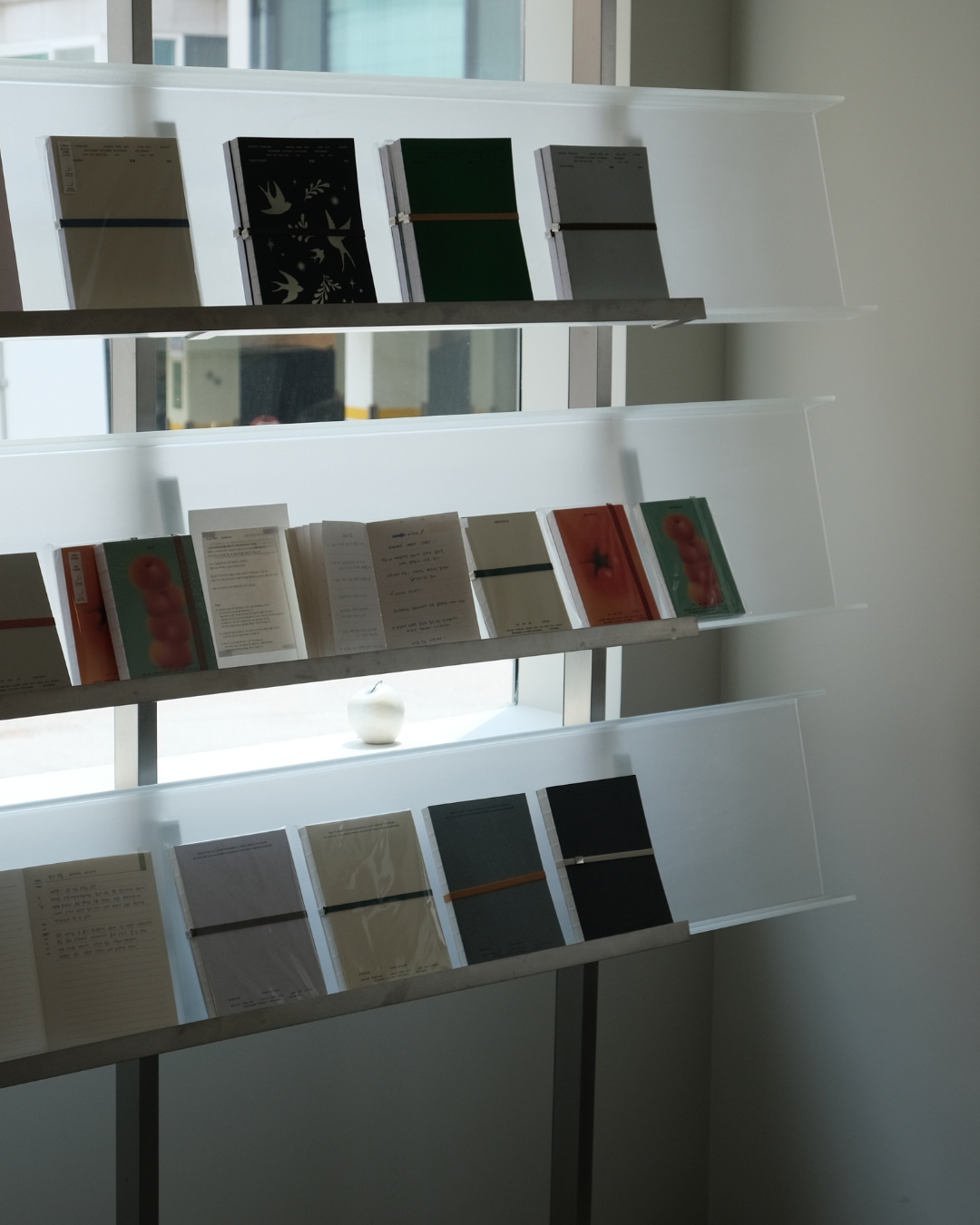
I had been longing for a physical space. We’re not a very ‘talkative’ brand, you could say. (laughs) We barely post on Instagram once a month. Since we’re not great at promoting ourselves, I thought it would be nice to be able to show things directly. At first, I considered making it a brand showroom, but I realized that to stand out from other general goods shops, I needed to showcase the sensibility that matters most to Somemood Design. Since we place so much importance on paper and material, I thought it would be great to create a place where people could experience paper itself. We also introduce Japanese and other international stationery brands so visitors can see a variety of brands in one place. I hope Smultronställe can be an enjoyable space both for people who deeply love stationery and for those encountering it for the first time.
When did you become so deeply drawn to paper?
It wasn’t something I dove into deeply from the start. One day, I wrote on a notebook I’d bought in Japan, and the writing feel was completely different. Even with the same pen, the ink glides smoothly on some paper but bleeds on others. That’s when I think I became more interested in paper. I kept testing different types of plain paper with varying textures and properties. I tried printing paper often used in high-end book interiors, and went looking for paper that worked well with fountain pens. I even visited a domestic paper manufacturer’s showroom and tested around 70 different types of paper. I wanted to introduce the paper I found that way to people, and that’s what eventually led me here.
Even in an age when we can record everything digitally, why do you think people still love stationery?
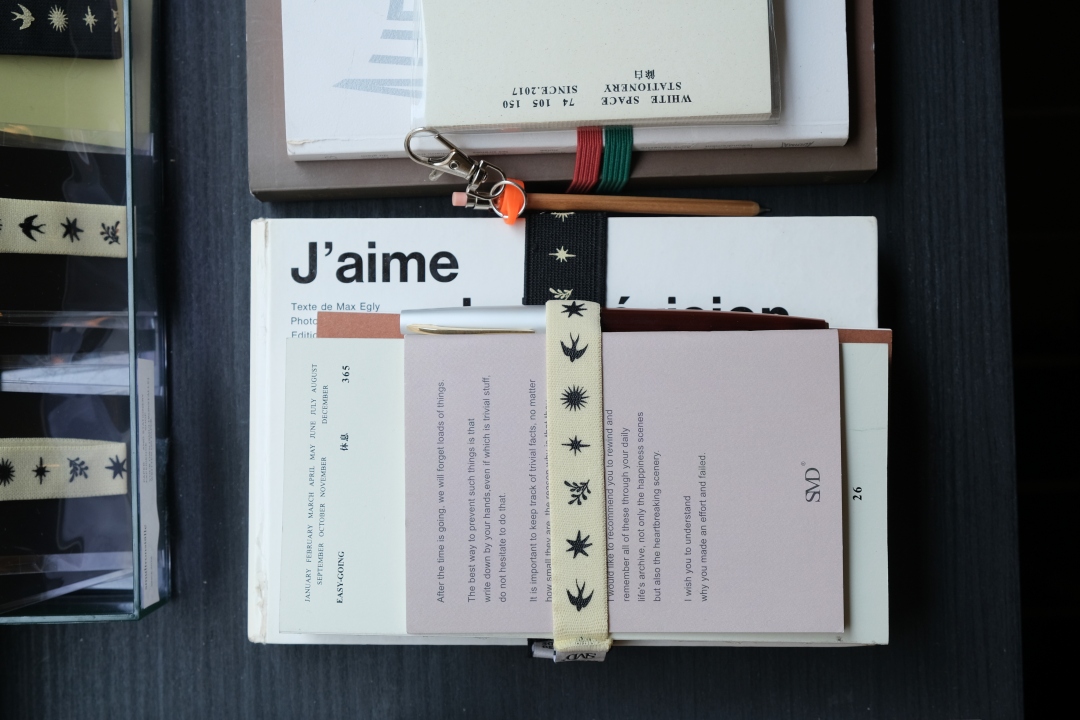
For me, writing by hand makes something truly feel like mine. Oddly enough, things I record digitally don’t stick in my memory very well — the same goes for schedules. That’s why I still write things like work logs in a paper notebook. Things I absolutely need to remember stay with me much longer when I write them by hand. For example, if I write something down in a notebook and highlight it, later on I’ll think, “Oh right, I highlighted that around this page,” and the whole moment comes back to me. I think it’s because writing by hand engages multiple senses at once. Of course, digital tools are much more convenient for recording things alongside photos or organizing quickly. But in the end, I think what stays with you longest is what you’ve written by hand.
On the other hand, since most things have become digitized, I think the act of writing by hand itself now feels new and even trendy. I think that’s part of why more people have been showing interest in stationery lately.
It seems like you’ve enjoyed collecting small things since childhood. Where do you think that taste comes from?
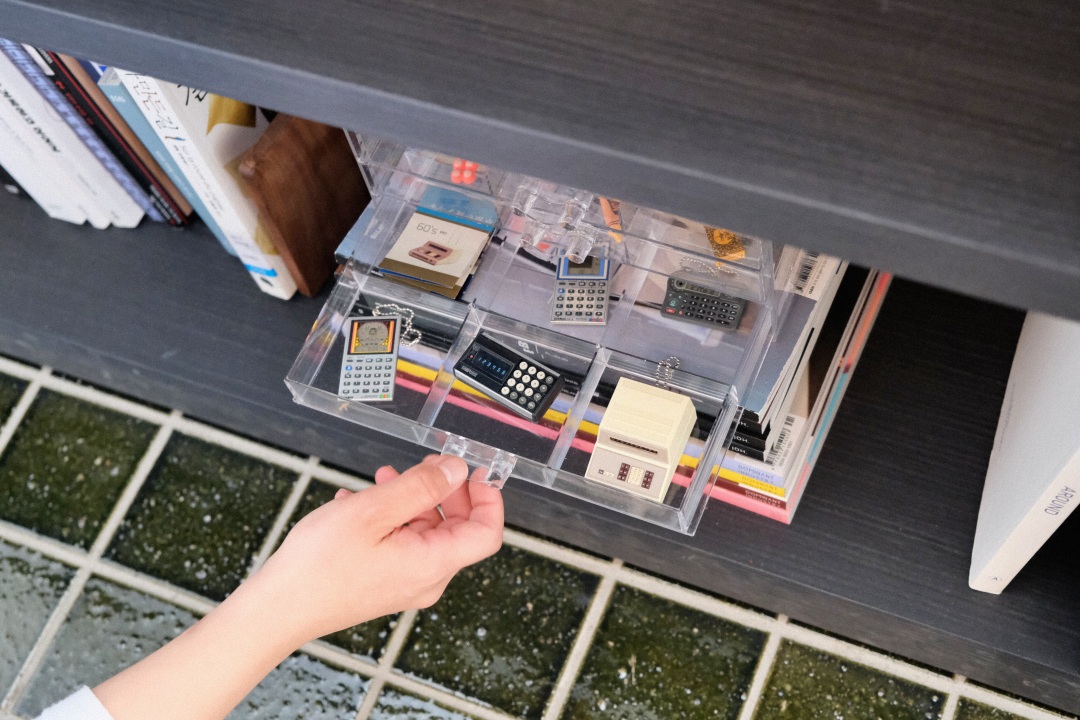
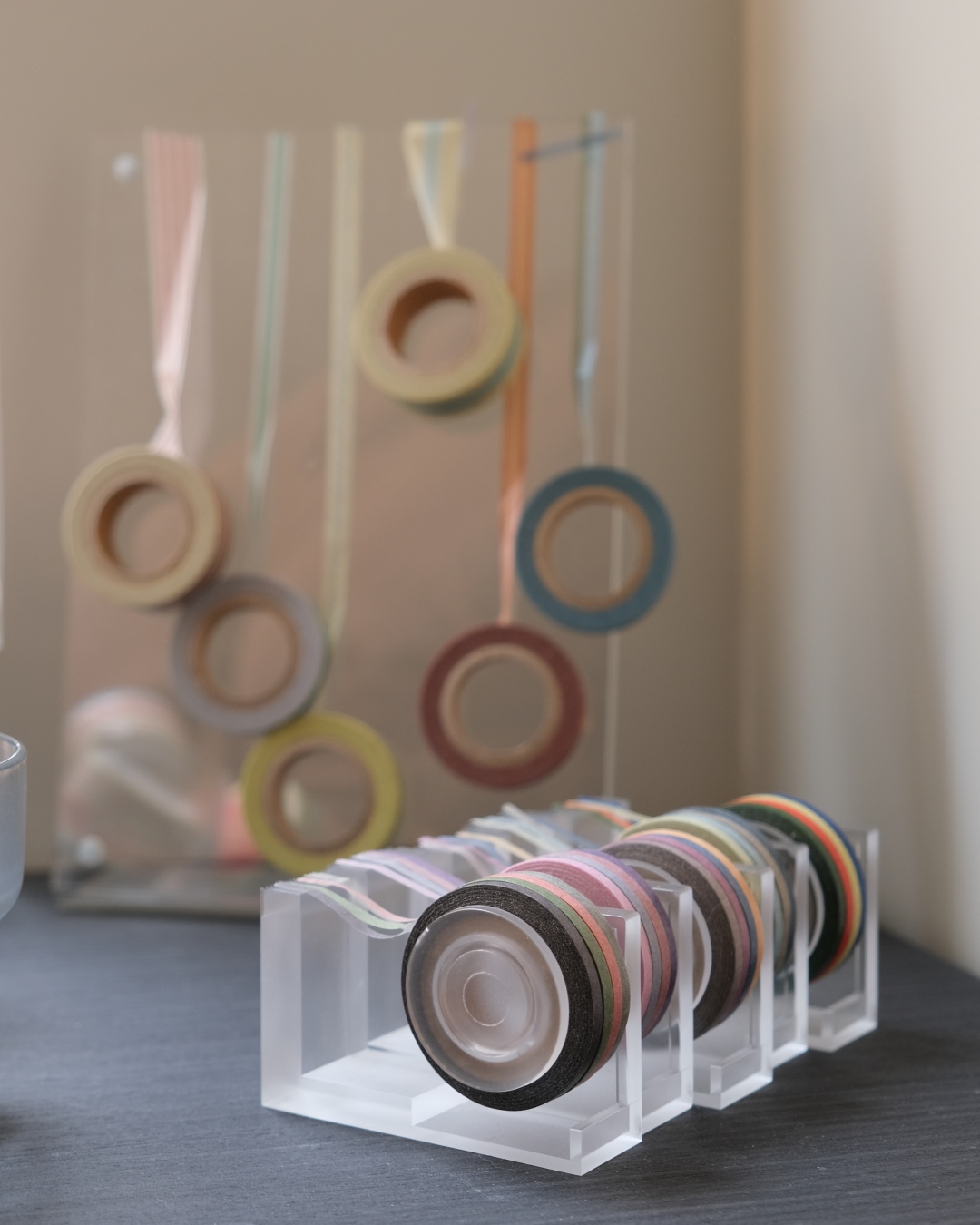
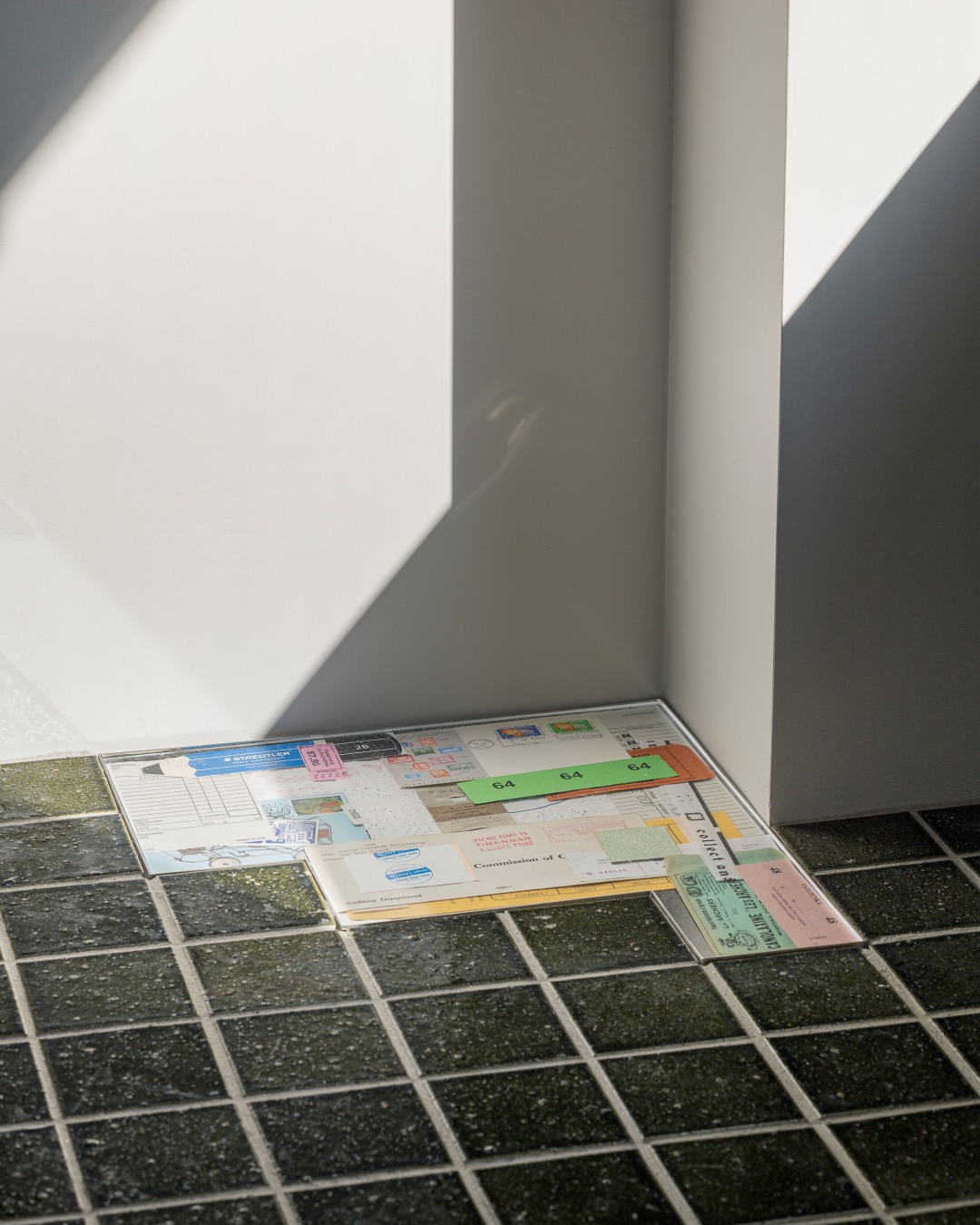
Maybe because there are so many things you can hold in your hand without spending much money? I love small objects with intricate, detailed designs. Even when I travel, I collect tea bag tags and stamps, and I bring back sugar packets or matchboxes from cafés and hotels to scrapbook them all. My dad loved collecting stamps too, so when I was little, he had his own stamp album and I had mine. I think that’s when I started loving the collecting of small, tangible things.
Is there a memorable project you’d like to share?
About four years ago, I held a small exhibition in Yeonhui-dong featuring matchboxes my dad and I had collected together since I was a child. It was fascinating to see how different generations reacted. Younger kids were often seeing matchboxes for the very first time. People my age remembered them as something from childhood. And older visitors received them as nostalgic memories from their own youth. There was even a matchbox from the 1960s with a three-digit phone number on it. (laughs) It was especially fun watching grandparents explain to their grandchildren how these used to be used. They’d ask things like, “Did you collect all of this yourself?” and had so many questions. It was amazing to see how such a small matchbox could spark conversation and connect memories.
Do you enjoy traveling in general?
I basically love getting out and about. Up until two or three years ago, I made sure to have an ‘input month’ every year. Around May, before starting serious preparations for the second half of the year, I’d watch movies, visit exhibitions, travel around, and buy all sorts of things. It was a time to stock up my head with material. I found that after about a month of thoroughly seeing, hearing, and exploring, new work would naturally come out of it. These days, running this space makes it harder to find that kind of time like before, but I still genuinely love going out and experiencing things firsthand.
Why is it important to you to collect things by going out and experiencing them in person?
I think you learn a lot by experiencing a product firsthand. Seeing something online is completely different from actually holding the real product. The finishing, packaging, and material come through so much more clearly in person. When you touch something with your hands, you can tell far more clearly where a brand put its care and attention.
Is there a criterion you consider most important when curating stationery?
First of all, it has to appeal to me personally. (laughs) I tend to prefer products that show real care and thought rather than ones that are simply pretty. I try to choose items that reflect my own aesthetic sense while also having good quality. Even for people who’ve visited a lot of stationery or lifestyle shops, I want them to discover something they don’t often come across. Some brands I actually found at overseas trade shows and introduced to Korea for the first time. It’s fun to watch true stationery lovers react with, “Wait, you can find this here?” In the end, I think the joy of discovery is essential.
Do you travel often for stationery?
I go to Japan a lot. I also love Taiwan and Germany, since both have well-developed stationery cultures. Germany in particular is famous for fountain pens and writing instruments. It has a deep stationery culture, though in a different vein from Japan’s. My honeymoon actually doubled as a stationery trip — my husband and I went to Switzerland and Germany. (laughs) We did an intense stationery tour in Berlin. On the day we’d planned to visit certain shops, they all happened to be closed at the same time, so we even paid a fee to change our flight tickets just so we could go back and see everything.
Having experienced both firsthand, what differences do you notice between Korea’s stationery market and those abroad?
I think the level of Korean stationery design has risen quite a bit. In terms of sophistication, it holds its own against Japan, and sometimes I even feel it’s more stylish. But in terms of quality and cultural depth, I think we still have a way to go. Japan’s stationery culture has such a long history, and even for a single product, there’s a relentless pursuit of perfection. The range of ages that consume stationery there is also incredibly wide. I remember being struck by seeing a grandmother and her grandson browsing stationery together in Japan. Because the consumer base is so broad, manufacturers can afford to try all kinds of things. In Korea, on the other hand, stationery culture has grown quickly, but the consumer base is relatively thin. Compared to the design “hardware,” the “software” — the fine-tuning of quality and usability — is still lacking. I hope that side of things continues to improve going forward.
Is there anything you hope to achieve through Sumultronstelle going forward?
My ultimate goal is to raise people’s interest in stationery and paper. I want the appeal of this space itself, dedicated to paper, to grow alongside the recognition of the Some Mood Design brand. Like our recent collaboration with a shoe brand, I’d love to keep working with different brands in interesting ways going forward.
+Kim Seol’s Recommended Stationery Travel Spots
Berlin, Germany
- Polly Paper - Environmentally friendly stationery(@polly_paper)
- R.S.V.P. Papier(@rsvpberlin)
- LUIBAN Papeterie(@luibanberlin)
- P & T - Paper & Tea - tea shop Berlin(@paperandtea)
Tokyo, Japan
-Tools Ochanomizu(@tools_ochanomizu)
-P.F.S. PARTS CENTER(@p.f.s.partscenter)
-Paper Tree(@papertree_official)
-THINK OF THINGS(@think_of_things)
-THINGS ‘N’ THANKS(@things_and_thanks_shop)


