5 Cultural Spaces in Singapore’s Civic District
From museums housed in former government buildings to a cutting-edge performance hall at Marina Bay, here are five cultural spaces in Singapore’s Civic District, home to the city’s densest concentration of modern architectural heritage.
5 Cultural Space in Civic District — Cultural Spaces in Singapore’s Civic District
The city’s passage through time lies layered in the Civic District, where colonial heritage is densely concentrated*. From a museum in a former government building to a school brimming with Peranakan heritage and a state-of-the-art performance hall at Marina Bay, here are five cultural spaces that span Singapore’s past, present, and future.
* An administrative center developed around the spot where Sir Thomas Stamford Raffles first landed in 1819. Singapore’s modern architectural heritage is scattered throughout.
Words Ko Hyeon
Photos Oh Chungseok
A Story That Began on the Riverbank
Asian Civilisations Museum
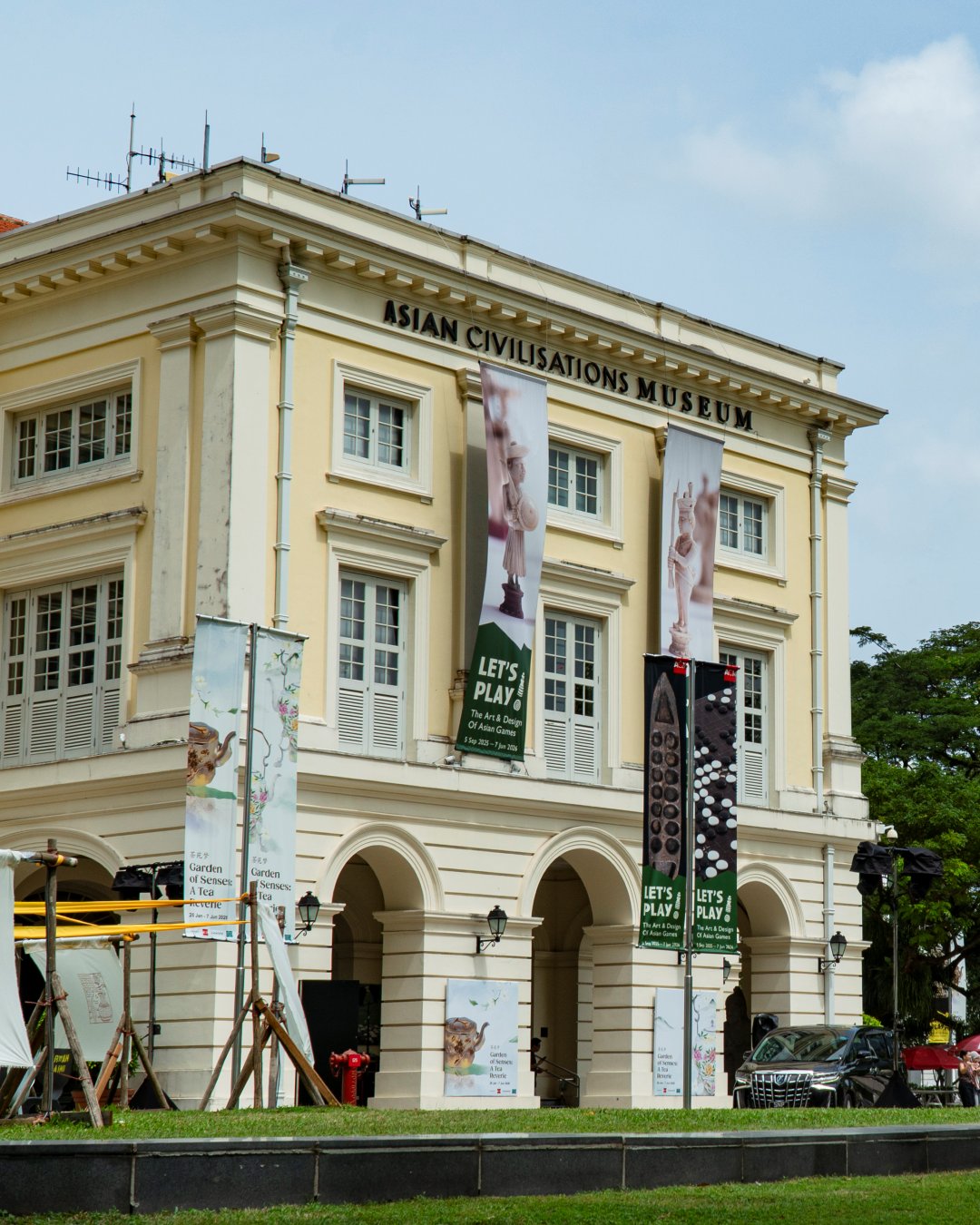
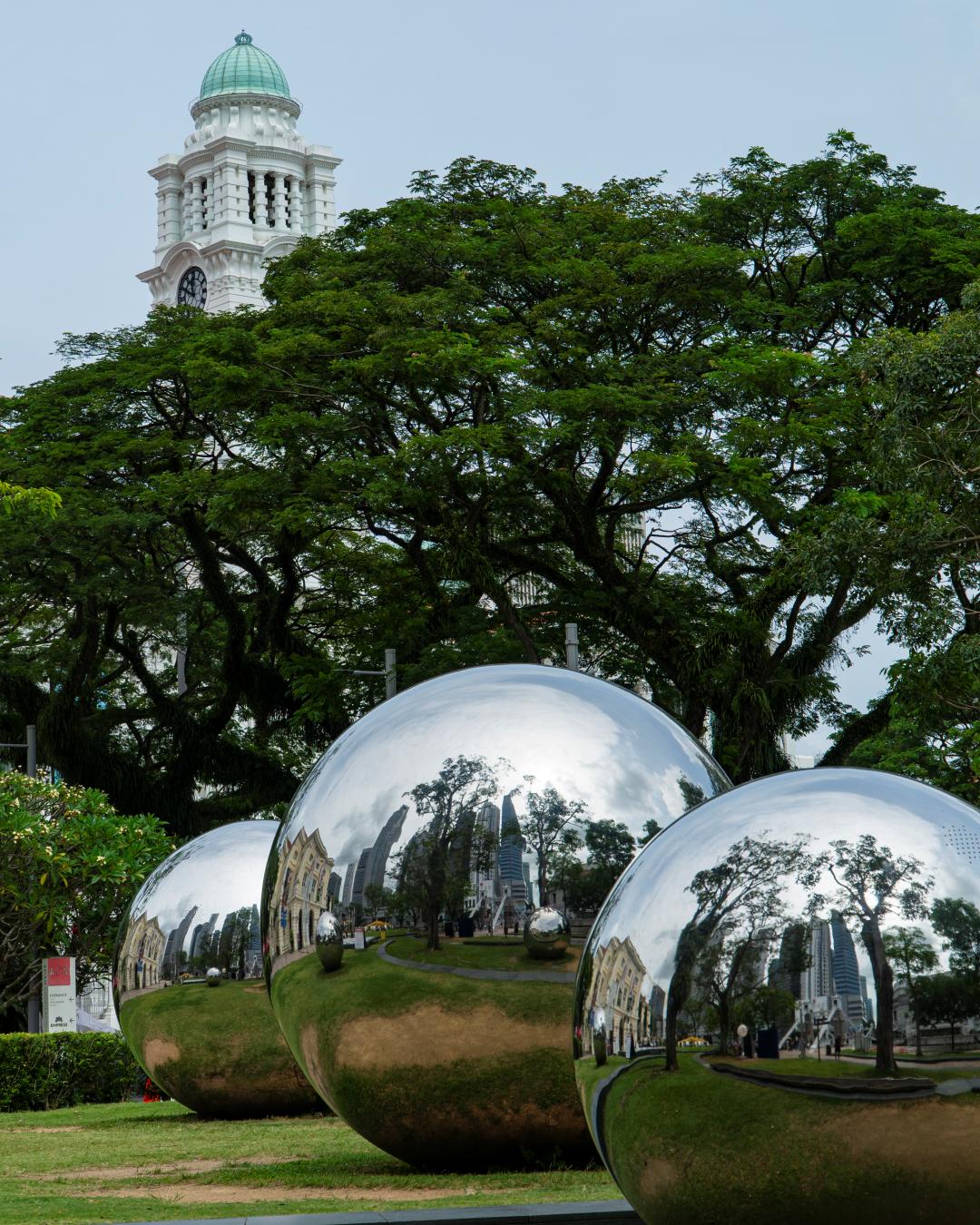
The cream-colored neoclassical building facing the Singapore River was built in the mid-19th century as a government office of the British Straits Settlements. Home to the offices of several government departments, it took on a new role in 2003 when it opened to the public as the Asian Civilisations Museum. Its main purpose is to tell, in depth, the history of the immigrants who came to Singapore from across Asia. The museum holds a large collection of art and cultural artifacts from China, Southeast Asia, India, and the Islamic world, and its visitor route is designed so that you can naturally follow how Asia’s different cultures gathered in Singapore and were reconfigured there. On the first floor of the main building, the theme “Trade and the Exchange of Ideas” is explored through crafts that tell the story of Singapore’s rise as a global trading port. The Tang Shipwreck collection in the annex gallery is another must-see. Ninth-century Tang dynasty ceramics and metalwork hint at the maritime Silk Road route that carried goods through Southeast Asian waters to the Middle East. As you tour the exhibits, the view through the museum’s windows, where the skyscrapers of the Central Business District (CBD) meet river cruise boats modeled on traditional wooden vessels, offers a compact picture of Singapore today. And don’t forget to snap a photo in front of the marble statue of Sir Thomas Stamford Raffles, revered as the founder of modern Singapore, which stands where he first landed.
Year built: 1867
The Vivid Colors of the Peranakan
Peranakan Museum
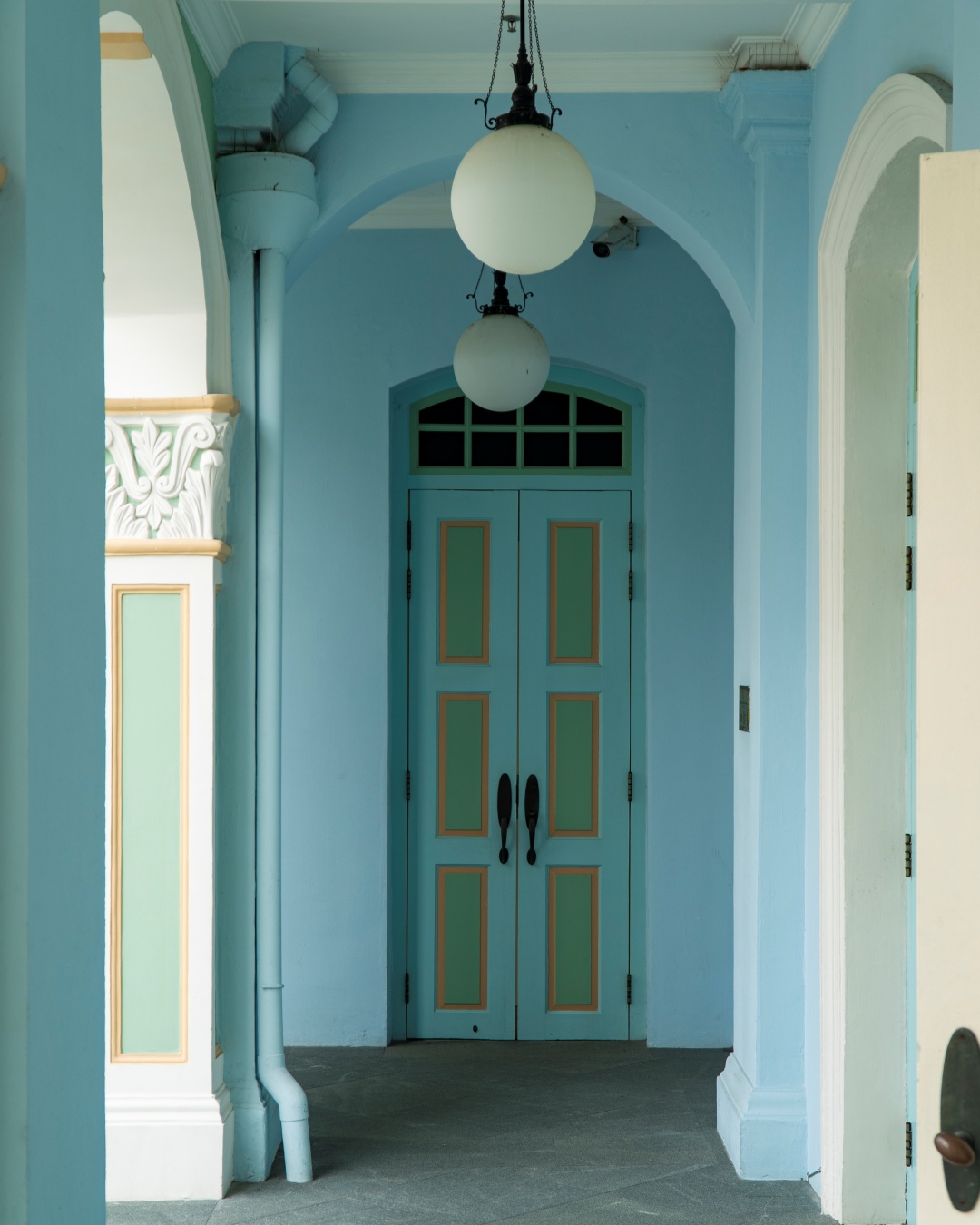
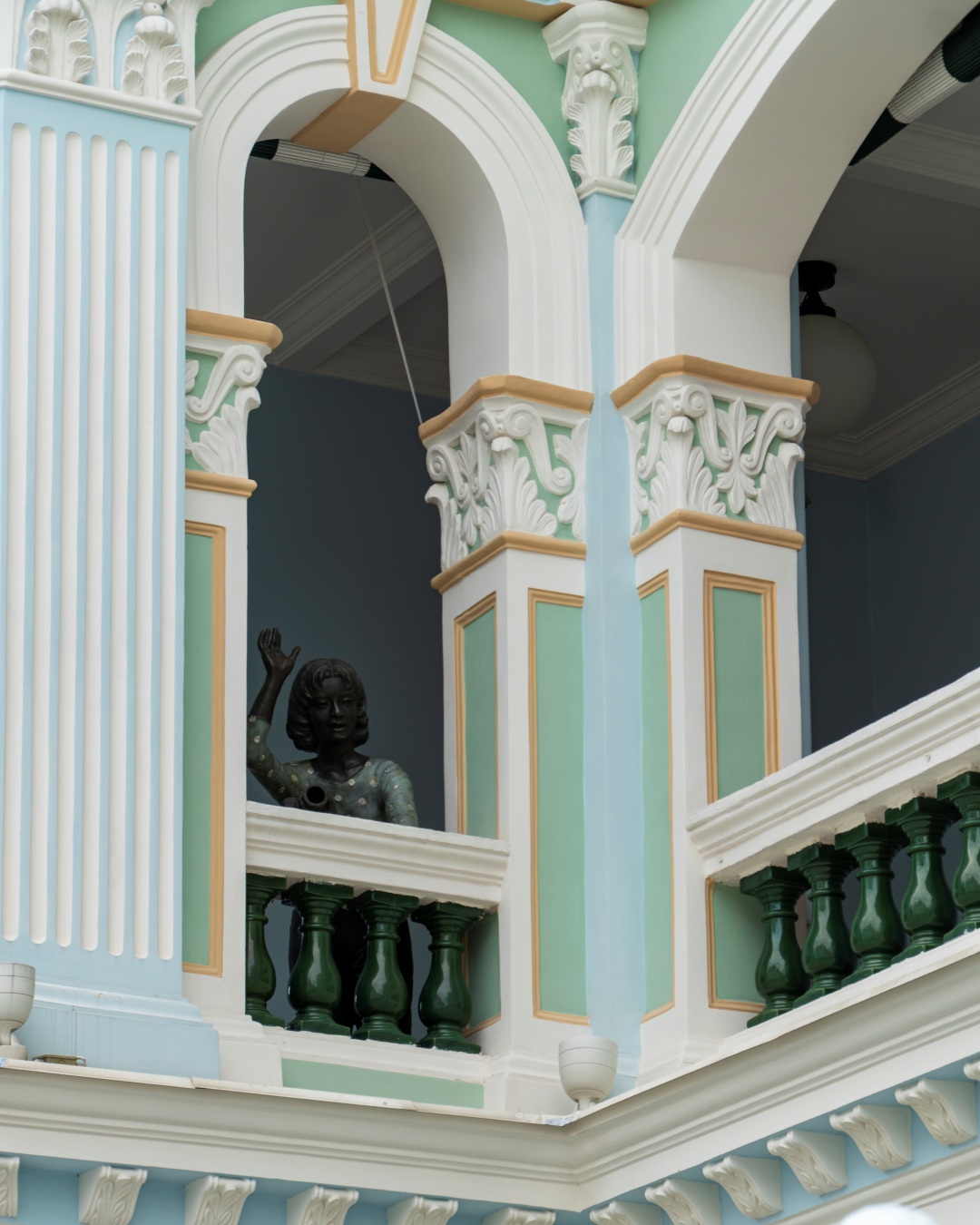
“Peranakan” is a word travelers to Singapore run into again and again. In Malay it means “locally born,” and it refers to the descendants of Chinese men who migrated to the Malay Peninsula and local women. The term also covers a whole culture of clothing, architecture, food, and more, which blends Chinese tradition, Malay ways of life, and elements of the British colonial era.
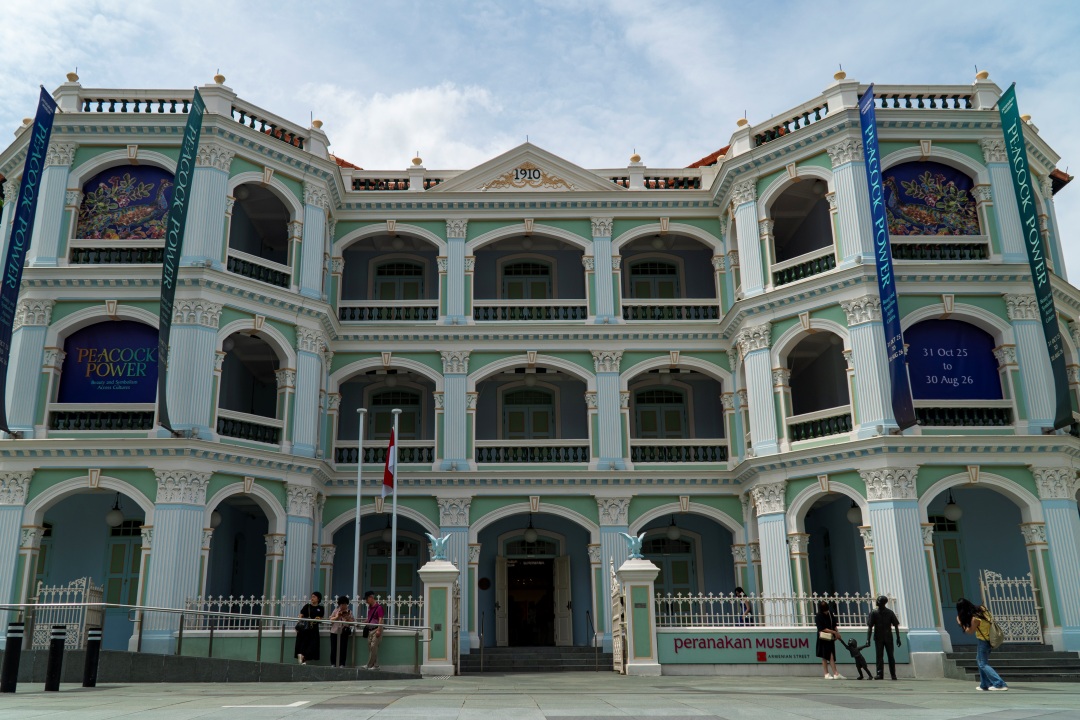
If you want a closer look at the Peranakan culture at the heart of Singapore, head to the Peranakan Museum. Housed in the former Tao Nan School, a modern educational institution founded by Singapore’s Hokkien community in the early 20th century, the museum focuses on Peranakan life and aesthetics. More than 800 items are on display, offering a broad glimpse of Peranakan identity, daily life, and culture, from delicately beaded slippers and traditional garments trimmed with ornate lace to brilliantly colored ceramics. Joining one of the English-language guided tours, held twice daily (three times on weekends), lets you hear fascinating stories about Peranakan culture. The gift shop on the first floor sells a colorful range of Peranakan designs reinterpreted for modern tastes.
Year built: 1912
A Museum’s Past and Present
National Museum of Singapore
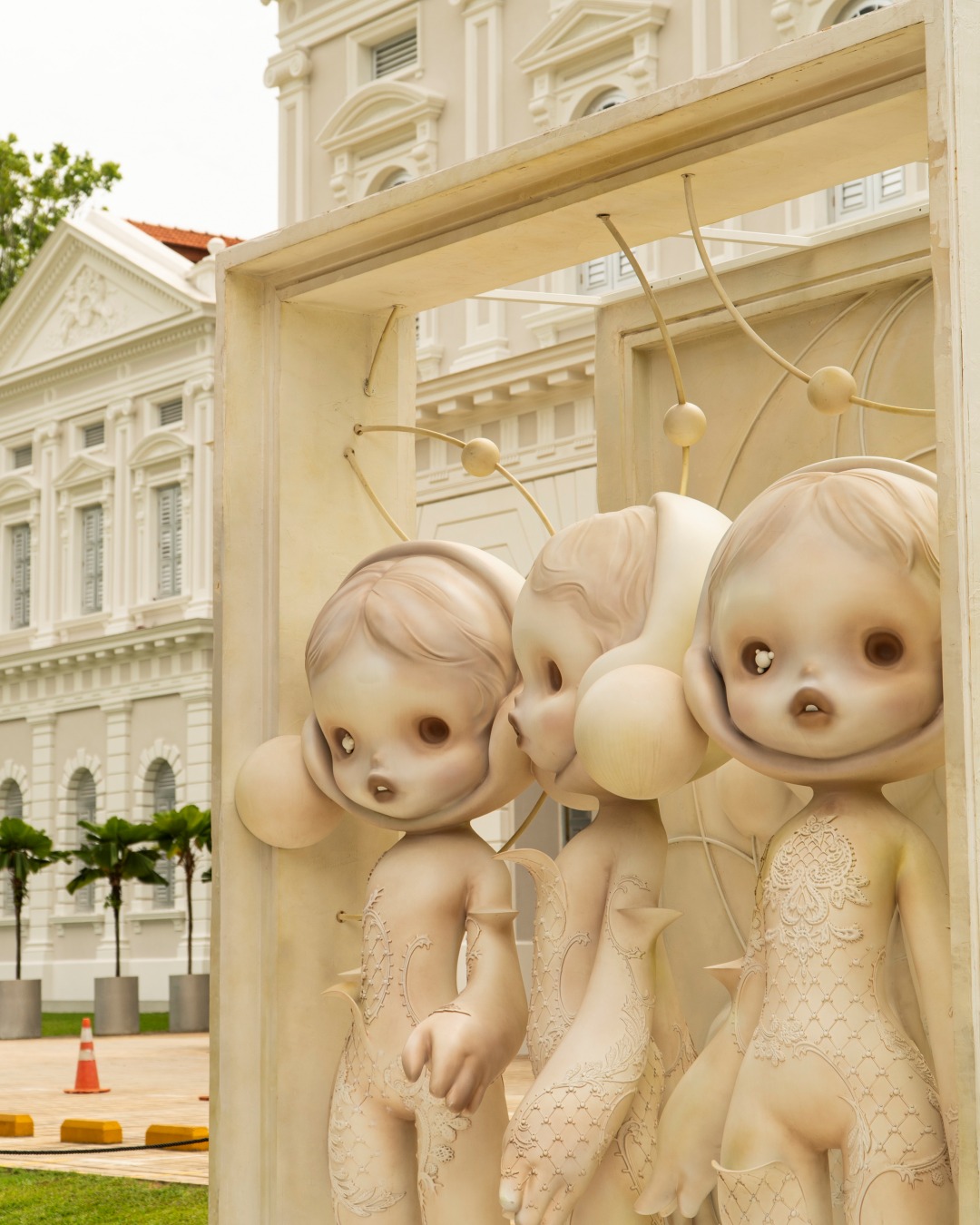
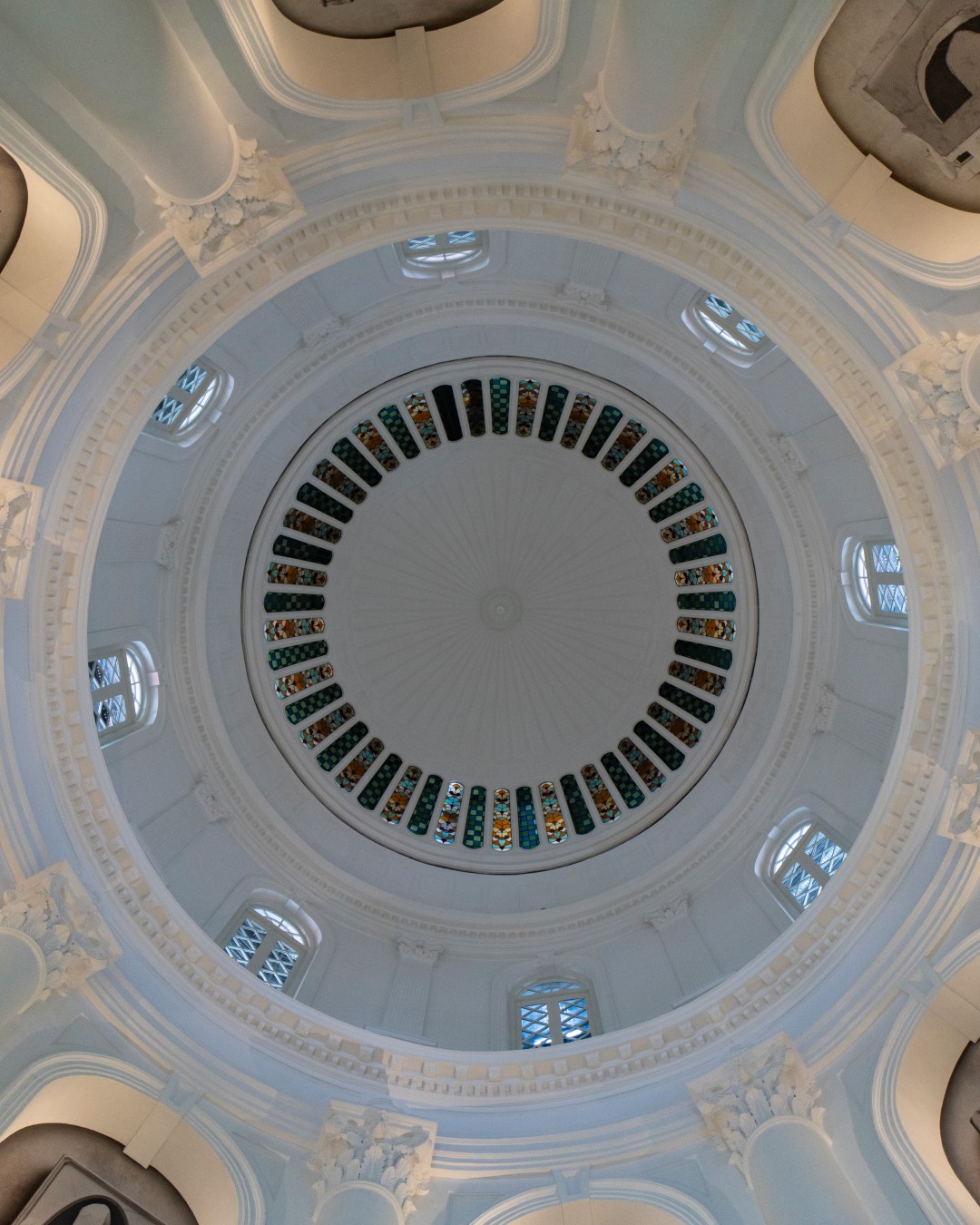
Built in the late 19th century as the Raffles Museum and Library, the National Museum of Singapore is the city’s oldest museum and one of its most important landmarks. The neoclassical building, with its imposing dome, is a sight in itself, and the exhibitions, which use cutting-edge technology to capture some 700 years of Singapore’s history, are of exceptional quality.
The permanent exhibition on the second floor is the museum’s highlight. Titled “Singapore Odyssey: A Journey Through Time,” it uses video, sound, and interactive technology to present, in immersive fashion, the key moments of political upheaval and social change Singapore has lived through, from fishing village to global financial hub. The architectural elements are also worth a look, including the Glass Passage linking the main and new wings and the Glass Rotunda, a modern reinterpretation of the main building’s round dome. Meanwhile, the “Story of the Forest,” which winds along a spiral passage from the Glass Rotunda, is an immersive exhibit that reinterprets, through digital technology, the botanical and zoological watercolors left by William Farquhar, Raffles’s aide. The 19th-century record of nature comes back to life as a vast forest of moving images, symbolically completing the museum’s identity as a bridge between past and present.
Year built: 1887
A Chapel Turned Multipurpose Cultural Space
CHIJMES
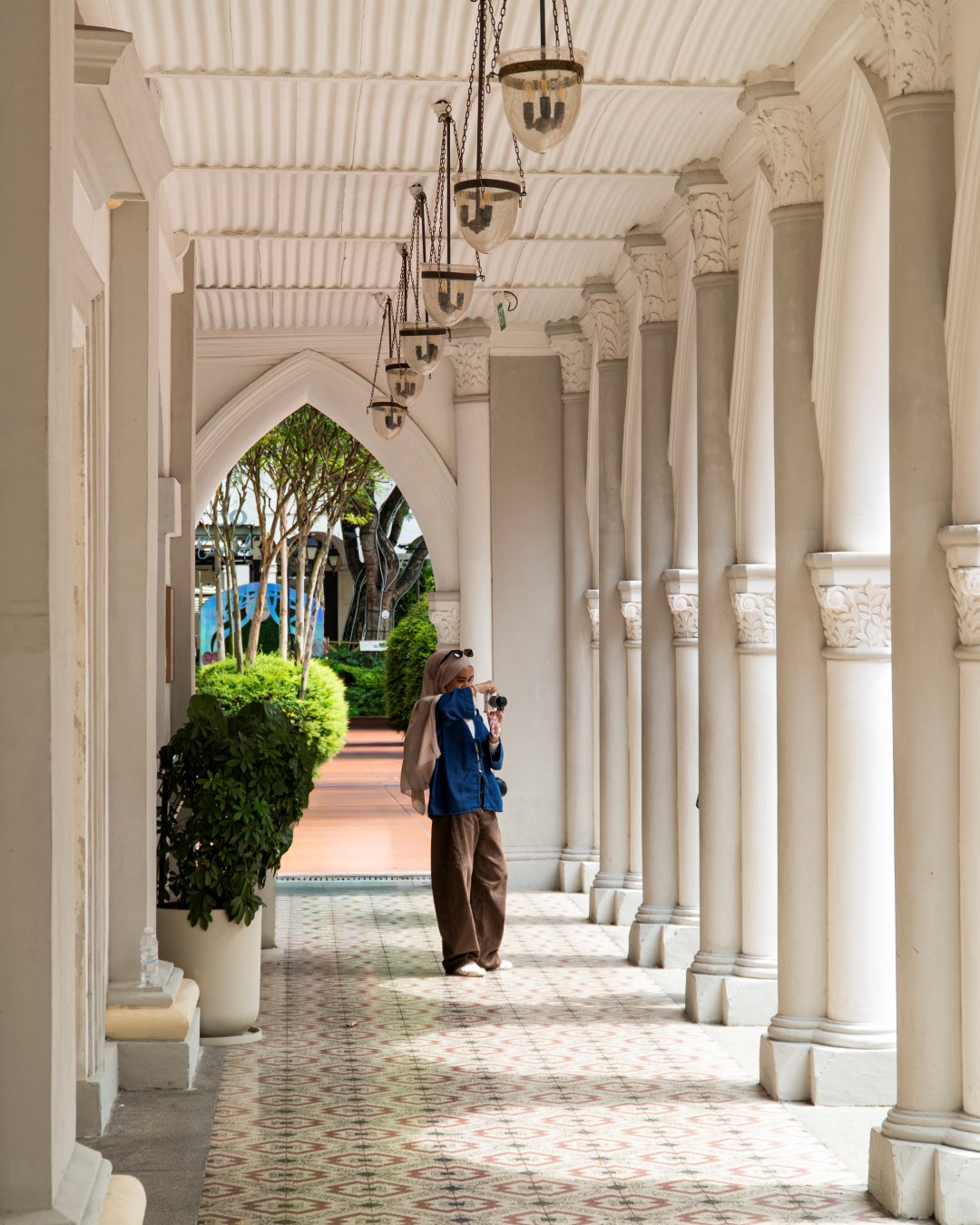
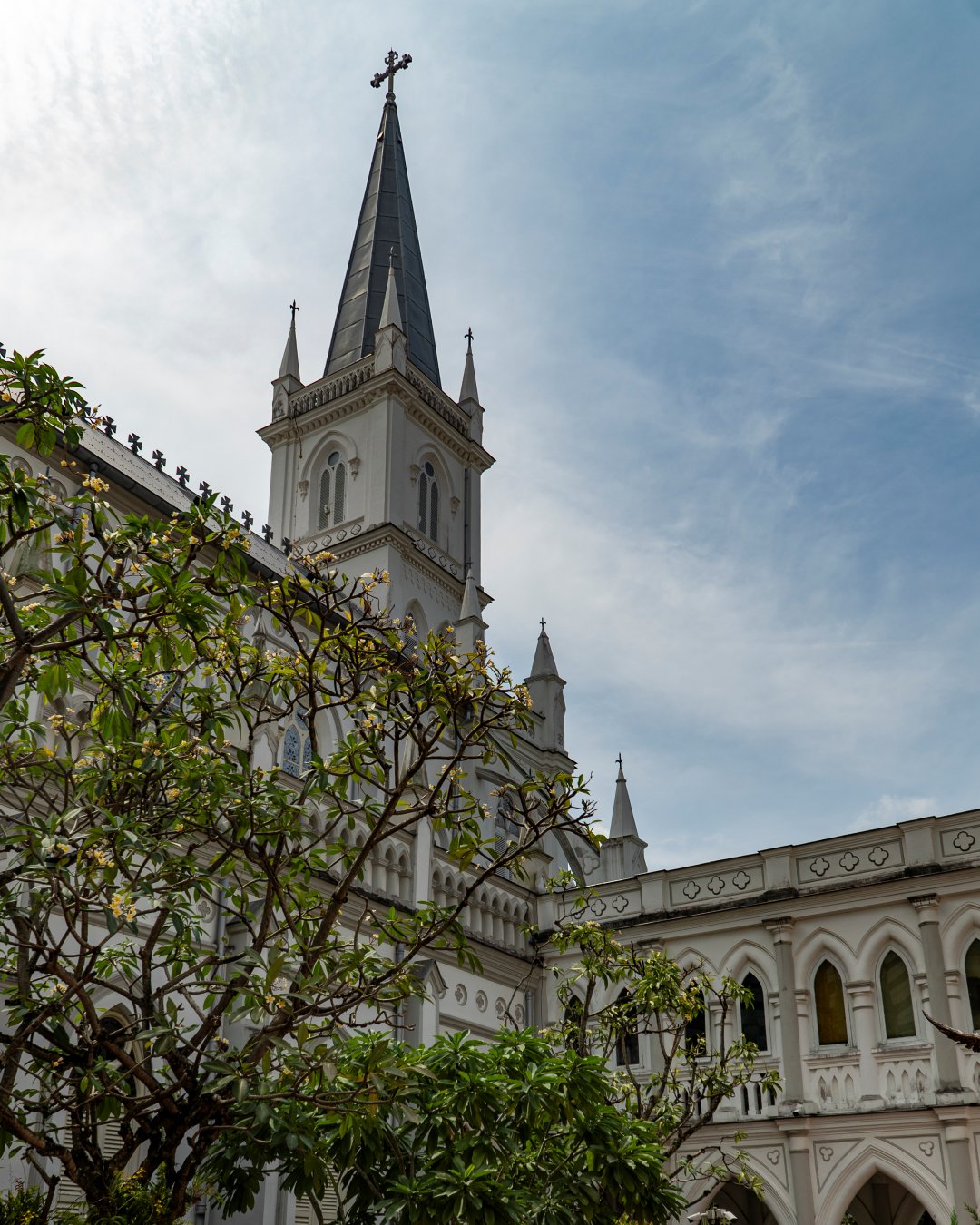
CHIJMES was founded in the mid-19th century as a Catholic girls’ school, orphanage, and boarding house. The chapel, with its gleaming white spire rising loftily on Victoria Street, is a popular spot among locals for romantic wedding photos. A French Gothic–style chapel was added in 1904, and thanks to its vaulted ceiling, fresco wall decorations, and stained glass depicting the Twelve Apostles, it is regarded as one of the most exquisitely beautiful chapels in Singapore.
After extensive restoration work in the 1990s, CHIJMES was reborn as a cultural complex and has become a haven in the Civic District. Around the lawn and fountain of the former school grounds, restaurants, cafés, and shops occupy the neoclassical annex buildings, and small events and pop-ups are held regularly. When darkness falls over the city, the chapel is lit up and live musicians play soft melodies beyond the open-air tables in the courtyard, lifting the romantic mood even further. As a result, it is loved by locals and tourists alike who want to enjoy a nightlife that is calm yet refined.
Year built: 1854
The Cutting-Edge Durian on the Bay
Esplanade – Theatres on the Bay
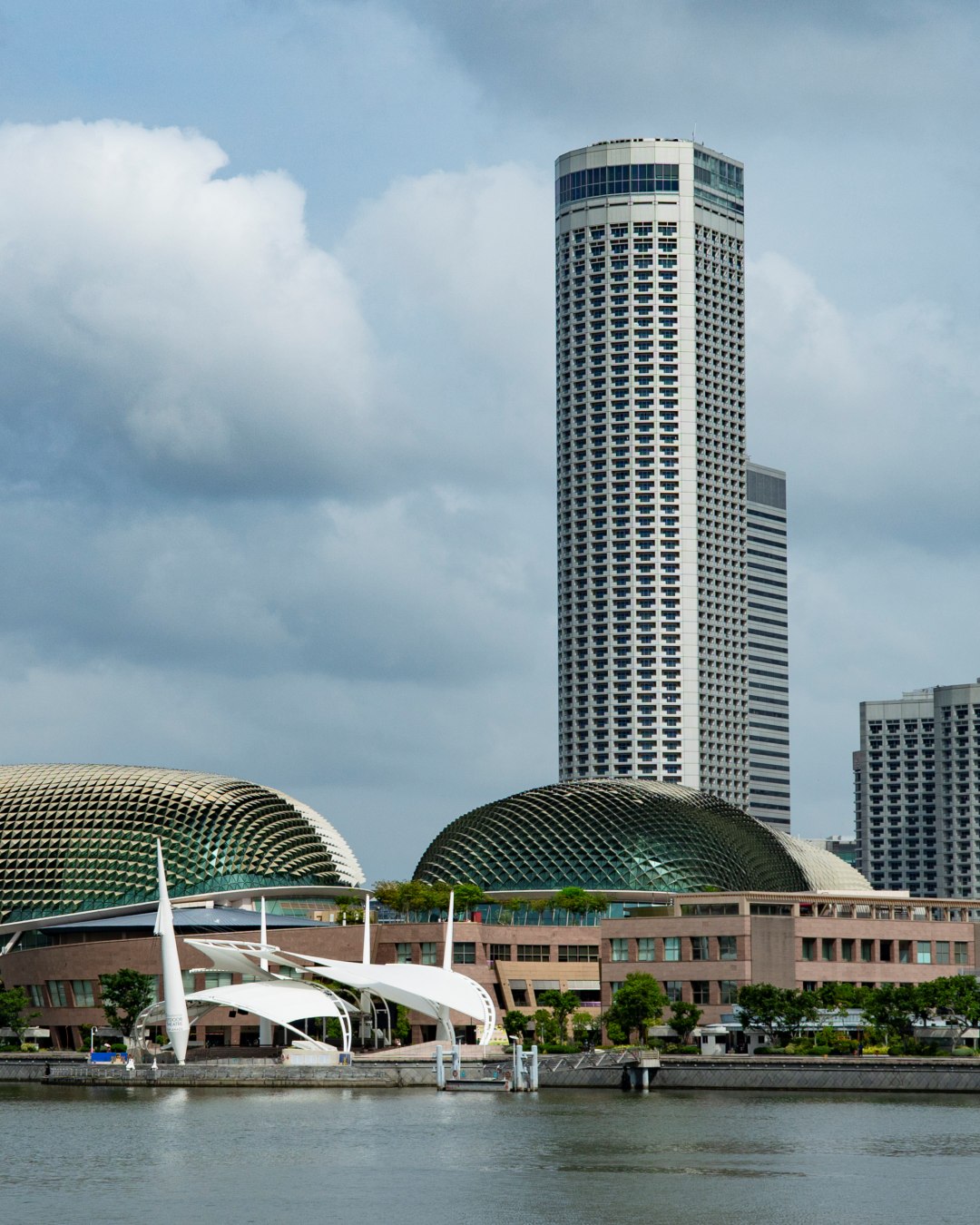
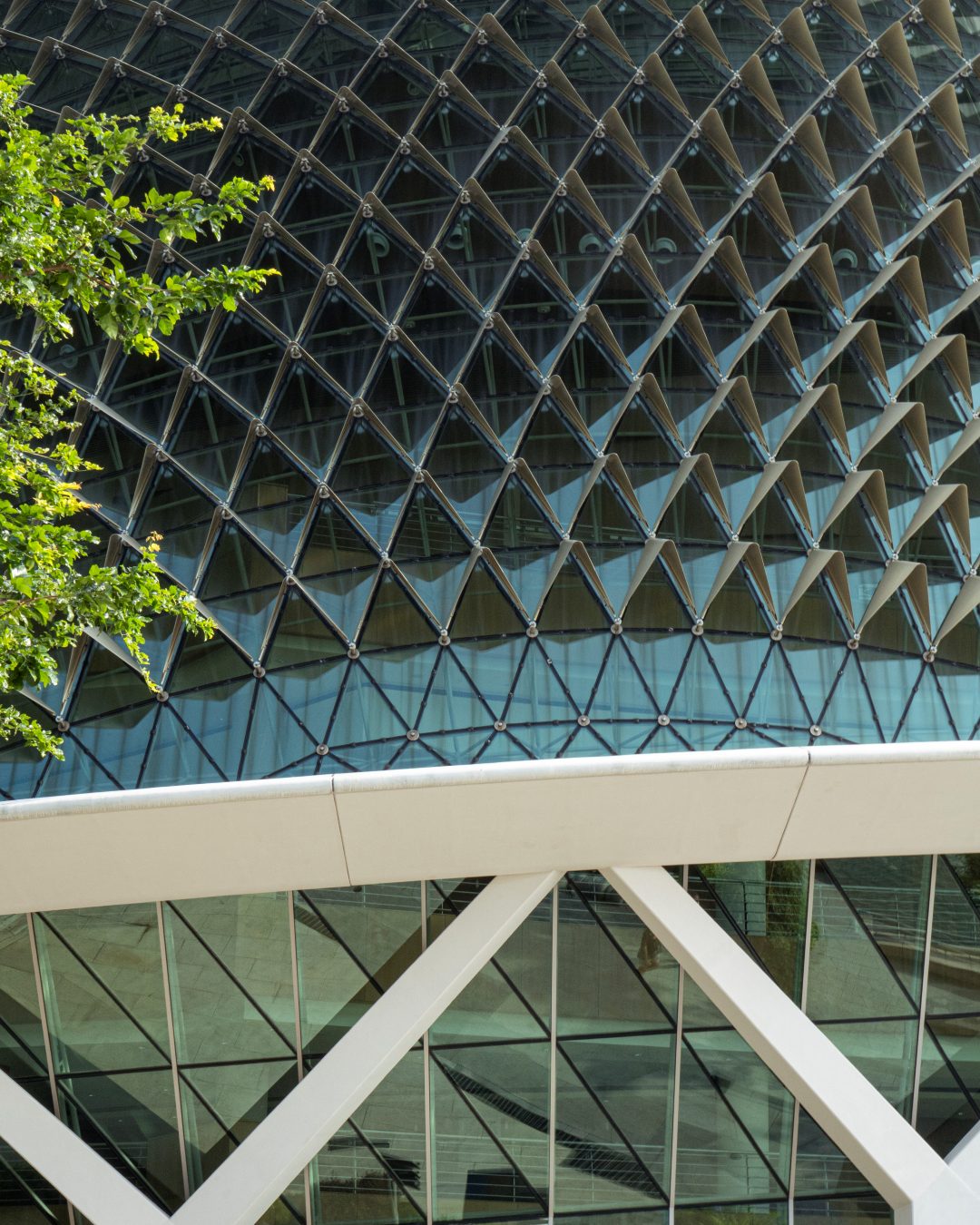
Merlion Park at Marina Bay is always busy with travelers hoping to have their photo taken against the backdrop of the city’s emblem. Among the things their smartphone lenses turn toward is a building with a distinctive silhouette: the spiky, domed Esplanade – Theatres on the Bay, which locals call ‘the durian.’ Opened in 2002, it is a cultural complex centered on a 1,600-seat concert hall and a 2,000-seat theatre, and it also includes a recital studio, an outdoor stage, galleries, and restaurants. The aluminum sunshades over its glass facade, which helped it become a Singapore landmark with little difficulty, block the harsh sunlight while softly drawing natural light into the interior.
You can book ahead for the varied performances held here throughout the year, from classical music and jazz to traditional music and contemporary dance, but there is no need to feel disappointed if you couldn’t get a ticket. You can still enjoy the venue’s appeal by catching the free performances held irregularly on the outdoor stage, or by taking a guided tour that lets you see its world-class, state-of-the-art stage facilities up close. Spending a leisurely few hours at the three-level Esplanade Mall, with its restaurants, cafés, and shops, is another good option.
Year built: 2002