2023 ASEAN Architecture Tour — With the ASEAN-Korea Centre
From New Khmer modernist architecture to contemporary high-rises and stadiums, a journey through Cambodia's present-day architecture as the country searches for a new identity, followed by a look at Java, Indonesia.
2023 ASEAN Architecture Tour — With the International Organization ASEAN-Korea Centre
An ASEAN Architecture Tour of Cambodia
Cambodia
From New Khmer–style modernist buildings to contemporary high-rises and stadiums, a journey through the architecture of present-day Cambodia as it searches for a new identity.
Words: Lee Kiseon
In collaboration with: ASEAN-Korea Centre
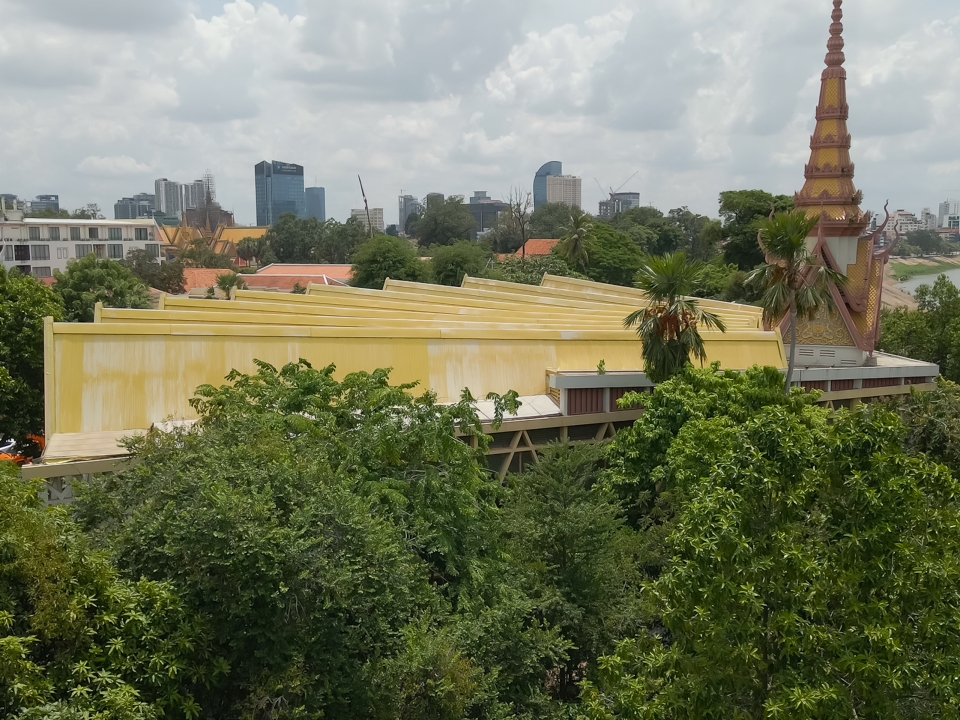
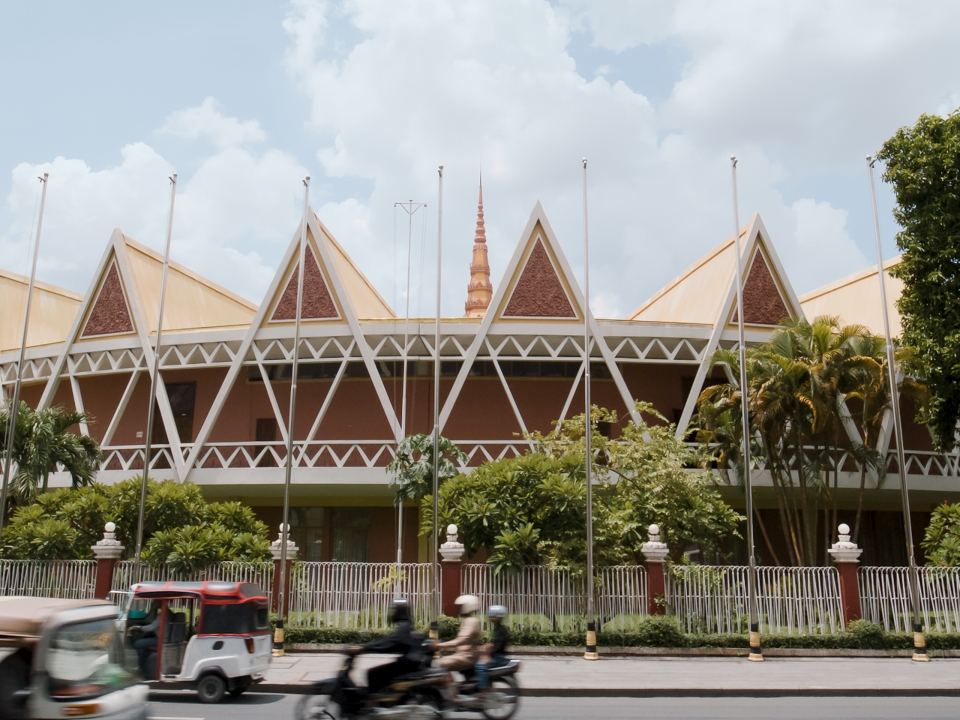
What does the Khmer Empire mean to Cambodians? It is a glorious past that once spanned all of Southeast Asia, and a source of architectural style, identity, and pride. When Cambodia had to forge a new identity as an independent nation in the modern era, it turned to the Khmer. After independence, King Sihanouk entrusted Vann Molyvann, a young architect just back from studying in France, with creating a new face for Cambodia. Over fifteen years, under Molyvann's leadership, buildings that spoke for a new Cambodia rose across the country, centered on the capital, Phnom Penh. In these structures, which combine the modernism then in vogue in Europe with Khmer style, confidence shows as much as bold lines do. In downtown Phnom Penh, the Chaktomuk Conference Hall applies a zigzag pattern that reinterprets the roofs of Khmer temples, and its fan-shaped roof is topped with a Khmer-style spire.
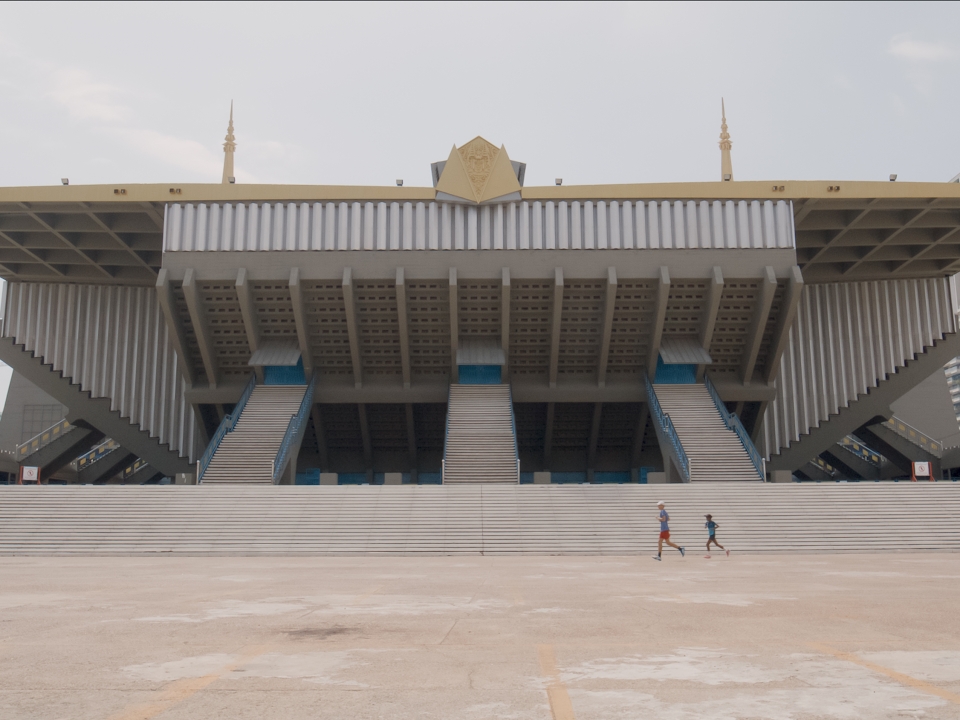
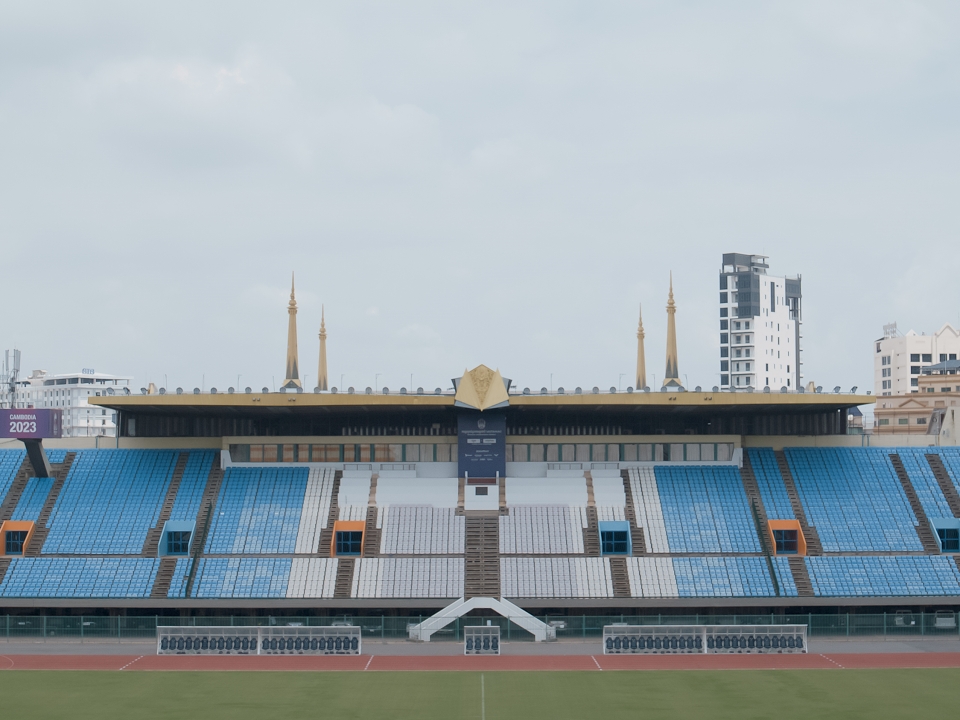
Considered the finest of Molyvann's works is the Olympic Stadium. Its facade displays the hallmarks of Brutalism, such as exposed concrete and geometric forms, and it harmonizes with the moats found at Angkor Wat.
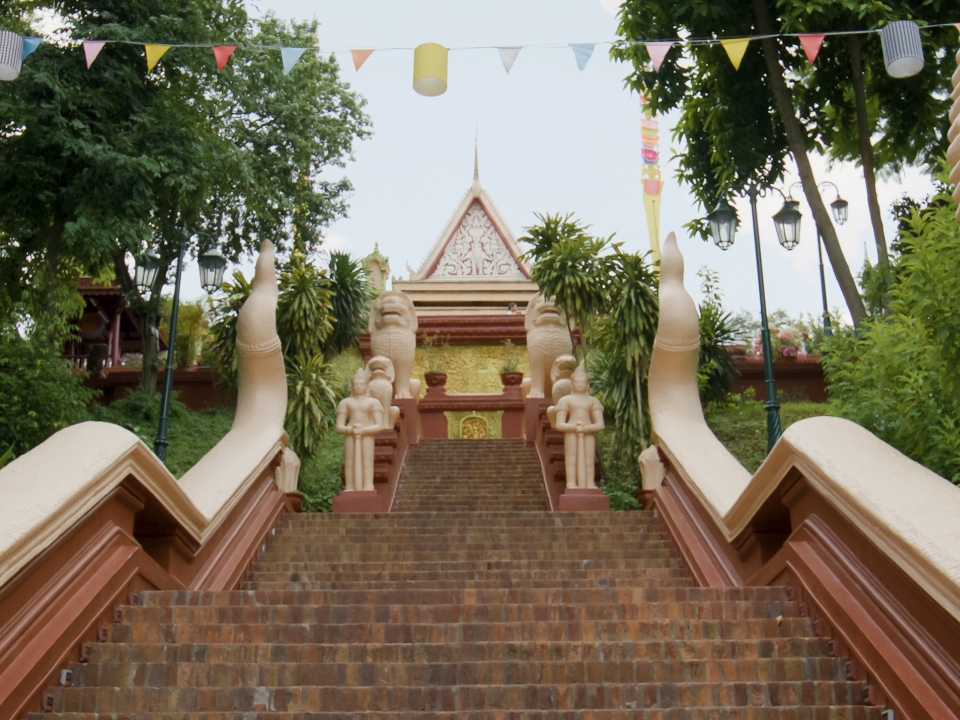
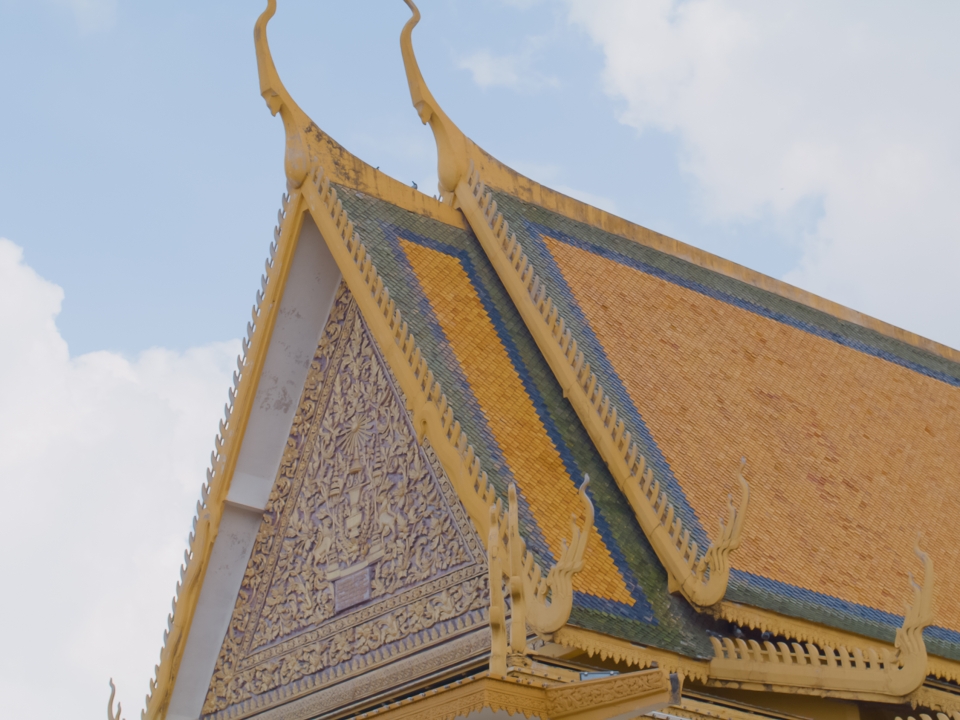
In Phnom Penh, the Khmer are remembered in many ways, from the Khmer-style Royal Palace and the Silver Pagoda to Wat Phnom, a Buddhist temple on a hill. The city's origin story is bound up with this place. Hundreds of years ago, during a heavy downpour in Phnom Penh, a woman named Penh picked up a piece of wood floating down the river. Inside were four Buddha statues and one statue of Vishnu, and the hill and Wat Phnom are said to have been built to enshrine them.
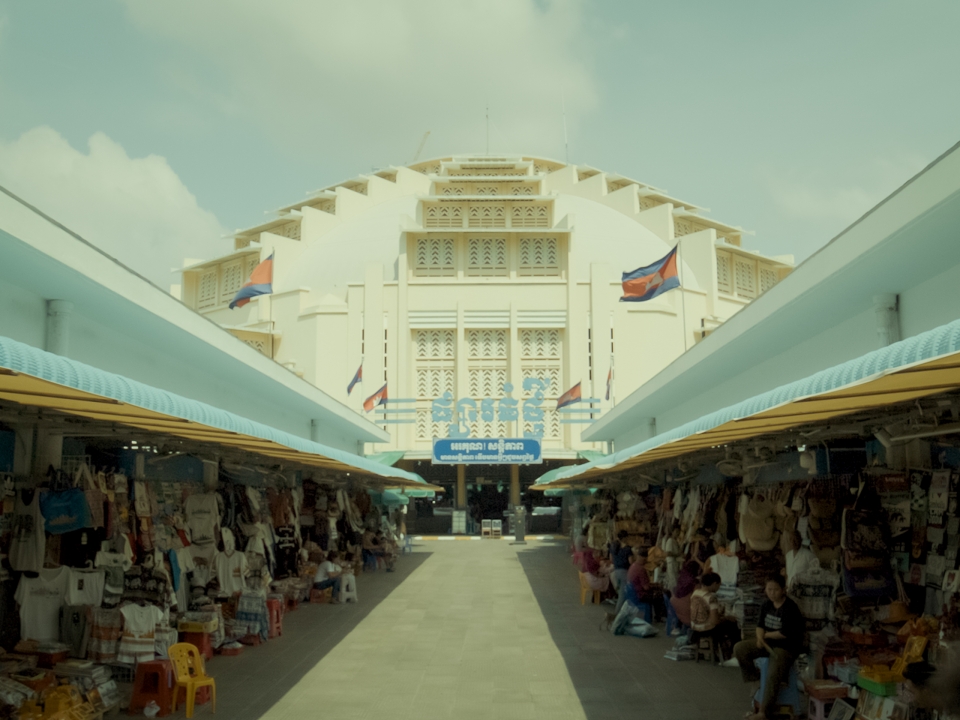
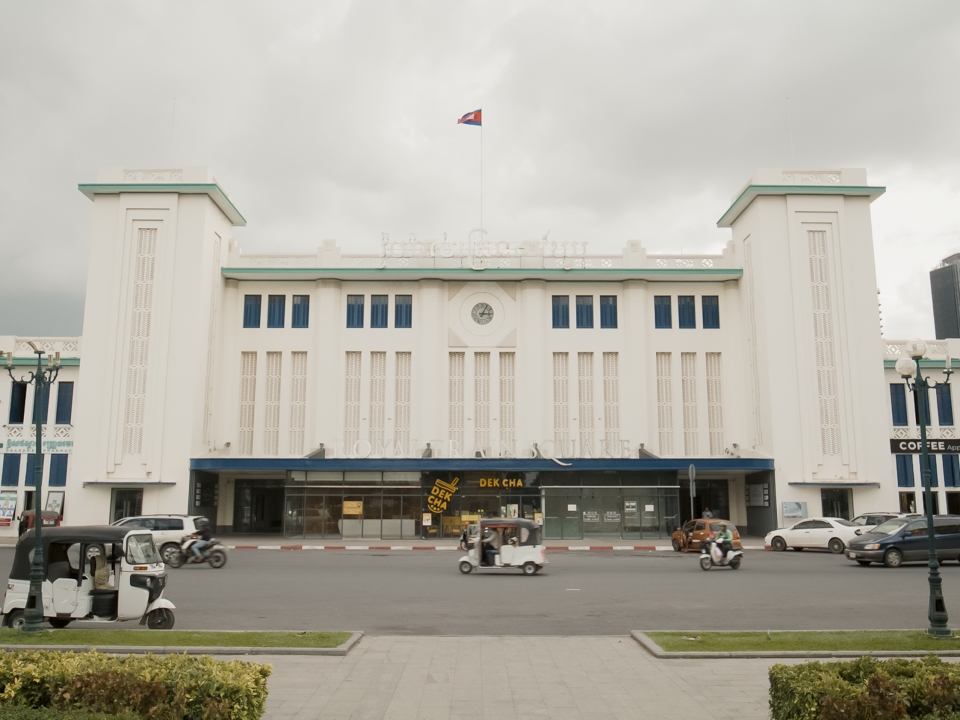
Ride a tuk tuk through Phnom Penh and incongruous sights keep popping up: the huge dome of Psar Thmei, designed by French architects in the early twentieth century; the Art Deco Royal Railway Station that looks straight out of a Wes Anderson film; Factory Phnom Penh, a multicultural complex converted from a garment factory; and Rosewood Phnom Penh, housed in a newly built high-rise.
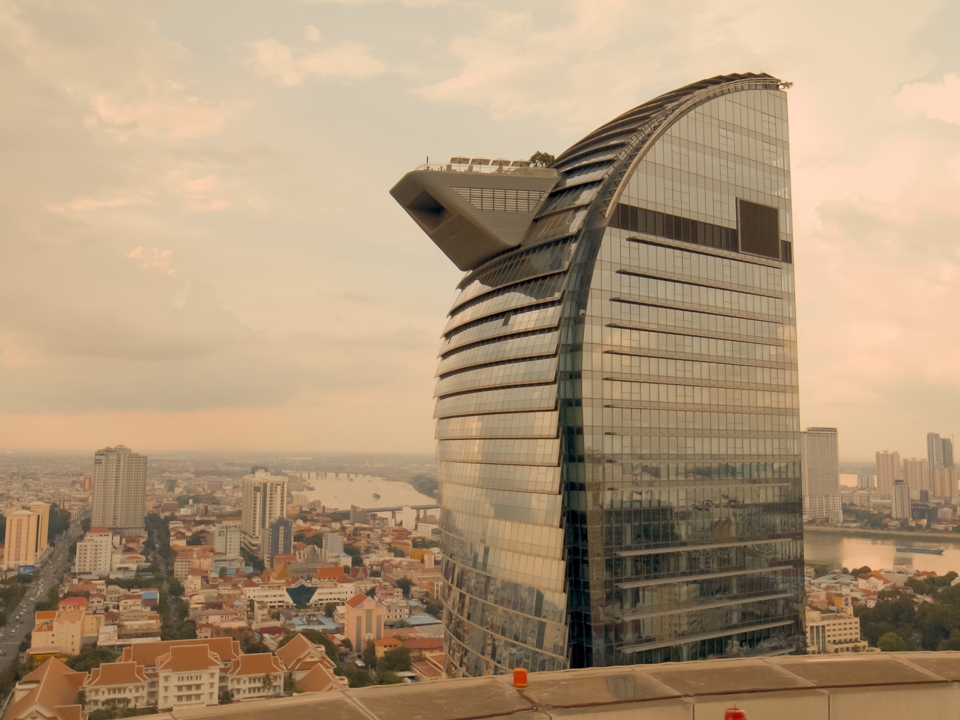
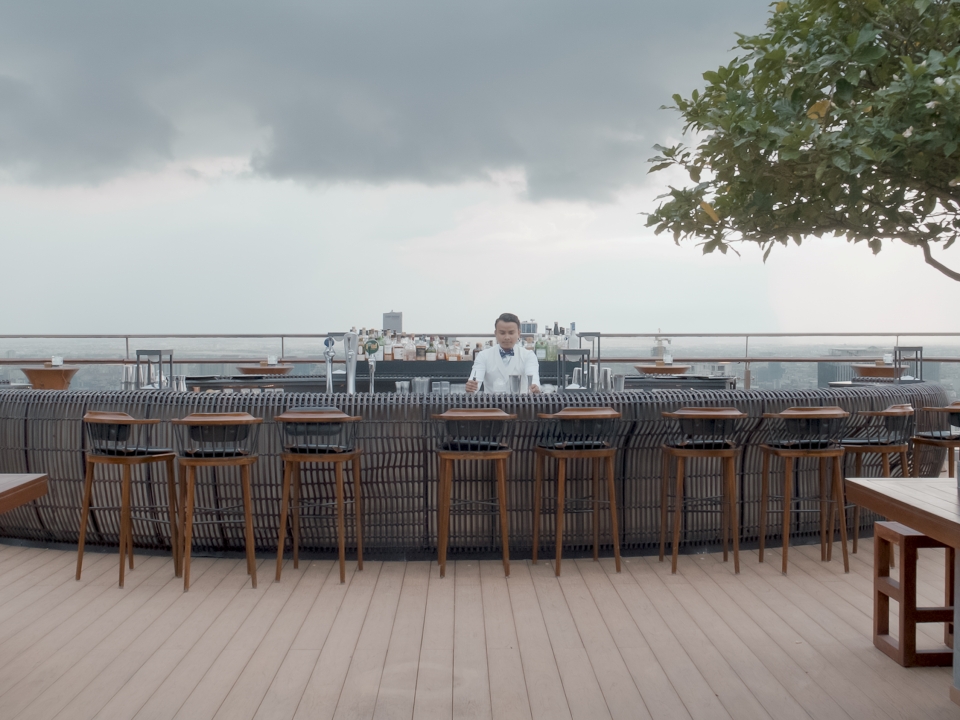
In particular, Sora, the bar on the 37th floor of Rosewood Phnom Penh, partners with The World’s 50 Best Bars to invite mixologists from around the world every month. From the bar’s terrace, supported by a cantilevered structure, the buildings you passed earlier and the Tonlé Sap River look like a scale model below.
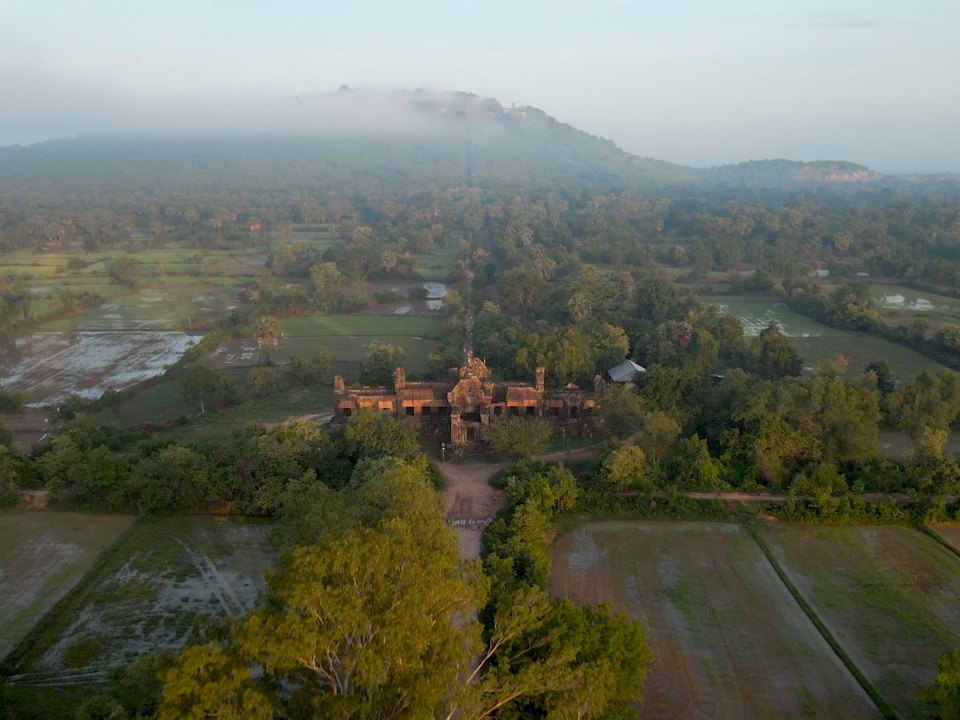
Head out to the areas around Phnom Penh and you will encounter even more Khmer heritage. Beyond Angkor Wat, temples that were once regarded as the kings’ abodes after death rose all over Cambodia. Phnom Chisor in Takeo, near Phnom Penh, was built in the eleventh century, before Angkor Wat. Khmer temples were designed to be in harmony with the land, the water, and the direction of the sunrise. Climb the hilltop temple at dawn and you will see a dreamlike sunrise over a plain dotted with an artificial lake.
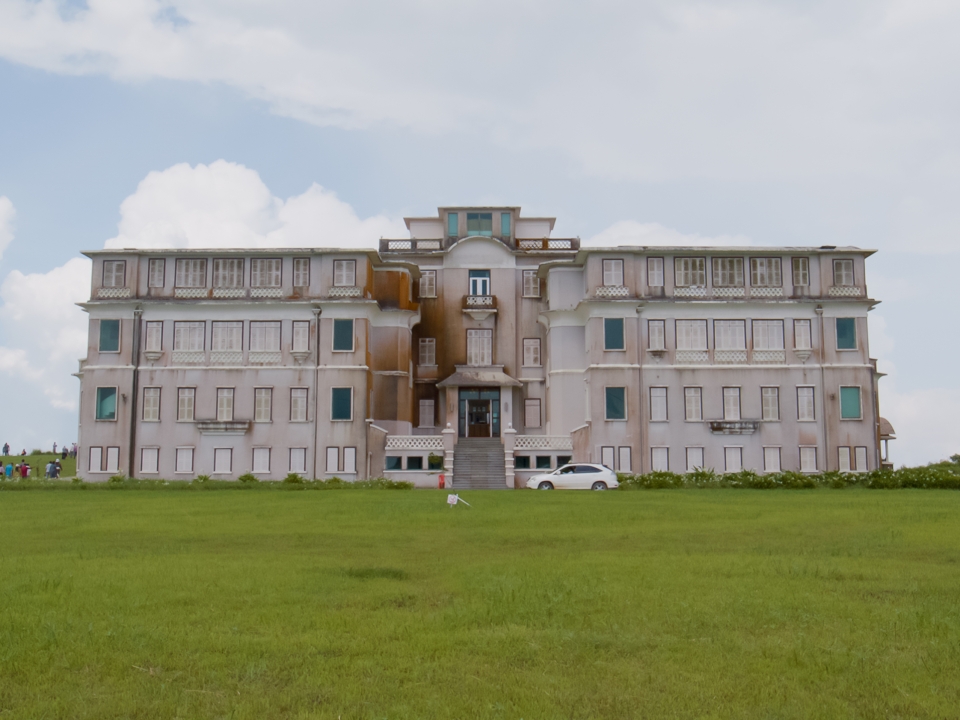
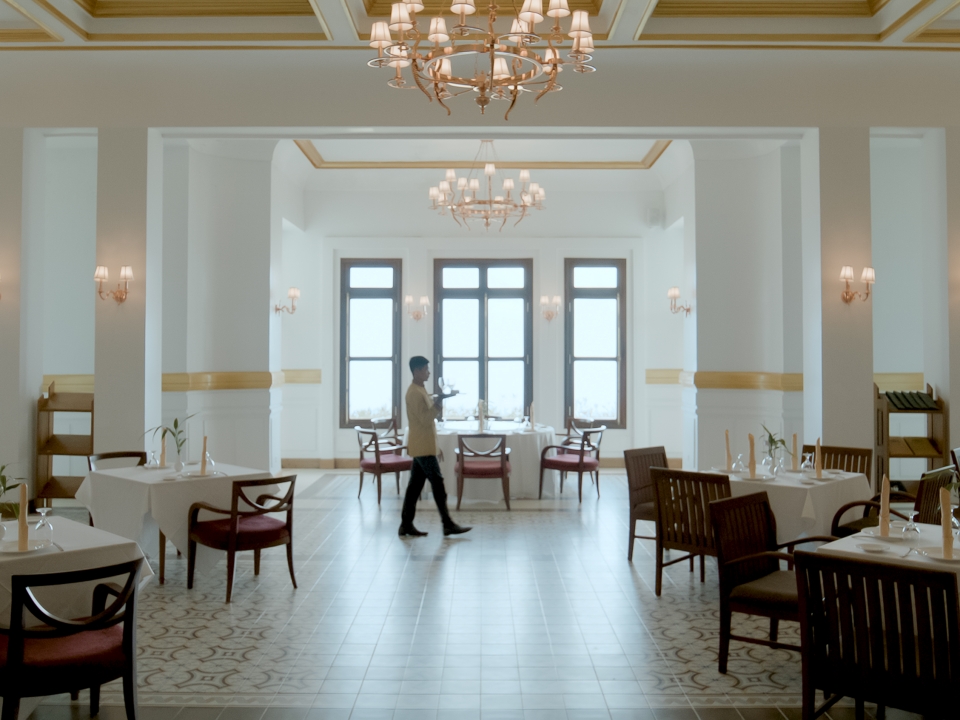
Continue south past Takeo and you reach Kampot, a pepper-growing region and port city. Like Phnom Penh, Kampot’s architectural landscape is changing fast. In southern Cambodia, the Damrei Mountains, also known as the Elephant Mountains, stretch some 110 kilometers and end at Kampot. Bokor Hill Station, a mountain resort the French built here in the early twentieth century, lay in ruins for decades and is now gradually coming back to life. Le Bokor Palace, which blends Modernist, Art Deco, and Palladian styles, recently reopened as a hotel.
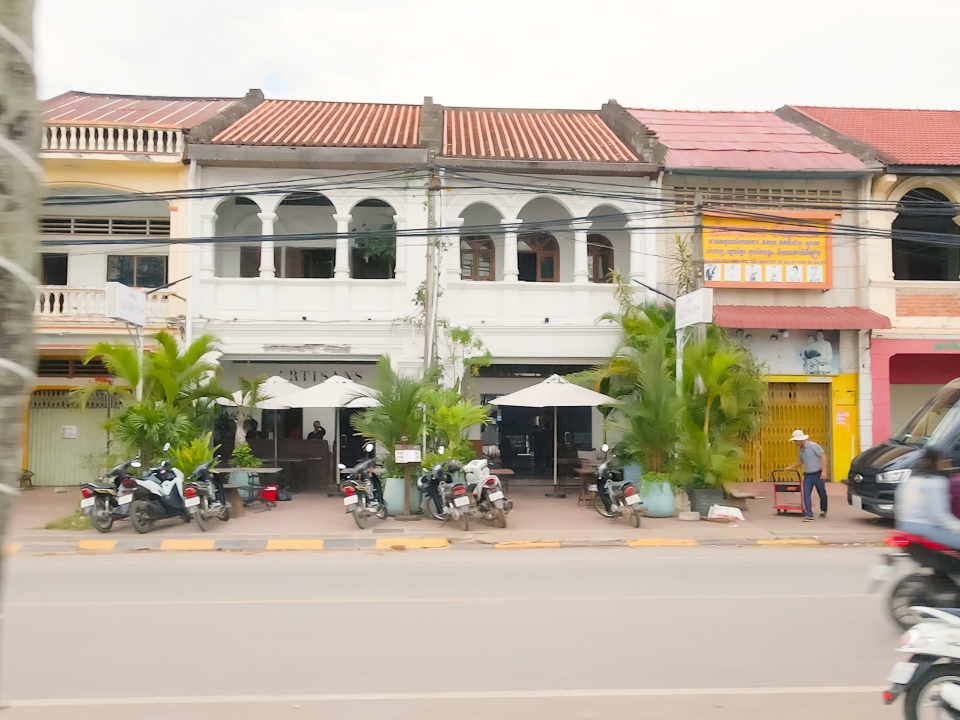
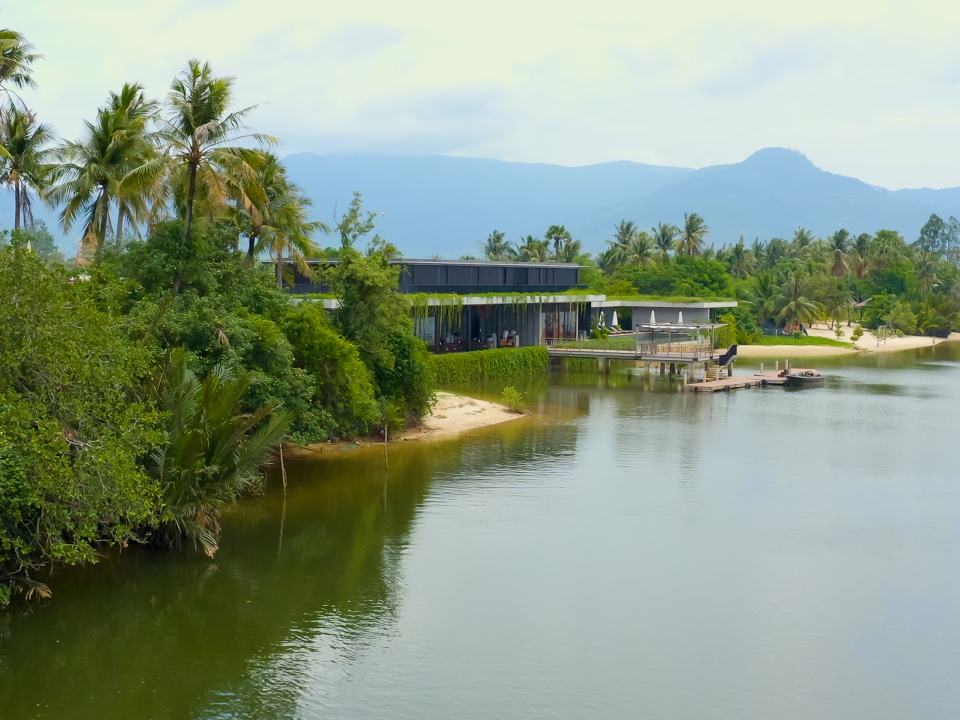
One of the surviving shophouses in town has been reborn as a contemporary café, Artisans Kampot. After exploring downtown Kampot, rest at the villa accommodations of Amber Kampot, set between the mountains and the river. There, you can experience Cambodia’s creative architectural design firsthand.
ASEAN-Korea Centre: An international organization that promotes economic, social, and cultural cooperation between the government of the Republic of Korea and the ten ASEAN member states. It was established on March 13, 2009, to expand exchange and cooperation between Korea and the ten member countries of the Association of Southeast Asian Nations (ASEAN).
An ASEAN Architecture Tour of Indonesia
Indonesia
On Java, the heart of Indonesia and the most populous island in the world, we look for the architecture of the past and the architecture of today.
Words: Lee Kiseon
In collaboration with: ASEAN-Korea Centre
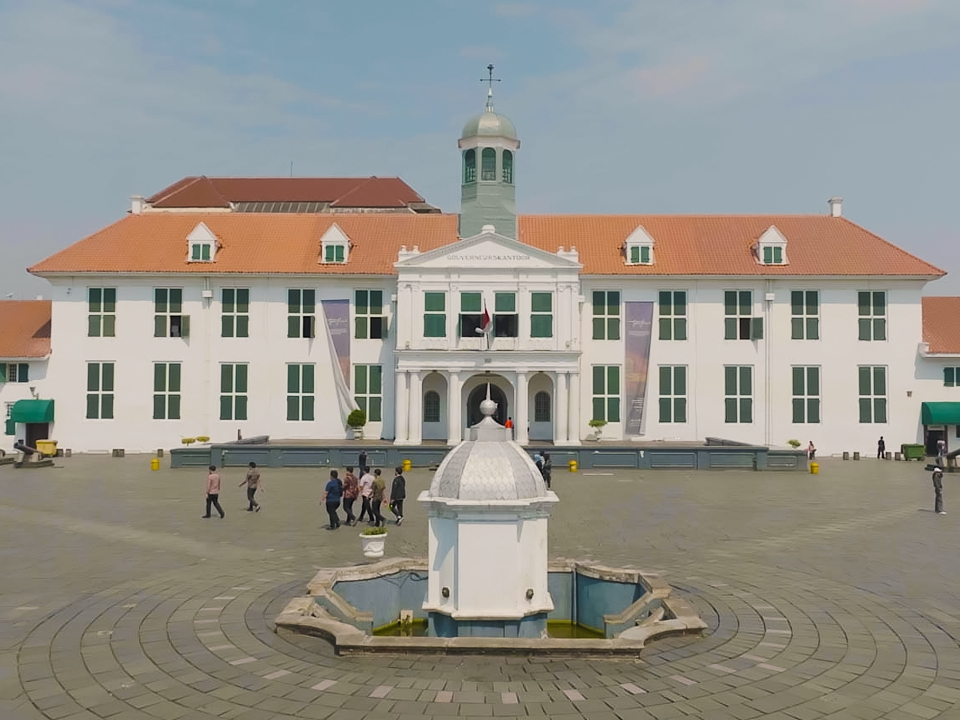
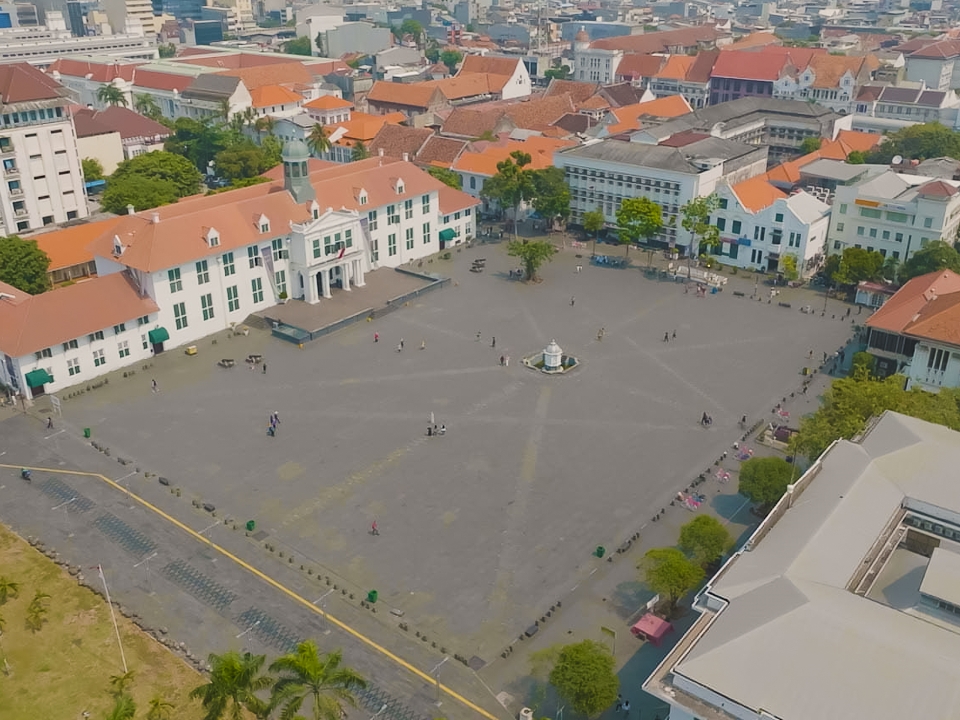
Between the Pacific and Indian Oceans, more than 17,000 islands stretching over 5,000 kilometers from east to west make up Indonesia. At its center lies Java, the most populous island in the world and home to the capital, Jakarta. Indonesia’s architectural landscape is as varied as its peoples, cultures, religions, languages, and ecologies. The origins of today’s Jakarta are traced to Kota Tua, the old town in the north. It is a grid-patterned city laid out by the Dutch in the 17th century. At its heart, Fatahillah Square is lined with modern European-style buildings such as the Jakarta History Museum, the Wayang Museum, and Café Batavia.
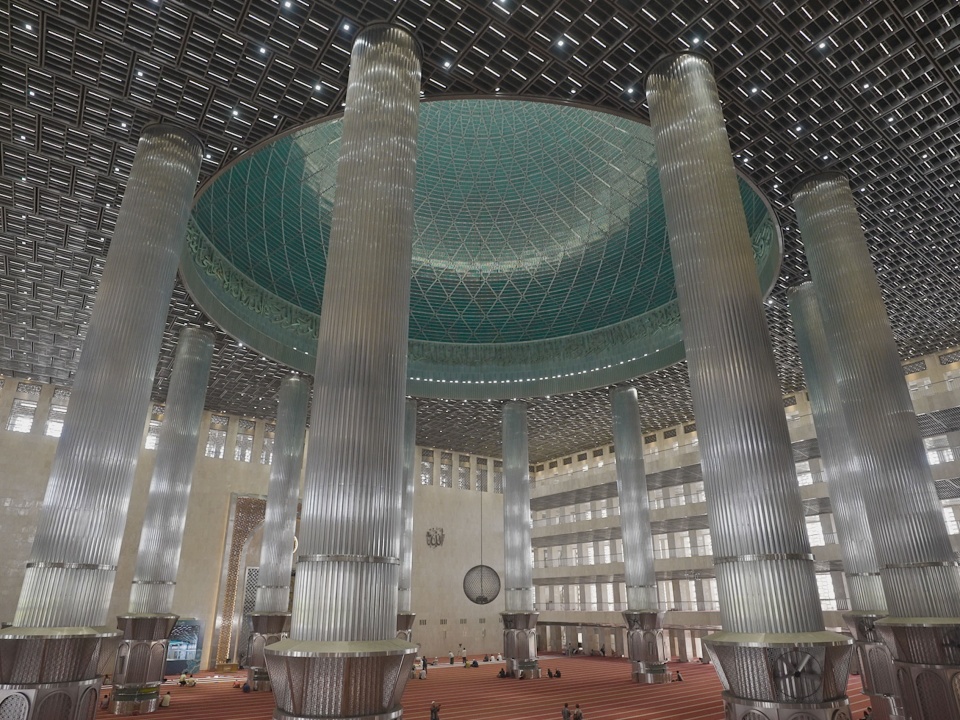
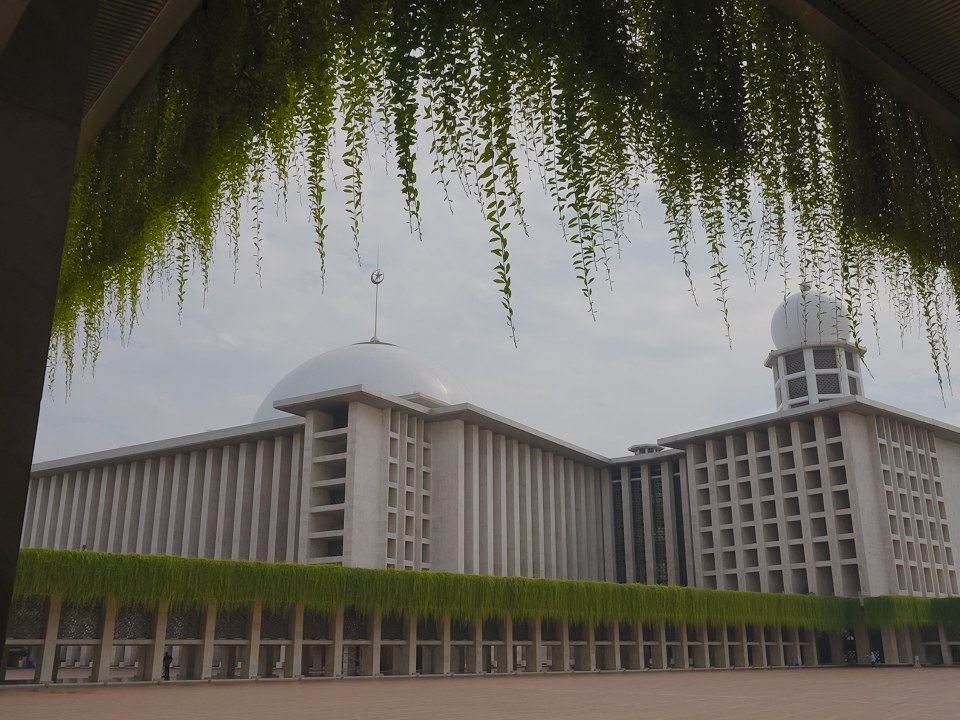
The city of Jakarta began here and expanded southward. Merdeka Square, home to the National Monument (Monas), is a place that symbolizes modern Indonesia. Nearby, the Istiqlal Mosque is the largest mosque in Southeast Asia and an icon of Indonesia. Its current site, within sight of the neo-Gothic Jakarta Cathedral, was chosen to express religious tolerance.
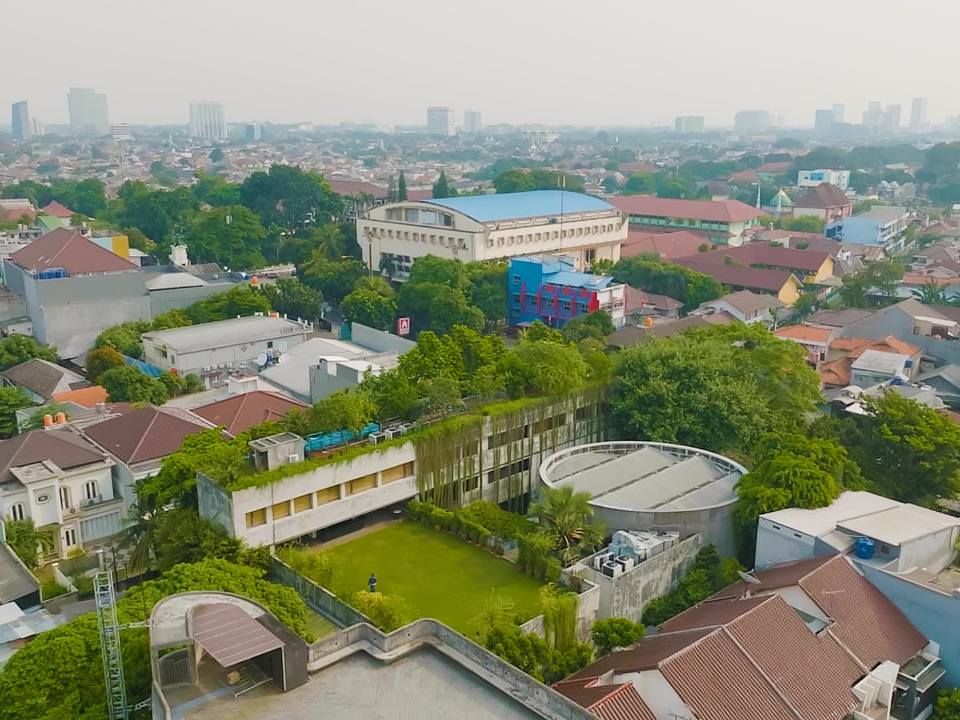
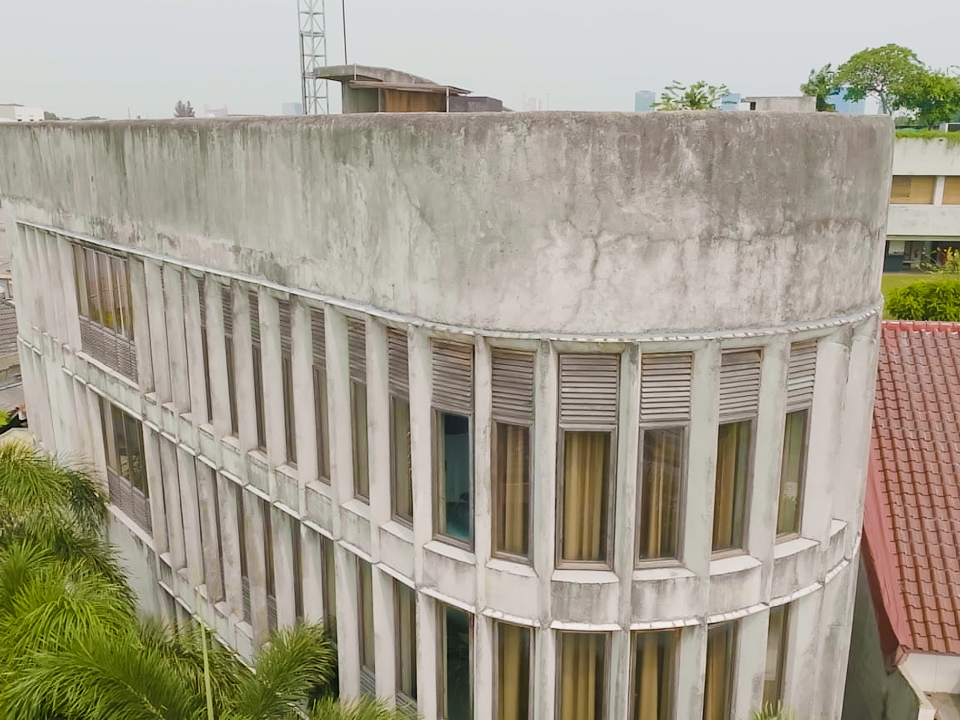
Indonesia emerged as a sanctuary of contemporary art in Southeast Asia in the early 2000s. The Salihara Arts Center is the oldest multidisciplinary arts space in Jakarta. It consists of several buildings, including galleries, a residency, and performance halls. Each building was designed by one of Indonesia’s leading contemporary architects, among them Andra Matin, known for his commitment to using a single material.
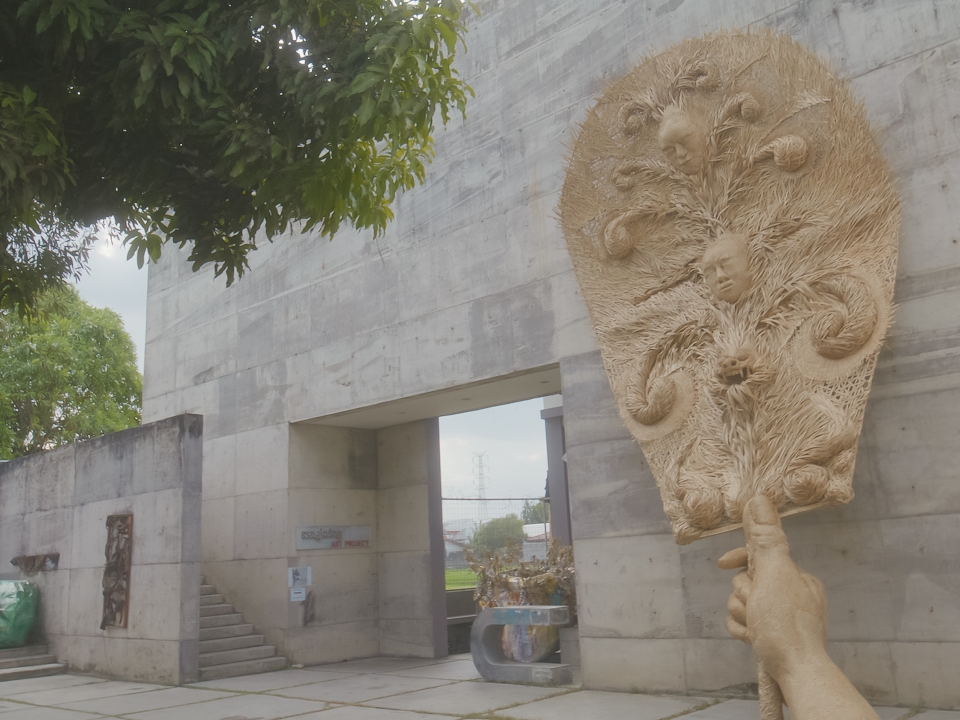
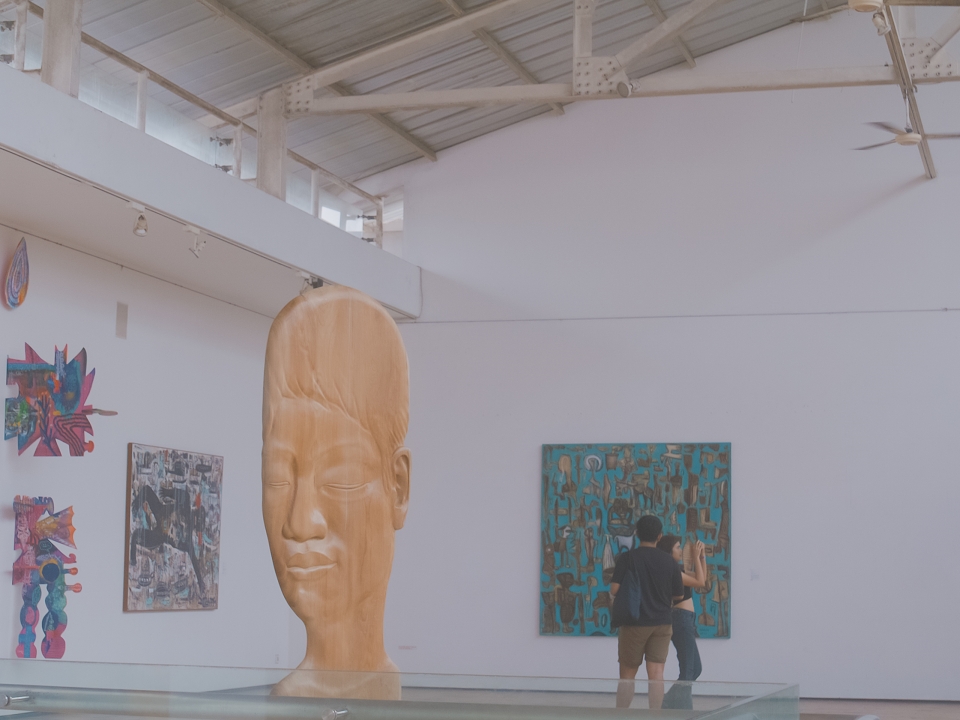
“They say that if Jakarta is where art is sold, Yogyakarta is the factory where art is made.” So says Jenni Vi Mee Yei, co-director of the contemporary art gallery Sangkring Art Space. Set amid rice paddies in Nitiprayan, a quiet residential district of Yogyakarta, the gallery discovers young artists and serves as a community that brings them together.
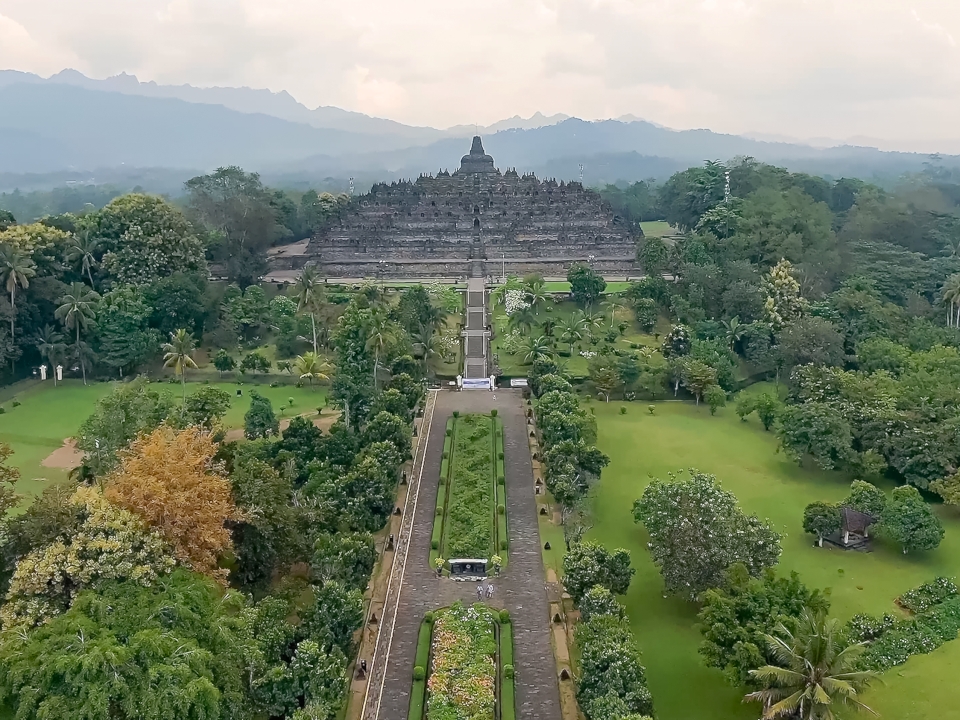
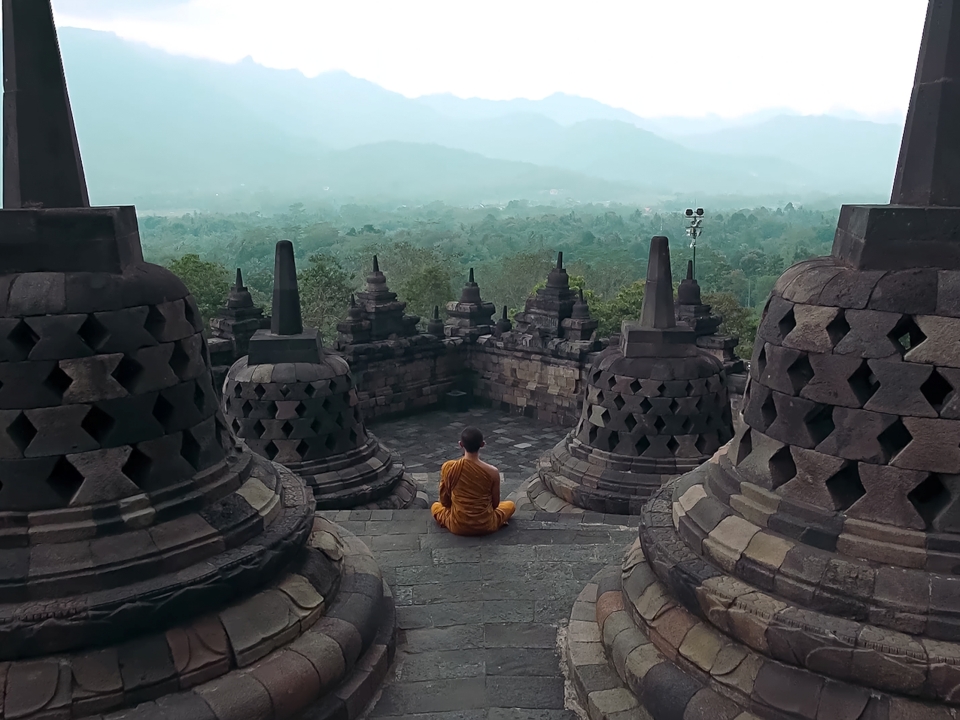
Yogyakarta, the ancient capital of central Java, is famous for two icons: the Borobudur Temple and the Prambanan Temple. Borobudur, the largest single Buddhist monument in the world, was buried under volcanic ash from Mount Merapi, which erupted about 1,000 years ago. For centuries afterward it survived only in the oral tradition of local residents, until Sir Stamford Raffles had it excavated in the early 19th century. A mandala made of some two million stones, Borobudur is architecture that visitors must experience for themselves: walking the galleries carved with reliefs of the Buddha’s life and meditating among the Buddha statues. The Amanjiwo resort, which looks out over the monument, takes its inspiration from Borobudur and feels like a present-day response to this world-renowned Buddhist structure.
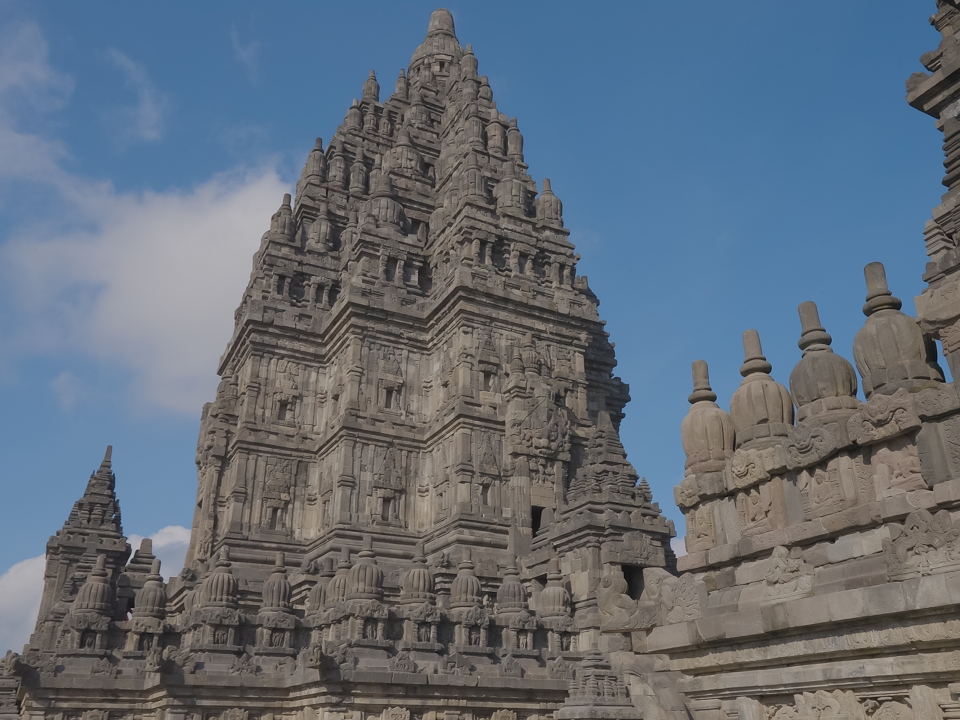
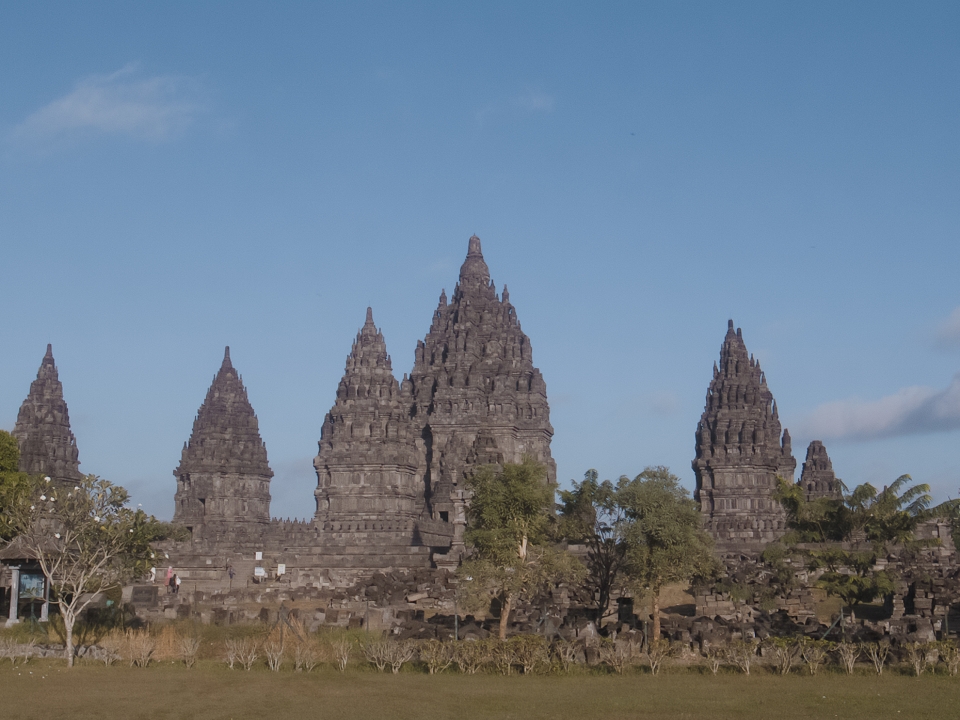
Northeast of Yogyakarta, the Prambanan Temple, the largest Hindu temple complex in Southeast Asia, was built around the 10th century. It consists of 224 temples, including the most important one, dedicated to Shiva. It too was destroyed by an eruption of Mount Merapi and is still being restored today. A legend says that a demon built 1,000 temples here in a single night.
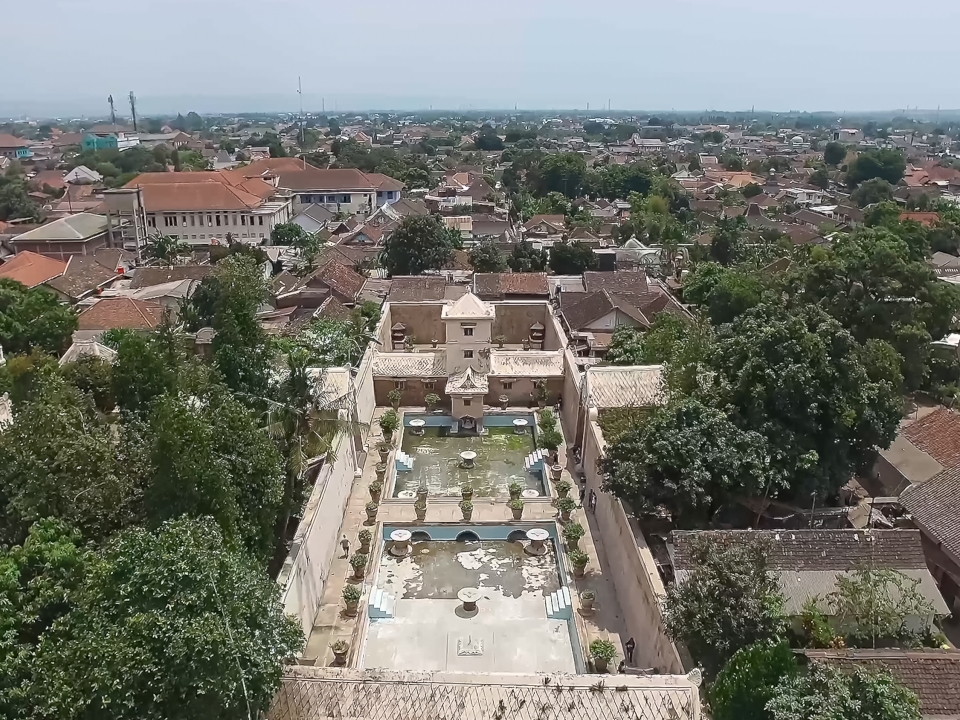
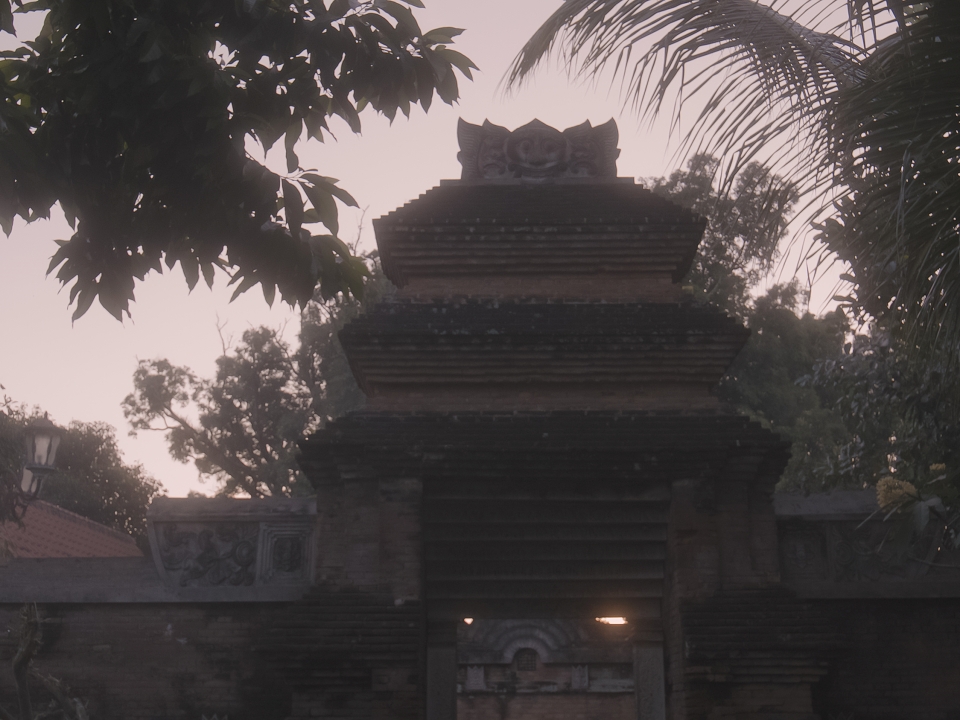
The old city holds the palace where Indonesia’s last remaining sultan lives, Taman Sari, where sultans once strolled centuries ago, and Kotagede, a residential district several hundred years old. Kotagede, a cluster of traditional Javanese houses, remains a living neighborhood for the people of Yogyakarta to this day.
ASEAN-Korea Centre: An international organization established to promote economic, social, and cultural cooperation between the government of the Republic of Korea and the governments of the ten ASEAN member states. It was founded on March 13, 2009, with the aim of expanding exchange and cooperation between Korea and the ten members of the Association of Southeast Asian Nations (ASEAN).
An ASEAN Architecture Journey to Viet Nam
Viet Nam
In Viet Nam, where centuries of life unfold along roads, alleys, and waterways, we look at a culture and architecture shaped by fusion.
Words: Lee Kiseon
In collaboration with: ASEAN-Korea Centre
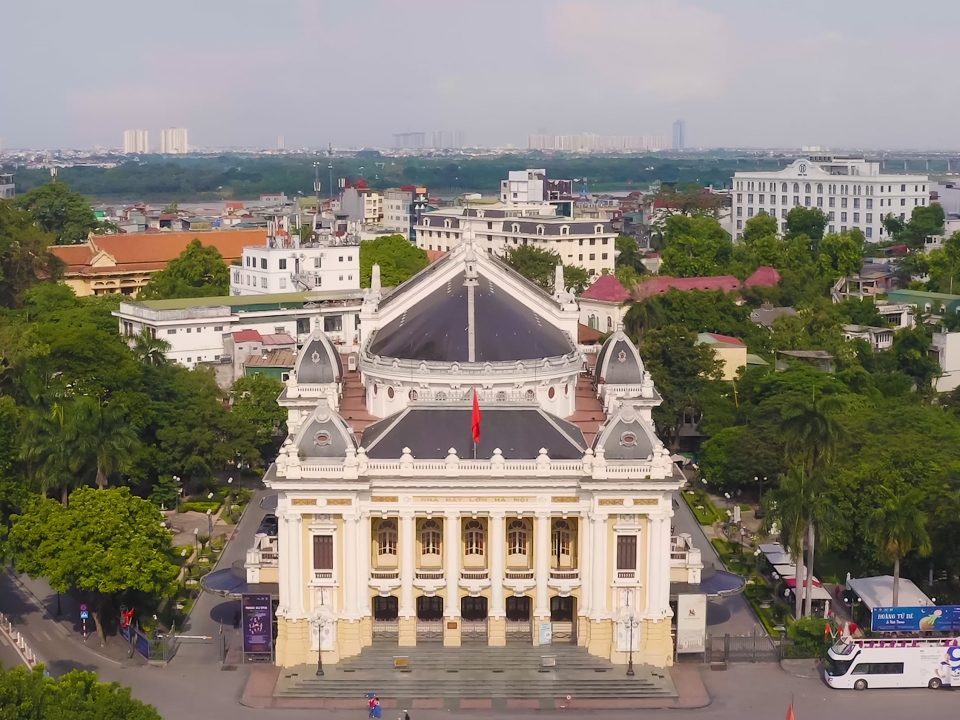
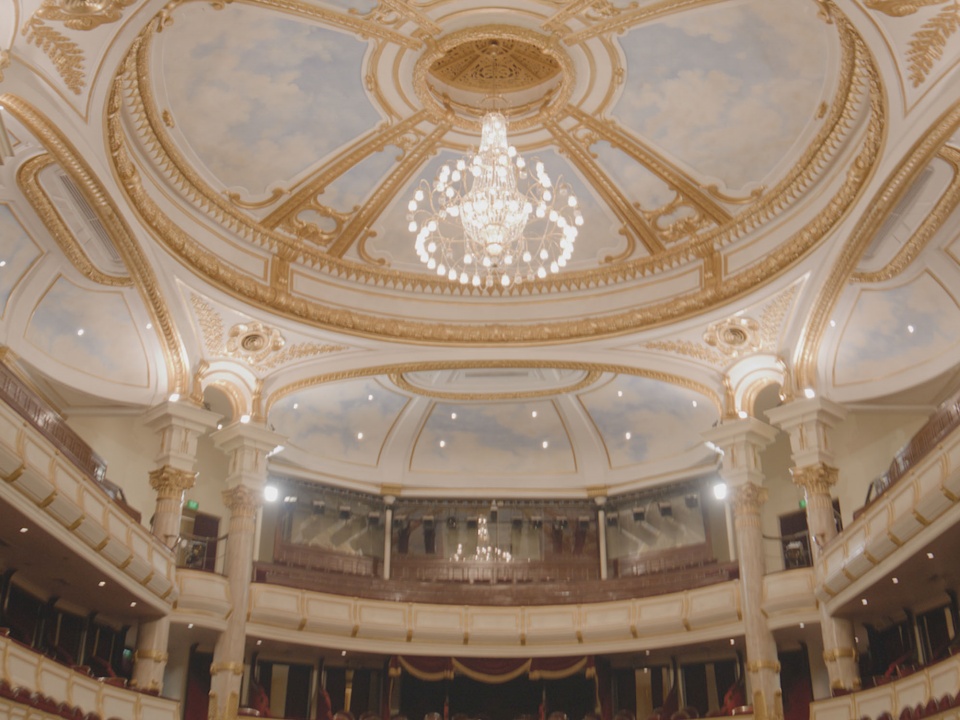
It is a city where thousand-year-old Buddhist temples and churches coexist with lakes steeped in legend and buildings built with sustainable construction methods. One way to read Hanoi, the thousand-year-old capital of Viet Nam, is through its streets. Hanoi’s roads, whose names begin with “Phố,” are built up in many layers. The roundabout where the Hanoi Opera House stands is the most famous intersection in the city. Boulevards radiate in every direction from the neo-Baroque opera house, lined with trees and Baroque-style buildings. In the 19th century, Hanoi became the central city of French Indochina, and European-style boulevards and buildings, much like those of a modern European city, rose up. The lives of Hanoi’s people have unfolded with this framework as their backbone. Even today, turn from a boulevard into a back alley and you will find it packed with charming shops and scenes of daily life.
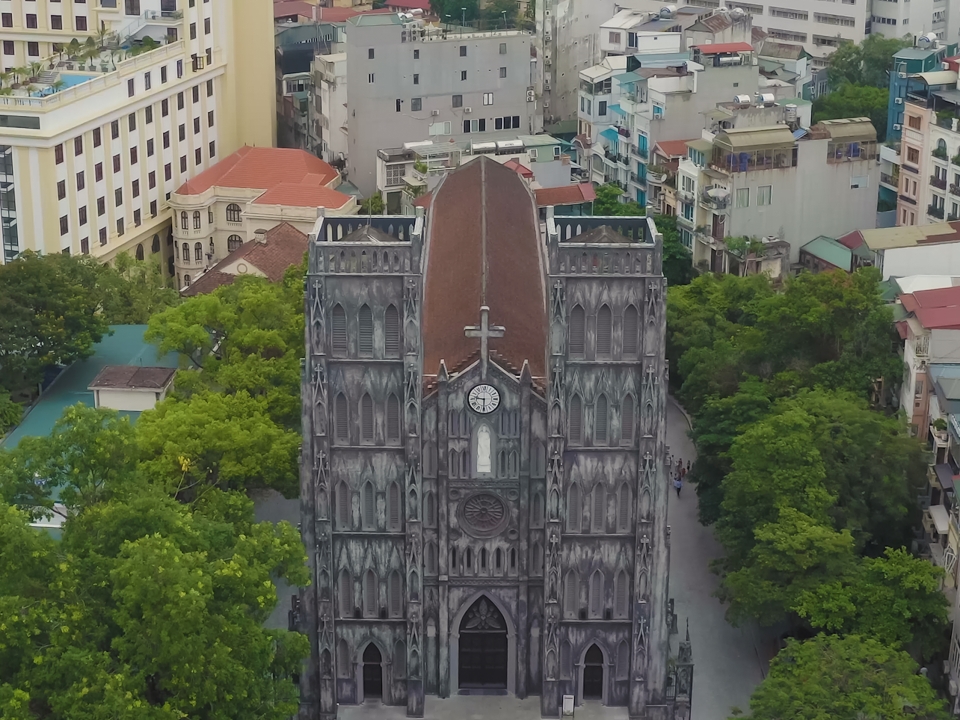
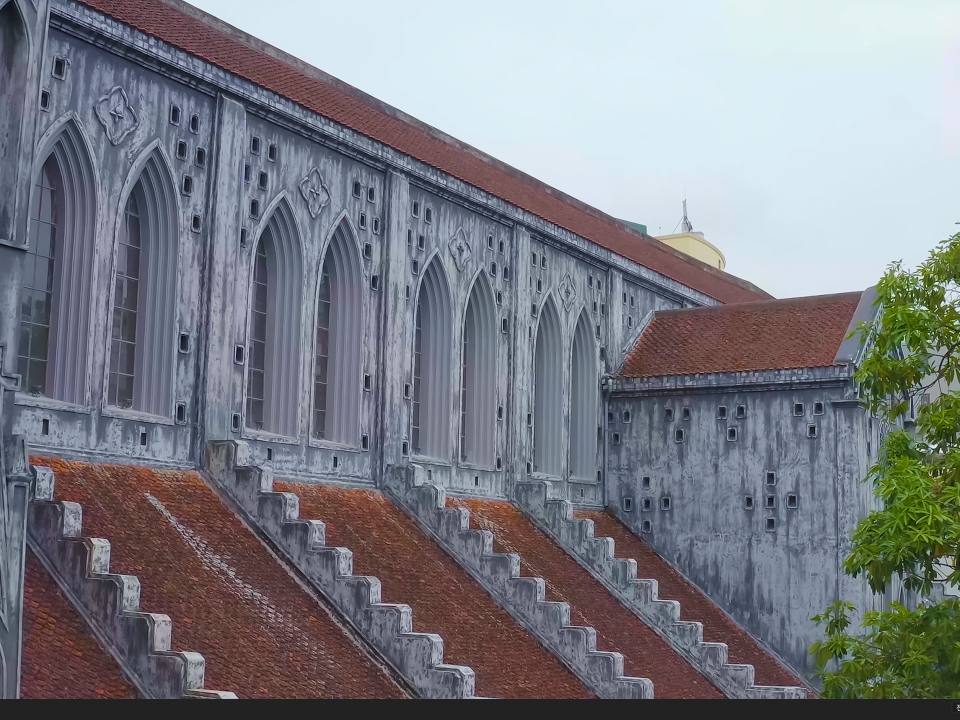
St. Joseph’s Cathedral, near Hoan Kiem Lake, sits where three roads meet. Most of the buildings around the cathedral square now house cafés and restaurants. Take a seat at one of them, sip a Ca Phe Sua Da (iced coffee with condensed milk), and gaze out the window, and you will feel as if you have landed somewhere between Hanoi and Paris.
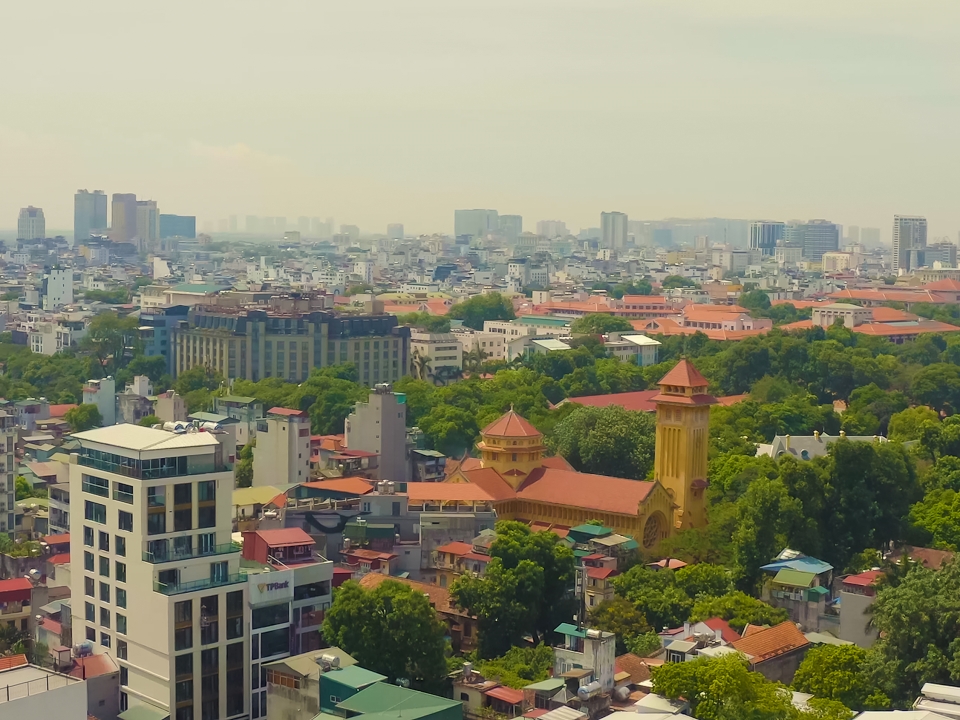
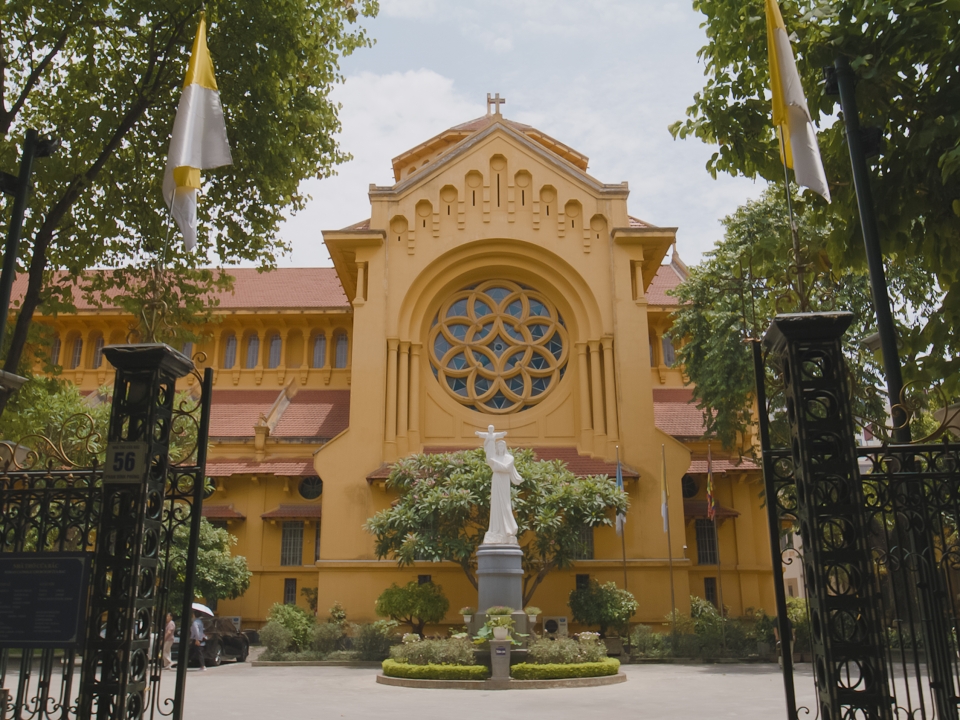
A road can also work as a metaphor. Because of its geopolitical position, where Northeast and Southeast Asia meet, Viet Nam, and especially its northern hub Hanoi, has long been a crossroads of cultures. Fusion cultures such as the baguette sandwich banh mi and Indochinese architecture emerged this way. Indochinese architecture blends Southeast Asian and European styles and developed most prominently in early twentieth-century Viet Nam. Considered among its finest examples, Cua Bac Church sets a tiled roof in Vietnamese and Khmer style atop a neo-Renaissance frame. The roof extends broadly over the corridors to shield them from strong sun and rain.
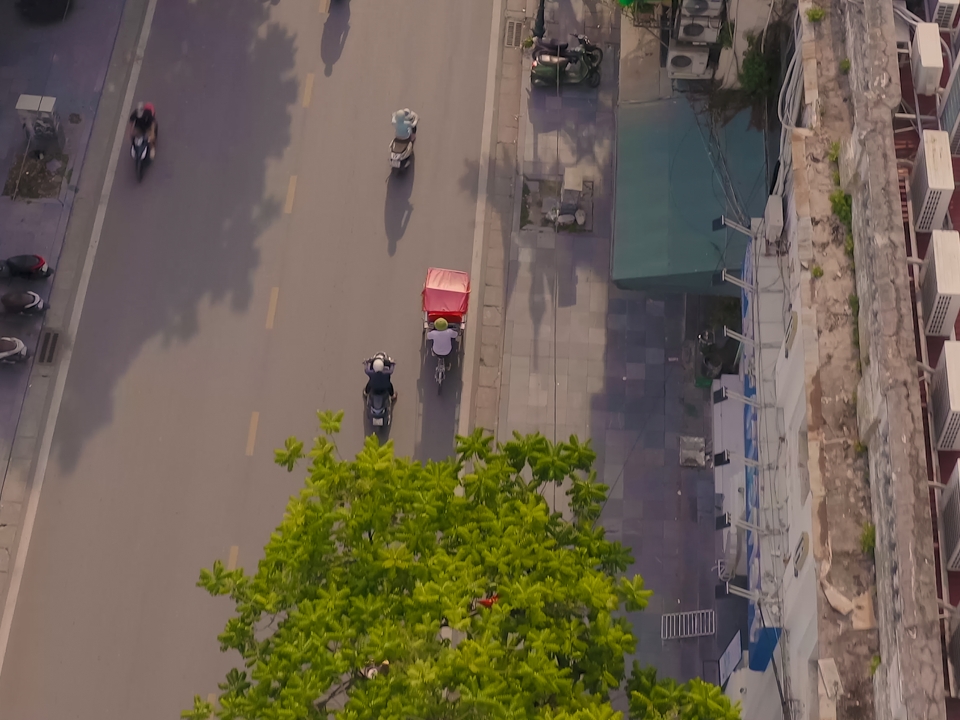
What stands out in Hanoi is a vitality, a practical attitude that puts the needs of daily life ahead of fixed rules. A street can be a restaurant, and it can be a market. This culture has a long history. The Old Quarter’s 36 Streets, for example, grew out of guilds formed hundreds of years ago by merchants from across Viet Nam. There are in fact more than 70 alleys in the 36 Streets, and the goods each street dealt in are still preserved in its name, as in Pho Hang Tre (Bamboo Street) and Pho Hang Ma (Paper Craft Street).
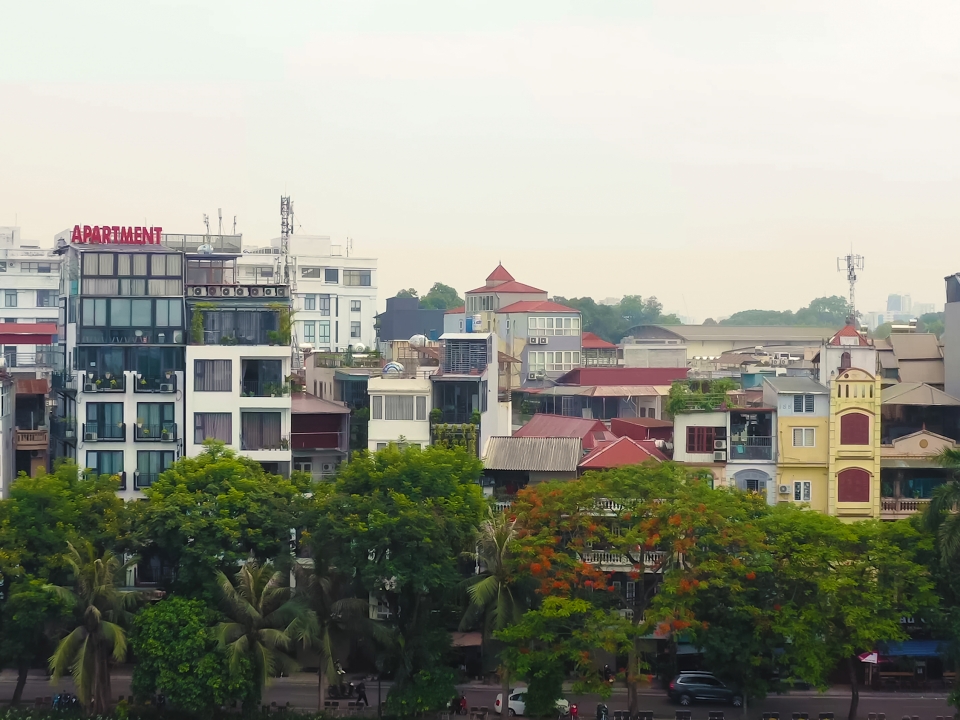
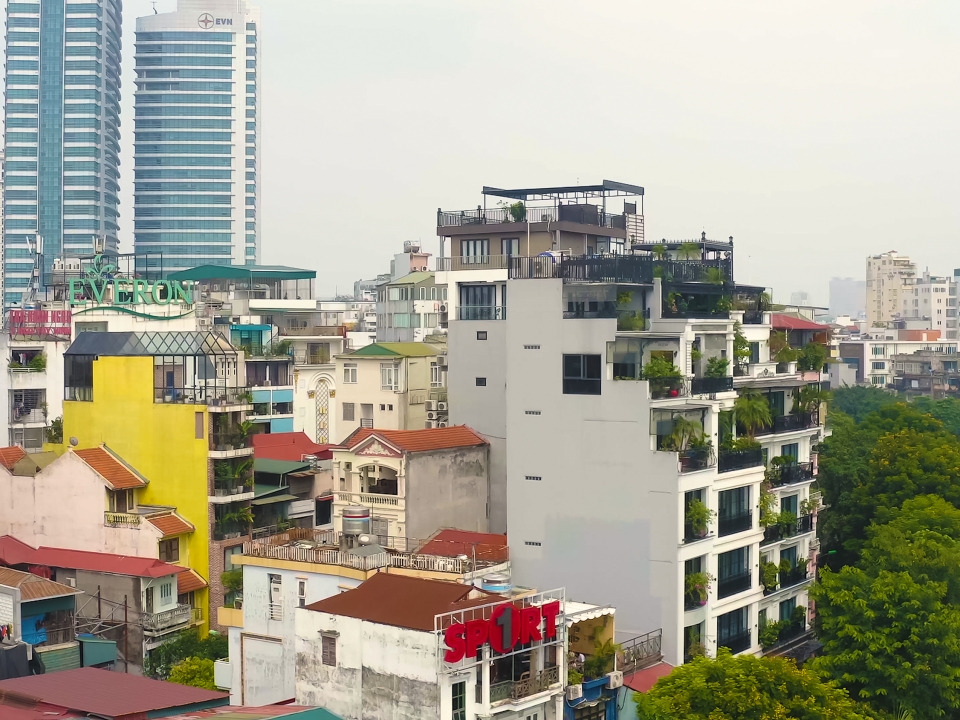
The vitality that is so typical of Hanoi also shows in the tube house, known as Nha Ong, a common sight in the city. Narrow in width and stretching deep inside, this architectural form developed as people adapted to a dense urban core. Usually the front of the ground floor is a commercial space and the upper floors are living quarters. Residents have lived here for generations, modifying their homes as needed.
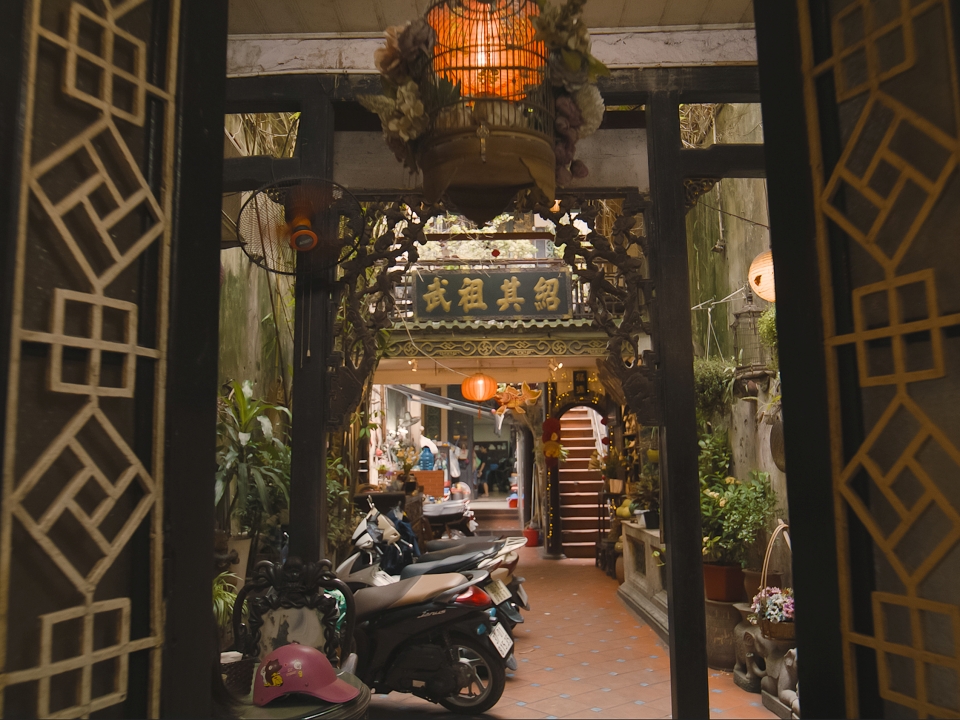
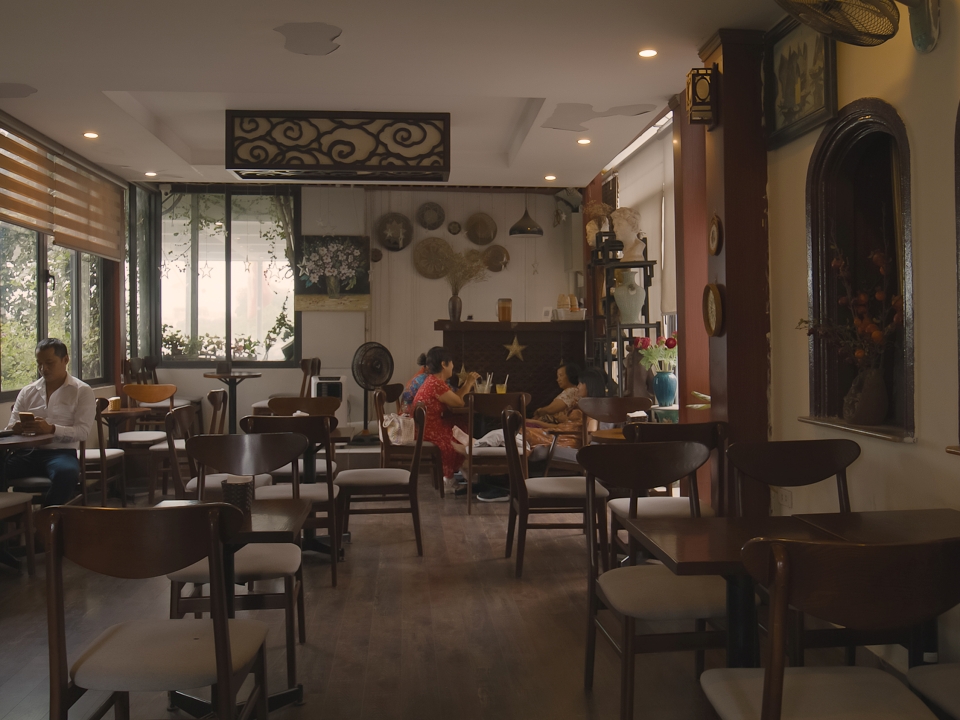
A café in a tube house lets you experience the charm of these buildings. Cafe Pho Co has a secretive allure, like a speakeasy. Enter through a passage behind a clothing shop, and you arrive at a courtyard where motorbikes are parked. Each time you wind your way inside and upward along narrow stairs and corridors, a space in a different style appears: a terrace overlooking the courtyard, an elegant tea room, and a rooftop with a view of the lake beyond the densely packed roofs.
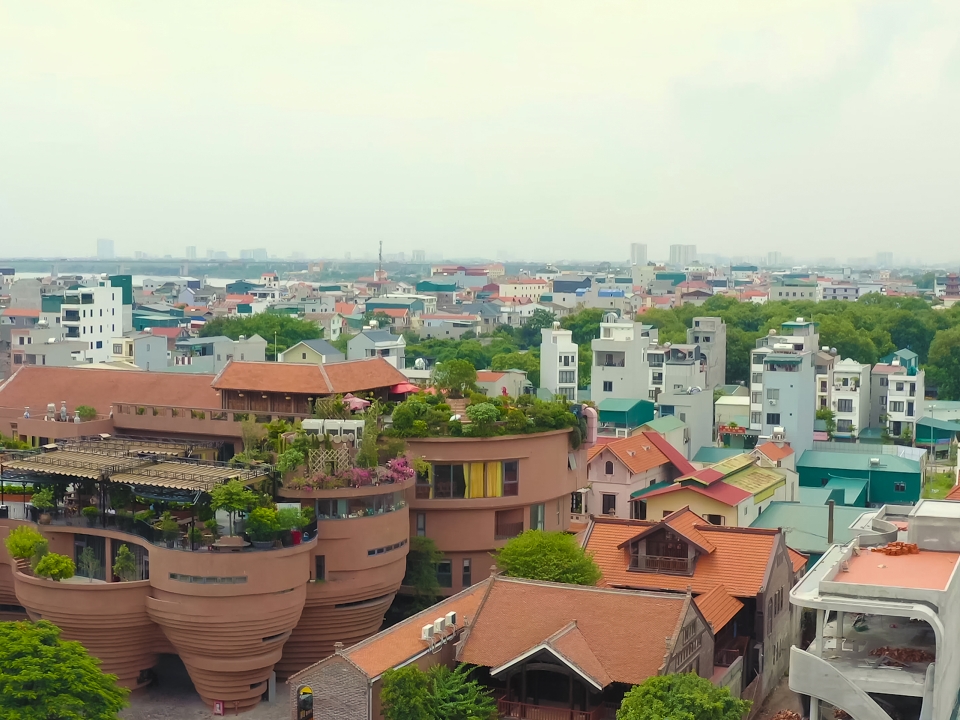
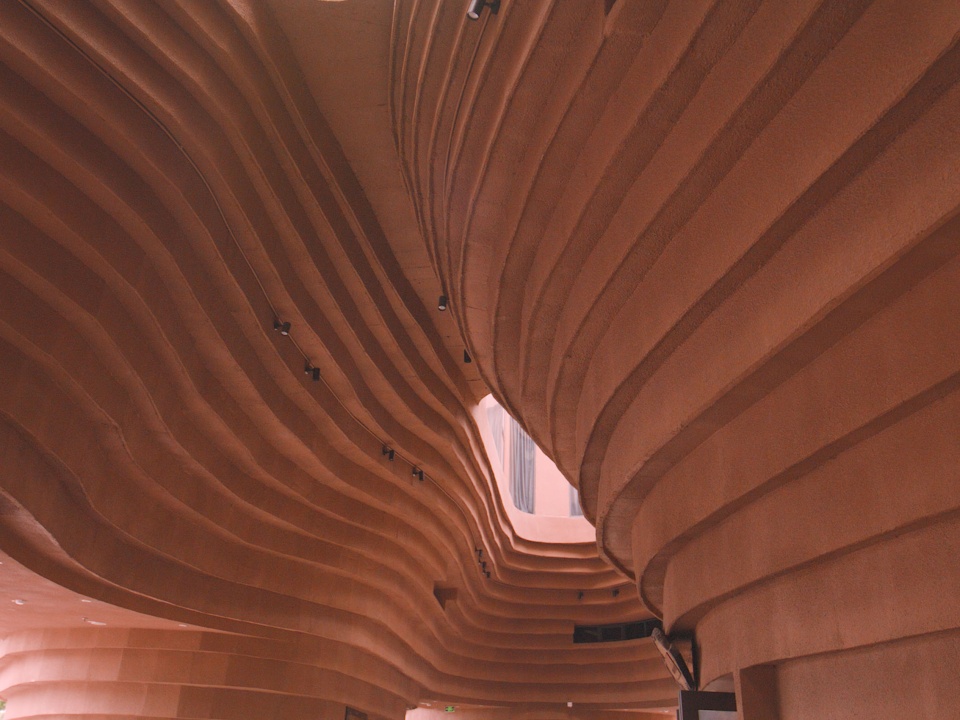
The oldest road in Hanoi, a name meaning “between two rivers,” is the waterway. Even now, ships travel up the Red River from the South China Sea to reach Hanoi. The river has given birth to lakes, nurtured rice, lotus, and trees, and shaped clay ideal for making ceramics. In Bat Trang, a centuries-old pottery village in the Red River basin, this clay takes form not only in traditional roof tiles but also in the canyon-like curved facade of the Bat Trang Pottery Museum.
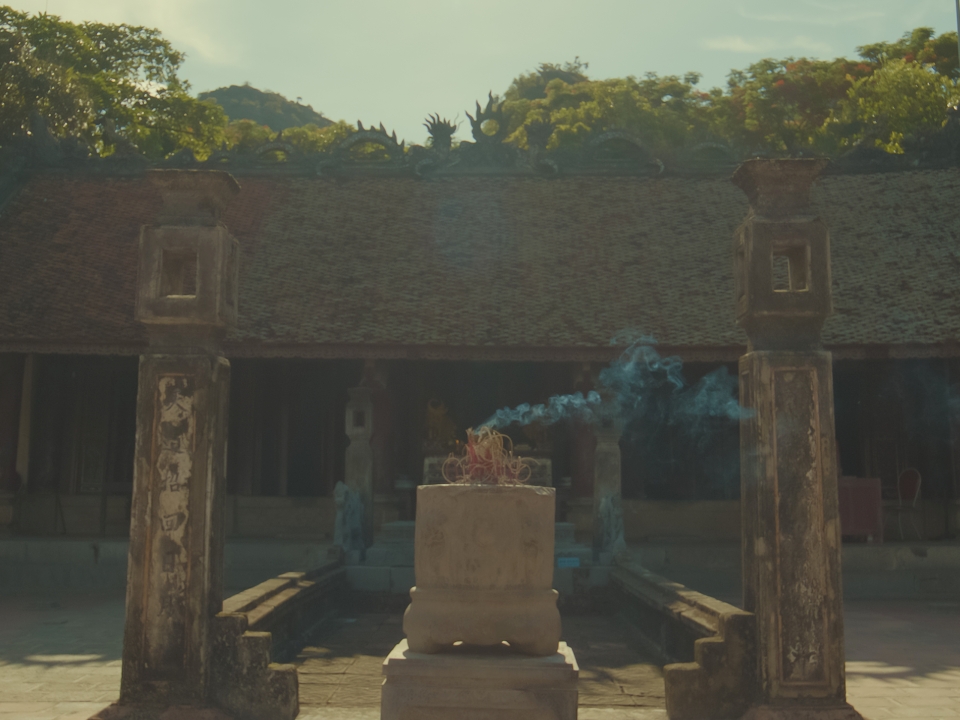
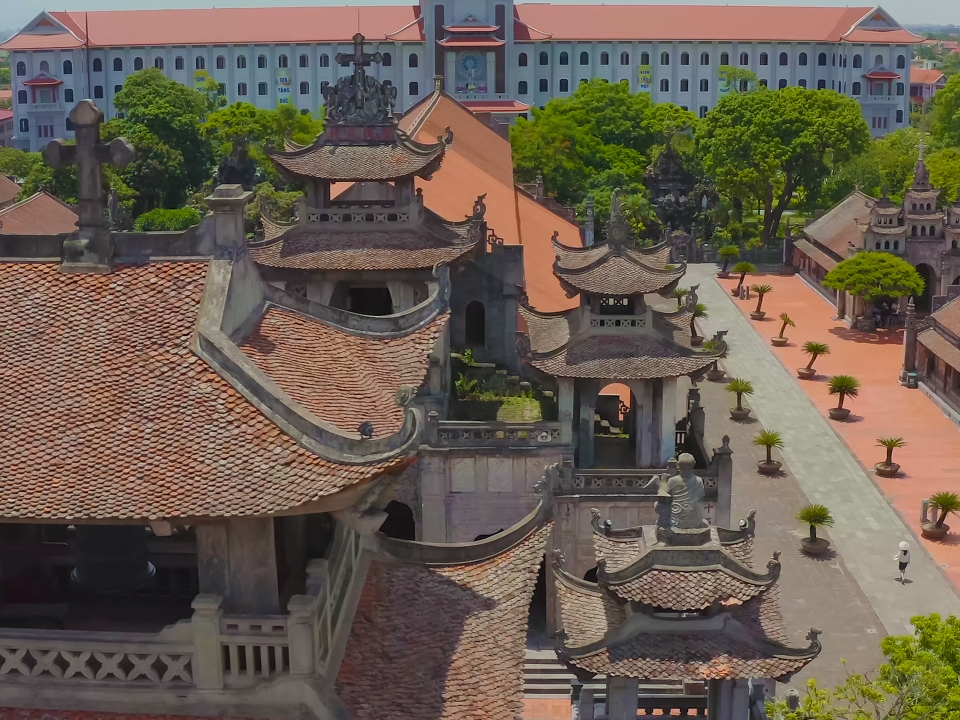
Before Hanoi became the capital, the ancient capital stood in Ninh Binh, in the Red River Delta. The temple ruins of Hoa Lu and Phat Diem Cathedral, which combines Eastern and Western architecture, blend with the limestone terrain to form Ninh Binh’s distinctive landscape and still welcome visitors today.
ASEAN-Korea Centre: An international organization that promotes economic, social, and cultural cooperation between the government of the Republic of Korea and the ten ASEAN member states. It was established on March 13, 2009, to expand exchange and cooperation between Korea and the ten member countries of the Association of Southeast Asian Nations (ASEAN).