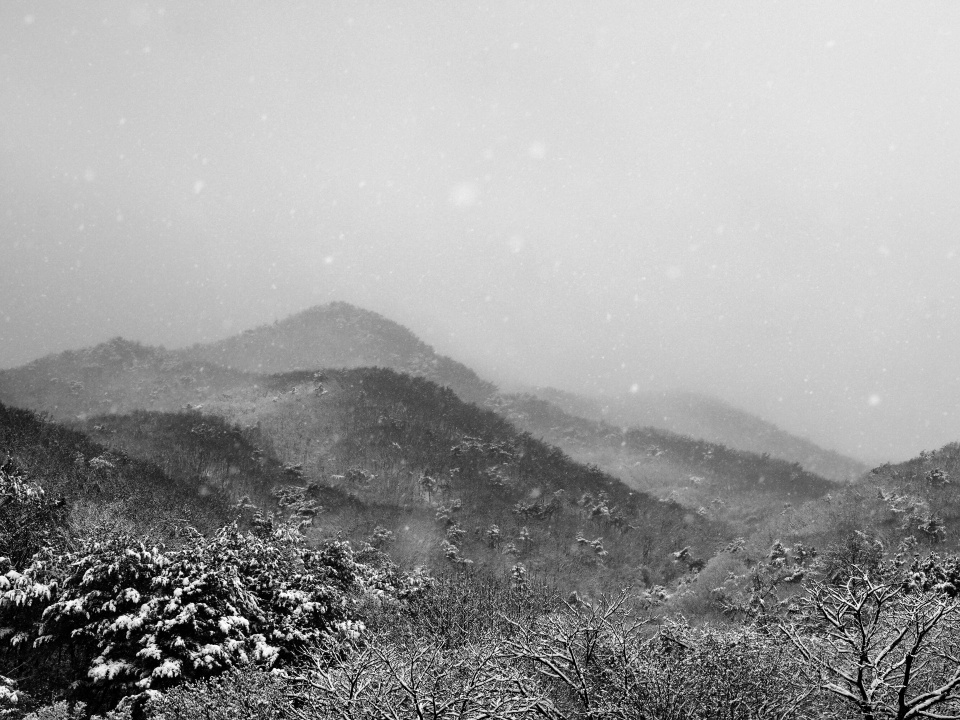
In this era of climate crisis, how is the season changing across the Korean peninsula? Documentary photographer and reportage writer Lee Sangyeop* has gathered scenes from Korea’s 24 solar terms — here is the second installment** of that story.
Words & Photos Lee Sangyeop
* Author of “A Landscape with Lenin,” “From the Pamirs to Yunnan,” “Map of the Borderlands,” “Are the Sweetfish Doing Well?” and other books.
** See Part 1 of Scenes from the 24 Solar Terms — From Ipchun to Daeseo
Ipchu 立秋 — August 8
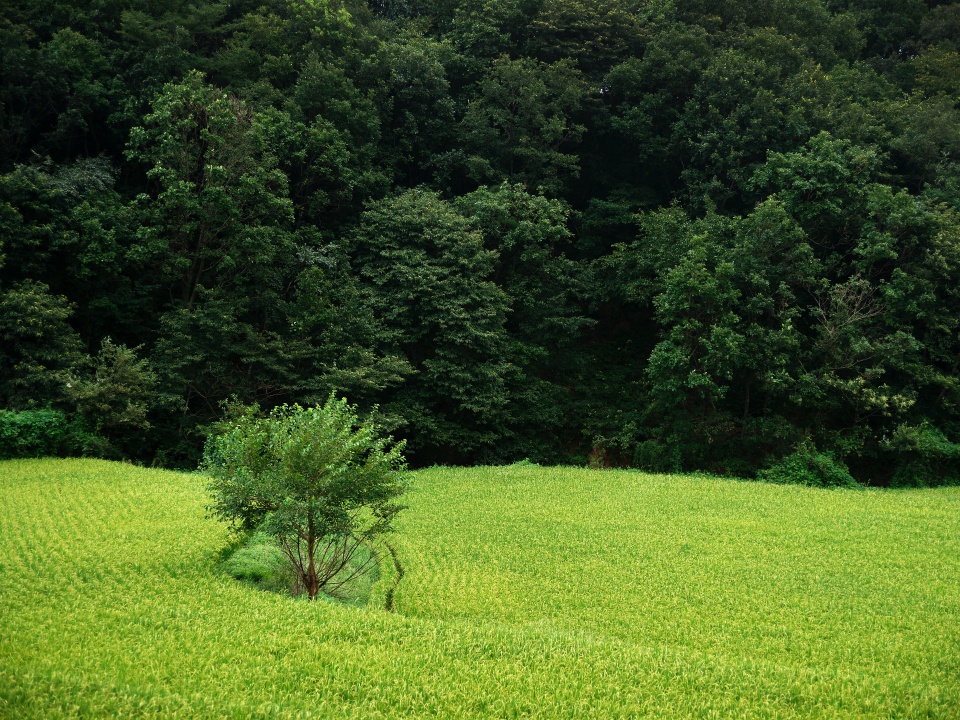
In a flooded paddy field in the countryside of Baegam-myeon, Cheoin-gu, Yongin, Gyeonggi-do, rice ripens to a golden yellow under the harsh sun of Ipchu. Though close to Seoul, this rural area feels remarkably remote. Ipchu, determined by the sun’s position along the ecliptic, is the thirteenth of the 24 solar terms. It falls on August 7 or 8 by the solar calendar, and traditionally marks “the turning point from summer into autumn — the period from this day until Ipdong is considered autumn.” But that saying now belongs to the past. In the sweltering heat of early August, it is impossible to sense any hint of fall. According to the Korea Meteorological Administration’s recalculation based on a century of climate change, the new Ipchu now falls on August 20. Moreover, the monsoon season has grown erratic, bringing heavy localized rain. Since this is the time when rice ripens, farmers grow anxious when it rains too much, worried the grain won’t mature properly.
Cheoseo 處暑 — August 23
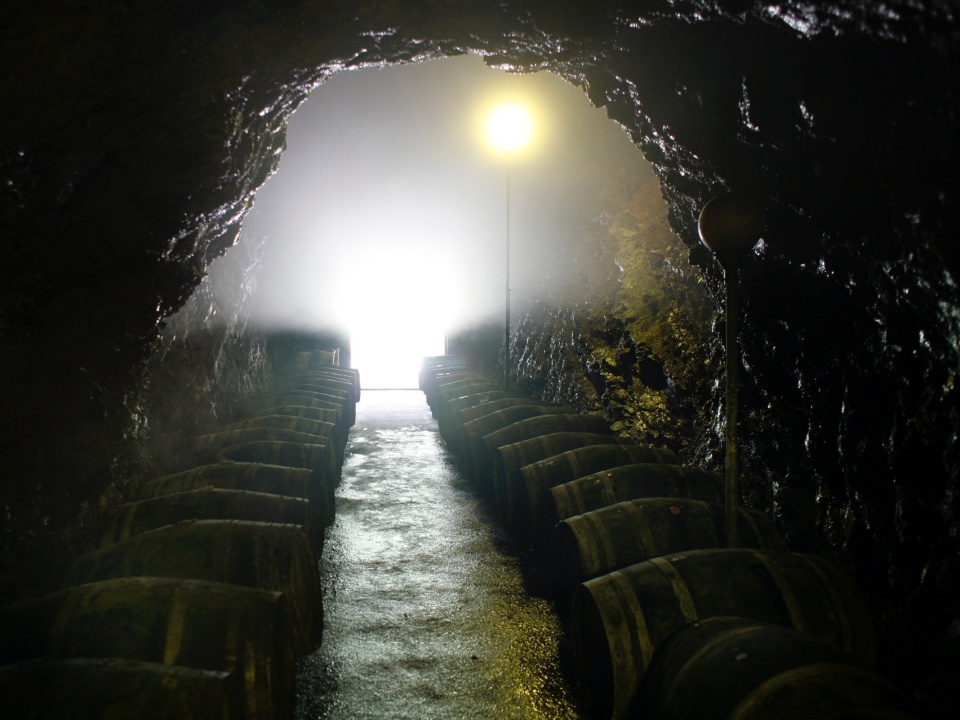
This is a cave wine cellar in Yeongdong, Chungcheongbuk-do. Its interior stays below 20°C even in midsummer, ideal for long-term storage at a constant temperature. Yeongdong alone is home to around 40 wineries. Cheoseo, the solar term following Ipchu, now arrives later than its original date of August 23 — closer to August 31. Only around then does the heat finally start to fade and the cool of autumn become noticeable. As the sunlight softens and grass stops growing, people do their last mowing of ancestral graves for the year. With lower humidity, clothes and books are hung out to dry as well. Because mornings and evenings begin to carry a crisp freshness, there’s an old saying: “After Cheoseo, even the mosquitoes’ mouths go crooked” — meaning the mosquitoes and flies that thrived in summer begin to disappear, while crickets start to appear one by one. Around this time, fruit harvests begin, and one of Koreans’ favorites is grapes. Traditionally, grapes were picked around Hallo, but nowadays, in major growing regions like Yeongdong, the harvest happens during Cheoseo. Grape festivals for visitors are also held around this time.
Baengno 白露 — September 7
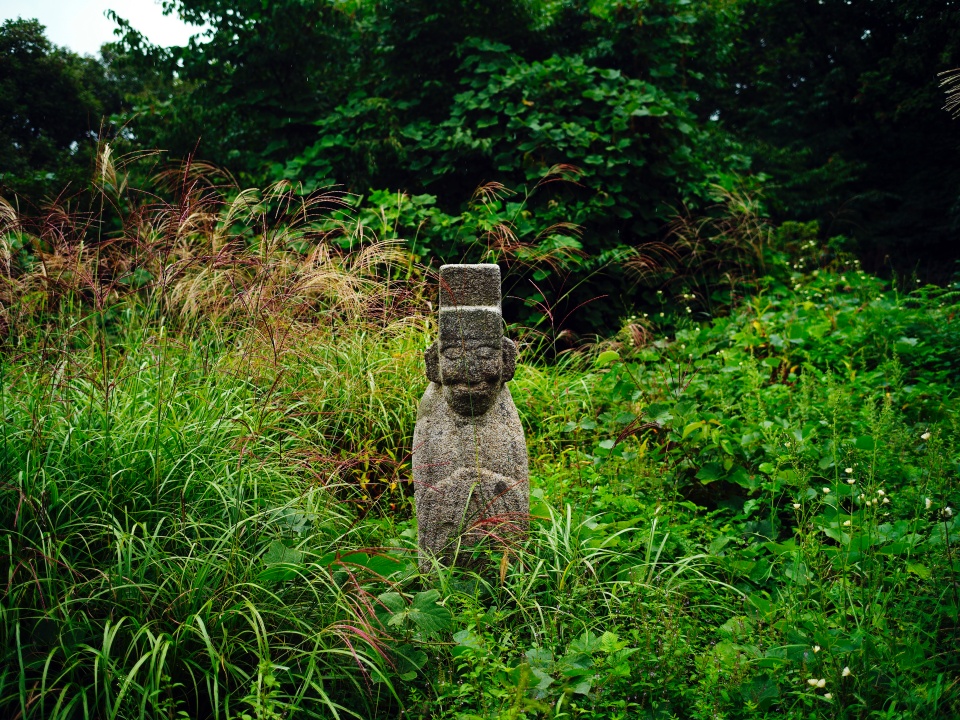
Baengno means “white dew,” named for the way nighttime temperatures drop below the dew point around this time, causing dew to form on leaves and objects. In other words, around mid-September, an early morning walk might leave the hems of your pants soaked. Around Baengno, people also begin mowing ancestral graves and take a brief break from farm labor after the exhausting summer season, before the harvest begins. So my family and I went on a rather special visit to our ancestral grave — that of my clan’s founding ancestor. He was a man named Lee Imgan from the Goryeo dynasty, who helped Yi Seonggye stage the coup that founded the Joseon dynasty. His great-grandson, Lee Jongmu, showed early talent in suppressing Japanese pirate raids alongside his father, rose through official ranks, and became widely known for later conquering Tsushima Island. He is regarded as the “restoring ancestor” of our family line. Still, I have my doubts about whether he was truly such a great general. Oddly enough, it was only after I moved to Gogi-ri in Yongin over a decade ago that I discovered Lee Jongmu’s grave was within walking distance of my house. “Looks like we’ve come to keep watch over his tomb.”
Chubun 秋分 — September 22
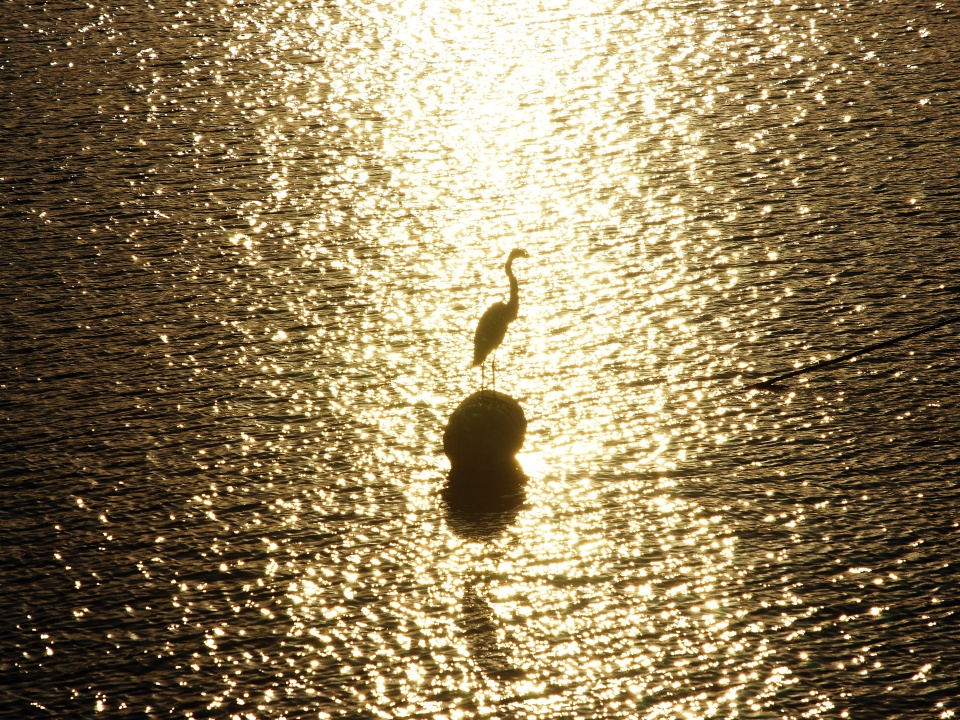
This is a view of the sea off Yeosu, Jeollanam-do. After Baengno comes Chubun. Since Chubun marks the point when day and night are of equal length — the moment the sun crosses the midpoint between the ecliptic and the equator — its date remains fixed around September 23 without much variation. However, the actual climate of Chubun has shifted to early October, a result of climate change. Both Chubun and Chunbun (the spring equinox) share equal day and night lengths, yet temperatures during Chubun run about 10 degrees higher, due to the lingering warmth from summer. This period coincides almost exactly with Chuseok, Korea’s biggest holiday, and is a time for harvesting nature’s bounty. Seafood is especially prized along the west coast, with gizzard shad (jeoneo) taking center stage. As sea temperatures steadily rise along the west coast, gizzard shad — which favor warmer waters — are migrating north from the south coast toward the west and east coasts. Yeosu, where gizzard shad are caught in abundance, hosts a ‘Gizzard Shad Festival,’ but by September, the fishing grounds extend as far north as Seocheon in Chungcheongnam-do. Gizzard shad that first appear in summer continue to be caught well into autumn. As the gizzard shad disappear, the gray herons that summer in Yeosu begin thinking of their journey north as the cold winds start to blow.
Hallo 寒露 — October 8
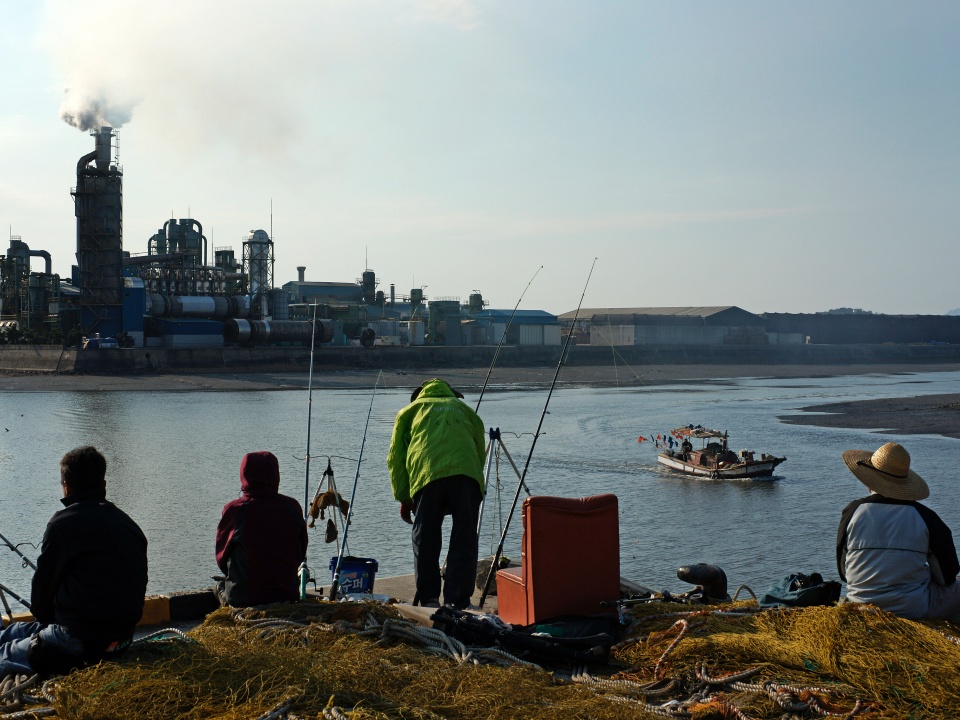
The tide comes in at Bukseong Port in Incheon. Fishing boats that had been working the waters off Ganghwa return to port. In October, during Hallo, the boats are surely loaded with shrimp destined for making chujeot (autumn salted shrimp). When boats brimming with shrimp line up, a makeshift fish market springs to life. Owners and their families sort, pack, and sell the freshly caught shellfish and seafood themselves — a scene of frantic energy. Amid the chaos, one senses a fierce will to live. As climate change reshapes the solar terms, summer is expanding and pushing autumn aside. While the overall duration of autumn-like weather hasn’t changed drastically, it now tends to stretch well into early winter. As a result, Hallo now claims the entire month of October. Hallo, the seventeenth of the 24 solar terms, means the time when ‘cold dew’ begins to form. When this cold dew turns to frost, the next solar term, Sanggang, begins. Around this time, geese can be seen flying overhead, and wild chrysanthemums bloom along the roadside.
Sanggang 霜降 — October 13
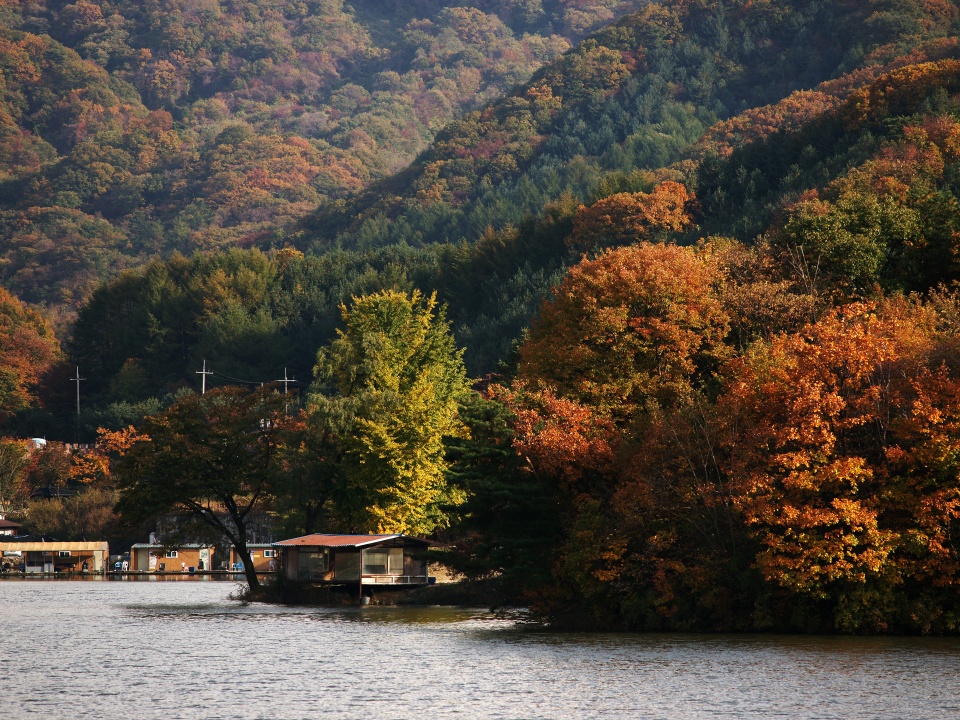
Anglers hoping for a big catch gather at Gisan Reservoir in Yangju, Gyeonggi-do, as dew settles and cold air lingers over the water. The forests around Yangju are notably filled with cultivated pine nut trees, said to produce nearly half of the country’s domestic supply. It’s also around this time that squirrels start stockpiling food for winter. Sanggang is the solar term when frost begins to fall — light frost early on, followed by heavy frost later. Before the hard frost sets in, farmers harvest nearly everything except black soybeans (seoritae), which are left in the ground a little longer. Korea’s solar terms have changed considerably over the past 30 years — winter has lost two terms, while summer has gained two. Among the 24 solar terms, fixed astronomical events like Chunbun, Chubun, Haji, and Dongji — determined by Earth’s orbit — remain unchanged, but the terms tied to biological cycles, such as temperature, rainfall, and frost, have shifted dramatically.

Ipdong 立冬 — November 7
It’s hard to say how much people truly notice the shifting solar terms caused by climate change, but Korea’s weather has changed so much that hardly anyone remains unaware of it. At a nearby restaurant, napa cabbage grown in its own vegetable garden flourishes against the backdrop of Gwanggyosan, its slopes tinged with autumn color. Yet according to the solar calendar, Ipdong is near, meaning the cabbage should be finishing its growth and ready for the farmer to harvest. Two weeks after Ipdong, the calendar points to Soseol — yet no snow falls. Ipdong marks the solar term when plants wither, ice begins to form, and winter is announced. The ‘Climate Report’ now designates November 16 as the new Ipdong, roughly ten days later than before. As a result, frost still appears more often than snow. From this point on, deciduous trees shed their leaves to conserve energy, grasses turn yellow and wither away, and insects vanish from sight.

Soseol 小雪 — November 22
On an early morning during Soseol, frost blankets Woljeong-ri Station in Cheorwon — a place famously known through the phrase “the iron horse longs to run.” The silence here weighs heavily on a photographer traveling alone. To photograph the Cheorwon DMZ (Demilitarized Zone), I visited a GP (guard post) along the Southern Limit Line at dawn, where the Cheorwon plains stretched out in golden hues and the wetland ponds lay frozen over. Although November’s average temperature here isn’t particularly colder than other regions, those who served in the military in this area vividly remember unusually harsh winters — whether from a psychological effect or the heavy fog and humidity that intensify the perceived cold. Soseol, now recalculated for December, traditionally fell in late November, but as summer and autumn have lengthened, it has shifted into December. What’s more, Daeseol now arrives just a week after Soseol — winter itself has become compressed. Rainfall has steadily increased over the past 30 years, with about 1 to 2 percent more snowfall on average. In truth, snow should be falling by late November, but nowadays average temperatures tend to stay above freezing, resembling the climate once typical of Ipdong. Only now does winter truly begin. Beside the iron horse that can run no more, the early winter feels colder still.

Daeseol (Major Snow) December 7
Gogi-ri in Yongin is surrounded by Mount Gwanggyosan. When heavy snow falls during Daeseol, the whole world turns white. Here, people clear the knee-deep snow just to survive. If this task is put off, movement becomes impossible and friction builds up among neighbors. So everyone has to diligently clear the snow on their own. Daeseol, said to bring the heaviest snowfall of the year, arrives just a week after Soseol (Minor Snow). This timing differs little from the traditional timing of Daeseol. Soseol and Daeseol have essentially merged into one. These solar terms were originally based on the climate of China’s Huabei region, but they aren’t too different from ours. These days, once snow starts falling, it tends to pour down uncontrollably. Along the rural roads of Gogi-ri, calcium chloride is spread diligently to clear the snow. Thanks to this, travel is easier, but there’s a price to pay. Calcium chloride corrodes roads and vehicles, seeps into the ground and accumulates, and eventually flows into streams, polluting freshwater sources.

Dongji (Winter Solstice) December 22
This is Incheon’s Chinatown, visited in December around Dongji. Around this time, the streets turn red. Chinese visitors flock to this place through the Spring Festival period in January and February. In particular, in northern regions like Shandong, the hometown of many overseas Chinese in Korea, dumplings are eaten a lot in winter — not the filling-less bread rolls, but the Korean-style dumpling, gyoza. Chinatown still retains many modern buildings once owned by China and Japan. Dongji occurs when the sun reaches the winter solstice line, 23.5 degrees south of the equator — that is, when the sun’s ecliptic longitude reaches 270 degrees. By the solar calendar, it falls around December 22 or 23. When Dongji by the solar calendar falls in the early part of the eleventh lunar month, it’s called Aedongji; in the middle, Jungdongji; and near the end of the month, Nodongji. In this way, Koreans layered the lunar calendar onto the solar-based Dongji, forming a lunisolar system of seasonal customs imbued with meaning. Through the Silla and Goryeo dynasties, the Tang dynasty’s Seonmyeongnyeok calendar was used, and it remained in use until the first year of King Chungseon’s reign (1309), when it was replaced by the Yuan dynasty’s Sushili calendar. This suggests that before King Chungseon’s time, Dongji may have been celebrated as the New Year.

Sohan (Minor Cold) January 6
It’s said that the coldest cold of the year comes not at Daehan but at Sohan. This means that, compared to China’s Huabei region, the harshest cold sweeps into the Korean Peninsula around Sohan rather than Daehan. Sohan used to fall in early January, but is now considered to fall at the end of December. This is when the peninsula’s coldest weather is supposed to arrive, yet the average temperature no longer drops below freezing. Whether it’s Sohan or Daehan, the average temperature now stays above zero. Perhaps that’s why spring seems to have come to Haeinsa Temple on Mount Gayasan. Even though it’s still Sohan in January and the snow hasn’t melted, a light rain is falling, and green shoots are already budding on the trees. On this day, a senior monk had passed away, and lay monks and devotees are preparing a cremation ceremony. “Venerable! The fire is being lit!” The death of a great monk always draws curiosity. Attention tends to focus entirely on the elaborate cremation ritual and the relics left behind. But it also plunges one into deep contemplation. What is life?

Daehan (Major Cold) January 20
Where is the hottest place in the depths of winter? It’s the labor of fire. Workers who melt glass into vessels under tremendous heat are drenched in sweat from head to toe. This is a glass factory in Yongin, visited during the cold of Daehan. Workers join forces to pull out a furnace crucible heated to 1,500 degrees Celsius. Inside this factory, it feels like the height of summer. Daehan is said to be the coldest period among the solar terms. It’s the last of the 24 solar terms, occurring when the sun’s ecliptic longitude reaches 300 degrees. By the solar calendar, it falls between January 20 and 21, and by the lunar calendar, in the twelfth month. In East Asia, this was seen as the term that closes out winter, with the final day of Daehan called Jeolbun, regarded as the seasonal end of the year. According to folk custom, this night was called Haeneomi, and there was a tradition of scattering beans in rooms or on wooden floors to drive away evil spirits and welcome the new year. By the solar terms, January contains both Sohan and Daehan, but due to climate change, the new markers of the season have become Daehan and Ipchun (Start of Spring) in January. Of course, even that meaning has begun to fade, as the average temperature no longer drops below freezing even during Daehan, continuing steadily until even Ipchun no longer stands out clearly.