An interview with poet 1 Kim Yurim, who has been living in a parallel world right here, right now
Interviewer Hur Taewoo
Interviewee Kim Yurim
Photos Choi Namyong
1 She began her literary career in 2016 by publishing poems in Hyundae Sihak. She has released three poetry collections and writes and publishes through a variety of projects.
For an interview, we sometimes send the questions in advance, but this time I didn’t.
Why?
I wanted to keep it fun.
Ah, to keep it fun. (Laughs) Yes, that works for me.
Here’s the first question. 2 Who is Hong Seungtaek, who appears often in “Another World” (Byeolsegye)?
He’s my friend and colleague. We’ve been working together since my earliest days of writing, and he writes poetry too. These days he mostly does performance, moving back and forth across boundaries. 3 We submitted work together to a literary magazine called “Toybox.” It had a section that accepted collaborative submissions, so I proposed it: “Seungtaek, want to try this together?” The theme at the time was ‘letters.’ He studied architecture, you see. I said, “We both write poems, so if I write a poem and send it to you, could you send back a poem or something like a floor plan, whatever comes to mind? Then I’ll write another poem in response.” That’s how it went: we passed poems and drawings back and forth about three times, and I included that exchange in this collection.
Your three collections came out from three different publishers. Isn’t that rare?
It does seem a little unusual, but I don’t think it’s unheard of... Does it look odd? Like I’ve been hopping from place to place? (Laughs)
Each of three major publishers released one of your collections, so I wondered whether that means your work fits the style of poetry today.
4 “Two-Way” (Yangbanghyang) and 5 “Three or More Models” (Se gae isangui mohyeong) were both published after I submitted them myself. Usually a writer is approached by a publisher first, but with me, and the same goes for the 6 short story I published recently, once I’ve gathered enough poems and feel they would work well bound together, I actively submit them to a particular publisher on my own initiative. That’s how my first and second collections came about. Even so, each publisher accepted my submission, so it’s a little amazing to me.
Isn’t it harder to get published by submitting?
Maybe so. Honestly, it was hard at first. Some writers get contacted right away after debuting and publishing a few pieces, but that wasn’t my case. I understood that publishers abroad generally accept submissions by the book. The debut process is also a bit different from Korea’s. So I thought, well, people do it this way, so why not give it a try. It was also a way to work through my own struggles at the time. And my style of writing poetry isn’t about making an impact with each individual poem or having one powerful line, the kind people usually expect from poetry. I work in a way that conveys something better through the flow of an entire book, so I think I felt it made sense to present it as a book.
You must have a heavy workload normally.
Yes, I do. It’s killing me. (Laughs) These are deadlines I set for myself. Beyond poetry, I write project-based fiction and do a bit of translation as well. I thought it would be interesting to discuss how a text changes depending on the translator, so I’m planning to publish a series called “Translation Practice.” Last year I saw a VR work by Kim Huicheon called “Love and Soul” and loved it so much that I was writing a critique of it. Then I started working,
and everything came to a halt. Right now, I’ve just published a collection, so if there’s a poetry deadline I handle that, and after that I’m writing fiction. It is a lot.
You’re doing many things at once.
Yes, I tend to be prolific, and the more I write, the more I throw away, and I revise many times. I enjoy that whole process.
2 Poet Kim Yurim’s third poetry collection, published by Changbi in 2022.
3 “Toybox,” which bills itself as an all-round literary magazine, has published seven issues so far.
4 Poet Kim Yurim’s first poetry collection, published by Minumsa in 2019.
5 Poet Kim Yurim’s second poetry collection, published by Moonji in 2020.
6 She published the short story ‘Mother of Gangs’ in the Spring 2022 issue of “Literature and Society.”
Do you have a day job related to your writing?
I haven’t been there long, and although the job involves writing, the workplace itself is in a quite different field. I create content at a manufacturing startup, so it’s different. It’s the same in that it’s writing. I feel as though my head is literally being split in half.
So your three collections, “Two-Way,” “Three or More Models,” and “Another World,” have come out about once a year?
More or less. “Two-Way” and “Three or More Models” came out about six months apart, and after skipping last year, “Another World” came out this year.
I felt that “Two-Way” was written with the individual poet Kim Yurim as the self, that “Three or More Models” was written with the idea that the speaker could be an individual or an other, this or that, and that in “Another World” there is simply a being called ‘Yurim.’ To put it in terms of travel: when someone travels, everyone is a foreigner, an other and yet also oneself. So it struck me as poetry written by Yurim at a travel destination.
I can see how a reader of my collections might get that impression. Personally, I don’t think I could write like this if my ego had grown larger. I believe all writing is for oneself and ultimately can’t help but reveal oneself. It’s a matter of how much of yourself you reveal. Even with criticism, I think it’s writing that reveals yourself by passing through other people. So in one sense it may be right to say the ego is growing, but the self, or Kim Yurim, and the relationships surrounding her, or the way sentences stretch out, are somewhat different. For example, in the poem “Kim Yurim’s Secret Art,” you can’t quite tell what the relationship between ‘I’ and Kim Yurim is. So I’d like to hear more about what you mean by the ego having grown.
Rather than grown, I think “split” or “divided” would be the better word.
If “Two-Way” began, in a sense, from the self, then this collection has definitely moved away from starting out from a one-dimensional self. And personally, I think I wrote it better than the first and second collections. (Laughs)


I heard you legally changed your name to Yurim.
It was originally a purely Korean name with no Chinese characters, and I added 7 Chinese characters. That counts as a name change, apparently.
Within one collection, there are different poems with the same title. Is that meant to show another Kim Yurim within Kim Yurim?
Actually, there is no poem called “Another World” in this collection. There’s no title poem. The word ‘another world’ is used either for someone behind the times, as in “Did you come from another world? How can you not know this?” or, at a new travel destination, to mean that somewhere is different and wonderful, as in “This place is truly another world.” As I wrote in the poet’s note, ‘Honestly, I don’t know much about another world either. What on earth is a world other than the one I’m in now?’ I think the whole book may have been written to pose that question. And it’s true that another world unfolds inside it. It can be interpreted in many ways, but simply put, another world isn’t somewhere else; you could see it as something that subtly shifts, little by little, right here and now. For example, there’s a poem called “The Road of Interviews.” It repeats the line “But they were strangely out of step,” scenes and events overlap as if in a dream or in reality, and I deliberately made the sentences overlap too. It’s as if one were continuing someone else’s writing, or rewriting an existing sentence almost word for word. There are also cases like “Back to That Café,” where poems have the same title without being closely related.
So when you have poems with the same title, do you write one first and then the other? Or do you write both at the same time?
Usually I think I wrote them in succession. Sometimes a poem that was originally one became two or three later on. In those cases, I worked on them with time in between. Other times I wrote, at the same moment, the different poems I could produce under one title. Hmm, now I see why you send the interview questions in advance. (Laughs) It’s something I discussed with my editor, and I agree with the idea that “another world is here.” When you say, “That person must be from another world. How could they not know something like that?” the “person” you’re talking about clearly belongs to “here.” I can point to that person only because they are “here.” I don’t really imagine a “there” that lies beyond “here.” On the other hand, I imagine parallel worlds a lot. If I once came close to a serious accident, I imagine that in another parallel world I died or was badly hurt. It isn’t pessimism. There have been countless moments where things could have branched off, and I think of “here” as something that keeps changing, which is probably why I work this way. I suppose you could guess that writing by taking over a poem I’ve already written, as in dictation, and adding variations to its sentences also stems in part from my thoughts about, or attitude toward, the world.
It might be a poem, but I also thought it could be read as a text.
Not long ago, my book was discussed on the Changbi podcast ‘Bukbukseoro’ (North-Northwest Road), and the poet Kim Hyun said of my poems, “They stop just short of reaching what we usually think of as poetry, and yet they are becoming poems.” I thought that phrase might help readers understand my collection. What you just said, that my poems could be texts, is also interesting and a lovely thing to hear. You could see the word “poetry collection” as a kind of label, but I think we need that way of dividing genres. And I did write them as poems. They become poems when they’re published as a poetry collection and read within the boundary of that form. If I had put them out saying, “Just read them, regardless of genre,” I think nobody would have found the entrance. Because of that constraint, they might even look less like poems. I’m happy when I hear that these poems open up the possibility of being read as something else: not a film, not a poem, not a novel. I didn’t exactly intend that, but I hoped for it. So it’s entirely possible.
7 Yurim. The name is said to mean “surpassing beauty.”
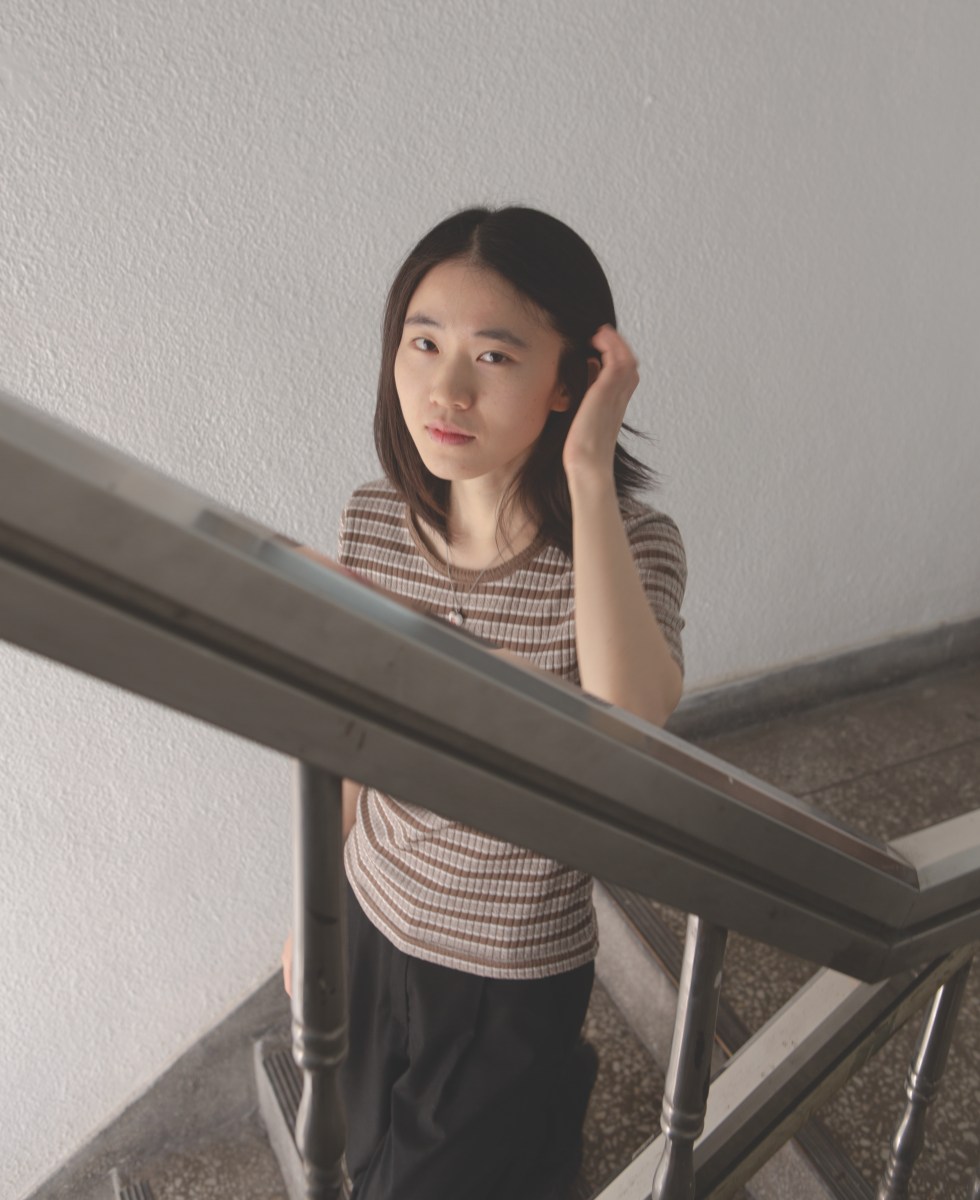
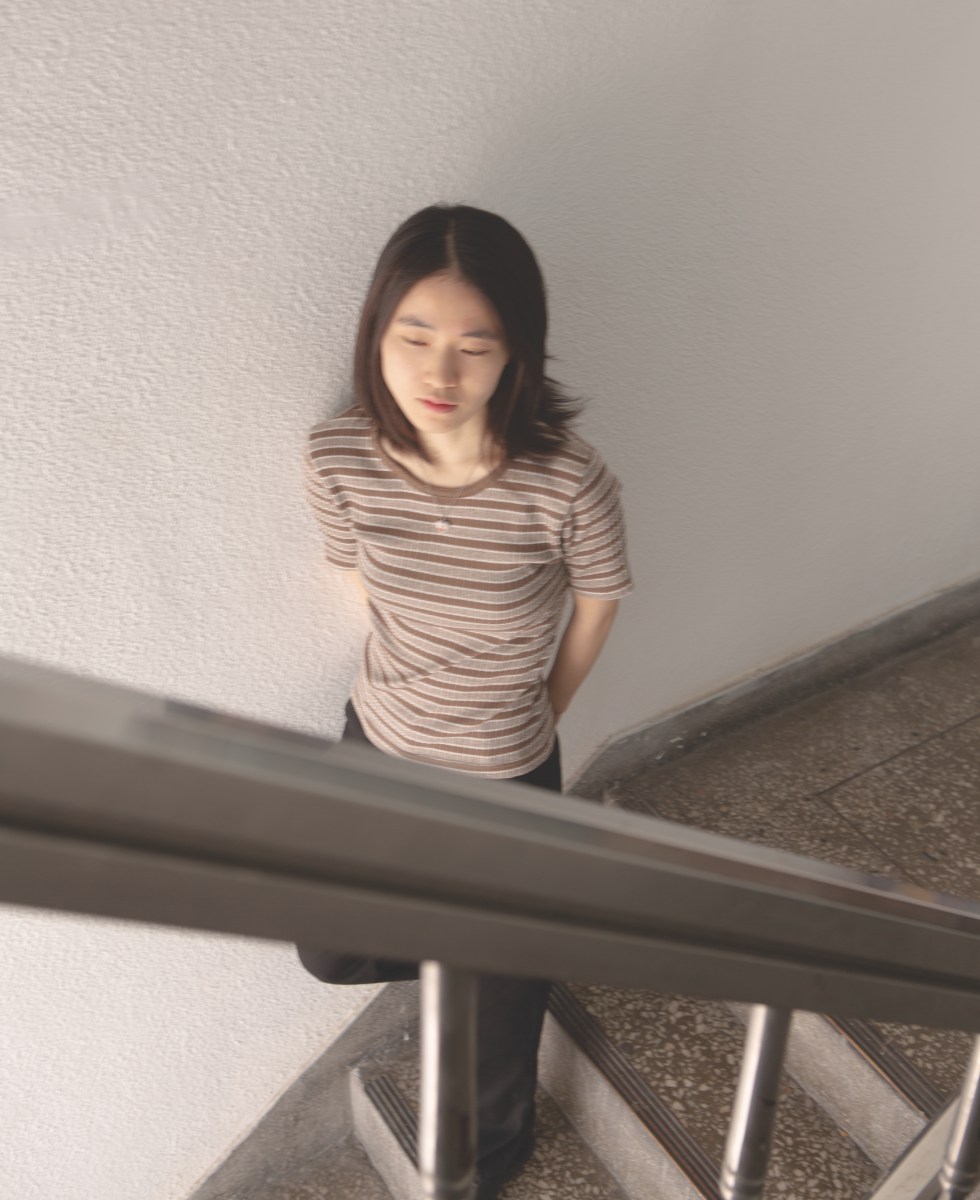
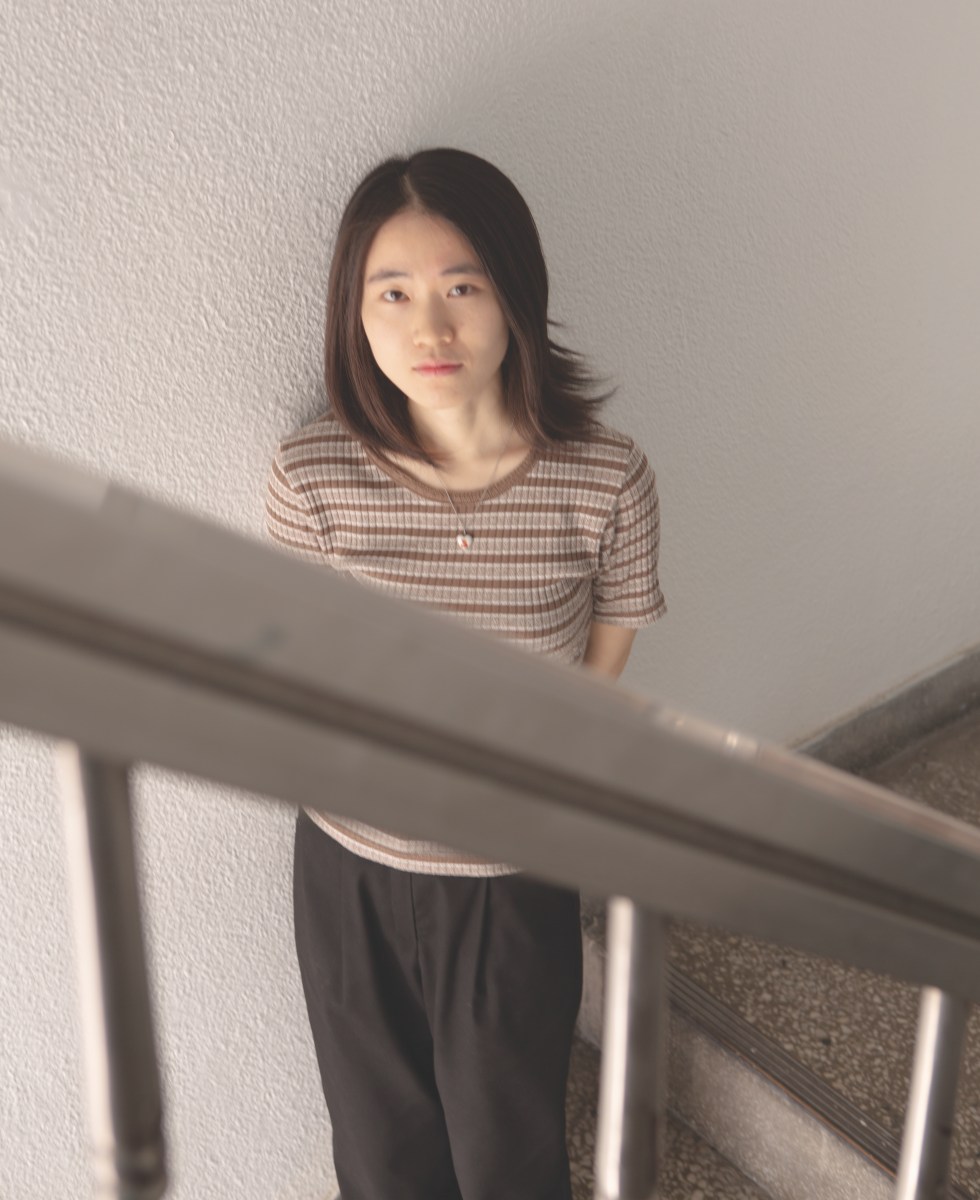
How do you choose where to travel?
Recently I’ve mostly traveled within Korea because of COVID, and I don’t really have set criteria for choosing a destination. I usually go to a city I want to learn more about. Personally, I like destinations that seem a little dull, a bit desolate, you could say. You know, the kind of place people describe by saying, “There’s nothing there.” When I hear that, I actually want to go. I like visiting famous places too, but I also like walking neighborhood streets and wandering through markets. If a restaurant catches my eye as I pass, with a sign I like and an old look to it, I’ll go in and eat. I often travel with the idea of staying at least four nights and getting to know the neighborhood a little before I leave. When I visited Busan before, I stayed around Millak-dong and the old downtown, and most recently, in the Suyeong-dong area, I mostly went back and forth between just two subway stations. I build my own pattern, as in everyday life: “Tomorrow I’ll buy rice cakes from that place again.” I like traveling as if I lived there, even if only briefly.
In an earlier issue of our magazine 8 we ran poems from your walking series. Do you naturally enjoy taking walks?
Yes, I do. My eyesight isn’t great. I like walking with my glasses on, and I also like walking with them off, when I can hardly see. When I walk in a slightly blurry state, there are visual elements I notice more readily. I can pick up on what has changed more easily. It’s a bit different from being able to see in fine detail. I enjoy walking the same place again and again, with and without my glasses. I like walking alone and I like walking with others, but when you walk with someone, you’re aware of the person beside you, and you feel you have to keep sharing what you’re seeing. It feels like a completely different kind of walk from one taken alone. I even wonder whether it should be given a different name.
I think I wrote about ten poems in the walking series, and at the time I was personally obsessed with places. It may be connected to ‘Another World’ (Byeolsegye), what science fiction calls an “otherworld.” The places I had gone, and the entire situation I was in, felt like an otherworld. A moment passes and never comes back, which I couldn’t bear, so I clung to places that I could touch and that had concreteness. I can’t feel any tactile sense of time, but a place, at the very least, plants the illusion that it “existed.” Of course, going back to the place of that moment is impossible. When I was writing the walking series in earnest, I think I strongly wanted to be fooled into feeling that I had gone back to that moment through the place. I can’t touch the moment when I was in Spain, but I can keep the place in photographs, and there’s the bench where I sat looking at Gaudí’s cathedral. It very likely still stands there. It’s hard to talk about time in language, but talking about a place connects much more easily. It’s simple and one-dimensional, but it’s tied to matter. It gives a sense of reassurance, too.
Is there anything you always carry with you when you travel?
I tend to pack a bit of everything, like a traveling peddler. I don’t think there’s any one thing I always bring.
Do you write poems while traveling?
Not at all. When I travel, I focus on traveling. In the past, even on trips I would wonder whether I might write a poem from the experience later, but lately I don’t have even that. Honestly, I’m not even sure whether what I do counts as traveling. (Laughs) It may be related that Jongam-dong appears so often in my poems, because I focus on concrete places I can pick out within the everyday life where I currently live.
On recent trips, I’ve treated accommodation as important. I mostly browse Airbnb and choose a place that feels as if it could be my home. Big or small doesn’t matter. Either way, I bring my own things and arrange them like my own vanity table or my own workbench. Once I arrive, I unpack, make the place feel like home, and head out lightly, as if I were a local. Travel feels a little different from how it used to. Before, I had a vague illusion that a trip might solve something. At the same time, I knew it wouldn’t, so I badly wanted to travel and yet really didn’t want to. Setting out to resolve something is, in a sense, carrying luggage. But that’s no longer the case. I just go in the lightest state possible.
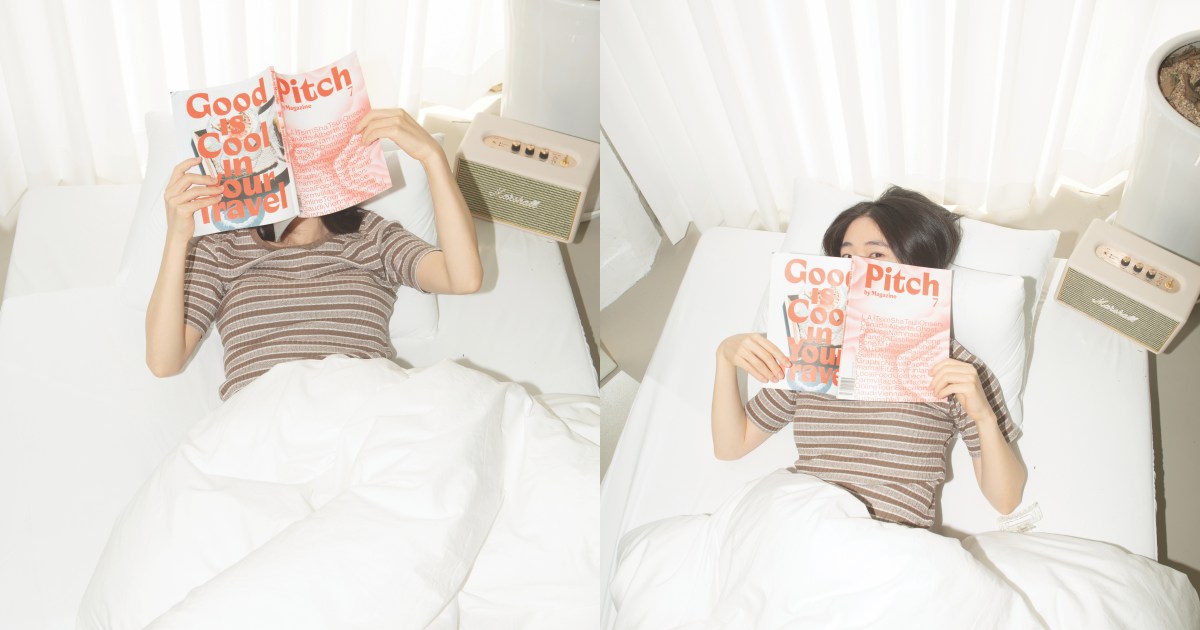
8 Three poems published in the inaugural issue of “Pitch by Magazine”: ‘Walking Gasiri,’ ‘Walking the Seoul Museum of Art,’ and ‘Walking Hanam Market.’
Of all the places you’ve been, which destination do you remember the least?
What a fascinating question. How could I pull the place I remember least out of my memory? If I can recall it, then it isn’t the place I remember least... So I don’t think there is such a thing as the least memorable destination. Each place hides in the mind and eventually, at some moment, meets a catalyst like Proust’s madeleine and makes its presence known.
There is, though, a place so intense that it became like a dream. It was somewhere in southern Germany, and I can’t even remember its name. I paid a fare to cross a river by boat and arrived at a small German village. The local children looked at me and pulled at the corners of their eyes. I think I just smiled. I climbed a small mountain, and it was crimson. Deeply red and silent, and I was alone. I don’t think I will ever again walk a forest path blazing that red. It was the ultimate dream destination in primary colors.
What do you think about sustainable travel?
First of all, I have to stay alive. Only then can it be sustainable. And I’d need balance, if I’m going to travel, work and write. Among travel, work and writing, and, well, the world and the universe, and my tiny pea-sized home, good meals and friends, I have to protect what I want to protect as myself. Only then will travel become possible. Don’t you think? I don’t believe a trip taken to avoid a problem right in front of you is really travel. That kind of trip isn’t travel; it becomes baggage. To truly set off well, to truly travel well, I first have to be able to accept myself to some degree. If I make an effort to accept myself as I am, admitting that this is all my vessel can hold, then it won’t matter what kind of trip I take or when, and the time before the trip, during it and after it can be both different and the same.
“Sustainability” is a buzzword these days. But I think the word may be one way of expressing an important topic that has been repeated for a long time: continually accepting that I am human. The hardest thing is simply accepting that I am human, not any other animal. If I can accept that, then I think I could keep on traveling as a human being, too.
If you could create a travel destination with words, what kind of place would you make?
Wow. Create. I’d want to create a version of myself who’s rich. Then the destination wouldn’t matter. That’s probably not what the question was getting at, is it? Well, I think I’d create an ordinary city with ordinary streets. I don’t like planned cities. I’d make streets where everything is jumbled together, and a little messy would be fine. I’d make trees, cars, and people you can see anywhere. Still, I’d like there to be water. Ordinary water. I just want to blend in among those people. Together with the person I love. And I’d like to walk along briskly, listening to the same old noise under the same old sunlight. I think that’s what I travel for. There are already so many special places in the world, really. You can just go and see those for yourself. The destination I’d create would be a street you can see anywhere, so ordinary it can’t even be told apart from the rest.