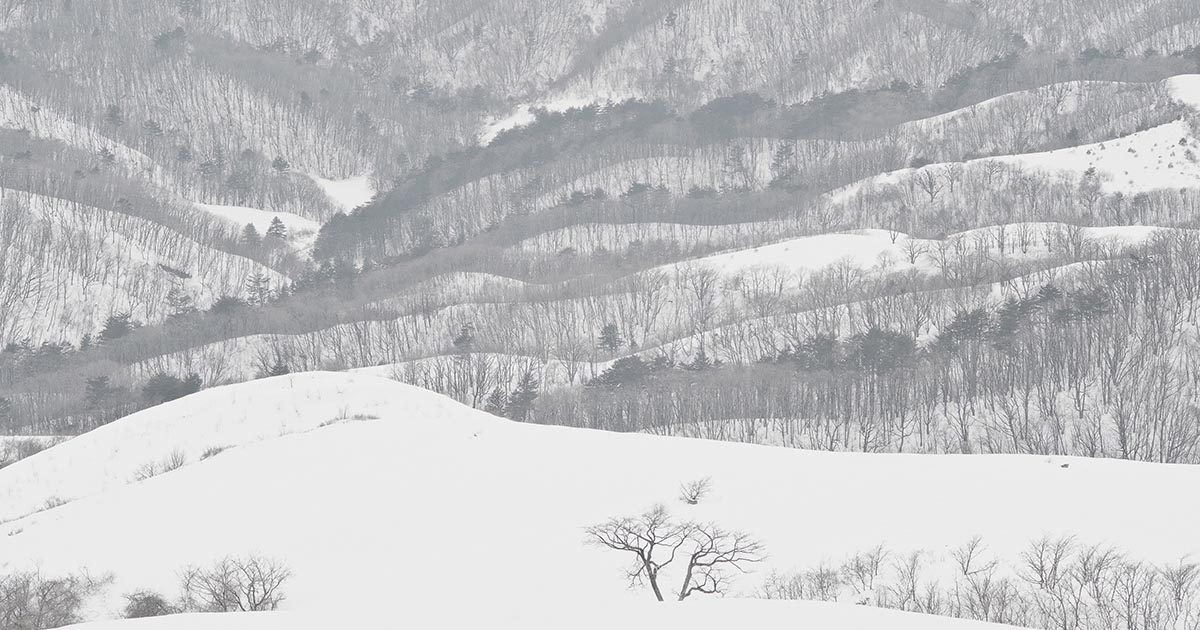
White evokes nothingness, like a blank sheet of paper. It is also the color that appears when all light is mixed together, a state of being. It is a landscape whose meaning grows richer either because it holds everything and needs nothing more, or because it has no form at all. Through WHITE, photographer Kim Joowon reflects on the sublimity and beauty of nature, and on the value of small, nameless beings and places.
Words & Photos Kim Joowon
joowon.myportfolio.com
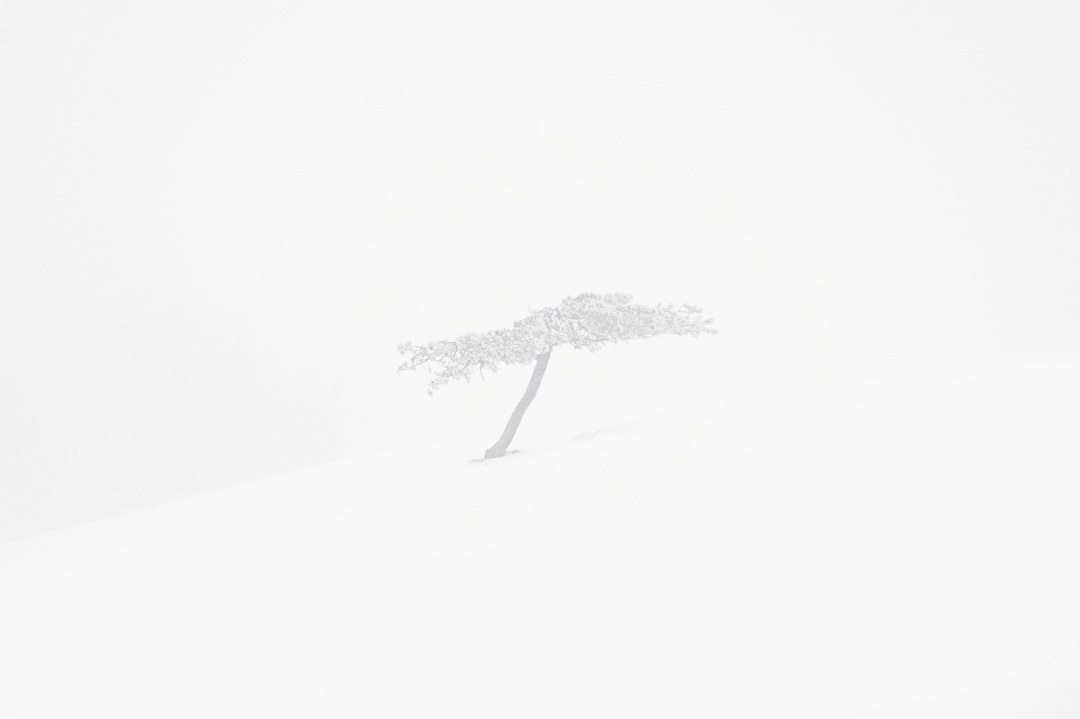
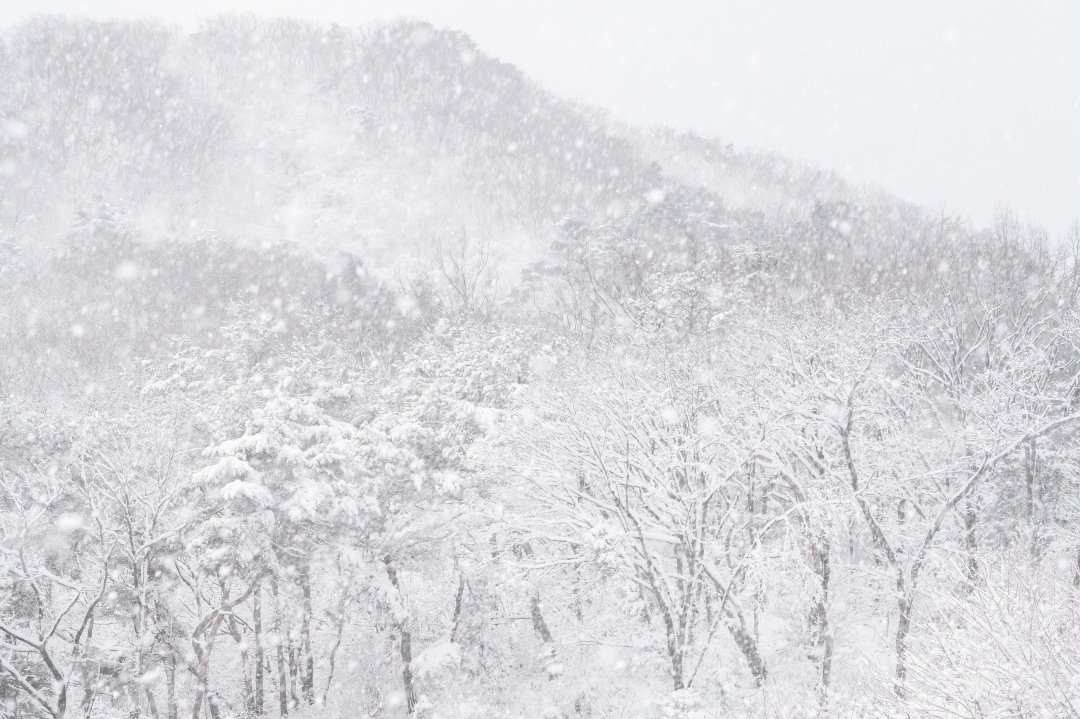
A few winters ago, I was snowed in by a heavy blizzard in Gangwon-do. White snow surrounded me, and in a landscape with no people, there was only the faint sound of snow falling. Then came the sound of the wind and of trees dancing. In a landscape unlike any I had experienced before, the natural world and its ancient scenery seemed to be alive and breathing.
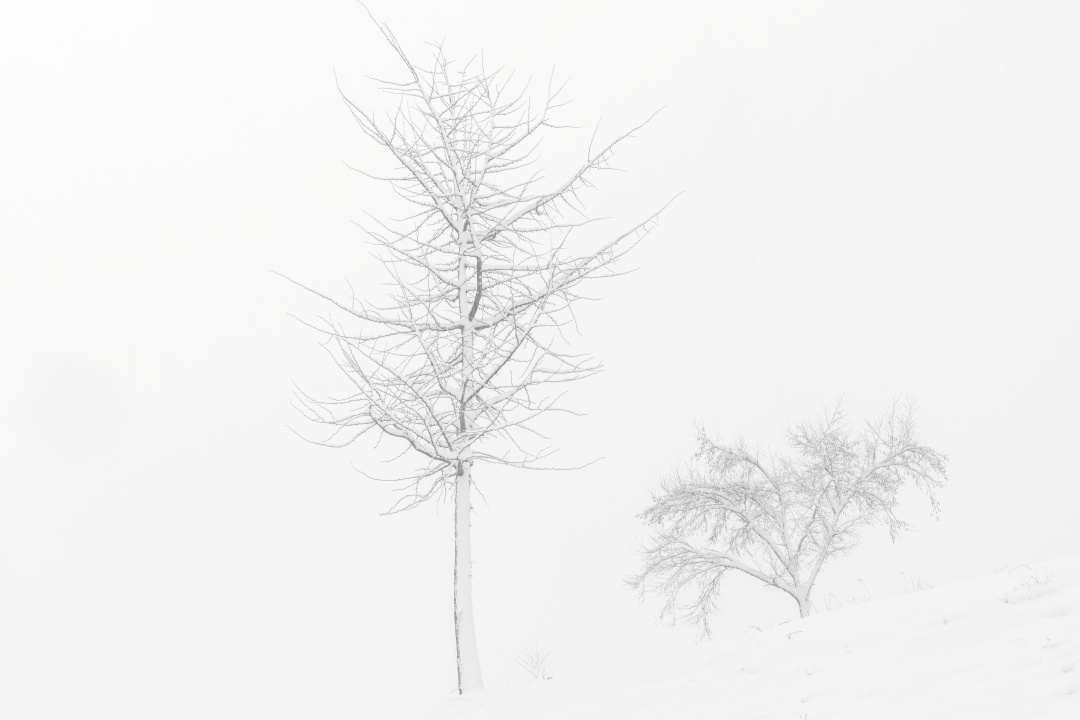
The WHITE series captures the landscapes I encountered in that snow. In the heavily falling snow, places made by people and objects with an original purpose lose their function and are trapped, unable to move. In their place, things no one paid attention to reveal themselves in their beauty: a single blade of grass, a stand of fallen trees, upturned earth, an island about to be quarried away, a boulder lying by the roadside.
The photographs feel so still that they look as if they were taken just after the snow stopped. In fact, every scene was shot with a long exposure while the heavy snow was falling, on purpose. This lets the photograph take in the character of white snow as fully as possible, rather than fine detail. Sometimes I found myself in dangerous situations, unable to move in either direction because of the blizzard. Each time, though, the stillness and wonder, as if I were swimming through a white cloud, brought me peace rather than fear.
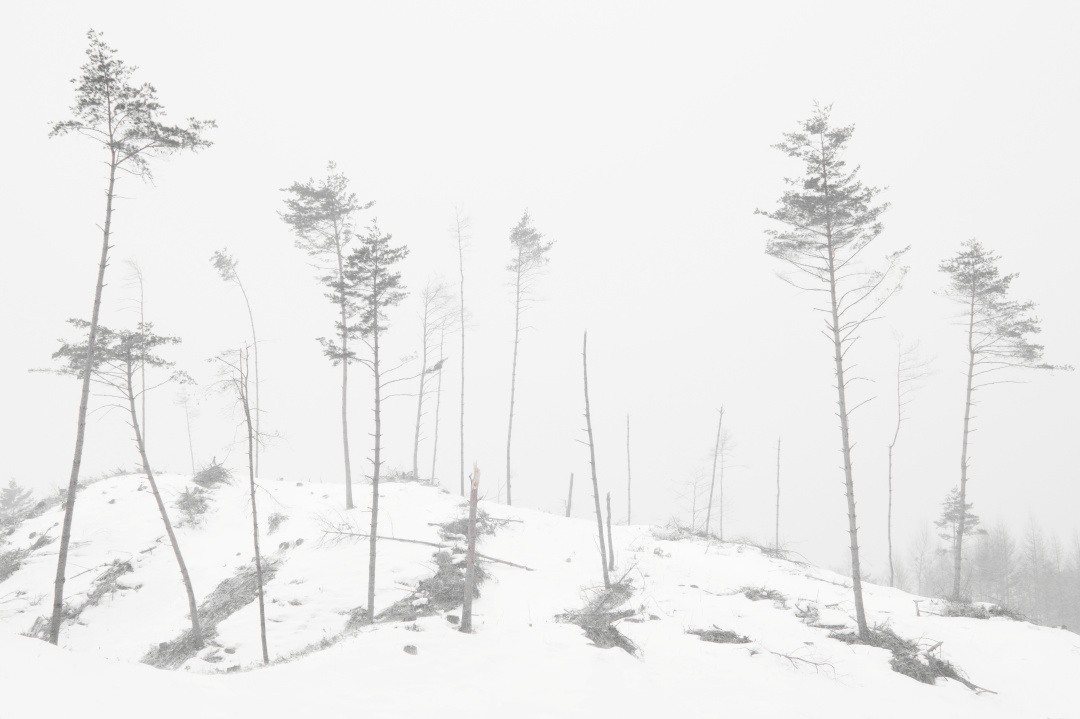
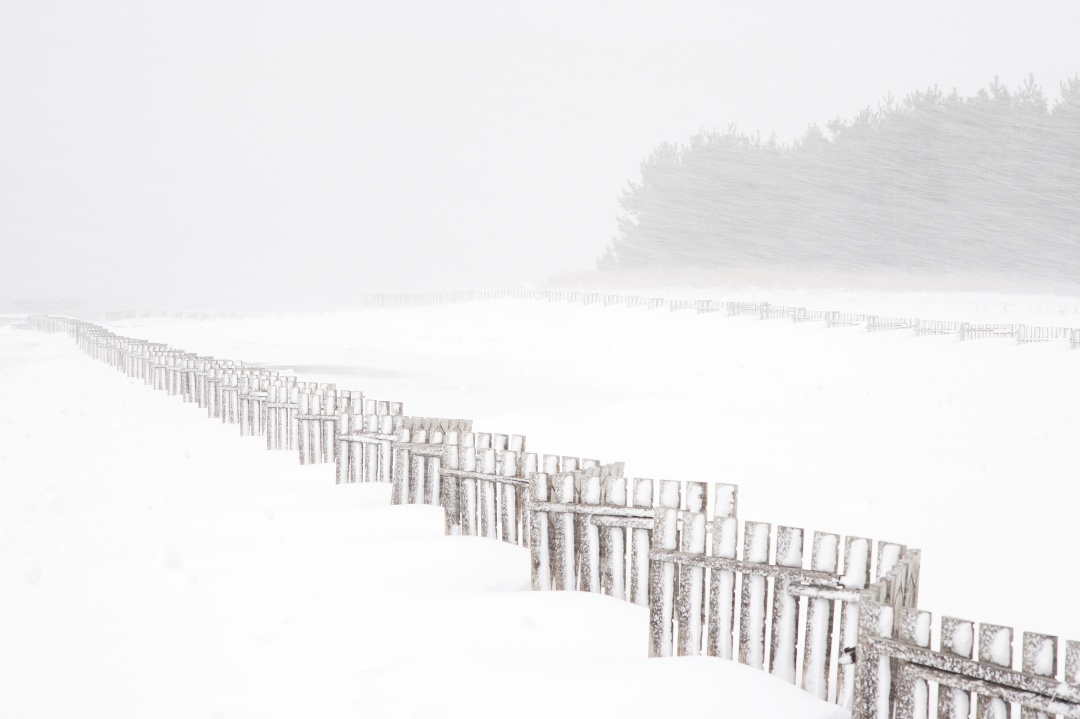
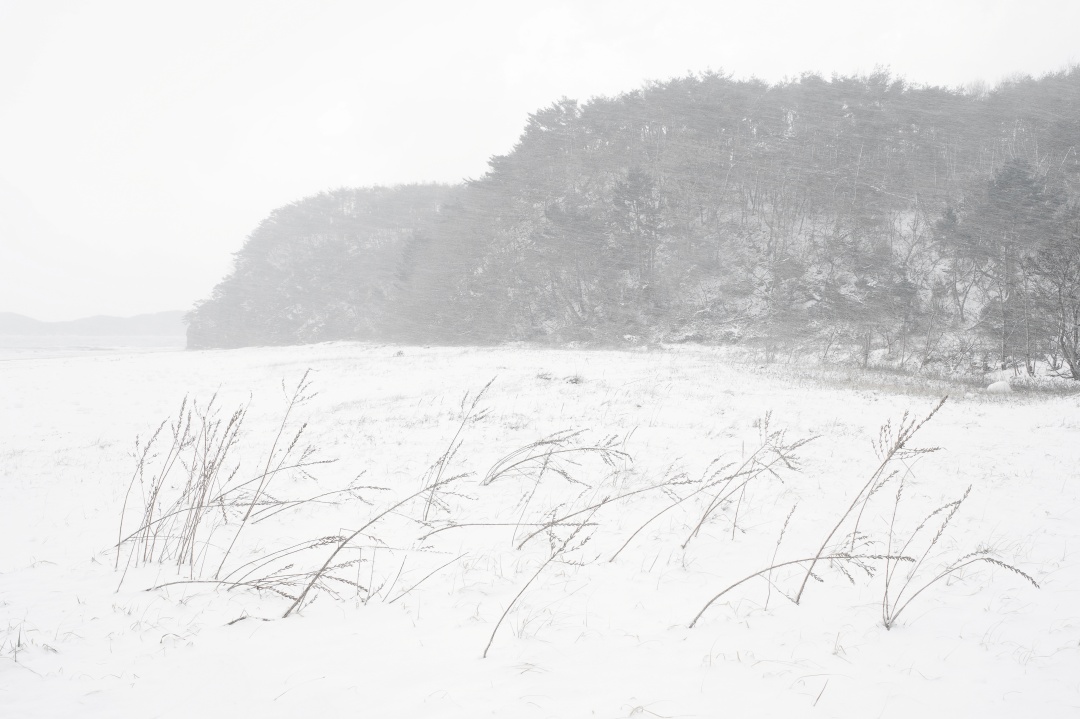
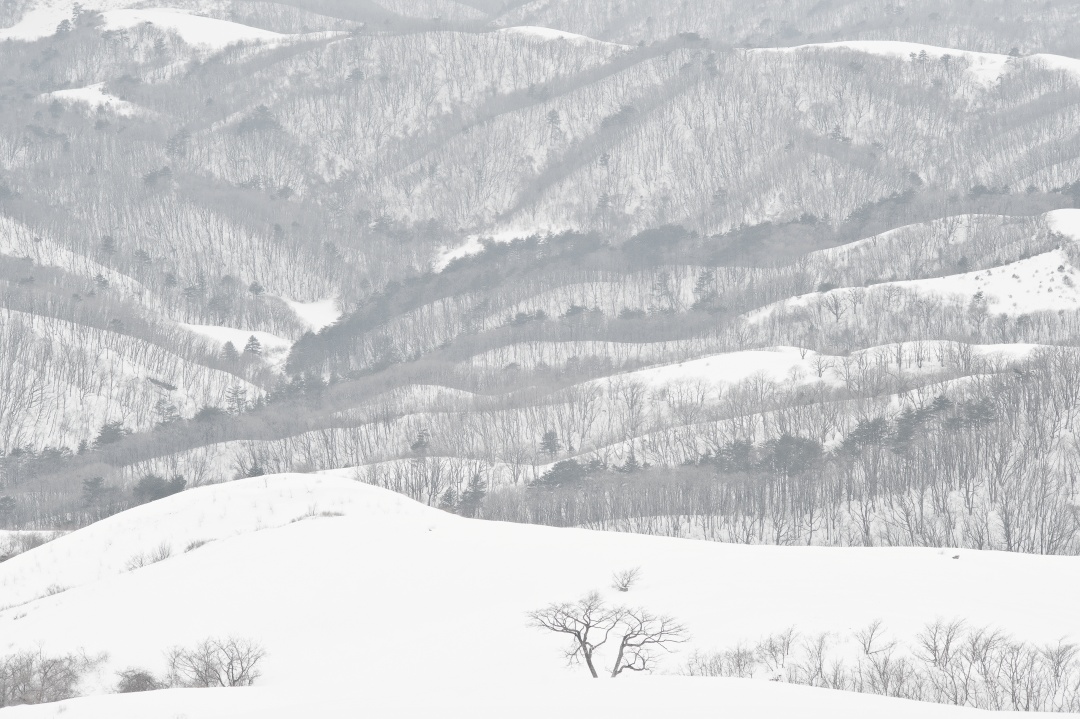
When snow fills the world, the objects and scenery around me are hidden beneath it, and small beings come into view. This image of being filled with snow and emptied by it at the same time is the world I hope to pursue in WHITE. Even as the world chases what is complicated and glamorous, I think I love white all the more because I want to live simply and modestly.
I began working on WHITE in 2009, so it has already been ten years. When winter comes, I go on five-minute standby. I always listen closely to the weather reports, and when I hear that snow is coming, I drive off along dangerous roads in Gangwon-do and along the west coast. Less than 10 centimeters of snow cannot give me a completely clean white landscape. Usually, when I hear news of a heavy snowfall of 20 centimeters or more, I rush to the place. When too much snow falls, there are many hazardous stretches because plowing can’t keep up, and sometimes it is hard to find a landscape worth shooting. Of course, there are many failures too.
Often I arrive after hearing a heavy-snow forecast only to find that the snow has already stopped or that the scenery isn’t what I wanted. Sometimes the roads are closed and I can’t get in at all. For this reason, I have to visit places before the snow falls and imagine how they will look under it. Picturing snow-covered scenery at places I visit in other seasons, or clipping in advance the landscapes I hope will see snow, is also part of the pleasure of waiting and preparing.
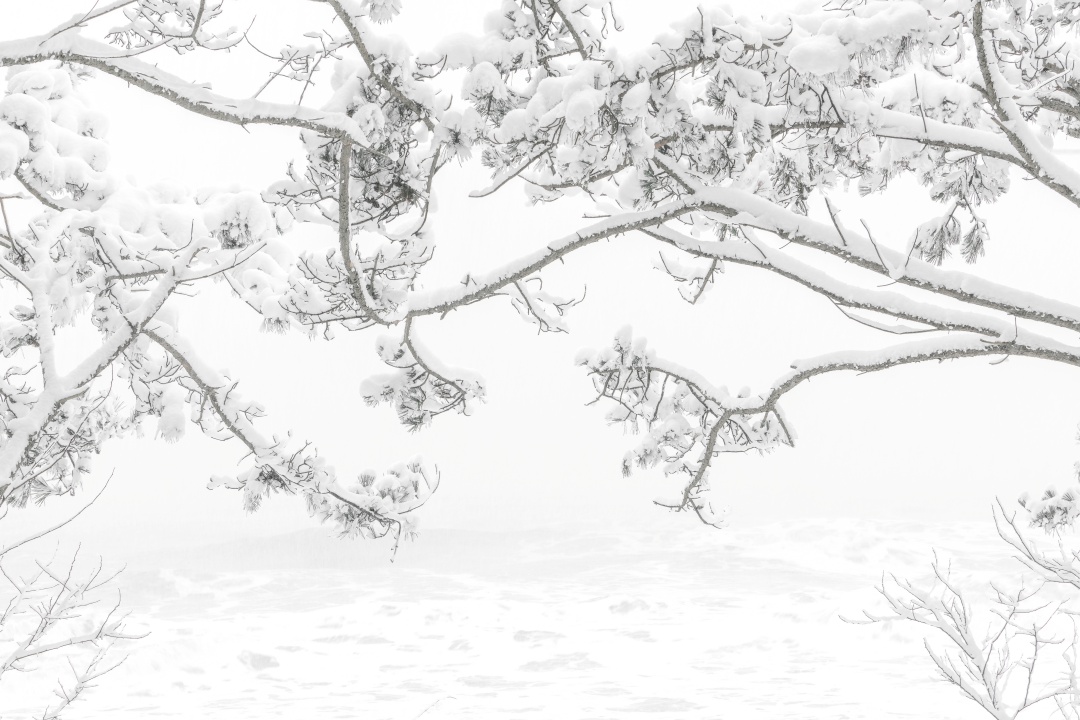
The winter landscape of ten years ago is very different from today’s. Warm days now last longer than they used to, and snowfall is steadily decreasing. Many factors are involved, but the environmental change caused by global warming is one of the biggest. When I started this project a few years ago, I thought that someday we might no longer be able to see snowy landscapes in Korea. That is slowly becoming reality.
Snow doesn’t fall all winter long, so I have to work over a long span of time, at a patient pace. Once enough work accumulates, I plan to bind it into a photobook. I wonder how much my perspective and thoughts on the work will have changed by then. Working over such a long time feels like a battle with myself. Inside me, a voice sometimes asks, “Why go to that cold, dangerous place again? Haven’t you done enough?” But a louder voice, telling me to remember the excitement I felt at the very beginning, always leads me back into the snowy landscape.