Rum Tasting at Kō Hana Distillers
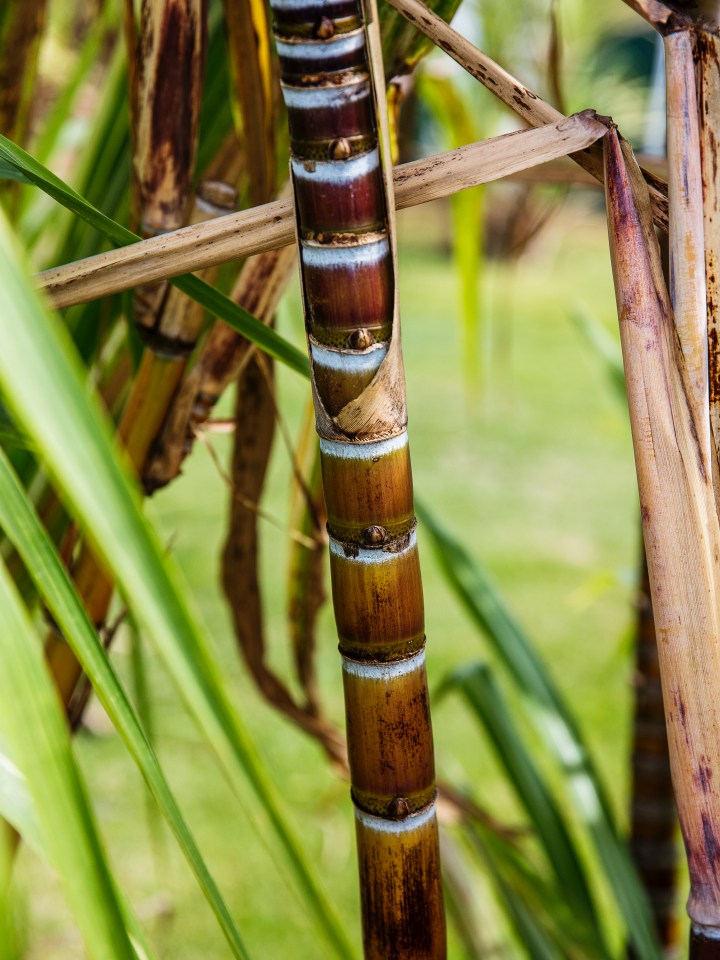
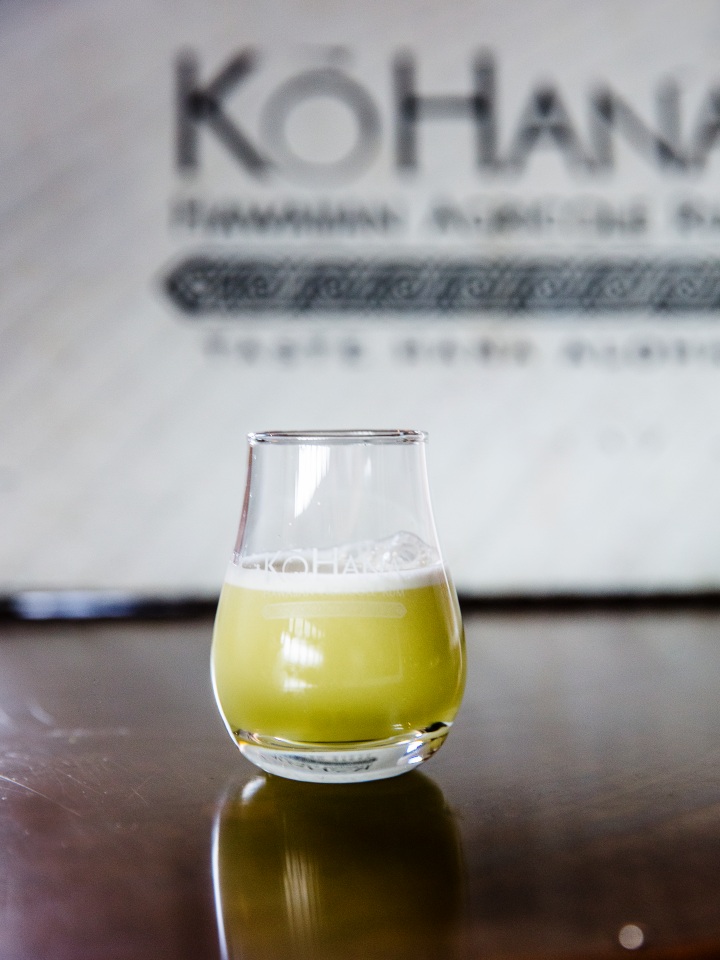
“What sets us apart from most rums is that we use fresh Hawaiian sugarcane juice instead of molasses.” At 5Kō Hana Distillers, Tiffany Tubon hands us a cup of juice pressed on the spot. It lacks the cloying sweetness of an artificial sweetener, but its gentle sweetness is oddly thirst-quenching. This is the secret of Kō Hana Hawaiian Agricole Rum, and it gives the spirit an aroma and flavor that set Hawaiian rum apart from ordinary rum.
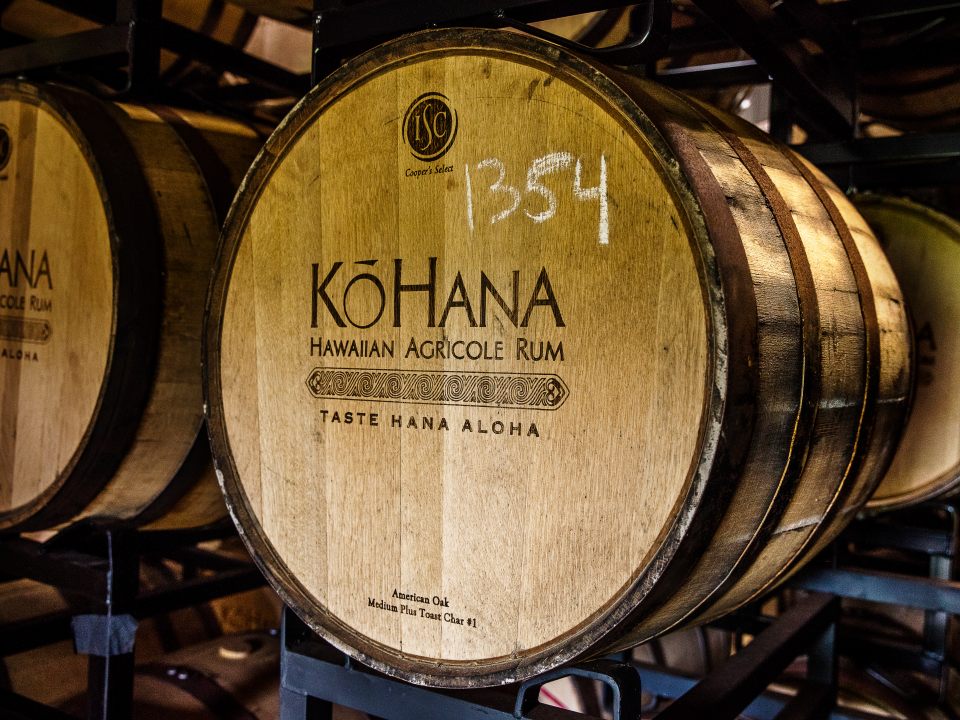
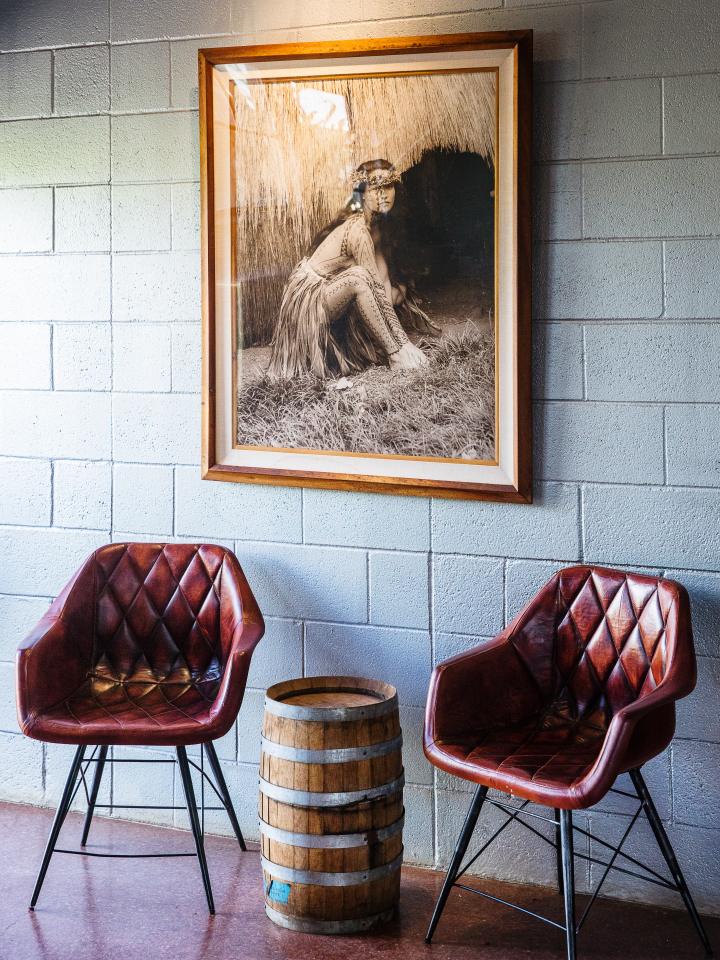
Kunia, where Kō Hana Distillers is located, is a longtime agricultural area on Oahu. Land that was once a pineapple plantation now grows native Hawaiian sugarcane varieties. 6 Kō Hana’s rum is made entirely within the region, from growing and harvesting the native sugarcane to processing and aging, so it truly delivers on the promise of “Farm to Bottle.” It is also the only rum made from a single sugarcane variety. The Tasting Room, which opened in 2015 in the village’s former post office, is the best place to experience Kō Hana Distillers’ rums.
“There are 35 native Hawaiian sugarcane varieties that have been cultivated for roughly a thousand years. The flavor of the rum changes depending on which variety’s juice is used.” The aging process also shapes flavor and aroma. The rum first ages in casks the distillery builds itself, then undergoes a second aging in oak barrels that once held bourbon, whiskey, pinot noir and more, and its character shifts yet again. Barrels used for aging are then reused to hold coffee, honey and other ingredients, which take on the aroma of the rum. Recently, the distillery even developed a Hawaiian hot sauce using rum barrels.
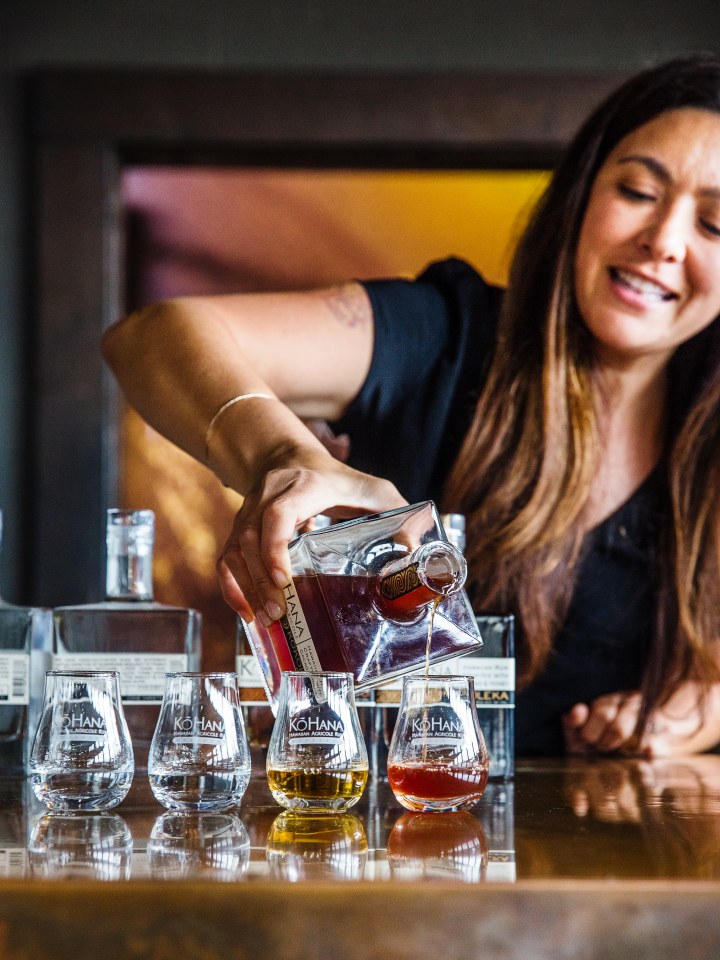
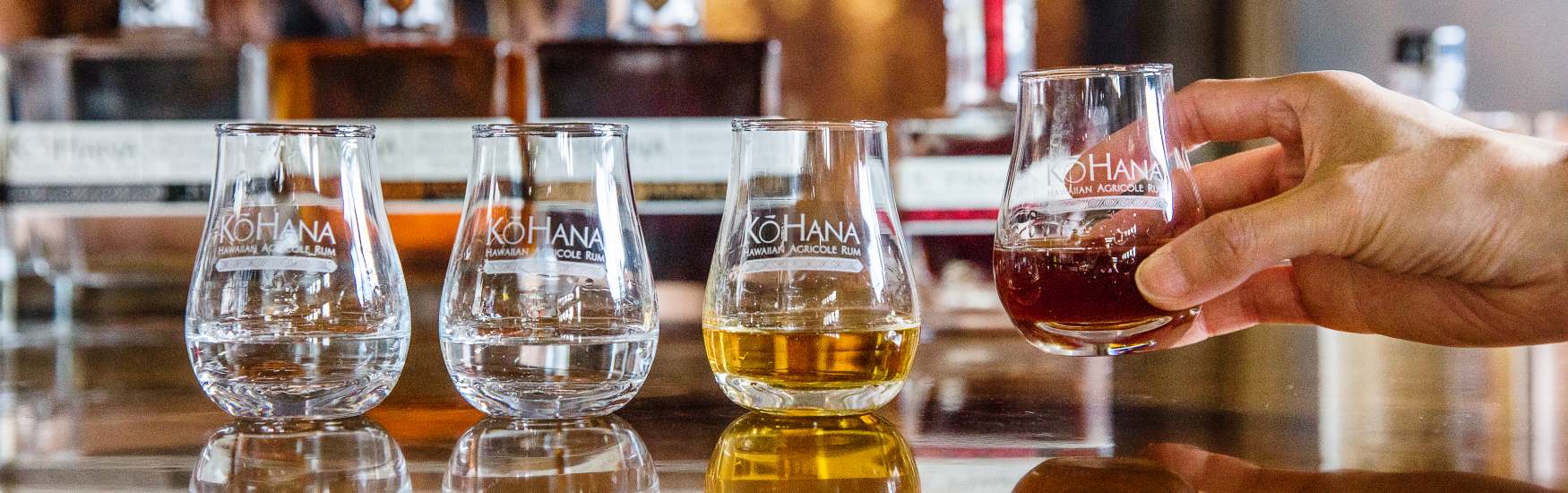
At last, the final stop on the tour: the rum tasting. We sample Kō Hana’s range in turn, starting with Kea, a white rum that preserves the fresh taste of Hawaiian sugarcane, then Koho, which is aged a second time in barrels, and Kokoleka, infused with cacao and honey and loved as an after-dinner drink. Without a moment’s hesitation, I buy a bottle of Koho, my favorite. It isn’t because I heard that it takes a year from planting to harvest, that seven farmers harvest all the cane in the area by hand, or that a single barrel of rum requires four tons of sugarcane. Or at least, not only because of that.
6 In Hawaiian, Kō means sugarcane and Hana means work.
Aloha ‘Āina Tour at Kualoa Ranch
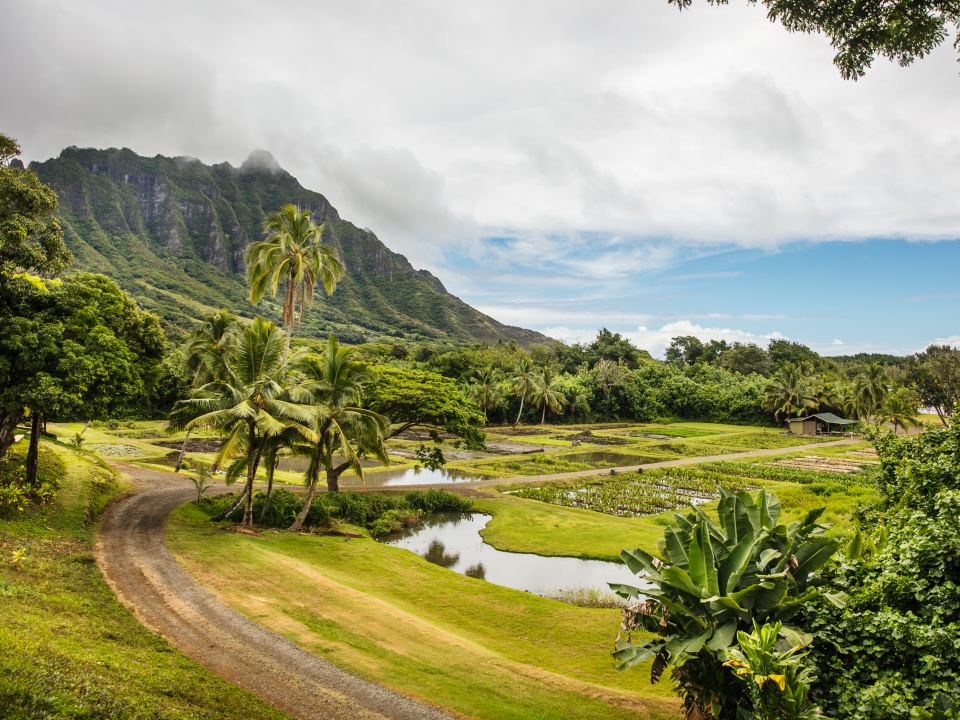
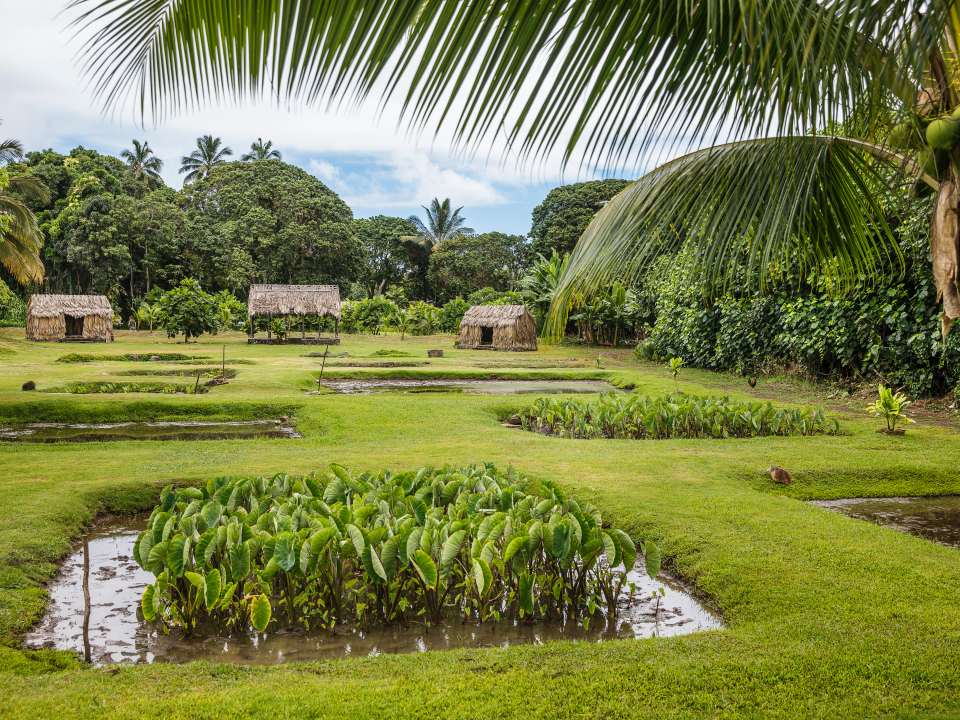
As the navigation map shows we are nearing 7Kualoa Ranch, a mountain ridge rises like a folding screen. This peak is why the place has a Hawaiian name meaning “long back.” The ranch’s roughly 1,620 hectares (about 4,000 acres), part of a private nature reserve, take in cliffs and valleys, forests and meadows, and meet Kāne‘ohe Bay on the island’s eastern coast. With such varied terrain, nearly every outdoor activity you could want in the mountains, valleys and sea is available here. If I had to pick just one tour that you can experience only at Kualoa Ranch, it would be the Aloha ‘Āina Tour.
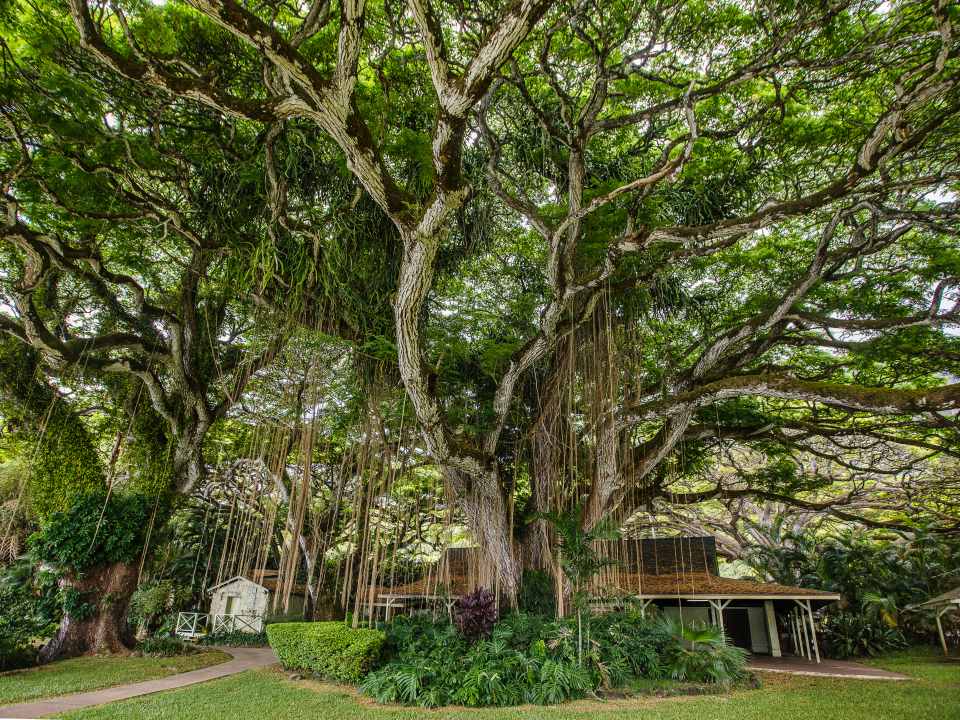
A trolley carrying about 20 people rolls into the greenery. Over roughly an hour and a half, we tour crops grown in the traditional Hawaiian way and orchards where dates, guavas, mangoes and many other tropical fruits grow, then visit a traditional Hawaiian fishpond. It is enough time to see the other side of Kualoa Ranch. The heart of the tour is aloha ‘āina, the native Hawaiian “love of the land.” Along the way we stop to taste 8poi made from taro harvested on the farm, and to crack open macadamia nuts ourselves.
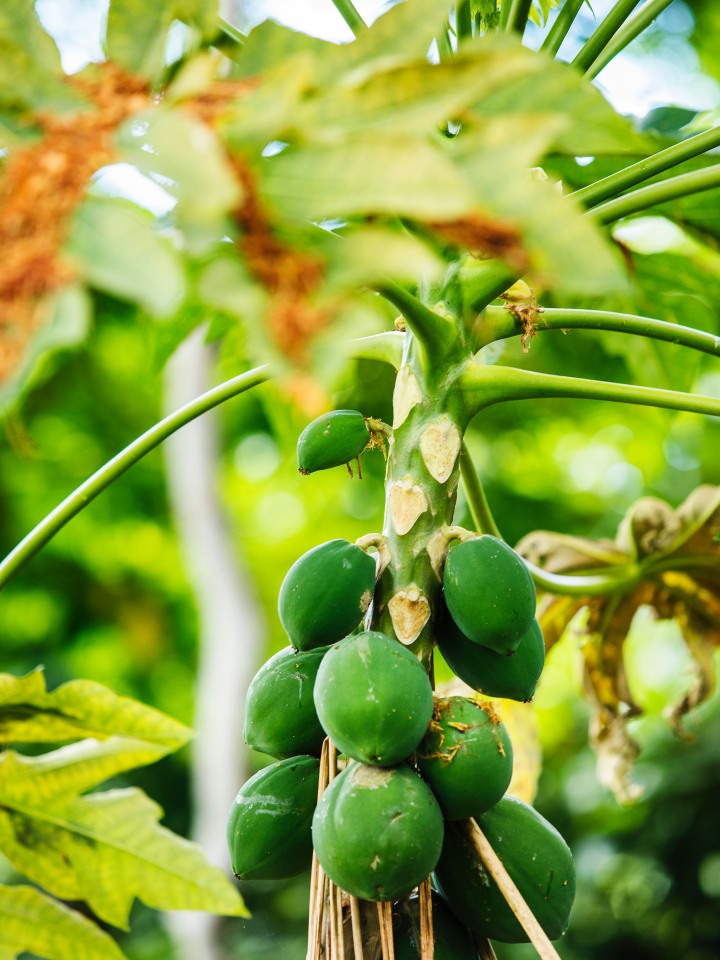
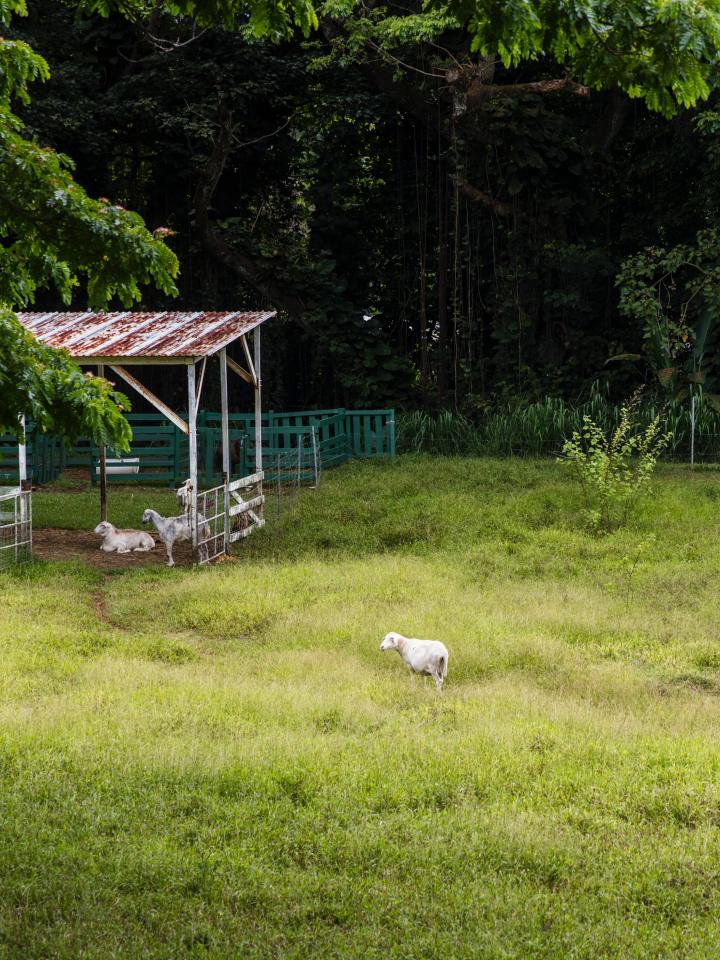
As the Aloha ‘Āina Tour shows, supplying local food in a sustainable way is one of Kualoa Ranch’s important roles. It grows a variety of crops, raises cattle, pigs and sheep, and produces oysters and shrimp. It is also a workplace for more than 300 local people, an effort called Kualoa Grown. This is why calling Kualoa Ranch a filming location for countless movies and TV shows, or one of Oahu’s top tourist attractions, falls short.
8 A dish made by pounding taro and mixing it with water. Rich in protein and able to be stored for long periods, it was a staple food of native Hawaiians.
Another Recommended Activity
Here is a chance to ride through the nature of Kualoa Ranch on horseback. With a guide, you ride deep into Ka’a’awa Valley and back over about two hours. The horses move quite slowly, so even beginners can try it with no trouble as long as they follow the basic safety rules. Match the unhurried plod of the horse and enjoy the wild scenery at leisure.
Mina’s Fish House
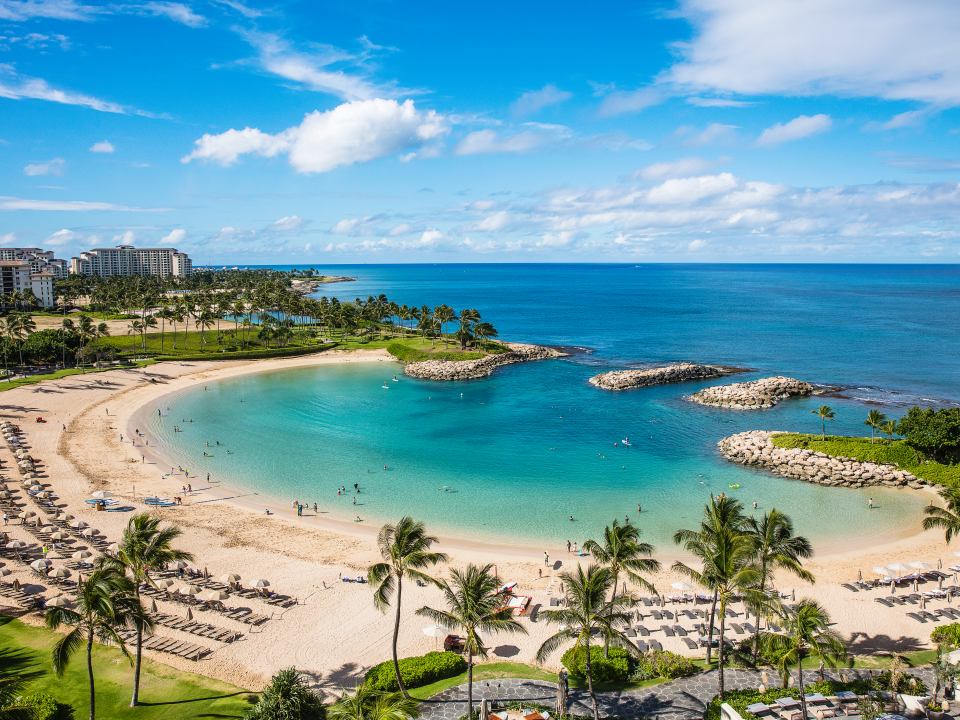
If you want fresh seafood in Hawaii, the safest bet is a place with “Fish House” in its name. And if that place is Mina’s Fish House, all the more so. Located inside Four Seasons Oahu at Ko Olina, Mina’s Fish House draws inspiration from traditional Hawaiian fish houses and pursues 9Line to Table. It sources fresh seafood from local auctions and from local fishermen, and gets other regional specialties and produce, such as tomatoes, lettuce, root vegetables, tropical fruit and seaweed, from nearby farms. It goes a step further, too: it was the first in the world to introduce a fish sommelier. The fish sommelier talks directly with guests, shares information about Hawaiian fish, and suggests drink pairings that suit each dish’s preparation, texture and flavor.
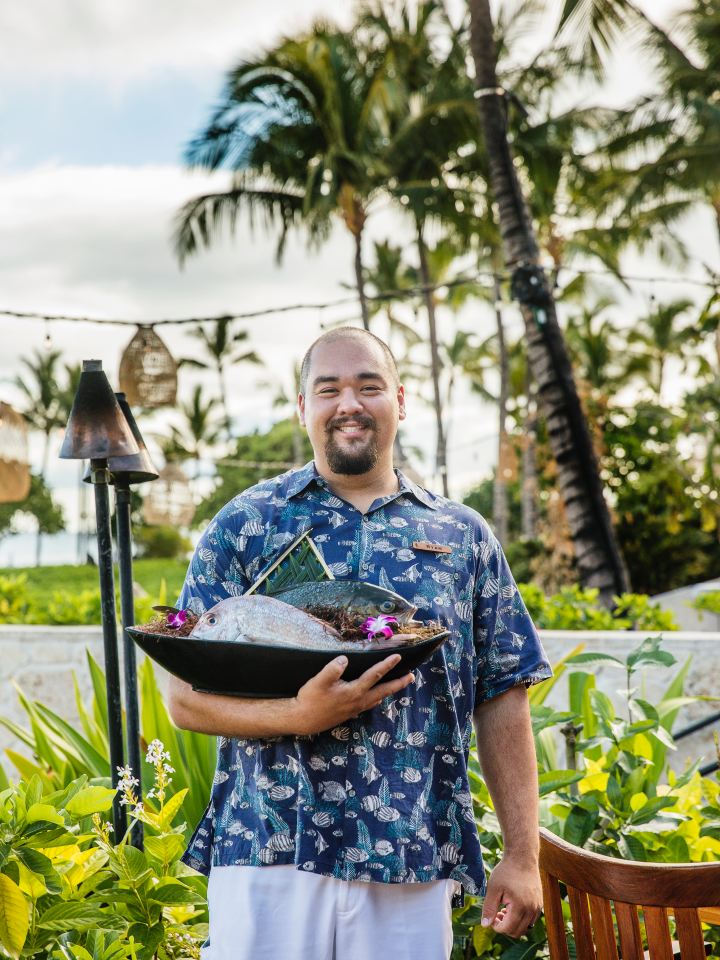
“I think one of the fish sommelier’s key roles is to introduce travelers who know only mahi mahi or ahi tuna poke to the variety of Hawaiian seafood and cooking. Through that, we invite them to experience Hawaii’s rich culture and the aloha spirit more deeply,” explains Michael Arnot, the executive chef who oversees the resort’s food and beverage service, including Mina’s Fish House.
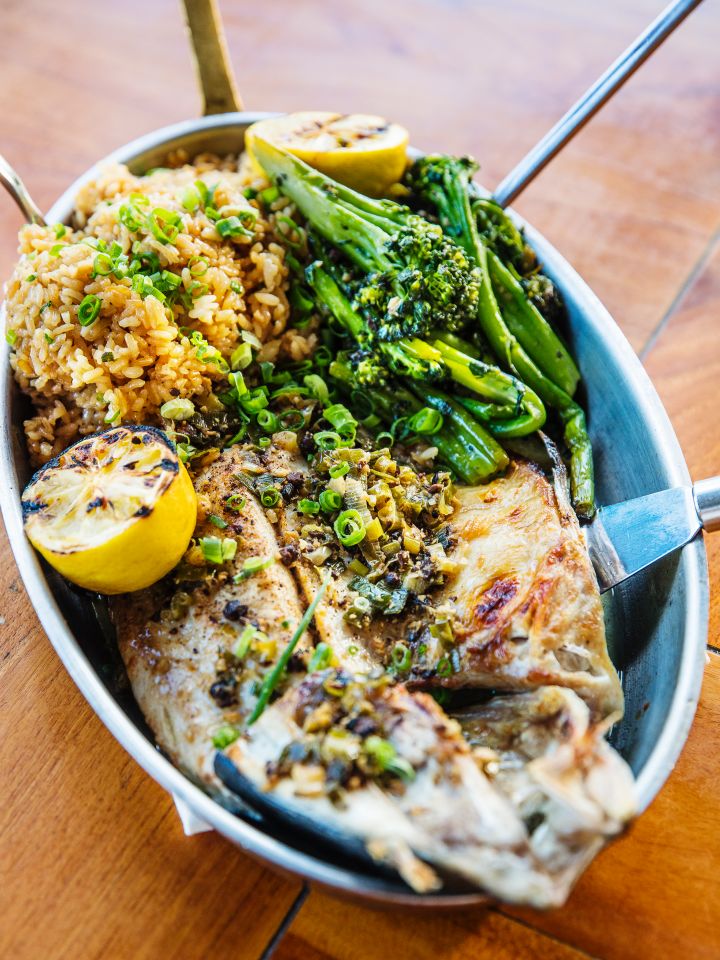
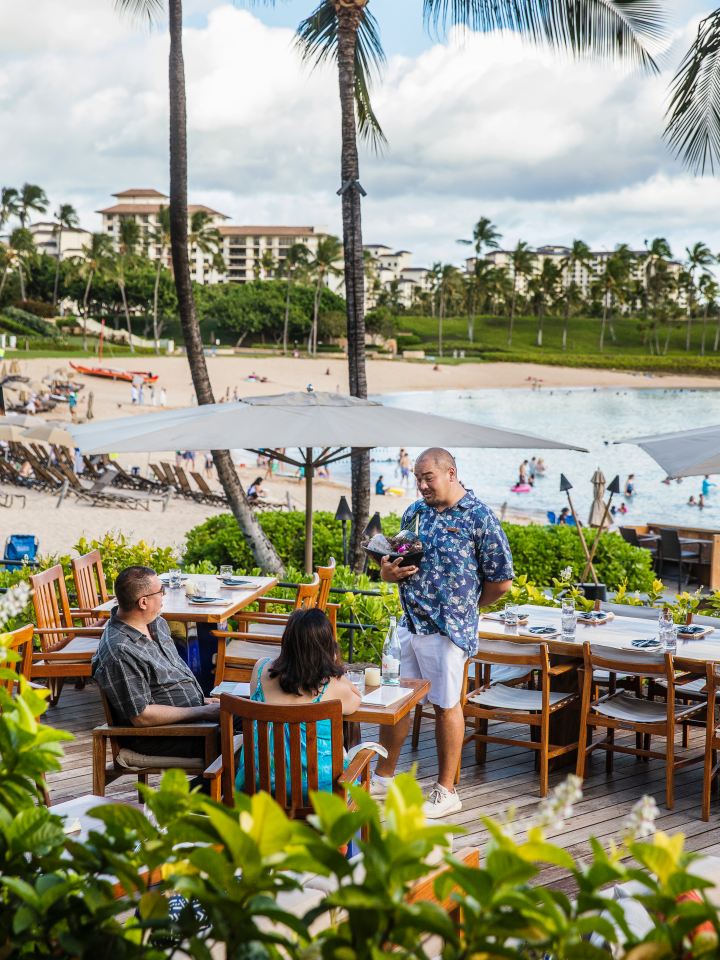
We settle into an outdoor table overlooking the lagoon, with a pleasant sea breeze drifting in. When we ask the fish sommelier, Ryan, for a recommendation, he answers with a question of his own: what kinds of fish do we usually like? A series of careful questions follows, about preferred flavors and textures, and after a brief conversation, what arrives at the table is Kona kampachi. A Hawaiian yellowtail that lives in deep water far from the shore, it is high in plant-based fats, which give it a soft, moist texture. The whole fish is seasoned with ginger and scallions and grilled, then served with broccoli and garlic fried rice. Tasting top-quality local fish with the Hawaiian sea right in front of you is, well, a more luxurious way to practice Mālama Hawai‘i than I had expected.
Four Seasons Resort Oahu at Ko Olina
Four small, semicircular lagoons line Oahu’s west coast and are considered the greatest draw of the Ko Olina area. Facing one of them, Four Seasons Resort Oahu at Ko Olina boasts open ocean views and a rocky shoreline. Open-air restaurants and bars facing the sea, an outdoor pool and a spa are further advantages. The guest rooms reflect Hawaii’s nature, with banana-leaf-print wallpaper, traditional furniture made from local wood and bold decorative touches. The resort also offers activities such as paddling out to sea in a traditional Hawaiian outrigger canoe, or snorkeling to observe marine life such as green sea turtles. www.fourseasons.com/kr/oahu/
9 Making dishes with directly harvested seafood.
Travel2Change Beach Cleanup & Yoga
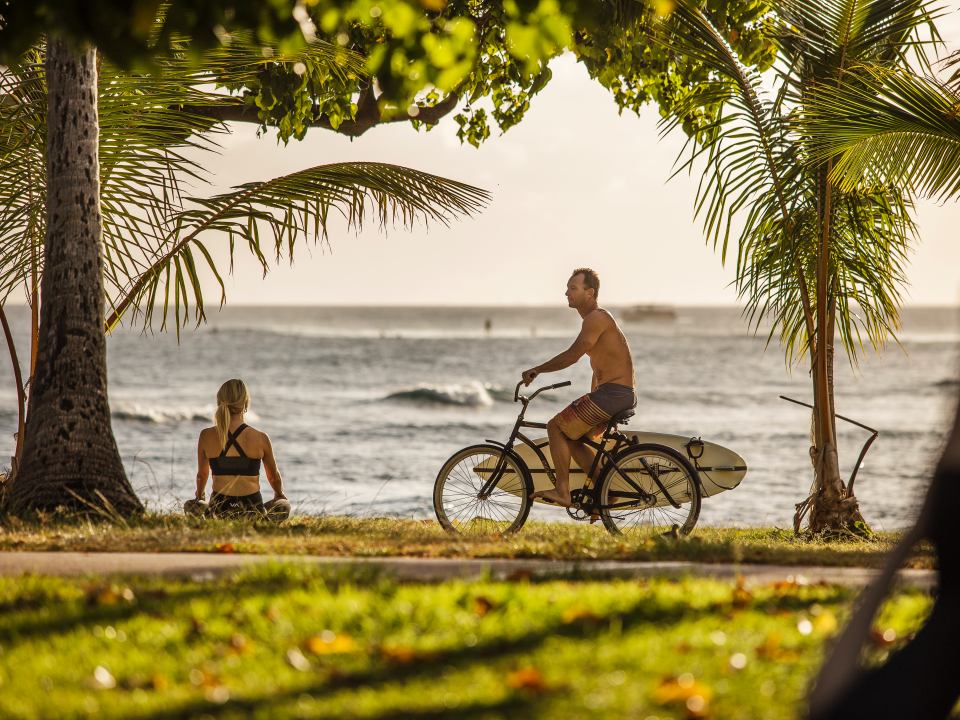
“Breathe in deeply through your nose, and as you breathe out, raise both arms to the sky.” We have found a spot under a huge tree, and with soft music playing in the background, we have been moving to Jonathan’s instructions for a few minutes. The pleasantly cool sea breeze, the sunlight that vanishes and reappears with the drifting clouds, and the deep scent of grass mingled with the smell of earth awaken all five senses.
On a Friday afternoon, with the weekend just ahead, 10Magic Island grows livelier by the minute. Families are already getting their barbecues going, people jog or play ball games, and several dogs are out for walks. Offshore, a group of surfers bobs on the water, waiting for a good wave. Jonathan, the yoga practitioner I have just met here today, works as a host of the beach cleanup yoga program at 11Travel2Change.
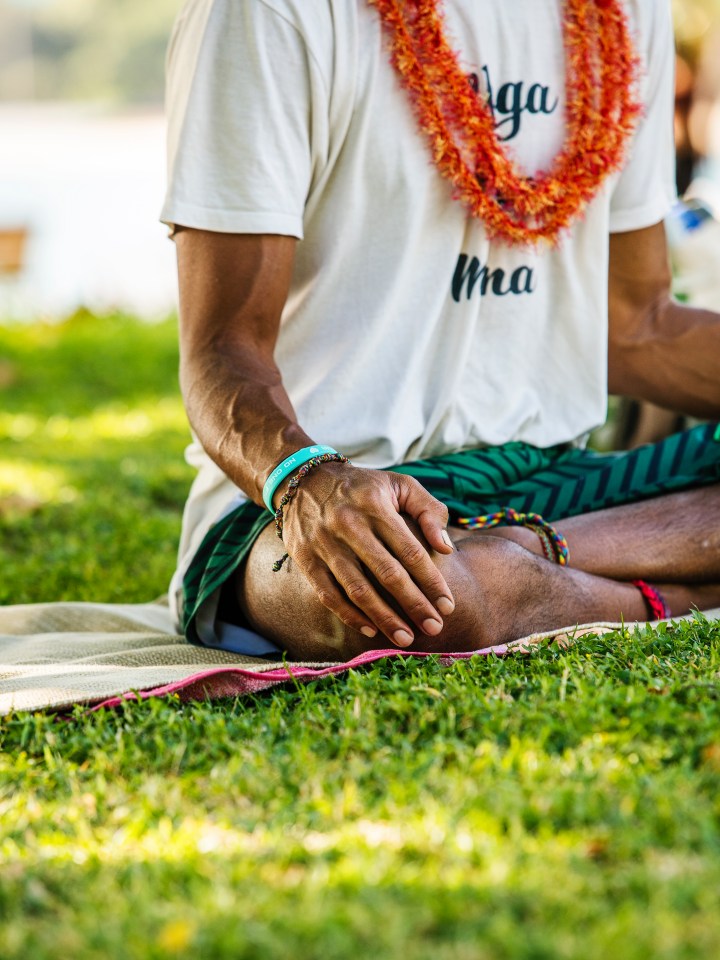
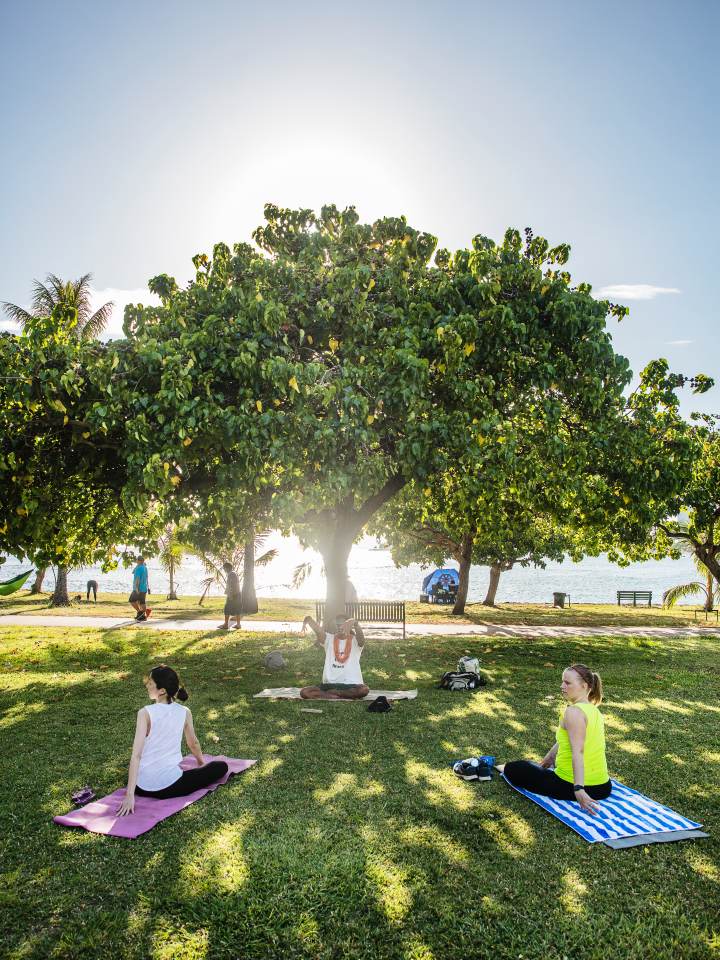
Founded in 2011, Travel2Change is a nonprofit that pursues sustainable travel through activities that can benefit local communities. It offers more meaningful travel experiences, such as hikes that protect Hawaii’s forests by removing invasive species, walking tours on the history and culture of Waikiki, and canoe outings in a traditional Hawaiian canoe that teach participants about marine ecosystems.
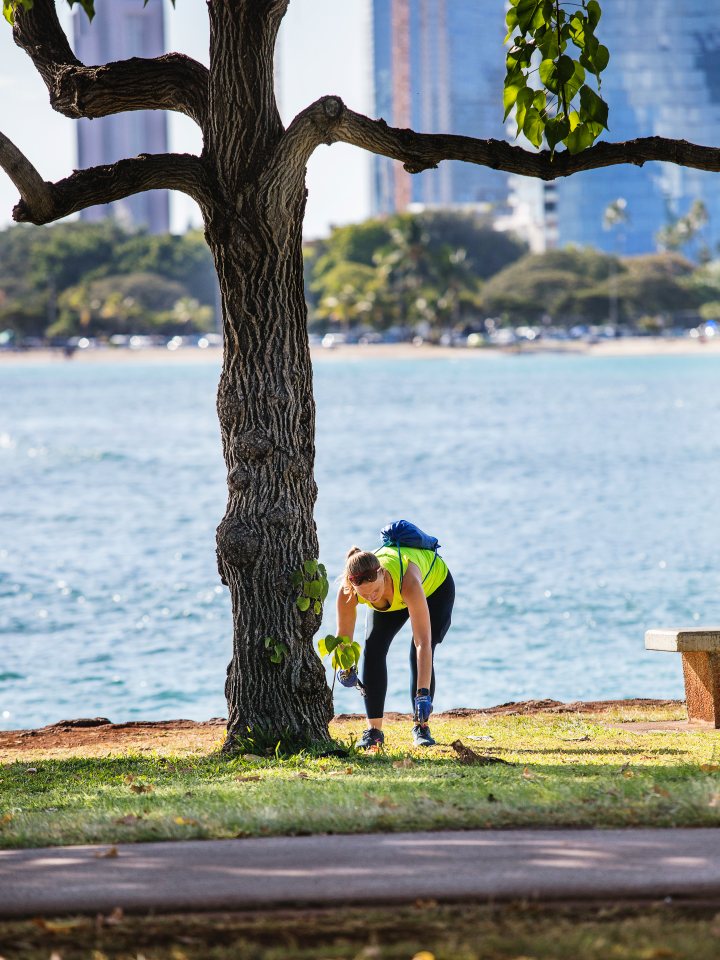
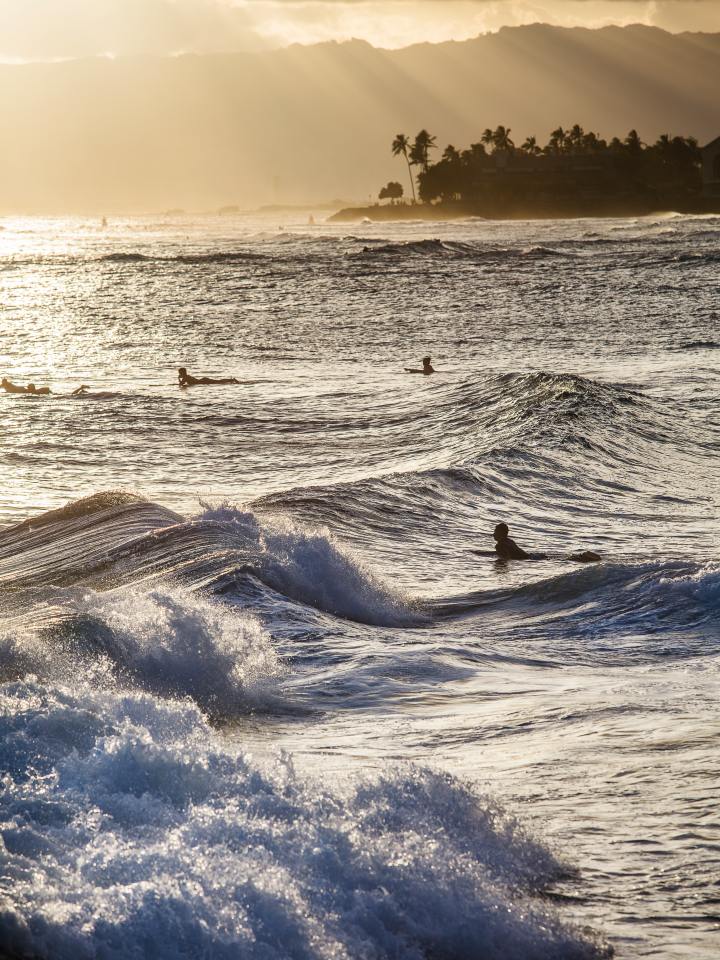
“Picking up trash is good for the environment, but I think it also has meaning because you cleanse your own mind first, before the physical activity that trains the spirit.” Jonathan said this after we had each spent about 15 minutes picking up trash and returned to our spots before starting yoga. What Travel2Change adds is not so different. While doing something that benefits the destination, travelers also discover the joy of travel and the experiences open to them. Thinking about locals, local communities and the destination’s environment is important, but so are the pure joy and learning that travelers gain from the journey.
More Sustainable Places to Visit
Polynesian Cultural Center
The first settlers to put down roots in Hawaii, between the 11th and 13th centuries, were Polynesians. They are known to have migrated in waves, first from the Marquesas Islands and then from Tahiti, both part of French Polynesia. Later, as Europeans arrived in Hawaii, many races and cultures mixed, but there is no doubt that the legacy of ancient Polynesia has left a deep mark on Hawaiian culture today. The Polynesian Cultural Center on Oahu’s North Shore is a place where you can experience the cultures of Polynesia across the Pacific in one spot. Activities include starting a fire the traditional Samoan way, getting a Fijian warrior tattoo and learning traditional Tahitian dance. The highlight is the luau, a traditional Hawaiian feast. While you enjoy a generous spread of traditional food, including kalua pig (pork slow-cooked for hours in an underground oven called an imu), a lively show of dance, song and live music unfolds on stage. The live show ‘Hā—Breath of Life,’ themed on the dances and songs of Polynesia, is also popular. www.polynesia.com
Kaka’ako Farmers Market
If you find yourself on Oahu on a Saturday, visit the Kaka’ako area. Once a Native Hawaiian settlement centered on salt beds and fishing villages, it became a factory district of steel-related industries in the 19th century. Today, murals by local artists give it life, great dining and shopping spaces have appeared and events are held regularly, making it one of the trendiest districts on Oahu. The Kaka’ako Farmers Market, held every Saturday, adds to the neighborhood’s popularity. You can buy fresh, high-quality local food such as Hawaiian coffee and honey, as well as crafts made by local artisans, and so many people come that it is crowded from the early morning when the market opens. Nearby is Salt, a complex of shops, restaurants and bars, which we recommend visiting too. Saturdays 8am–12pm, 919 Ala Moana Blvd.
10 An artificial peninsula on the eastern side of Ala Moana Beach Park. It also borders the Ala Wai Yacht Harbor.
Prince Waikiki
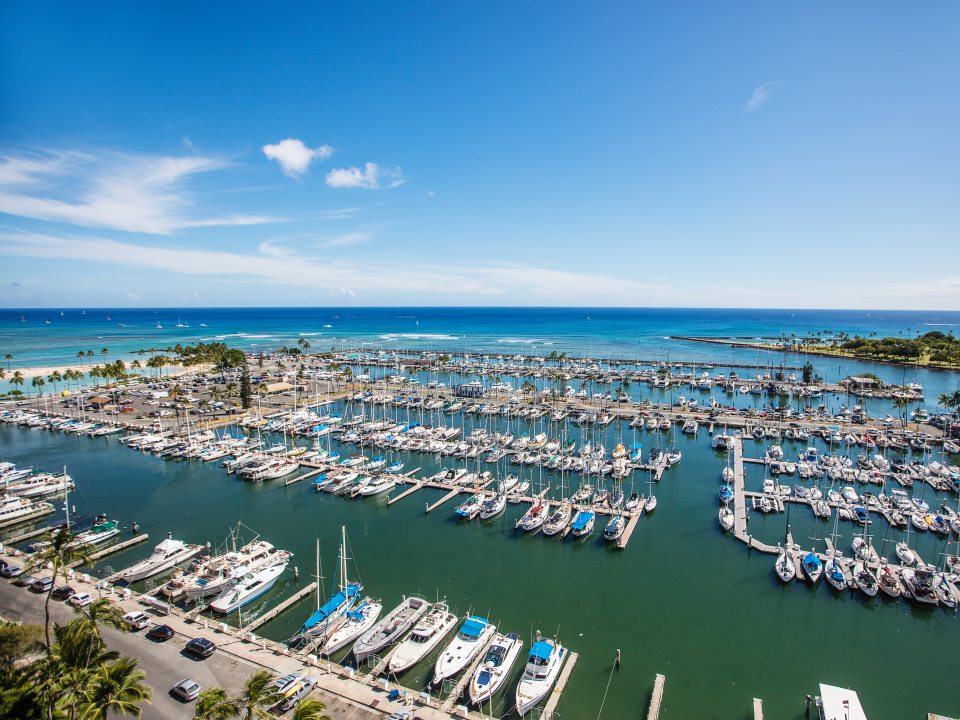
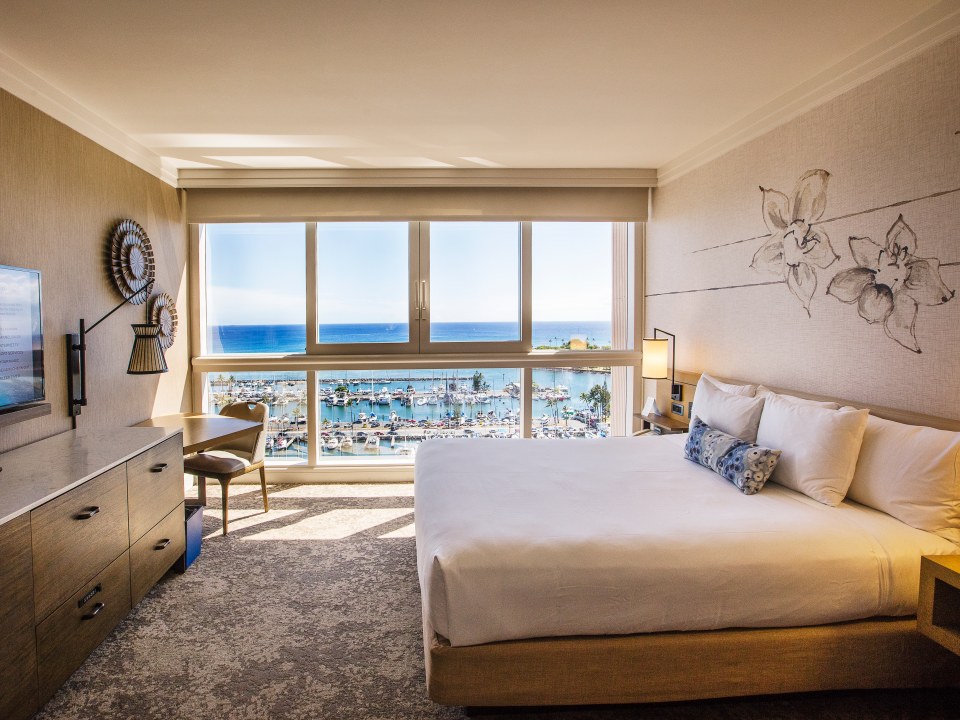
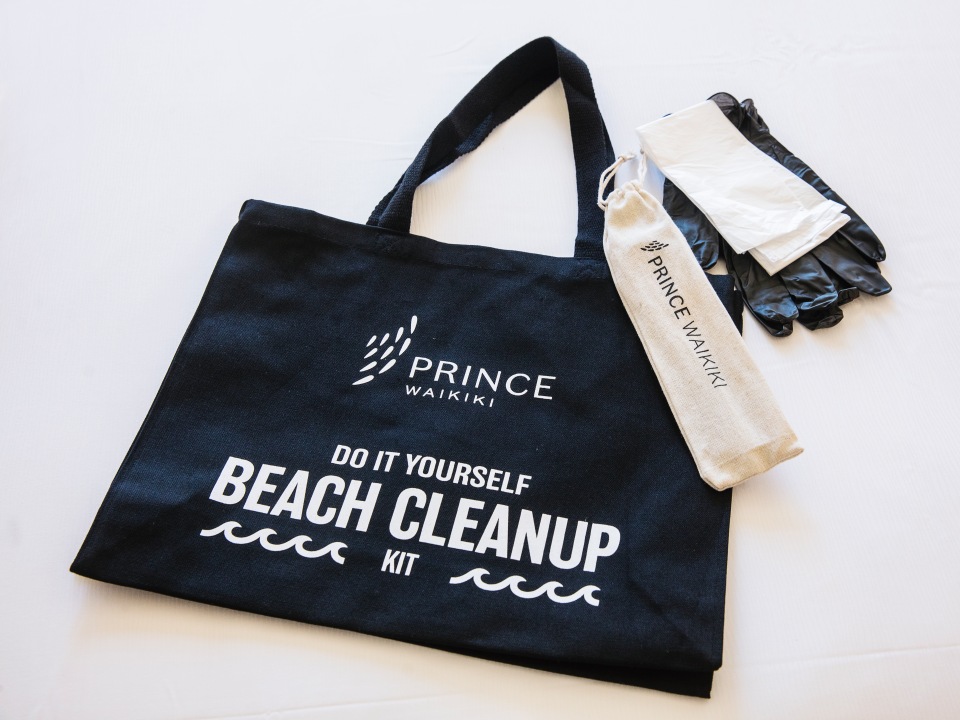
12Prince Waikiki, at the western end of Waikiki Beach, received a Hawaii Green Business Award earlier this year in recognition of its efforts toward sustainability, including environmental protection and the use of clean energy. It was also quick to join the Mālama Hawai‘i campaign run by the Hawaii Tourism Authority, and it has partnered with the local nonprofit Sustainable Coastlines Hawaii to actively encourage guests to take part in beach cleanups.
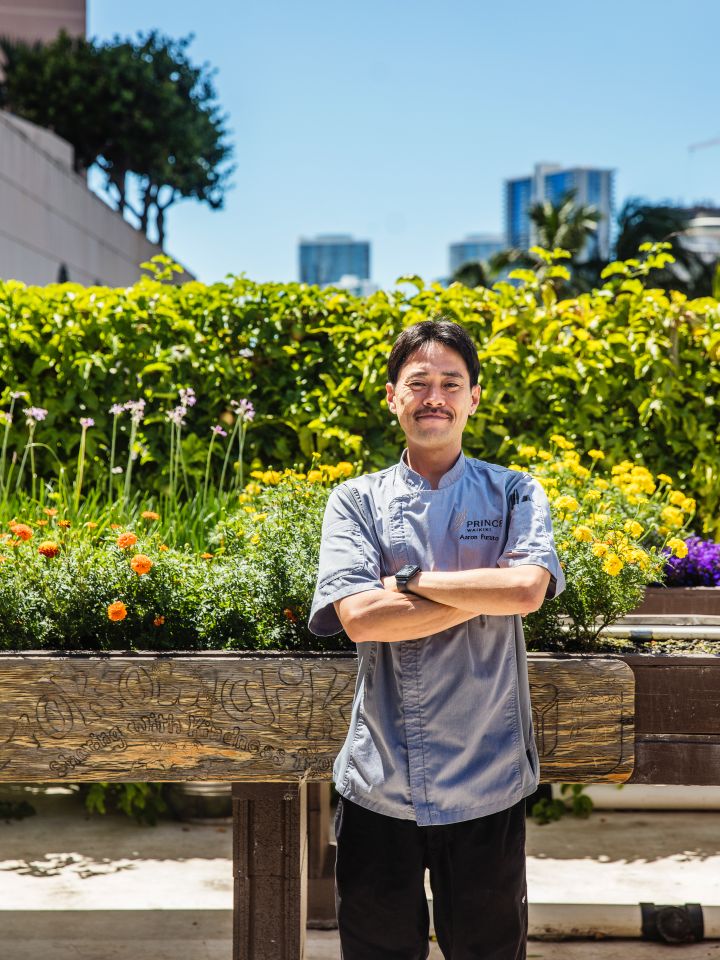
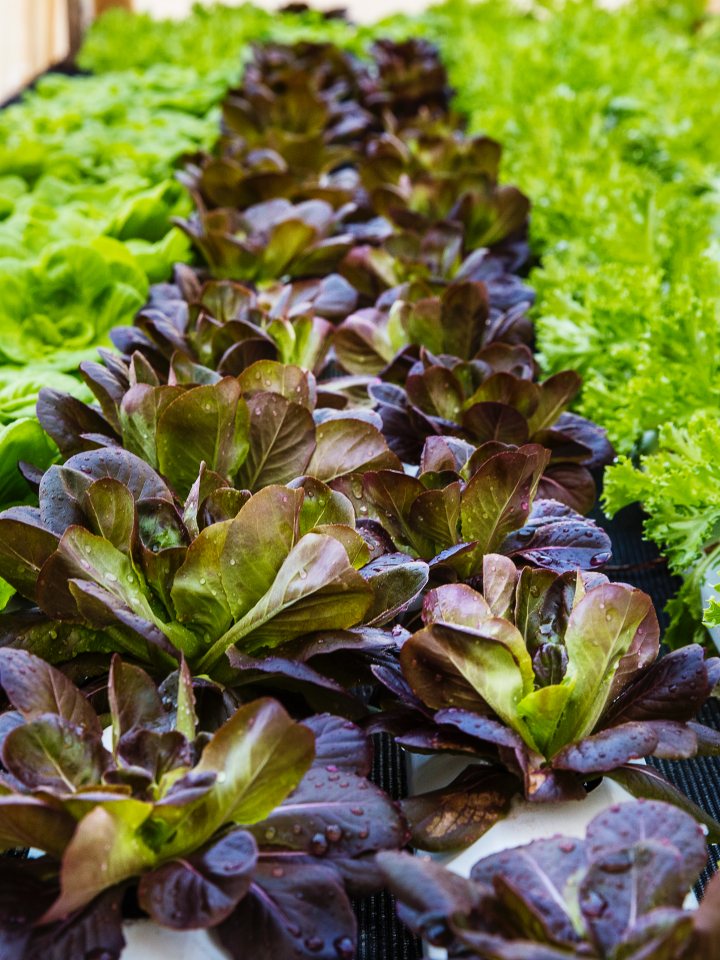
To see how sincere Prince Waikiki is about sustainability, you have to go up to the rooftop garden. This small garden, tucked into one corner of the building’s roof, is the hotel’s secret weapon for realizing farm-to-table dining in its restaurants. It is small, but already in its third year. Right after the pandemic, when both fresh ingredients and labor became hard to come by, the garden was conceived as a way for the hotel to be more self-sufficient and sustainable. It now grows herbs such as lemongrass and rosemary, vegetables such as lettuce, chives and okra, edible flowers including marigolds, and the tropical fruit lilikoi, all hydroponically.
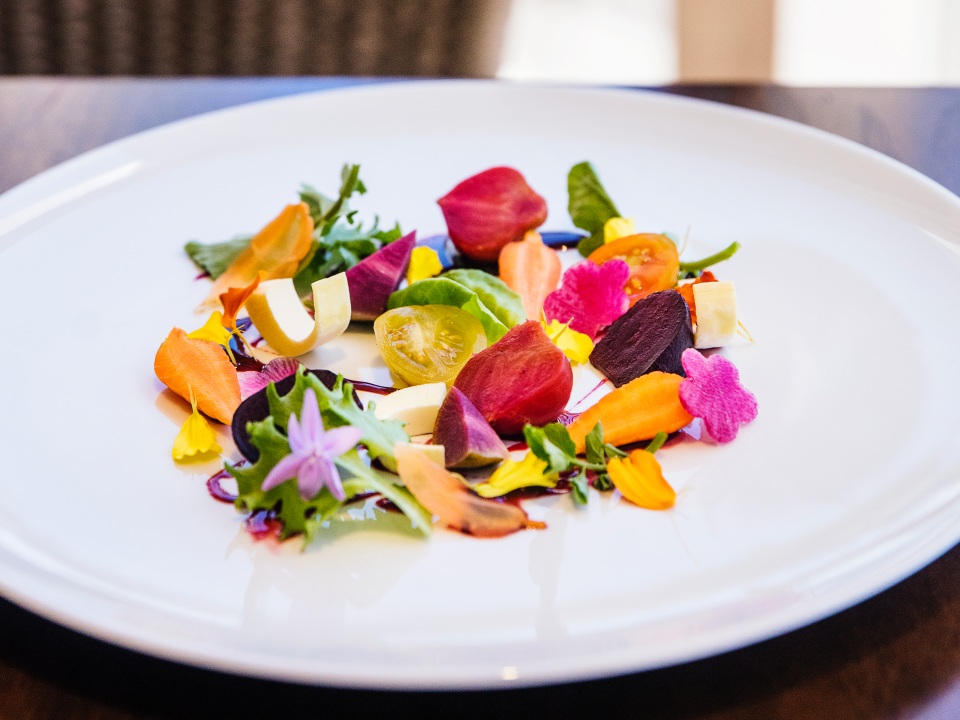
“The vegetables and herbs harvested here go to the hotel’s restaurants, room service and banquets. Eventually, we plan to grow microgreens as well,” says Aron Purto, executive chef of 100 Sails Restaurant & Bar at the hotel. The fresh produce, grown 100 percent organically in the rooftop garden and picked just before use, appears throughout the menu in many forms. Back down in the restaurant, a plate arrives that holds the rooftop garden itself. A salad of carrots, tomatoes, beets and leafy greens, garnished with yellow and purple edible flowers picked from the rooftop garden, is a full-spectrum palette of color.
“To source fresh local ingredients, we work with many small producers across Hawaii. Smaller farms sometimes can’t produce enough, but this way we can keep the hotel’s menu going while also supporting the local community.” Jeremy Shigekane, executive chef at Prince Waikiki, continues as he drizzles the salad with a sauce made from fresh bay leaves, lilikoi and seaweed brought down from the rooftop. And that isn’t all. Scraps left over from the kitchen don’t go into the trash. They are passed on to local pig farms, putting zero waste into practice. And the traveler’s role in this journey toward sustainability? Simply enjoying healthy dishes made from local ingredients with a short food-mile footprint is enough.
12 Prince Waikiki Hotel: www.princewaikiki.com