Nature Friendly Life — Kim Minji’s Nature-Friendly Way of Staying Active
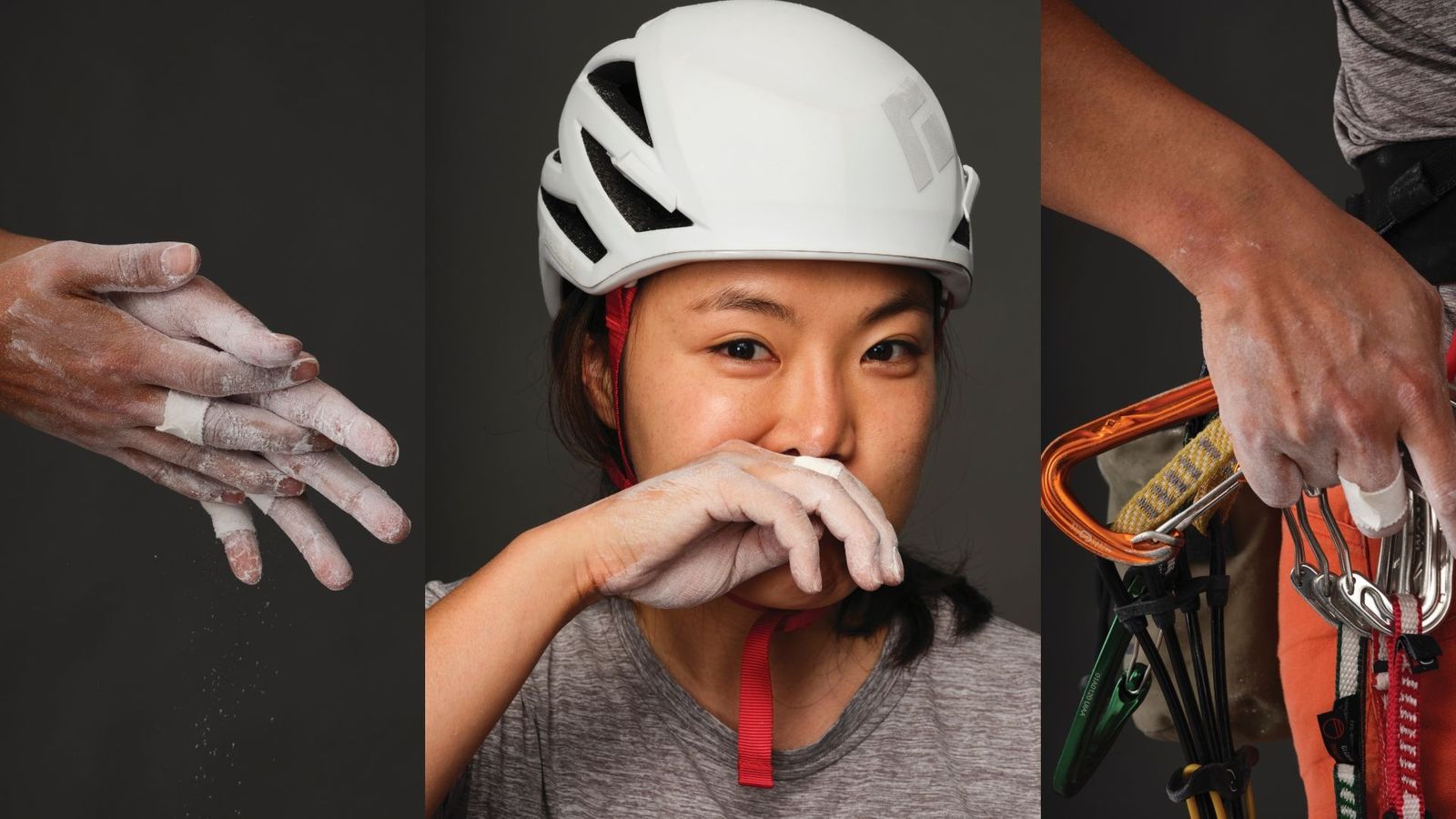
Trail runner, climber, lacrosse national team player, YouTuber, startup founder, investment analyst… She once kept watch over a laboratory, and now she seems to have made herself a test subject for nature-friendly living. We met Kim Minji, a player who handles a dizzying range of pursuits with ease, thinks hard about zero carbon emissions, and runs and climbs mountains for kilometers every day.
Words Hur Taewoo
Photos Park Jaehong
Interviewee Kim Minji
You’re active as a Patagonia brand athlete, right?
In Korea, there are four trail runners including me, three climbers, and four surfers. Usually, the ambassadors or athletes at activity brands are all real competitors. They’re people who always place near the top when they enter a competition. So why did they pick me? (Laughs) I think Patagonia values a love of adventure and a willingness to take on new fields. If you look at the global ambassadors, some don’t even have Instagram accounts, and they don’t advertise that they wear Patagonia. Being a brand athlete doesn’t make me any more famous. My followers don’t suddenly shoot up, either. I suspect they chose me because I simply live the way I always have. Even though I keep receiving outdoor clothing, I keep wearing only the clothes I like. And I always repair them. The pants I wore today have been mended, I think, five times. Torn here, torn there.
When did you first become interested in sports?
I was good at them from elementary school. I even came in first in vaulting, but lacrosse was the first sport I took up seriously. In high school, the school told us to pick one sport. Kendo, swimming, soccer, sport dancing… The teacher introduced lacrosse, and it looked so cool. They also said it would help if I went to study abroad later. So I started, and after that a national team was formed, and I ended up as its captain.
What was your dream as a student?
To be a scientist. (While preparing to study abroad) I was looking for a place where I could do both biology and lacrosse, and I ended up enrolling at The Johns Hopkins University. But in college I joined the fencing team. The school’s lacrosse team was so good that I couldn’t even show my face. (Laughs) That was when I really trained systematically. I fenced and ran two or three hours a day, and rode a bus for ten hours to get to competitions. As for running, I used to just run (without caring about times), and that was when I learned the idea that you have to finish five kilometers within a certain number of minutes. At first I couldn’t break thirty minutes, then I got under thirty, then under twenty-five… I kept running steadily for several years and gradually got better. Along the way I grew to love running, and because I loved mountains, I did more trail running than road running, hiked often, tried backpacking in Hawaii without knowing anything, and rented a van to travel around the American West…
So your life goals changed?
I’m suited to work where results appear right in front of me. I wanted to become a scientist, so I majored in biology in college and mostly cultured cells in the lab. I’d wake up in the night to check the cells, doze off and wake up to check the cells. Then one day, for no reason at all, the cells die. If I put in a certain amount of time and effort, results should follow, but in biology there’s little I can control. With climbing, for instance, the results are right there in proportion to how hard you work. I think that kind of thing was a bit too hard on me to keep going as a scientist.
How much do you train these days?
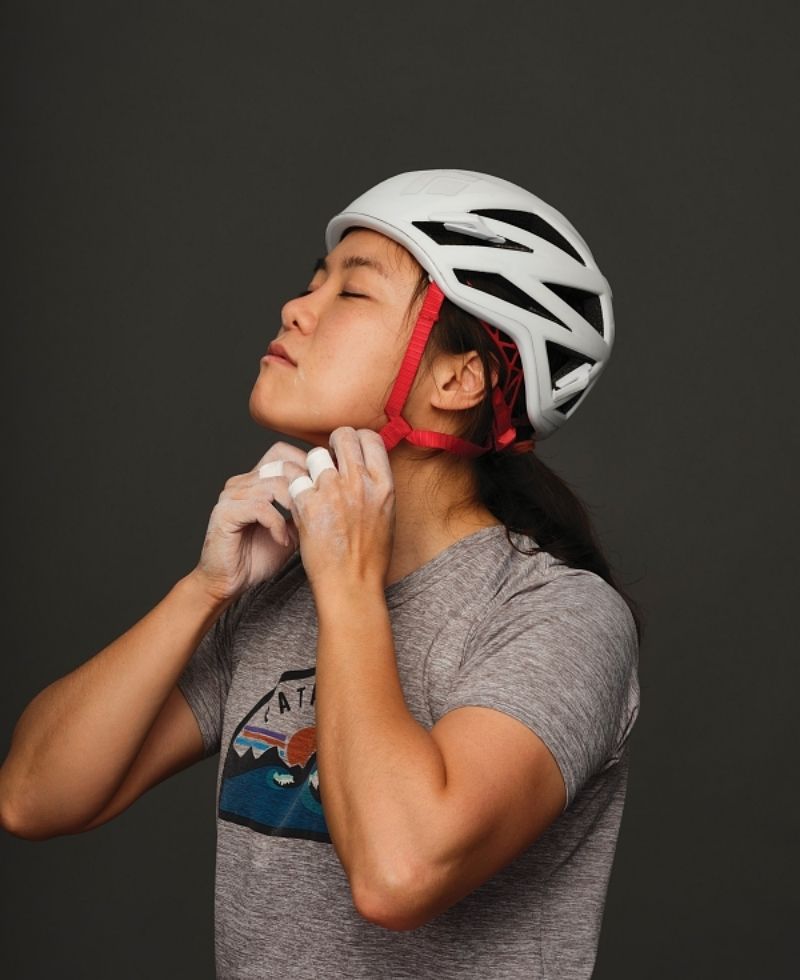
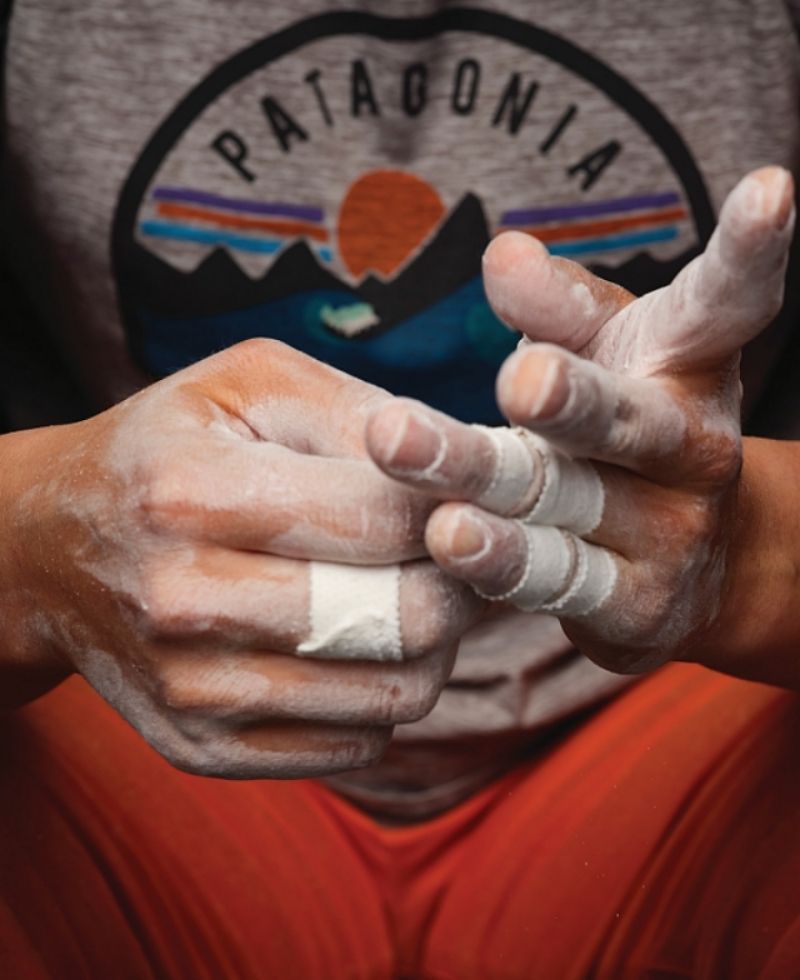
In climbing, I’m training for a 5.12 grade. On Tuesdays and Thursdays I do endurance training at the climbing gym, and I go outdoors to the crags or do bouldering. Three mornings a week I run, about five to ten kilometers.
Isn’t there a risk of injury?
I got hurt most when I ran marathons, because I ran long distances for so long. That’s when I hurt my knees and lower back. I don’t think I’ve ever been injured trail running. At most I’ve rolled an ankle by mistake.
Have you ever felt discouraged?
I’m not the type to stake my life on times, so I’m fine. If I were a really fast runner, a truly great athlete, I’d probably have felt discouraged every time I missed the top places.
Why did you take on a month-long van-life trip?
In 2015, I worked on a photo project on Ulleungdo with three Korean women and three American women. I took part as a trail runner, and of the six people I met there, four lived in vans. Once I heard that, it sounded like so much fun. You wonder how on earth people live in a van, right? I made up my mind that I’d do it someday, and in 2016, when I changed jobs, I had about a month free. I thought, this is the time, and off I went. I visited national parks in the American West. Starting from San Francisco, I went to Yosemite, Glacier, Grand Teton, Zion… If I went again now, I’d plan a somewhat shorter route. There were a few days when I did nothing but drive.
How much did the trip cost?
Renting the vehicle was the most expensive part. It was almost 100,000 won a day, so for a month the van rental alone was about 3 million won. Gas added up, too. The van had a gas stove and a refrigerator, so I cooked my own meals as much as possible, and on the occasional really tough day I bought food.
Is there an episode that stands out?
A mouse got into the van. Twice! I’d never imagined a mouse could get into a car, but it turned out that it slipped in while I’d left the door open a little at a campground. I was sleeping under my sleeping bag when something brushed past. Half asleep, I just thought, “What was that?” and kept sleeping. The next morning I got up to eat some nuts, and everything had been dug through. “Oh, a mouse got in!” That day I turned the whole van inside out, and I was so shaken that I had no choice but to sleep in a motel. After that I always stored all my food in a storage box. They say you should never leave things like nuts out in the open.
Which place did you love most on that trip?
The most memorable was Yosemite. The view where you can see El Capitan and Half Dome right in front of you is stunning. Zion was very impressive, too. Yellowstone, though, wasn’t what I’d expected. There were so many bison, but it felt like I’d just gone to look at animals. The place that disappointed me was Bryce Canyon. Compared with other national parks, the scenery is mysterious, but it’s a bit, how should I put it, dainty? I think I only trekked there.
Do you like traveling alone?
I just liked going around on my own. I traveled alone a lot. Some of my friends say, “You don’t even eat alone, so how can you travel alone?”
Don’t you get lonely?
Of course it gets hard. The longest backpacking trip I’ve done was a nine-day thru-hike of the Wonderland Trail. Around day six I started thinking, “Why am I even doing this?” and it was really tough. I got through it one day at a time and barely finished. Before I got hooked on climbing, one of my goals was to complete the PCT (Pacific Crest Trail), but I’m not very interested in that now. (Laughs)
How did you become interested in the environment?
I think I pay more attention because it directly affects the activities I do. When you spend time outdoors, you naturally watch the weather more. Last summer it kept raining, so I couldn’t go climbing. I love skiing too, but it snows less and less. In fact, because of my asthma, I can’t even run on days when the fine dust is bad. Some people say climate change isn’t caused by global warming, that temperatures are simply going up and down, but that’s just what they want to say.
What’s the biggest problem?
People’s awareness. For example, even if a company’s CEO says, “We’re going to reach zero carbon emissions!”, an employee may think that raising sales and getting paid comes first. It’s hard to change the awareness of members of an organization, of citizens. Infrastructure matters too, but that’s something capital can solve, whereas awareness can’t be solved with money. Even if people don’t follow through, it matters just to be conscious that there are efforts like designating a ‘no-meat day’ and going without meat for a day. When I tell people, “I do these kinds of things,” I usually get a positive response. When I need to explain how to reduce carbon emissions, it’s best to keep it simple, like installing water-saving devices or cutting back on electricity use. I don’t own a car. I rent one only when I need it, and whenever possible I walk or ride Ddareungi, Seoul’s public bikes. When I recommend that to people, they’re horrified… I’d like it if people at least made using public transportation, like the subway or the bus, a habit.
How do you practice environmental protection in your outdoor activities?
I try to go no-cook whenever I can. Even when I go camping with friends, I pack the meals for the day in lunch boxes. If you want to cook something, you need a fire, and trash is unavoidable. I also try to eat as little meat as possible. It’s ironic to say you care about the environment and then eat a lot of meat. Transportation produces the most carbon emissions, and food comes next. Honestly, I don’t buy many things, like clothes. Even when I want something, I think about it for a long time, and if I forget about it, I just go without. My trail running shoes tend to tear easily, and I keep one iron rule: to buy a new pair, I have to throw out the old pair first.
I heard you work in an environment-related field now.
At the beginning of last year, I was in Northern Europe. Right before that, I had been doing investment work at SoftBank Ventures, and I figured that if I was going to do investing anyway, I should do it in an area that suited me. When I looked into it, investment related to sustainability and climate change response was most active in Northern Europe, and especially in Sweden. So I went to Stockholm to interview with several companies, but because of COVID-19 all the interviews were canceled and I had to come back to Korea. After returning, the company I looked into for work was Innomad. It made portable hydroelectric generators sold in Patagonia stores. I contacted the CEO out of the blue and said I wanted to work there, and luckily there happened to be a six-month short-term project, so he suggested we give it a try together. It was a project to realize zero-carbon-emission camping at Hadong Gujebong Recreational Forest. When you go camping, you can roughly tell when and how carbon is emitted. It comes down to the transportation to get there, the electricity you use, and food waste, and we quantified and calculated all of it. ‘Every night you sleep there, planting two trees can bring your carbon emissions to zero.’ Unfortunately, I wasn’t able to finish the project.
If you were a venture capital investment analyst, what kind of service would you want to invest in?
One service I thought was good recently is an app that links to your card history. For example, say I buy $30 worth of goods at Brand A’s shop. The app calculates how much carbon was emitted because of that purchase and tells you. Another service lets you take a photo of your purchase receipt and shows you a comparison of the carbon emissions. It might tell you that an avocado has higher emissions than chicken. When the information is tied to what you actually consumed, the problem hits home more. On the other hand, I also think it’s very important to invest hundreds of billions or even trillions of won in new technologies that reduce carbon emissions, as the Bill Gates fund does.
Lastly, is there a trip you would like to recommend to the magazine’s readers?
A month before starting my first job, I traveled to Hawaii. Of all the islands, Kauai was especially peaceful. I went backpacking alone on the Kalalau Trail and made friends there. If you go up above the island’s valley, there’s still a hippie community living self-sufficiently. Seeing that shocked me. Everyone outside is struggling to get by, and yet there’s a place like this in the middle of Hawaii… It made me realize that you don’t need to live owning a lot of things. People seemed happy even in a simple life. Of course, I can’t live like that for the rest of my life, but even after I returned to my daily routine, that memory helped me a great deal in how I live.