It was 2014, and two friends of ten years finally acted on something they had always said out of habit. There was no grand ambition or master plan, just bodies worn out by office life and the tangled feelings of women about to turn thirty, and so their trip around the world began. Once they left, they were fearless. Whenever they hesitated, they just went for it, and that carried them through 781 days. After they came home, they worked as content creators in a range of roles and kept living everyday life like travelers. In 2019, they took on a new journey as lead writers of the JTBC travel show “Traveler.” Wi Seonim and Kim Meotji, who ran away in the night, have honesty and humor as their greatest weapons. Don’t you want to know why their stories draw us in?
Words Pyo Youngso
Photos Jung Sooim
In collaboration with Urban Space Odyssey
P Pitch by Pitch
S Wi Seonim
M Kim Meotji
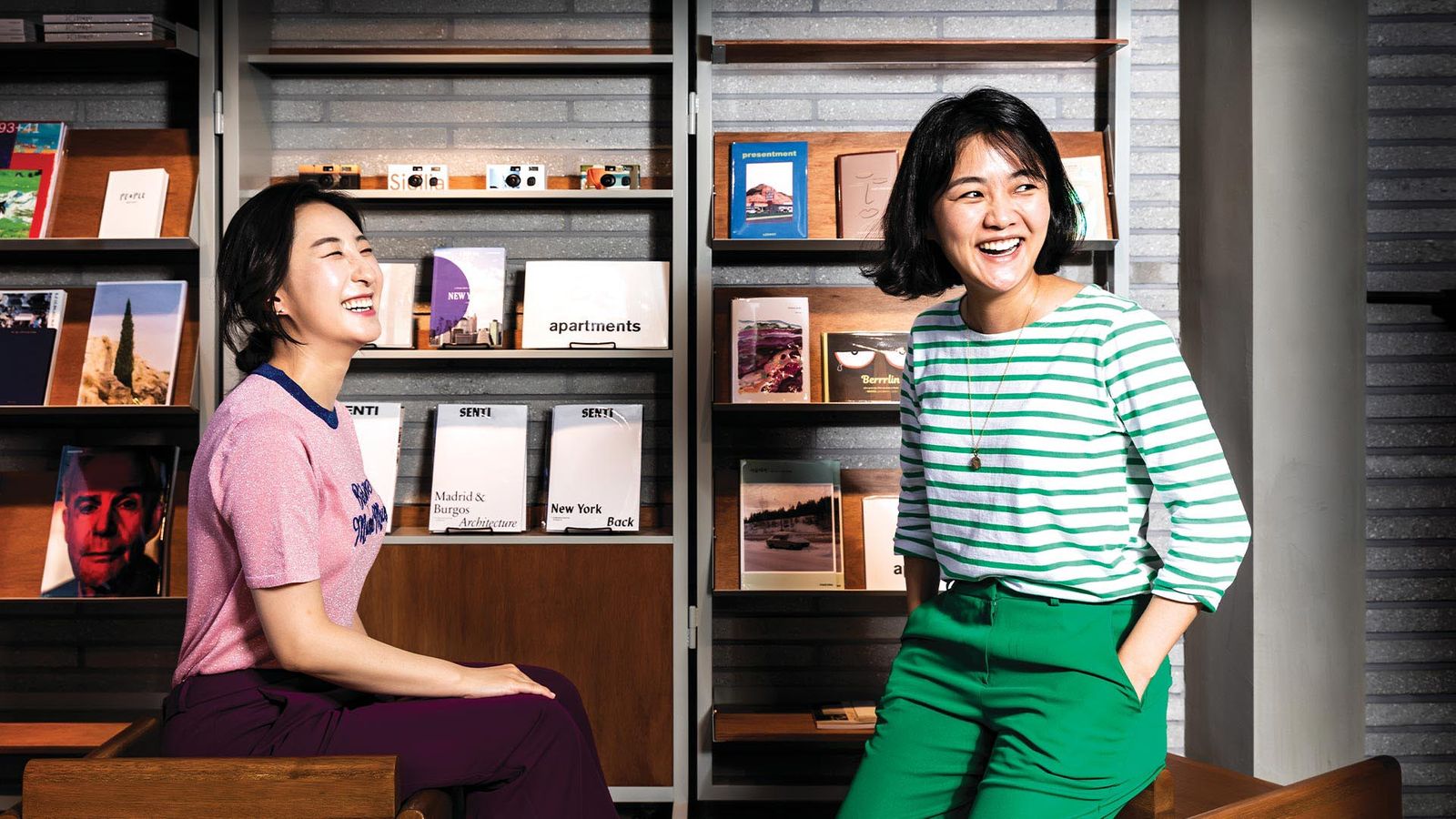
P You traveled the world, wrote about it on a blog, posted travel videos, and even published a book. Did you ever expect to become this well known?
S Not at all. It was a blog, so I figured somebody would read it. I imagined that “somebody” would be a small circle of travel enthusiasts, plus our friends. But surprisingly, a lot of people liked it, and I think that’s when I started down the path of an attention seeker. (Laughs)
M It wasn’t “from then.” This friend is a born attention seeker. I bet she had a plan all along. She loves attention so much that she shared her diary with people back in middle school.
P Have the two of you known each other since middle school?
S No, we’re friends from university. When I was in middle school, there was a website where you could post your diary online. A diary is supposed to be something only you read, right? But I posted mine there. When Meotji heard that, she said, “So you had that attention-seeking streak even back then.”
M Even before Cyworld, she already liked showing her writing to people and getting noticed.
S But I didn’t start the blog with a plan. A trip around the world is a huge event in life, so I just thought we had to keep a record of it.
P So even before you left, you were thinking of writing and shooting video.
M We started shooting video during the trip. We had brought a camera, but at first we had planned to shoot with our phones. This friend said that since we were spending so much money to go, we should do it properly, so we bought one. Once we were out there, though, we noticed that other travelers were carrying something smaller than a camera. They were shooting video with action cams like the GoPro. We thought, all right, let’s record our trip with one of those too, so we bought the gear mid-trip.
S We had no money at the time, and buying it locally wasn’t a great option, so we bought a cheaper version through a friend who came from Korea to see us.
P Did you always like writing?
S Yes, I did. I just liked writing something steadily, all the time, but I don’t think I ever thought of it as “I’m a person who writes.”
M I never imagined I could write. Even while blogging, I was just recording our trip, and since some people came to read it on purpose, I thought we should make it a bit more fun. I still didn’t think of it as writing, but later I realized I was doing it.
S I pushed her a lot. I’d say, “Why am I the only one doing this? You try it too.” Meotji and I are really on the same wavelength. We both have a burning desire to dissolve anything into humor. That taste matched when we wrote, too, I think.
P You’re working as writers on JTBC’s “Traveler,” and the destinations for both Season 1 and Season 2 were in South America. Is there a special reason?
S It’s less that we chose South America for a particular reason, and more that we weighed several factors and it just happened that both seasons ended up there. We both loved South America when we traveled. It was also the continent where we stayed the longest. Usually we settle on a destination after several meetings with the production team, and since we were participating as writers, I suppose our opinions carried a little more weight.
P When the show moved on to Season 2, was there anything you changed from Season 1, or any concerns?
M When we first started, the most important thing to us was “showing the traveler as they are.” We wanted to make a show where viewers feel like they’re traveling along. We wanted to capture the traveler’s feelings and small moments more than where they were going, and I think Season 1 expressed that well. In turn, some viewers wanted to see more of the various charms of the destinations. The signature of our show is narration that tells the traveler’s inner thoughts. We wanted to keep that element while bringing out more of each destination’s appeal, and we thought about where to go, which led to Season 2.
P You wrapped up Season 2 safely. What do you hope for next?
M If opportunities keep coming, we’d like to show travel that’s full of human warmth, from a traveler’s smallest tastes to their biggest challenges, from the neighborhood next door to the other side of the globe. Just as we first aimed, we want viewers to feel as if they had set out together with us.
S When you travel, there are moments when the spotlight seems to fall on one spot. Moments when you think, “This is what I came here to see.” It’s fine to edit only those parts beautifully, but the exhausting, annoying hours leading up to that moment, and the process you have to endure, are all part of travel too. I think it’s meaningful to capture in detail every image and feeling you get along the way.
P How does traveling purely for the sake of travel differ from traveling for work?
M Both are definitely travel, but the range of freedom is different. There’s a moment I still remember. In Season 1, the traveler Ryu Junyeol sees the sea dyed red in a Cuban city called Varadero, takes off his clothes, and jumps in to watch the sunset. The only thing I could think while watching was, ‘I want to go in too!’ I wanted to watch the sunset from inside the sea as a traveler, not as a crew member, and I couldn’t, so I felt so wistful. Overall, though, it felt like the crew and the cast were all traveling together. Following the traveler’s journey, he’d make choices I wouldn’t have made, so in that sense it was a new travel experience, too.
P During the production of “Traveler,” does the traveler get to make every choice?
S Yes, so it felt like watching a work whose point of view had shifted from first person to third person. A kind of travel where you watch and imagine, “Ah, this is how I felt back then, so what is the traveler feeling right now?”
M We don’t usually put every emotion into words. Our job was to talk with the traveler about what he felt during the trip, then polish that so viewers could listen more easily and feel as if they were there, and express it as narration.
P What did the producer in charge say when he proposed that you take part in the show? He was asking travelers, not professional TV writers, to make a travel program.
S To begin with, Producer Choi Changsu was apparently an avid reader of our blog. We had no idea, but one day he left a greeting on the blog. He said he had watched our whole journey, and with a meaningful remark that it seemed time for us to meet, he asked us to get in touch. At first we were surprised, and after a while we started wondering, “Could this be a scam?” He didn’t recruit us as writers from the start. He said he wanted to make something fun out of travel and asked us to do it together.
M We started with a light heart, thinking it would be nice if we could help, and then things got bigger.
S We expected a one-off job, like offering a few comments or reference material, but as the meetings continued, at some point we found ourselves signing a contract.
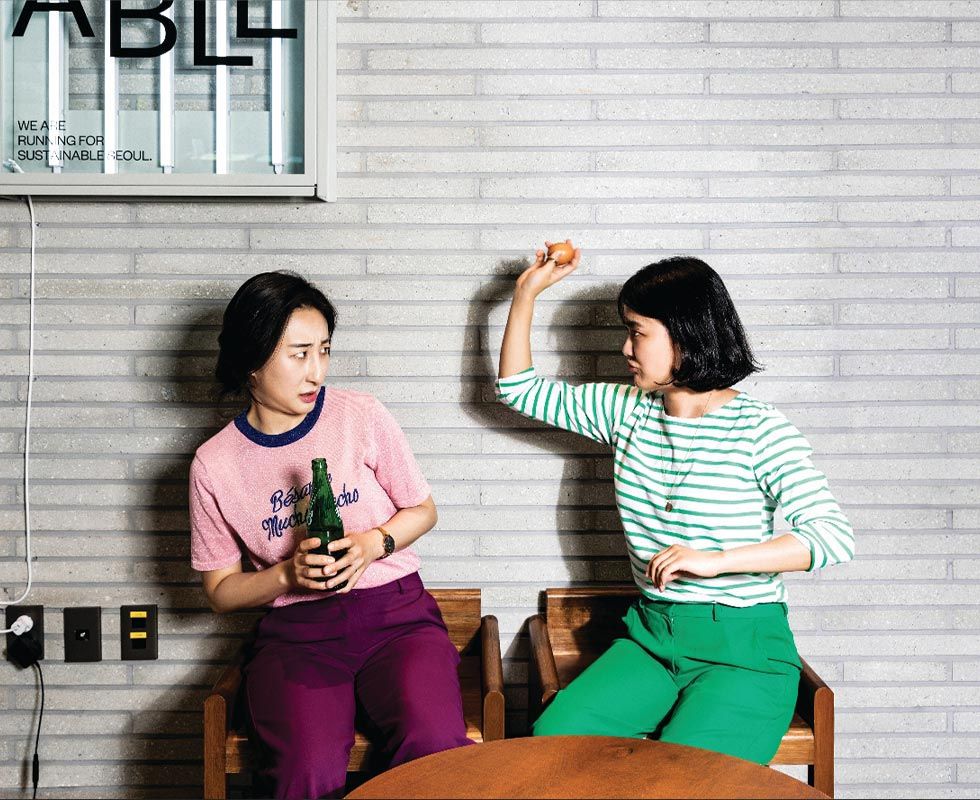
P In the authors’ note of “Thirty, Running Away Instead of Getting Married,” you wrote that you hesitated a great deal over publishing the book. You wondered, ‘There are already countless travel books, so how could ours be different?’ and ‘Our trip isn’t the right answer, so what does it mean to show it?’
S I think you get to know yourself better when you travel. Seeing magnificent scenery, eating delicious food, and having new experiences are good in themselves, but I like discovering the new sides of myself that pop out each time. Travel may or may not be the key to solving a problem, but once you understand yourself better, I think you build the strength to work through it.
M Unlike Seonim, for me it’s all about fun. Pure enjoyment.
S She pursues only that.
M (Laughs) I like using all five senses. Seeing, hearing, tasting, touching. Stepping out of daily life and feeling unfamiliar stimulation in an unfamiliar environment is a huge joy in itself. For me, setting out on a trip is, in a word, joy.
P After wandering far from home for a long time and going through countless unexpected things, I’d imagine you’re no longer startled by most everyday matters.
M I thought so too, but it turned out not to be true.
S If you went through the exact same thing you experienced on the road, maybe that would be true. But that goes for anyone, not just travelers. When something unexpected happens, I still get flustered and angry all over again. Still, when I thought about what had changed at least a little since before the trip, I think I’ve become somewhat bolder. I survived all kinds of strange things in every corner of the world, and there were times when we were seriously short on money, yet here I am now, making a living. So I’ve come to think that this, too, shall pass. Between the two of us, we say we’ve grown ‘muscles of the heart.’
M In everyday life, similar things tend to happen over and over. On the road, you go through all kinds of things in a compressed span of time, so I think we got craftier and better at solving problems.
P I also enjoyed how you two kept bringing (?) mishaps and accidents on yourselves by showing up at new destinations with no preparation at all.
M They say a person’s temperament never changes. We’re both people who just don’t prepare, and no matter how hard we tried, it never worked.
S So we always had regrets. Whenever something happened and was about to get resolved, we’d vow, ‘Next time, let’s definitely prepare,’ and of course it was always the same. By now we’ve accepted that, too. We’re people who aren’t good at preparing and packing ahead of time, so we should think of a different way to solve things—well, that’s what we say, anyway, but that’s not what we actually do. (Laughs)
M But I found all of that fun, too. (Laughs)
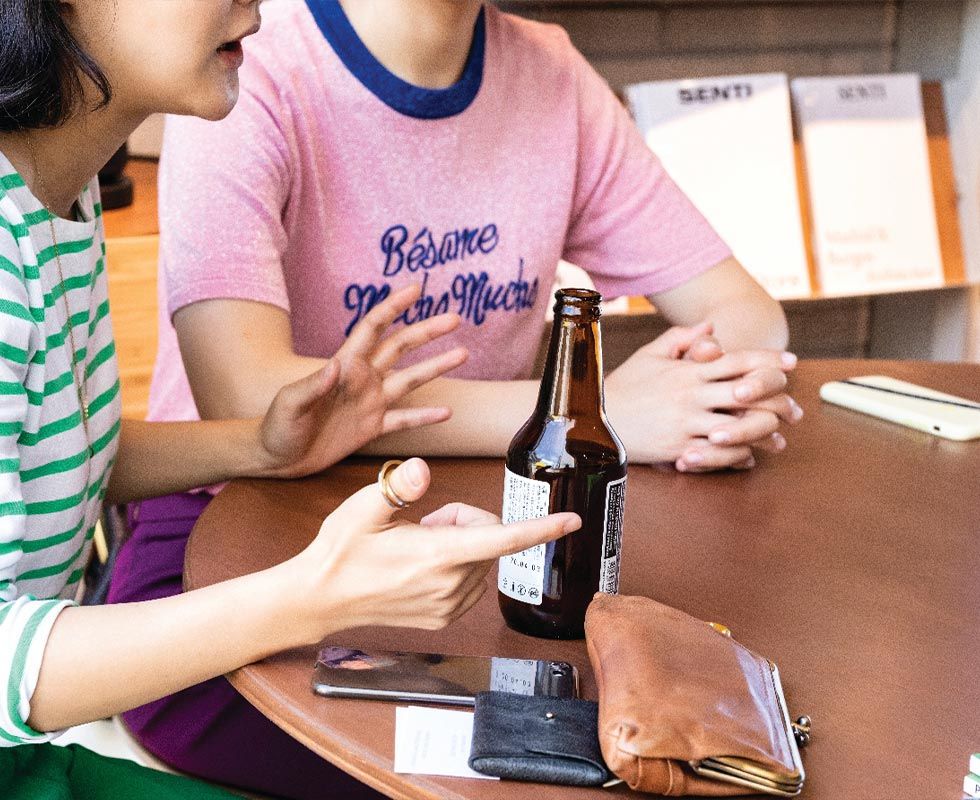
P If you could go back to the moment before your world trip, keeping everything you know now, what would you do and not do?
M There’s nothing I’d tell myself not to do, but if I went again, I’d like to travel more actively. Since we were two women traveling together, we had our own rules for reducing risk, like never leaving the accommodation after dark. But finding the right line was sometimes surprisingly hard. When someone approached us, it wasn’t easy to tell whether they meant well or had bad intentions. The wider you open yourself, the more people you meet and the more varied experiences you have, but the greater your chances of being exposed to danger, too. There was a time when someone held out a hand and I backed away out of fear, and I wonder what it would have been like if we’d gone along—maybe it would have been more fun. On the last trip, the center of gravity was on safety; next time, I’d like to widen my range and travel with a bit more balance.
S I think I also developed a knack for judging how far is far enough. There’s nothing in particular I’d tell myself not to do, either. What I’d like to do is keep better records. I loved writing things down and worked hard at it, but because I didn’t have a concrete goal, I got lazy at times. So there are almost no records from Latin America, and I remember that made things a bit hard when we wrote the book later.
M If you look at our blog, there are gaps of several months at a time, and for some countries there are no posts at all. Then we suddenly pop up and say, “We’re in Australia.” (Laughs)
S In a way, there was pressure too. We started getting attention and lots of people enjoyed reading, so it felt like we had to write ‘more entertainingly, more perfectly,’ and when you keep putting it off for one reason or another, the excitement fades. If I set out again, I’d like to jot things down without pressure, even in my phone’s notes app, as they happen.
P Is there anywhere you absolutely want to go?
M Not really. I’d probably go somewhere I haven’t been yet.
S My wish is that things get better in these times so we can go anywhere at all.
P Do you have any personal rules or know-how you picked up while traveling the world?
S I thought about it a lot, and honestly there’s no know-how worth sharing. We just floundered a lot. Still, if I had to give a tip about long-term travel: as a trip drags on, nothing goes the way you want or plan, so there are moments when anger wells up. When you’re alone, you can just let it out on the spot, but with a companion, that isn’t easy either. At those moments, we would toss out a ‘magic sentence’: “Let’s think positive.” Just looking at the sentence on its own…
M Whoa, you scared me! You sound like someone who’s really good at English. If this were live, I might have stepped on your foot. (Laughs) Here’s how that sentence came about: it was on our first trip abroad, in India. We’d been scammed, and we were hot and irritated, sitting on the side of the road. That’s exactly what Seonim said. The words were ‘let’s think positive,’ but her face looked so fierce. I just burst out laughing. I mean, saying something so nice with that face! After a big laugh, it felt like no big deal, and we said, ‘Fine, let’s go eat something delicious.’ Ever since, just saying it whenever something bad happens or our mood sinks makes us laugh.
S It clears the air. Like the spot where the current suddenly changes. The key is to say it with a scrunched-up face. I think that may be the know-how that got us to where we are today without fighting, flying home separately, or ending the friendship.
M When I posted a photo of our arrival at the airport on the day we came home, friends said, “I didn’t think you’d come back together,” and “I thought you’d fight and come home separately!” They were more amazed by that than by the fact that we’d traveled for two years. (Laughs)
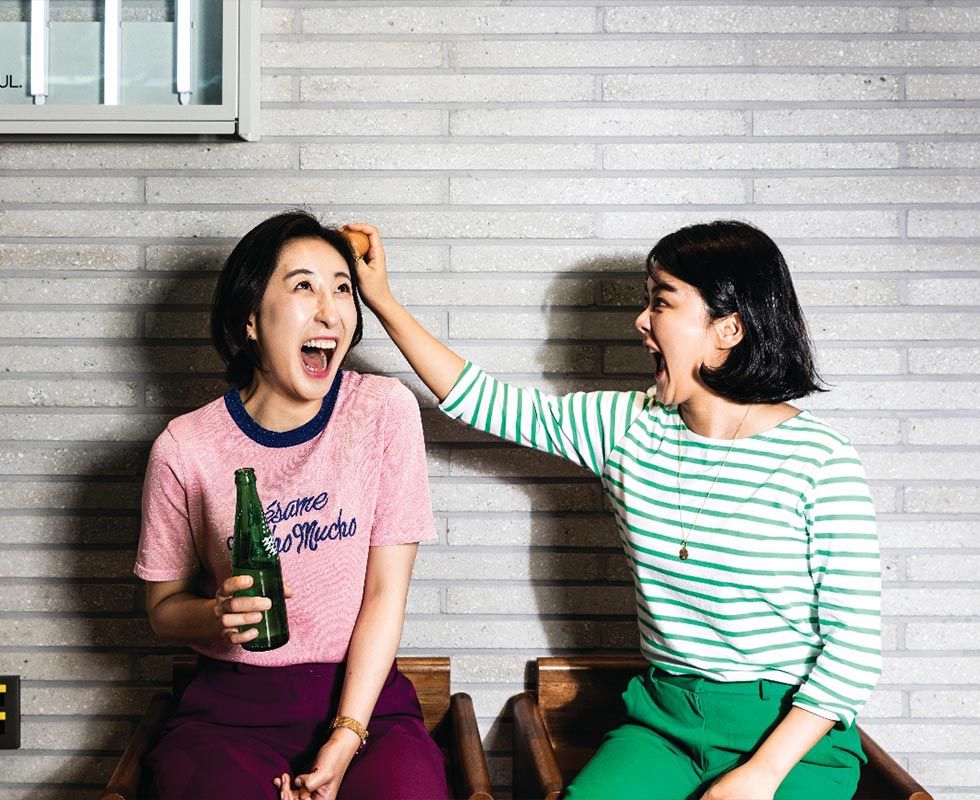
P Is there a personal ritual you always keep when you travel?
S As you’ll see if you read the book, every time I moved to a new city, I wrote a postcard to my mom in Korea. Honestly, it wasn’t out of deep filial devotion; I started it because I felt sorry for my mom being home alone and wanted to make it up to her somehow. I began sending postcards from the very first city, and I nearly gave up many times along the way, but I saw it through to the end.
M I love elephants. There’s an enormous amount of stuff in the world with elephants on it. But all of it is baggage, right? When you’re agonizing over whether to pack three pairs of underwear or four, buying decorations was out of the question. So I made do with buying just one elephant charm I could hang on my bag. Other than that, there was nothing I absolutely had to do…
P For example, always trying the local liquor…
M Oh, that’s what it was!!
S We did that as naturally as breathing, so I didn’t even think of it as a ritual. We did it without fail!
M It was one of those things we did as routinely as eating. (Laughs)
S We were backpackers, after all, so we always enjoyed a country’s cheap booze, like soju in Korea.
P Is there a drink that stands out in particular?
M In Brazil, there’s a cocktail called the Caipirinha. It’s made with cachaça, a Brazilian spirit distilled from sugarcane, plus lime and sugar. When you drink it through a straw, each grain of sugar and the tartness of the lime come together, and it’s just so, so delicious. I drank a lot of them!
P Is there a work, in any genre—book, film, music, TV, comics—that inspired your travels?
M If I had to pick just one, it would be ‘Love & Free’ by Takahashi Ayumu. You could say my life was changed by travel, and this is the book that influenced that. Our first trip together to India was really wonderful. Even after we got back, I kept savoring the memory, and then one day Seonim said she was going to leave again. She said she’d take a leave of absence, earn money, and go, and asked me to come along. At the time, I was mostly thinking I needed to start earning a living quickly, so I refused. I was living on student loans for tuition and part-time jobs, so what was I doing thinking about travel? Then I happened to read this book in the library. Before I’d even reached the halfway point, there’s a scene where the main character and a traveler have this exchange: “Why did you set out on a trip?” “Because I was born on this Earth, and I wanted to see more of it.” That very sentence moved me. Right, since I’ve been born anyway, let’s see more! I closed the book right then and told Seonim I was going with her. That’s how I took a leave of absence, earned money, and traveled.
P The chef Anthony Bourdain said, “Just as we take something from travel, we hope to leave something good behind at the places we visit.” What can we leave behind at our destinations through travel?
M When I asked myself what we left behind, and conversely what we take from travelers when we see them, I think the answer is ‘a traveler’s energy.’ I think we can leave behind the positive, lively energy of people who have stepped out of their daily routines to enjoy an unfamiliar place: excited, happy, sometimes exhausted, but taking on challenges anyway. Maybe locals see such travelers and draw fresh energy in their everyday lives.
S That’s why many people run Couchsurfing or Airbnb, because they like that energy in travelers.
M Even in my own daily life, when I see someone traveling, my heart flutters and I want to cheer them on. Somehow I feel livelier that day and end up walking down a new alley…. That’s how I get the energy to live my everyday life in a new way.
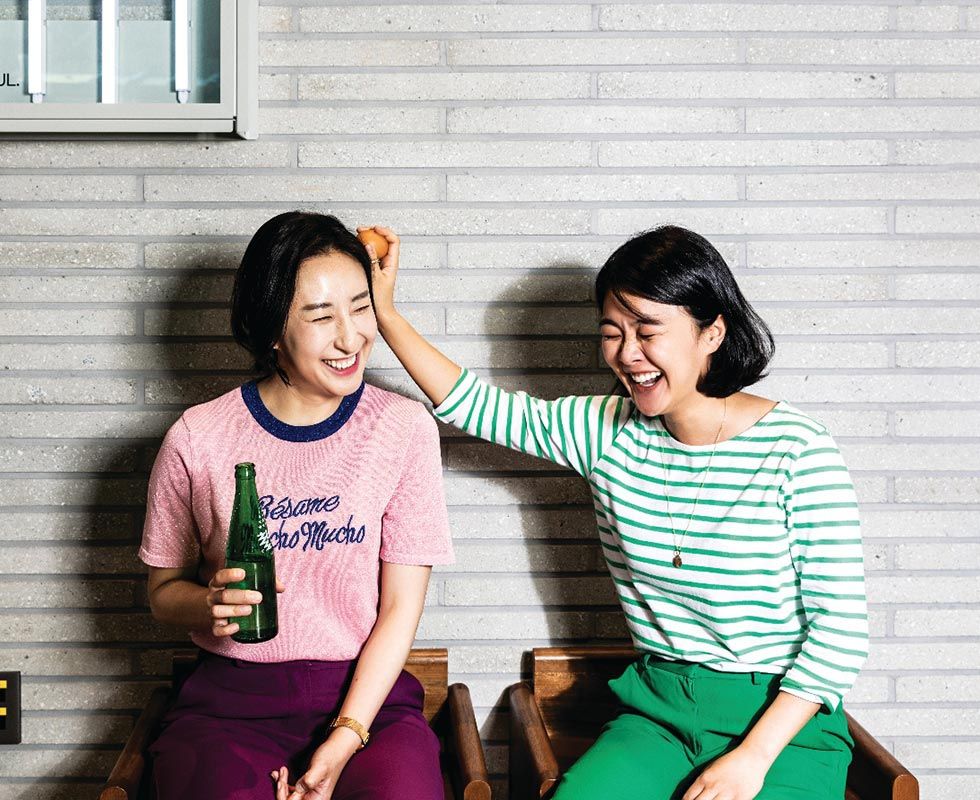
ⓒ Jung Sooim
P What are each other’s strengths and weaknesses as travel partners?
S I think Meotji’s strengths and weaknesses are very clear. Her strengths are that she’s easygoing, positive, and optimistic. Since I feel I lack those qualities, I suppose they look even better to me. The weakness is the same thing: she can seem like she isn’t thinking. (Laughs) I’m not a planner either, so I did have expectations that the other person would take care of things. Now I’ve come to accept and acknowledge that side of her, too.
M Seonim is incredibly proactive. Anything new, scary, or untried, she goes for it. She was born fearless. I’m a big scaredy-cat, but with her beside me, I’ve tried things I never would have on my own, and the trips have been so much more fun. Downsides? I can’t think of any. What can you do? You just live with it. Ha ha ha.
S If you put it that way, what does that make me?
M There’s no flaw big enough to make us say we can’t travel together. On the strawberry farm, too, Seonim was great at packing, so we made good money. She helps with the household budget, too. She has everything going for her. Ha ha ha.
P Have you ever had a big fight?
S Never one big enough to pull each other’s hair out. But we’ve had plenty of chilly moods and cold wars. I joke that I’ve been the one who put up with more, but I know better. She’s the one who puts up with far more. When I get annoyed or snap at her and Meotji just answers with a smile, I turn around and feel sorry. Then I’m a little more considerate next time. That’s how it’s gone.
M Is that what you were doing? (laughs)
P If you had to travel alone, where would you want to go? Or where would you recommend the other go?
M I do have a recommendation! Anywhere, as long as it’s a country with little travel infrastructure. Somewhere even getting around is exhausting. I’d drop Seonim there, and I’d sit in my living room happily reading her travel log. She does the suffering, and I get the fun.
S Not great.
M I think it would be really fun. She writes so well.
S Meotji is always saying she wants to leave, but she never seems to say “where.”
M I think anywhere unfamiliar would be fun. Oh! Recently I’ve been thinking I’d like to try Paris. A home with a distant view of the Eiffel Tower, French wine in hand, watching people on the street and soaking up the city’s “romance.” Paris was only a brief layover for me while filming “Traveler.” I don’t know if daily life there would be as romantic as I imagine, but I’d like to experience it once. But if I absolutely had to go on a trip, I’d probably pick somewhere more exotic. Africa would be great, or Central Asia. We both like what we’re not used to. Not cultures we’ve seen a lot through the media, like Europe or the US, but completely unfamiliar ones. It was true of India, where we first traveled together, and of Türkiye and Egypt, which we visited after taking a leave from school and earning the money. We’re always drawn to places we know less about.
S For me, too, leaving is the point, so no particular destination comes to mind. Usually I search for flights, find the cheapest ones, and from those pick a place with a different culture that I haven’t been to. I’d like to go to Bali once. I’d like to try surfing, too.
ⓒ Jung Sooim
M Oh, so you need a rest?
S And good food. But for me, too, the place itself isn’t the point. Meotji loves food, food culture, gastronomy, drinking, and singing and dancing, so I really hope she’ll do that kind of travel content once. If she turns out the content, I think I could make a lot of money off it. Whether it’s YouTube or whatever, I want to be beside her picking up the crumbs, so I recommend it strongly. Anywhere with a rich food culture! And once things settle down, China would be nice, too.
M Oh, China!! And I have a total tolerance for spices.
S See, the look in her eyes changed, right? When we wrote our book, we each wrote our own manuscript and then swapped to edit and revise. Meotji’s writing had so much about eating.
P You already seem excited about China. To finish, could you tell us one funny story involving spices?
S Meotji loves cilantro, and I can’t eat it. It’s an ingredient used in all sorts of ways in Southeast Asia and many other cultures, so I had to fiercely memorize “No cilantro, please” in each country’s language. But no matter how earnestly and clearly I ordered, when the food arrived, there would be cilantro sitting right on top, again and again. I’d just said it aloud, shown them the sentence on a translation app, and crossed my arms in an X over and over while pointing at the cilantro, and still there it was, floating in the bowl. I’d get furious, wondering if they were ignoring me.
M Seonim finally couldn’t take it anymore and started watching the cooking process. As typical backpackers on a tight budget, we mostly ate at shabby street stalls, so peeking into the kitchen wasn’t particularly hard.
S Once I actually watched, I saw that they had their own struggles. The order and motions for adding each ingredient were so ingrained in their hands that they added cilantro without realizing it. Like a machine with a command programmed in. Only a moment later would they notice, laugh out loud, and shrug. What could I do? I had to laugh along. Ha ha ha. In the end, I often couldn’t eat properly in cilantro cultures (?). And Meotji? As if a friend’s trouble were her joy, she downed both bowls in one go and smiled at me!