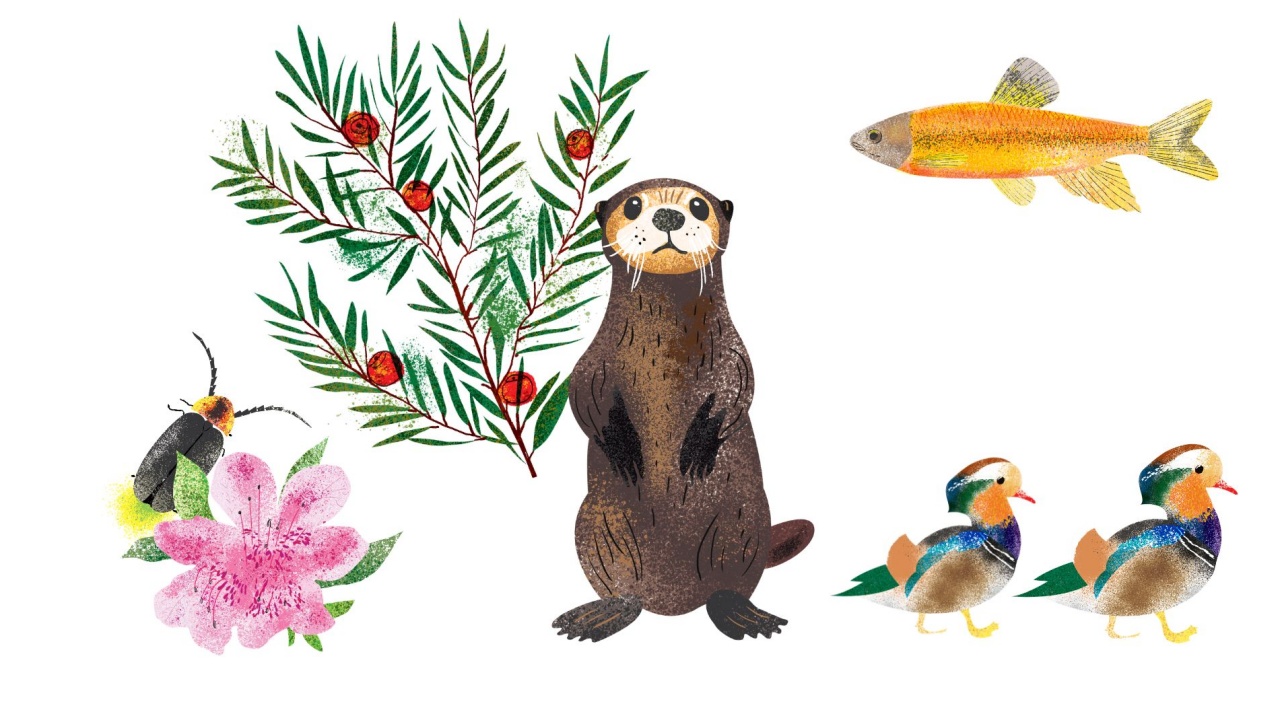
With clear, deep valleys flowing down from mountains over 1,000 meters above sea level, and tributaries of the upper Geumgang River winding through every corner, Muju is a place that preserves pristine nature. The rich ecosystem that has taken root there is the clearest proof of just how clean and unspoiled Muju’s natural environment remains.
Words Pitch by Pitch
Illustrations Kim Eunbin
Royal Azalea
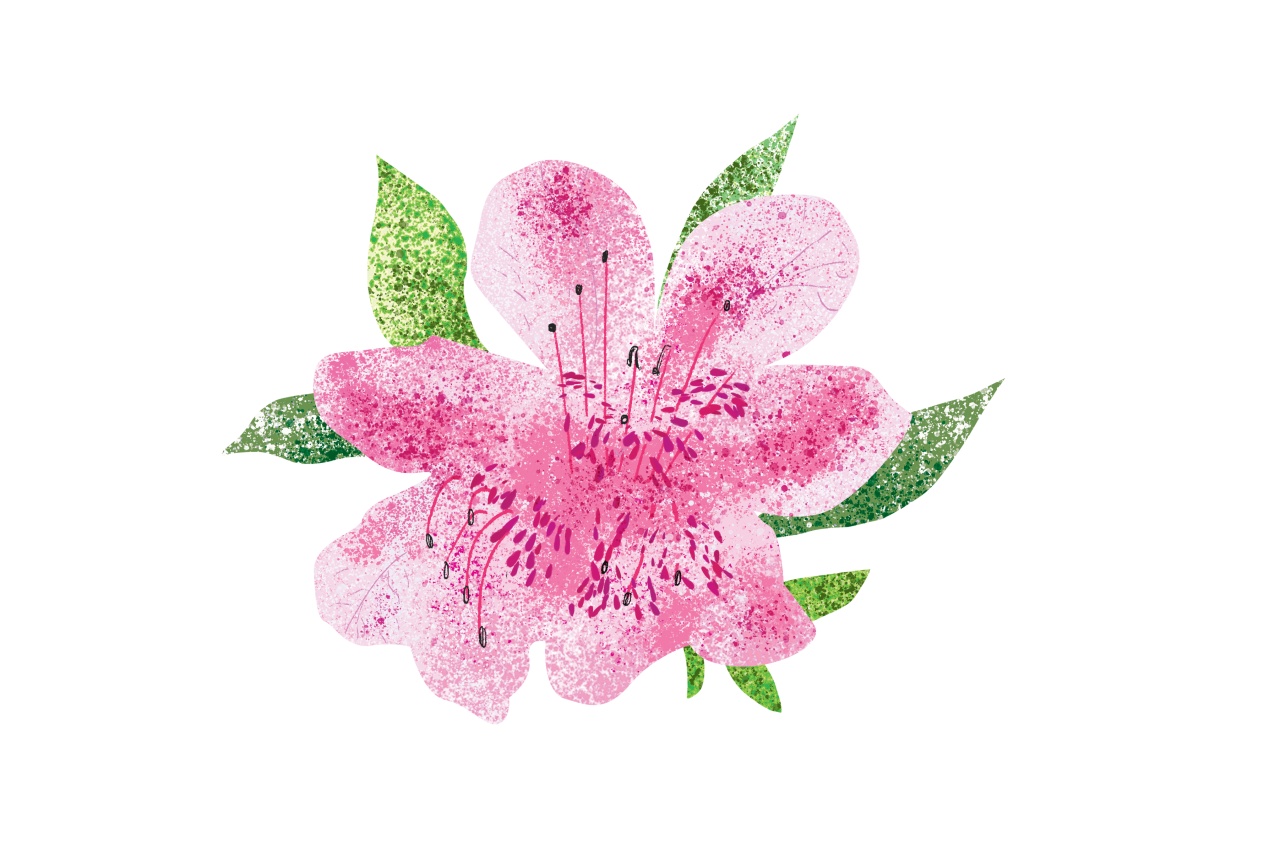
Mount Deogyu is also famous for its royal azalea colonies. Evenly spread from the valley floor all the way to the summit, the mountain puts on a spectacular show when the pink blossoms reach full bloom in May and June. At the higher elevations near the summit, the azaleas display a paler, softer hue, offering a charm distinct from azaleas found elsewhere. The royal azalea has been designated the official flower of Muju County.
Otter
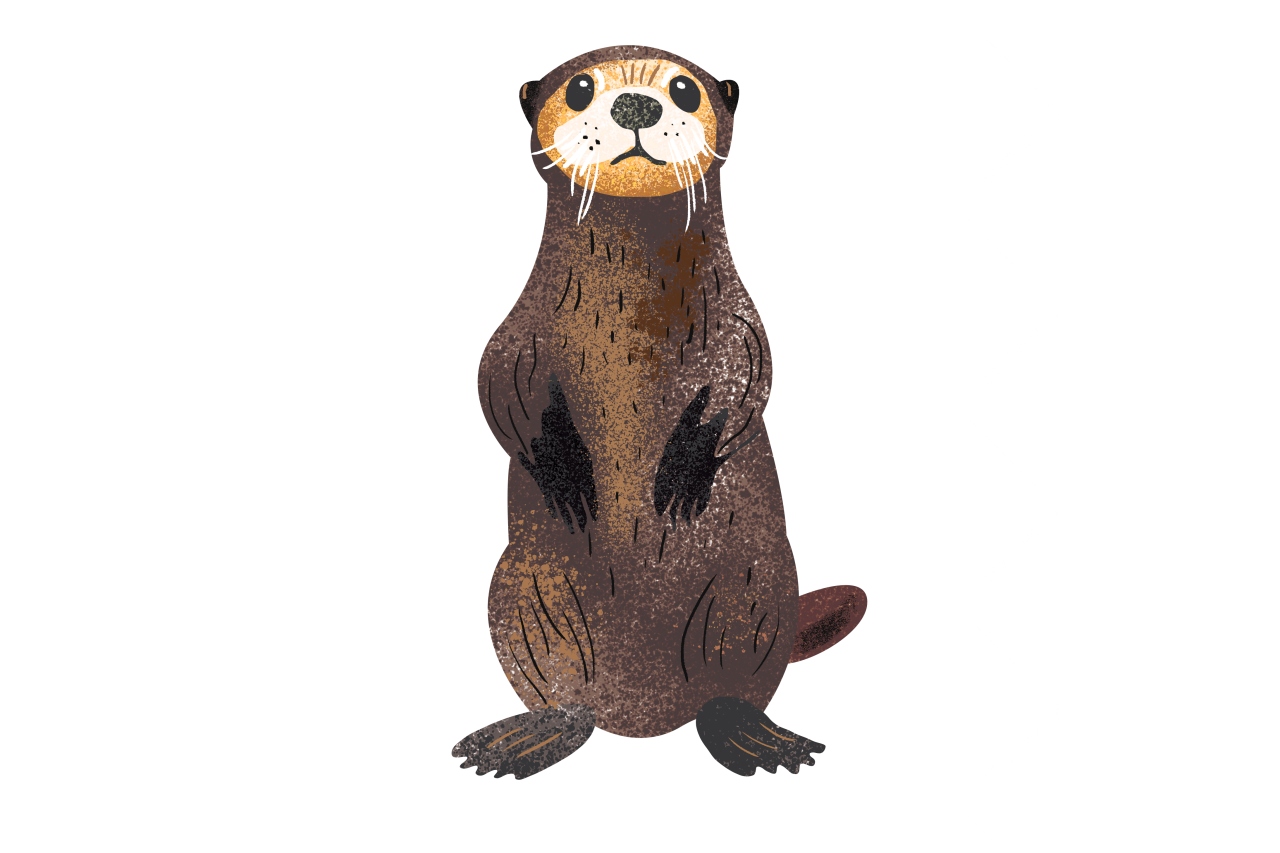
A nocturnal mammal of the weasel family, the otter mainly lives along rivers and lakeshores. Its elongated body and webbed feet make it well suited to life in the water, though it moves relatively slowly on land. Otters once inhabited nearly every river in Korea, but the species is now listed as a Class I Endangered Wild Animal. Traces of otters have been found along Namdaecheon Stream, Seolcheonho Lake, Wontonggol Valley, and Jeoksangsan Valley in Muju County. The Insect Museum at Bandi Land also has an otter exhibit where visitors can watch feeding sessions.
Yew
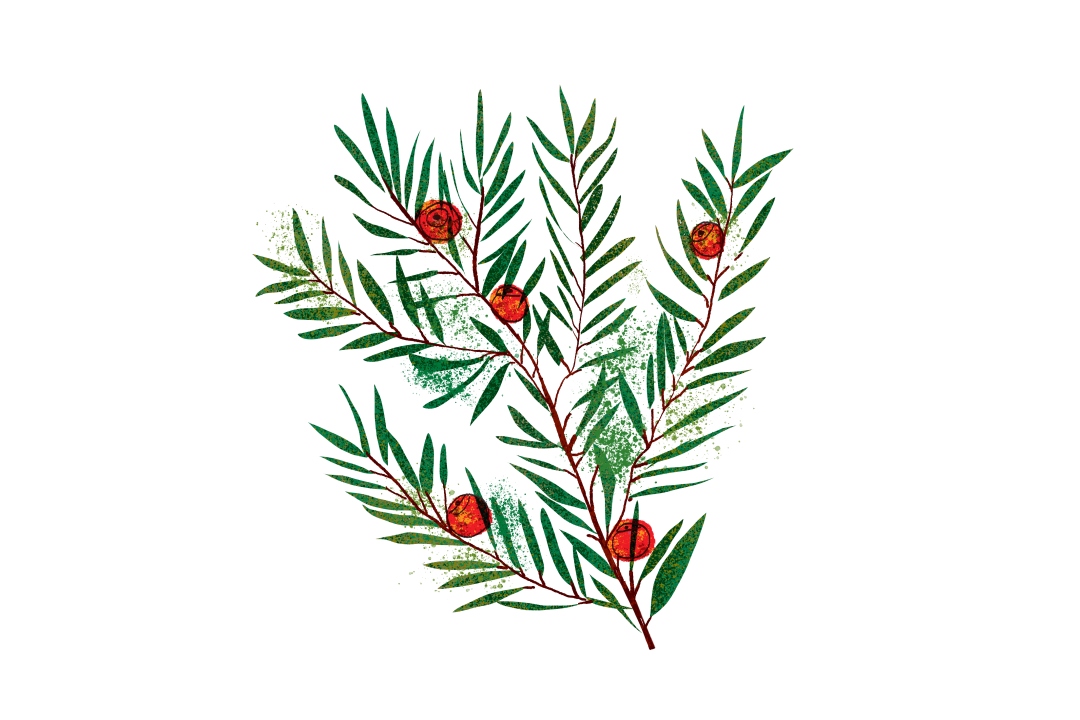
The official tree of Muju County, the yew is known for its glossy, pointed green needles and bright red berries. It thrives at elevations above 1,000 meters, in humid, foggy, and slightly shaded conditions. An ancient grove of yews can be found near Hyangjeokbong Peak on Mount Deogyu.
Firefly
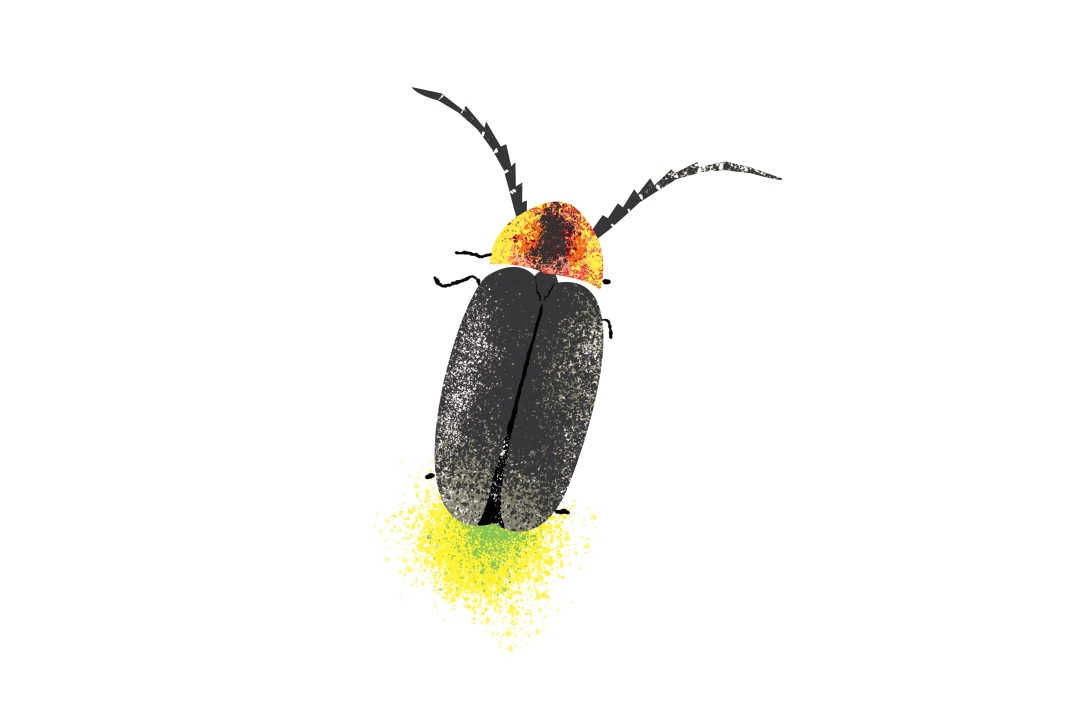
The firefly is a symbol of Muju’s pristine environment, and the only insect in Korea designated a natural monument. Three species live in Muju: the Korean firefly, the Unmunsan firefly, and the late firefly. The fireflies and their feeding habitats in Garim Village in Muju-eup, Suhan Village in Seolcheon-myeon, and the 88 Olympic Forest in Mupung-myeon have all been designated protected zones.
Mandarin Duck
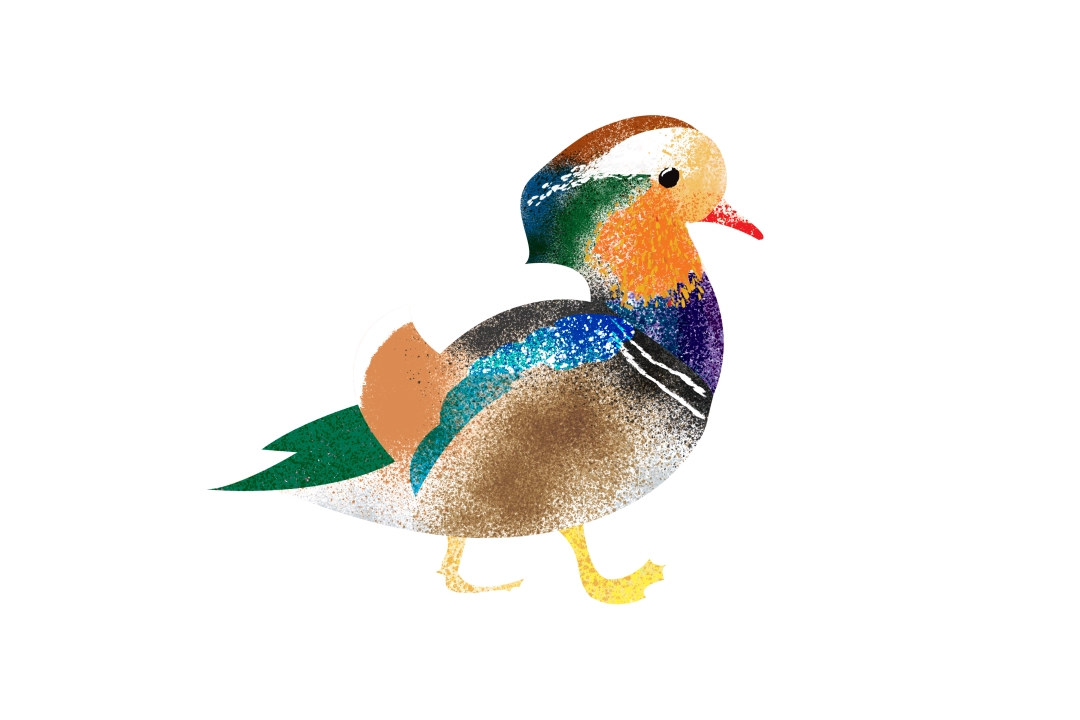
The mandarin duck is Muju’s official bird. It can be spotted throughout Deogyusan National Park, including Gucheondong Valley, as well as in major Muju waterways such as Namdaecheon and Seolcheoncheon Streams. Unlike the mottled brown-and-white female, the male dazzles with his vividly colored plumage.
Chamgalgyeoni (Korean Dark Chub)
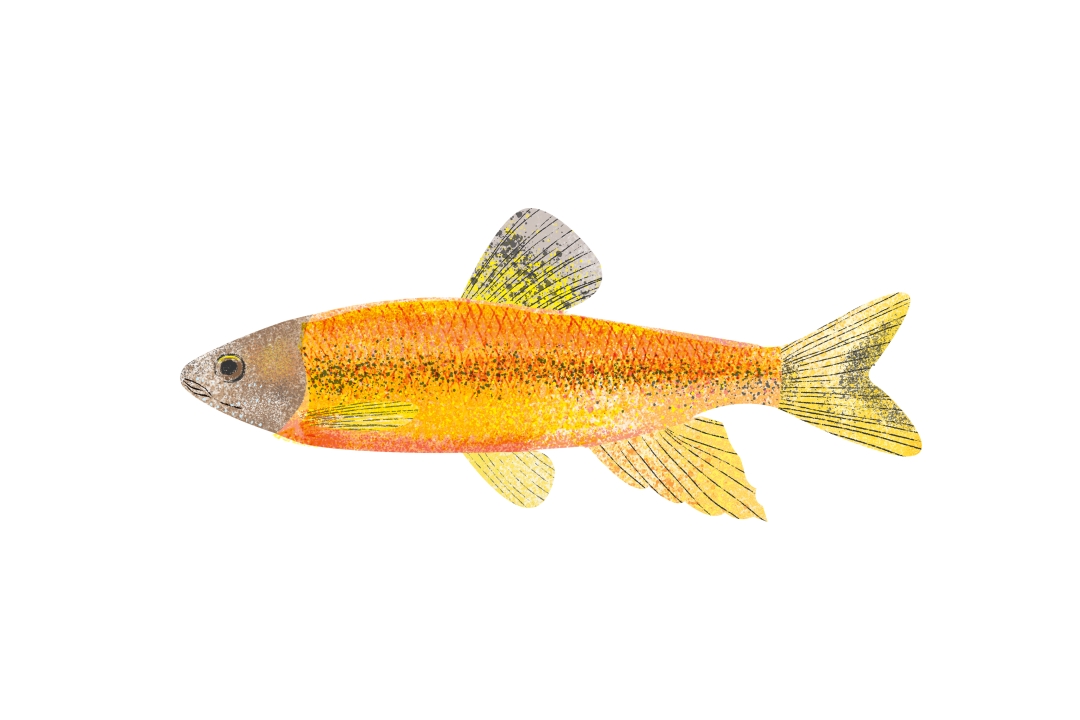
A freshwater fish of the carp family found in the Geumgang River and most of Muju’s streams, the chamgalgyeoni is endemic to the Korean Peninsula Korean Peninsula. It measures 10 to 15 centimeters in length and has a yellowish body. Unlike the similar galgyeoni, it lacks a red spot above the eye. It is typically found in the middle and upper reaches of streams.