From Da Lat through Mui Ne to Ho Chi Minh City, a journey that meets Viet Nam’s diverse nature, rich culture and dynamic change.
Words Hur Taewoo
Photos Park Shinwoo
In collaboration with ASEAN-Korea Centre
Mui Ne
About three hours by car from Da Lat, the scenery changes dramatically. The rugged mountains vanish, and visitors are greeted by wide beaches, open sea and blazing sunshine. This is Mui Ne, a seaside town in Bình Thuận Province (Tỉnh Bình Thuận) in southeastern Viet Nam. It was originally a quiet fishing village, said to have been a base for fishing and salt production since around the eighth century, in the era of the Chăm kingdom. From the late 1990s, word of its exotic natural charms spread, and it quickly rose to popularity among foreign backpackers. For a remote fishing village, transformation was only a matter of time. As hotels and resorts went up and tourism infrastructure improved rapidly, Mui Ne became one of Viet Nam’s leading seaside resort destinations. Kilometers of white-sand beach and blue sea complete a gift of a landscape, and the shoreline is lined with resorts, restaurants and all manner of activity facilities. Travelers in shorts and sunglasses enjoy Mui Ne’s calm in their own ways, whether browsing seafood at a traditional fishing village or gazing at the sea from a comfortable café.
The sea wind blows in Mui Ne all year round. Over countless years, the dry climate and the sea breeze have worked together to shape rare terrain. Marvelous sand dunes and canyons emerged, and the scent of the sea, carried on the wind, drifts into every corner. In the dry winter season, kitesurfing contests unfold every day on the water off the beach. From April to October, when the wind is relatively gentle, you can take your time trying water sports such as surfing, paddleboarding and kayaking. As a fishing village, it also has an abundance of fresh seafood. Every morning, the freshly caught haul pours into the fishing village, and seafood restaurants lining the coastal road put out tanks to show off their fresh catch. What’s more, the region that includes Mui Ne is famous as a producer of the fish sauce nuoc mam. With both seafood and salt close at hand, that is hardly surprising. These elements of a food culture that has continued for hundreds of years remain an essential part of everyday life in Mui Ne.
Desert-Like Dunes: The White Sand Dunes
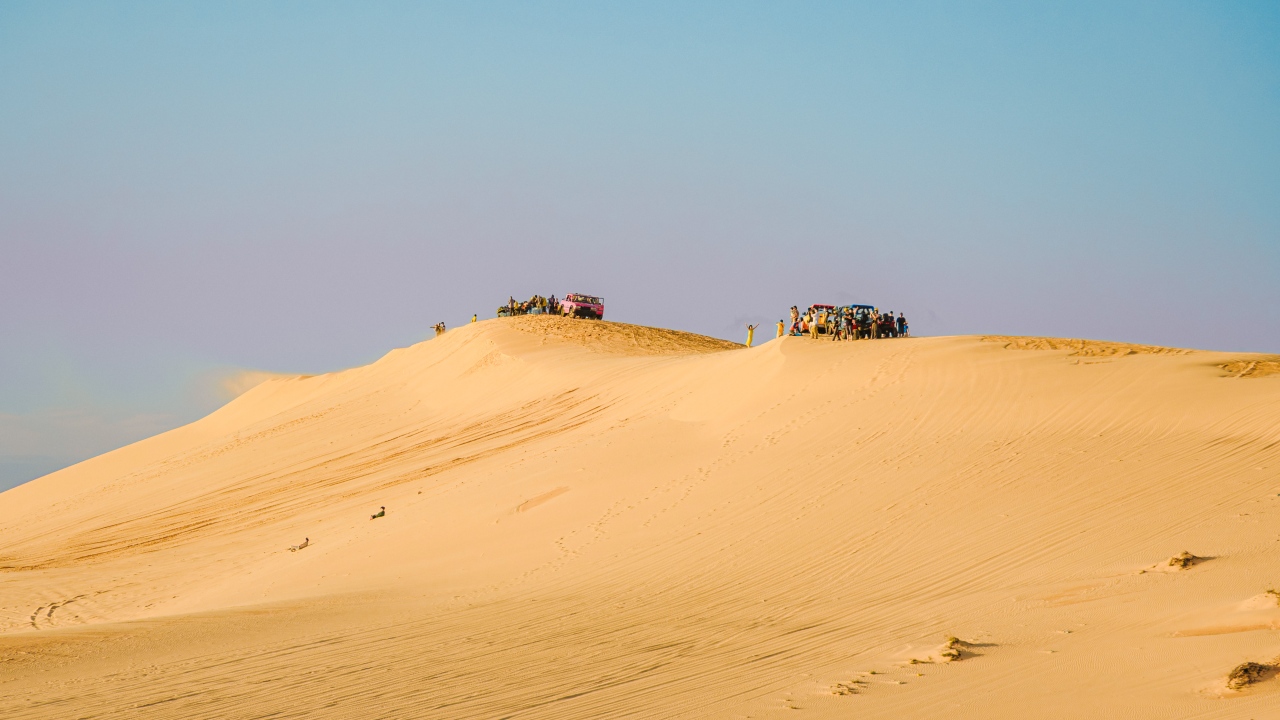
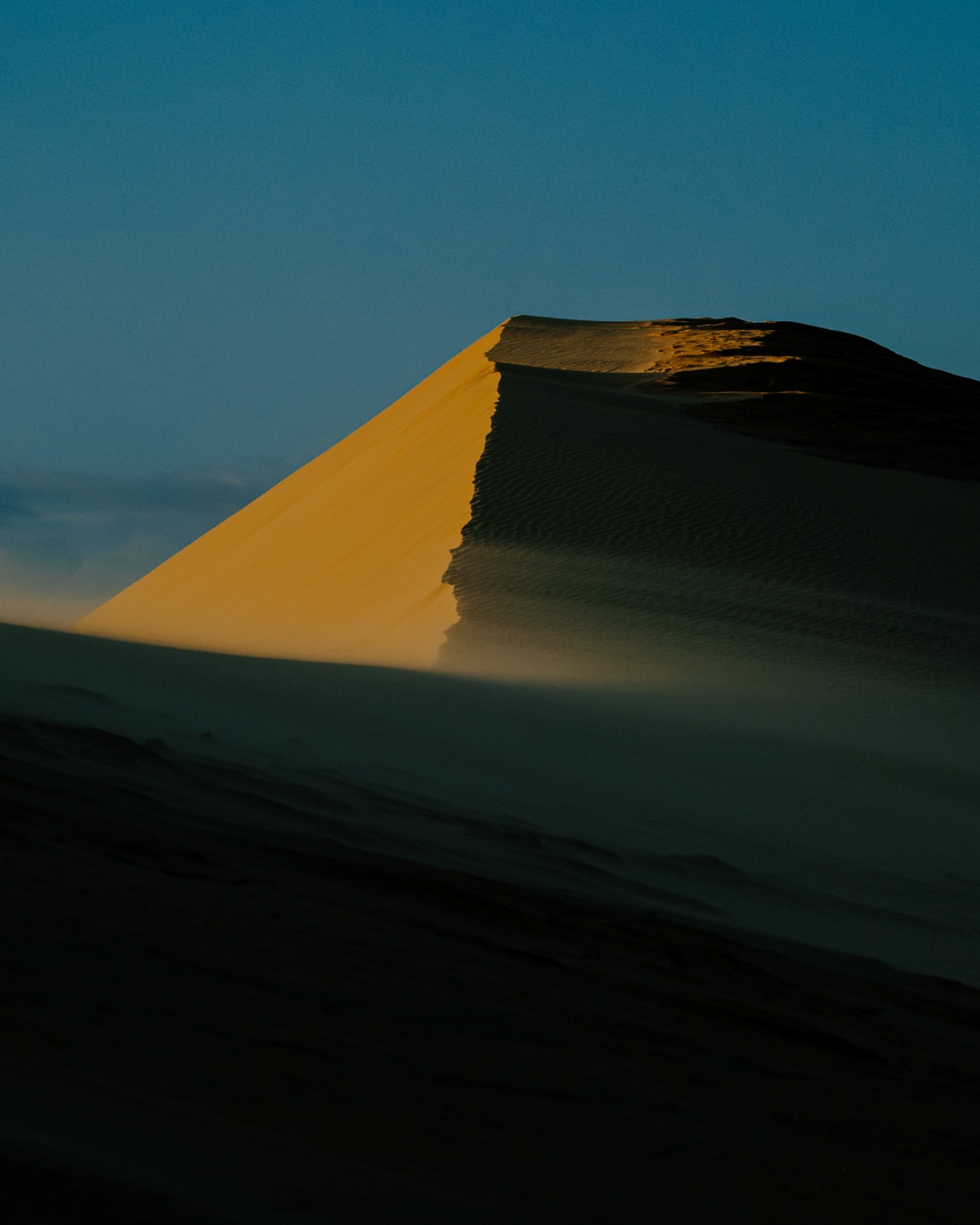
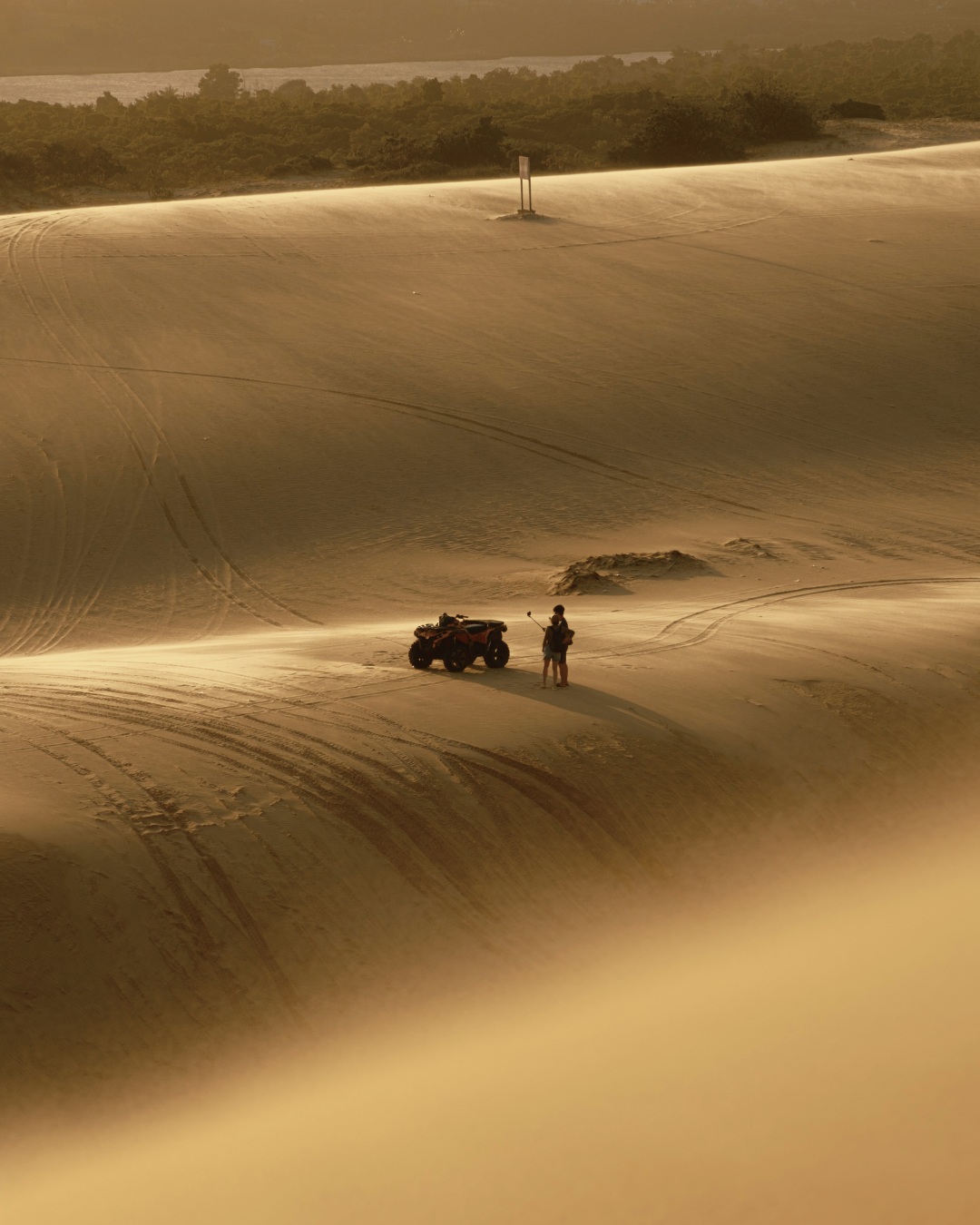
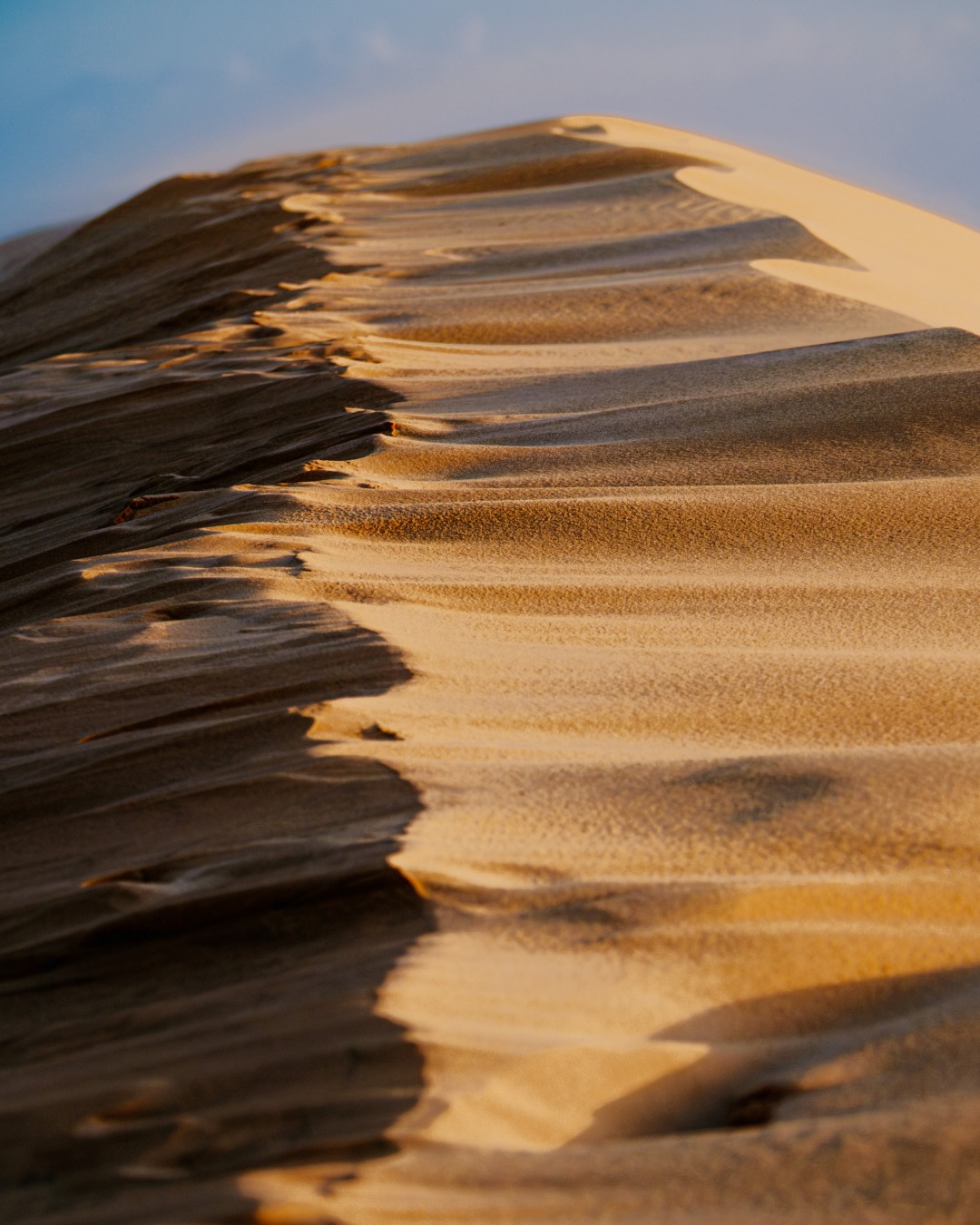
About 25 kilometers northeast of central Mui Ne, the White Sand Dunes are the largest coastal dunes in Viet Nam. Formed by sand carried on the wind and piled up over many years, the dunes, which cover an area of roughly 3.7 square meters, look at first glance like a piece of a desert. Many travelers come straight from Da Lat or Ho Chi Minh City to witness this natural wonder, which is listed as a nationally designated scenic site. In the middle of the White Sand Dunes lies a vast freshwater lake like an oasis, Bau Trang. The name means “White Lake,” and locals call the lake and the dunes together the Bau Trang white sand dune area. The lake was reportedly once a single body of water before a sand embankment divided it in two. The landscape of the White Sand Dunes around the lake never stops changing. Depending on the angle of the sun and the wind, the sand glows in every color and constantly shifts shape. Those who aren’t satisfied with simply gazing at the dunes climb aboard a jeep or an ATV. As you cut across the snow-white dunes and race down steep slopes, everyone ends up shouting with excitement. When sunrise or sunset washes over the dunes, the surreal atmosphere holds your gaze.
Hòa Thắng, Bắc Bình District, Bình Thuận
A Canyon Where Fairies Might Dwell: The Fairy Stream
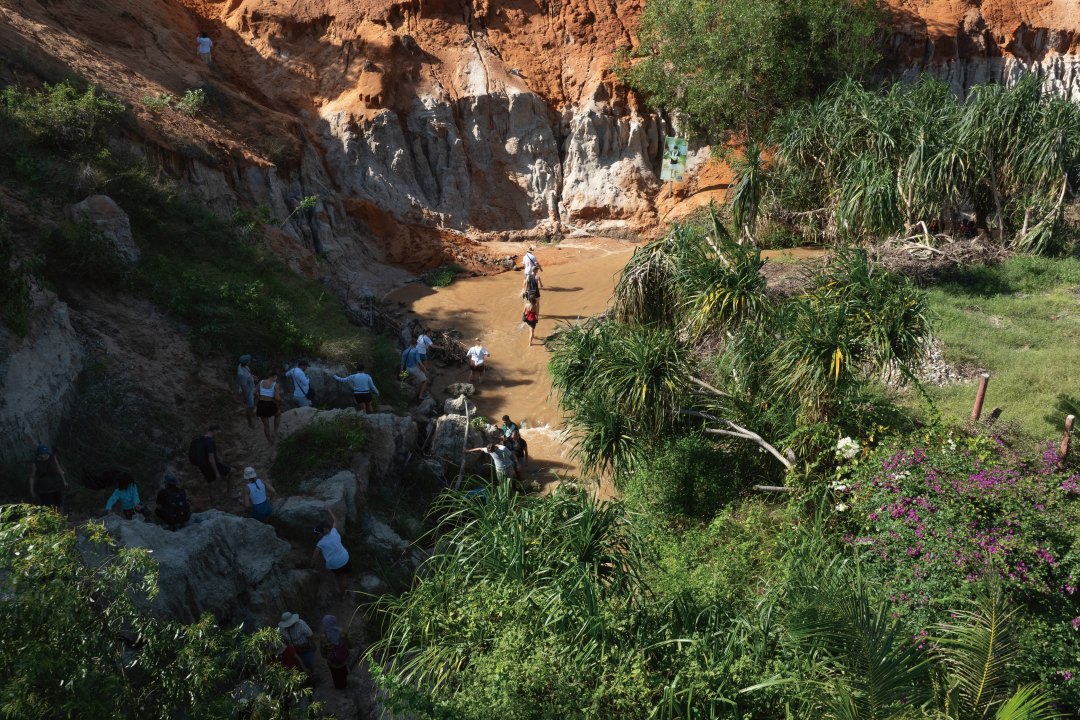
With red sand cliffs rising mysteriously on both sides of a shallow stream, this canyon feels somewhat unreal. Water flows year-round across the arid land, and you can even wade upstream as if on an expedition. Some say it is called the Fairy Stream because of a legend that fairies bathed in its waters; others say it is because the cliffs, seen from above, look like a fairy with her hair flowing down. Walking barefoot through the water in single file, people begin snapping commemorative photos once they properly enter the canyon. On one side stand red sand dunes, and on the other, bleached white limestone cliffs, together forming a gorge. Carved into unusual shapes by weathering, the cliffs reach 15 to 20 meters in height. Thanks to this strange appearance, the place has even earned the nickname “the little Grand Canyon of the East.” The cliffs rise like sculptures shaped by wind and water, while red sand softly covers the streambed. After wading about 2 kilometers upstream, you reach a small waterfall at the end, tumbling down with a refreshing sound. There is also a legend that your wish will come true if you take off your shoes and walk along the water, which is another way to enjoy the Fairy Stream to the fullest.
40B Huỳnh Thúc Kháng, Hàm Tiến, Phan Thiet
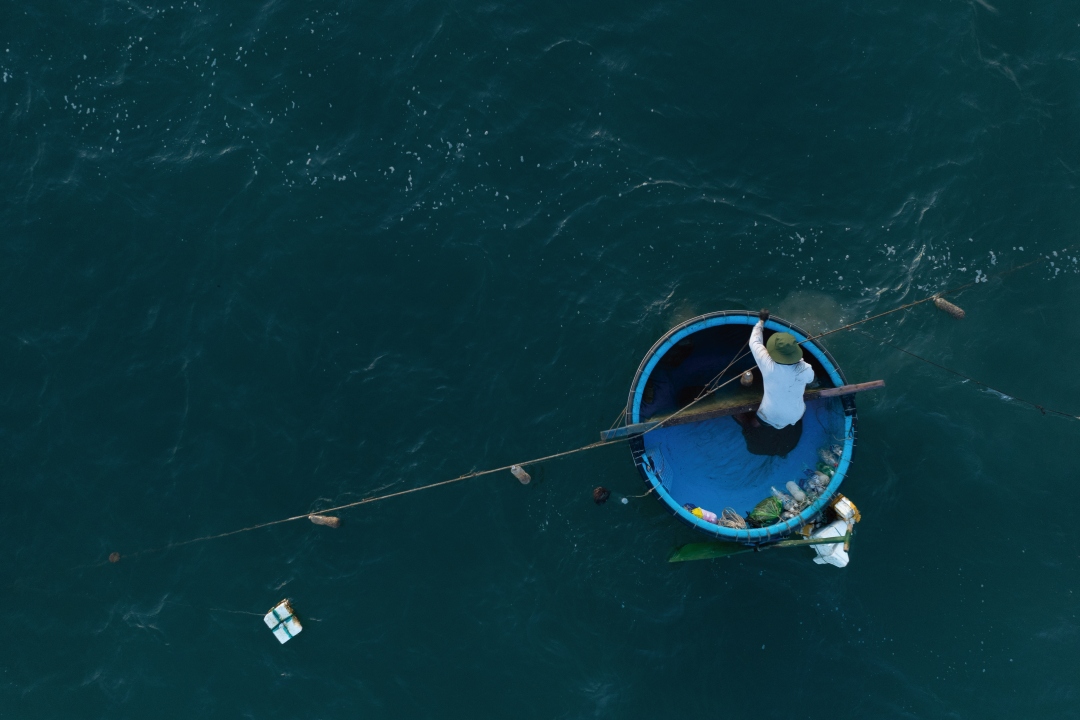
The Energy of a Living Fishing Village: The Fishing Village
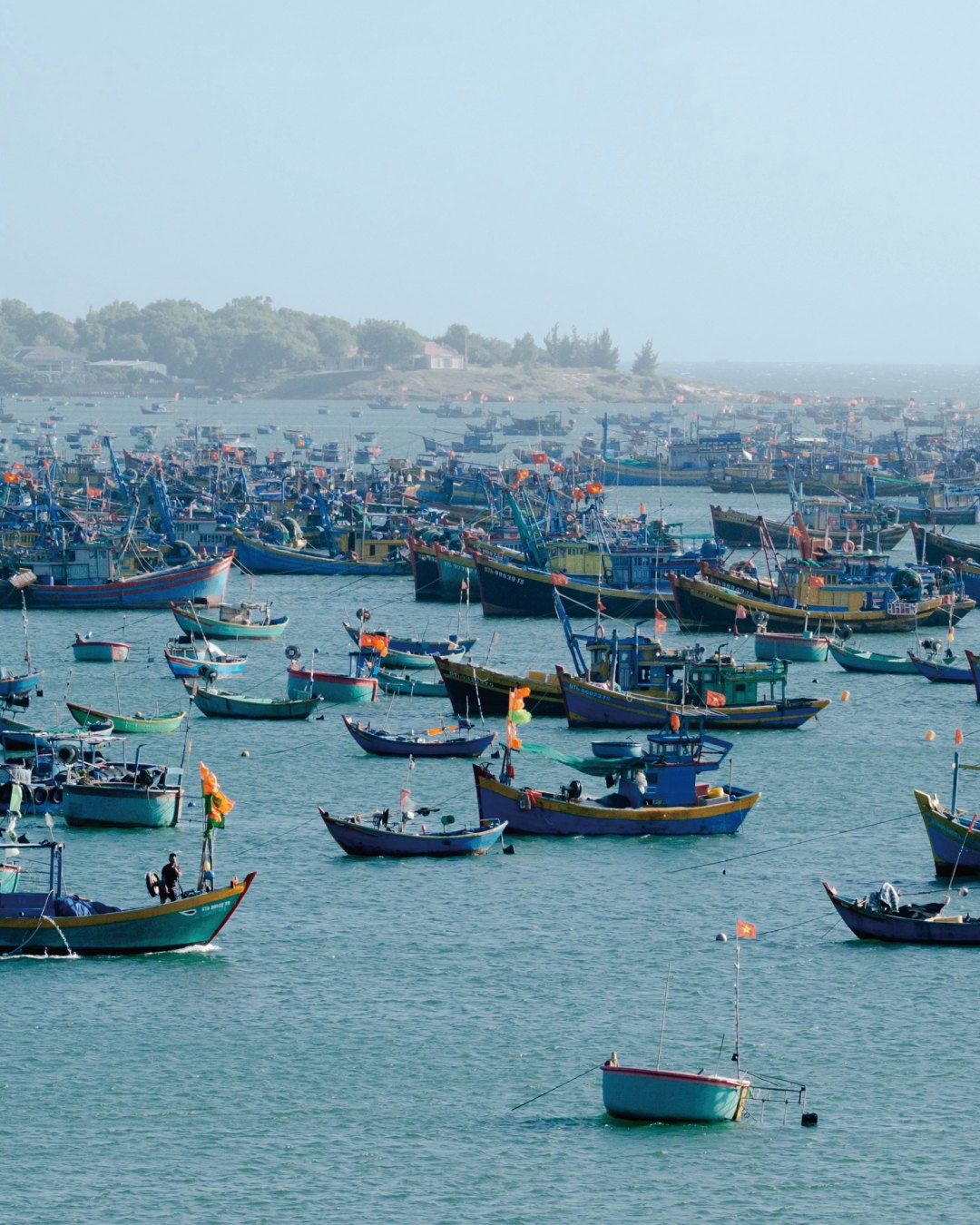
Unfazed by the resort-development boom, the Fishing Village has kept its own culture and way of life. The basket boats that originated in this fishing village decorate the sea off Mui Ne like an art installation. They are said to have come about during French rule, when fishermen insisted that theirs were “baskets, not boats” to avoid the boat tax. Locally, these basket boats are called thuyền thúng. The name literally means “basket boat.” Thousands of fishermen make their living in these round, basket-shaped vessels.
Their shape is simple, but the basket boats, which set out from the early dawn hours, skillfully ride over the waves to go fishing. The sight is spectacular even from afar, as if a huge fleet of baskets had taken over the sea. When the boats return one after another, the morning fish market opens and all kinds of seafood change hands. Once the market ends, the Fishing Village falls quiet again, and everyone returns to their places to prepare for the next day’s fishing. Only a few people come and go at the stalls selling seafood. This sequence, repeated day after day like a documentary film, is the daily life of the Fishing Village and the history of Mui Ne.
W7RH+7MV, Mui Ne, Thành phố Phan Thiet
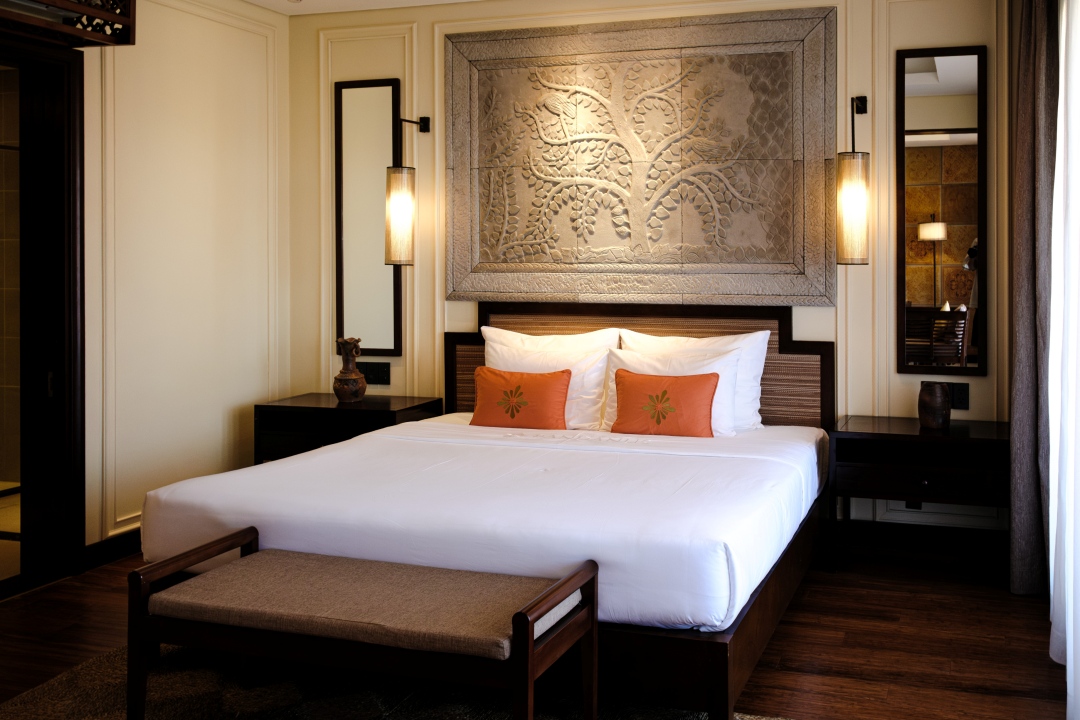
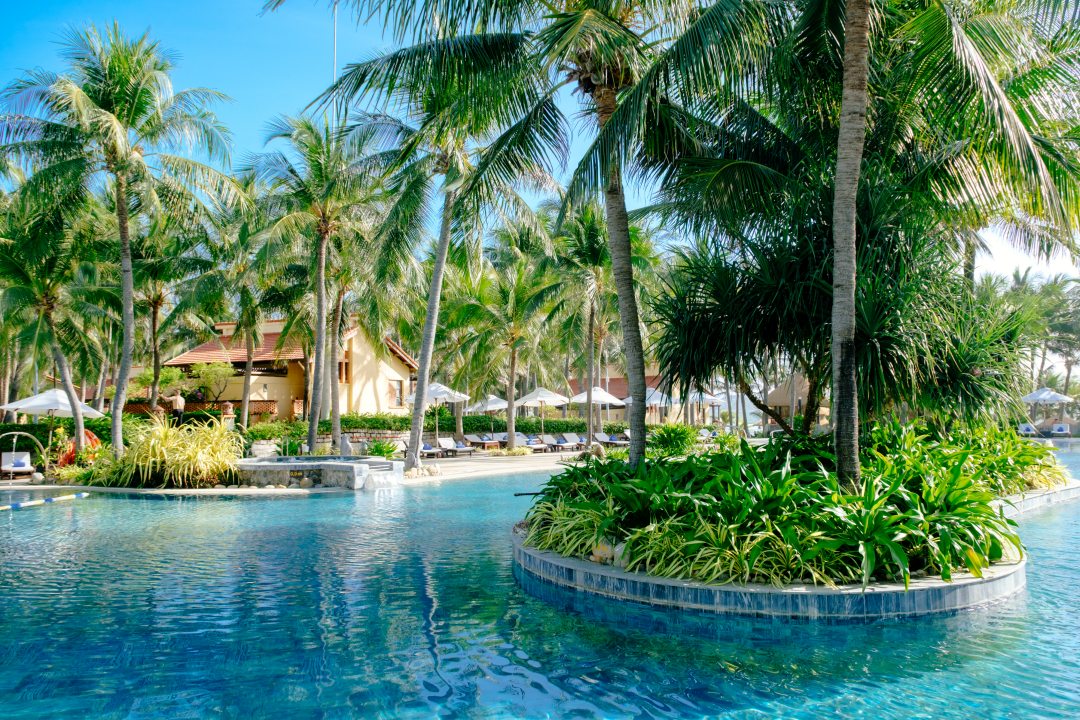
Pandanus Resort
Where Traditional Design Meets the Sea: Pandanus Resort
Set slightly away from Mui Ne’s busy center, within a tropical garden covering about 100,000 square meters, Pandanus Resort is charming for its relaxed and peaceful atmosphere. The buildings, inspired by the architecture of the ancient Champa kingdom, feel like a royal retreat, and traditional artworks and decorative objects from the lobby to the guest rooms catch the eye. Most of the spacious, tidy rooms have terraces, making it easy to air out the room and catch the sea breeze for a while. The resort also offers a number of activities of its own. The roughly 300-meter private beach and the main outdoor pool comfortably accommodate large groups, and at the poolside bar you can enjoy a cool cocktail while watching the beach. With a spa, fitness center, tennis and basketball, as well as water activity programs such as windsurfing, there is plenty to do without leaving the resort.
To Eat
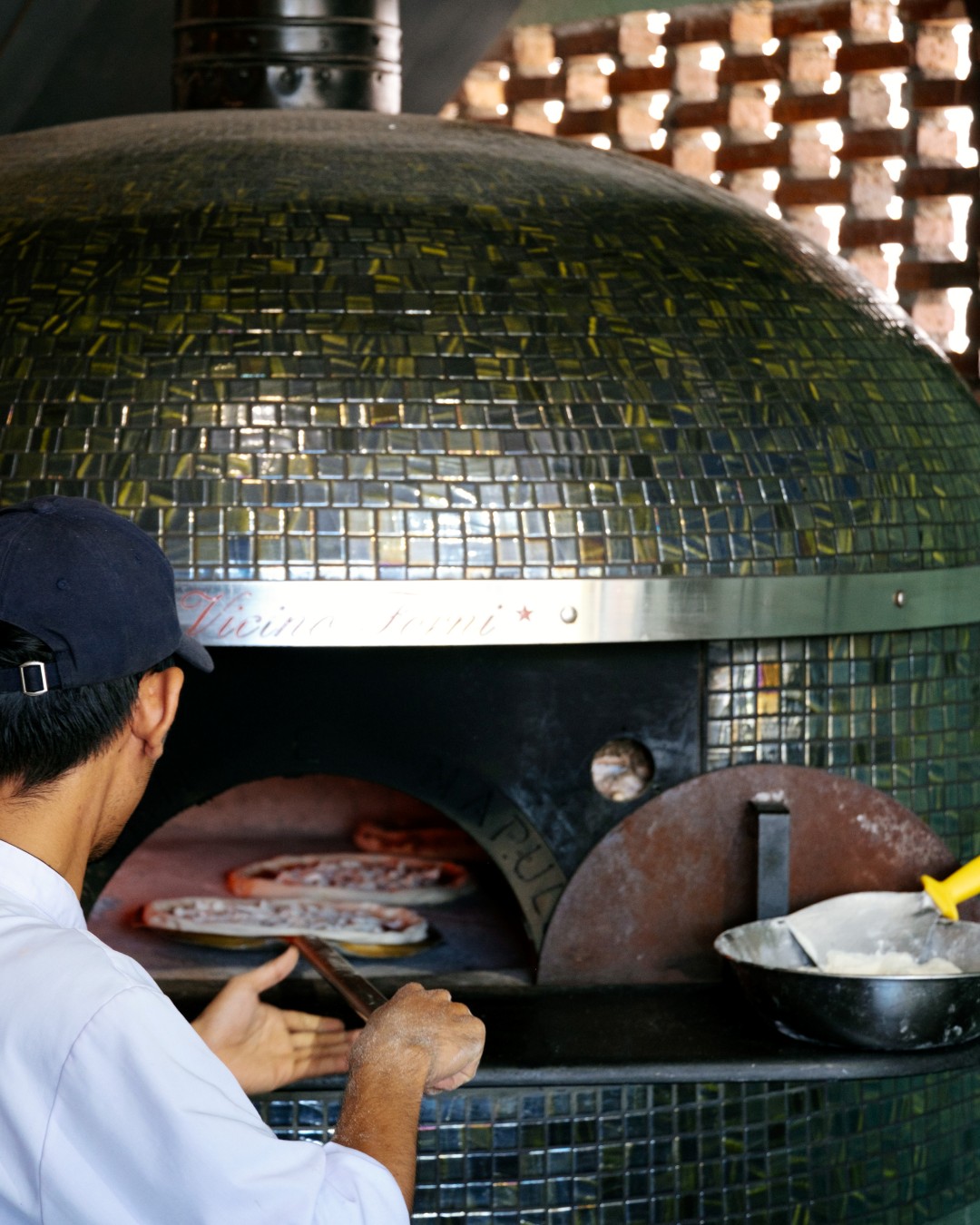
La Riva
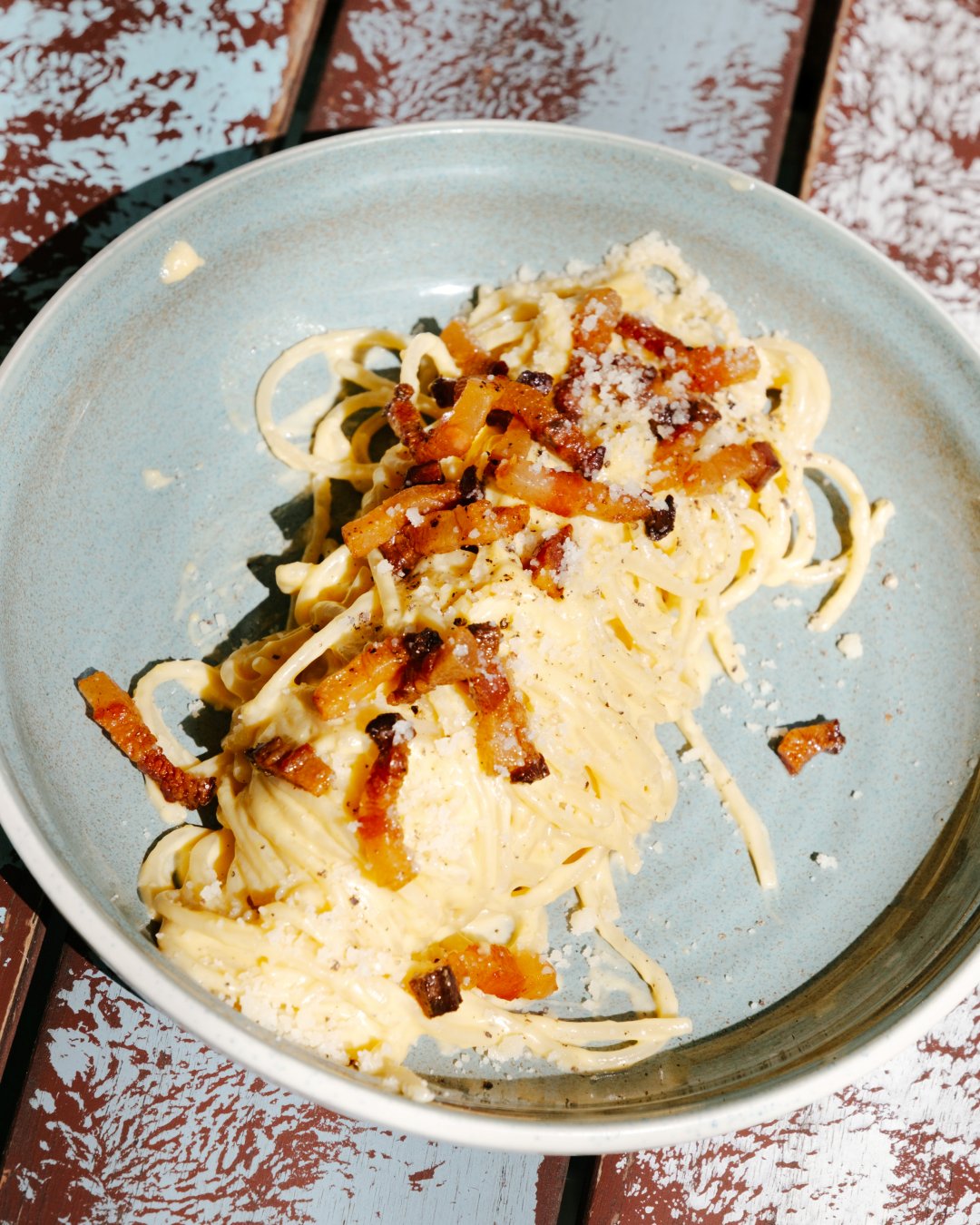
A confident purveyor of Neapolitan wood-fired pizza and pasta. An Italian chef commands the kitchen himself, pairing fresh ingredients with superb technique. The pizzas baked in the wood-fired oven capture authentic Italian flavor; the signature Parma ham pizza balances a chewy crust with generous layers of ham. Pastas such as the seafood pescatore and the rigatoni with basil pesto hold their own as well. On the Mui Ne beachfront road, it is arguably the best Italian restaurant around.
33A Nguyễn Đình Chiểu, Phường Hàm Tiến, Thành phố Phan Thiet
Boke Mr. Crab
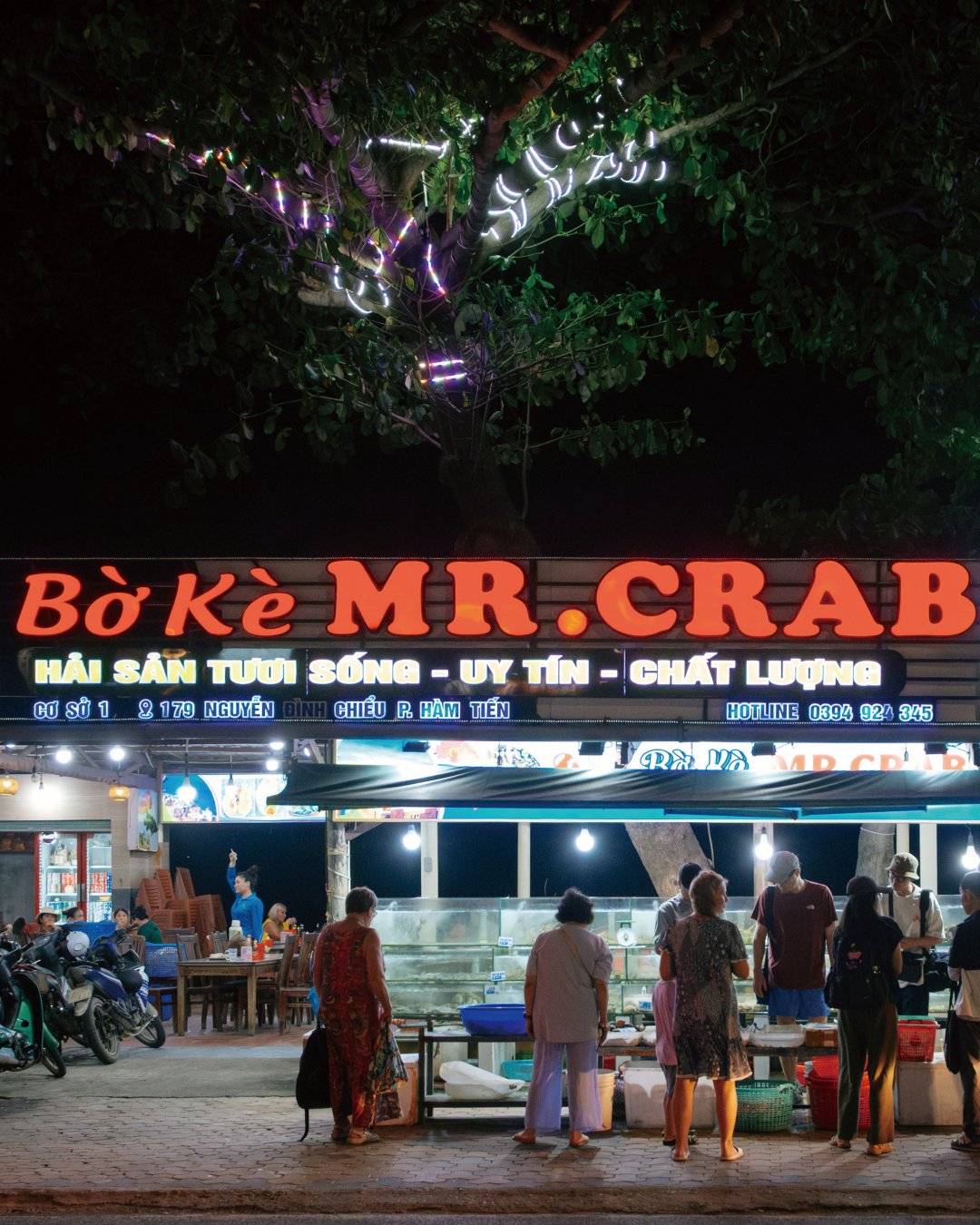
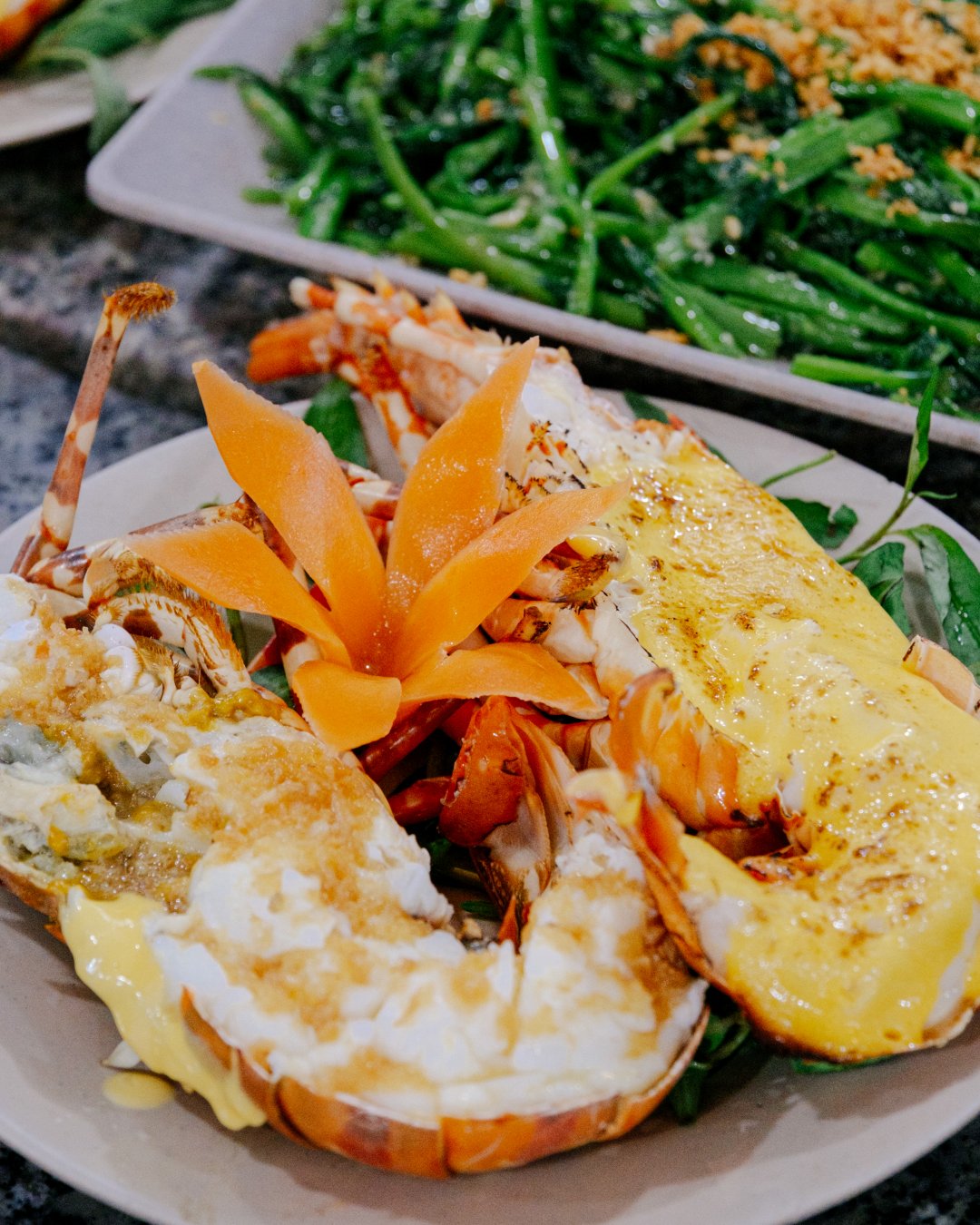
Boke Mr. Crab is a seafood restaurant even locals vouch for. Diners pick live seafood from the large tanks at the front of the restaurant, and it is cooked on the spot. Crab, king prawns, scallops, clams and more can be grilled, steamed or stir-fried to your liking. The stir-fried seafood in a tangy-sweet house sauce is especially appetite-whetting, the more you eat. Add an ice-cold beer, stir-fried morning glory and seafood fried rice, and nothing is missing.
112 Nguyễn Đình Chiểu, Hàm Tiến, Phan Thiet
Ho Chi Minh City
Ho Chi Mihn City
Where does Ho Chi Minh City’s fierce energy come from? Viet Nam’s largest city and its economic capital is astonishingly dynamic. From Phan Thiet, the city that Mui Ne belongs to, the expressway reaches Ho Chi Minh City in two and a half hours. Skyscrapers appear on the outskirts, and soon enough huge streams of motorbikes and crowds in a hurry show off the big city in full. It developed as the commercial center of the Nguyễn dynasty (Nhà Nguyễn) from the 17th century, served as a hub during French rule over Indochina, and was the capital of South Viet Nam, once called the Pearl of the Orient, before receiving its official name, “Ho Chi Minh City.” With nearly 10 million residents, it is the present and the future of a Viet Nam that grows by the day.
Ho Chi Minh Square, the most glamorous plaza in Viet Nam, seems to condense the heat of the city. Saying it is bustling day and night hardly covers it. From the Ho Chi Minh City People’s Committee Building, built under French rule, to the Saigon riverside, locals, travelers and vehicles stream ceaselessly. Everything from restaurants to hotels buzzes with commerce, and travelers line up to take souvenir photos in front of timeless, elegant architecture. It feels like a firsthand demonstration of what life in a big city that changes by the day is like.
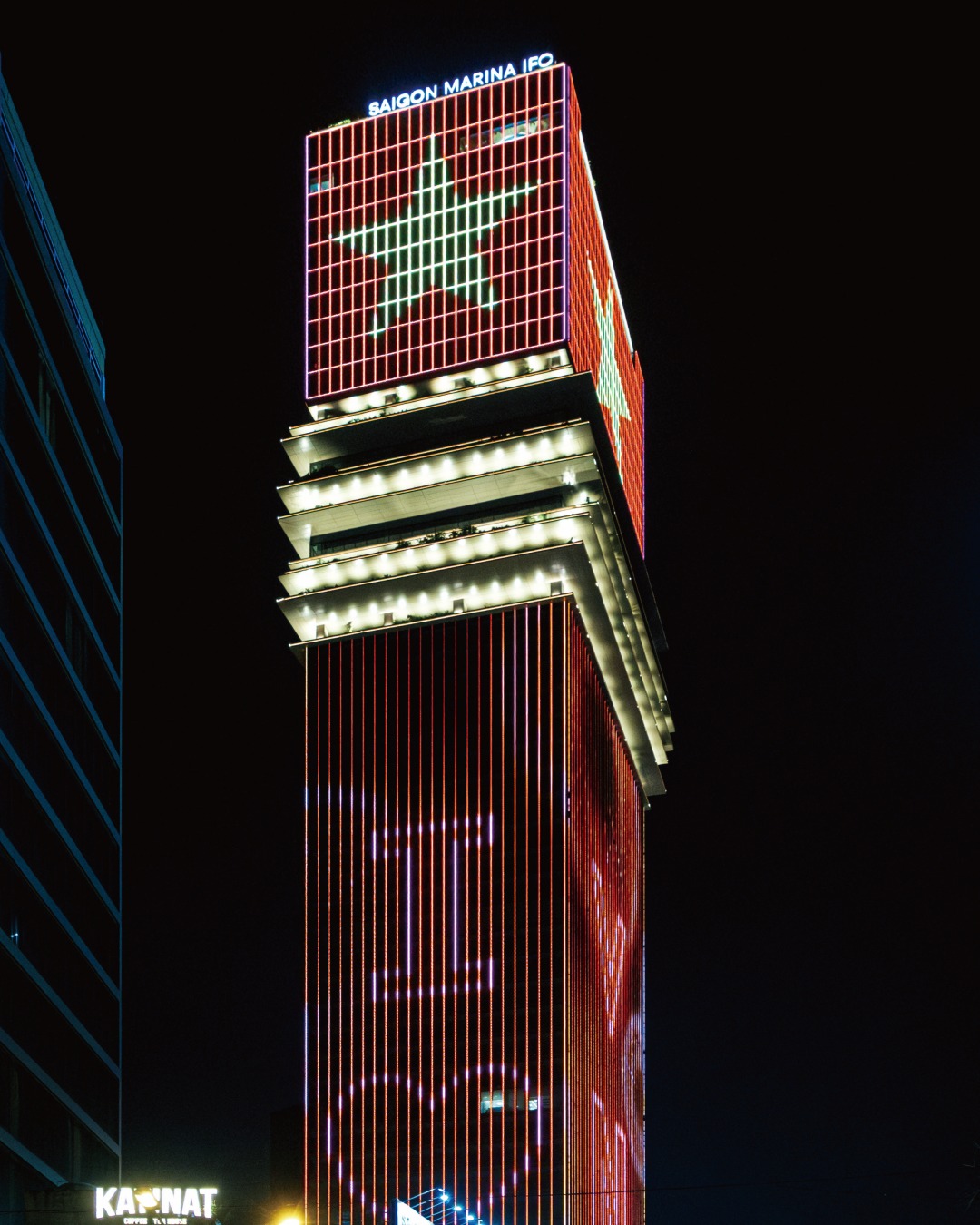
Settle into a meal of delicious noodles at an old restaurant in the historic quarter, wander through a few attractions and markets, and a day in Ho Chi Minh City is gone. Yet even as darkness slowly settles, the heat does not subside. The city at night, seen from a skyscraper observatory or a rooftop café, is brimming with light. Beyond the tangled alleys and small shops of District 1, forests of buildings and giant billboards rise. The flashing neon seems to make you forget the city’s turbulent past and guide you toward a bright future. The dazzling night of Ho Chi Minh City feels likely to last a good while and stay in anyone’s memory.
Where the Letters of Indochina Gathered: Saigon Central Post Office
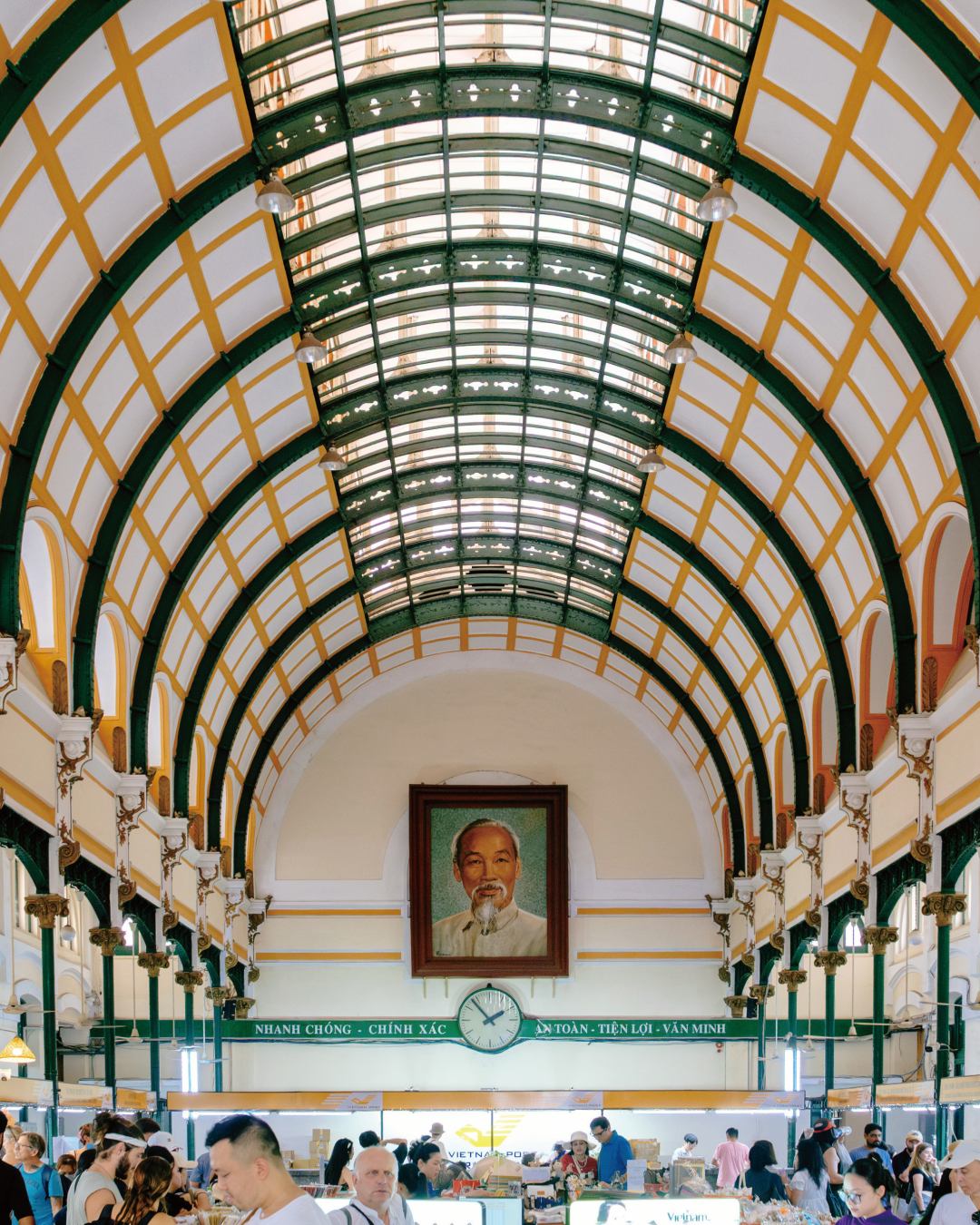
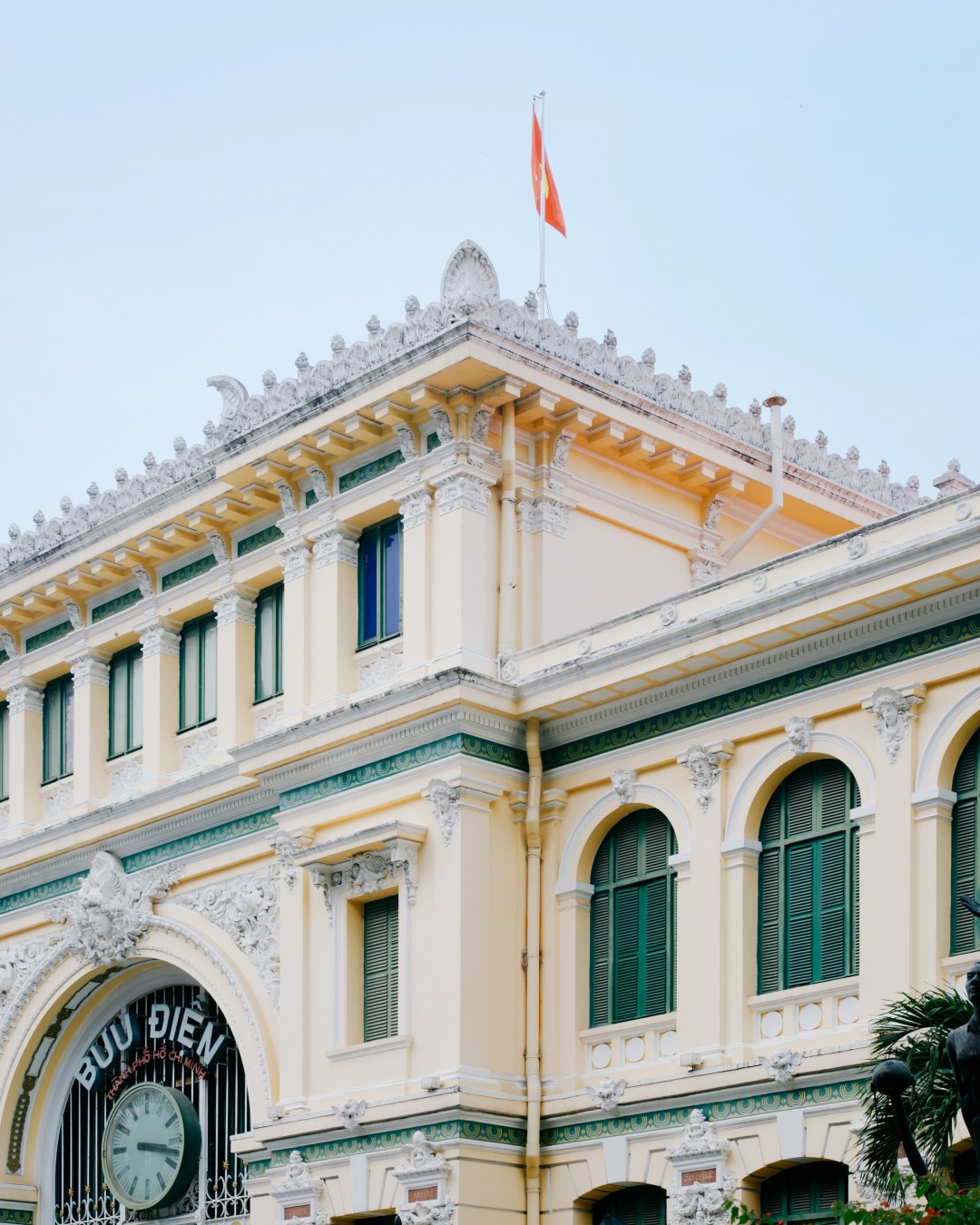
In the heart of District 1, directly across from the red-brick Notre-Dame Cathedral, stands a yellow building. This is the Saigon Central Post Office, completed in 1891. Under French rule, the post office is said to have handled international mail not only for Viet Nam but for all of Indochina. The building, an exquisite blend of Gothic and Renaissance styles, expresses its function artistically. The names of scientists who contributed to advances in communication, such as Benjamin Franklin and Alessandro Volta, are inscribed on the exterior walls, and a relief of Hermes, the messenger god, is carved above the entrance. Inside, too, you can find more than 130 years of history intact. The huge domed, arched ceiling is the work of Gustave Eiffel. On the walls to either side beneath the arch hangs a map of Saigon from 1892. At the far end of the central hall, a large portrait of President Ho Chi Minh greets visitors. Today the post office thrives as both a tourist attraction and a shopping arcade. It is lively with postal staff, travelers writing postcards and people buying souvenirs. The old wooden phone booths have become backdrops for souvenir photos, but the excitement of the past, when people sent news home from inside them, lingers still.
02 Công xã Paris, Bến Nghé, Quận 1
Saigon’s Runway Across the Eras: Nguyen Hue Walking Street
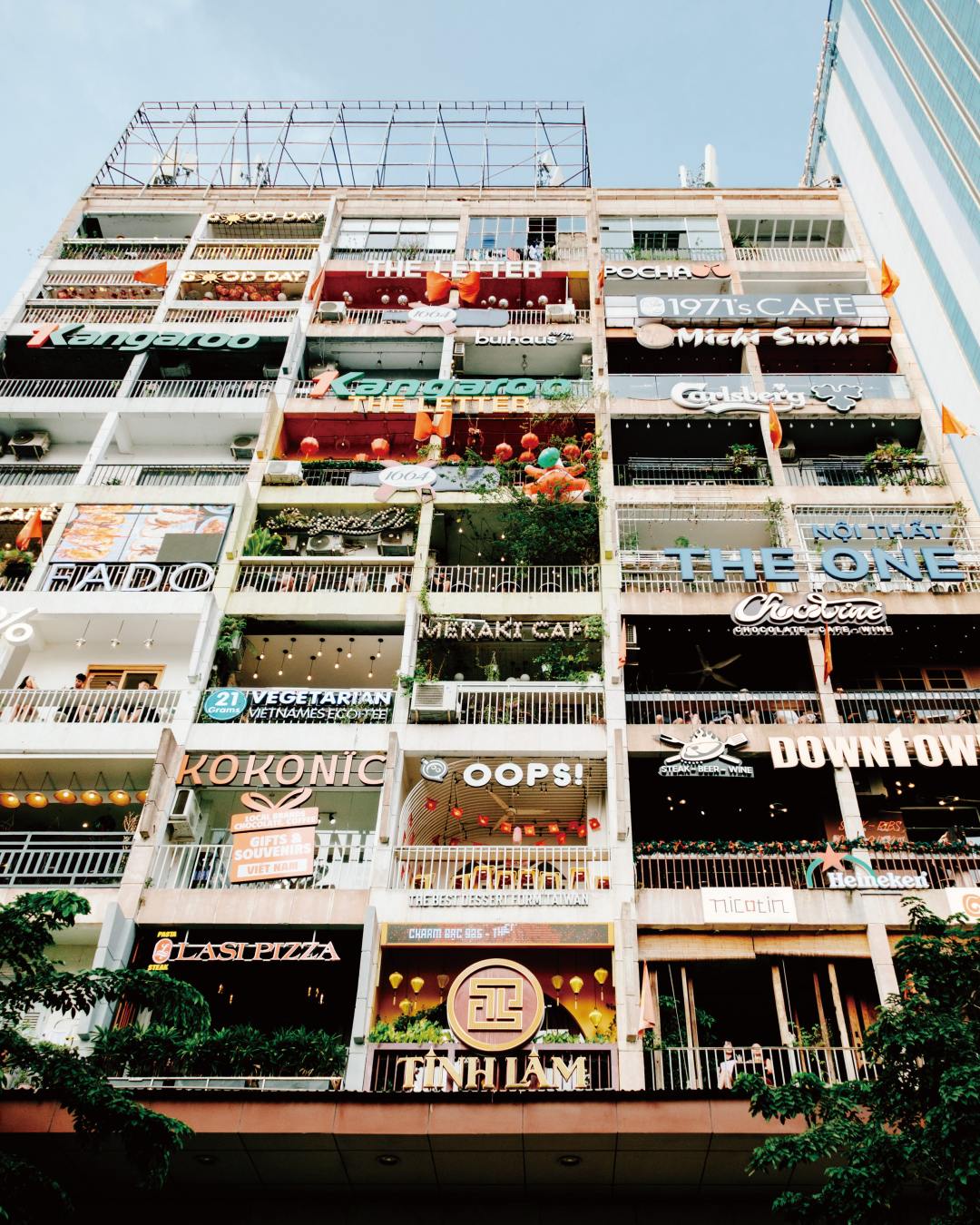
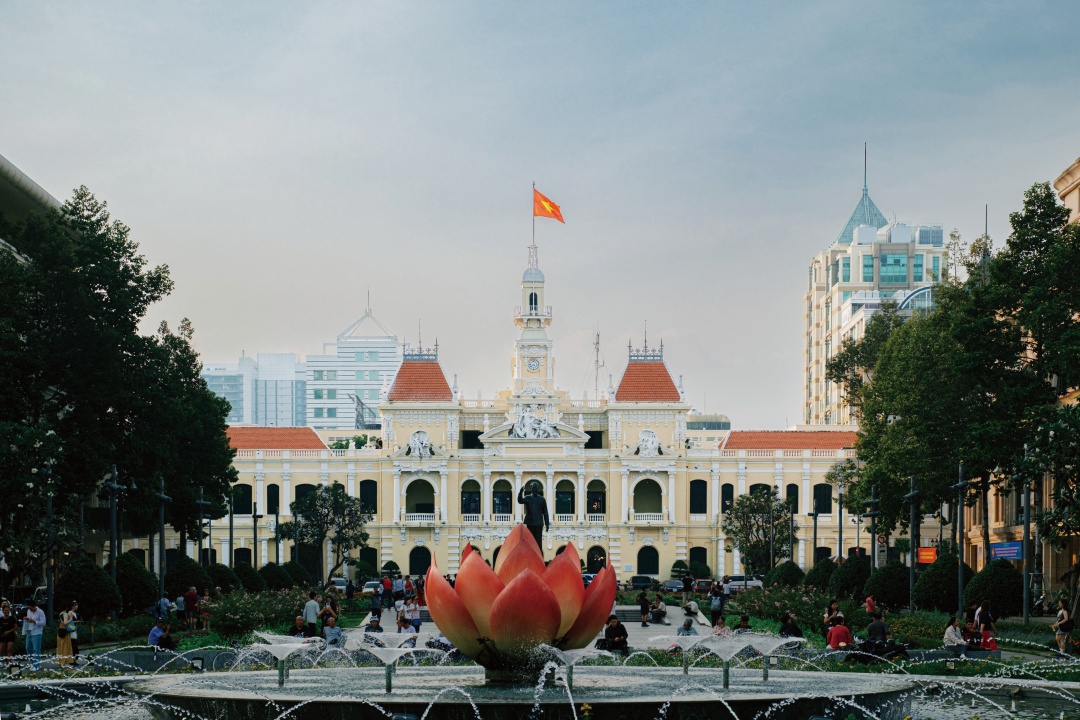
This street, better known as Ho Chi Minh Square, is like a crystallization of Ho Chi Minh City. At the northern end of the roughly 670-meter-long plaza stands the Neo-Baroque Ho Chi Minh City People’s Committee Building in all its grandeur. The statue of President Ho Chi Minh guarding its front symbolizes the spirit of the nation. From there to the Saigon riverside, the plaza and street are filled from morning to night with countless locals and travelers. On one side of the plaza stand shopping malls housing luxury brands like Louis Vuitton and Chanel, along with upscale hotels; on the other is the Café Apartment, a building whose weathered balconies are each packed with cafés full of character. When the sun sets and darkness falls, the plaza turns into a vast stage. Under the lights of the buildings that illuminate it, street performances and busking unfold all around. Hundreds of people stand or sit in the plaza, watching the shows. The sight of couples strolling in the cool river breeze seems to summon the old romance once carried by the name “Saigon.”
Đ. Nguyễn Huệ, Bến Nghé, Quận 1
Bitexco Financial Tower
A City Panorama Unfolds: Bitexco Financial Tower
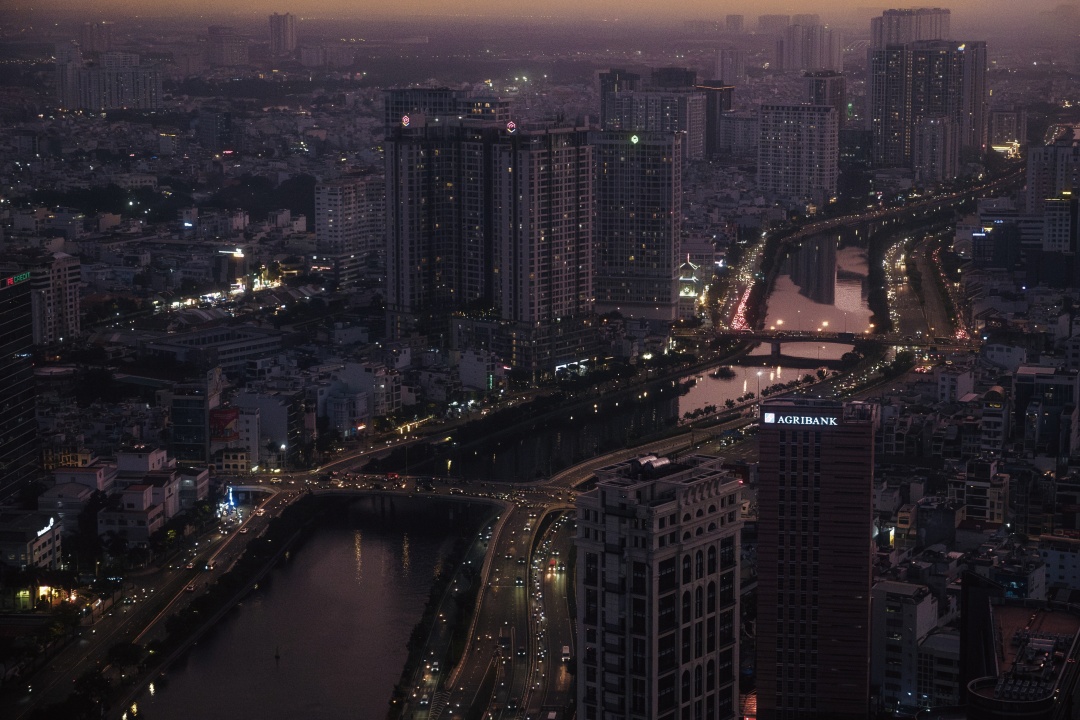
From the Skydeck observatory of the Bitexco Financial Tower, you can take in the future of Ho Chi Minh City at a glance. The 68-story building is famous for its distinctive design inspired by a lotus bud. Ride the high-speed elevator up to the deck, and a 360-degree view opens from about 260 meters. Roads branch out in every direction, the Saigon River winds leisurely around the city, and beyond lies the supertall new town of Vinhomes. Try to time your visit for around dusk. The best moment is when the skyscrapers light up one by one in the sunset glow and the countless headlights of cars filling the streets begin to sparkle. On one side of the deck, an exhibition room introduces the city’s major landmarks and traditional dress.
A Sanctuary in the Busy City: Vinh Nghiem Pagoda
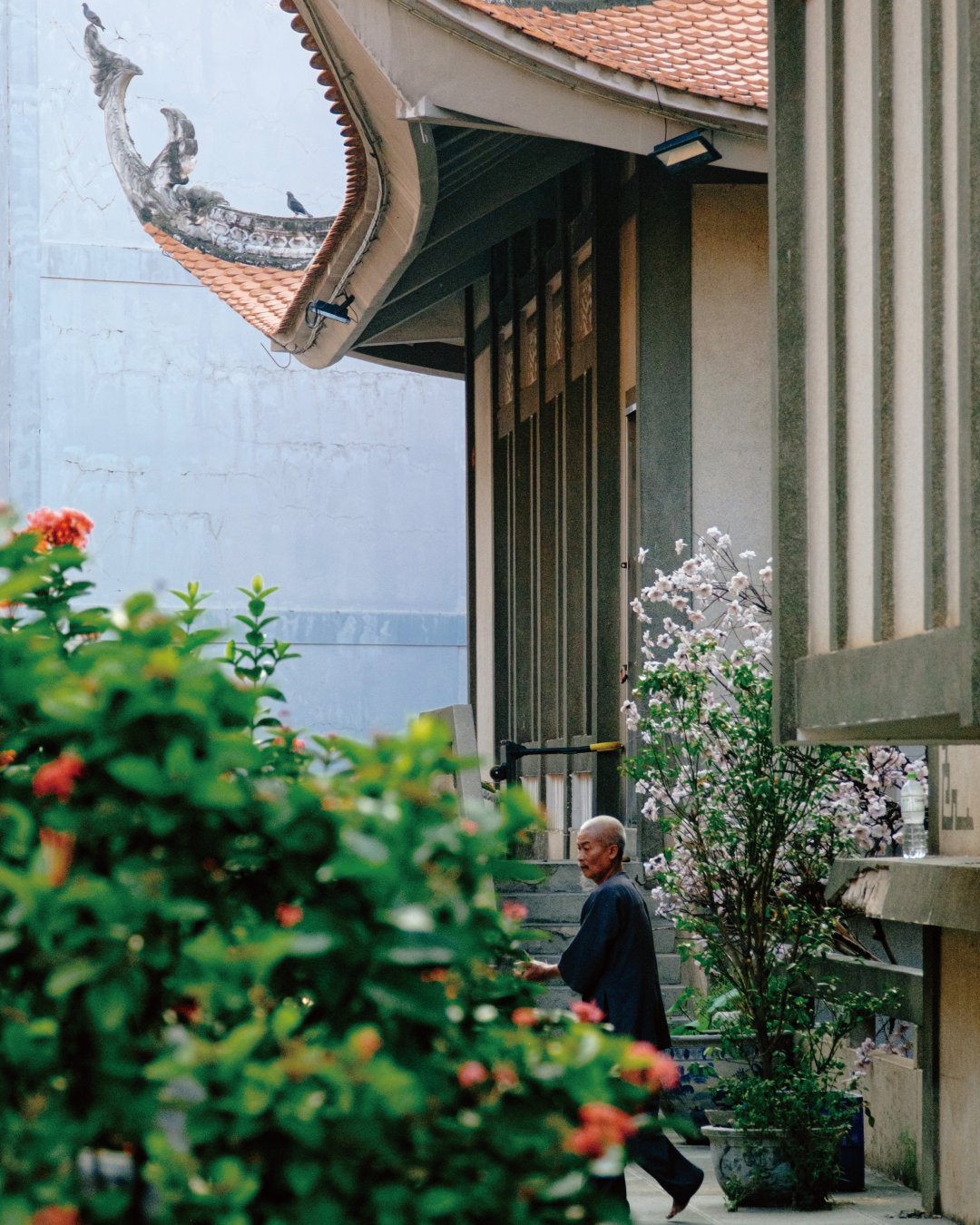
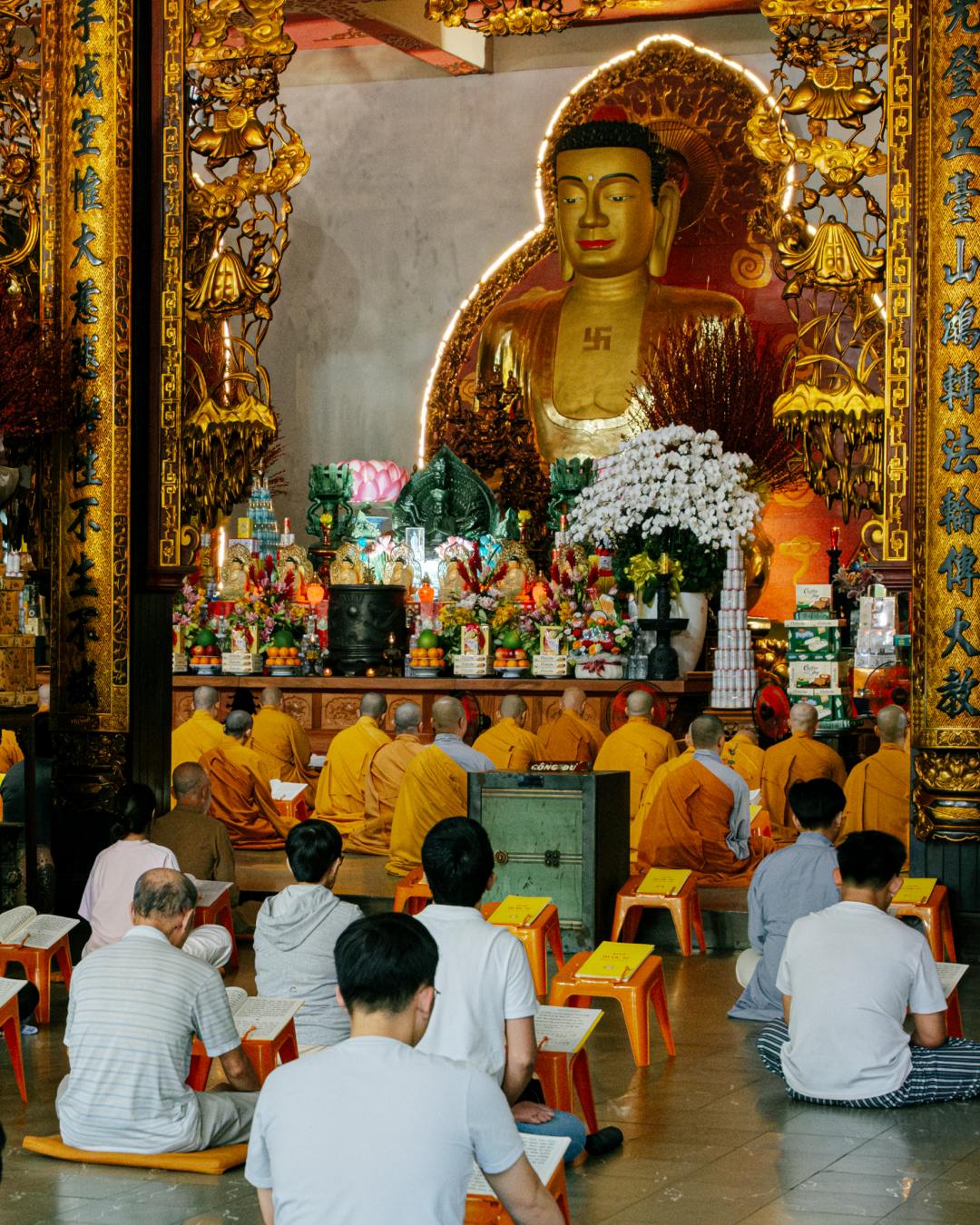
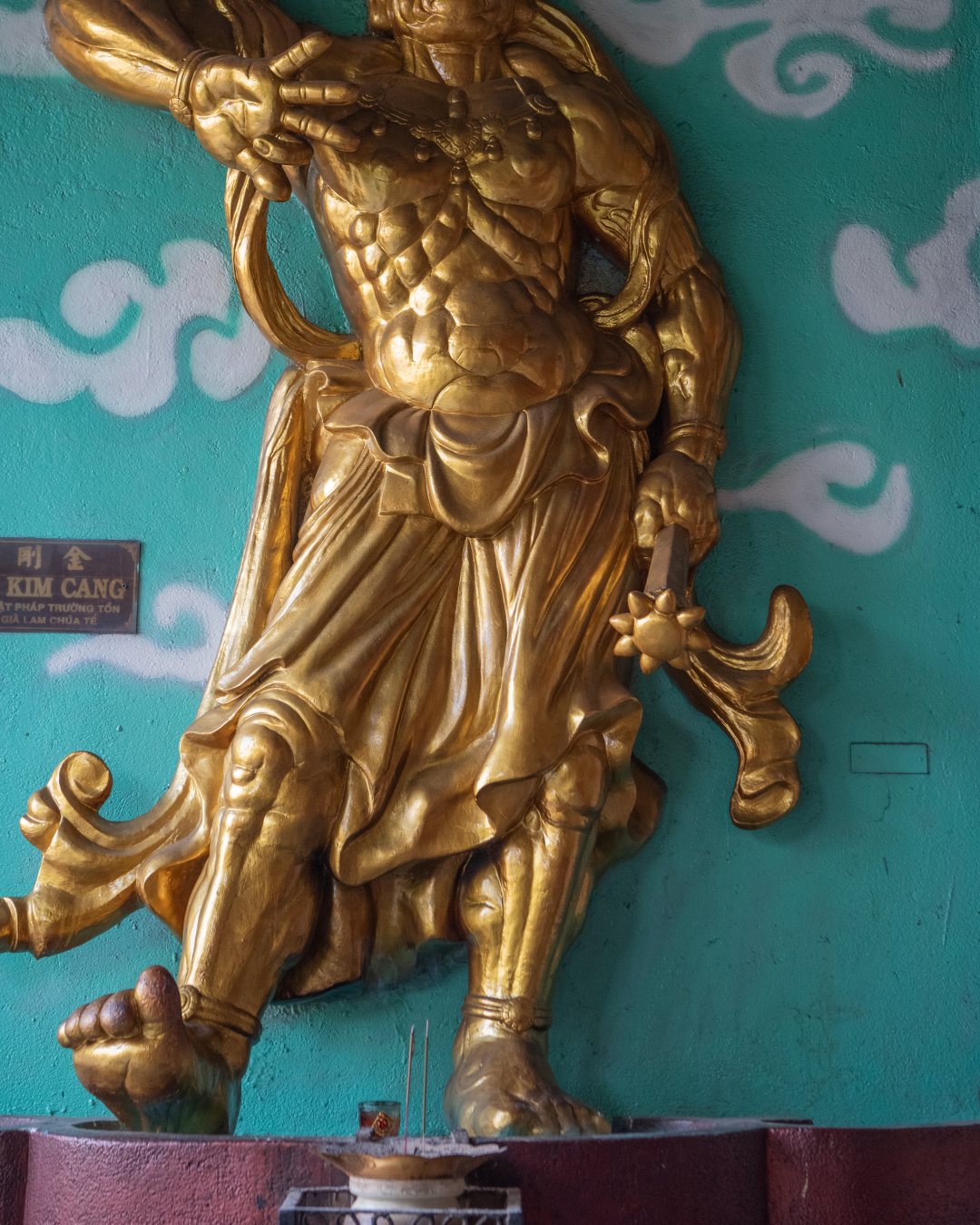
This is the largest Buddhist temple in southern Viet Nam, recommended for anyone seeking calm amid the bustle of the city. Completed in 1971, it combines traditional Vietnamese Buddhist architecture with modern concrete construction. Locally, it is regarded as one of the representative works of 20th-century Vietnamese Buddhist architecture. Step inside the grounds and your eye is drawn to the seven-story tower, about 40 meters high, and the graceful roof of the main hall, whose corners are crowned with finely carved phoenix heads. The bell hanging at the back was donated by Japan’s Buddhist community; it is said that if you strike it three times and make a wish, the wish will come true.
339 Nam Kỳ Khởi Nghĩa, Phường 7, Quận 3
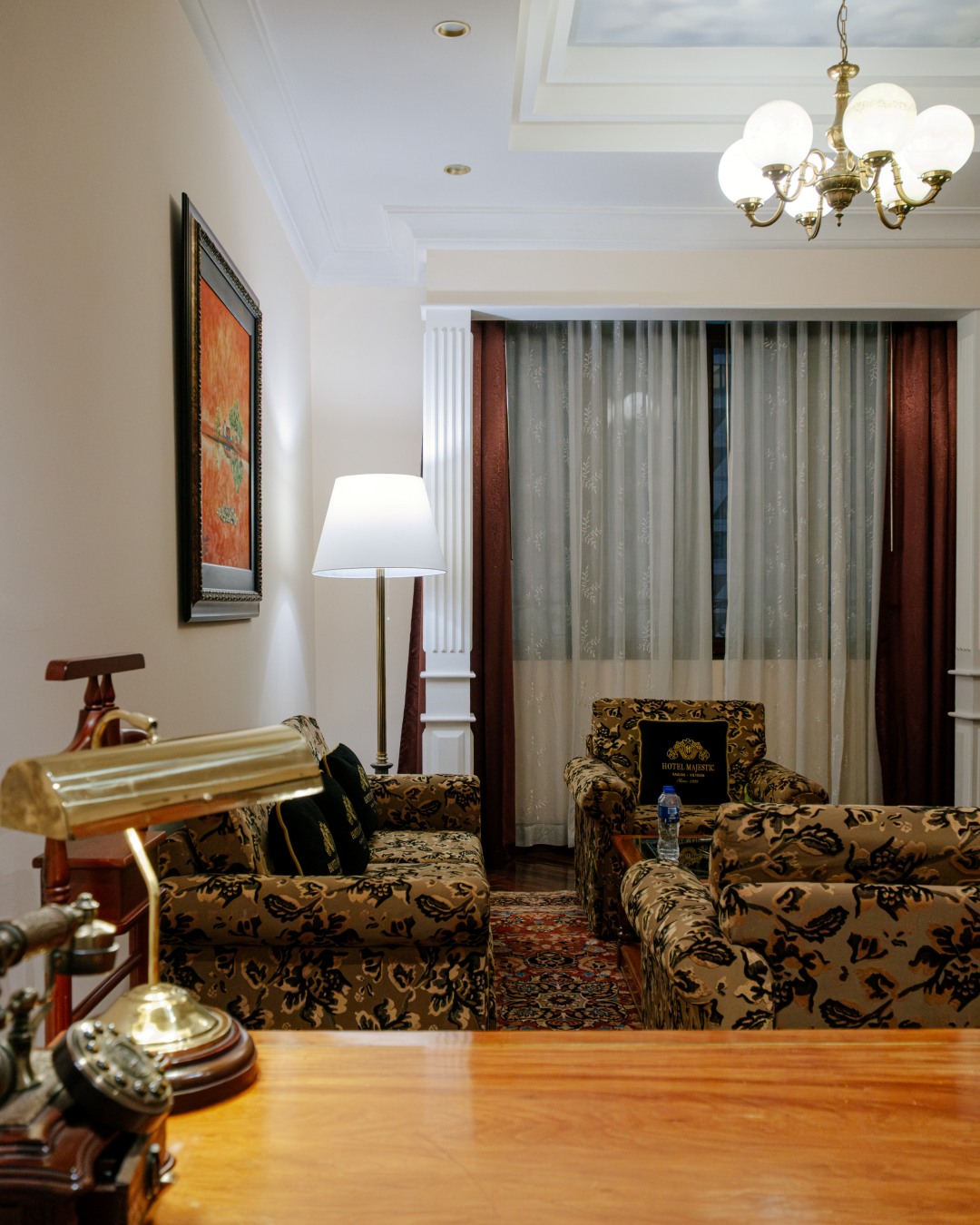
Holding the Time of Saigon: Hotel Majestic Saigon
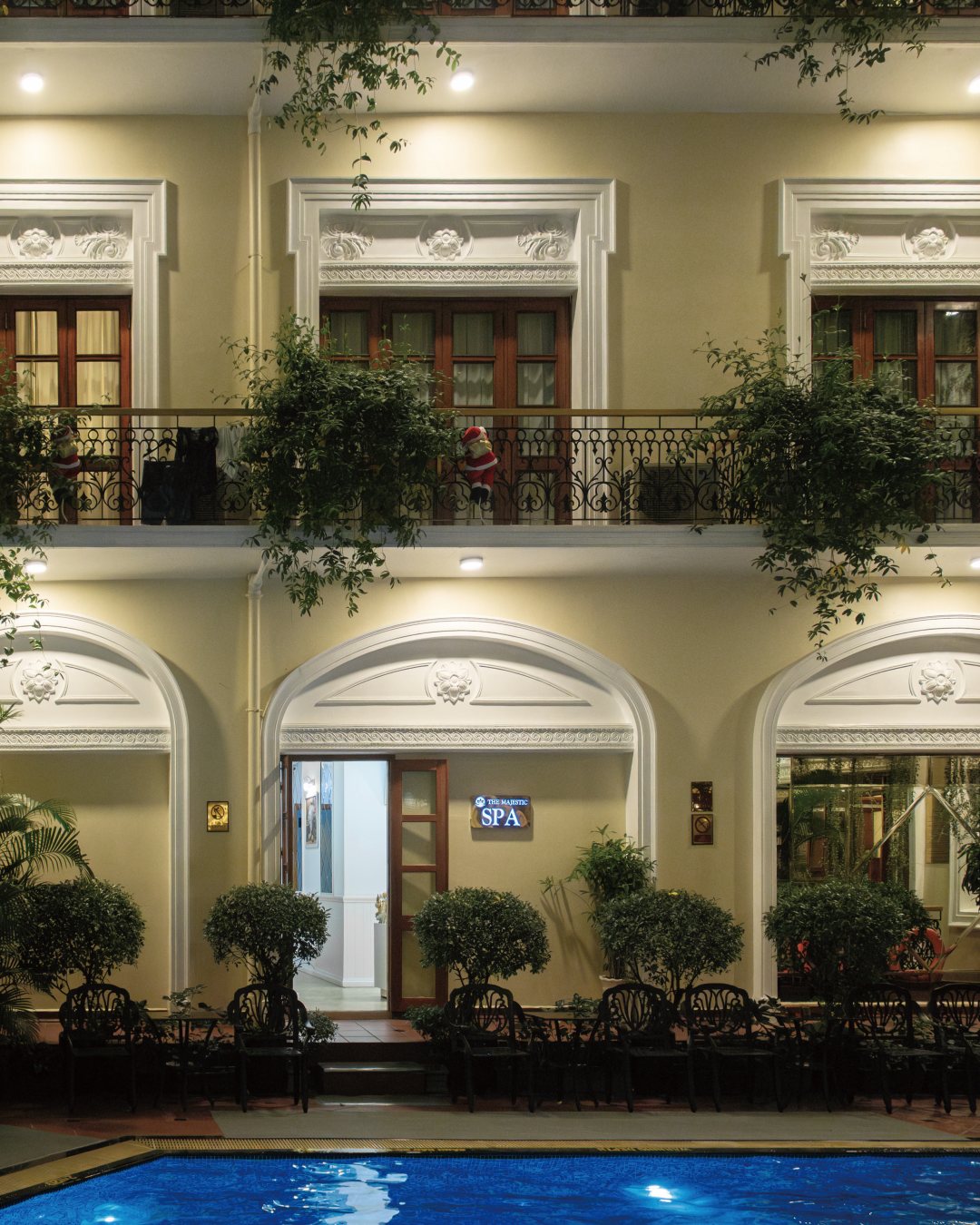
Standing on the banks of the Saigon River, Hotel Majestic Saigon has lived through Viet Nam’s modern history firsthand. It opened in 1925 as a showpiece of French colonial architecture, and almost immediately became one of the most talked-about addresses on the Indochinese Peninsula. The English writer Somerset Maugham, French President François Mitterrand, and America’s John F. Kennedy are among the many notable figures who have stayed here, and during the Viet Nam War and reunification, numerous foreign correspondents based themselves at the hotel and sent news to the world. Even today, the main building’s high ceilings, marble floors, stained-glass windows, and classic guest rooms with wooden furniture preserve the splendor of that era. On the eighth floor, M Bar is a rooftop bar with a sweeping view of the Saigon River at night, where you can experience the romance of the Majestic Saigon, which has lasted for more than a century, at its peak.
Where to Eat
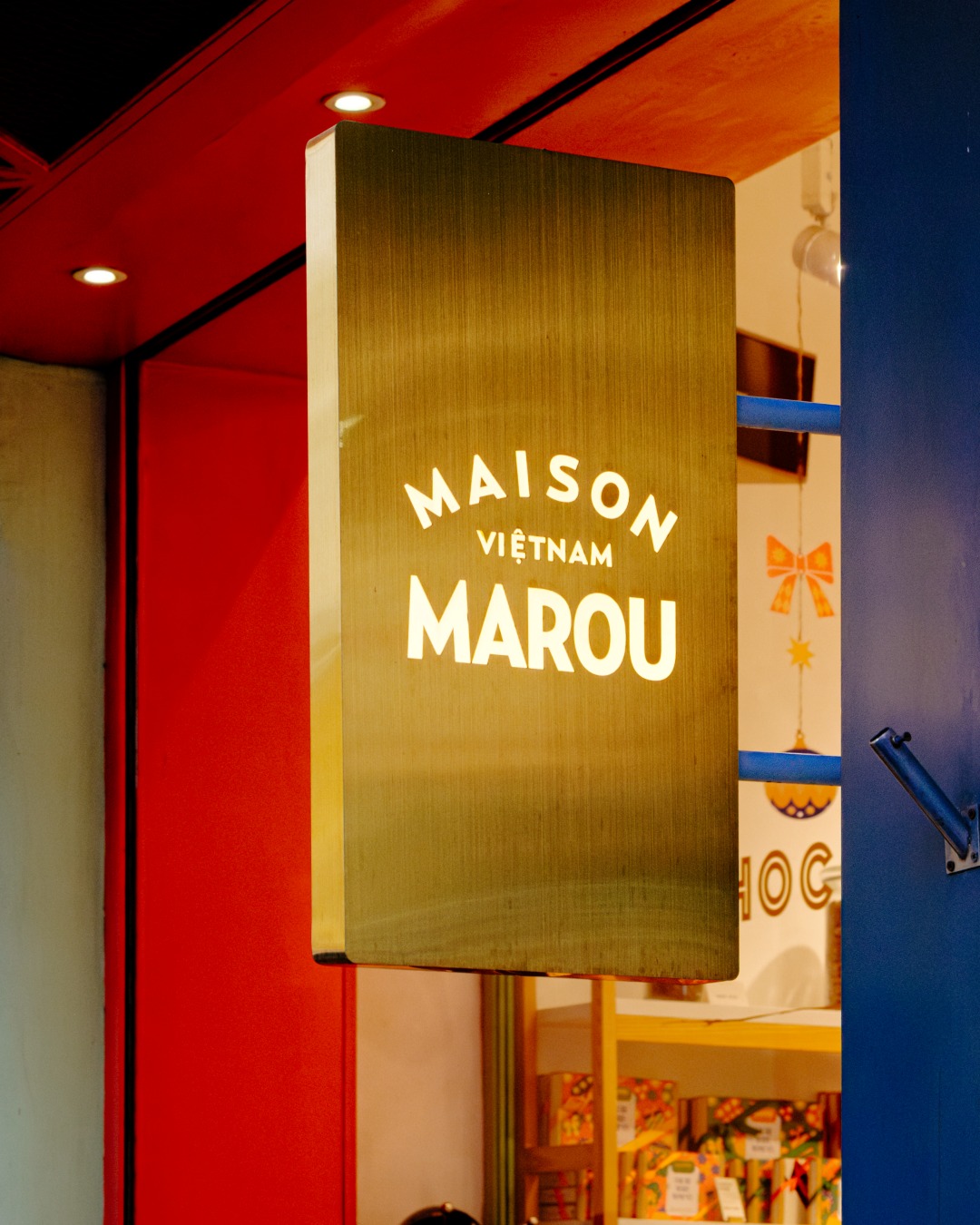
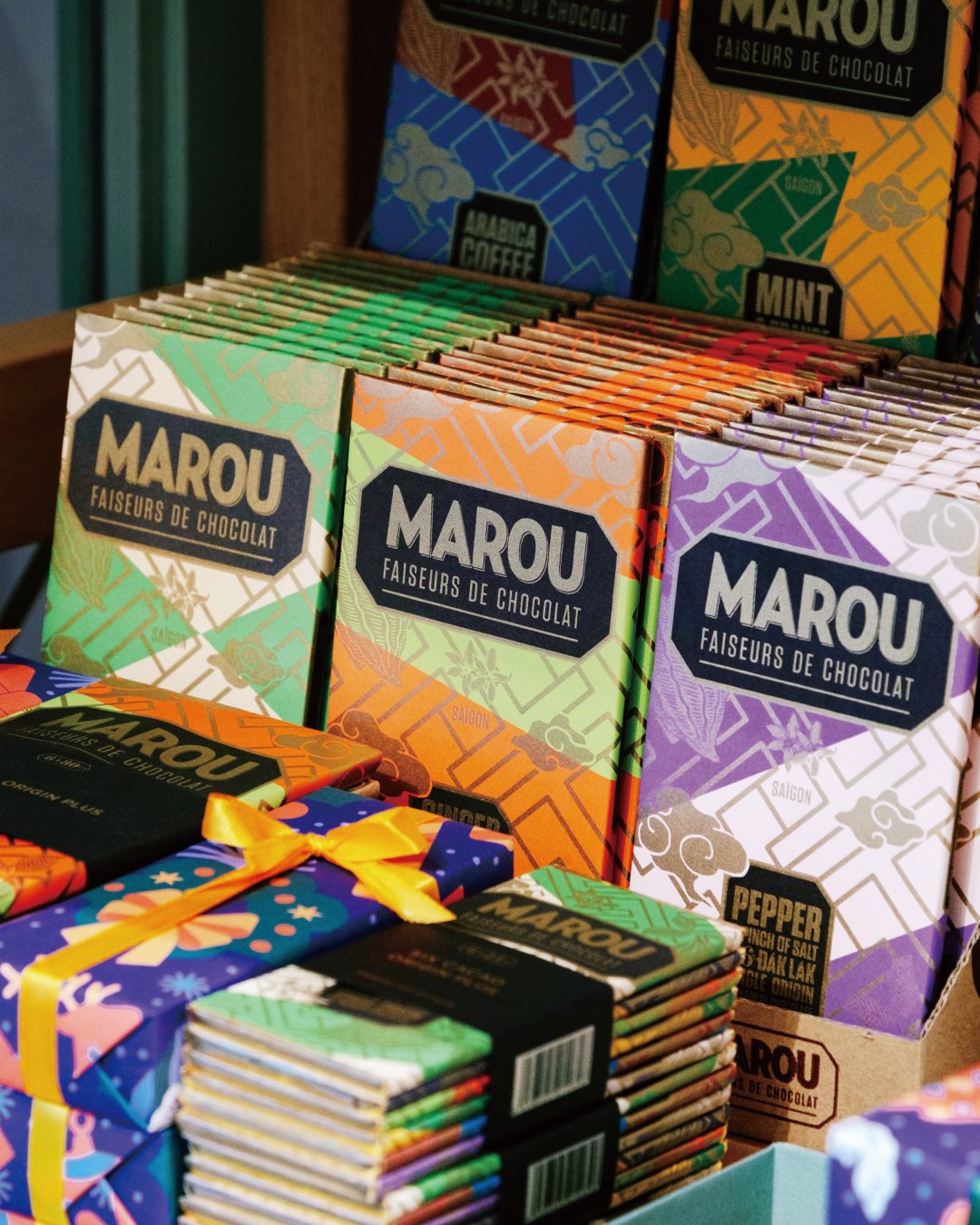
Maison Marou
Viet Nam’s first premium chocolate brand to apply the concept of terroir to chocolate, much as with wine. It makes its chocolate in-house from cacao beans grown in various regions of Viet Nam, and its bean-to-bar products have won worldwide popularity. It runs some 20 cafés in Viet Nam alone, and these stylishly designed spaces sell drinks and desserts as well as chocolate. By using fair-trade cacao, the brand contributes to the sustainability of Vietnamese farms.
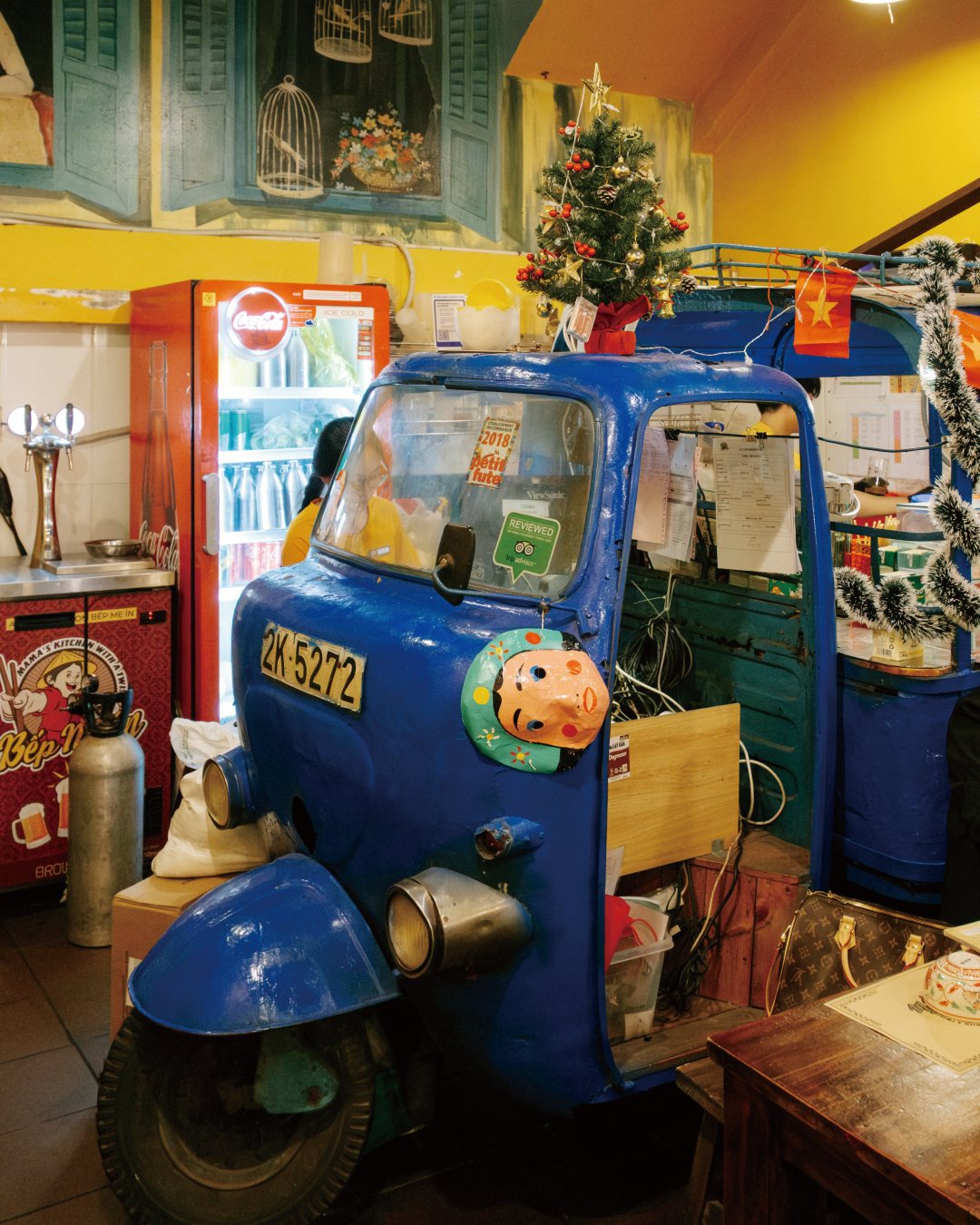
Bep Me In
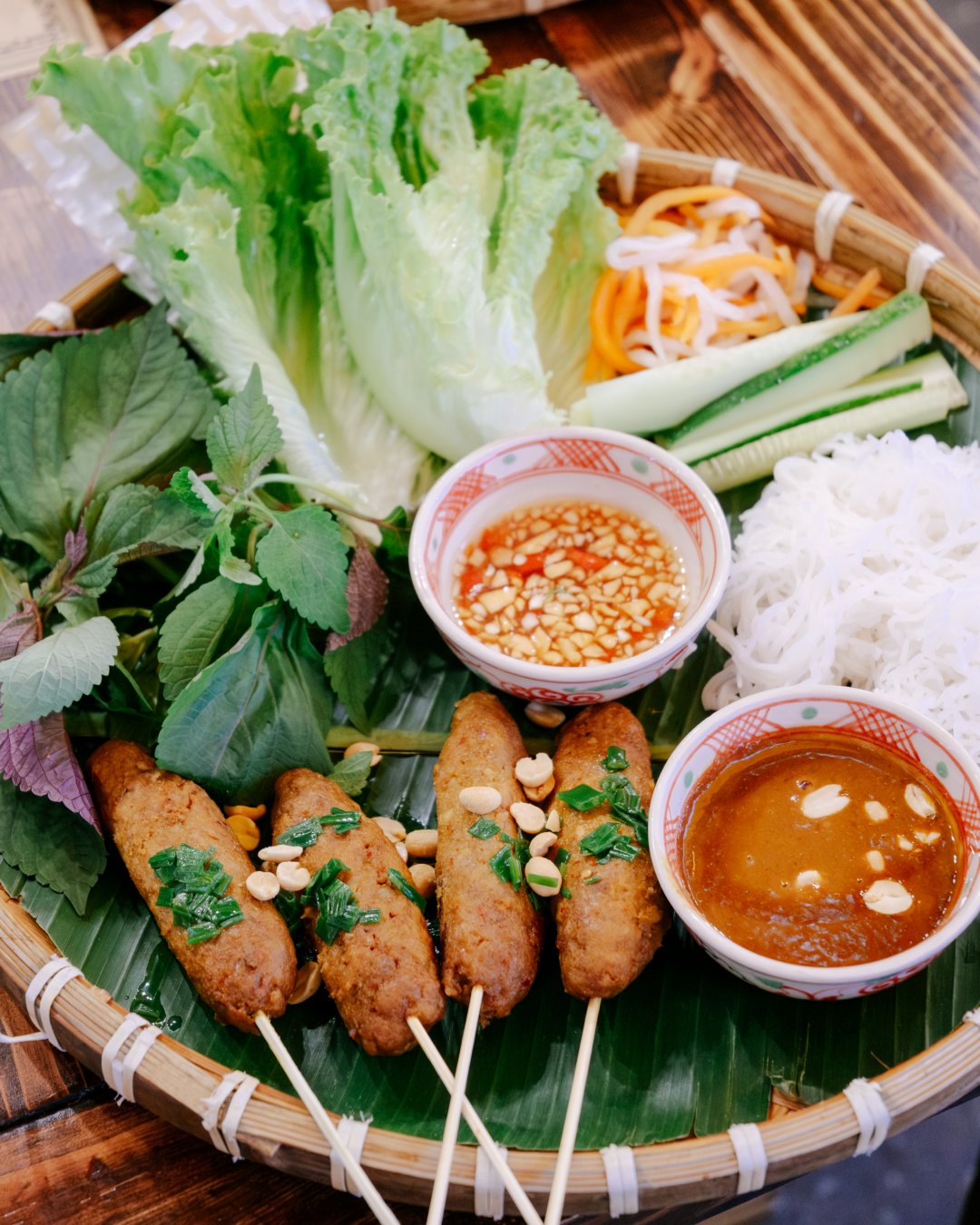
A Vietnamese home-cooking restaurant selected for the Michelin Guide’s Bib Gourmand. Tucked at the back of a narrow alley near Bến Thành Market, it is packed with locals and travelers right from the entrance, with barely room to step inside. The interior, decorated with yellow walls and retro props, captures the feel of old Viet Nam. Signature dishes include bánh xèo, the crispy Vietnamese pancake served with a variety of greens, and fried rice with plump shrimp and egg served in a coconut shell.
Quan Bui Original
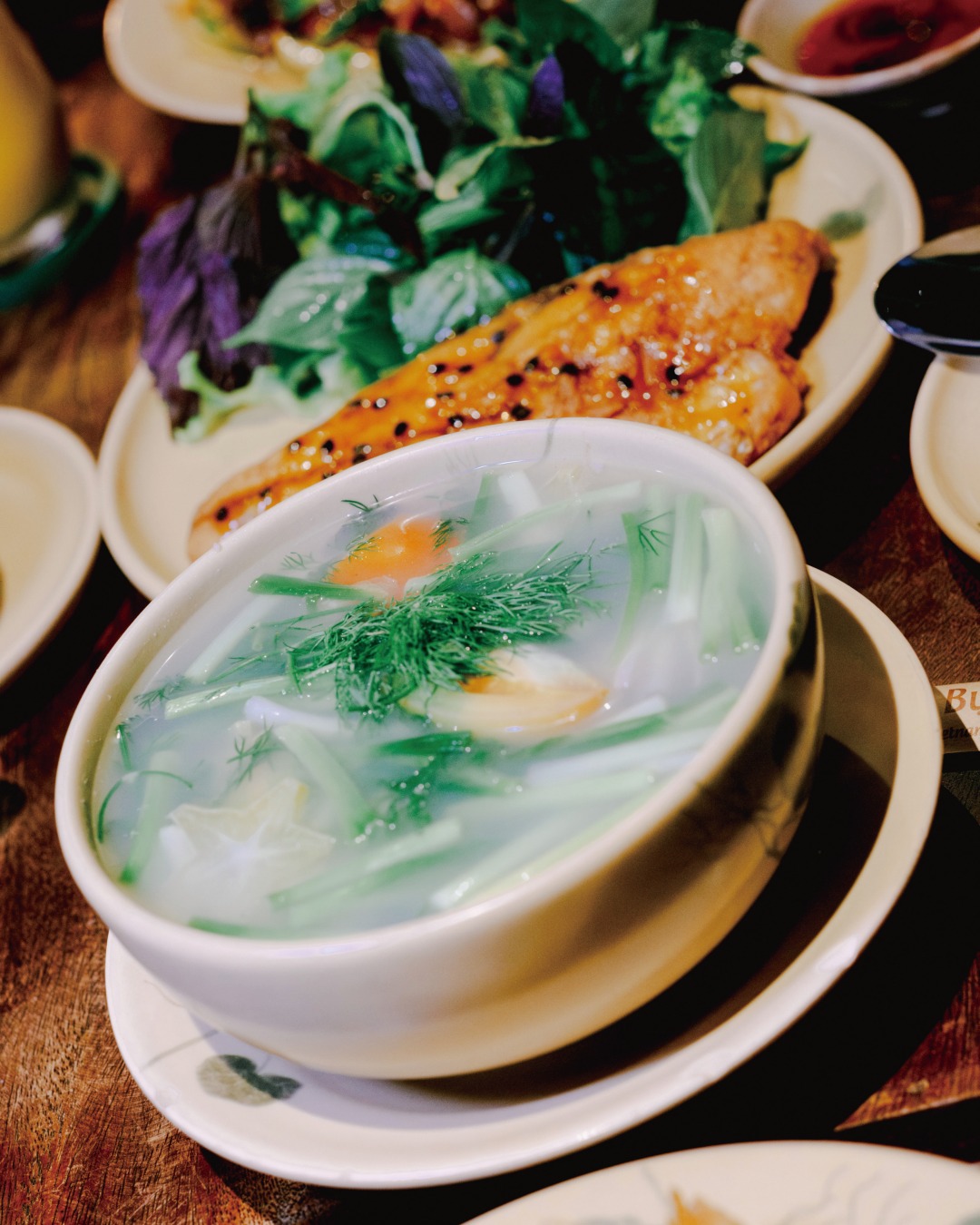
A place to enjoy traditional Vietnamese cooking with an upscale touch. Its interior stands out, pairing retro props that elegantly recreate the Saigon of the 1950s and ’60s with lush green plants. Popular dishes include a lotus stem salad prized for its crunchy texture, sweet-and-savory braised beef, and an array of spring rolls and grilled skewers. Artificial seasonings are kept to a minimum in every dish to preserve its natural flavor, and the plating is given just as much care.
►The article continues in ‘Viet Nam Heritage Travel, Part 1: Da Lat.’